
Over the past 15 months Dr Vicki Bowes, avian vet/pathologist and I have met up a number of times. In the last couple of months we’ve gotten together four times to pore over my flash drive of mystery cases that are looking for a diagnosis. She often refers to our detective work as ‘best guess’ given that we are often working with insufficient data and photos. This is one of several posts that resulted from those meet ups.
One of my six month old hens has what I believe are cataracts in both eyes. I noticed her bumping into the run door when I’d go to let them out. Then she laid an egg in the middle of the lawn and bumped into the feeder.
Within a period of two weeks, probably less, she lost most of her sight. She knows how to find the coop, roost, run, food, water, and favourite sunning/scratching spots. She is doing great, but I want to help her as much as possible. – Nancy Olson Salisbury
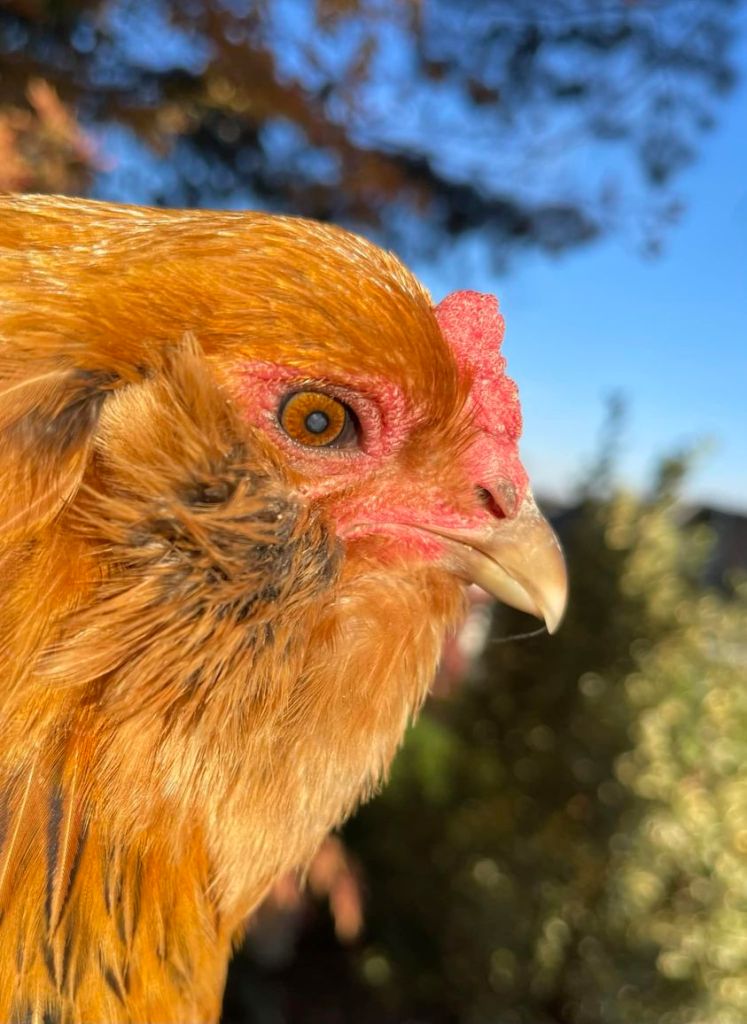
Dr Bowes: The pupil size is abnormal. It’s not the ocular form of Marek’s Disease, but could be an inflammatory response to a systemic infection like Salmonella. It’s possible to have birds in the same flock not all be infected or be symptomatic with different symptoms. The opacity of the iris does look like a cataract. Some birds are genetically predisposed to cataracts, but you’d need to have an exam with an opthalmoscope to confirm the diagnosis. It’s important to provide consistency in the environment to ensure her quality of life.
Blackhead Disease (Histomoniasis)
We butchered five turkeys whose livers looked like this. What is it? – Jenni Papp

Dr Bowes: This is classic Blackhead Disease (histomonosis) caused by protozoa carried in earthworms and cecal worms. There is a strong inflammatory reaction (raised tumours) on the liver. Diagnosis is made post mortem by finding a cheesy exudate in the cecal core and tumours on the liver. Affected turkeys may appear sick, droopy and pass sulfur coloured droppings (typical of liver disease). The disease is carried by chickens – who do not get sick – to turkeys. There is no treatment or vaccine. The best prevention is to not house chickens and turkeys together.
Liver Tumours
The photos are of two different birds. The first pic is one bird; the second two are a different bird. They came from the same place but at different times, from a breeder who gives me all her cockerels a few days after hatch and I grow them out for dog food. Out of maybe 100+ birds over the summer we’ve had half a dozen look like this. – Sue Stiely
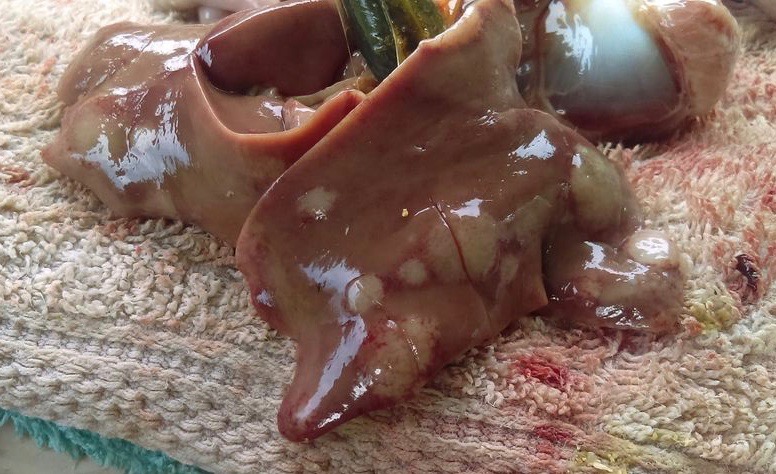
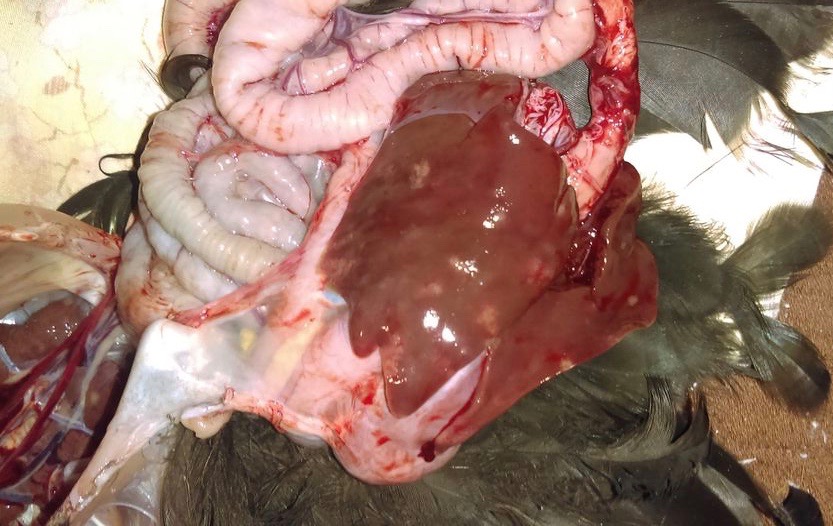
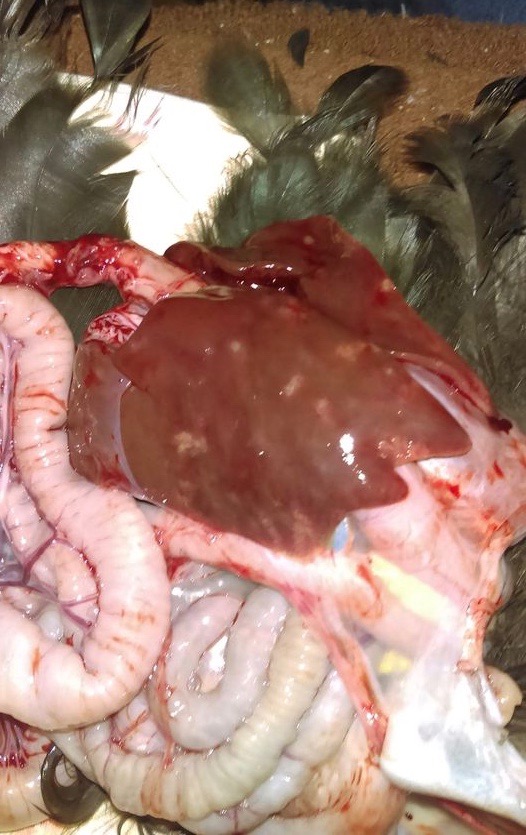
Dr Bowes: If the first bird was a turkey I would diagnose Blackhead Disease, but since it’s a chicken I would say Marek’s Disease, since the nodules are raised (tumour cells) and the liver is pale. The second bird is different. There are discrete areas of necrosis (flat, dead cells), which are typical of a bacterial hepatitis or a Staphylococcus infection like bacterial septicemia in the joints and bones. The corrugated nature of the intestines suggests a heavy worm load.
Weird Eggs
Malformed Chalazae
What is in this egg? Is it just malformed chalazae, or does my flock have worms? – Leta Dunlap
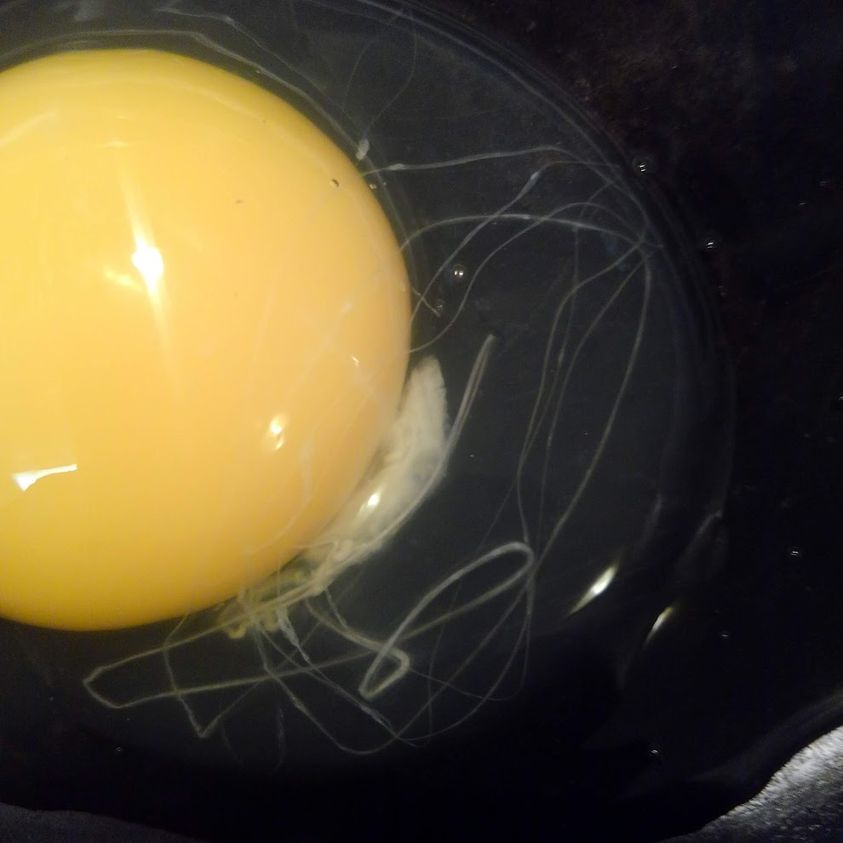
Dr Bowes: Threadworms are found high in the intestinal tract and are unlikely to be seen in the reproductive system. There is a structural density and inconsistency that isn’t typical of worms. I think this is anomalous protein that originates at the chalazae.
Repaired Egg
This one was sent to me by Bethany Fair to add to my Weird Eggs post. I recognized that it was an egg that had been repaired before it was laid but I wondered how that happened.
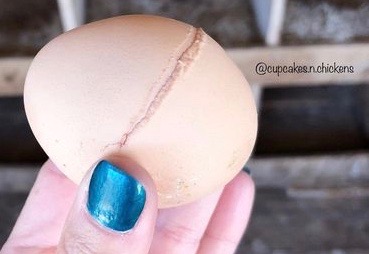
Dr Bowes: This egg was broken in the shell gland and repaired prior to being laid. The break may have been the result of trauma caused by a hen jumping down from a roost bar.
Abnormal Yolk
What’s going on with this egg? – Marie Elyse
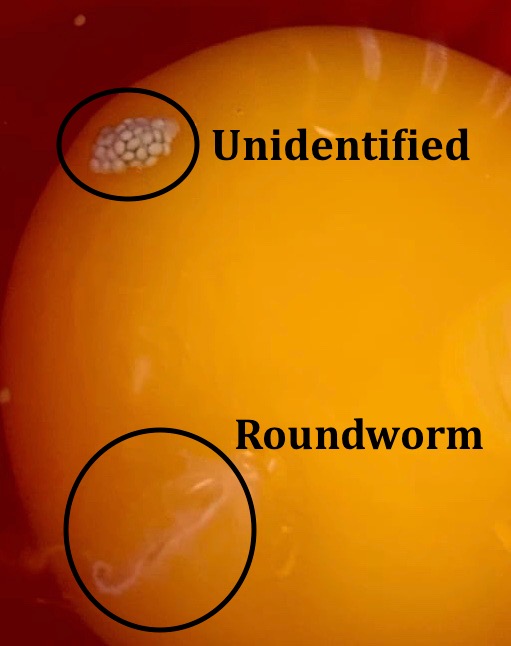
Dr Bowes: There is what looks like a larval roundworm in the yolk, but the cluster is not related to round worms. This is a bit of a mystery that would require microscopic work to accurately diagnose.
Glossary
Chalazae: the two twisted membranous strips joining the yolk to the ends of the shell.
Exudate: a mass of cells and fluid that has seeped out of blood vessels or an organ, especially in inflammation.
Necrotic: Necrosis is the death of body tissue, which occurs when too little blood flows to the tissue. Necrosis cannot be reversed. When large areas of tissue die due to a lack of blood supply, the condition is called gangrene.
Ophthalmoscope: an instrument used to view the interior of the eye and retina.
That wraps up another edition of ‘Best Guess’ brought to you by Bitchin’ Chickens and Dr Bowes. I offer my continuing appreciation to Dr Bowes who patiently wades through my files of chicken health care issues helping me to learn and to offer answers to the owners and the chicken keeping community at large.
Featured image: Jason Holley
If you need some help deciphering an x-ray or necropsy report, or figuring out a health issue in your flock feel to drop me a line by using the ‘contact’ button on the home page.
 Bitchin' Chickens
Thank you and Dr Bowes so much for posting these informative articles. I am learning so much and for a first time chicken owner I feel more confident about raising my six birds.
LikeLiked by 1 person
Thanks for the feedback; I’ll pass it on to Dr Bowes.
LikeLike
I am finding these case studies fascinating. Repulsive photos, but still fascinating & very educational
LikeLiked by 1 person
The last time Dr Bowes invited me over she called our work ‘gorefest’.
LikeLike
She got that right! But it’s educational and not just for shock value or clicks. Totally justified use of the images. How else would we learn?
LikeLiked by 1 person