
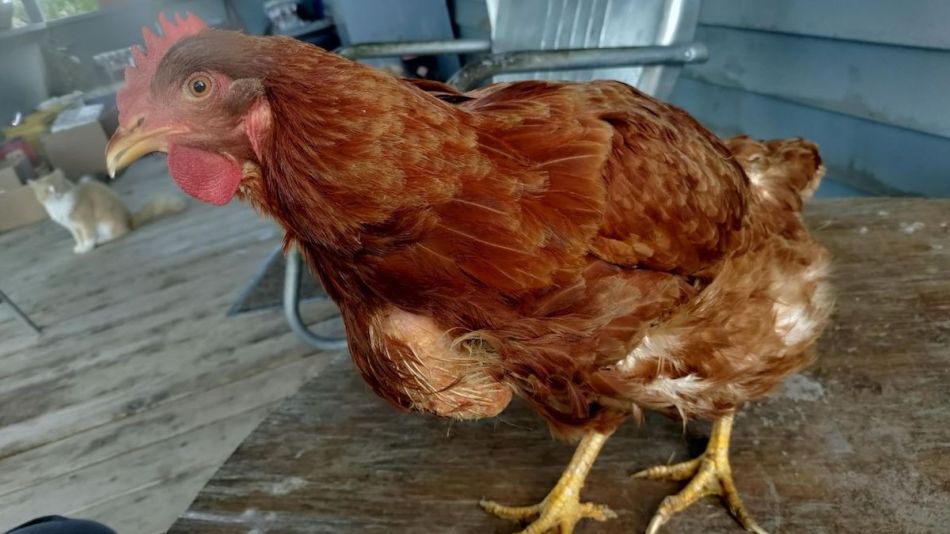
Oftentimes we see health issues posted in online chicken groups and never really get the diagnosis or find out what happened to the patient. In this case, we follow the story of a Rhode Island hen throughout her treatment to her full recovery. It also demonstrates that it’s often difficult to accurately diagnose what’s going on with our birds and in the time we’re spending trying to treat them they can get worse, much worse. Thankfully in this situation Rain had access to medical professionals that assisted with the treatment of her hen.
Abscess: An enclosed collection of pus in tissues, organs, or confined spaces in the body caused by an infection and is usually swollen and inflamed.
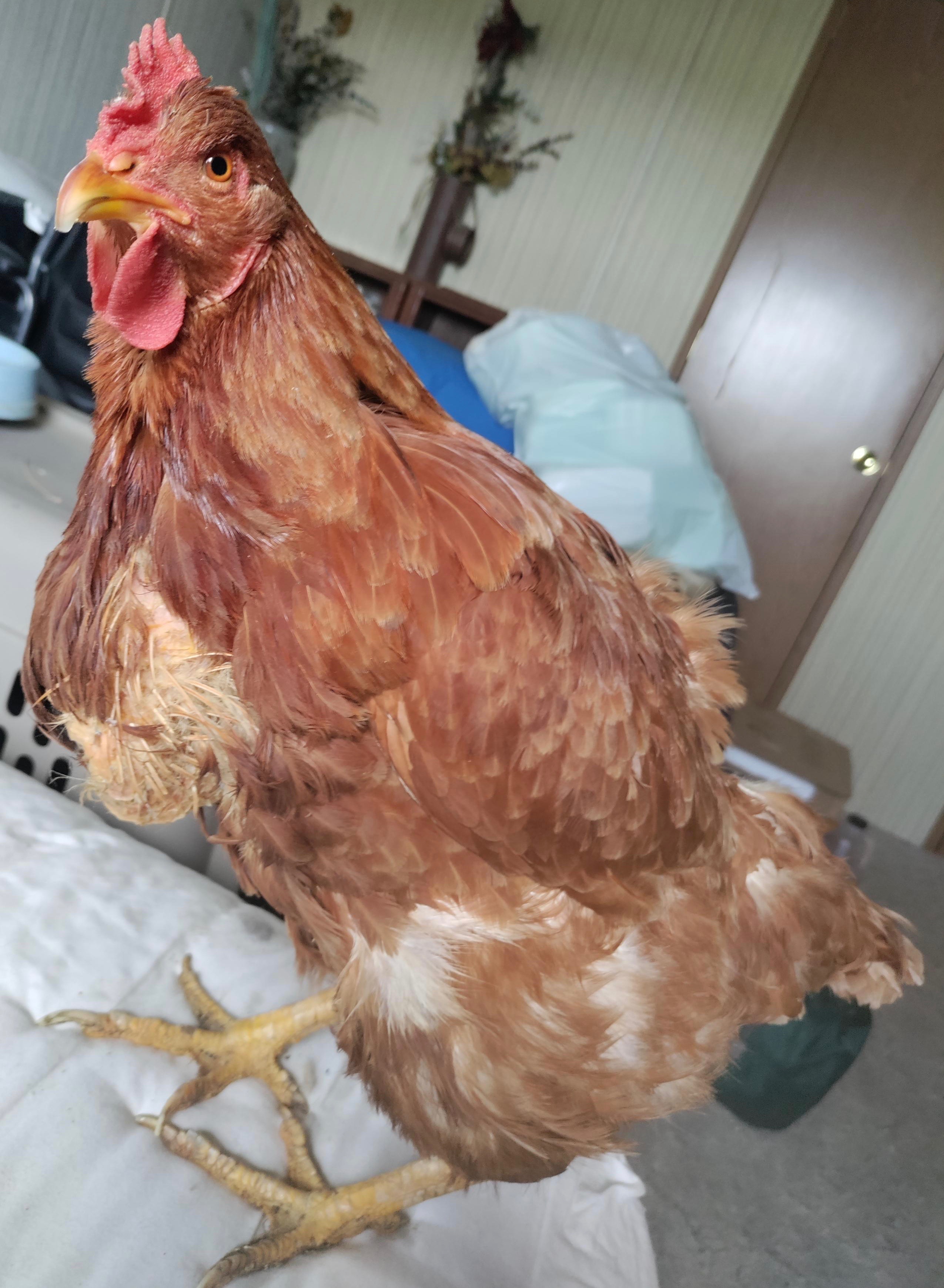
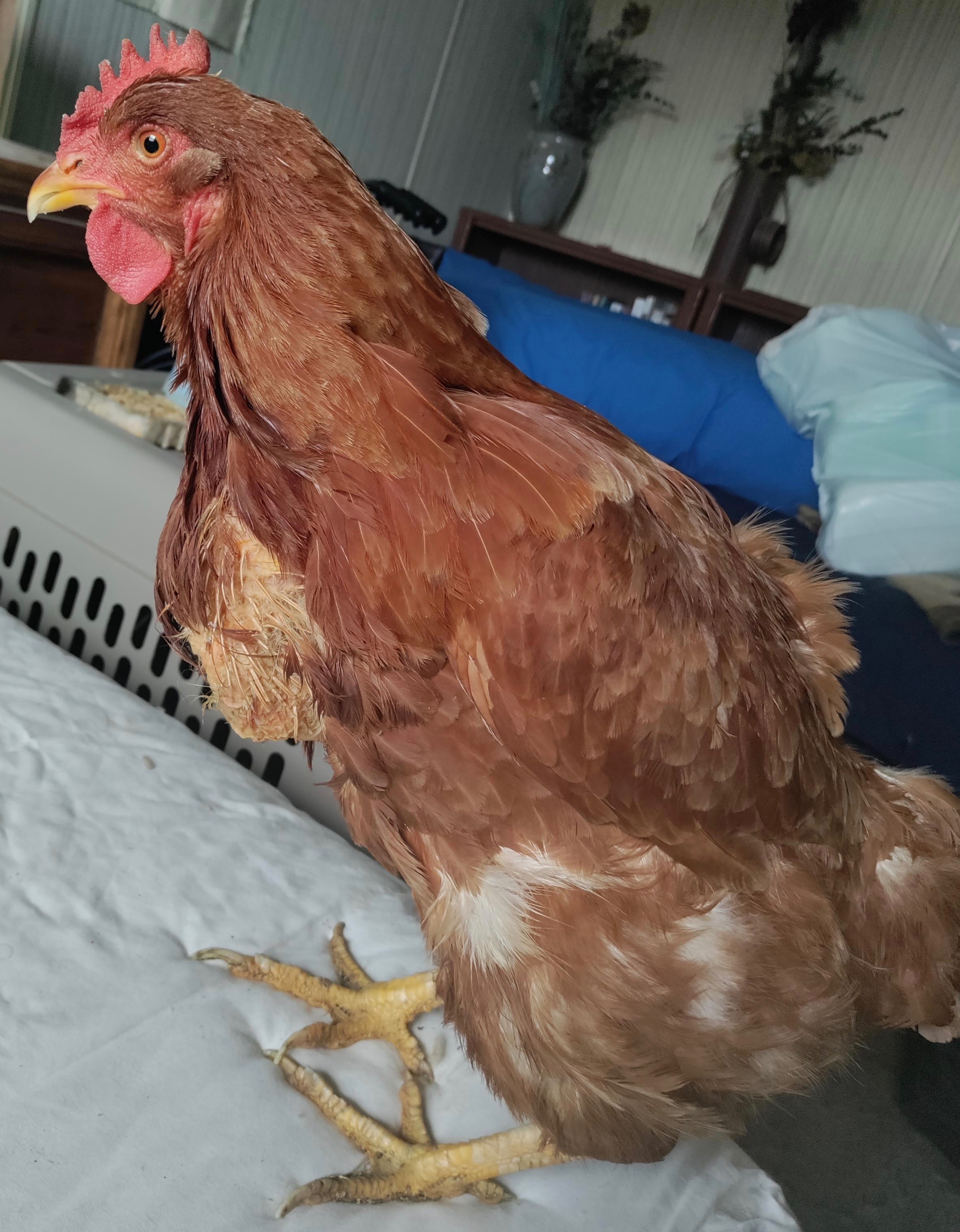
Boobs, Rhode Island Red, 5 years old
Day 1: I acquired four Orpingtons and Rhode Island Red hens posted on Facebook in mid-March. The owner told me that one of them had an orange-sized lump in her breast, but it didn’t matter to me. The area was fluid-filled which I assumed was a crop issue and could easily be remedied.
Week 1-2: Over the next couple of weeks it got larger so I gave her Fluconazole (antifungal) orally at 1/3 of a 150mg tablet every 48 hours. After two doses there was no change.
Week 3: I then tried massage and gave her 6cc olive oil four times daily; again with no improvement. The substrate in her previous home was sand so I thought her crop might be impacted by her ingesting it.
Week 8: Boobs was isolating herself, the skin on her breast started to turn black and green and the smell was horrible, signs that the tissues had become necrotic and died.
I’ve worked as a vet tech for the last 22 years and took her to the clinic where I work for treatment. Luckily one of the perks of my job is pro bono x-rays for my animals.
We administered 1cc of barium dye orally, then took radiographs immediately afterwards to locate the exact position of her crop. It seemed there was a large mass in front of, but not in, her crop.


The little white area is her barium filled crop, while the larger white area is the abscess, which was full of pus and blood clots.
We aspirated 5mls of pus from the lump, then cut open the mass at the necrotic area and opened it with hemostats. Approximately 120mls of fluid was drained from the area, and then flushed with saline.
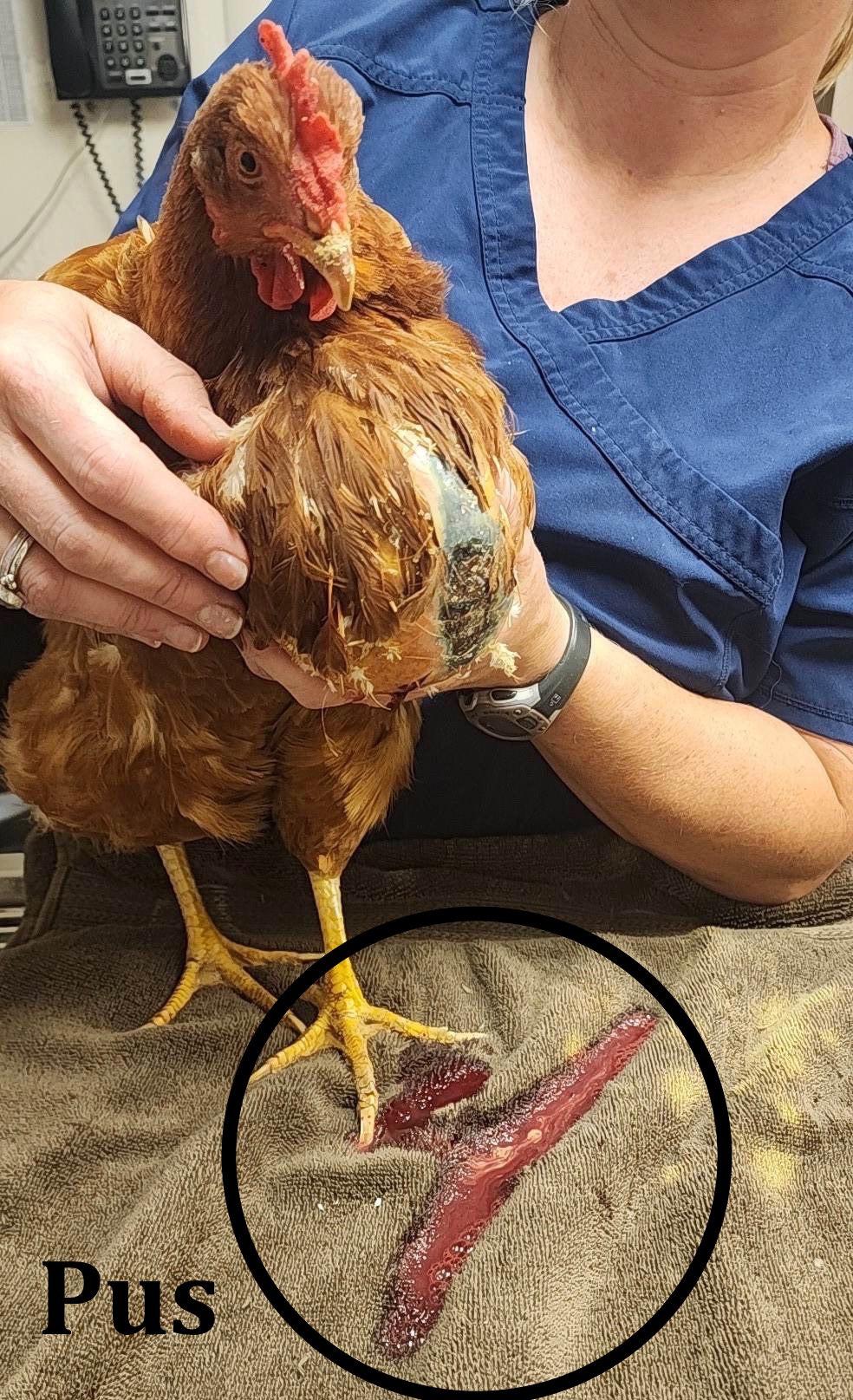
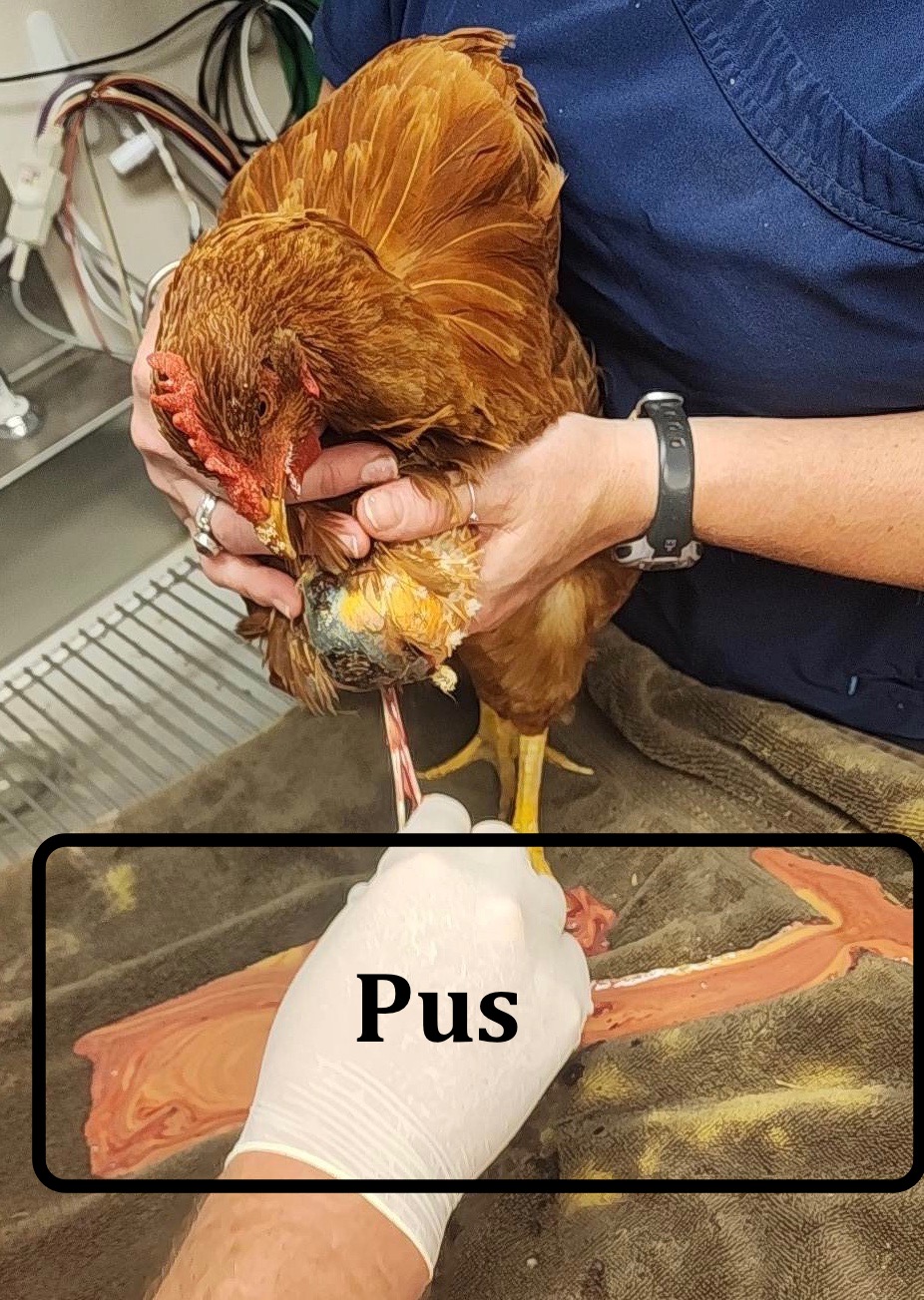
We left it open to drain. No sutures were needed and because of the infection we wanted to leave it open.
I started her on 34mg of Baytril (antibiotic) daily and 1mg/kg of her body weight Metacam (pain management) oral suspension once daily. She is an avid eater so there was no need to force her to take the meds. I applied Nitrofurazone (antimicrobial) ointment to her breast area and squeezed out any residual discharge. Nitrofurazone is my first choice for livestock, mostly because maggots hate it. I had to keep her inside to avoid the risk of flystrike.
We’re not sure what caused the abscess, but probably a penetrating injury of some kind. We did a cytology slide of the bacteria and it was loaded with rods.
Post- Op Recovery
Week 1:
She hated the shirt I made for her recovery. Her balance was off because she had been packing a D-cup and then had no idea what to do with her new A-cup. She took the meds easily. I started to ferment my feed. I had my doubts she would eat it, but she loved it and she was standing up and moving around.
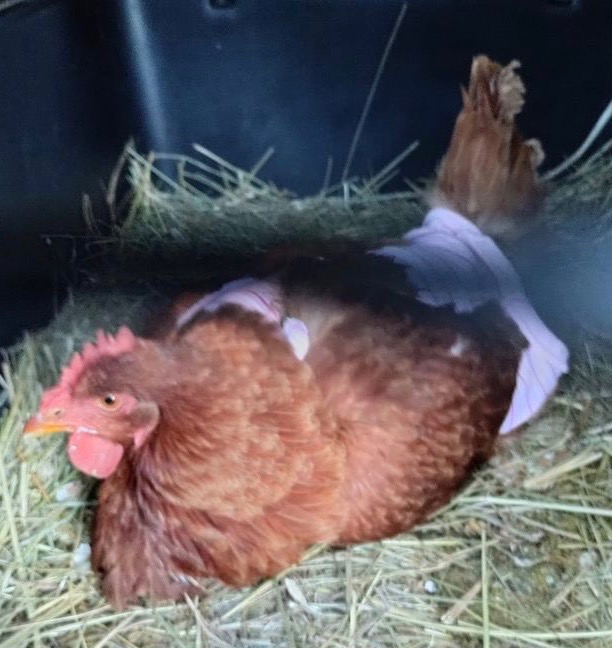

Week 2: Boobs was quite chatty. learned to stand upright again and was eating very well.
She finished her 10-day course of Baytril, the only medication she was on. The abscess was totally drained, but I still was able to feel quite a bit of scar tissue in her breast area, probably because it had been there for several months. There was no sign of infection and she is expected to make a full recovery.
Thanks to Rain Hampton for sharing her story and photos, used with permission.
 Bitchin' Chickens
Hi, Just curious about the radiograph views. Is the lucent tubular structure running along the edge of the mass air in the esophagus, or the trachea?
I don’t know really anything about abscesses in chickens, but I’m pretty certain they ingest a fair bit of fecal contamination of the stuff they scratch around in their environment and eat. Could this have originally been a perforation of the esophagus by some sharp & contaminated ingesta that healed over but left the bacteria there festering in this sequestered cervical area? It seems that a skin wound might have caused something quicker to soften up and drain on its own. Also, would be interesting to know if external skin wounds might lead more often to cocci-based abscesses.
Cheers, Jeff
LikeLiked by 1 person
Hi, thanks for the question which is a bit above my pay grade. I’ll show the radiograph to my avian vet for her opinion and then update the post with her comments. I love it when my readers keep me on my toes.
LikeLike
Here is Dr Vicki Bowes’ (avian vet/pathologist) reply to your query: The tubular structure is the trachea. It’s possible that the crop can become perforated, but I think in this case the infection went from the outside inwards, probably due to a penetrating injury. The necrotic area could have had a fibrous capsule preventing the abscess to erupt.
LikeLike
I have this exact thing on my chicken. A friend and I were gonna try and drain it today until we flipped her over and saw it’s turning purple on one side. I freaked out and figured I may need to take her to the vet. I’m hoping this isn’t extravagantly expensive.
LikeLiked by 1 person
Purple is a sign it’s becoming necrotic. A vet could assess and drain it, then prescribe antibiotics if needed. Vets varying in cost and experience – I hope you find a good one. Can you send me a photo? Use the ‘contact’ button on my homepage and I’ll send my email. Thanks
LikeLike
My chicken has huge abscess under her. What do I do?
LikeLiked by 1 person
A few questions: how deep and wide is it? How long has it been there? Is it black? Smelly? Is there discharge? Are you able to clean the area with a disinfectant soap? Do you have a topical antibiotic cream like Polysporin or Vetericyn spray? Is she eating, drinking, pooping normally? It would be helpful if I could see some good photos. Can you drop me a line using the ‘contact’ button on my homepage and I’ll give you an email to send photos?
LikeLike