

This edition marks 24 months of my partnership with Dr Vicki Bowes, avian vet/ pathologist. We get together on a regular basis to look at cases that I collect and present to her for a diagnosis, or sometimes ‘best guess’ based on the limitations we’re dealing with. Regardless of the results I always learn a lot and hope that you do as well. I’m particularly pleased if I can find something new or challenging for her; not so, this time but I’m always on the hunt for an issue that piques her interest.
Abdominal Hernia
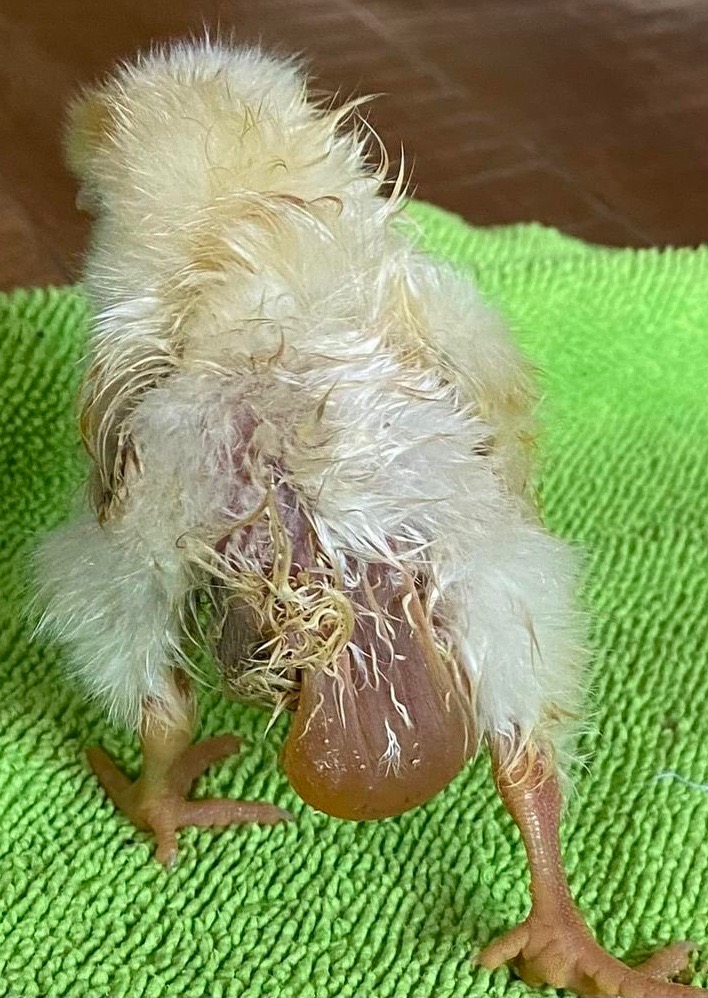
Dr Bowes: I don’t think this is oomphalitis or involves the yolk sac, but is an abdominal wall hernia. Was this chick assisted to hatch? Recommendation: euthanasia.
Feather Follicle Cyst
What’s going on with this chick? – Kristen Sigala


Dr Bowes: Naked necks are vulnerable to feather follicle cysts. Keep the area clean, make a small incision in the dark area and try to squeeze out what is inside. Make sure to control any bleeding. That bump on the neck is an attractant for other birds to peck.
Torn Comb
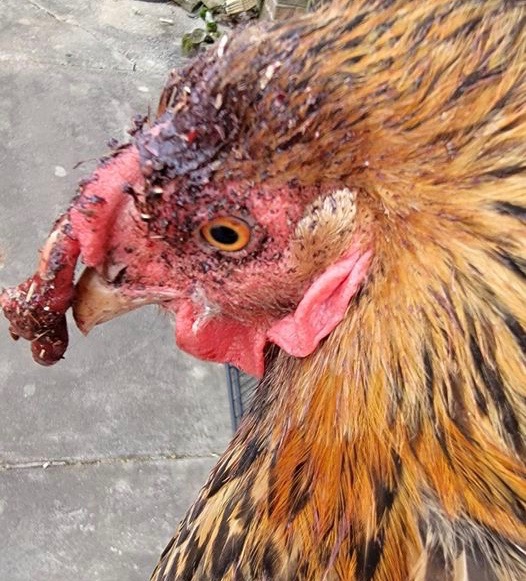
Dr Bowes: If the torn area still has a blood supply it won’t become necrotic and fall off. A vet could remove and suture it. The DIY solution is to take a sharp pair of scissors or a scalpel and cut off the hanging piece. Be prepared to stop the blood flow. Aftercare includes pain management and topical antibiotic ointment.
Abnormal Anatomy
I have a Liege Fighter hen who is 11 months old and may have Leukosis. Her intestines, gizzard and other organs are lower and further down in her body, causing her crop and respiratory system to be unusual. Her crop and stomach get huge when she eats and it causes slight respiratory distress, but she doesn’t seem fazed by it. She’s super active and eats/drinks/grazes normally.
There is also the slightest possibility it could be a bornavirus issue based on symptoms and research my vet did. Her bursa seem to be enlarged/inflamed and not sure if that is tied to Leukosis or something else. – Cheri Lyon

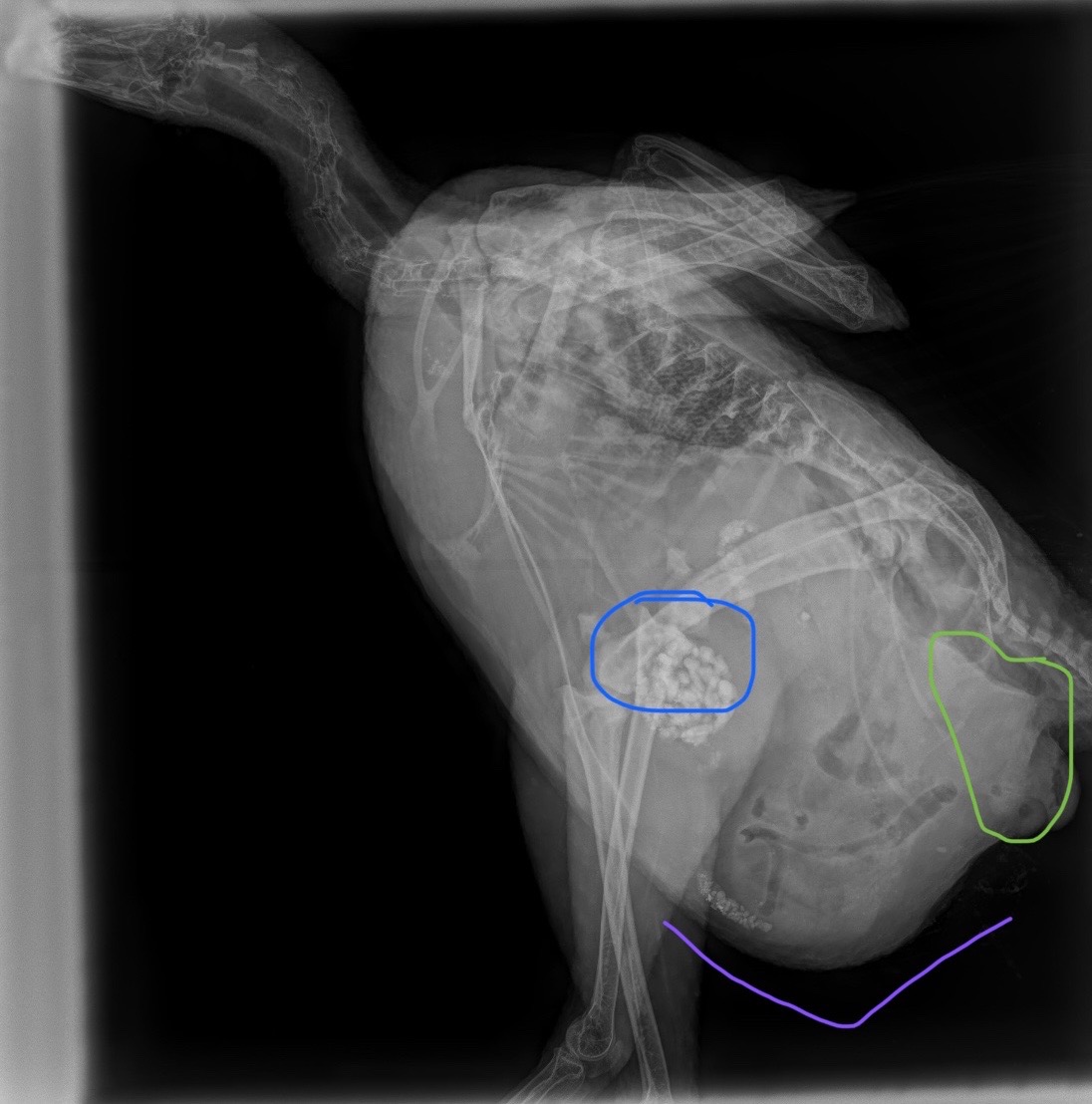
Dr Bowes: Leukosis is the disease (i.e. tumour) state of Lymphosarcoma. Avian bornavirus causes proventricular dilation disease, a progressive neurological and gastrointestinal disease, which is not recognized in chickens. I agree that her gizzard should be lower and wonder why her abdominal area is pushing it up. Of concern, is the size of her bursa (you shouldn’t be able to see it in an 11 month old hen). Unfortunately the X-rays are too difficult to read to give you more information.
Proud Flesh
My 5-year-old rooster is a rescue from cock fighting that has developed a big growth around one of his spurs. I live on an island with no avian vet, but took him to a exotic species vet who diagnosed either cancer or scar tissue growth from his spurs being cut too short in the past. In either case, he said it couldn’t be excised from his leg because the bulbous mass is pretty solid. My rooster’s spurs are growing long and will soon start to affect his walking but I’m not sure if I should cut them, or just have the one on the other leg trimmed. Scar tissue growth and cancer are very different possibilities, so I’d be grateful for a second opinion. – Rose Welsch Cervantes
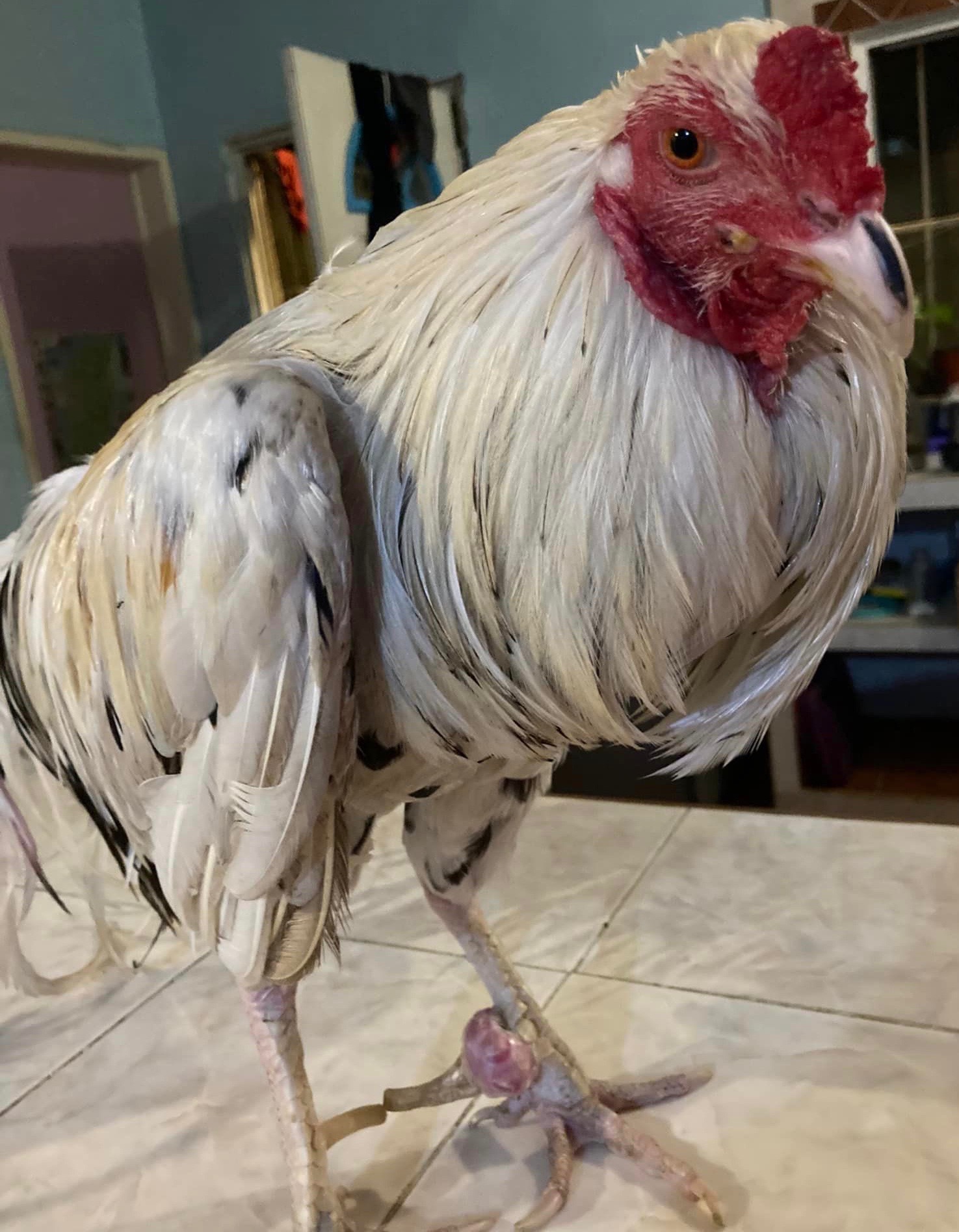


Dr Bowes: I think that was caused by an injury to the area around his spur, resulting in proud flesh: an exuberant granulation of tissue that is pink, lumpy, with a blood supply but no nerves. It should have been treated when it was more manageable but you could use hydrocortisone cream 1% or Proud Flesh ointment topically. A vet could debride the area.
Tapeworms
Bitchin’ Chickens: I remembered a photo that Dr Bowes and I looked at recently in which tapeworms appeared to look like large sesame seed segments. I asked if this was also a tapeworm. Unfortunately I didn’t have information as to whether this came out in poop or not.

Dr Bowes: We can assume they are tapeworm chains, but what is the yellow stuff that appears like egg material? There are hundreds of species of tapeworms that can look quite different.
Abscess
This is a 5-week-old chick that and acts completely normal: eating/drinking fine, and is active. We gave her an Epsom salt soak and sprayed with Vetericyn. This is the third chick we’ve had serious problems with from this hatch (bought 18 hatching eggs from a local). – Amanda Hockett

Dr Bowes: It’s interesting that there are new feathers emerging adjacent to a bald area. I think this is a nasty abscess and would treat as a wound by cleaning and debriding it. If it continues to get bigger after treatment, then I would suspect squamous cell carcinoma.
Well that wraps up another edition of Show & Tell With Bitchin’ Chickens and Dr Bowes. I hope that it’s been a learning experience for you.
If you’d like help with a case drop me a line using the ‘contact’ button on my home page. Remember to wear gloves, take good close up photos from several angles and supply us with plenty of information (e.g. timelines, symptoms, medications, general flock health, etc) so we’re able to more accurately pinpoint what’s going on.
Thanks again to Dr Vicki Bowes for her willingness to share her wealth of knowledge and experience to build capacity and skills in small flock keepers.
 Bitchin' Chickens
The proud flesh entry is very interesting to me. My human teenaged child tried to squeeze a blemish and ended up growing a very large (size of a strawberry) granulomata on his face in the following two days. Dr. Bowes’ description of the roosters proud flesh is identical to what my son’s doctor explained, with it having a blood supply but no nerves. She said she could surgically remove it, but it would likely come back, or we could use some prescription cream on it, which would take “awhile”. This thing was on his face, it bled all the time, and he was in school trying to deal with it on top of everything else! Finally she said we could try just packing table salt on it several times a day. We choose that option, and it was completely shrunken and gone inside three days, never to return.
Now I wonder if salt would work quickly enough on the roo to shrink it away before the salt became toxic to the roo? Thanks for this awesome series, BTW! DC
LikeLiked by 1 person
Thanks for the story and feedback. I can ask Dr Bowes about using salt to shrink proud flesh and will update the post if I find the answer.
LikeLike