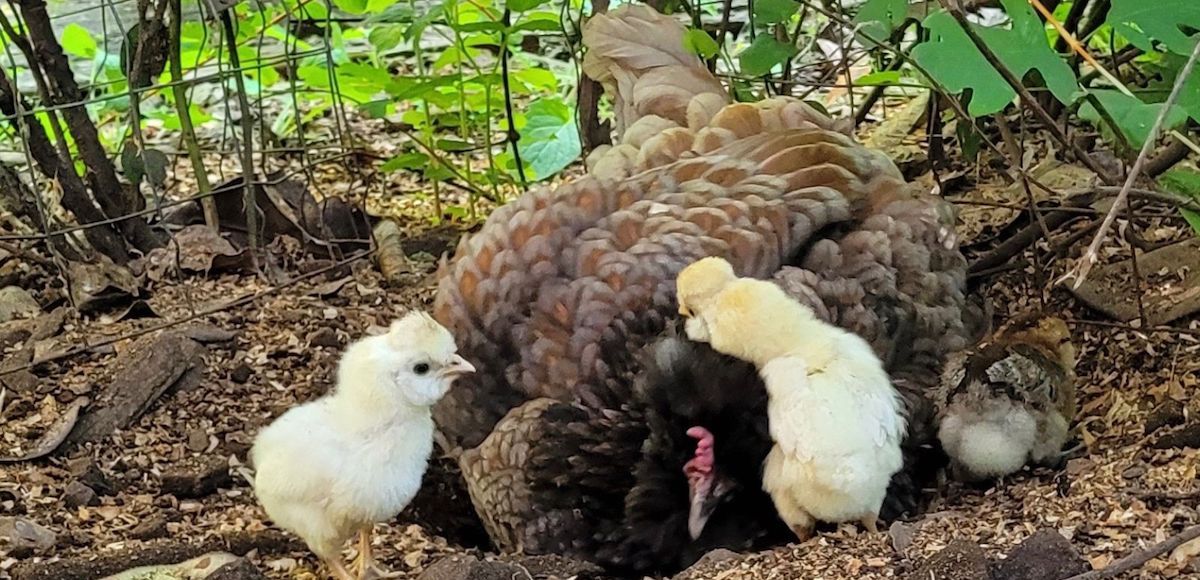

Dealing with broody hens can be a bit like a soap opera or even a Shakespearean tragicomedy, full of missteps and bad outcomes. I was hoping when I embarked on this latest foray of dealing with my flock during hatching season it would be full of happy endings and not the latter.
I’ll start out by saying that the tendency for hens to go broody is genetic and my flock clearly carries that maternal DNA. Some breeds like Silkies, Orpingtons and bantams are overrepresented in that department, but most of my girls are descended from Polish, Appenzeller Spitzhaubens and Ameraucanas. My rooster is a smooth feathered Silkie-Easter Egger cross whose only obvious Silkie traits are his walnut comb, five toes and his ability to throw the odd melanistic (black skinned) or blue eared offspring. Some of my hens are his daughters so perhaps he contributed some broody genes in a flock already rife with them.
2018 was a crazy year in which I had 17 clutches hatched by broody hens as well as receiving the chicks that hatched from eggs I donated to two school hatching programs. To say it was crazy is an understatement. I vowed never to weaken and let every hen who wanted to walk the road to maternity be allowed to. I found that with a few, consistent gentle strategies I could talk them out of it fairly easily. Of course, that was until they went broody a few weeks later.
The last couple of years I have pared things down to letting two hens sit/hatch at the same time. Carol, another chicken keeper recently offered me some purebred Isbar (pronounced Ice-bar) also known as Silverudd Blå (Blue) hatching eggs and I eagerly awaited a couple of hens who were synced in their desire to incubate them.
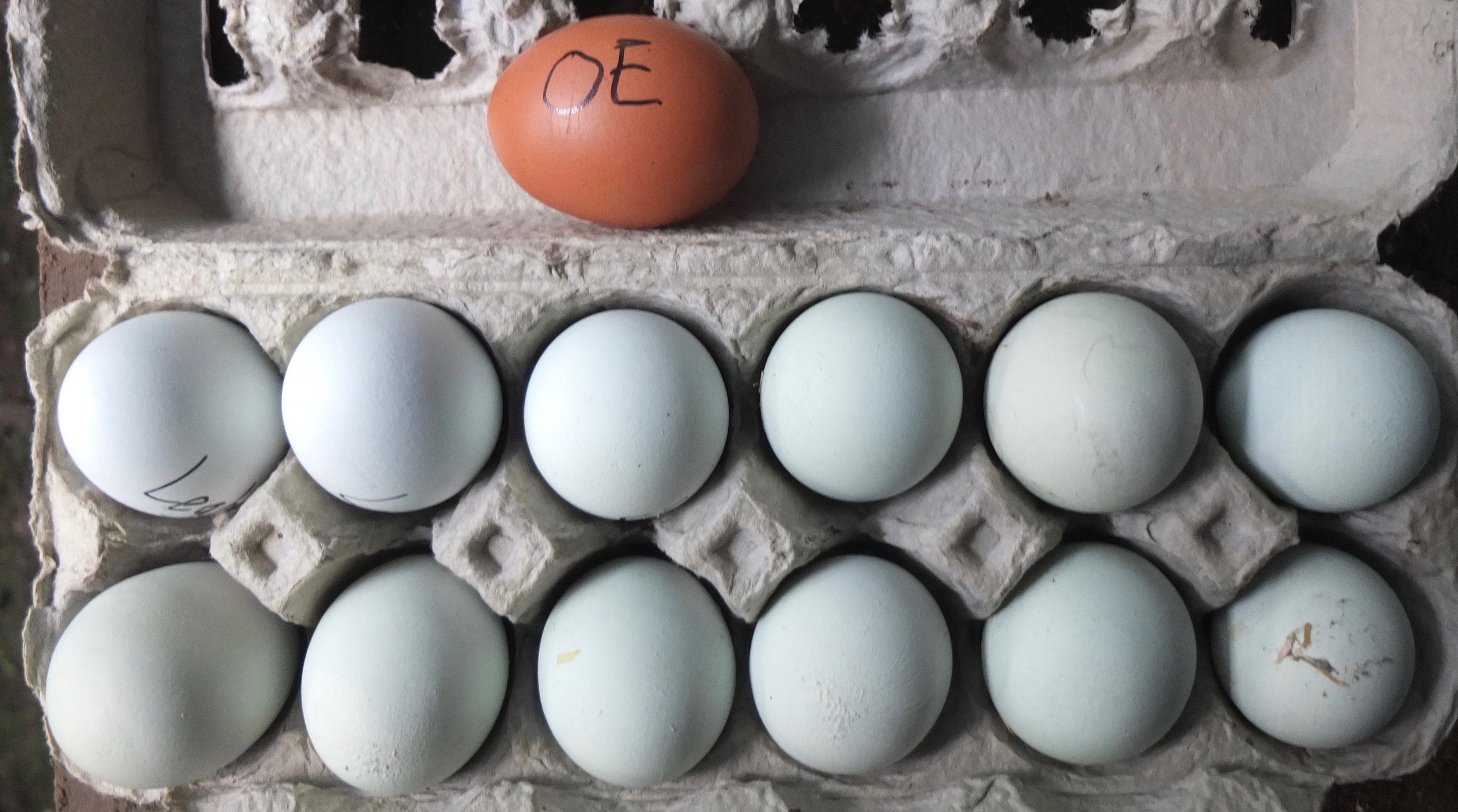
Piggy, who has gone broody before, but never had chicks, stepped up to the plate. At first she was only in the nest boxes at night, but after a couple of days was sitting 24/7. It’s important that they are at just the right stage of commitment before giving them eggs or the chances are good they won’t sit. Carol put aside eggs for me the next day: 9 purebred Isbar, 3 Isbar x Opal Legbar and one F1 (first generation) Olive Egger (Isbar x Black Copper Marans). I was excited to get some new blood and more blue egg genes in my flock. I was given the eggs for free to test out their viability/hatchability. I wanted to offer them the best chance at survival.
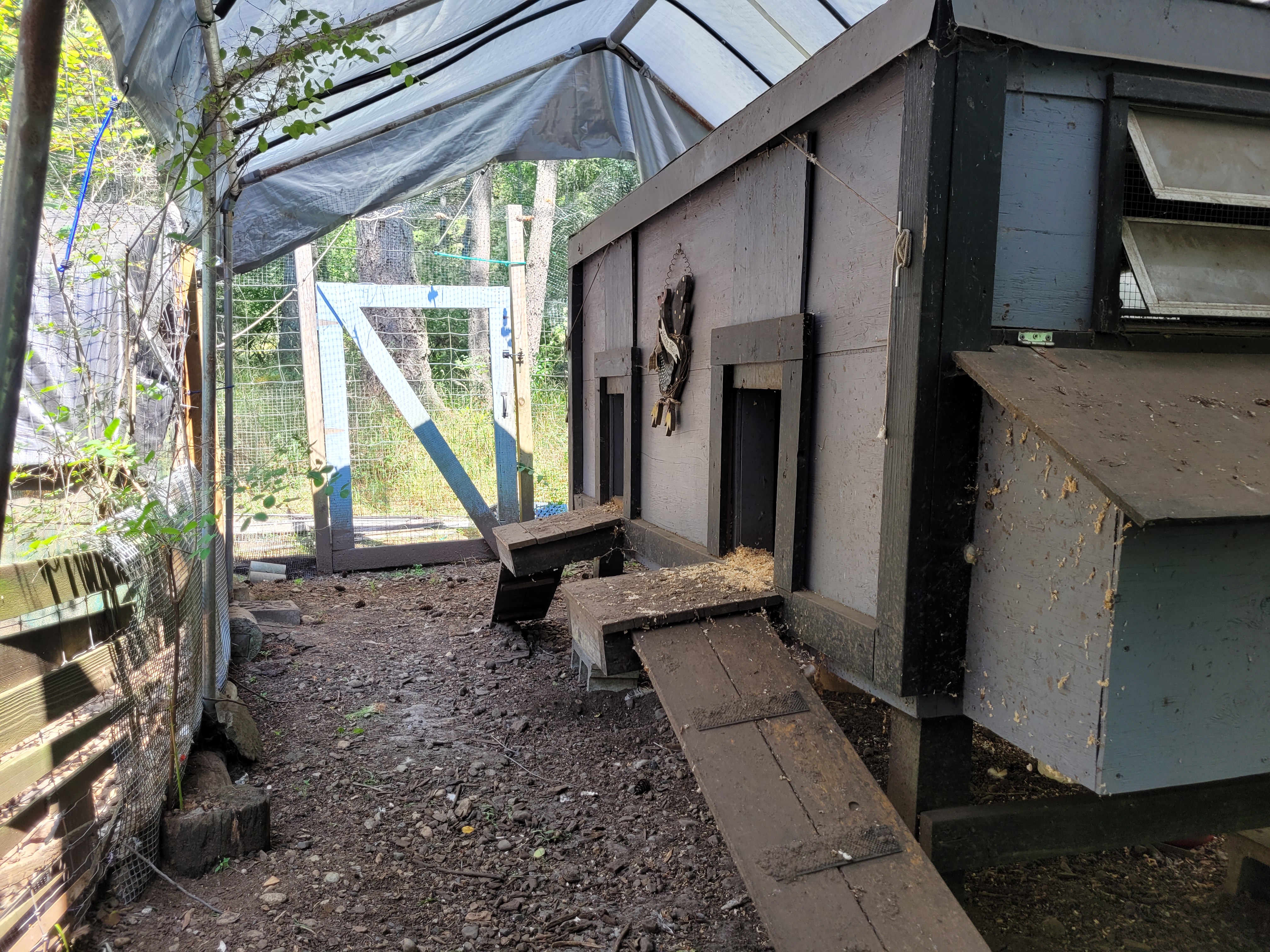
My main pen and coop adjoins a second small area that I use for broody hens. The 8’x4’x4’ coop is divided into two equal areas, each with three nest boxes, roost bars, opening window, glass door, and a pop door with a ramp down to the shared pen. I have had broody hens share one side, happy to stay in their own nest box but then it was a bit of sh*tshow once the chicks started to hatch and were claimed by the wrong hen.
I found it simplified things if each hen were in her own private maternity ward. I put the eggs in one nest box and blocked access to the other two to ensure she didn’t inadvertently end up not sitting on the eggs.
Piggy took to the eggs like a duck to water and never looked back. Unfortunately she’s on the petite side so only managed to cover 10 eggs. I put three of the Isbar eggs to one side hoping that someone else would go broody. I also started to collect some of my own blue and frizzle eggs, keeping them at optimal temperatures and turning them daily.
Over the next few days it appeared I had two more first time broody hens. I waited until they had sat for a few days and tried one on the three remaining Isbar eggs and 7 of my own. Moving hens from where they think they should be doesn’t always work. It didn’t in this case. I moved ?? back to the next coop, then the following night tried with Aurora, a six year old experienced broody. Again, she wasn’t having it. At this point, the eggs were almost a week old and close to the limit of when I think is ideal. I tried Aurora’s daughter Borealis and she took to them.
Each hen was provided with food and water making my job pretty simple. Ensure they got off the nest at least once a day to poop, eat and drink. I lifted them out but sometimes they’d head straight back for the eggs without a break. This wasn’t good for them, but it did give me the opportunity to check on the eggs.
Piggy was doing just fine, but on day 8 I found Borealis had broken one of the Isbar eggs getting yolk over most of the others. My concern was in the hot weather the yolk might be a good medium for bacteria and contaminate the remaining eggs or coating them making it difficult for any chicks to hatch. I didn’t want to start from scratch so just hoped for the best. Two days later she managed to break two more: another Isbar and one of my frizzles (the two I really wanted would hatch).
On day 21, Piggy hatched three chicks: one purebred Isbar, one F1 Olive Egger (Isbar x Black Copper Marans) and one Isbar x Opal Legbar. I candled and removed the remaining seven eggs; all were unfertilized which doesn’t bode well for that rooster’s fertility rates.
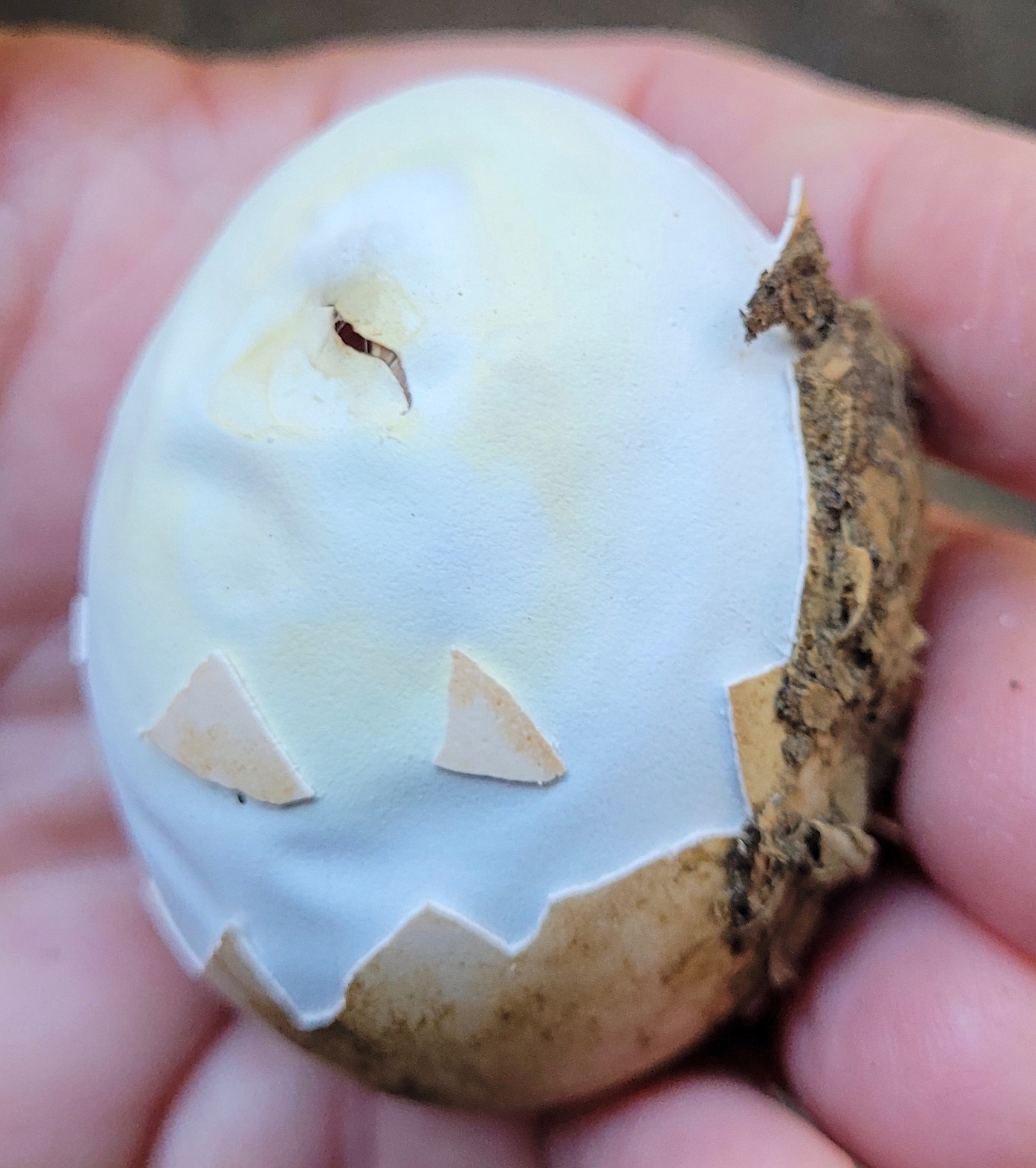
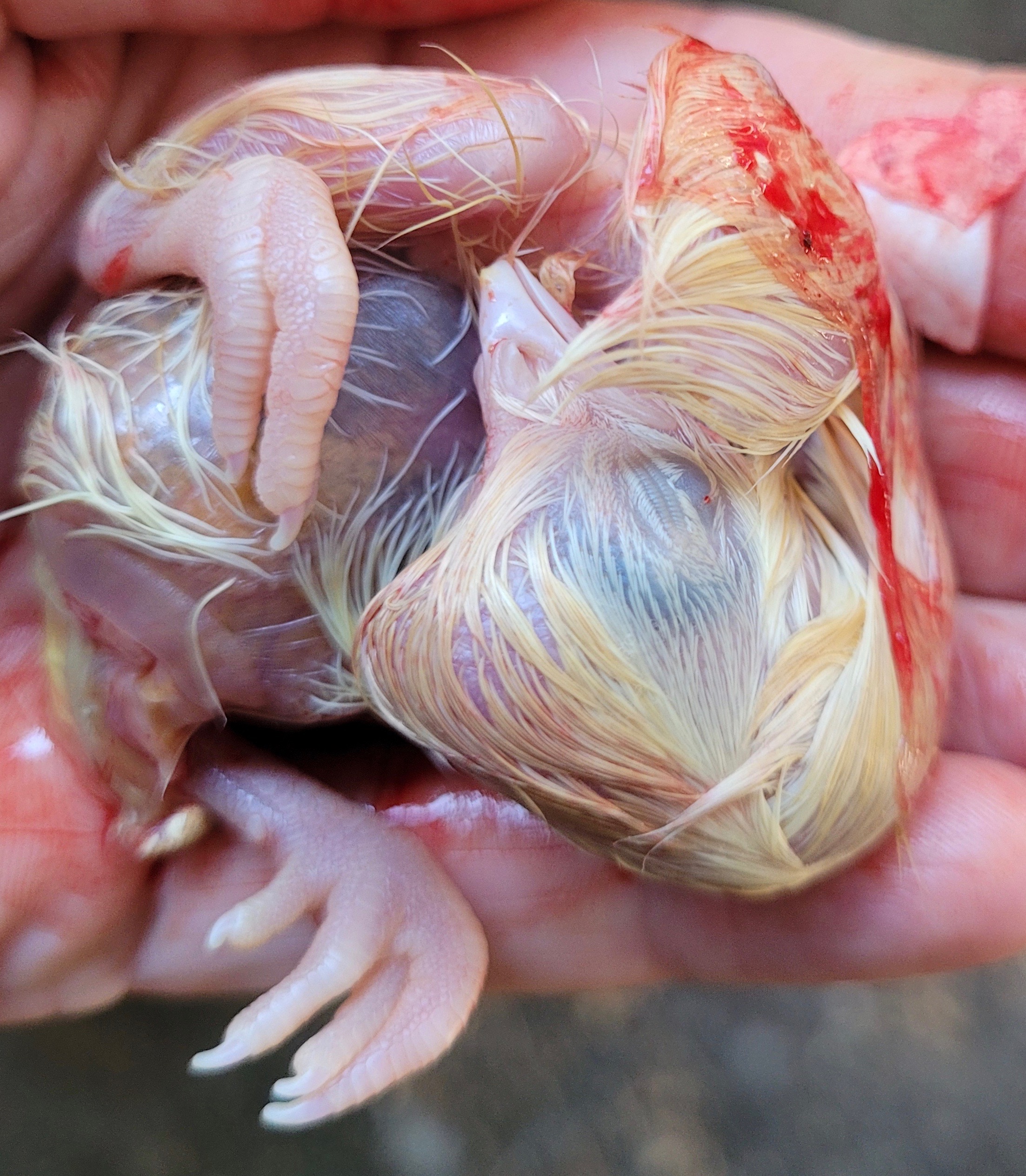
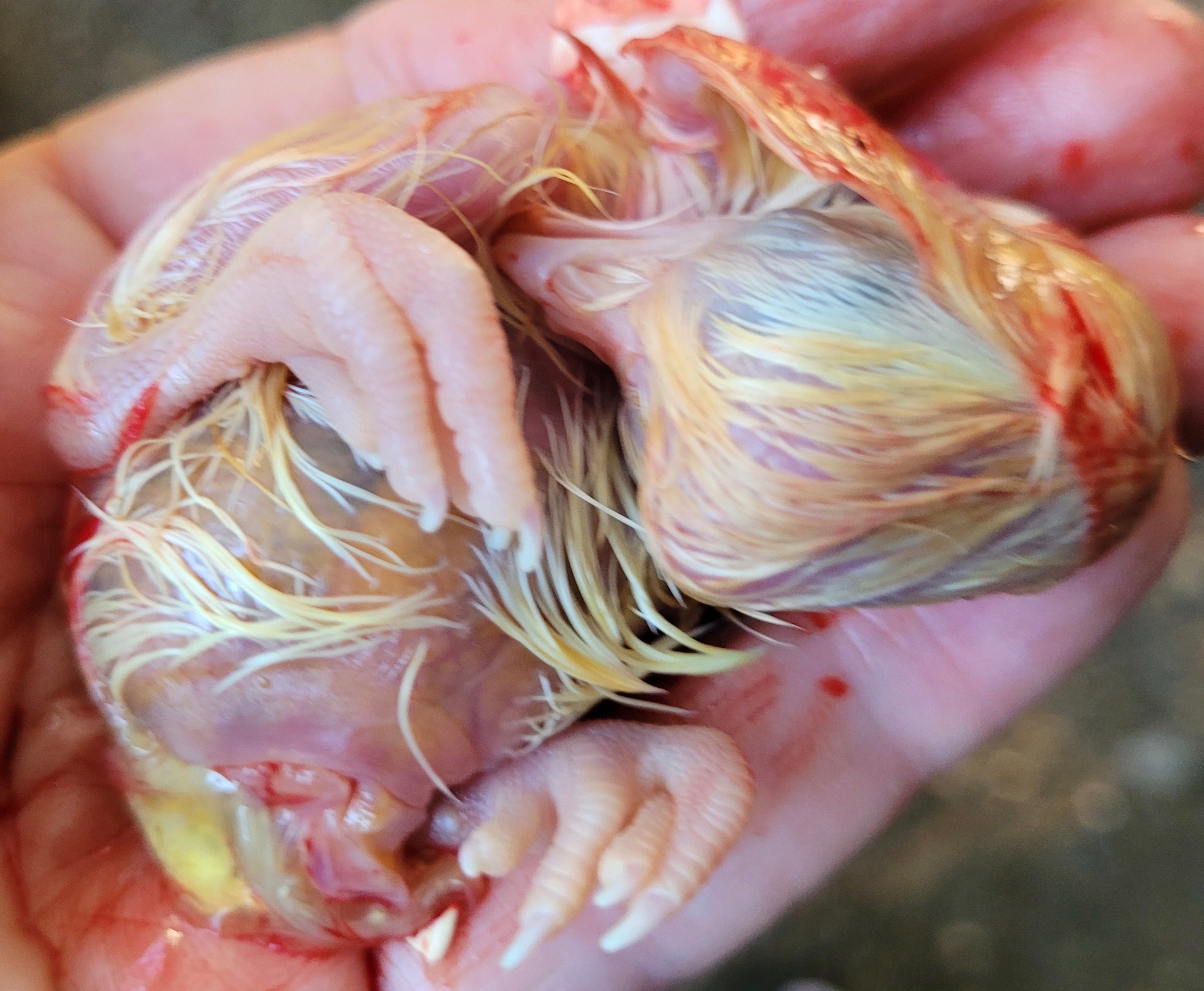
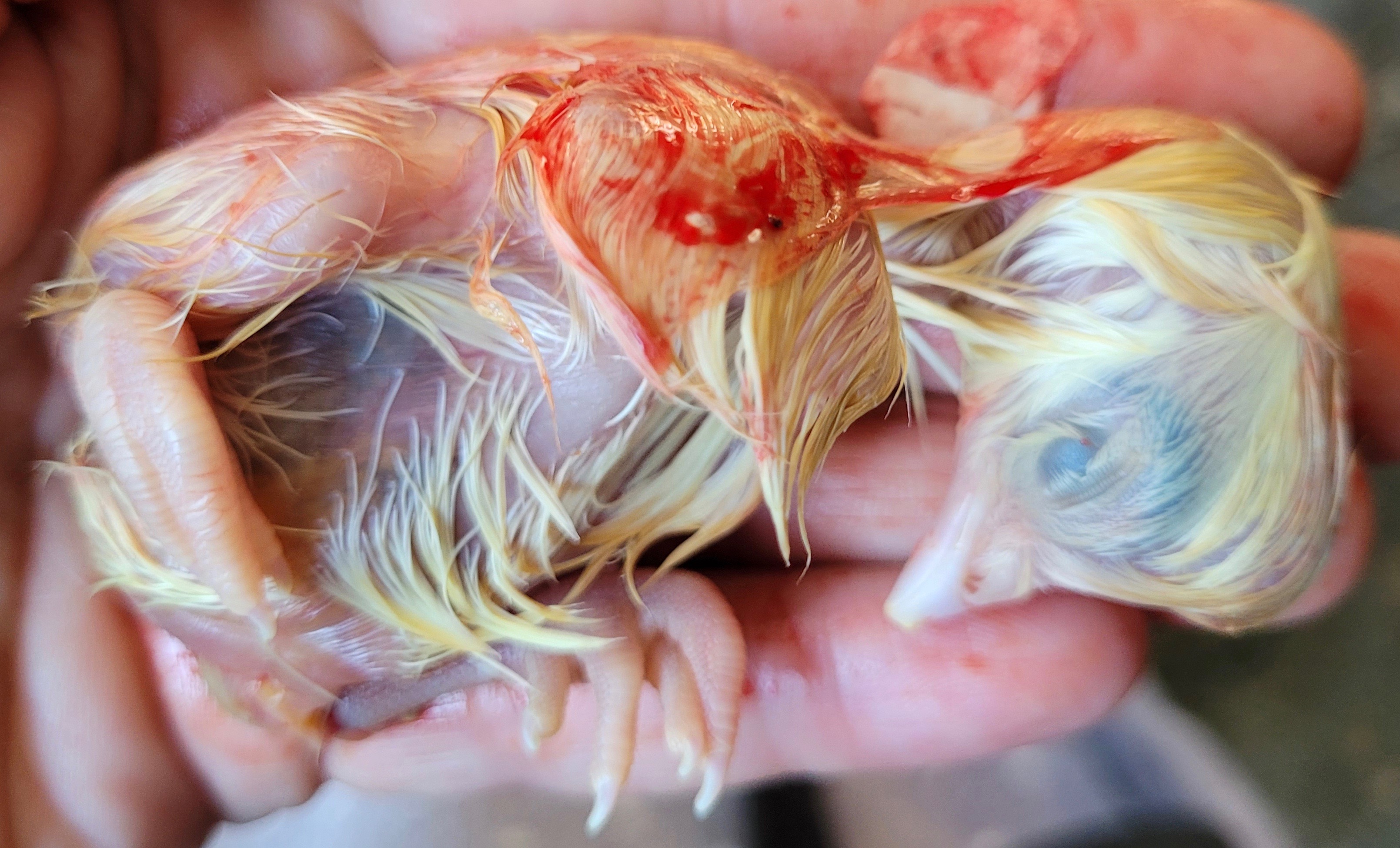
Four days later, it was Borealis’ turn: On the morning of day 21 a chick was pipping but had made zero progress in 12 hours so I opted to assist it. The white membrane was clear of veins and stuck to the chick, shrink-wrapping it, so it couldn’t get out of the egg. I slowly picked off shell, then pulled off bits of dried membrane. It’s the first time I’ve seen an unabsorbed yolk sac and there was more blood than I’ve experienced with other assisted hatches. I tucked it under my hen and hoped for the best.
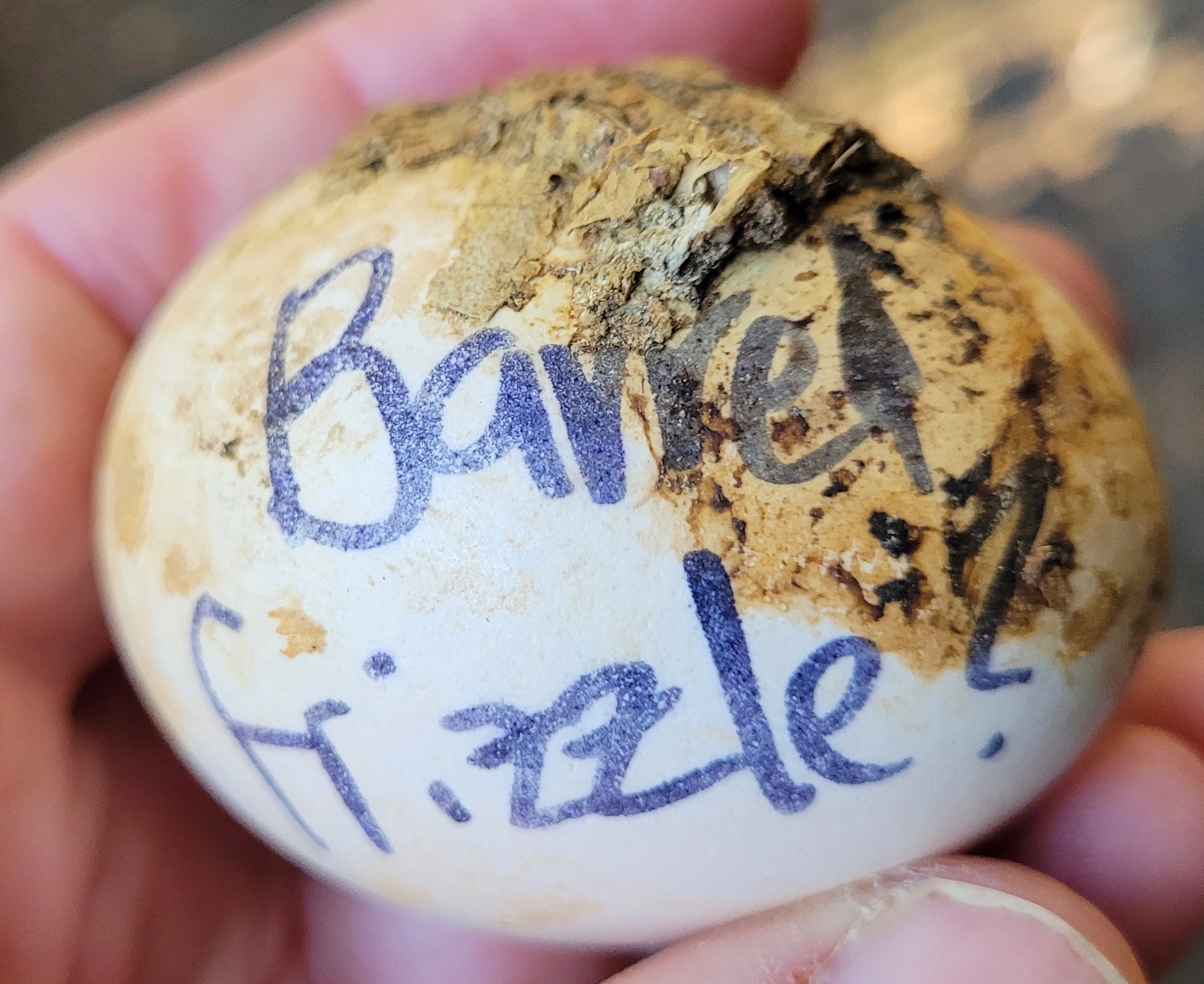
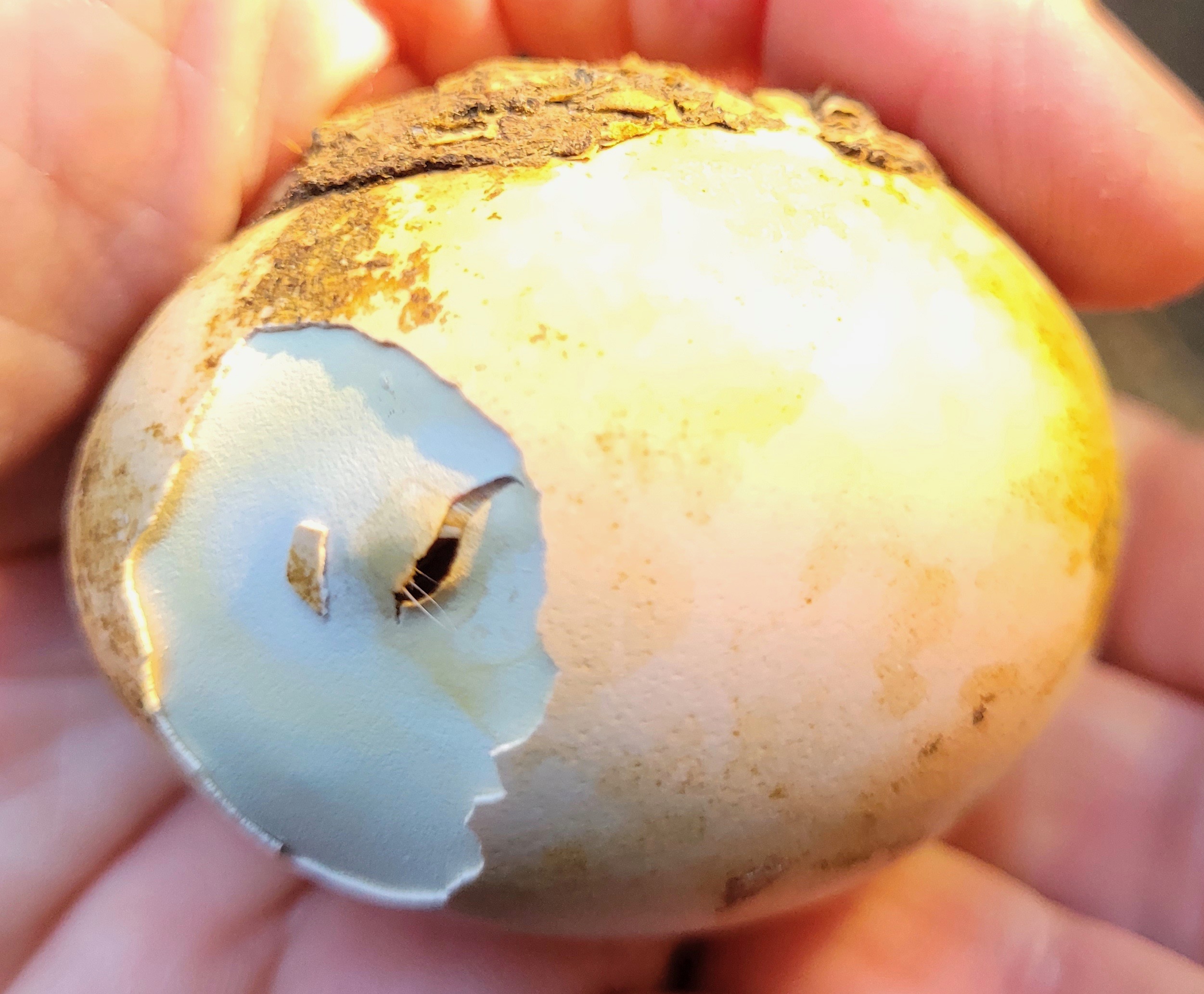
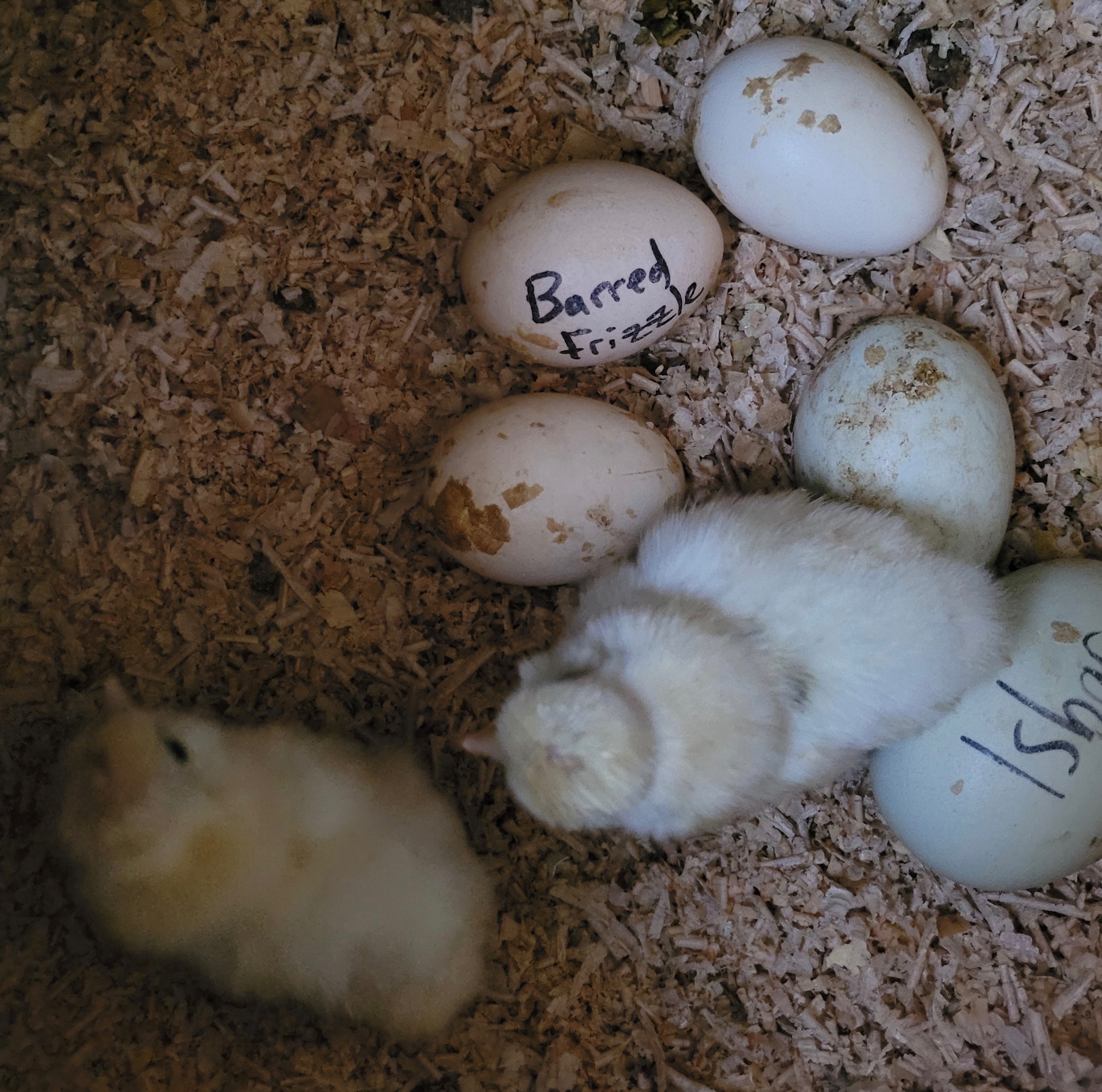
The following morning she was weak but hanging in. Two other chicks had hatched (one olive egg, one blue egg). By the evening, my little chick was up with the others.
I’m sure Borealis was happy that hatch day had come and gone as she was feeling quite thin and I was concerned that she’d lost weight.
Two days later I cracked open the remaining five eggs: four were unfertilized and sadly, another of the frizzle eggs contained a fully developed chick that died before pipping.
I kept Piggy and her three chicks locked in the coop until I was home to supervise their navigation of the ramp. At ten days old they still looked pretty small and vulnerable but managed to get to the ground in one piece.
A few days later, I opened the coop door for Borealis and her brood. Her first impulse was to have a long dust bath. She did call intermittently for the chicks to join her, but they couldn’t figure out how to get out of the coop and down the ramp.
Piggy was so distressed by their cries she went into the coop to see what was going on. She fed them some snacks and tried to lead them out of the coop, but they decided to wait for their mum. Borealis clucked a bit from the ground, which encouraged them to jump, rather than walk down the ramp. I was worried, but they all landed okay.
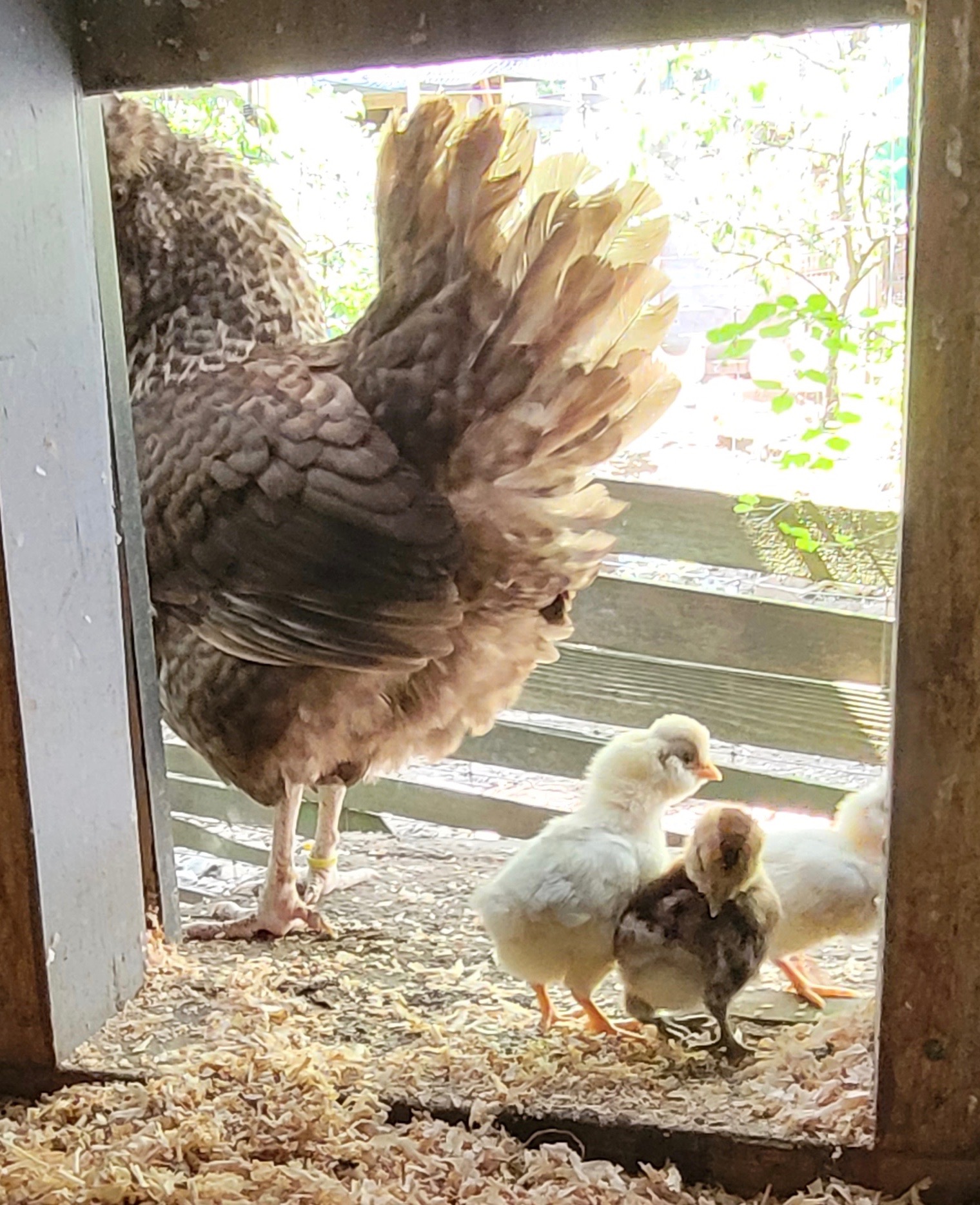
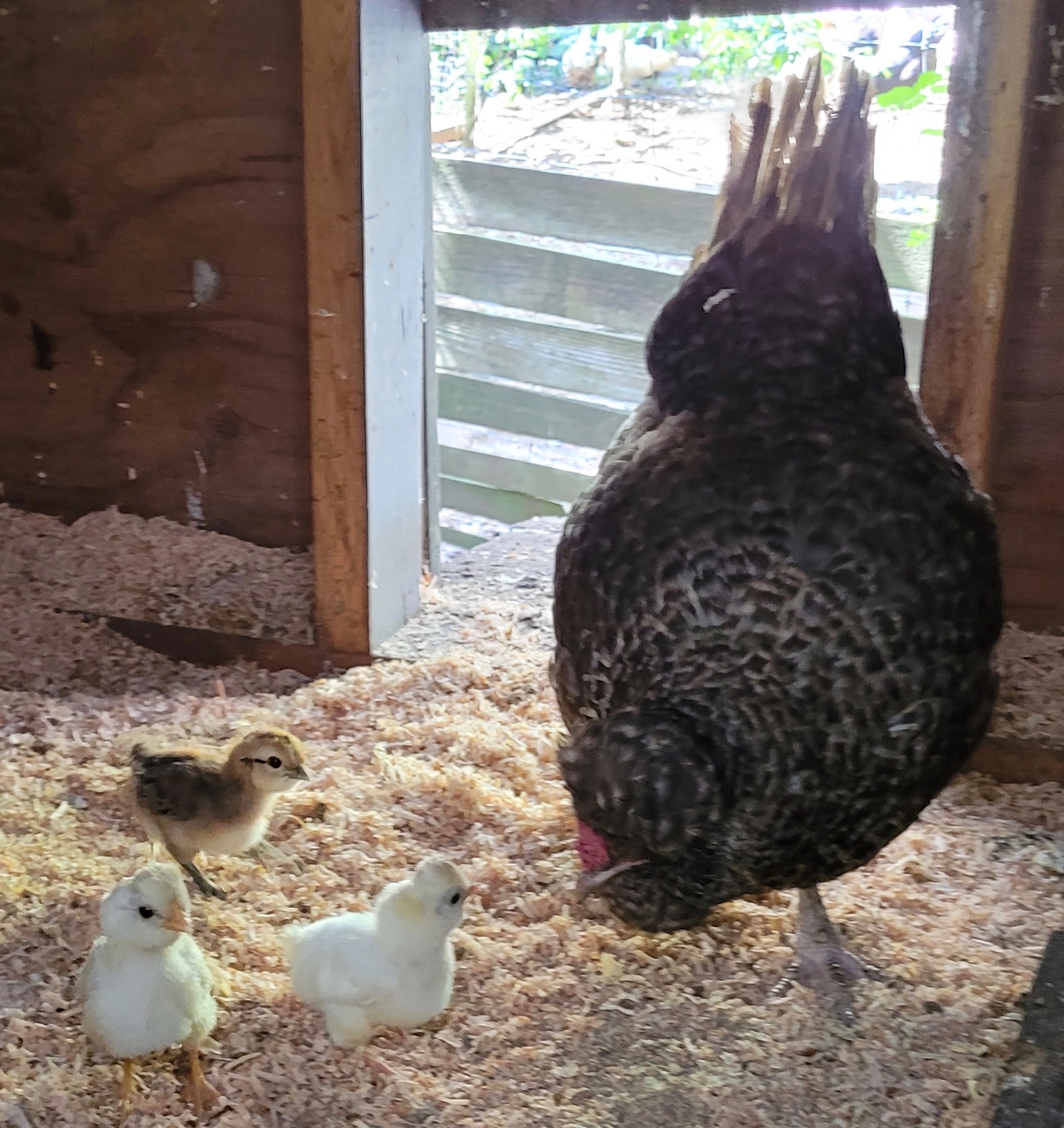
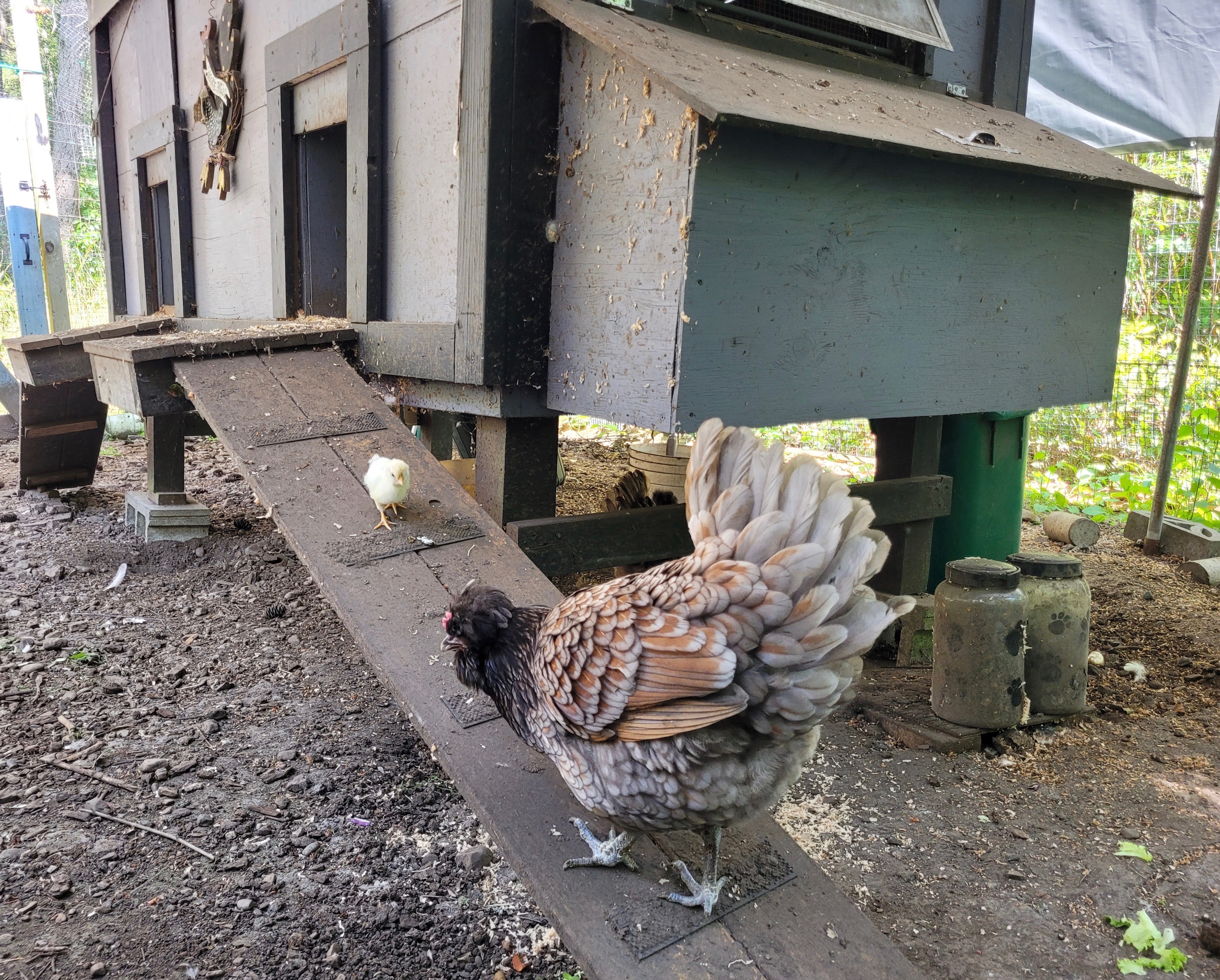
There was a bit of a standoff between the two hens, but it all seemed to work out. I have two food/water stations and they have loads of space (450 square feet) to hang out. At bedtime, Piggy and her chicks went into the wrong side of the coop so I had to nab Borealis and her chicks who were probably confused about where they should go.
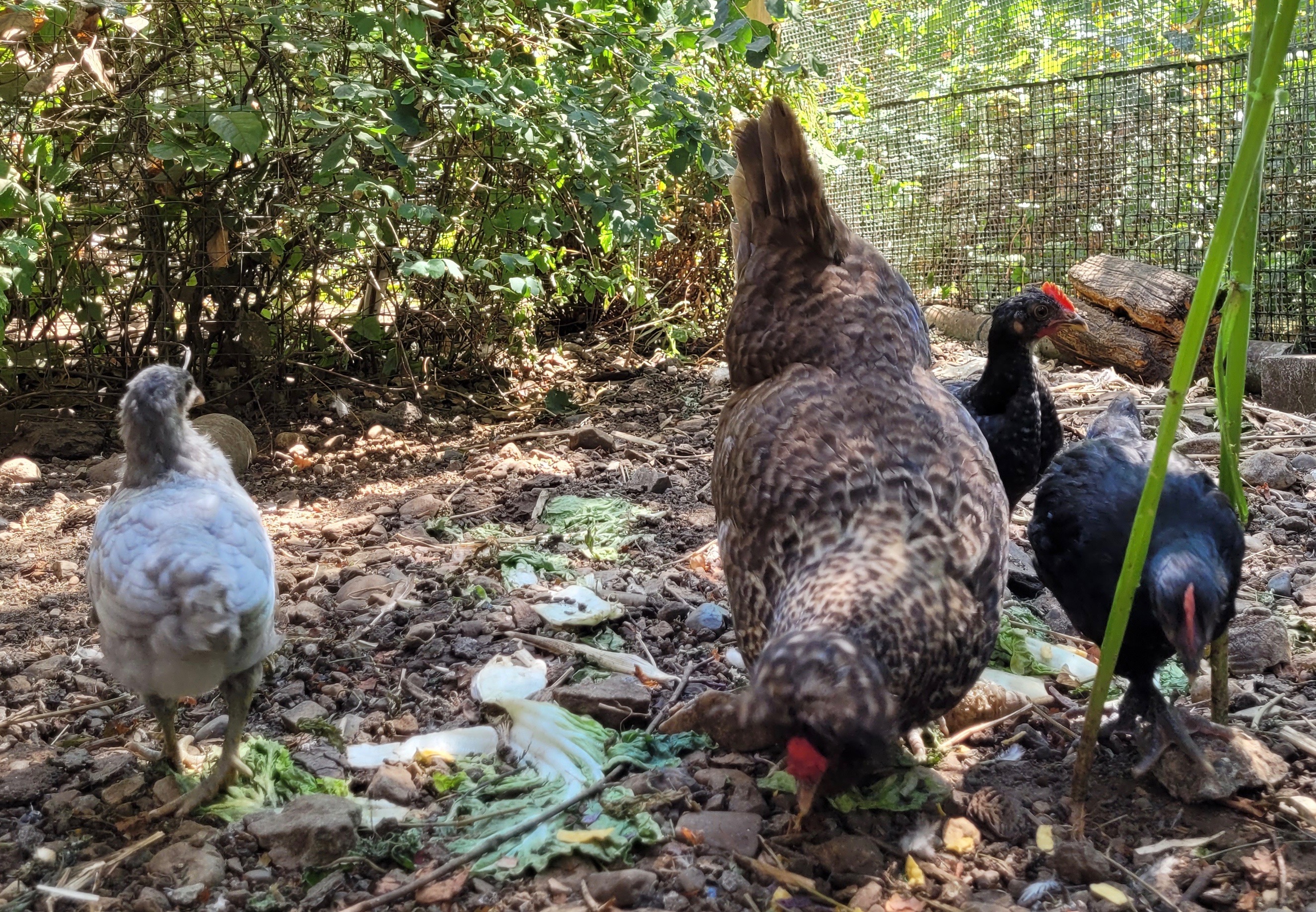
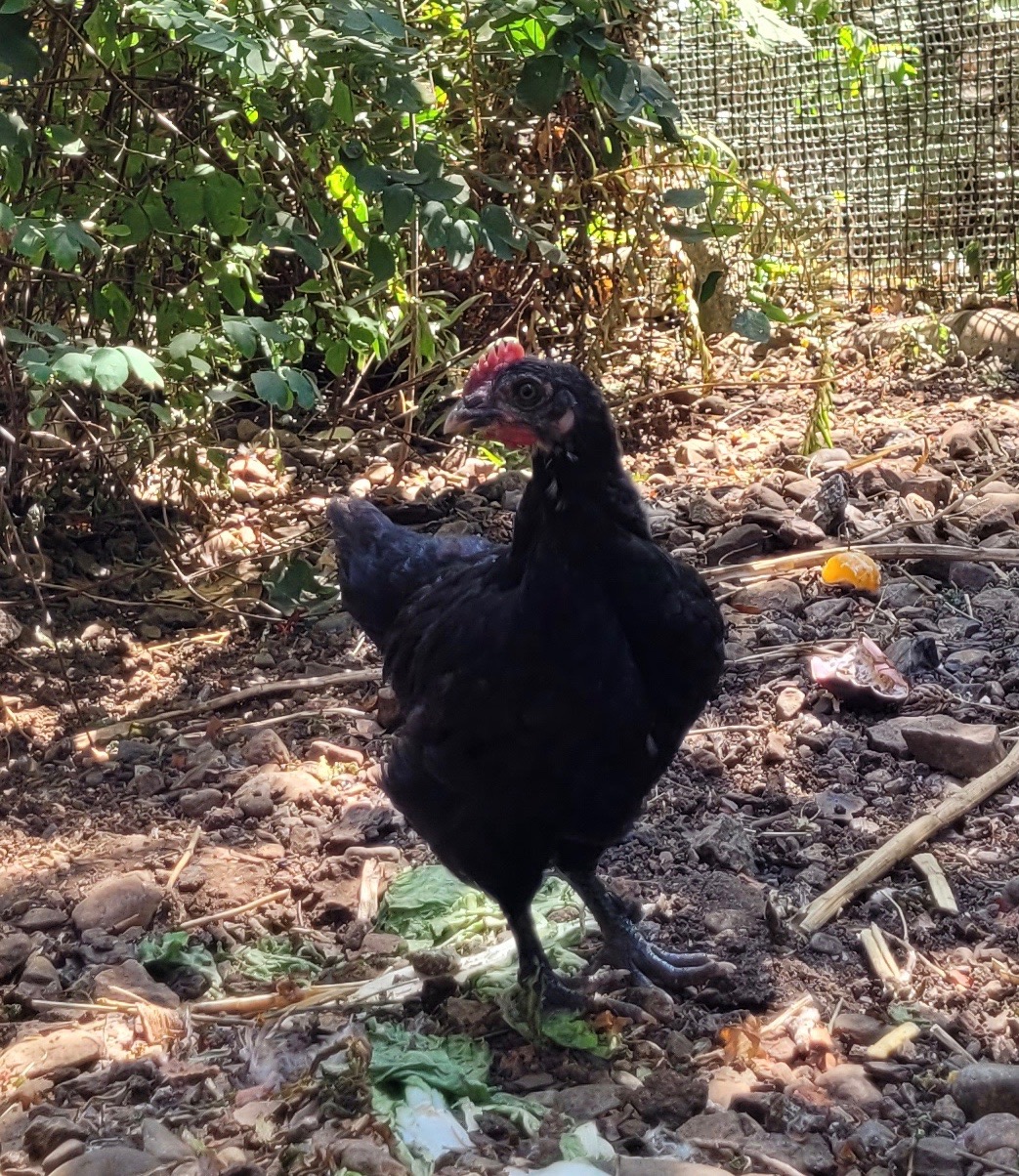
The next few weeks did play out like a bit of a comedy with a hint of something darker. Piggy, it turns out, could be named Bossy. She claimed everything for her own chicks. If Borealis called her chicks to food, Piggy rushed over and pushed them off. Same with water or sunny spots to lie in or which side of the coop to go back to at night. Borealis was not budging from the side where she’d been sitting on eggs, but Piggy wanted to be there too – sometimes. She alternated which side to sleep in, but most nights they were in the same side in two adjacent nest boxes.
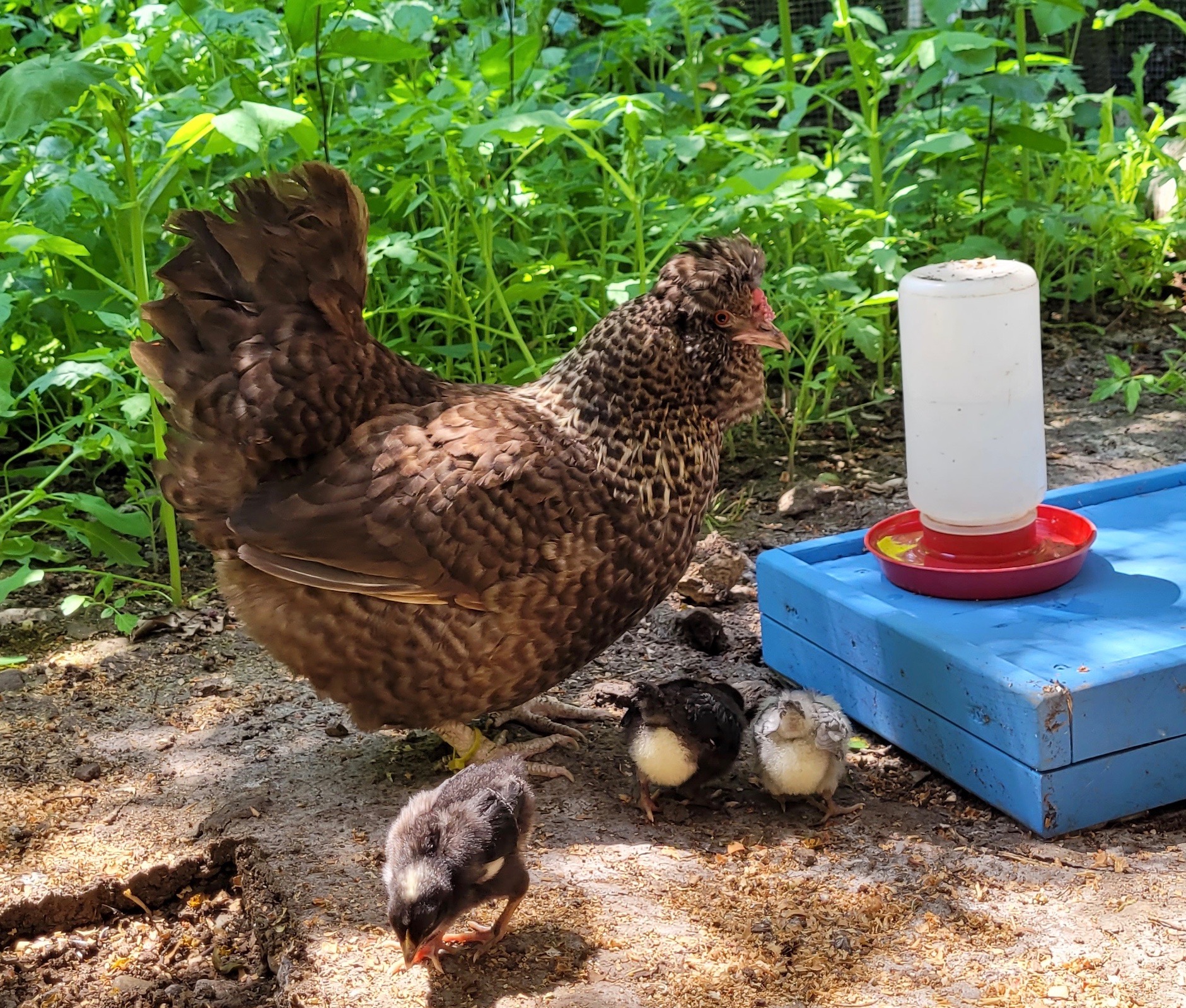

Piggy decided which one was her favourite and claimed it for her own. I was a tad nervous she might harm the other hen’s chicks, but there was no real malice or hint of violence. She just wanted to provide her kids with the best and wasn’t interested in sharing.
That’s unfortunate, as I have had hens end up in the same crate with all the chicks acting like one big happy family.
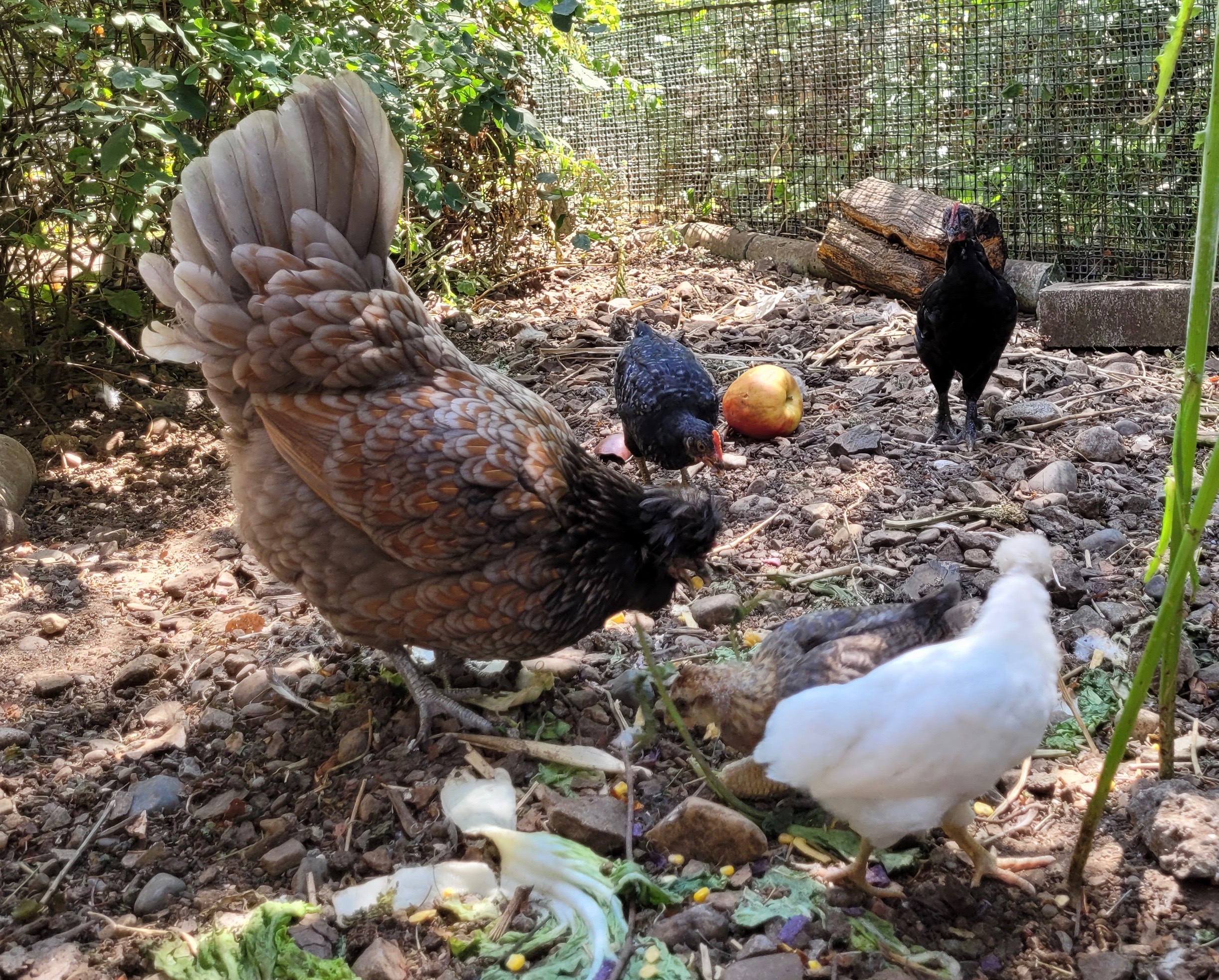
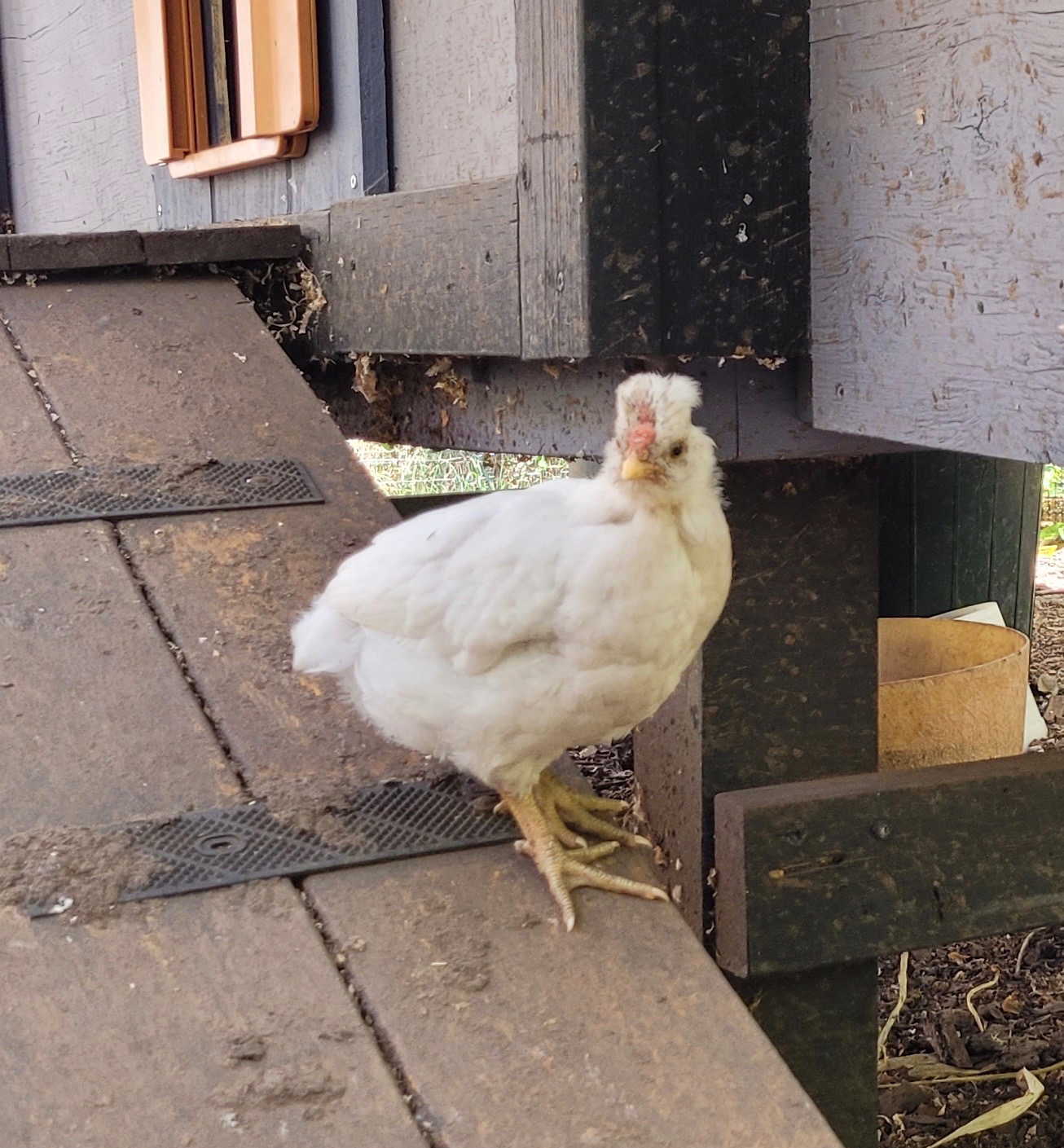
I was hoping that Piggy would be done with her chicks first as I worried if not, Borealis’ chicks wouldn’t be protected. When her chicks were six weeks to the day she started laying. The next day she laid again and was restless at night and avoiding wanting going into the coop. I rustled the little family in. Piggy cleared signaled to her chicks that she was done. One was up on the roost bar and two were in the middle nest box between the two hens. Once it was dark I returned Piggy to the main coop.
The following night Borealis and her chicks were settled in the coop and Piggy’s chicks were outside, refusing to go in. My pen is large enough with some shrubs for cover so that it would panic them if I tried to net them. I went out every twenty minutes hoping they’d go in on their own and if not, I would pick them up in the dark and move them in. After going out three or four times I was relieved to see they made it in safely before the automatic door closed.
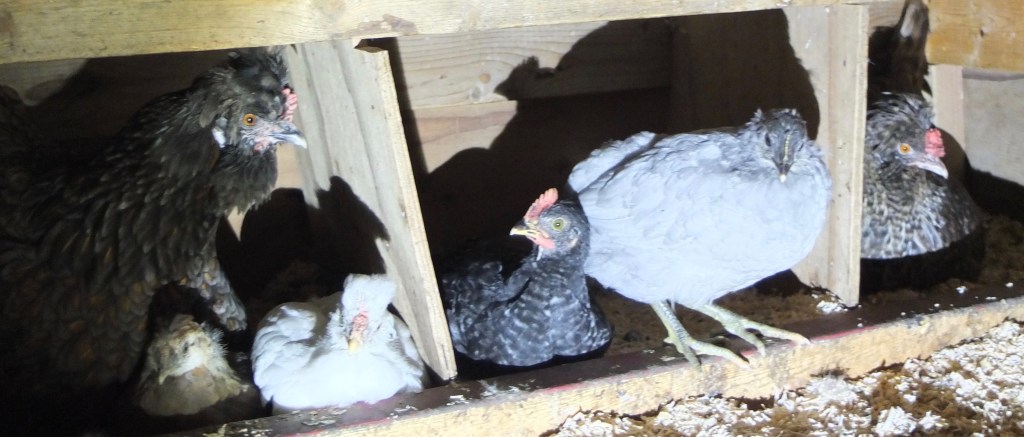

That night one of the cockerels was with Borealis and Piggy’s other two chicks were cuddled up with their cousins.
When her chicks were seven weeks old Borealis headed back to the main coop and over the next few days the two hatches managed to form their own little flock.
“From broody hens to bold opinions — cluck yeah, we’ve got it all.”
 Bitchin' Chickens
Congratulations!
I waited all summer for a hen to go broody like they did last year before I had a rooster. No dice now that I have an amiable rooster!
LikeLiked by 1 person