
For more than two years my mentor, Dr Vicki Bowes, avian vet/pathologist and I have been meeting up to look at cases that I collect to figure out a diagnosis and treatment plan, if possible. She’s alternately called these sessions ‘Show And Tell’ or ‘Best Guess’. Recently she invited me over for what she termed ‘Gore-fest’ which was fitting as I’ve endeavored to find some more interesting and challenging cases for her. It’s especially satisfying if I can come up with conditions she’s never seen before.
We’ve worked on well over 150 cases and have definitely come across some oddities before, but I thought it would be interesting to dedicate several posts specifically on the weird stuff that happens to chickens.
Feather Issues
No Feathers On One Side (photo credit: Mitch Hummel)

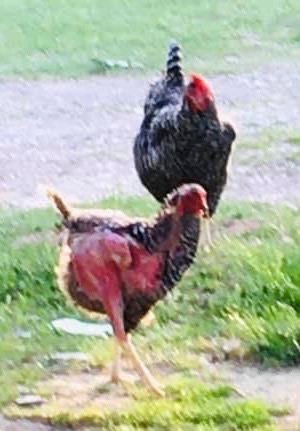

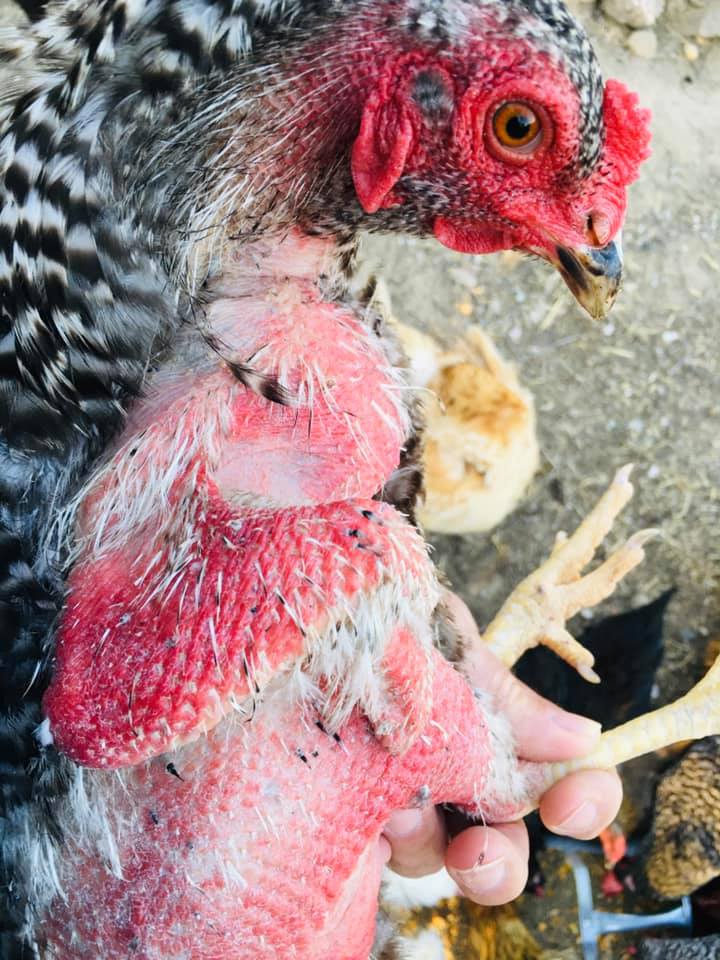
Dr Bowes: I’ve never seen this condition before. It would be important to know if she ever had feathers on that side. How long has she been this way? Any other issues? The feathers look like they are trying to grow. Because they are missing in such a large area it is not an issue of pecking but maybe developmental (i.e. something wrong with the feather follicles). The red skin is due to exposure to the sun.
Abnormal Feather Structures


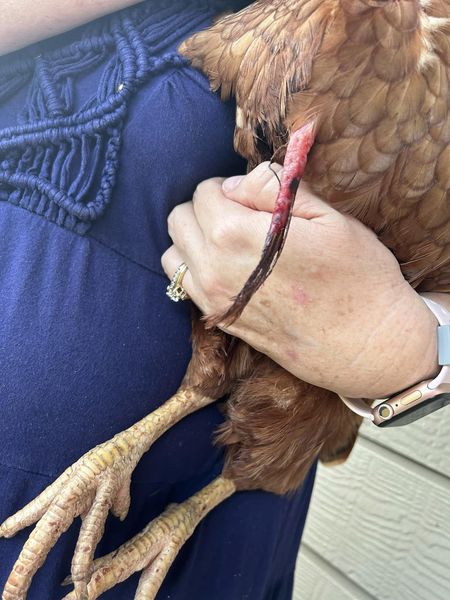
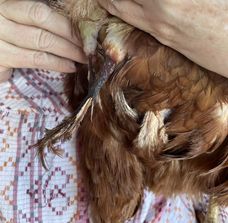
She had been out all day and came back to the coop looking like this. It was soft like an intestine. She was eating, drinking, and didn’t seem to be in pain. The next day it had turned black and necrotic. She ate breakfast, drank water and was out free ranging with the other chickens acting like nothing was wrong. Later that day another one emerged and also turned black. It truly looks like a pulled feather. What is it and what can I do? – Tammy Anne
Dr Bowes: The feathers look normal. I would examine the hen to see if there are additional tubular structures or other abnormalities. There is a form of feather follicle cysts in which one follicle can generate multiple feathers, which might explain the number of sites affected here. My concern is that the protruberances have become gangrenous which can introduce toxins into the body. I would take her to a vet who can biopsy them.
Bitchin’ Chickens: Just after Dr Bowes and I looked at this case the owner took her hen to a vet who thought the condition involved abnormal feather growth. By then the skin structures had fallen off of their own accord. She was treated with Betadine and monitored for flystrike.
Featherless (photo credit: Jade Butler)
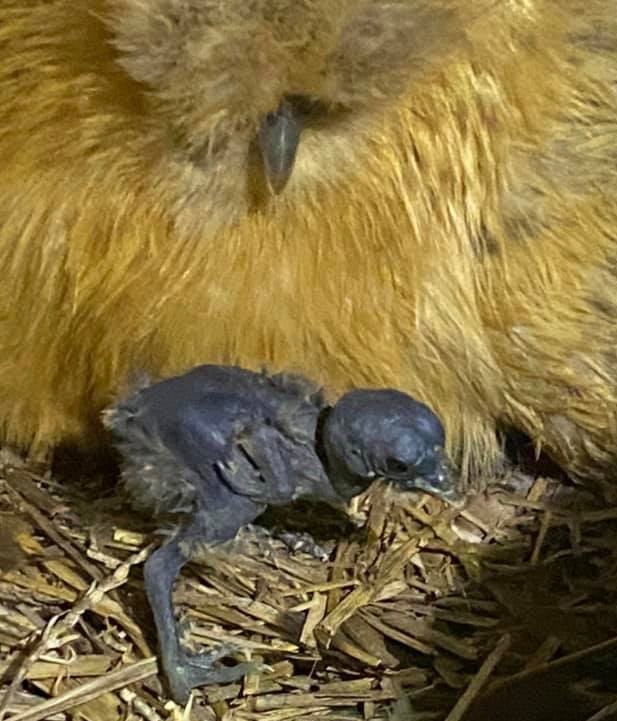
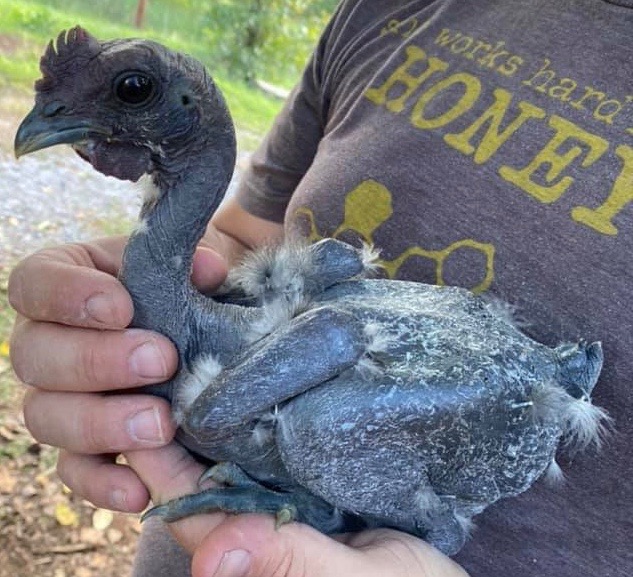
Dr Bowes: This is a genetic anomaly so don’t breed this bird. My concern would be vulnerability to sunburn, but the melanin should protect it.
Clubbed Down

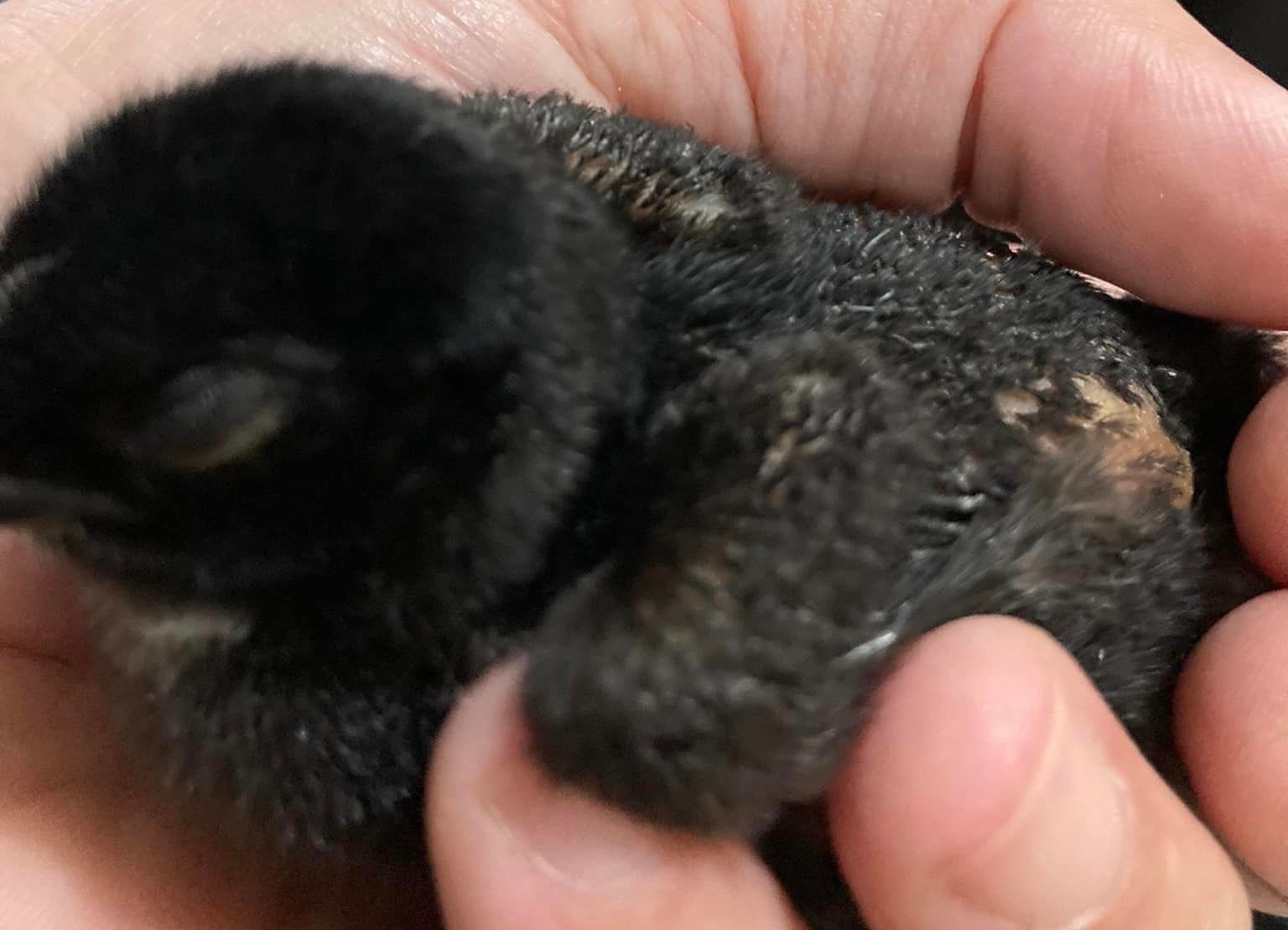
Bitchin’ Chickens: Clubbed Down is characterized by a failure of the down feather follicle to rupture the surrounding sheath, causing the feather to coil and assume the appearance of a bubble.
Dr Bowes: There is no definitive answer as to what causes clubbed down, but it may include iron or zinc deficiencies. There is a genetic link to melanistic breeds (i.e. Silkies, Ayam Cemani, Svart Hona). Once those baby feathers have molted the new feathers that grow in will appear normal.
Skull Deformity (photo credit: Jessica McElveen)


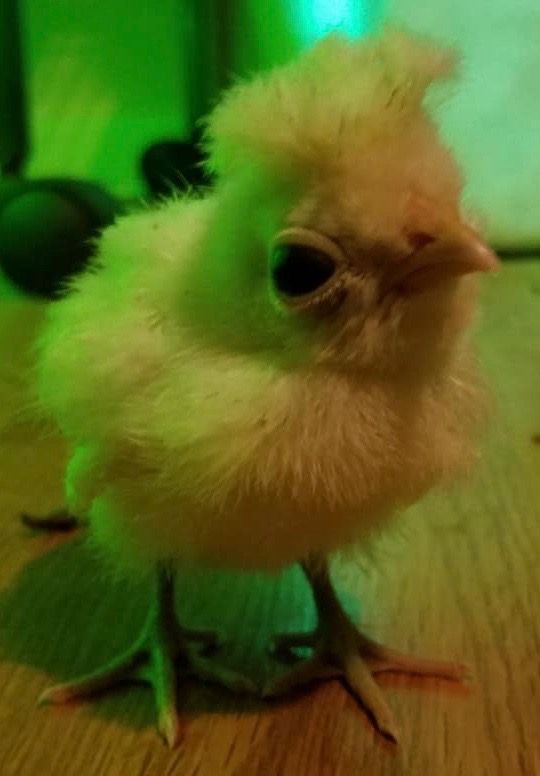

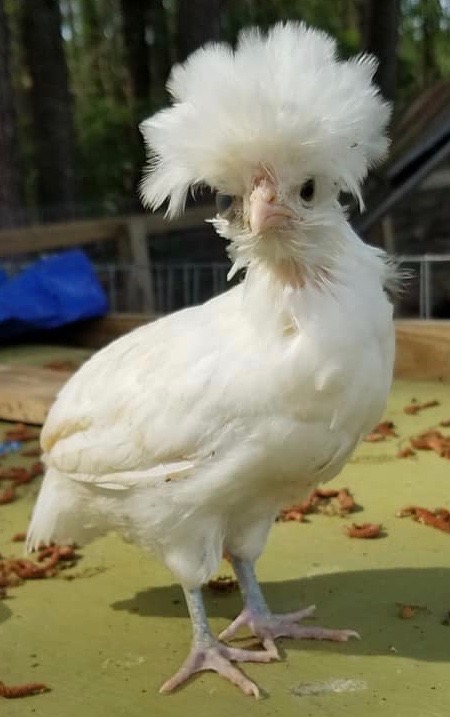
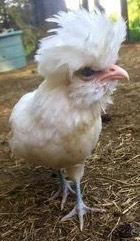
Dr Bowes: This is a congenital deformity of the skull in which the eyes are asymmetrical. It may have been a developmental issues caused by interoccular pressure due to interference of fluid circulation. It appears to be able to close the eyelid, which will protect the eyeball. I’d like to know if it has the proper anatomy, does it respond to light, is it blind, is there pain involved?
Developmental Issue
Bitchin’ Chickens: When I first showed this photo to Dr Bowes I had no idea what I was looking at. She tried to decipher the chick’s anatomy but when I got home I was still confused and brought the image back for more clarification. I would have liked to have seen the chick from various angles.
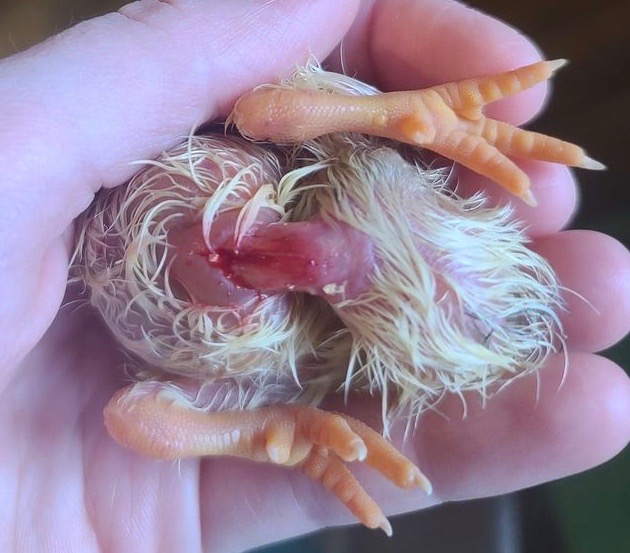
Dr Bowes: This chick moved into the correct position within the egg to pip. There appears to be a developmental issue in which the neck is attached by a band of tissue to the navel. I’ve never seen anything like it before and hope I don’t again, in future.
I’ve always been fascinated by the randomness of nature. I’m right in my element when I come across weird chicken stuff and am happy to post about different kinds of twins.
Parasitic Twins
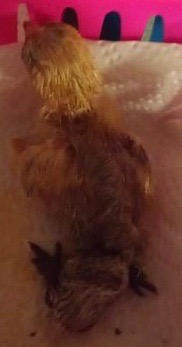
Bitchin’ Chickens: Parasitic twins occur when a twin embryo begins developing in utero, but the pair does not fully separate, and one embryo maintains dominant development at the expense of its twin. Unlike conjoined twins, one ceases development during gestation and is vestigial to a mostly fully formed, otherwise healthy individual twin. The undeveloped twin is defined as parasitic, rather than conjoined, because it is incompletely formed or wholly dependent on the body functions of the complete fetus.
This is a chick hatched by a broody hen. It’s connected to its partially formed parasitic twin via the umbilical cord, which is the latter’s source of nutrients and blood supply. Once hatched, the umbilical cord dried and the parasitic twin died and was easily removed by clipping the remnants of the cord that attached the twins together. (photo credit: Lacey Newby)


Here is another example of a chick and its parasitic twin which has detached in the latter photos (photo credit: Tammy Sylvester)

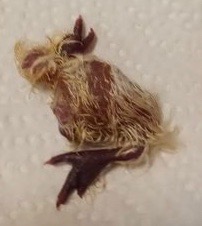
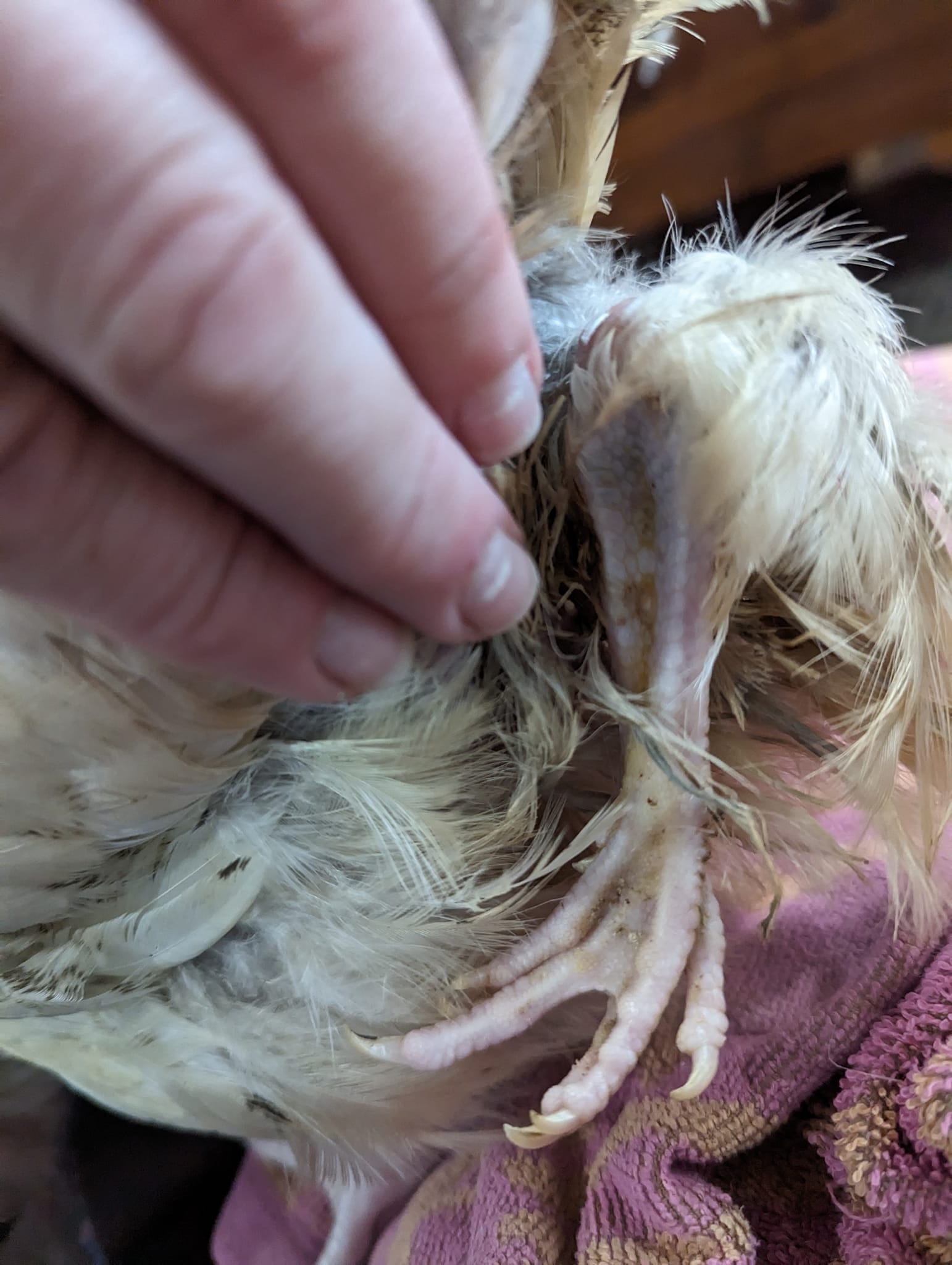
Vestigial Twin: When the first image came up in my newsfeed I was so tired it took me a moment to realize what was wrong (i.e. chicks don’t have three legs!).
It’s a form of parasitic twin in which one is partially absorbed by the other. The parasitic twin is usually so malformed that it usually only consists of legs and organs. (photo credit: Sara Darling)


That wraps up another episode of the fun and wacky stuff found in nature and maybe even in your coop. I hope these cases didn’t disappoint.
If you’ve got an interesting story you’d like to share drop me a line via the ‘contact’ button on my home page.
Once again, my appreciation goes out to Dr Bowes for indulging my passion in the weird and wonderful, and along the way learning more about chickens with the intention of passing that on to my readers.
Featured photo credit: Angela Hodges Lloyd
 Bitchin' Chickens
I have a chicken with the NO FEATHERS ON ONE SIDE ISSUE…no other issues with her, except some of her eggs are bubbled at the pointy side, but her eggs are good…is there anything I can do for her?! I feed all my girls very expensive good for them feed, plus leftovers, which are mainly organic, and treats including meal worms and grit and bird seeds…none of my other girls have this issue and all are very healthy?!?
LikeLiked by 1 person
The egg issue sounds like excess calcium. Can you send me a photo via the ‘contact’ button on my homepage?
LikeLike