
For more than last two years I’ve gotten together with Dr Vicki Bowes, avian vet/pathologist on a regular basis to pore over files in my memory stick loaded with interesting chicken health issues that I’ve collected for her expert opinion. She refers to it as ‘Show and Tell’ or ‘Best Guess’ and has done a good job at making diagnoses given the information we have at hand, usually only a short paragraph from the chicken’s owner. My job is to write them up to share with my readers as a form of skills building for chicken keepers.
Bill Injury (photo: Stephanie Richardson)

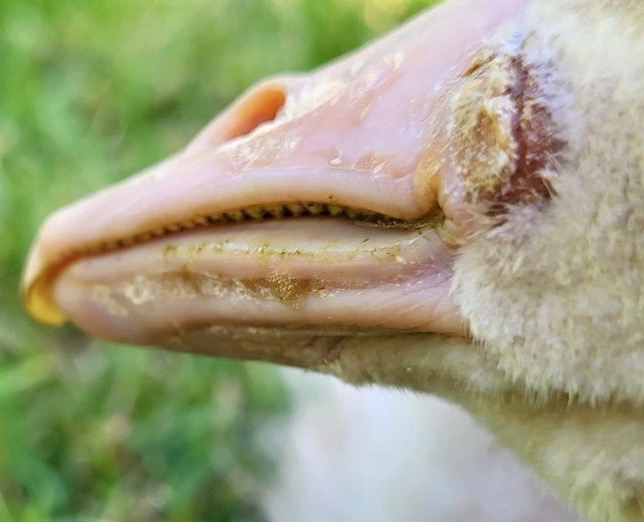
Dr Bowes: I suspect this is an injury and would clean and treat as a wound with an antibacterial wash and topical ointment.
Eye Issue
My neighbor surrendered this little hen to me yesterday because she wasn’t sure how to help it. It looks like a really bad case of wet fowl pox, a nasty upper respiratory infection, or both? Whatever is going on has clearly been a problem for a while and you can smell infection on her. I just feel so bad and want to help. She is still eating, drinking, and active. Stool also looks normal but she is very underweight.
I’m an ICU technician at an animal emergency room and brought her to work with me. We mostly see cats/dogs so I’m unsure what antibiotics to give her. She’s also only .11kg – Nicole Stites

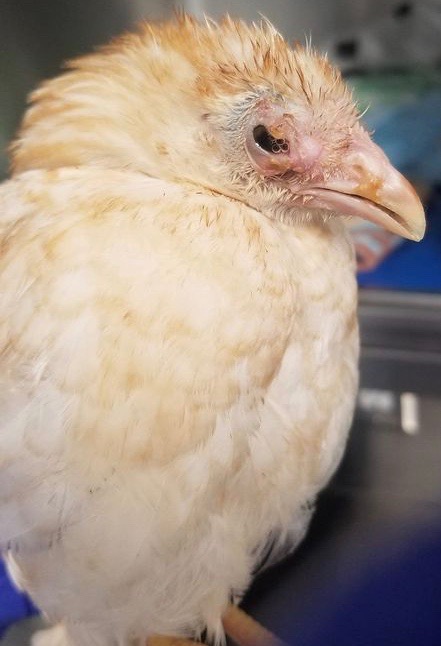
Dr Bowes: Bubbly eyes can be caused by Mycoplasma gallisepticum (MG), dust or ammonia, which block the nasal-lacrimal tear ducts. A vet could debride and clean the ulceration, and prescribe oxytetracycline or Tylan.
Fowl Cholera
This hen came to me with this swollen wattle. It hasn’t necessarily gotten any worse but it’s definitely not getting better. It’s very hard and I can’t squeeze anything out of the little hole. How should I go about treating this? – Amber Stark


Dr Bowes: This is a textbook case of Fowl Cholera (Pasturella multocida), which is often seen in the wattles. Bacteria may no longer be there, just hardened pus. Oral antibiotics do not penetrate the area. A vet would sedate the bird and remove the contents surgically.
Wasp Sting
Swollen wattles and brown, possibly bloody discharge, from mouth. Tiny wound on neck. – Nicole Phillips


Bitchin’ Chickens: On seeing this photo I asked the poster if he’d been stung by a wasp. It turns out he was, so I recommended giving him oral Benadryl.
Dr Bowes: He is drooling because he can’t swallow properly.
Turkey (photos: Enca Rose)


Dr Bowes: Treat the wound by cleaning it with an antiseptic wash and applying Polysporin.
Two sick turkeys from the same flock:
#1
- wasn’t gobbling, feathers weren’t fanned out, laying down
- mucous in mouth
- very lethargic and wouldn’t leave the coop
- seemed better the first night and was walking around the next morning
- two hrs later he was laying down breathing heavily and had more mucous in his mouth
- died an hour later
- previous to this, he was completely normal

#2
- two days later, another tom got sick
- swollen snood
- mucous coming from mouth and eyes
- heavy breathing, lethargic
- euthanized
Dr Bowes: This presents as a typical case of Mycoplasma gallisepticum (MG).
Wing Injury
Piper got hurt about month or so before passing. It started with a lump on her hip and she was limping due to what we thought was an injury. The wing issue/wound started a few days later.

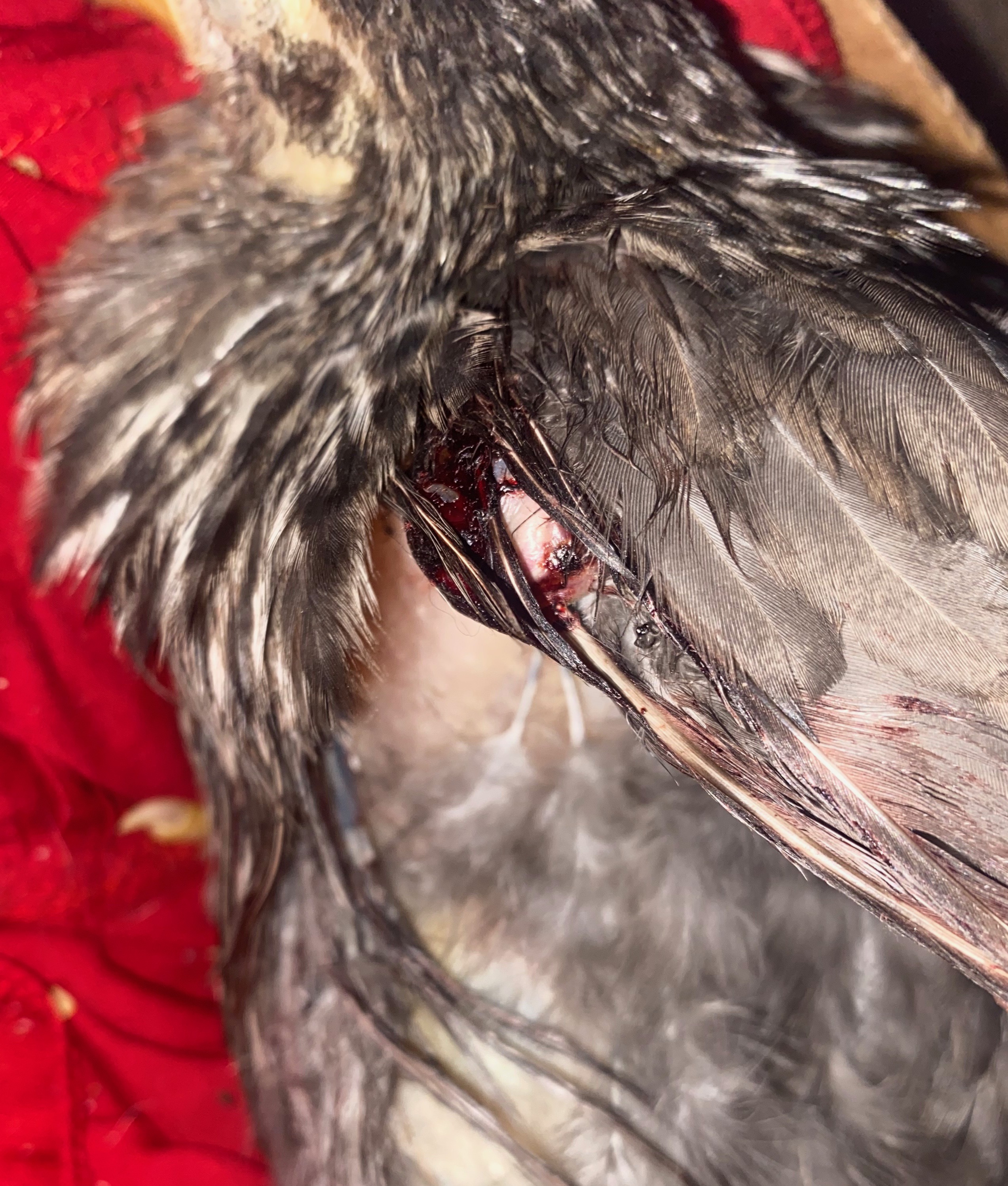

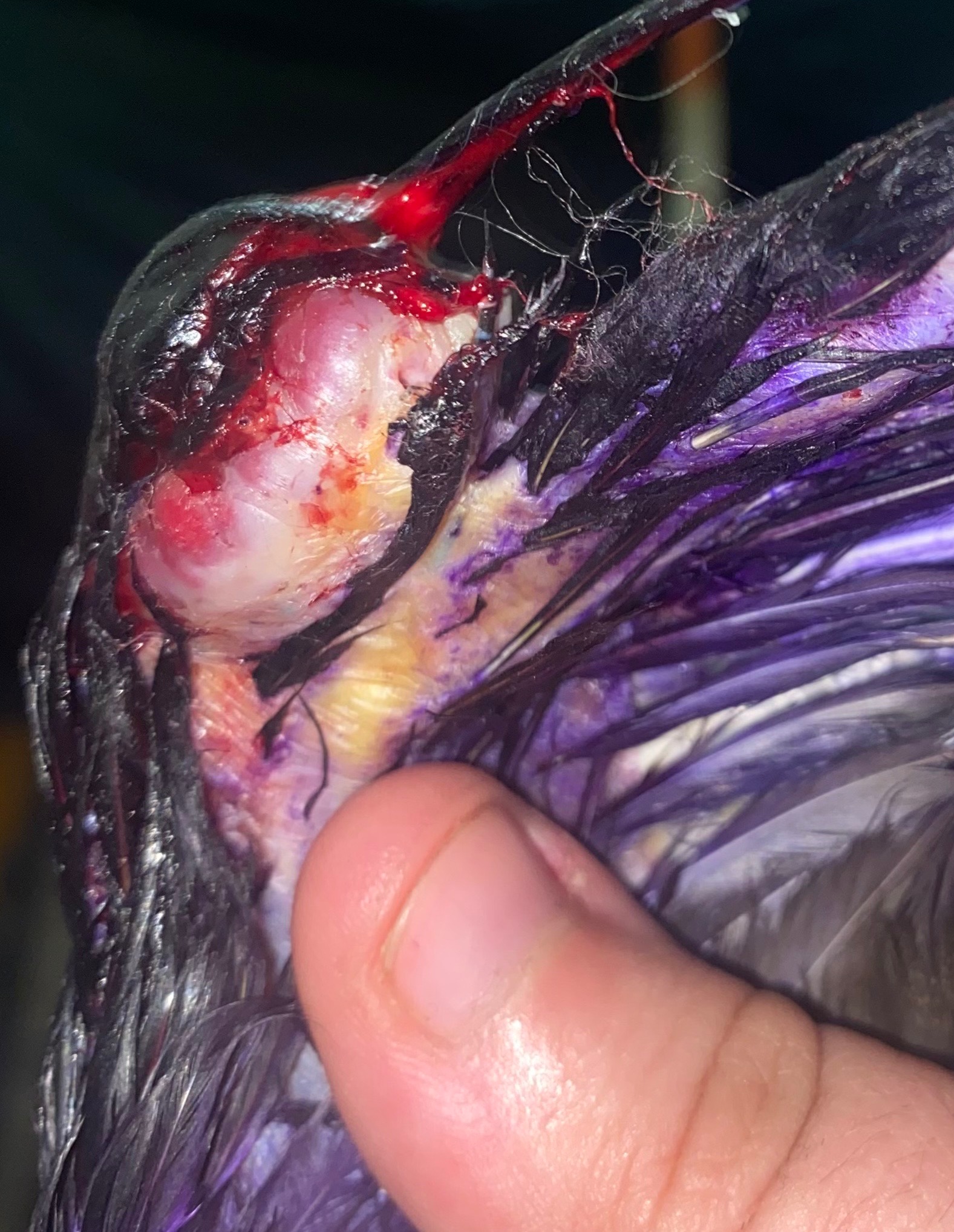

When we went to the vet they said they were positive that she had a broken wing and possibly broken hip and charged us for two X-rays, but only took one ($200 dollars!). They then said she didn’t have a break at all and were unsure what was happening. Their diagnosis was possible infection and we were sent home with antibiotics (3 ml amoxicillin/day).
I kept up with that. I also had her wing wrapped for most of the month or so that she was hurt as she kept pulling and pecking at it. I tried BluKote, Neosporin and Veterycin covered by sterile non-stick bandages and self-adhering wrap.
She ripped off the callused lump and had clotted blood all over her. We think she may have bled too much and died from blood loss. – Patricia Micaletti
Dr Bowes: Unfortunately the hen was not well positioned in the X-ray. It appears the lump was fairly fast growing and I would suspect a neoplasia squamous cell carcinoma. It can be caused as a secondary issue to an injury. There was a lot of tissue destruction and if the hen continuously pecked at the wound it is possible that she bled to death.
My appreciation goes out to Dr Bowes for stepping up to share her expertise in order to improve the care of small flock poultry.
If you’ve got a case you’d like to share or need help with, drop me a line by using the ‘contact’ button on my homepage.
 Bitchin' Chickens
0 comments on “Avian Pathology Cases: 39”