

For the last two and a half years I’ve gotten together with Dr Vicki Bowes, avian vet/pathologist on a regular basis to pore over files in my memory stick loaded with interesting chicken health issues that I’ve collected for her expert opinion. She refers to it as ‘Show and Tell’ or ‘Best Guess’ and has done a good job at making diagnoses given the information we have at hand, usually only a short paragraph from the chicken’s owner. My job is to write them up to share with my readers as a form of skills building for small flock keepers.
We met up recently to look at 20 cases. I’ve grouped these ones together as they all involve abnormal keratin in some form or another.
Keratin contains amino acids such as cysteine, lysine, proline and methionine and is the main structural component in feathers, fingernails, claws, beaks, spurs and hair.
Keratin Growth
This 2-week-old turkey poult has bits of attached flaky skin. It’s not flystrike. – Bfg Farm
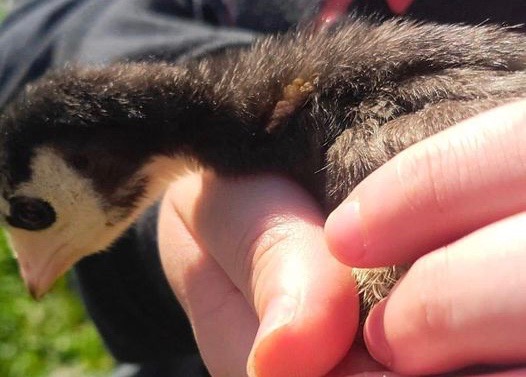


Dr Bowes: It appears to be keratin. Does it feel waxy or like a soft fingernail? I would soak and gently cut the growth with sharp nail scissors to see if there is bleeding. If not, soak, remove and debride the area. Look at the skin underneath. Is it abnormal or not?
Keratin Plug
I need help on identifying what these are on one of my turkey’s neck. They are hard to the touch and protruding under the skin. I pulled them out with tweezers from the top; pushing from the bottom, then rinsed it out and the liquid exited the other wound; they are connected. I squeezed antibiotic into both holes. It’s softer the deeper it is, so I couldn’t pull it all out. – Kimberly Armstrong

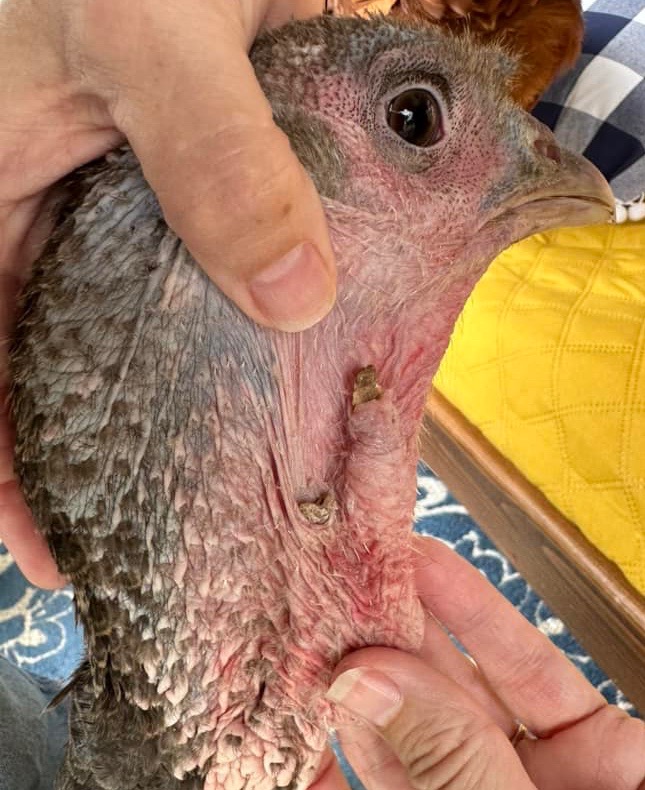
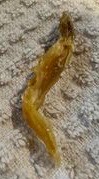
Bitchin’ Chickens: Keratin fistulae are a very likely cause. Keratin plugs can join and tunnel as they swell and become impacted. Continue to flush it and keep the wound moist to encourage granulation. Prevent letting it dry out and scabbing around the inside of the wound, which will prevent the tissues from joining back together.
Treat the wound daily with a topical antibiotic like Polysporin for 7- 10 days. If the skin heals but leaves a tunnel behind, it can collect debris and continue to cause problems. If that’s the case, you may need veterinary care.
Feathers have a number of functions: flight (ok, not so much for chickens); insulation against heat and cold; waterproofing; protection against the weather and insects; camouflage; courtship; and to assist in their ability to detect air currents and sound vibrations. Their diversity comes from the evolution of small modifications enabling them to serve different functions. These cases are about health issues related to feathers.
Feather Follicle Cyst
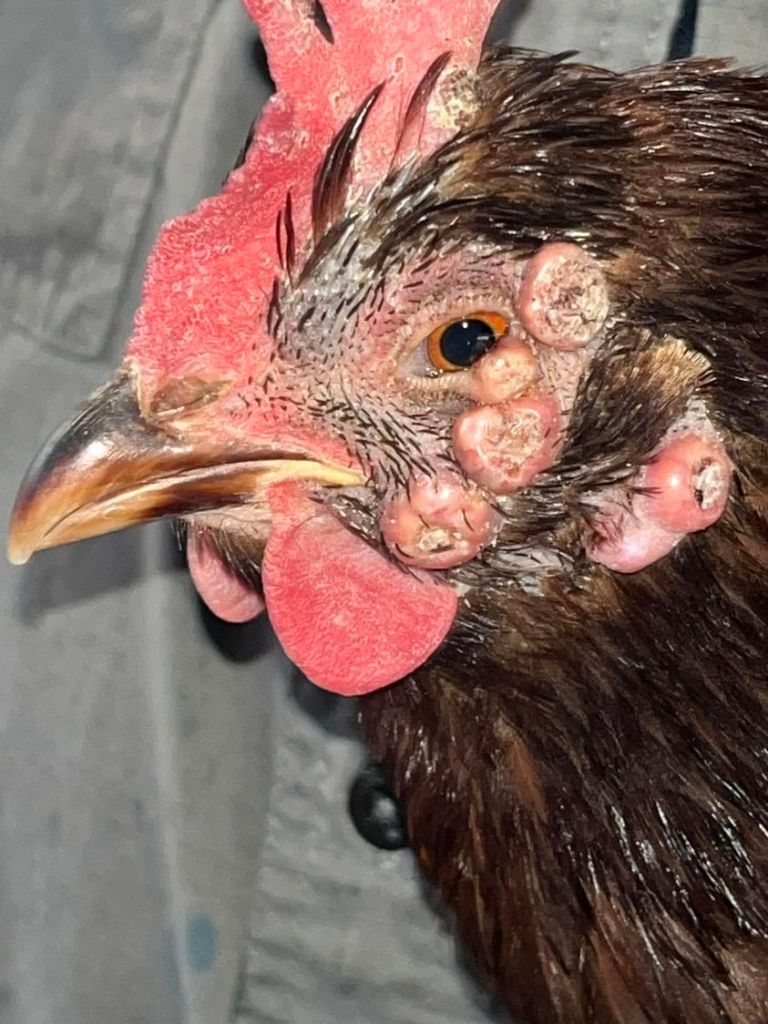
Bitchin’ Chickens: Just like ingrown hair in people, chickens can have issues with feathers that don’t erupt through the skin. Follicle cysts are oval or elongated nodules, lumps or masses which contain an accumulation of yellow-whitish keratin. They can develop as a result of infection, genetics, previous damage to the feather or any condition that interferes with normal feather growth. Think of feather follicle cysts as being the bird equivalent involving feathers instead of hair and because feathers are so much larger than hair so are the resulting cysts.
Dr Bowes: This appears to be a case of keratoacanthoma or feather follicle cysts. Treatment depends on the location, size, and impact on the bird’s comfort level, but often requires the removal of the cyst and follicle. You can sometimes soak the area in an Epsom salt bath (or use a warm compress) and see if you can remove the feathers and accumulating debris using sharp tweezers.
Dystropic Feathers
#1
I have a feather-footed bantam hen that has been limping for the last week. The only issue I can see is this long white feather that might be hurting her because of its length it sometimes folds back and she steps on it. It looks vascular so I’m not sure about trimming it, but I want to do what I can to help her. – Dylan Richards
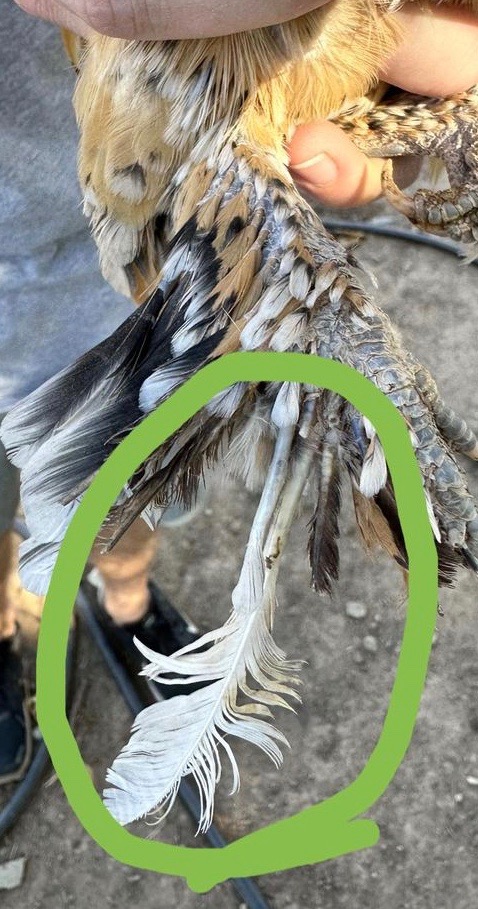
Dr Bowes: You can pull it out with pliers, but that might cause bleeding. It’s preferable to just snip it with scissors to prevent the feather follicle from being stimulated to produce a new feather. Trim it down to the blood line (the white hollow part).
#2
All the hens in flock look normal, except this one year-old whose feathers did not regrow after molting. – Raina Carillo


Dr Bowes: Not only does she have feather loss, she has lost barbules on her existing feathers. She looks older than one year old and resembles a spent laying hen. Are the follicles empty or contain broken feathers? The feathers need to drop out of the follicles in order to stimulate new ones to regrow. Are the feathers fragile or abraded? I would house her separately with a friend from the flock for 4-6 weeks and observe her. You can give her supplements, Feather Fixer and feed with 18% protein and monitor her improvement.
Glossary
Dystrophic: tissue degeneration caused by diseases of nutrition or metabolism
Fistula: an abnormal connection between two body parts, such as an organ or blood vessel and another structure. Fistulas are usually the result of an injury, infection or inflammation.
My appreciation goes out to Dr Bowes for stepping up to share her expertise in order to improve the care of small flock poultry.
If you’ve got a case you’d like to share or need help with, drop me a line by using the ‘contact’ button on my homepage.
 Bitchin' Chickens
Hello….I am Raina Carrillo my above girl molted perfectly this year…She looks gorgeous and am so happy….I will figure out how to submit a picture…thank you for your time!!! And yes she is now 2 years old approximately…
LikeLiked by 1 person
Thanks for the update. Can you send me a note via the ‘contact’ button on my homepage and I’ll give you my email?
LikeLike
Hi, remember this chicken? I treated her for depluming mites & the two photos are of her now. I treated her twice, about 10 days apart & after about a month, feathers started to emerge along her neck, then the feathers on her back started to come in & now she’s beautiful again! She went through a light molt this fall & came out of it beautifully. Next year, I expect her to have a hard molt since this year was light however, the light molt may have been the result of the depluming mites. I’m just happy she’s back to normal! Pamela Passon
LikeLiked by 1 person
That’s great news. Unfortunately your photos didn’t come through. Can you use the ‘contact’ button on my homepage to touch base and I’ll send you my email? Thanks
LikeLike