
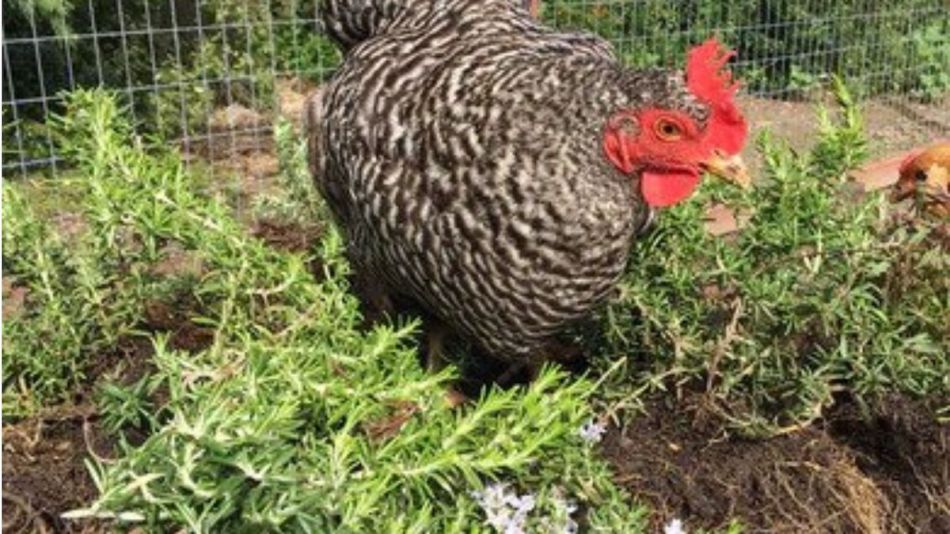
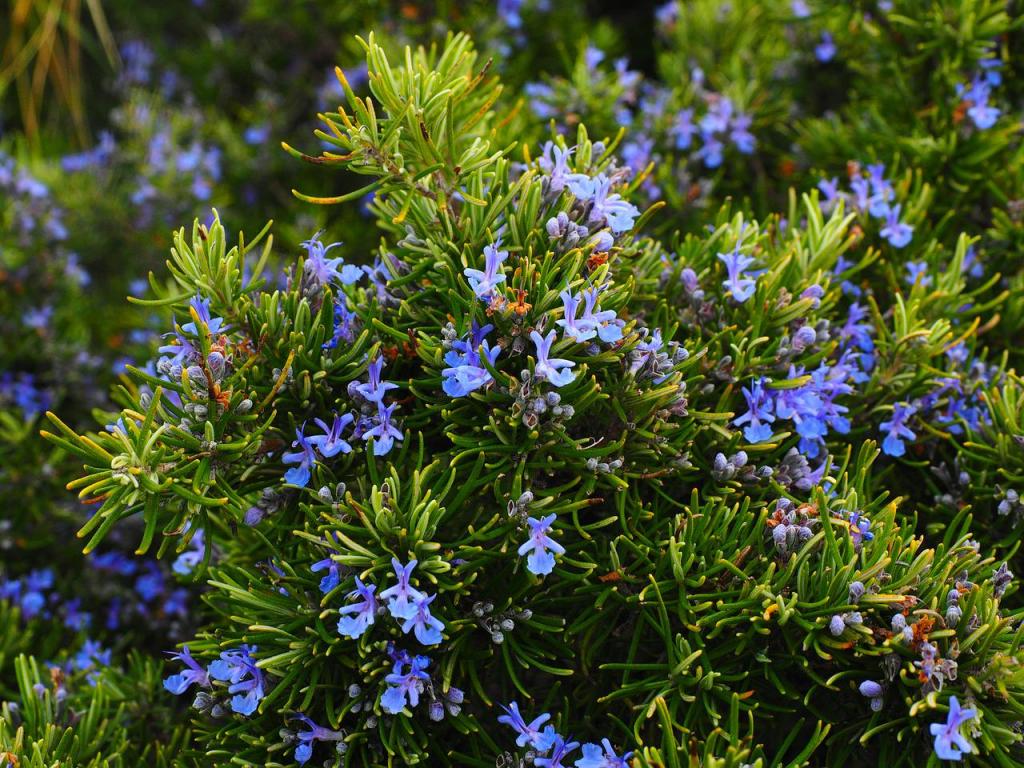
Rosemary (Rosmarinus officinalis) is an evergreen bushy shrub which originally grew along the Mediterranean Sea and sub-Himalayan areas. It’s narrow, needle-like leaves are accompanied by pink, purple, white, or blue flowers. Rosemary is a common medicinal plant, known for its distinctive aroma and use in culinary dishes. The leaves are ingredients in tinctures and infusions and can be used to prepare tea, essential oil, and liquid extract.
In traditional medicine, it has been used as an antispasmodic, mild analgesic, to treat headaches, insomnia and depression.
It has been shown that rosemary has significant antimicrobial, anti-inflammatory, anti-oxidant, anti-tumour, antinociceptive, and neuroprotective properties. It has been used to reduce inflammation, as an analgesic, anti-anxiety, and for boosting memory as well as treating pain, anxiety, and sleep issues.
Benefits For Chickens
- Nest Box Herbs: In my experience chickens dislike strong smelling herbs and avoid eating them. I grow a number of aromatic and medicinal plants that I dry and add to their nest boxes. Not only do they enhance the fragrance in the coop, many of them repel insects.
- Antibacterial and Antimicrobial: Rosemary can be used to treat bacterial infections such as Staphylococcus aureus infections (i.e. bumblefoot prevention).
- Nutrition: Fresh rosemary contains high amounts of A, B, and C vitamins, as well as magnesium, calcium, copper, iron, and manganese. Steep leaves and add to their drinking water.
- Feed Additive: Powdered rosemary supplemented (up to 6 g/kg) has been used as an effective feed additive to improve performance, immunity and antioxidants in laying hens.
- Neurological Protection: Carnosic acid, abundant in rosemary, helps to reduce oxidative stress and overstimulation in nerve cells, ultimately protecting the nervous system. It is also known to protect certain parts of the brain from tissue damage, heal nervous tissue, and reduce blood clots.

Growing Rosemary
Drought-tolerant, rosemary grows best in warm areas, similar to its native shores of the Mediterranean Sea. In these conditions, rosemary can grow into a shrub 5′ – 10′ in height. Rosemary grows so vigorously in an ideal environment that it needs yearly pruning to keep it bushy.
If you live in Zone 7 or warmer, it grows easily as a perennial evergreen shrub that lives for many years. Rosemary is hardy down to 15- 23°F (-10 to -5°C), so it may need winter protection. In colder areas, rosemary should be grown in a pot and brought indoors for the winter.
I have a 15 year old bushy rosemary that started its life with me as a garnish on a restaurant dinner plate. Next time you see a decorative sprig of this herb when you’re dining out carefully wrap it up and once home stick it directly in a pot of soil and keep well hydrated until it develops a good network of roots. Once established, you can transplant directly in the ground or into a pot. It also makes an attractive and fragrant perennial around the outside of your chicken run.
Credits: Brazilian Journal Of Poultry Science; Journal Of Animal And Feed Sciences; National Institute Of Health; Poultry DVM Featured photo credit: Treats For Chickens
 Bitchin' Chickens
I’m in the wrong zone for growing rosemary. Although I do have 3 I bring in onto my porch to overwinter they wouldn’t yield much! 🙂 I mostly just stroke them for the perfume. I checked what the NIH has to say about it and it sounds like I would benefit from eating,
or just sniffing, rosemary!
LikeLiked by 1 person
thanks for this info – I’ll try rosemary in the hen house boxes
elizabeth
LikeLiked by 1 person
I love natural remedies. Origanum is also great!
LikeLiked by 1 person