
This series is a partnership between Bitchin’ Chickens and Dr Vicki Bowes, vet/avian pathologist. We get together to chat about interesting chicken health issues and attempt to come up with a diagnosis or treatment options based on the information we have, which often isn’t much.
Recently we worked through almost 30 cases and I’ve grouped some of them according to location and issues related to pathogens. This one is all about the conditions that affect the eyes.
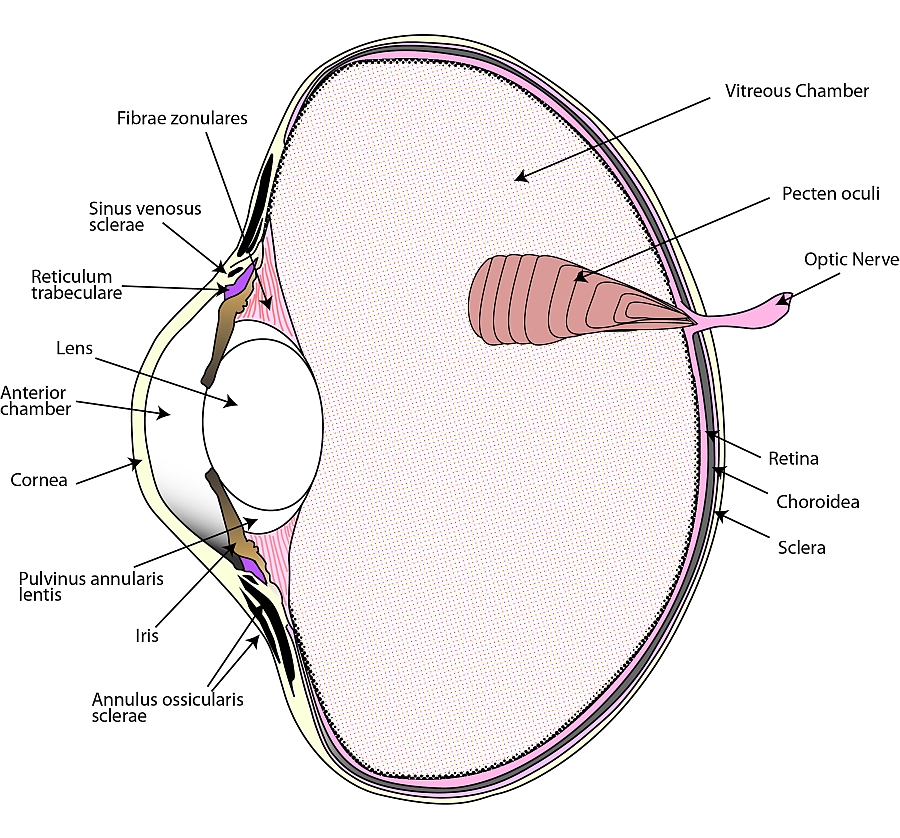
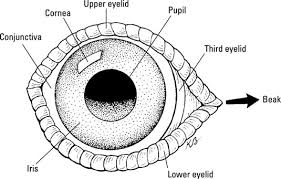
I’ve written a couple of other posts about eyes that might be useful: Blindness In Chickens and Assessing Eye Issues In Chickens.
Suspected Abscess (photos: Samantha McKibben)
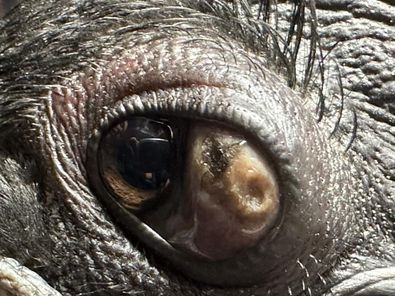
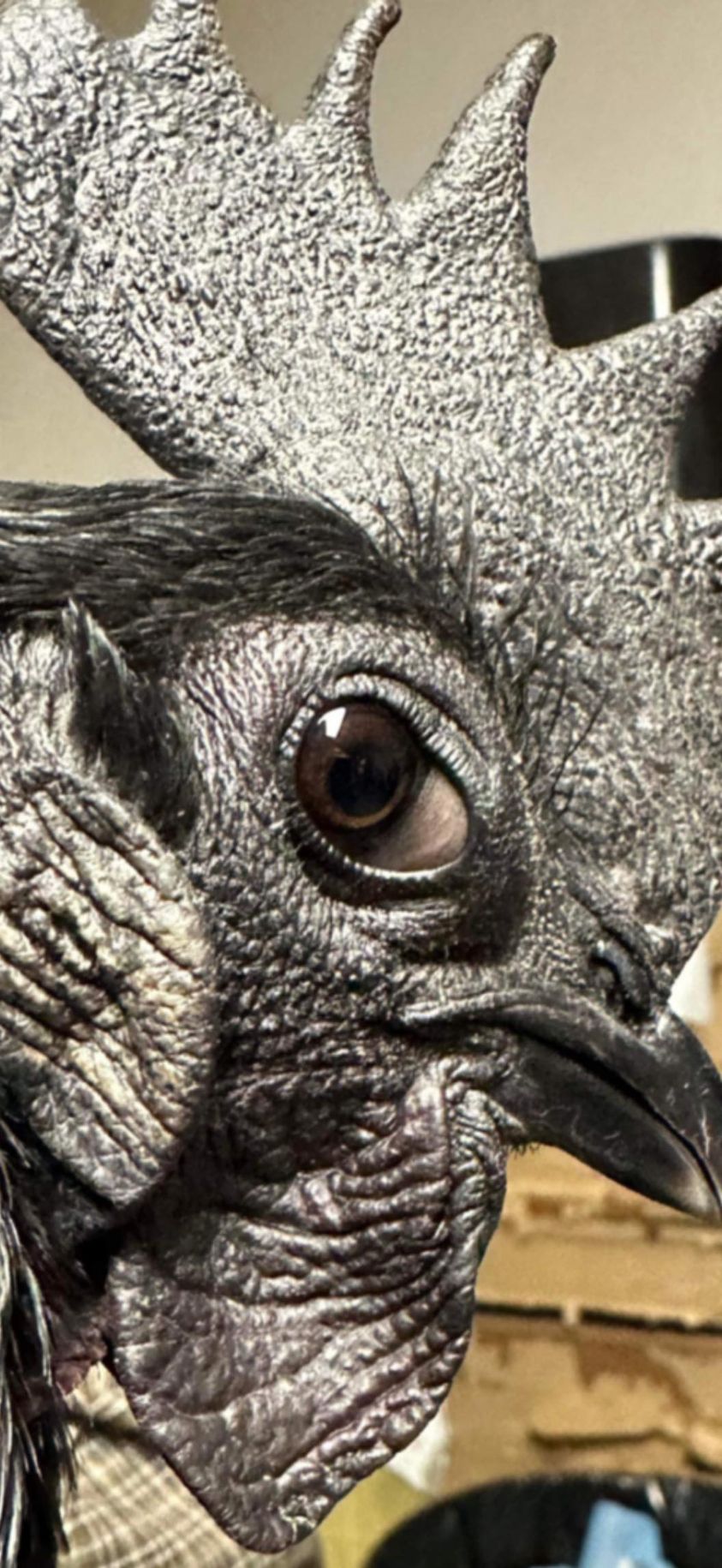
Dr Bowes: It could be an abscess under the third eyelid, which would be painful. Don’t mess with eyes. Take the bird to a vet who would be able to treat it and expect a full recovery.
Infected Eye
The eye was shut for two days. We used an antiseptic spray from the feed store, which we applied with a cotton ball twice. Her eye reopened and now it looks like this. – Anonymous

Dr Bowes: Only use ophthalmic products that were formulated for the eye. You could also use saline as a flush. I don’t like the colour, which appears to be pus in the eye. I believe this infection came through the bloodstream rather than is the result of an injury. Continued inflammation will cause more damage and should be treated with heavy-duty antibiotics.
Odd Pupil
I’m a new chicken owner and I noticed one of my 11-week-old cockerels has a weird shaped pupil. He eats and drinks and seems like everything is okay. Should I be concerned? – Anonymous
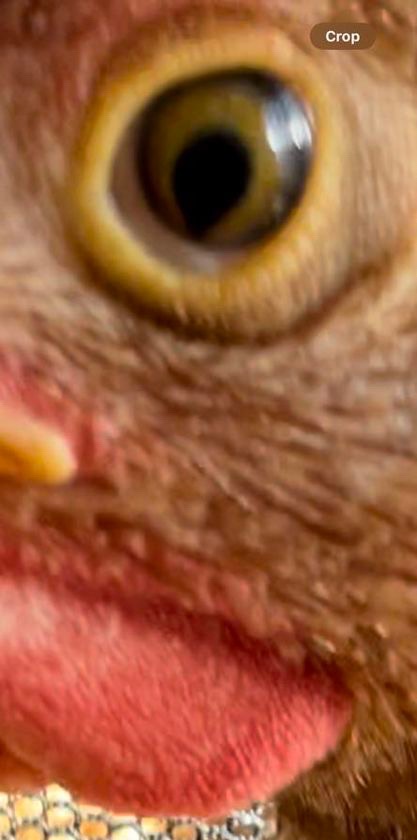

Dr Bowes: It doesn’t appear to be a defect. Is the iris intact? Is it just a pigment issue? The black spot is melanosis, which can be a precursor for melanoma. You will just have to monitor to see how he develops.
Iris Colour (photos: Madison Jianuzzi)

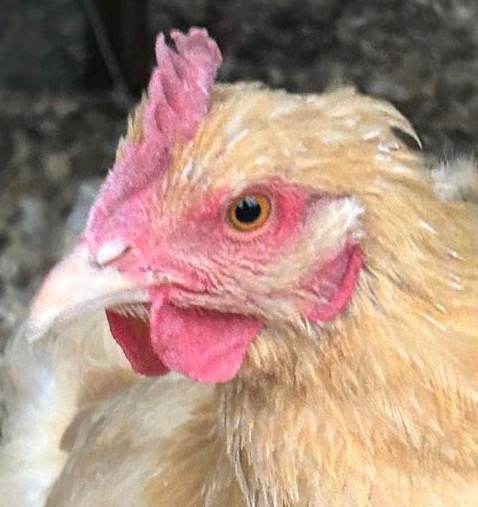
Dr Bowes: Is that a pigment issue? I don’t like that the pupil doesn’t appear round. It could potentially be Marek’s Disease, but I would wait and see. It doesn’t require treatment at this point.
Injured Eye
This is one of three six-month Swedish Flower Hen brothers who never fought until last week. I found him hiding with blood over his chest, wattles and comb. There was a cut on the skin around his left eye, which was also bloody where the amber part was. I had him inside for four or five days and applied Terramycin in his eye and gave him lots of fluids and food. His condition improved some and then he got re-injured. Now his eye has turned black – Emily Eliza
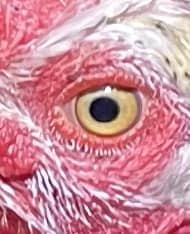
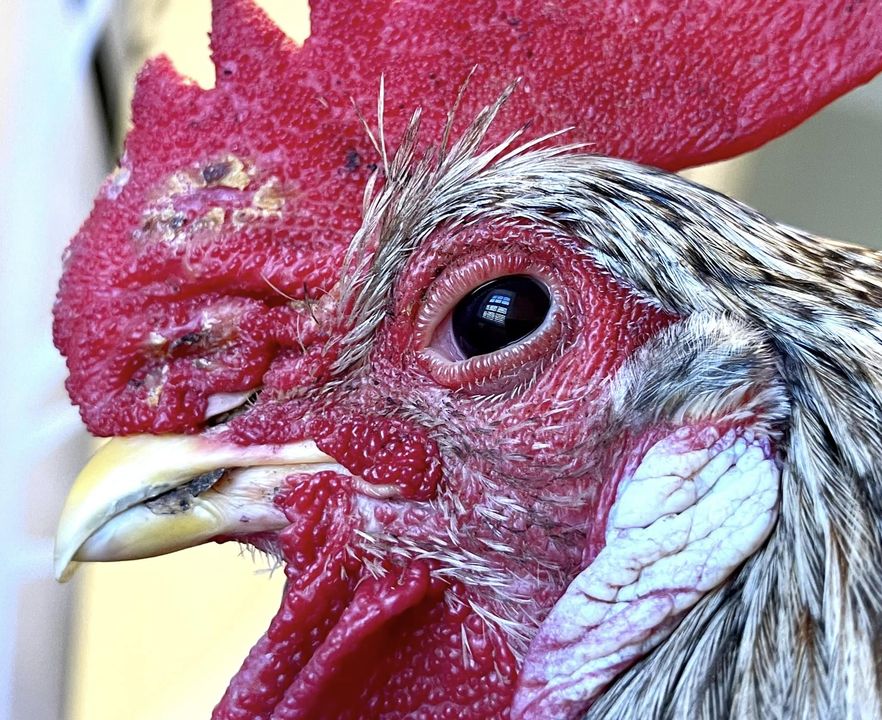
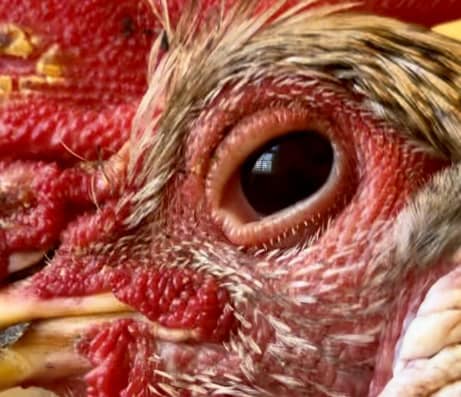
Dr Bowes: Can he close the eye properly? The globe of his eye is intact and the cornea is shiny. There is blood in his eye, which you need to monitor and protect from reinjury. He may ultimately lose sight in that eye. When dealing with eyes, only use ophthalmic formulas that are specially designed for use in eyes.
Different Irises and Pupils
My 7-month-old rooster can see normally and appears to be in good health. What is going on with his eyes? – Hollie Adams

Dr Bowes: Use a penlight to assess his pupil response. If it doesn’t react it could be Marek’s because the infiltrates don’t allow the pupil to respond normally. Monitor to see if there are any changes. Marek’s can be localized to the eye, but if he develops any neurological symptoms then euthanize him.
Bitchin’ Chickens: When Dr Bowes saw this photo she referred to it as ‘husky eyes’, as many dogs of that breed have two different coloured eyes, commonly called bi-eyes. The correct term is heterochromia, in which there are two different coloured eyes or an iris that is actually two distinct colours. Dr Bowes was surprised to hear that I once had a Siberian Husky who had one and a half brown eyes and half a blue eye.
Anisochoria refers to pupils that are different sizes, while miosis describes small pupils. Like my dog, it could be just the way the bird was born. If he has always looked like this without changes and has not showed signs of illness, then it is probably just a benign finding.
Blind Hen
My three-year-old bantam Cochin has a red spot in her eye. I used Denagard (antibiotic used to treat respiratory infections) for five days and Vetericyn eye gel three times a day. This is her eye today. She can’t see out of it and I believe her vision is almost gone in the other eye.
She still eats, drinks and poops normally and putters around the house. She only eats when I put food in front of her as I don’t think she can find her way back to it. – Jennifer Ruttan
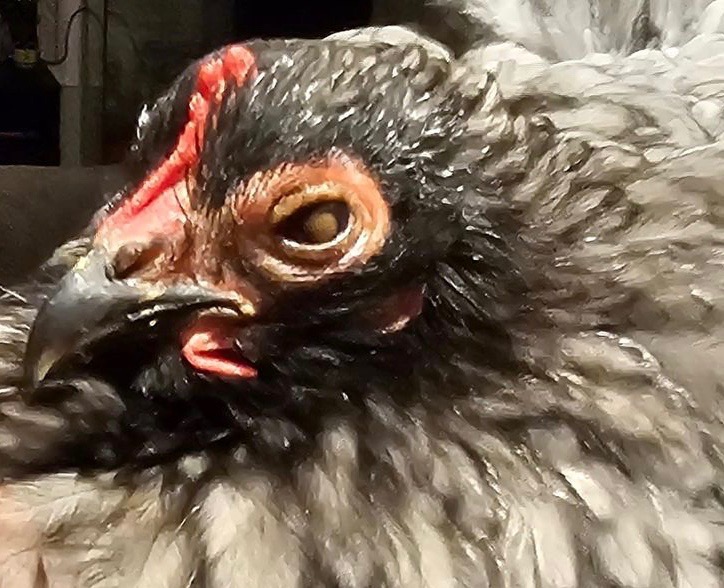
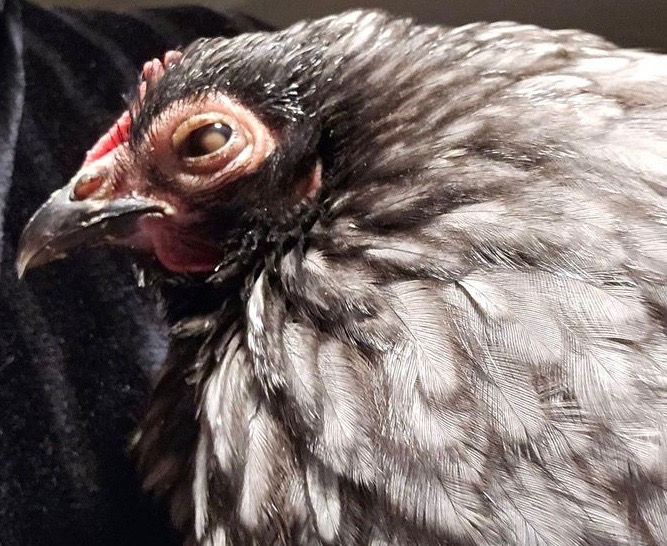
Dr Bowes: Red in the eye is indicative of trauma. It’s hard to tell where it is located. If it is in the eye it could be blood, pus or a tumour; if it’s on the eye then it affects the cornea. Have you tested her pupilary reflexes? Shine a pencil light into her eyes to see if it responds. Can she close her eyelids? I would treat with a topical antibiotic meant for eyes. If that is blood/inflammation it should resolve itself in five or six weeks.
Glossary
Abscess: a localized collection of pus in a cavity formed from tissues that have been broken down by infectious bacteria. An abscess is caused when bacteria such as Staphylococci or Streptococci gain access to solid tissue.
Anisochoria: pupils that are two different sizes.
Heterochromia: two different coloured eyes or an iris that is two distinct colours.
Melanoma: the most serious type of skin cancer, develops in the cells (melanocytes) that produce melanin — the pigment that gives your skin its color. Melanoma can also form eyes and, rarely, inside the body, such as in the nose or throat.
Melanosis: a condition of abnormal or excessive production of melanin in the skin or other tissue.
Miosis: abnormally small pupils
Well, that wraps up another edition of Show & Tell With Bitchin’ Chickens and Dr Bowes. I hope that it’s been a learning experience for you.
If you’d like help with a case drop me a line using the ‘contact’ button on my home page. Remember to wear gloves, take good close up photos from several angles and supply us with plenty of information (e.g. timelines, symptoms, medications, general flock health, etc) so we’re able to more accurately pinpoint what’s going on.
Thanks again to Dr Vicki Bowes for her willingness to share her wealth of knowledge and experience to build capacity and skills in small flock keepers.
 Bitchin' Chickens
Chicken had/has a serious eye infection. After three days of treatment, it is a lot better. Eye looks like the “infected eye” image in “Avian Pathology Cases: 45 Eyes” from Jan 24. And, this is the only place I have seen an image that looks like what I am seeing. There was a lot of swelling and pain. Treated with opthalmic ointment and oral doxy. Initially tissue around eye was very swollen and painful. Pupil was fully dilated looked black, no sign of nictating membrane, surface of eye was a little cloudy, retina surface had yellowish color similar to photo. Now, the bird is starting to open the eye, iris is returning to normal appearance, nictating membrane is not being used but is clearly present, but the retina is still yellow. It appears to be a thin even coating on the retina or may even be the retina, now void of color. I was wondering what antibiotic and dosage the Dr. Bowes would recommend. I was thinking it looked like infection on the retina. This is in a neighbour’s bird and they are out of town. Trying to do my best for the bird.
LikeLike
Unfortunately I don’t have immediate access to Dr Bowes and am unable to advise you as to the most appropriate antibiotic and dosage. Good on you for attempting to help your neighbour’s hen. Good luck.
LikeLike
Chicken had/has a serious eye infection. After three days of treatment, it is a lot better. Eye looks like the “infected eye” image in “Avian Pathology Cases: 45 Eyes” from Jan 24. And, this is the only place I have seen an image that looks like what I am seeing. There was a lot of swelling and pain. Treated with ophthalmic salve and oral doxy. Initially tissue around eye was very swollen and painful. Pupil was fully dilated looked black, no sign of nictitating membrane, surface of eye was a little cloudy, retina surface had yellowish color similar to photo. Now, the bird is starting to open the eye, iris is returning to normal appearance, nictitating membrane is not being used but is clearly present, but the retina is still yellow. It appears to be a thin even coating on the retina or may even be the retina, now void of color. I was wondering what antibiotic and dosage the Doc would recommend. I was thinking it looked like puss/infection on the retina. This is in a neighbor’s bird and they are out of town. Trying to do my best for the bird. Doxy was chose because I already had some prepared for chickens, it crosses the blood brain barrier, and it reduces inflammation. I had considered a floxacin, but am wondering if I made the best call.
LikeLike