
I recently got together with my mentor Dr Vicki Bowes, vet/avian pathologist to do necropsies on four birds I’d had stored in my freezer and to look at necropsy photos I’d collected or that folks had sent for Dr Bowes’ opinion. We motored through four reports from vets and eight DIY necropsy files.
Even though we’ve spent hours looking at cases over the last three years I’m always learning something new. I hope that all of our work also presents a learning experience for other small flock chicken keepers.
Orpington Hen, 9 months old (Christina Campbell)
Symptoms:
- Three days before death she seemed slightly less active first thing in the morning
- Crop was very full, assumed impaction and started massaging regularly
- Drinking water
- Next day, crop had reduced somewhat and she seemed more active
- The following day (Sunday) she got progressively worse through the day but I was still massaging the crop, which was now softer than the first day.
- By roosting time, she was very listless and not wanting to drink. I figured she might pass during the night, which is what happened. I was really surprised by the quick change from the day before.
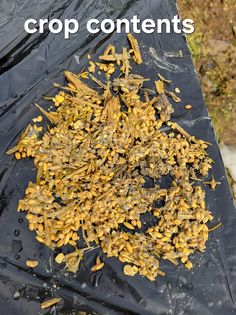
I kept her body in the snow and then performed necropsy on Tuesday afternoon. I expected her crop to have something more obviously causing issue, although it was quite full.



Necropsy Findings:
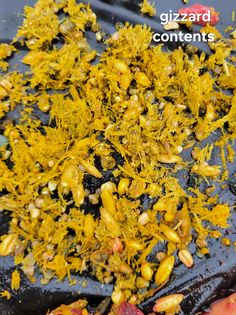
- Gizzard almost seemed to have stopped moving things through
- Proventriculus had a black colored substance inside
- Throughout most of her intestines was a bright yellow fluid. Yellow fluid was not present in abdominal cavity, only inside intestines once they were cut open.
I know that only a proper necropsy would give answers but unfortunately that wasn’t an option in my area.
Dr Bowes: Her liver was incredibly swollen. Judging from the contents of her crop the yellow fluid was just digested feed. Is the soft fleshy area her mesentery? Is it thickened? The focus of your photos reflects your belief that her symptoms stemmed from a crop issues. They didn’t. More photos would have been helpful. The dark spots in the proventriculus are the result of a hemorrhage, origin unknown. I think this could be a case of Marek’s Disease. Leukosis doesn’t usually involve the proventriculus.
Rescue Hen, Unknown Age (Teddy Wilson)
Symptoms:
- Isolation, lethargy, pale comb
- Shallow breathing
- ‘Vomited’ large amount of blood for two to three minutes, then died
Necropsy Findings:
- Blood in the trachea
- Esophagus and crop appeared normal and did not contain blood
- Normal gizzard
- Lungs seem bloody
- Liver was very obviously damaged and hemorrhaging. Difficult to remove as it was falling apart
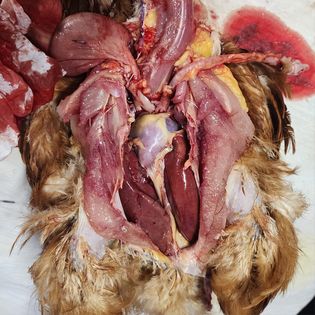
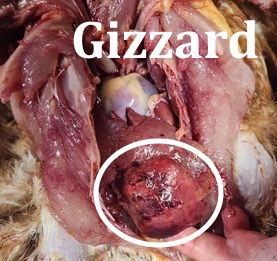
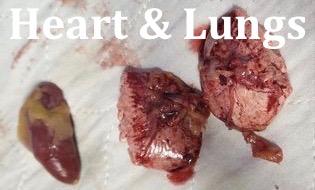
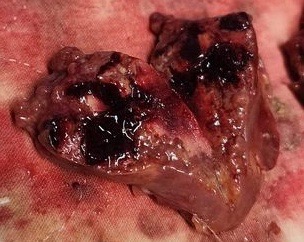
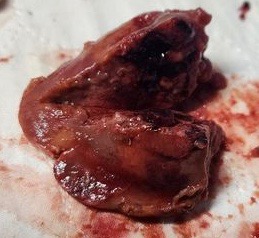
Dr Bowes: The heart was normal. I would have liked to see photos of the kidneys. The lump on the right side of the liver could be a tumour. The lungs were hyper-inflated. The gizzard was the source of the hemorrhage. An acute perforation can cause bleeding which then goes through the air sacs. Aspiration can occur, a consequence of inhaling blood, when there is a hemorrhage in the lungs. I would diagnose this as hemangiosarcoma, tumours of the blood vessels. The tumours can grow rapidly, then rupture and hemorrhage. This is not fatty liver disease.
Hen, Unknown Breed/Age (Kristine Floyd)
Symptoms:
- Hen declined over several weeks
- Ate/drank, lost weight
- Wry neck
- Emaciated
- Made weird purring sound
- Euthanized hen

Necropsy Findings:
- Bloated intestines
- Spleen covered in yellow-white spots
- Brownish-grey, bloated ceca
Dr Bowes: Those are caseous granulomas on the spleen. Under a microscope they look like bull’s eye targets; the central core is necrosis and an area of inflammation, while the outside of the circle is the body’s attempt to wall off an infection. I would suspect Tuberculosis.
Glossary
Caseous: cheeselike, especially in appearance, smell, or consistency
Granuloma: a tiny cluster of white blood cells and other tissue
Well, that wraps up another edition of Show & Tell With Bitchin’ Chickens and Dr Bowes. I hope that it’s been a learning experience for you.
If you’d like help with a case drop me a line using the ‘contact’ button on my home page. Remember to wear gloves, take good close up photos from several angles and supply us with plenty of information (e.g. timelines, symptoms, medications, general flock health, etc) so we’re able to more accurately pinpoint what’s going on.
Thanks again to Dr Vicki Bowes for her willingness to share her wealth of knowledge and experience to build capacity and skills in small flock keepers.
Featured photo: Melanie Proctor Clem
 Bitchin' Chickens
Great cases, once again. Thank you Claire and Dr. Bowes.
LikeLiked by 1 person
These cases always give me something further to research. Thank you. I had no idea chickens could contract tuberculosis! Is it contagious? Probably to the rest of the flock, but even to humans?- Alicia
LikeLiked by 1 person