
For more than three years I’ve gotten together with Dr Vicki Bowes, vet/ avian pathologist on a regular basis to pore over files in my memory stick loaded with interesting chicken health issues that I’ve collected for her expert opinion. She refers to it as ‘Show and Tell’, ‘Best Guess’ or, more recently, ‘Gorefest’ and has done a good job at making diagnoses given the information we have at hand. Sometimes all we are provided with is a short paragraph from the chicken’s owner, other times nothing more than a photograph.
My job is to write them up to share with my readers as a form of skills building for small flock keepers.
We met up recently to look at over 30 cases. I’ve attempted to curate them according to the area of the body affected. These ones are grouped together as they involve the head and face.
Abnormal Eyes
I have this hen that suddenly changed eye colours. Both eyes are different colours now. She seems weak also but was fine a few days ago. – Megan Myles

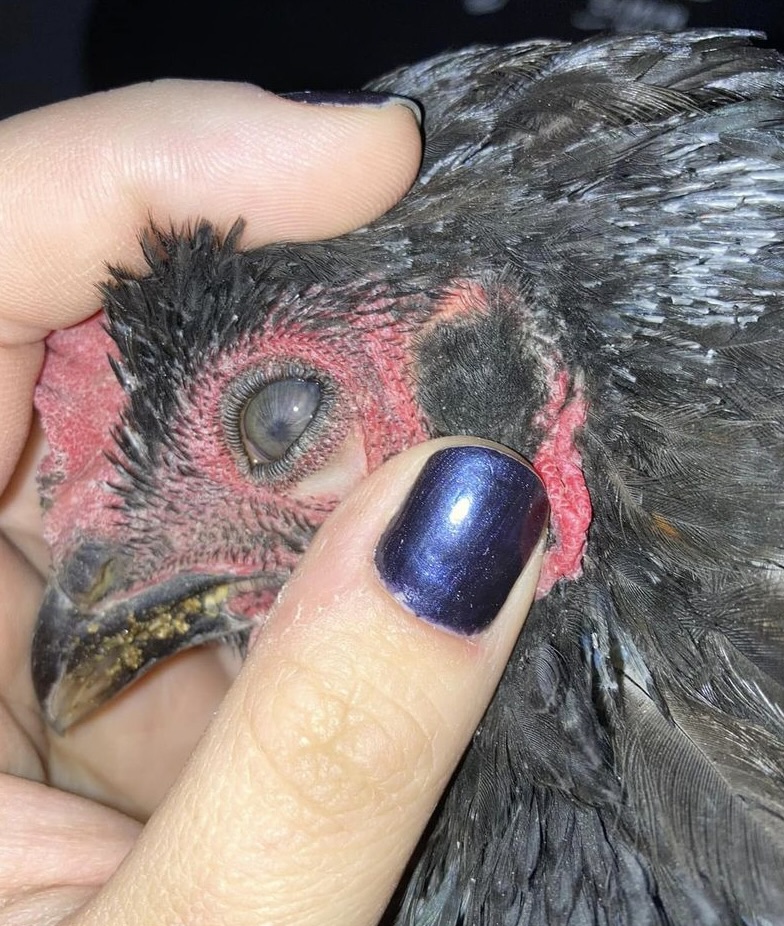
Dr Bowes: The abnormal iris could be the result of the infiltration of inflammatory cells or a tumour. The other eye appears to have something else going on. The striations are also abnormal. I wouldn’t rule out the ocular form of Marek’s Disease. You can test her eyes with a flashlight to determine her pupillary light reflex (i.e. does her pupil constrict or not).
Mystery Bump
Our 1.5 year old hen is struggling and we don’t know what to do. Three months ago we noticed a bald spot on the right side of her comb on the top of her head which we assumed was a pecking issue because the dominant hen pecks her there at night. The bump got slightly larger. It’s squishy, no signs of heat or infection so we assumed hematoma and maybe it keeps getting pecked at. Yesterday the bump got nicked and it started to bleed a terrifying amount. I managed to control the bleeding with StopBleed.
At the beginning of the injury she acted like nothing was wrong and was voraciously eating things we offered to distract her. Later in the night, after the bleeding stopped, she seemed stressed and we thought maybe she was in shock a bit. We fed her electrolyte water and let her sleep. This morning she has not improved. Her crop is swollen, water balloon-like and she is eagerly drinking electrolytes but refusing food. She has also been having very watery stools this morning, one normal cecal poop and a very smell brown and white loose stool.
She was absolutely fine yesterday. More than fine. But after this bleeding event, she is suddenly with swollen crop and has been sleeping all day and waking whenever we check on her for syringe feed her water drops. She will also eat a small bit of egg yolk on her beak and we have given her a drop of NutriDrench every 5-6 hours. – Heather Bixler
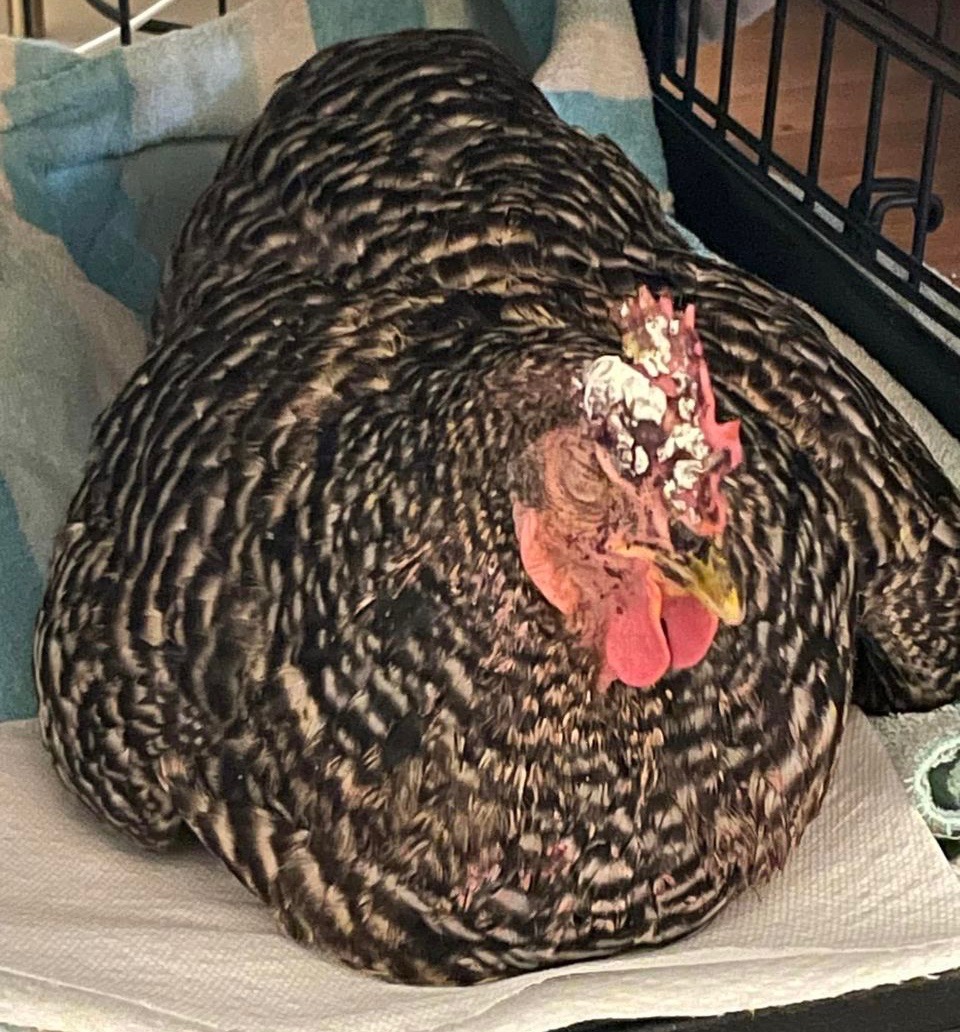
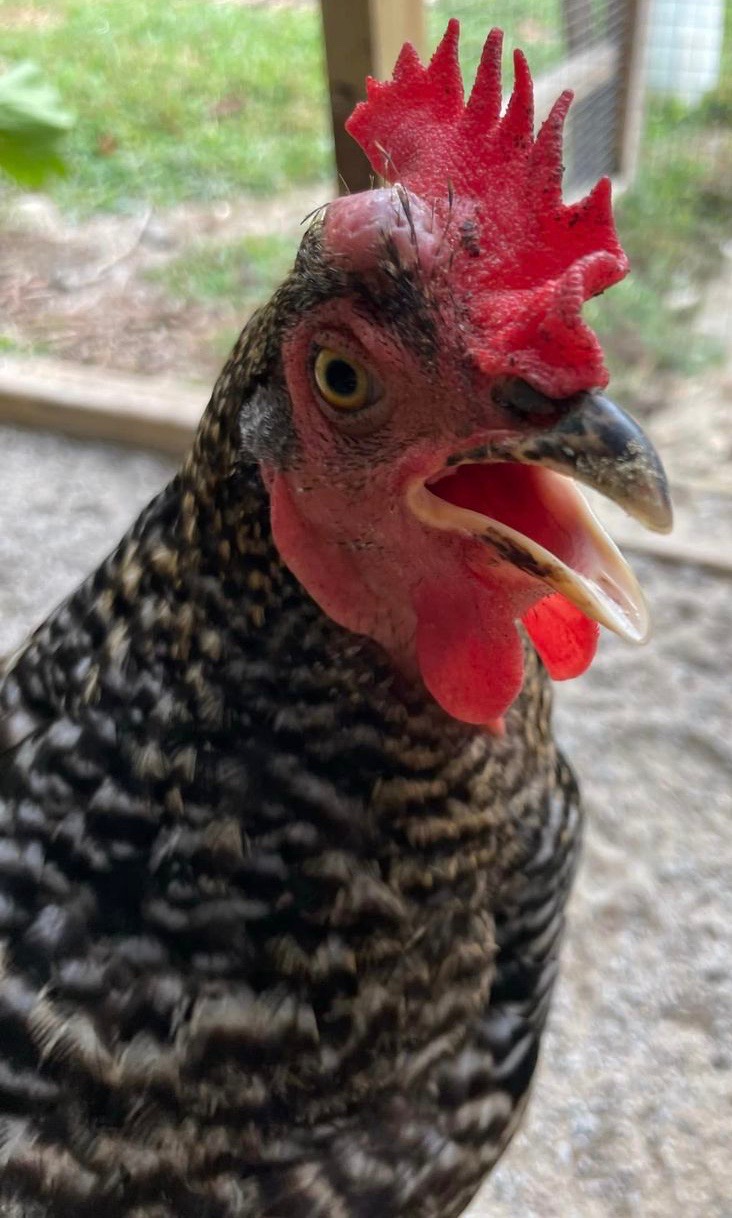
Dr Bowes: It’s not a hematoma and probably not the result of a pecking injury. How thick is the skin? It’s vascular, evidenced by the bleeding. A localized infection shouldn’t cause behaviour changes and the trauma wouldn’t affect her digestion. It could be a fibroma, abscess or even a xanthoma. You would need a biopsy to confirm a diagnosis and treatment plan.
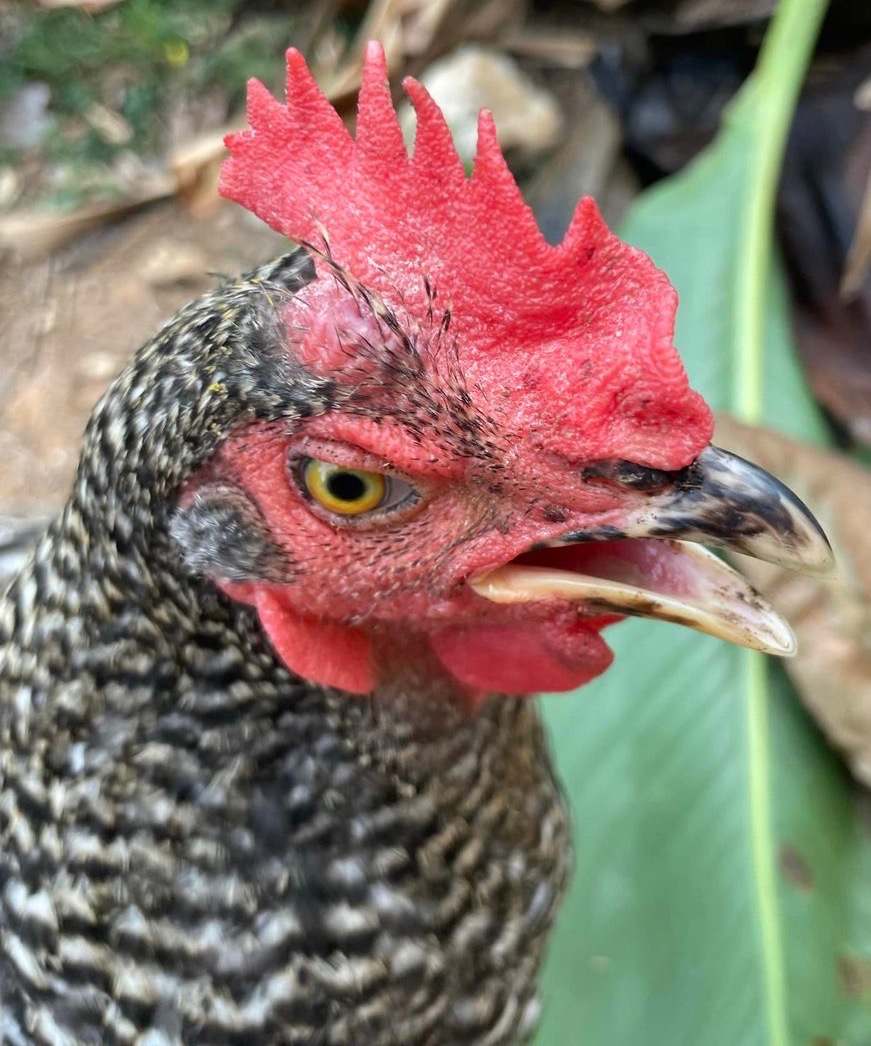
I have a sweet girl who developed a very hard mass under her eye and yellow cheesy matter in her mouth. This happened once before and the other birds pecked at her. It actually dried up and fell off leaving a big open crater that healed. This time I quarantined her and tried Tylosin which got rid of the foul odour and cut back on the yellow cheesy matter in her mouth but it wont go away. I have been trying Tylosin and warm compresses for two weeks. I will lance it although I don’t want to hurt her. I know it needs to be done. I will see if my vets are willing to send a culture out. I will start her on Meloxicam too.- Karen Meicht
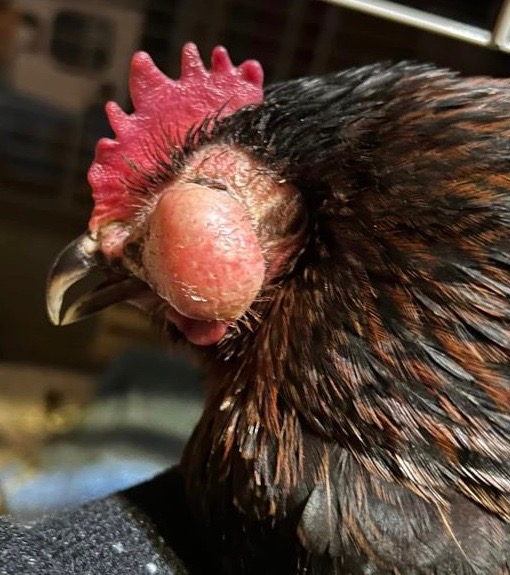

Dr Bowes: That’s a case of sinusitis. She needs to be treated with a topical antiseptic and antibiotics. It will remain unresolved as long as the solid mass is left in there. The caseous material needs to be cleaned out. A vet could make a small incision on the front (not the far side) and pop the encapsulated infection out.
Bacterial Infection
This is my eight year old hen. I noticed a small hard, black spot in same area a few weeks ago. It did not smell and now it looks like this. I messed with it today and a chunk fell off, which now smells like infection. She’s eating and drinking normally. She free ranges during the day. I don’t see anything inside her mouth. – Tracy Naylor Grimm
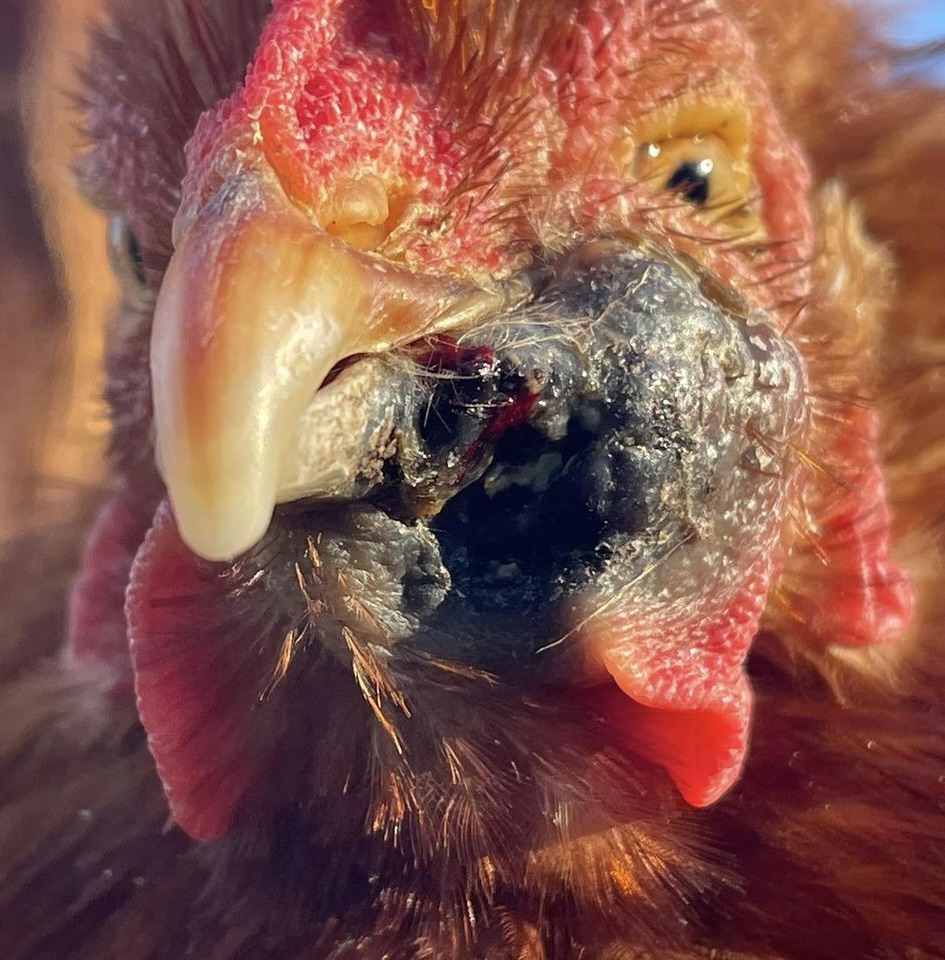

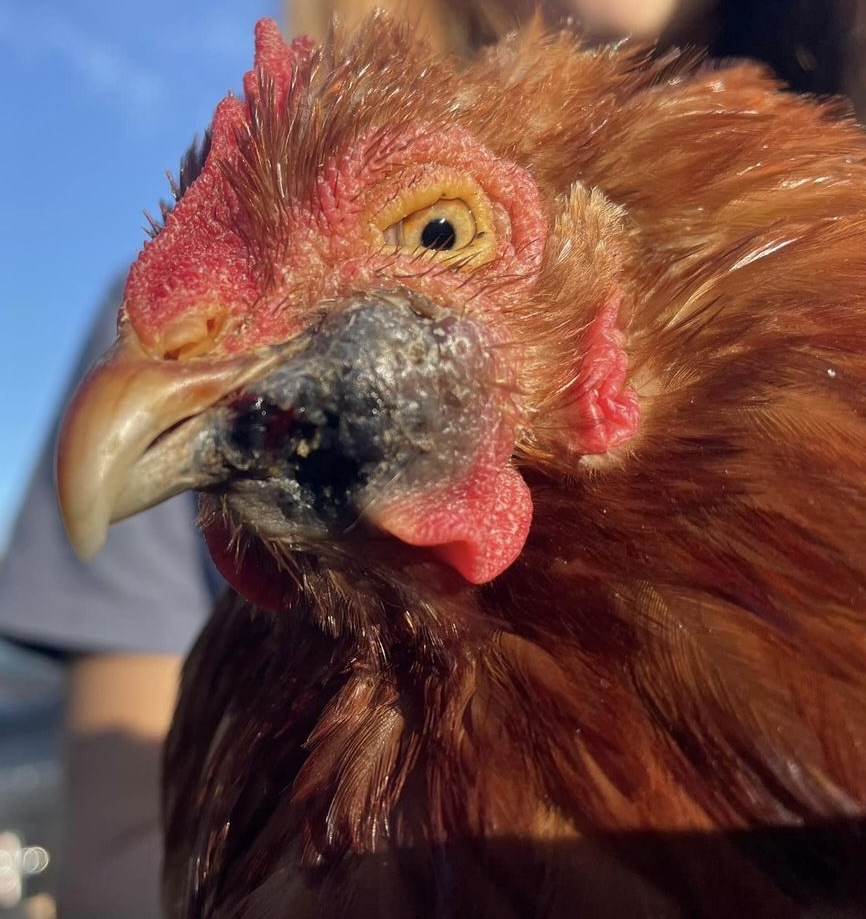
Dr Bowes: That’s an active infection which could be the result of a penetrating injury. There’s critical beak involvement which could become necrotic. Treat with a topical antiseptic and antibiotics.
Insect Stings Vs Fowl Cholera
I just noticed my chicken like this last night. She showed no symptoms other than the swollen wattles so we didn’t separate or treat to see what would happen. As of yesterday the wattles have deflated basically back to normal. Not sure if she got stung by something, but she’s good now. – Anonymous
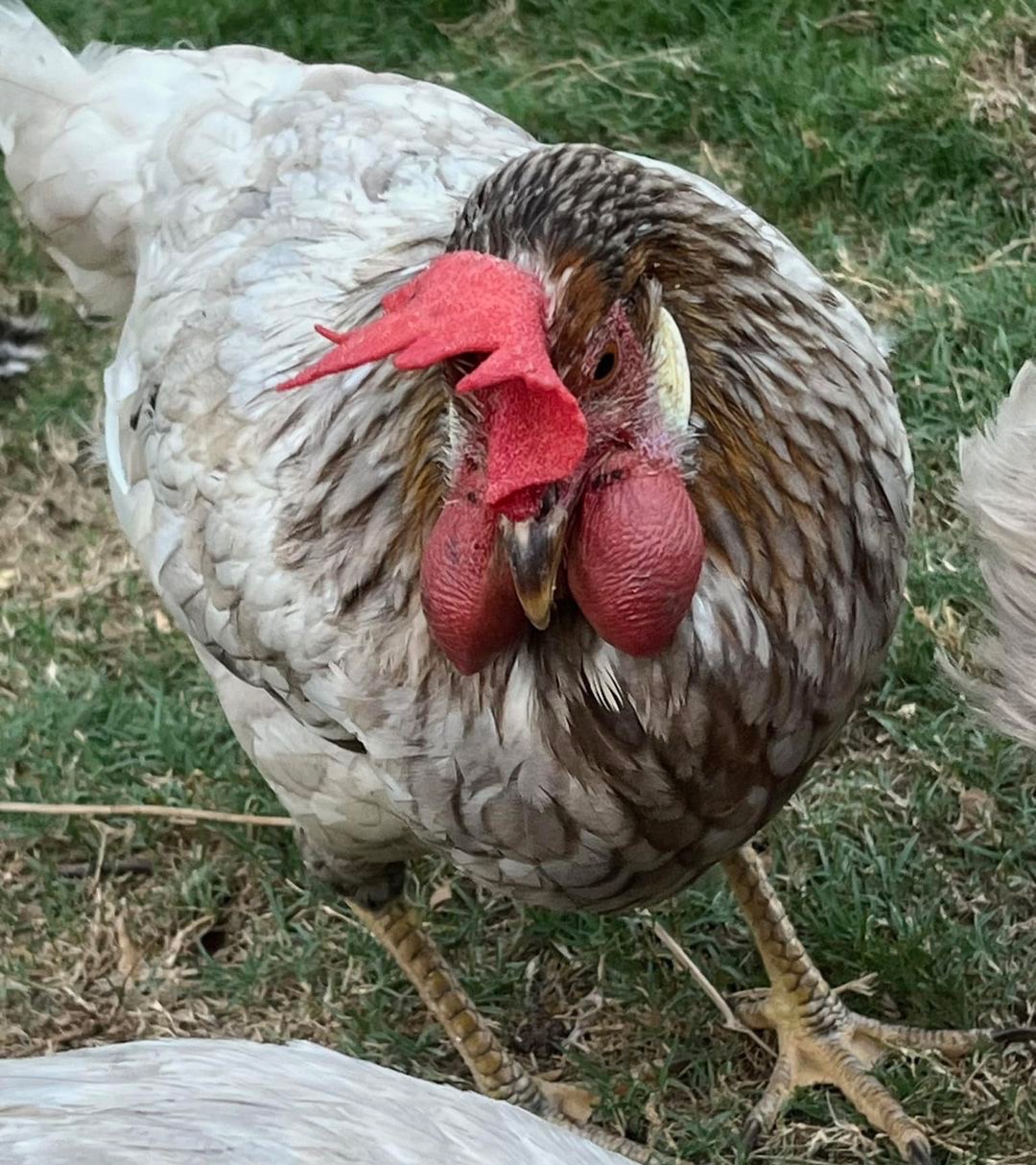
Bitchin’ Chickens: I included the story above because swollen wattles are a classic sign of, but not always, fowl cholera. In this case, the issue resolved itself within hours so I agree with the poster that her hen was probably stung by an insect. Benadryl is the recommended treatment for stings. If the symptoms don’t improve then you’re probably looking at fowl cholera.
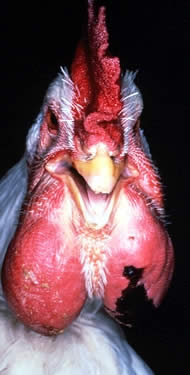
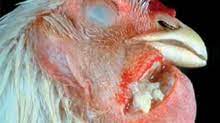
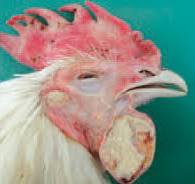
Photo credits: Poultry Hub; Neospark; Poultry Site
Dr Bowes: Cholera is caused by pasturella, a gram negative bacteria, and won’t resolve without treatment (Baytril, penicillin). It is a chronic condition and takes weeks for the wattles to fill with caseous exudate. As you can see by the cross-section photos the wattles are filled with semi-solid material that will need to be removed.
Fowl Cholera
My hen is so skinny, her comb is swollen and the other hens pick on her. We rescued these poor hens three months ago. Her comb has always laid to the side, but it is now swollen and feels warm to the touch. – Sharon Everroad
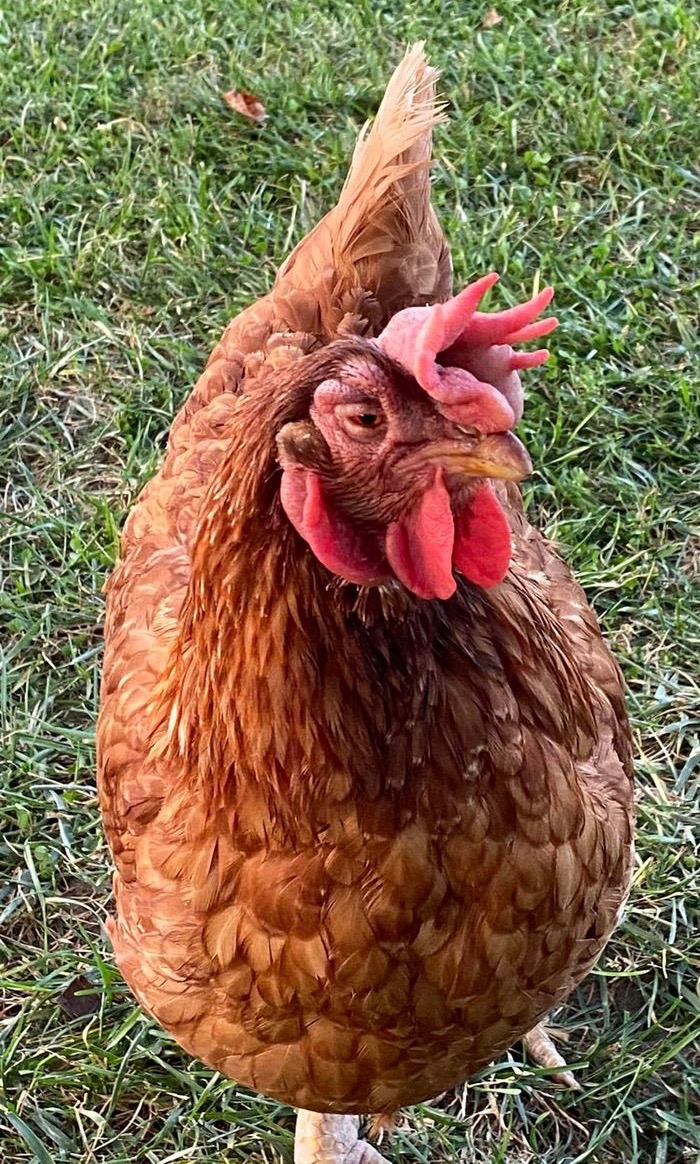
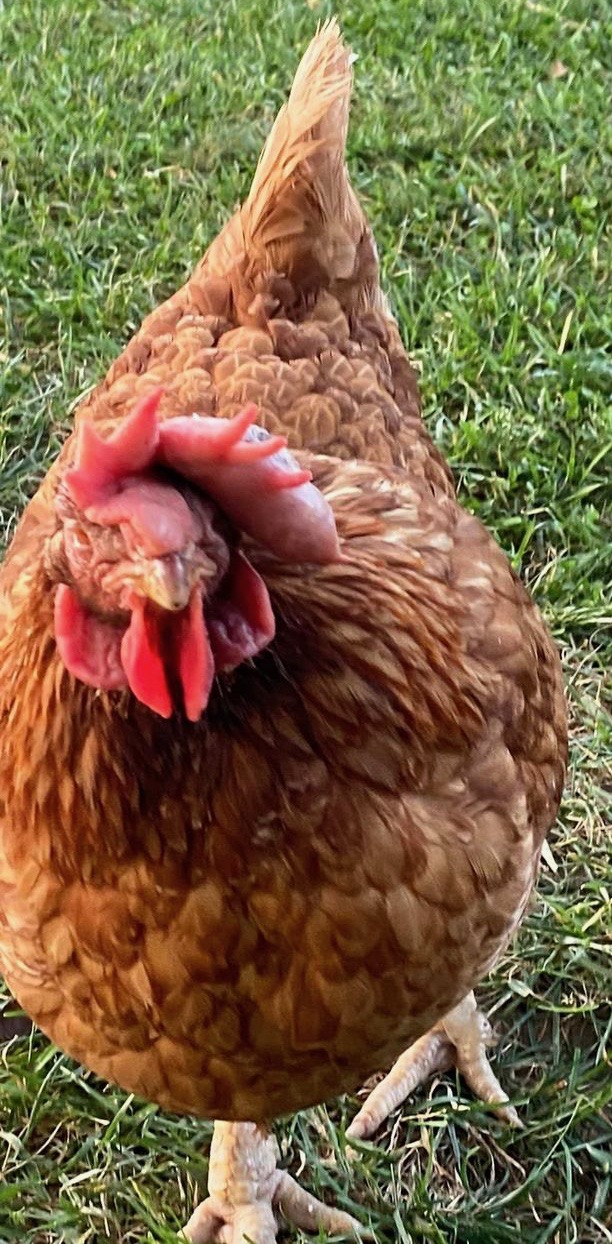
Dr Bowes: Fowl cholera typically affects the wattles, but can also involve the comb and ears. I think the abscess in her comb is a result of cholera and should be treated with antibiotics (Baytril, penicillin).
Glossary
Abscess: a localized collection of pus in a cavity formed from tissues that have been broken down by infectious bacteria. An abscess is caused when bacteria such as staphylococci or streptococci gain access to solid tissue.
Caseous: cheeselike, especially in appearance, smell, or consistency
Exudate: a mass of cells and fluid that has seeped out of blood vessels or an organ, especially in inflammation
Fibroma: a non-cancerous tumour or growth consisting of fibrous, connective tissue
Xanthoma: a skin condition in which certain fats build up under the surface of the skin. They are raised, waxy-appearing, frequently yellowish-colored skin lesions.
Well, that wraps up another edition of Show & Tell With Bitchin’ Chickens and Dr Bowes. I hope that it’s been a learning experience for you.
If you’d like help with a case drop me a line using the ‘contact’ button on my home page. Remember to wear gloves, take good close up photos from several angles and supply us with plenty of information (e.g. timelines, symptoms, medications, general flock health, etc) so we’re able to more accurately pinpoint what’s going on.
Thanks again to Dr Vicki Bowes for her willingness to share her wealth of knowledge and experience to build capacity and skills in small flock keepers. Featured photo credit: Positive Vet Tech
 Bitchin' Chickens
0 comments on “Avian Pathology Cases: 63”