
For more than three years I’ve gotten together with Dr Vicki Bowes, vet/ avian pathologist on a regular basis to pore over files in my memory stick loaded with interesting chicken health issues that I’ve collected for her expert opinion. She refers to it as ‘Show and Tell’, ‘Best Guess’ or, more recently, ‘Gorefest’ and has done a good job at making diagnoses given the information we have at hand. Sometimes all we are provided with is a short paragraph from the chicken’s owner, other times nothing more than a photograph.
My job is to write them up to share with my readers as a form of skills building for small flock keepers.
We met up recently to look at over 30 cases. I’ve attempted to curate them according to the area of the body affected. These ones are grouped together as they all involve skin.
Staphylococcus
My rooster has yellow hard scabs around the eye, ear, on the top of the head, near the beak, even on the upper eyelid. The skin under the scab is cracked and very irritated. He is in pain, can’t eat and scratches a lot. Two months ago I gave him Ivermectin orally 0.2mg/kg and most of the scabs fell off. He received the same dose of Ivermectin two more times, ten days apart. A month after the last dose, he began to itch again and the scabs reappeared. I tried Monistat cream for seven days and it didn’t work any better. I’m guessing it’s not a fungus. – Marko Milinkovic
Online Response (name withheld): It’s not fungus. It’s a Staph infection, probably Staphylococcus pseudointermedius, which often causes the hyperkeratosis you’re seeing around the follicles. Get some iodine or Chlorahexidine and wipe his face and neck with it every few days till those keratinized feathers fall out and new ones start to grow. That particular Staph is susceptible to Baytril/Enrofloxacin. It’s pretty obvious when chickens get it because it causes very visible symptoms: powdery skin, crusty areas, hyperkeratosis, skin peeling and feathers falling out.
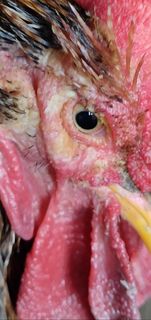

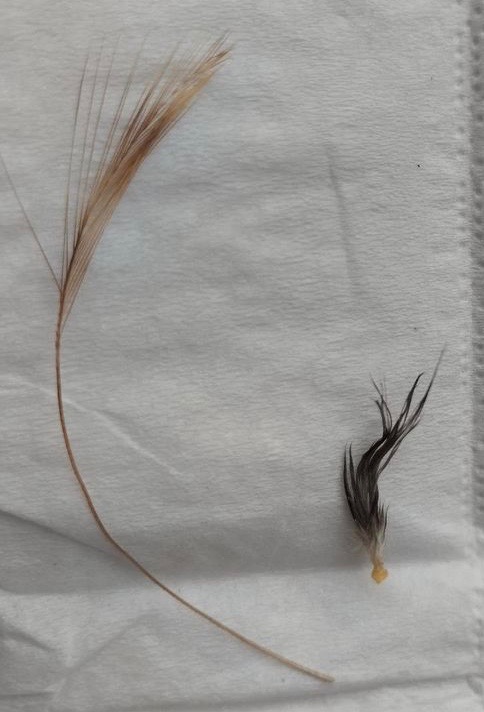
Dr Bowes: A few observations: your dosage of Ivermectin was far too high. Two-three drops applied topically is fine. Baytril should never be used to treat Staph infections. Amoxicillin or penicillin would be appropriate. The area is inflamed and needs diagnostics to determine what species of bacteria you’re dealing with. It’s probably Staphylococcus aureus not Staphylococcus psudeointermedius. You can pull some feathers and get a vet to culture them to determine if it is a fungal infection such as favus.
Xanthomatosis
My two year old rooster has a skin issue that we have been battling for over two months. It started on his comb and face and then spread to his head and neck and now into his wings, mid-body and thighs. I have been treating this as a yeast infection. Before treatment he smelled kind of like wet socks. I started using Iodine and coconut oil to treat. When it spread into his neck I switched to Miconazole 2% cream twice a day. After I applied this he started smelling like corn. I use many Qtips when I apply the Miconazole nightly and spend many hours getting the yellow ‘ick’ off his skin. I feel like we have it contained and it’s almost healed but then it flares back up.
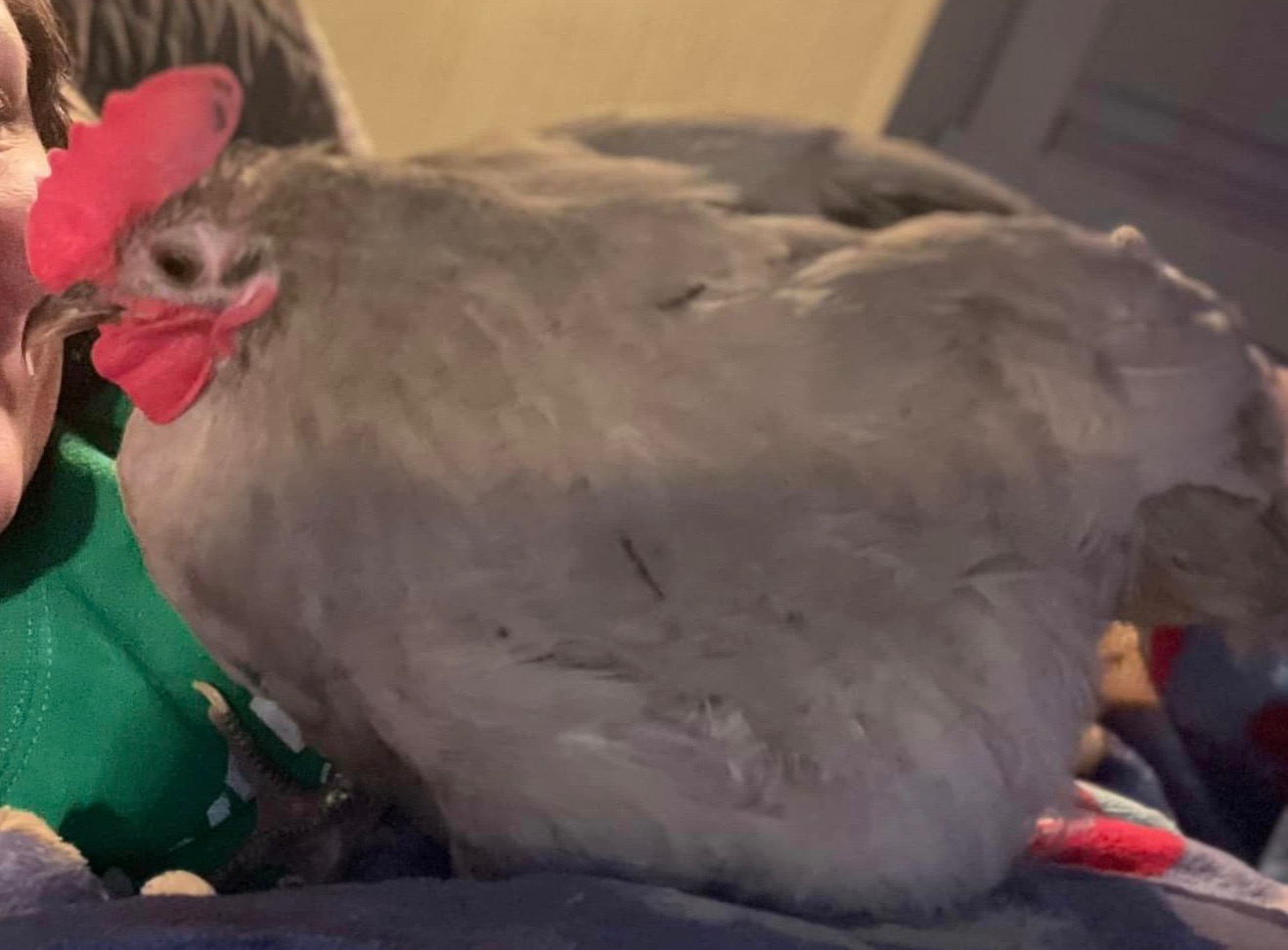
He is a special needs chicken so the added stress is getting to be too much for him. He has a leg that turns inward so he can’t walk well. When he gets stressed his comb turns purple and the open mouth breaths. He has always done this. Now when he gets really stressed, due to the long treatments, his bad leg quits working and he can’t stand at all. He is still eating and drinking well. I also included a photo of when he was healthy for reference.
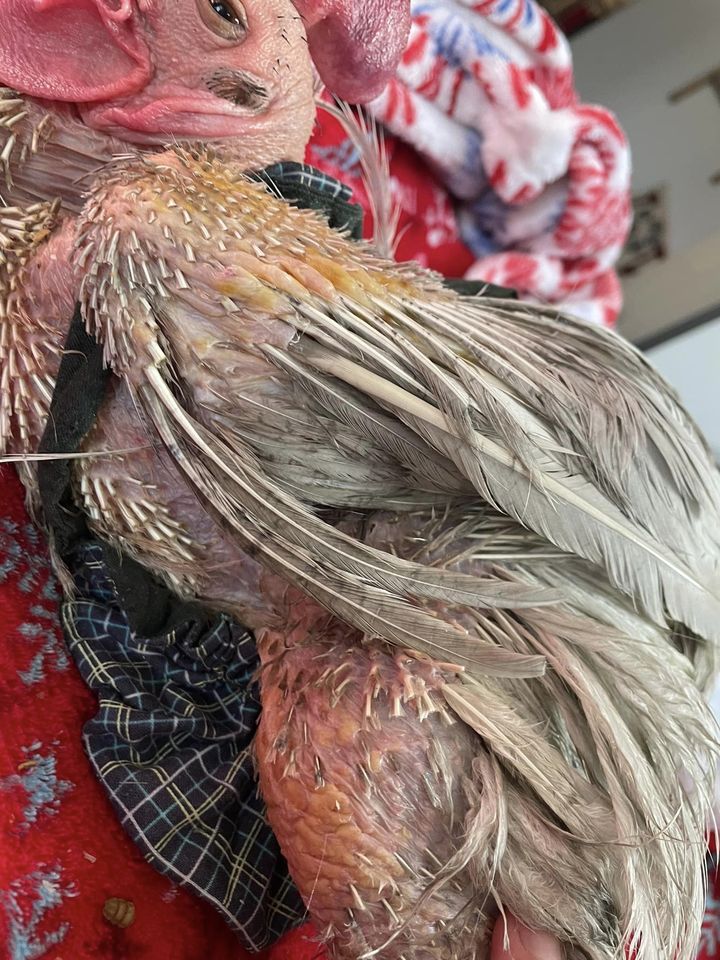
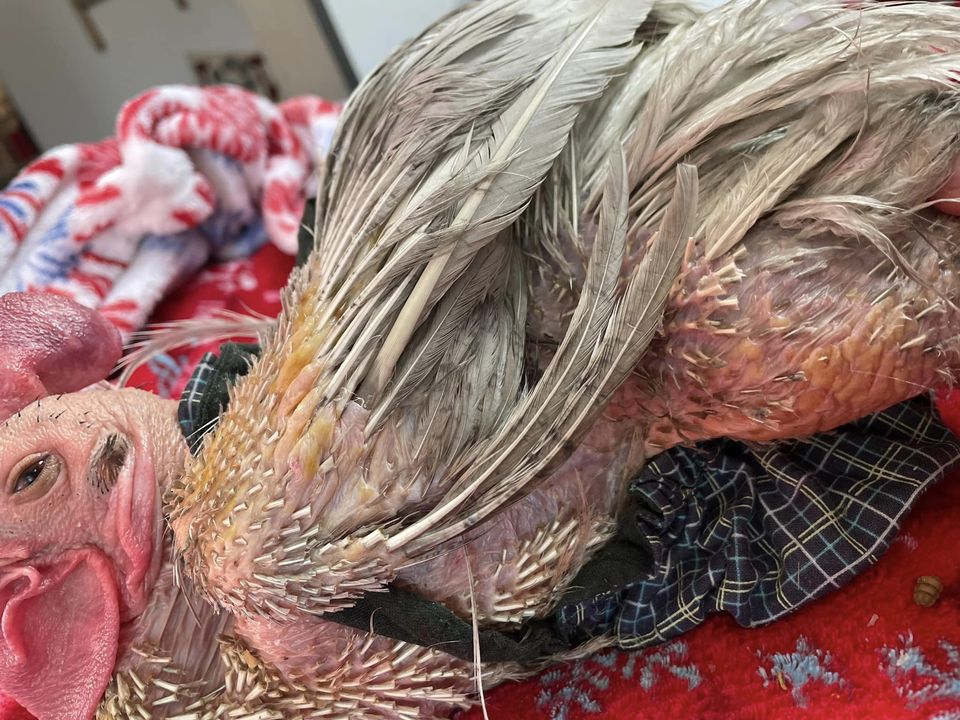
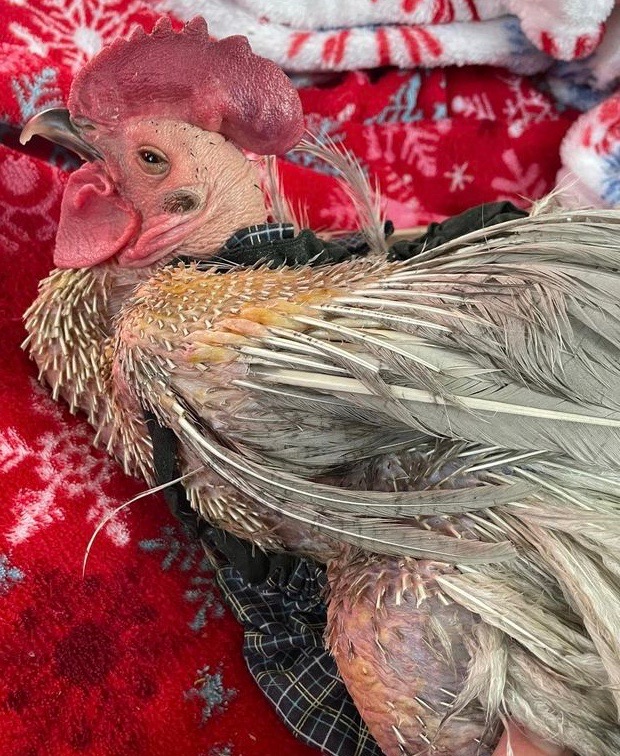
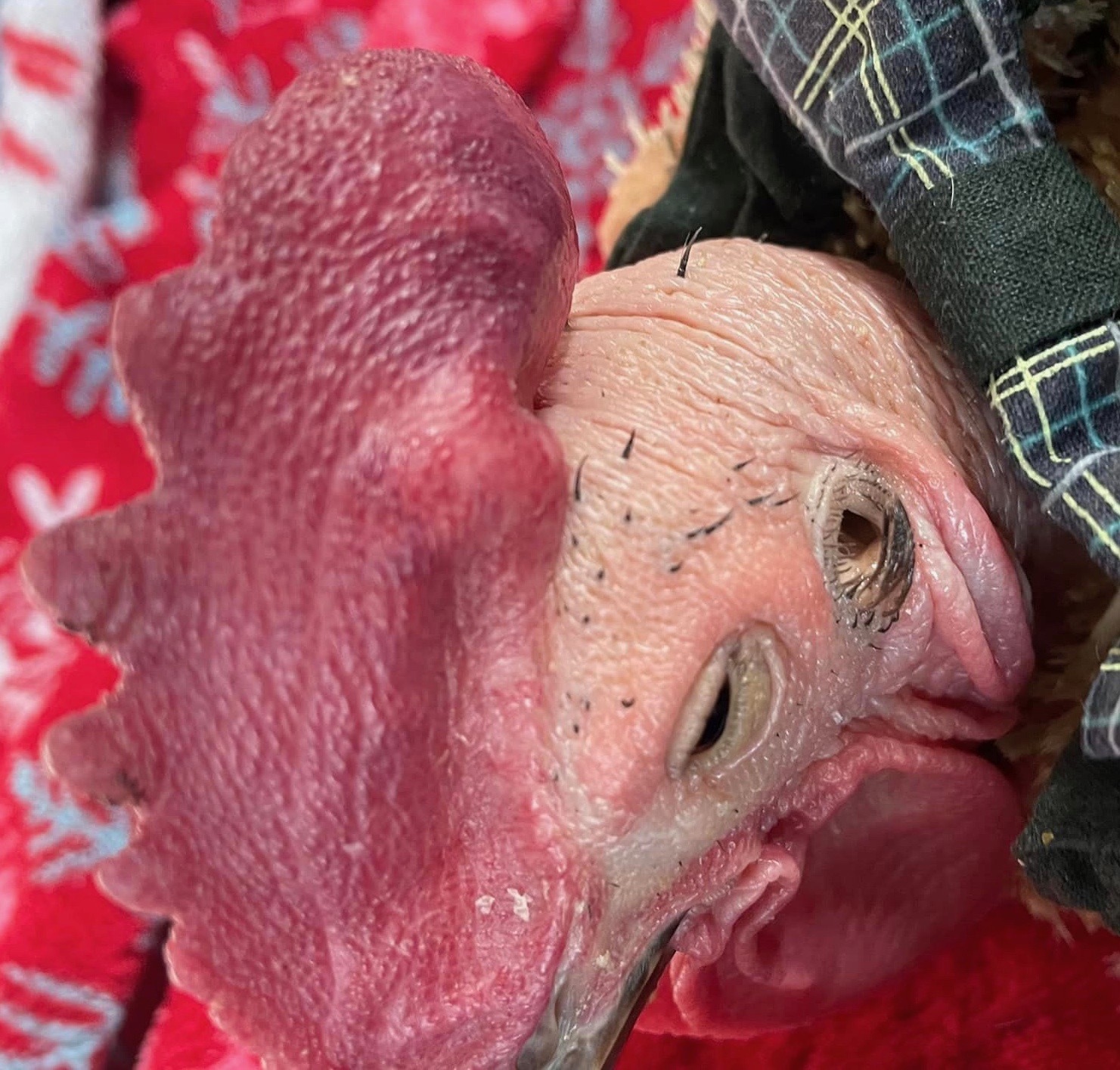
Dr Bowes:The fluctuating symptoms make me question his immune system. Cyanosis (blue comb) and open mouth breathing are signs of a cardiovascular issue. I would stop all treatments. It appears your rooster has xanthomatosis, a metabolic condition that involves collections of cholesterol under the skin. It’s usually the result of a genetic issue and has no cure.
Hemorrhage
Her skin is blue (not normal for her) around her neck, mouth is clear and acting completely normal. Only thing of note is she was bitten by a tick near her eye a month ago. – Amanda Pointer


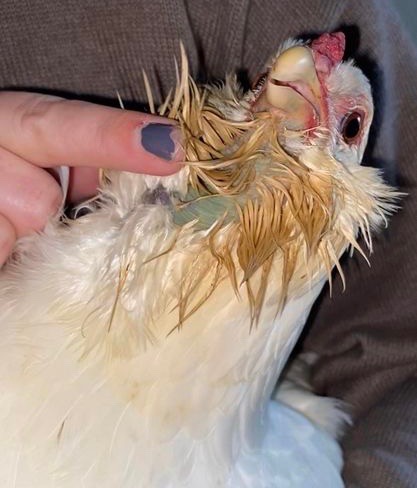
Dr Bowes: The green-blue colouration is associated with a healing hemorrhage. If it’s a bruise it will resolve itself. If not, it could be gangrenous dermatitis caused by a clostridium infection the result of a scratch or injury. Does it smell? If it is gangrene she will require that it be cleaned with an antiseptic as well as take antibiotics (penicillin). Her condition is not related to a tick bite.
Breast Abscess
My 8.5 year old Copper Marans hen has a nasty growth or abscess right on her keel. There are two ‘pads’ either side that feel almost like gristle with fluid in it. It doesn’t seem to hurt her. It’s been filling and emptying on its own. She is elderly which makes roosting a bit more challenging. – Joelle Lardi
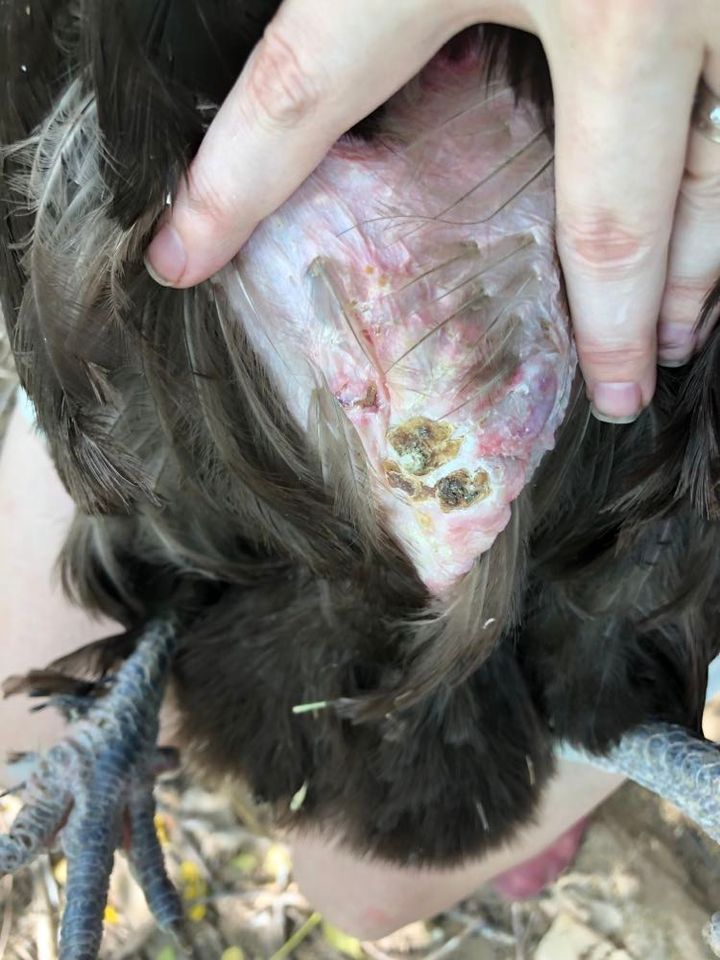
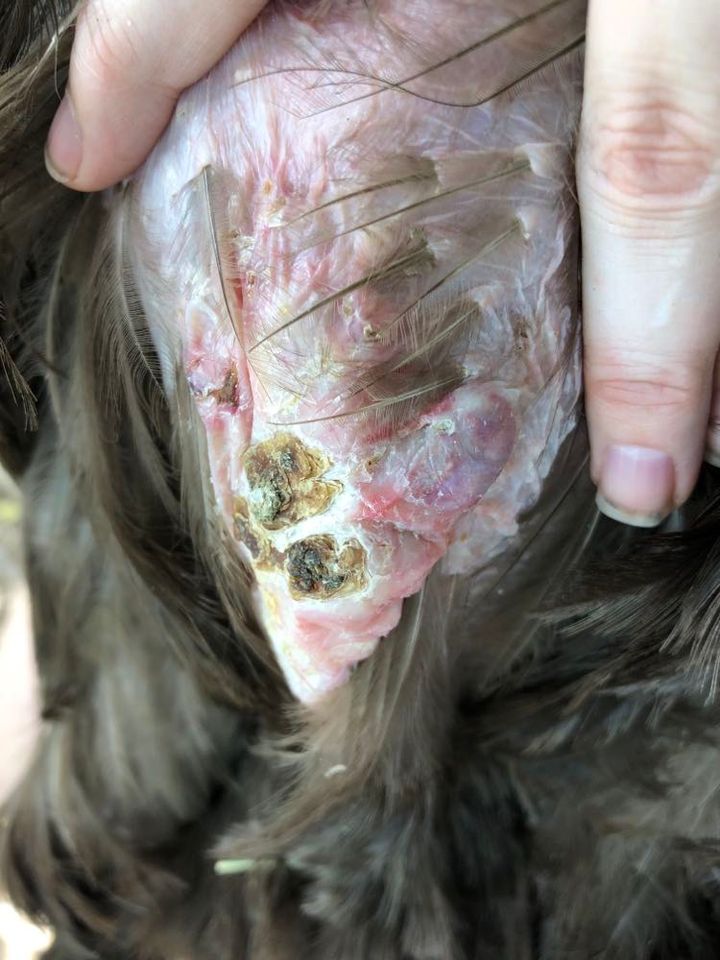
Dr Bowes: It could be a subcutaneous abscess which can impact heavy birds that are sitting on wet litter. Treat it with an antiseptic wash and monitor her. You will want to rule out the possibility of it being impacted feather follicle cysts or squamous cell carcinoma.
Update: Joelle made a straw bed on the coop floor for her hen and the abscess is starting to heal.
Well, that wraps up another edition of Show & Tell With Bitchin’ Chickens and Dr Bowes. I hope that it’s been a learning experience for you.
If you’d like help with a case drop me a line using the ‘contact’ button on my home page. Remember to wear gloves, take good close up photos from several angles and supply us with plenty of information (e.g. timelines, symptoms, medications, general flock health, etc) so we’re able to more accurately pinpoint what’s going on.
Thanks again to Dr Vicki Bowes for her willingness to share her wealth of knowledge and experience to build capacity and skills in small flock keepers. Featured photo credit: Poultry DVM To order the poster click here
 Bitchin' Chickens
0 comments on “Avian Pathology Cases: 64”