
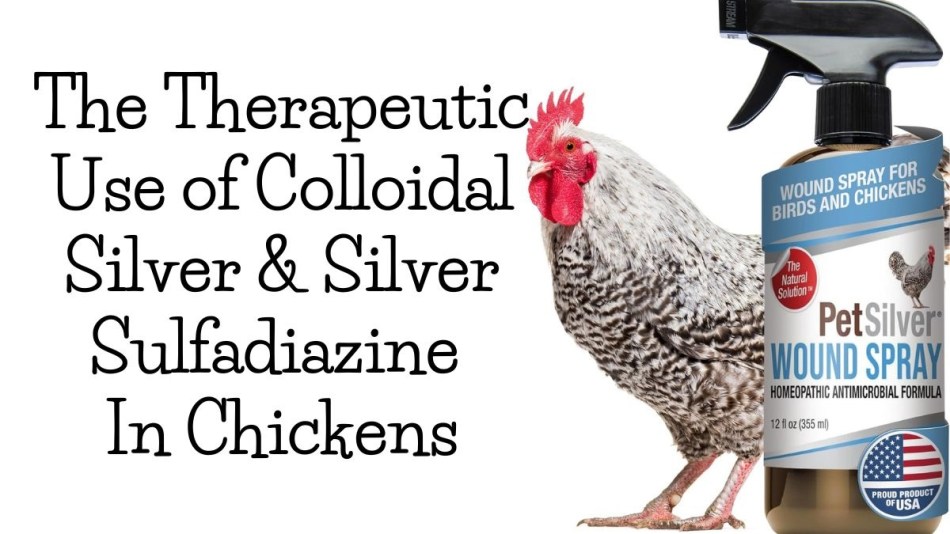
I’ve seen a number of online posts recommending the use of colloidal silver and silver sulfadiazine for chicken first aid issues. Recently one of my followers asked about its efficacy which I didn’t have an answer for. I asked my mentor, Dr Vicki Bowes, vet/avian pathologist and wasn’t aware of its usages either. She did make note to look into it, but as she’s a busy person I thought I’d start down the rabbit hole of the internet to see what I could come up with.
Like with many remedies and healing modalities there are folks that either support or oppose the use of silver. As someone who has used the services of acupuncturists, naturopaths and herbal medicine practitioners I don’t believe that something has to be studied by Western scientists to prove that it has therapeutic uses. Many remedies have been used for hundreds, and even thousands, of years with benefits that have not been scrutinized by science. Sometimes those things have been phased out as more effective remedies are found. Fully 25% of all pharmaceuticals used globally are derived from plants – many of which were (and still are) used by local healers in the areas where they were found, long before Western scientists understood their benefits.
The medicinal use of silver, which is slightly different from colloidal silver at the molecular level, is not a new idea. Silver ion has been employed as an antimicrobial for several millennia, preceding the discovery of microbes or the Germ Theory of Disease by several centuries. Prior to the understanding of germ theory, the use of silver for medicinal purposes was based on folklore or tradition. The earliest medical use of silver was for water disinfection.
When used in small amounts silver and most silver compounds can kill bacteria, algae, and fungi.
The biologically active silver ion (Ag+) acts on microbes in four ways:
- The particles can puncture the bacterial cell wall and disrupt cellular respiration.
- The ions can enter the bacterial cell, inhibiting cellular respiration and disturbing metabolic pathways.
- Once in the cell, silver can disrupt DNA and its replication.
- Silver can also remove biofilm produced by bacteria that forms on skin and other surfaces in the body, which provide a protective layer for bacteria.
Silver was the most important antimicrobial agent available before the introduction of antibiotics and continues to have various applications in modern medicine. It’s used as a component in the manufacture of catheters, breathing tubes, surgical equipment and burn dressings to reduce infections and in hospital plumbing systems to deactivate Legionella bacteria. It’s claim to fame in outerspace was producing safe drinking water aboard the Apollo space flights.
Colloidal Silver consists of tiny silver particles suspended in a liquid. Unfortunately, silver is now being touted for uses that have been disproven and, in some cases, are harmful. Current colloidal silver products are not only being used topically (on the skin), but also taken orally or intravenously. (The latter two are not recommended). Using too much or using it incorrectly can result in side effects such as blue-grey skin, organ damage and disruption of the gut biome.
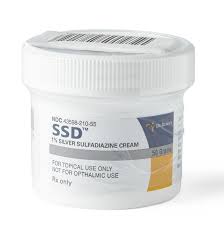
Silver Sulfadiazine is a topical antimicrobial cream made from silver nitrate and the antibiotic sulfadiazine.
If you think getting reliable information on the safety and efficacy of using silver products in people is a challenge, imagine how little data there is for its medical use in chickens. I did find several studies citing recommended applications for these products. I would feel confident saying the Colloidal Silver and Silver Sulfadiazine have been shown to be beneficial when used topically for the treatment in humans for wound care and burns.
As someone who encourages chicken keepers to keep a well stocked first aid kit these products seem to have their place, particularly as some of them can be purchased without a prescription.

Use In Chickens
- Colloidal silver applied to hatching eggs (50mg/kg concentrated spray) were shown to be effective in reducing bacteria and loss of moisture. In control groups chicks from eggs treated with CS spray had lower mortality and considerably higher body weights at 14 days of rearing.
- Topical antiseptic used to treat wounds, burns and skin infections. Dosage: the cream should be applied once or twice/day to a thickness of 1/16”.
- In one study, silver nanoparticles administered orally via drinking water (50 ppm) did not positively impact Campylobacter jejuni infection in broiler birds and, more importantly, negatively affected body weight and plasma immunoglobulins and immune response. The use of oral administration is thought to be harmful in chickens.
- Silver sulfadiazine is an antibiotic and antifungal which works by killing or preventing the spread of bacteria.
- Cream is used to prevent and treat wound infections in patients with second- and third-degree burns.
- Poultry DVM recommends its use topically to treat wounds and skin infections.
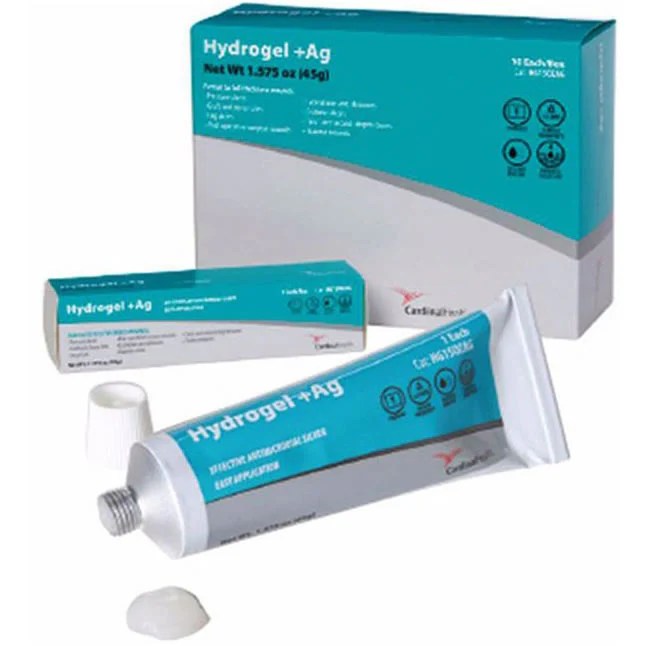
- Over-the-counter wound care products include Hydrogel +AG (Read labels carefully as not all hydrogels contain silver products).
Credits: BMC Veterinary Research; European Poultry Science; National Centre For Complementary and Integrative Health; National Library of Medicine; Poultry DVM; Science Direct; Joe Schwarcz, PhD; verywellhealth.
 Bitchin' Chickens
0 comments on “The Therapeutic Use of Colloidal Silver & Silver Sulfadiazine In Chickens”