
I’m a chicken keeper and a naturalist. Not all poultry folks are both. The responses to encounters with wildlife run the gamut: from acceptance that those species have the right to exist, to working harder to predator proof coops and runs and restricting birds’ free-ranging access, and all the way to wanting to eradicate every form of wildlife on a property whether those animals have shown any predatory behaviour ‘just in case’.
I live in an island with few native predators: mink, marten, raccoons, hawks, owls, ravens and, of course, dogs. I am fortunate, in that, I’ve had relatively few negative interactions with potential predators. I live on a small acreage surrounded by forest and some of my neighbours have had to contend with both mink and raccoons.
I’ve only once had a mink in my pen. I chased it off. It came back later that day and despite the naysayers advice that it would be back until it killed my whole flock I never saw it, or any other mink, again.
My birds have been penned for the last decade. Not in a tiny jail but a 30’x40’ fenced area with fruit trees and sheltered areas. The whole top is netted as well. The wire fencing on the other hand – some with 2”x4”, but most with 4”x8” openings – would allow a mink or determined raccoon in. I know that because I once, in fact, witnessed a fat raccoon squeezing out of my pen.
I’ve had three issues with raccoons. The first was a daylight attack in which I was able to wrestle my hen from a raccoon who was attempting to pull her through the fence. She made a full recovery. The other two were not so lucky. They both missed bedtime lock up (one was broody and hiding on a stash of eggs) and hunkered down in my three-sided shed. Lucky raccoons came upon them in the middle of the night and found an unguarded, tasty meal. I can’t blame them for my oversight.
I see their tracks on occasion, in the snow or mud, yet they never seem to bother my birds. Perhaps I’m just lucky or that we have come to some kind of unspoken agreement that they can help themselves to my compost as long as they keep their paws off my flock.
As we encroach on or destroy the natural habitat of many species we’ll have more encounters with those seeking an easy meal. A knee-jerk reaction would be to kill anything that might pose a threat to our flock – a strategy that can backfire as more animals may move in to fill the void. Many folks’ means of controlling those predators can be cruel: leg hold traps, poison, or tempting snakes to eat indigestible fake eggs. A more meaningful response would be to figure out how we can keep our birds safe without eradicating other species. Or if we can’t live with those predators are we able to relocate them?
I recognize that I don’t have to deal with the risk of big predators: coyotes, fox, bobcats and bear, or the exotics like large snakes and alligators. I feel for the folks that do. And, of course, not all encounters with wildlife are negative. Many chicken keepers have stories of feeding wildlife as a means of deterring them from predating on their flock, or co-existing animals that live on their property without harming livestock.
Here’s a range of responses from chicken keepers and their feelings on wildlife.
Owls
We have issues with pigeons and sparrows, then one night my husband came across a pair of small owls in the back of one of the covered runs. We’re down to only two pigeons and are working on other ways to keep the sparrows out of the coops. – Carol Mullen
Most owls around your coop are hunting for rats and mice. Please don’t poison their prey (i.e. rodents) as it moves up the food chain, poisoning the owls as well. – Bitchin’ Chickens
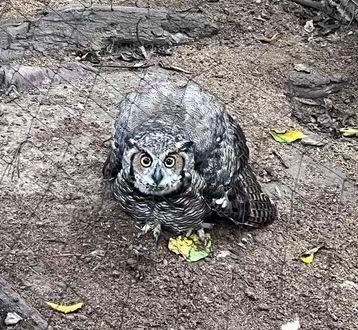
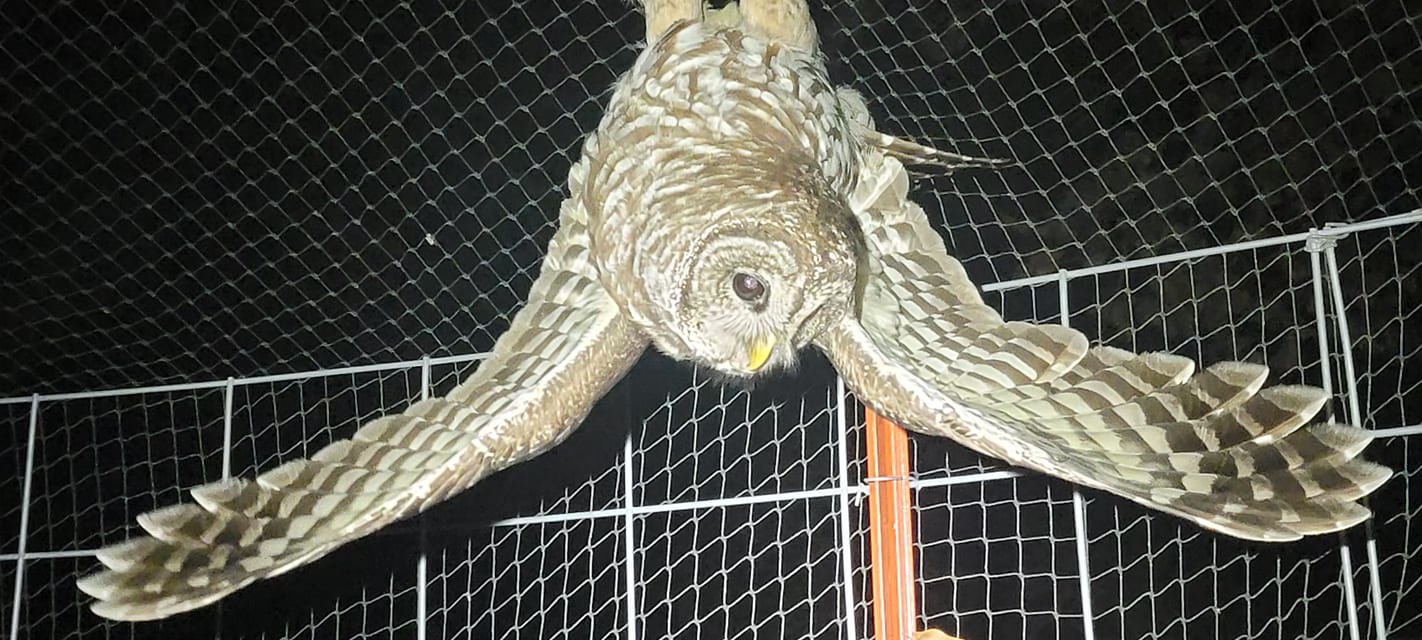
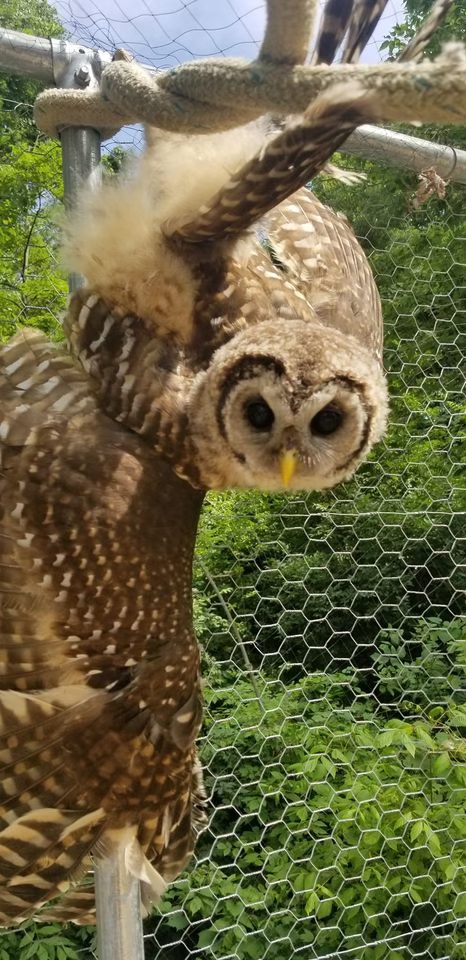
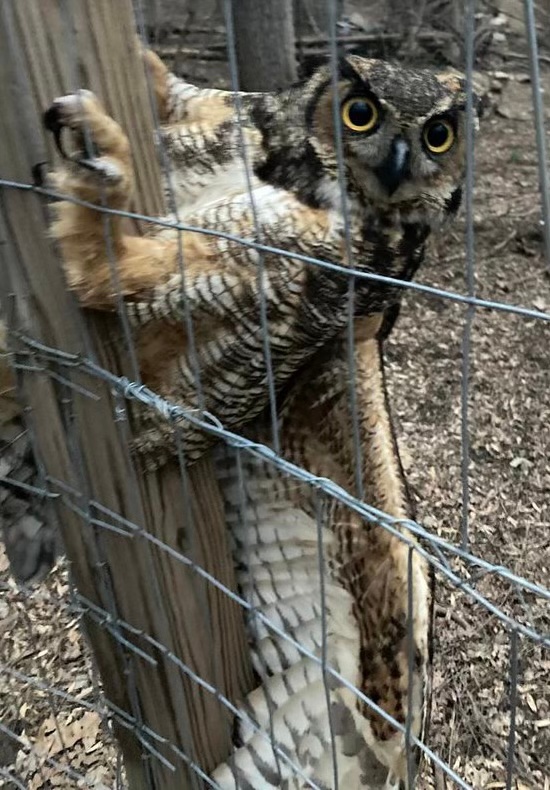
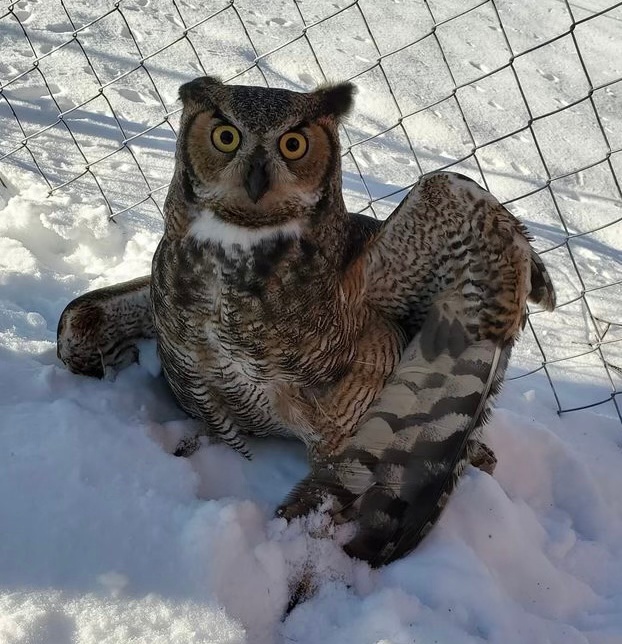
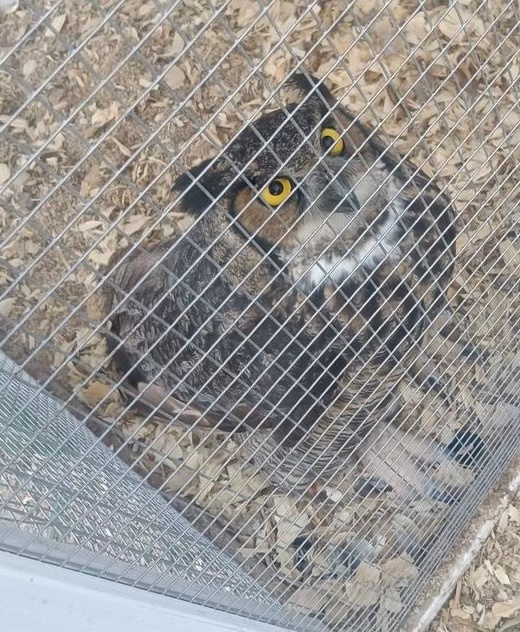
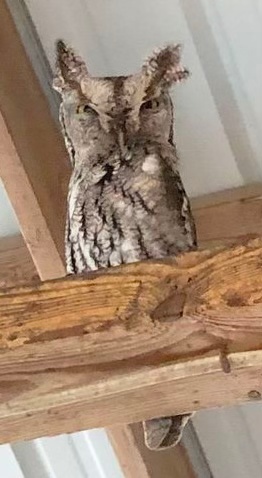
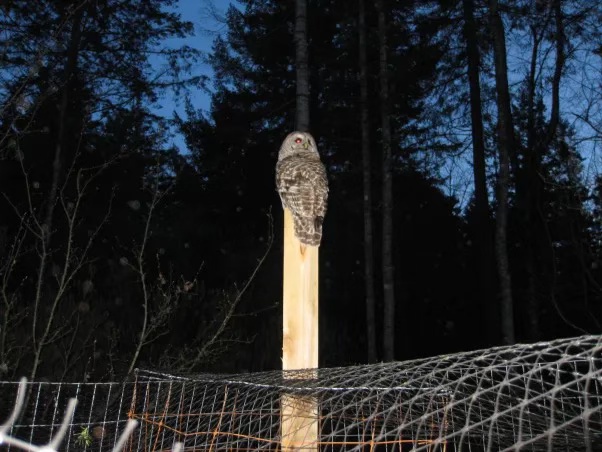
Photo credits: from top to bottom: Ally Harman; Kristen Carter; Sue Sidle; Autumn Williams; Kristen Thomas; Robert Foster; Moonlight Mile Farm; Bitchin’ Chickens
Raccoons
My hens were so relaxed and not bothered at all with this raccoon’s presence while I was screaming and shouting and poking it with a stick. Camera footage showed me that he ate a bunch of corn and grain in the coop and then just made himself comfy behind the birds. I’m so thankful he didn’t eat my chickens. He was in there for about an hour before I found him. My question is “Why did the chickens not care? Why are they so dumb!?” – Melody Littig
I actually had a young raccoon who used to come in my duck yard in the evening and he would walk by my ducks and geese. They would just look at him without freaking out. He would head straight to their feed bowls and chow down. He would even walk in the pond and pen area if I was there. I made a deal with him: all the duck feed he wanted as long as he left the ducks and geese alone! It worked but after a few weeks he disappeared and I’m afraid the neighbourhood coyotes got him. – Gary Bridier
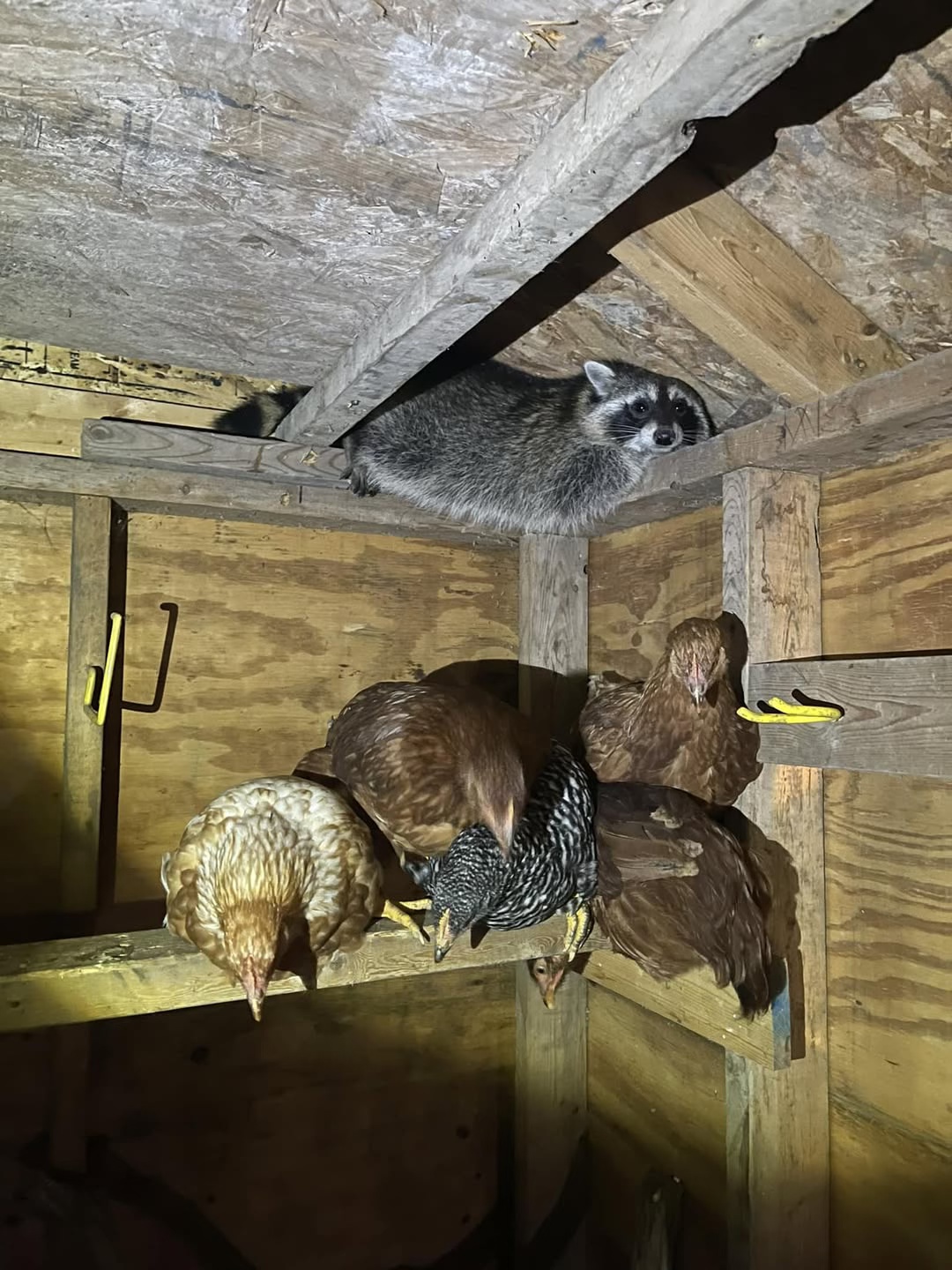
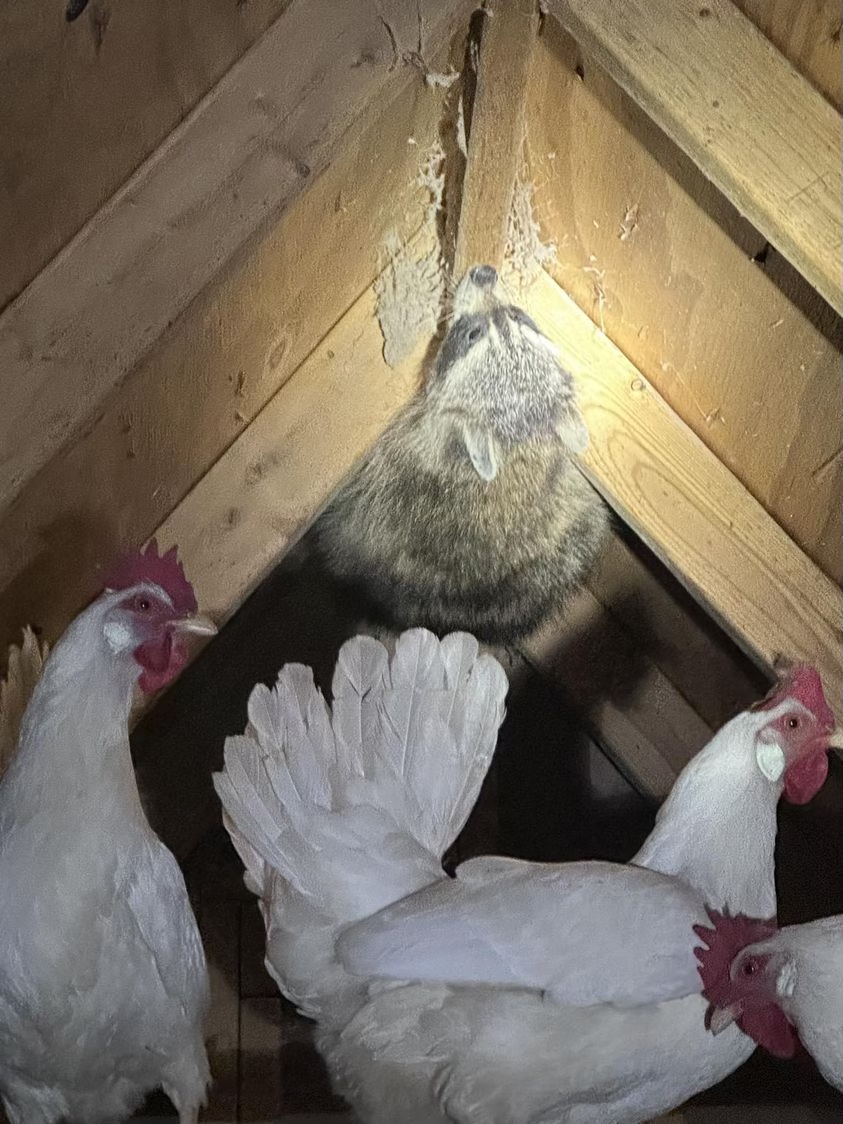
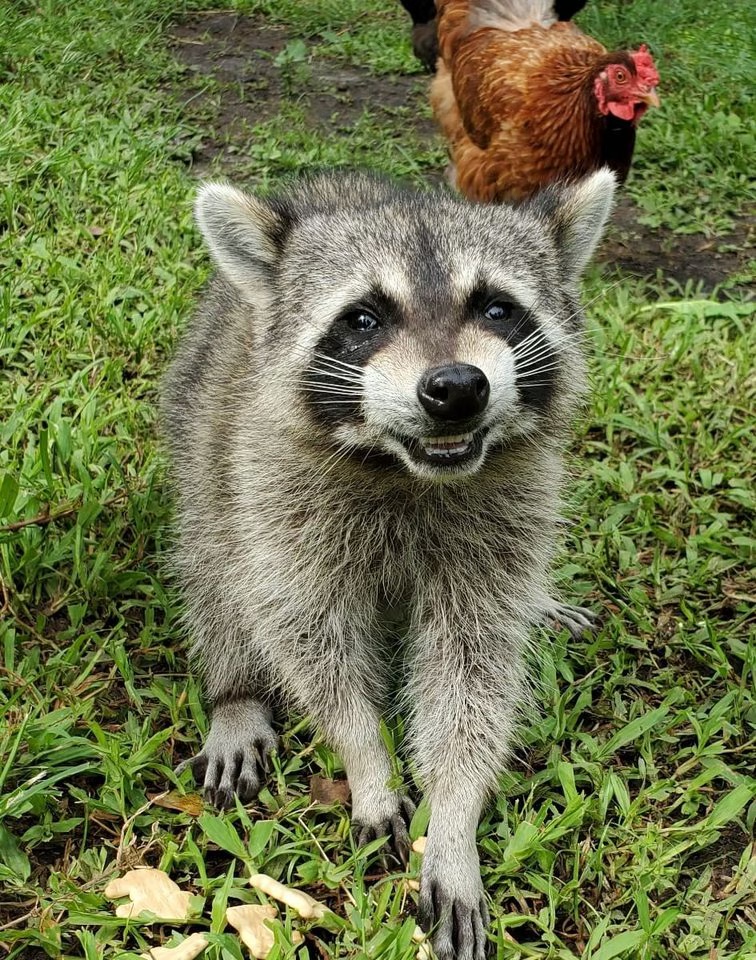
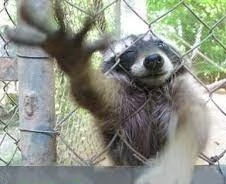
Photo credits: Dave Bielby; Colin Burkott; Melody Littig; VJP Poultry
Please do not trap raccoons as it is only doing what a wild animal does. It survives by hunting for food. Your yard is an inviting smorgasbord for any wild animal. It is best to make a predator proof run for your chickens. If it’s not raccoons it will be bears, cougars or eagles and depending on where you live, otter and mink as well. Ravens are also going after small livestock. You can’t stop them all and if you love your animals you will want to protect them by containing them unless you are outside with them. After loosing a hen to a raccoon we built a gazebo-style coop with metal fencing that we dug two feet into the ground to keep the diggers out and then wood/metal roof for the climbers, flyers and jumpers. Nothing is getting in and the girls still free range when we are in the yard. I’ve never blamed the racoon as it is only doing what it needs to. I blame myself for not keeping my girls safe. I love my hens, but also the wildlife, that’s why I moved to the island. We all must learn to cohabitate with our wild neighbours as their spaces are becoming human spaces and with the loss of their spaces comes a loss of the food they would survive on. If you provide food, they will come. Consider containing your peeps for their safety. – Kelly Chartier
When your alarm in the chicken coop goes off at 9pm and there is no way you are going to lose one more chicken! Yep, a raccoon. – Teresa Ravan Grizzle
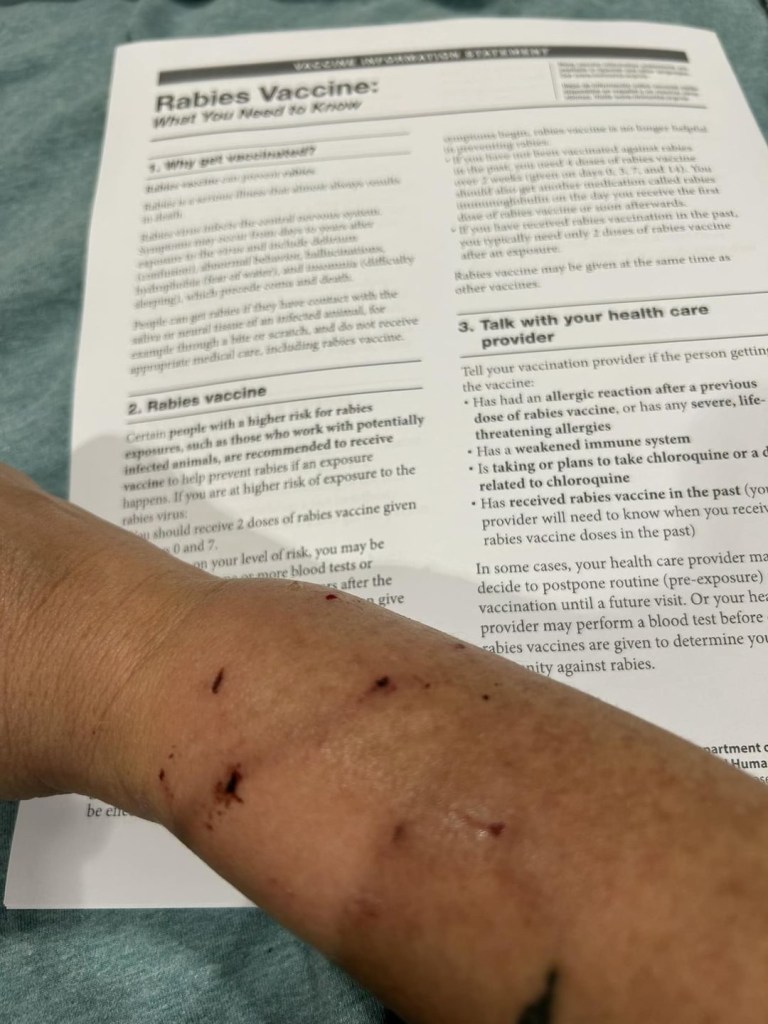
Bitchin’ Chickens: I originally posted this on my Facebook page in February 2023 and was a bit dismayed that many folks suggested I proactively kill/relocate the raccoon which missed my point: that it is possible to co-exist with potential predators. I’m posting it here in the hope that some of you will have found ways to live peaceably with wildlife. BTW: I’ve had no issues with raccoons since I wrote this.
I live in a temperate rainforest. We get lots of rain over the winter and very little snow. We’ve had about 5” over the last couple of days and now it’s starting to rain and wash it all away. My birds hate the snow and have been holed up in the coop until it’s well and truly gone.
When I went out to the coop this morning I noticed a trail of tracks around the perimeter: raccoons. It always surprises me when I see evidence of their presence, because I so rarely see them. I’ve got a dog (although her fenced yard isn’t close to the chickens) and many of my neighbours have one, or two, dogs so that probably deters them from coming out during the day.
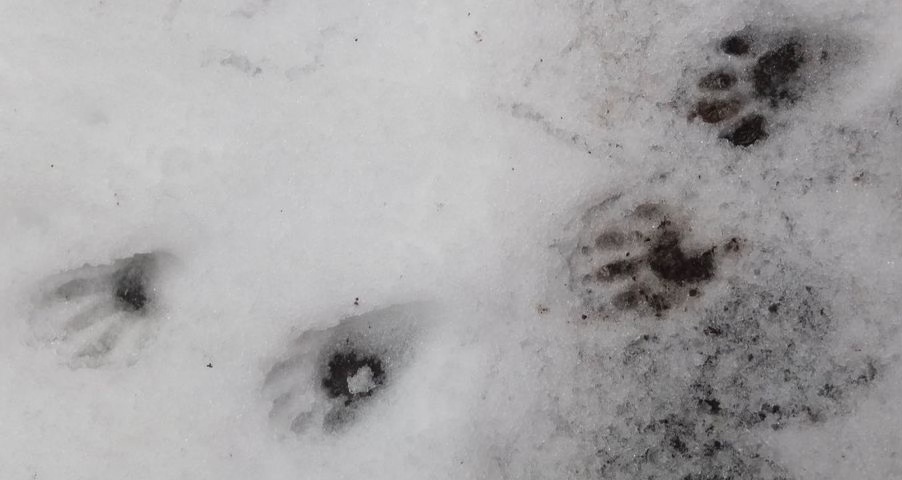
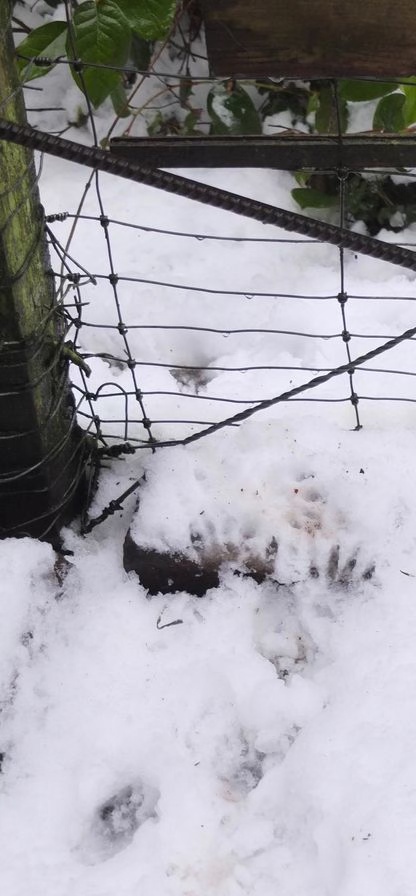
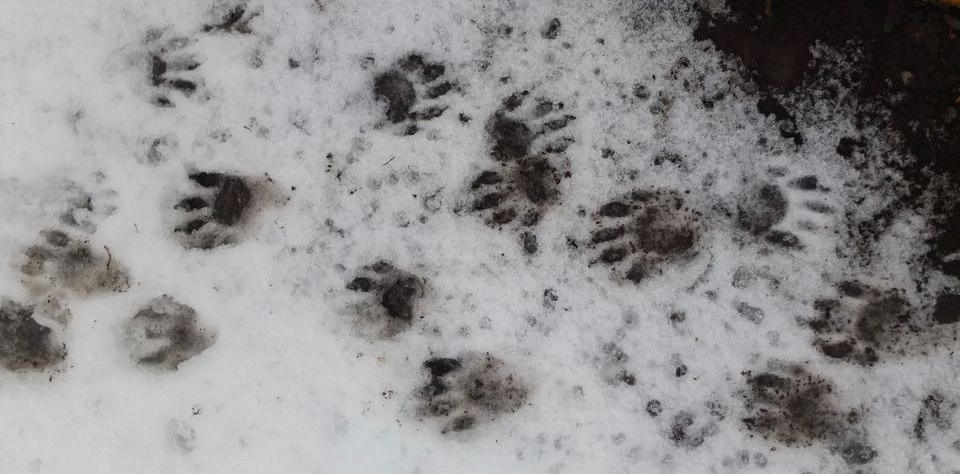
Photo credit: Bitchin’ Chickens
When I went into my fenced chicken pen they had been there too. Clearly, even someone with a fat bum can squeeze through 4”x 8” mesh. They are more interested in finding produce scraps my flock has left than predating on them.
I notice that lots of chicken keepers go-to would be to advise me to trap or to kill that raccoon before it does damage to my flock. Why would I do that when they obviously could be hurting my birds and they don’t?
I’ve got an automatic door and am vigilant about locking them up every night. There’s only so much you can do to protect your birds.
Seeing those footprints wasn’t a call to go on the offensive, but simply a gentle reminder that I live on their territory and we have found a way to co-exist.
One of the things non-chicken owning neighbours complain about is that having chickens attracts rats – not the birds themselves, but dropped feed, compost and a cozy coop to bed down in. I thought my coop was impenetrable – it’s got a concrete foundation, plywood interior clad with cedar siding. The roof is metal and there’s wire mesh along any openings and over all the windows. For several years I was aware that Norway rats were tunnelling under my coop’s foundation. I set some snap traps, caught the occasional one, but they were never really a problem. Then the Roof Rats moved in. Unlike their predecessors who are diggers these guys, as their name implies, are climbers. Somehow they made their way into my coop and despite my best efforts (blocking openings they’ve created, picking up chicken feed overnight) I haven’t been able to keep them out. They have chewed the roofing paper causing condensation issues and find small amounts of dropped feed. I can’t imagine the amount of poop accumulating in the walls.
Once they get into your buildings, whether it’s a house or coop, they can cause damage by chewing insulation, wiring and plumbing. And once inside the walls it’s harder to eradicate them. They can eat chicken feed, eggs and even chicks. I once watched an online video of a rat stalking and killing a bantam chicken at night.
Rats are carriers of pathogens that affect both chickens and people. They carry diseases on their feet and in their droppings, which can contaminate bedding, coop floors, feeders and waterers.
They make nests in your shavings and bales of straw. A friend once gave me several garbage bags of alpaca fur, which were unsuitable for making into wool. I stored them under a tarp near the coop. When I opened one up months later there was a rat nest and dead babies. Nothing like providing rodents with the best bedding for their kids.
I’ve tried a number of strategies to kill them and the most successful has been snap traps. I know other folks recommend glue traps, bucket (with water in the bottom) traps and various feed concoctions and, of course, poison. I can relate to their frustration but I can’t condone anything that causes undue suffering and in the case of poison, collateral damage to other species.
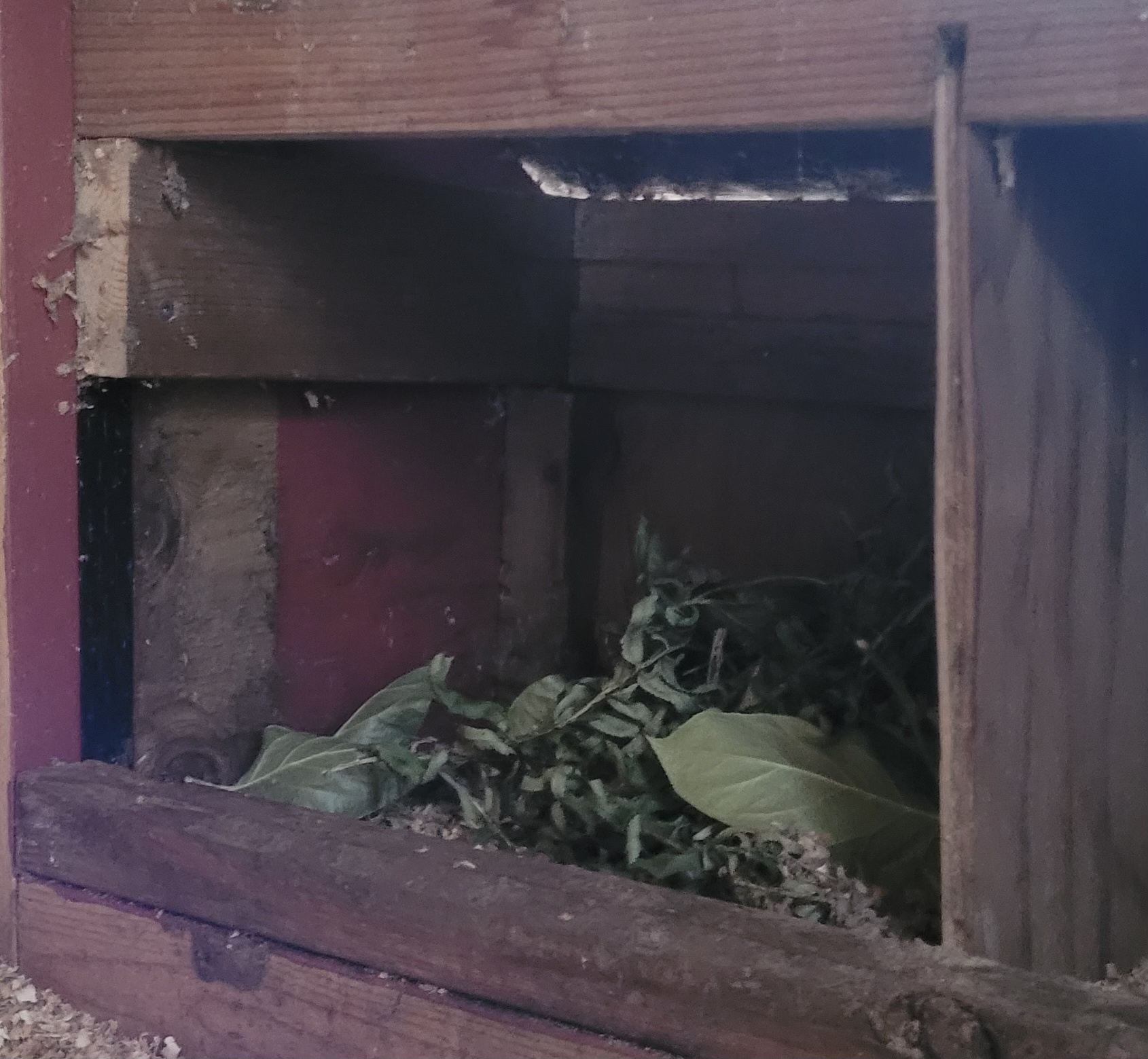
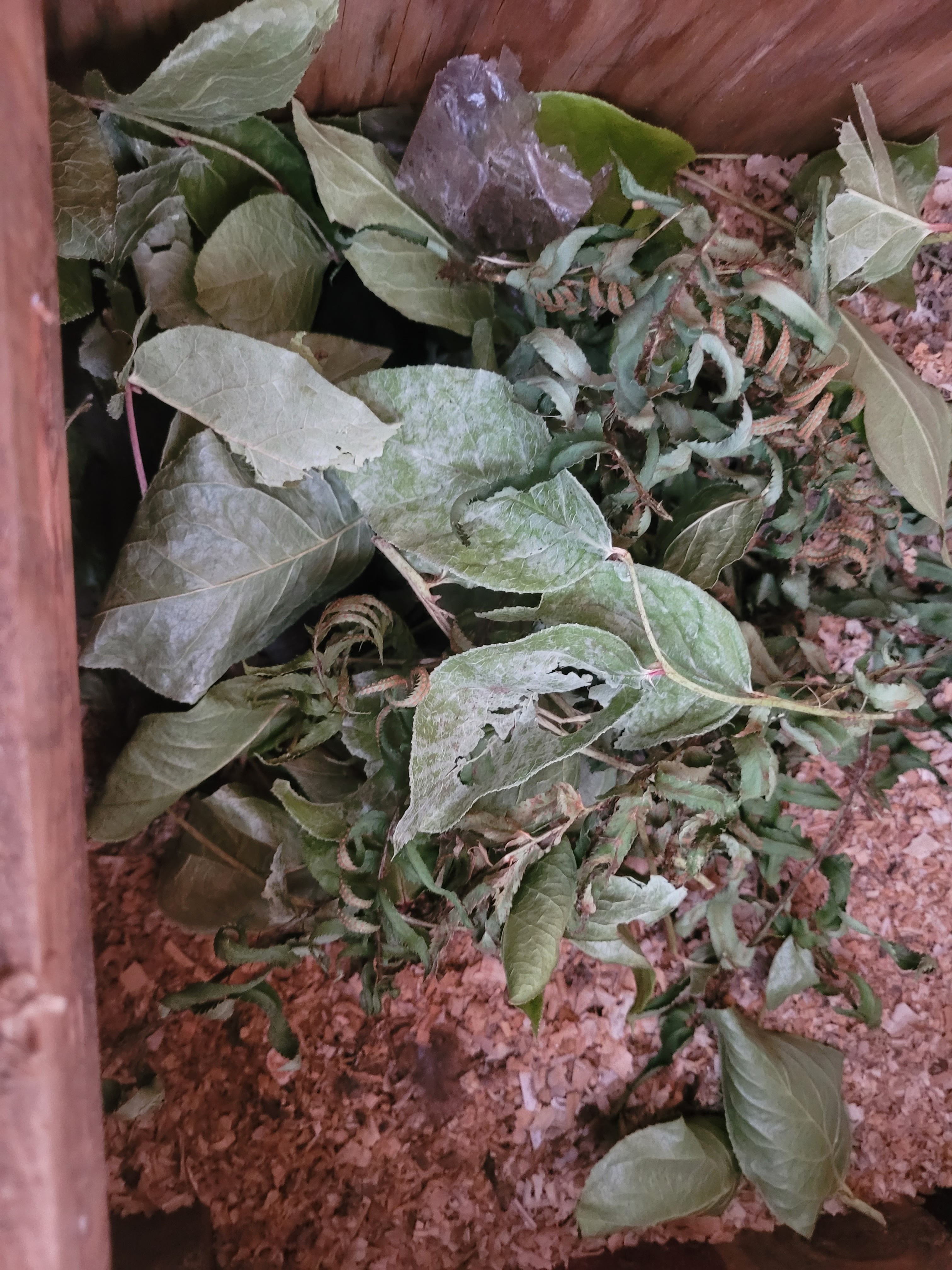
Rat Nest In An Unused Coop Photo credit: Bitchin’ Chickens
I am sad today. All but two of my chickens have died because somebody in my neighbourhood put out rat poison and rats poop everywhere and the chickens ate their poisoned poop and then died, one by one. I’m sad for me because this was my happy place: it’s my Zen, my self-care. I loved those birds like they were pets. I take care of them they provide for me and I provide for them. And now they’re all gone.
This didn’t’t just kill my homestead; I have a nest of owls who reproduce in my backyard every year for the past seven years. They eat the rats and this causes harm and death for them. Not to mention all the backyard birds, small dogs, cats, anything really that will eat something like a lime green rat turd or predator like an owl, eagle or a turkey vulture because a dying rat looks delicious.
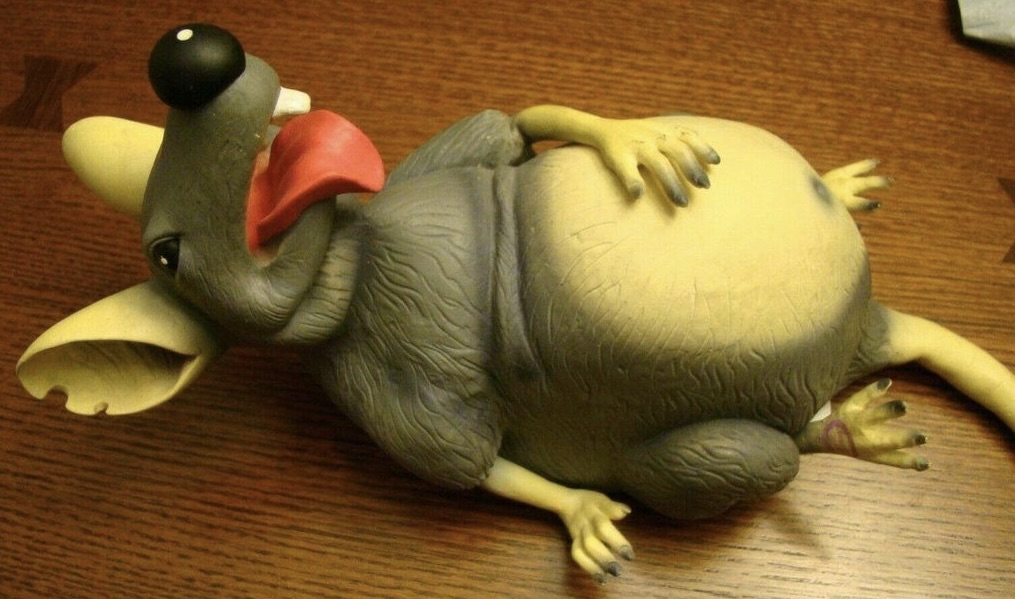
I am careful not to leave feed out making it accessible. I love my birds. Please stop using rat poison and find a more humane way for all the other animals that don’t deserve to die because of this. There are other ways to control rodents.
This has affected me and my tiny Homestead and my heart and well-being. I also want bring awareness to the fact that this also affects wildlife and nature our beautiful province. Do better humans. – Jade Zaworski
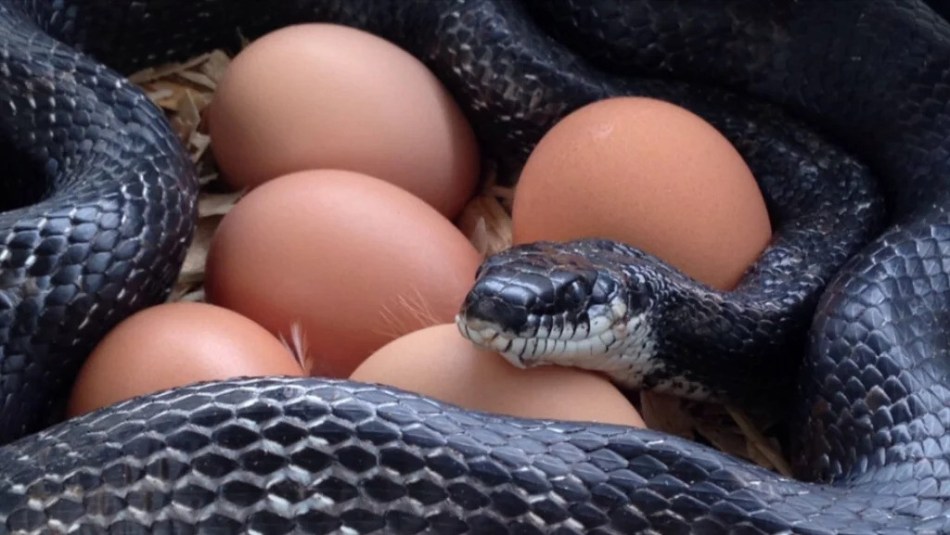
Snakes are a tricky one, but there are ways to keep them out of your coop. Leaving fake eggs and golf balls for them to eat (photo far right) results in a slow painful death. There are folks that put out the occasional egg for the resident snake knowing they are good hunters of rodents and will clear the coop of mice and rats. – Bitchin’ Chickens
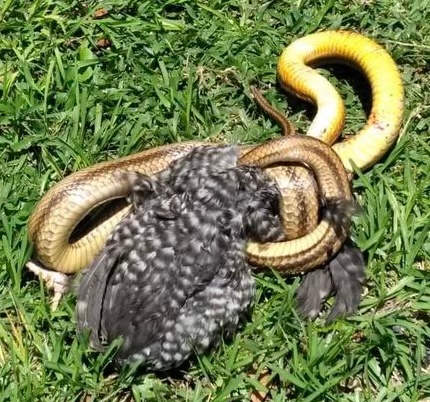
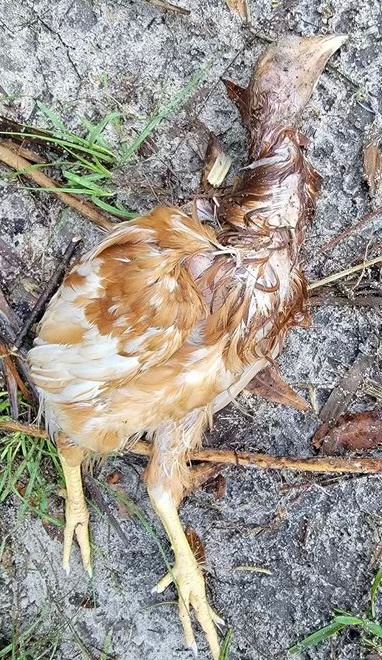
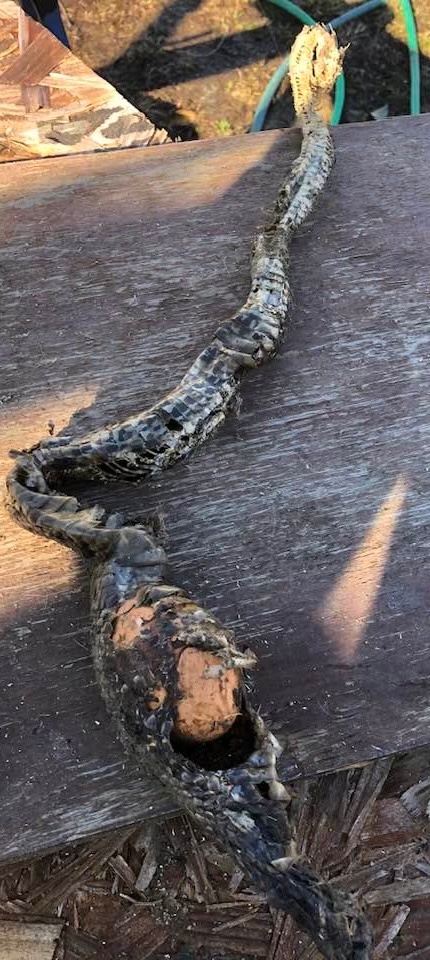
Photo credits: Linda Evans; Natalia Haftkowycz; James Metheney
“This is your periodic reminder that if you are going to use these with your chickens (which isn’t necessary), PLEASE practice proper ecological ethics and either affix them FIRMLY to something too big to swallow or glue three of them together with a permanent adhesive such as Original Gorilla Glue. There is no need to condemn wildlife (usually harmless rat snakes) to a slow and painful death because they mistook fakes for real eggs.”
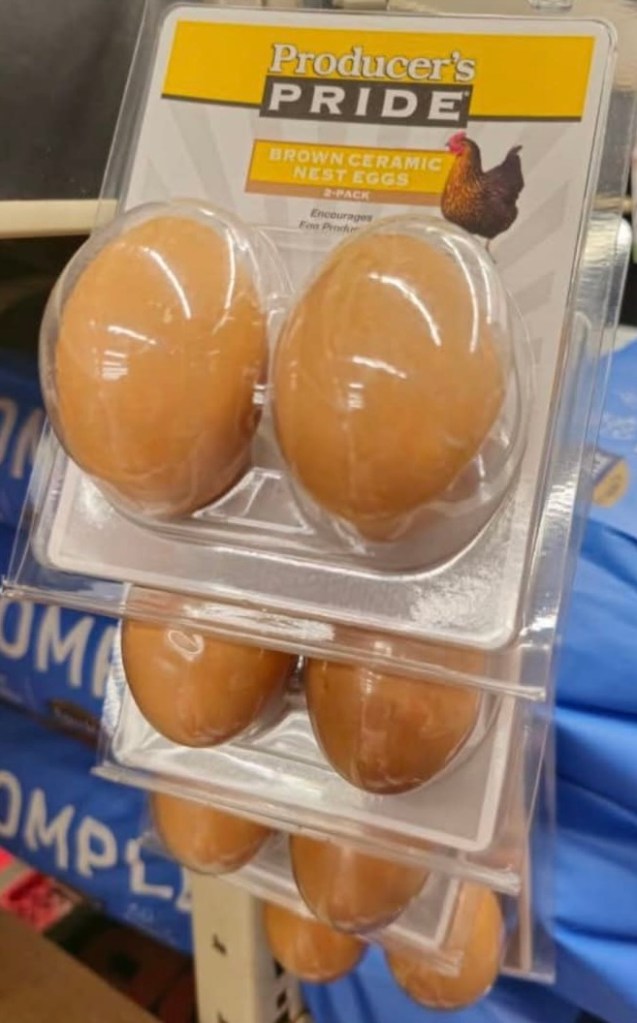
“I’m not asking you to like snakes, but you should be able to grasp that they were here first. You are the invader, not them. Besides, they are beneficial members of the ecosystem. They deserve to have their life respected like any other animal. Please take five minutes to do the right thing and make sure any fake eggs are impossible to swallow. Thanks.” – Unknown
Not all encounters are negative:
We have small backyard in the city, but we get lots of wildlife visitors. One time I looked out and there were deer, squirrels, and a rabbit, in addition to our birds. Our chickens also are not bothered by the local raccoons (for the most part) as long as I keep the food bucket in the yard full. One year, a mamma raccoon with 4 babies visited our yard. – Monika Hofmeier
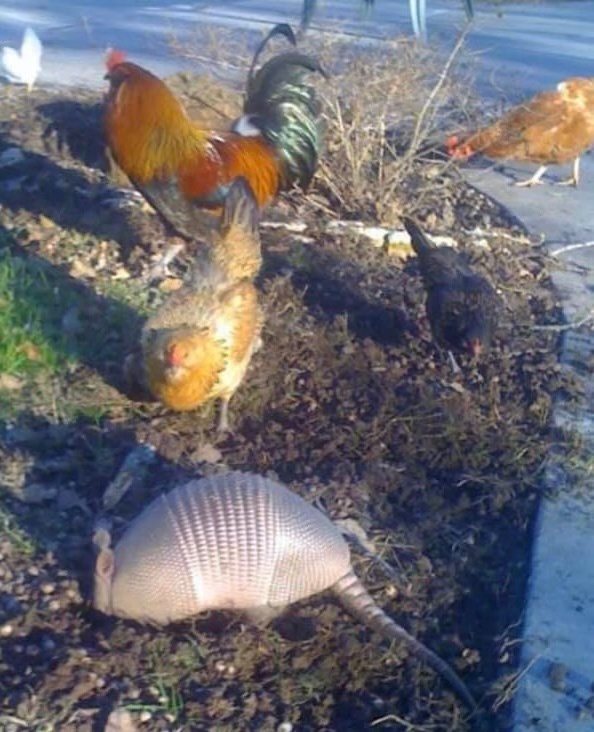
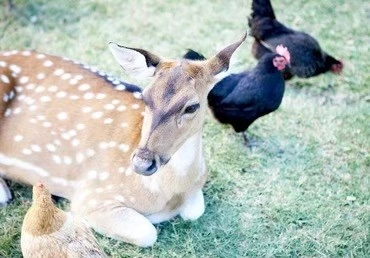
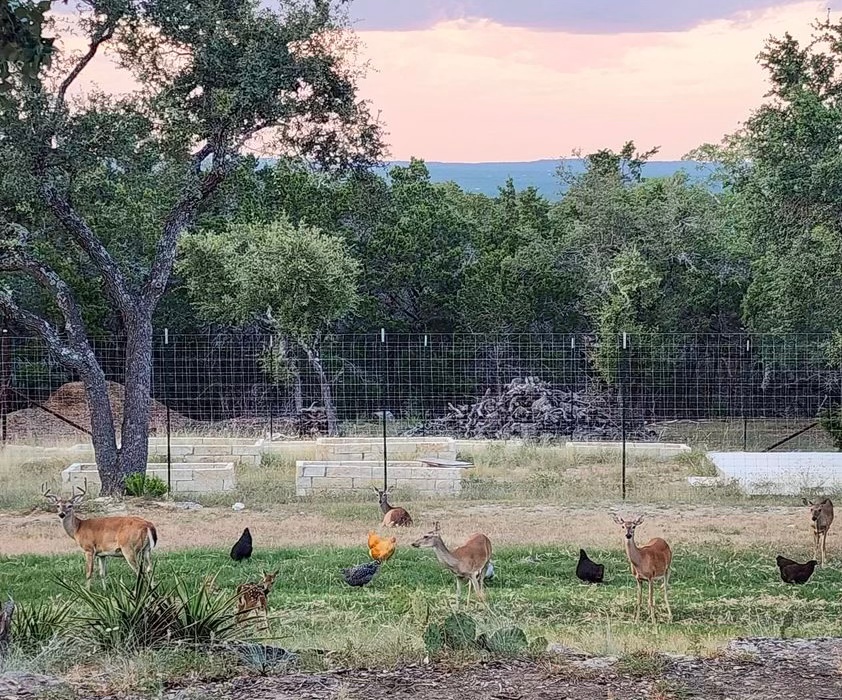
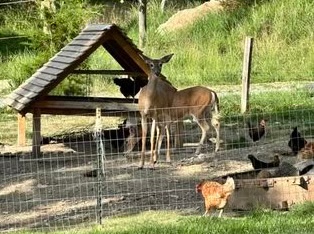
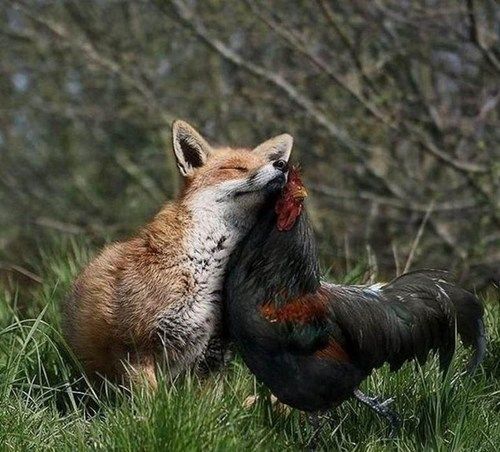
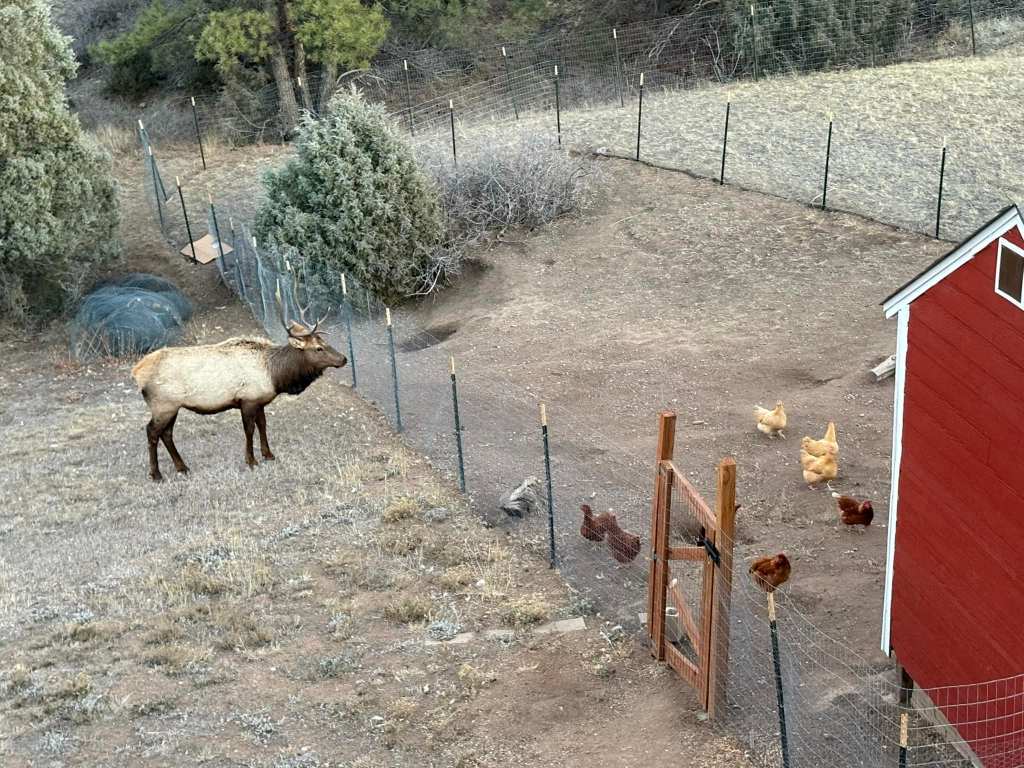
Photo credits: right to left: Becky Gandy; Shutterstock: Heidi Ledford; Unknown; Kelly Mimi Riner
And in some cases it’s the potential predators that are vulnerable and at risk:
Our girls have a predator proof coop with a run. When the automatic door opens they go into the larger unprotected run. I try to bring the food in at night but I’m forgetful and it only gets done about 70% of the time. I’m aware that opossums clean up the pumpkin, watermelon and other scraps the chickens don’t finish during the day. When the containers get left out they try to break in to get some feed. These are pretty sturdy feeders so they usually don’t get much. A couple of weeks ago, I notice one of the weather covers was missing. I couldn’t find it anywhere and I worried that it was wrapped around an animal’s neck.
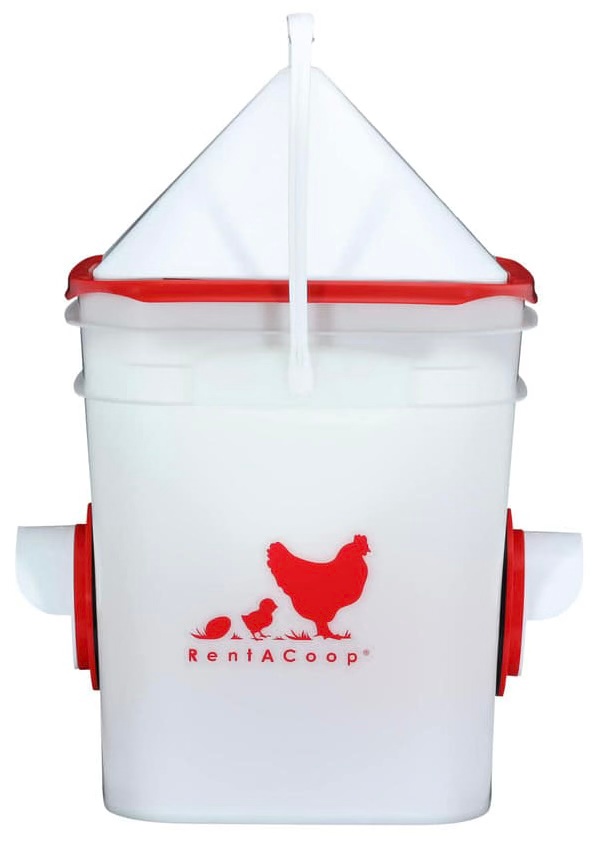
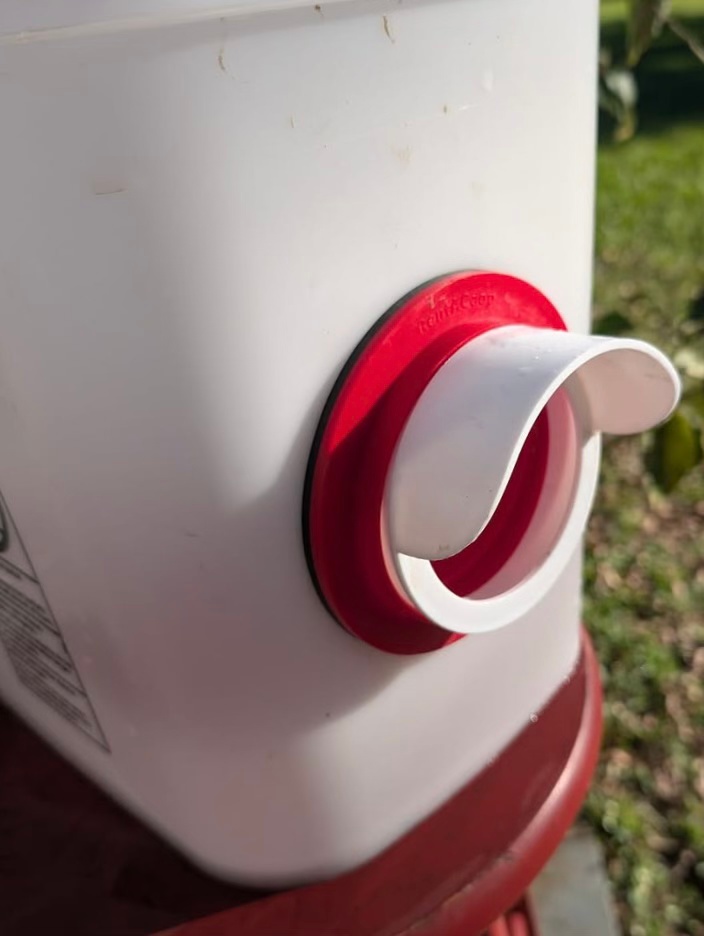
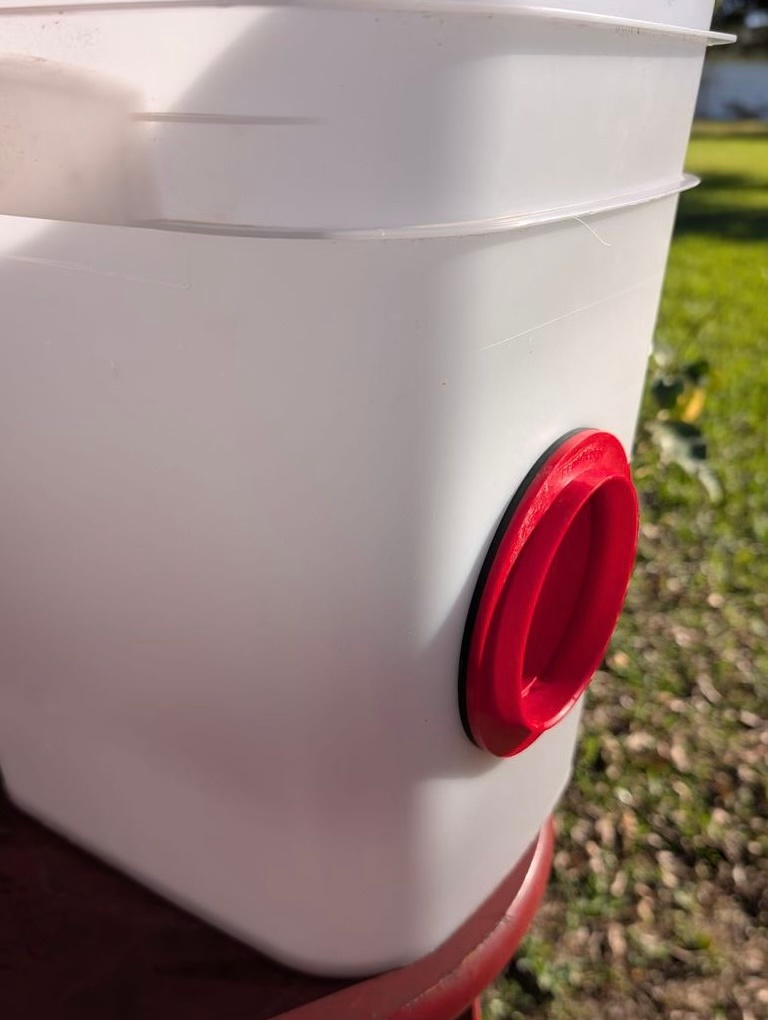
Two nights ago that fear was confirmed. We saw this poor fella wearing the the plastic cover. I felt terrible. After two nights we were able to trap him and cut it off. It was on extremely tight and was smelly from where the skin wasn’t able to breathe. Luckily it didn’t cause any injury.
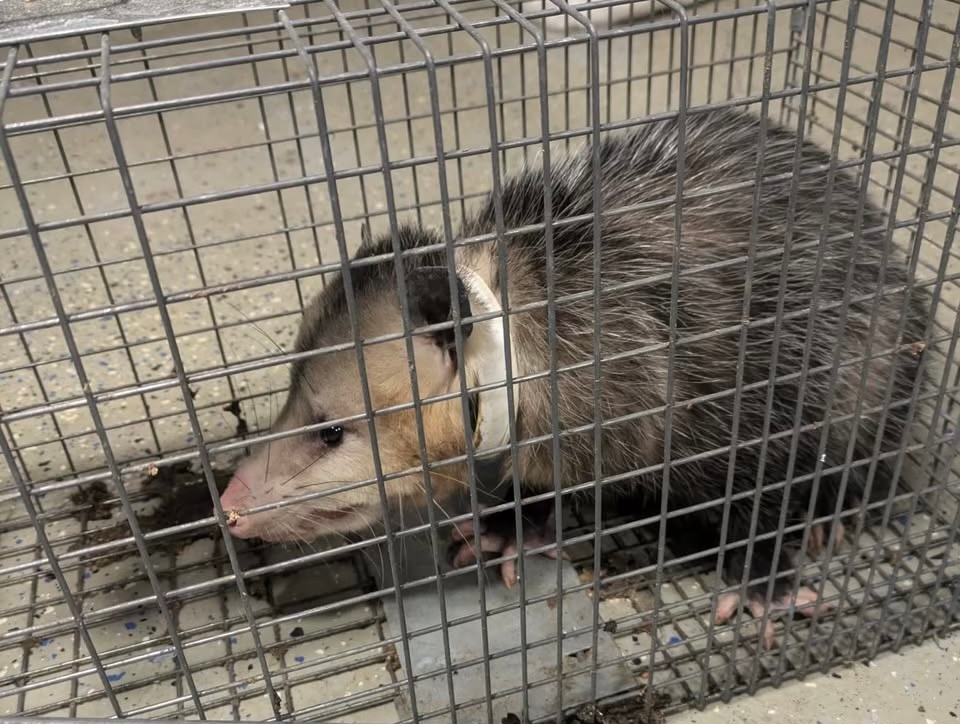
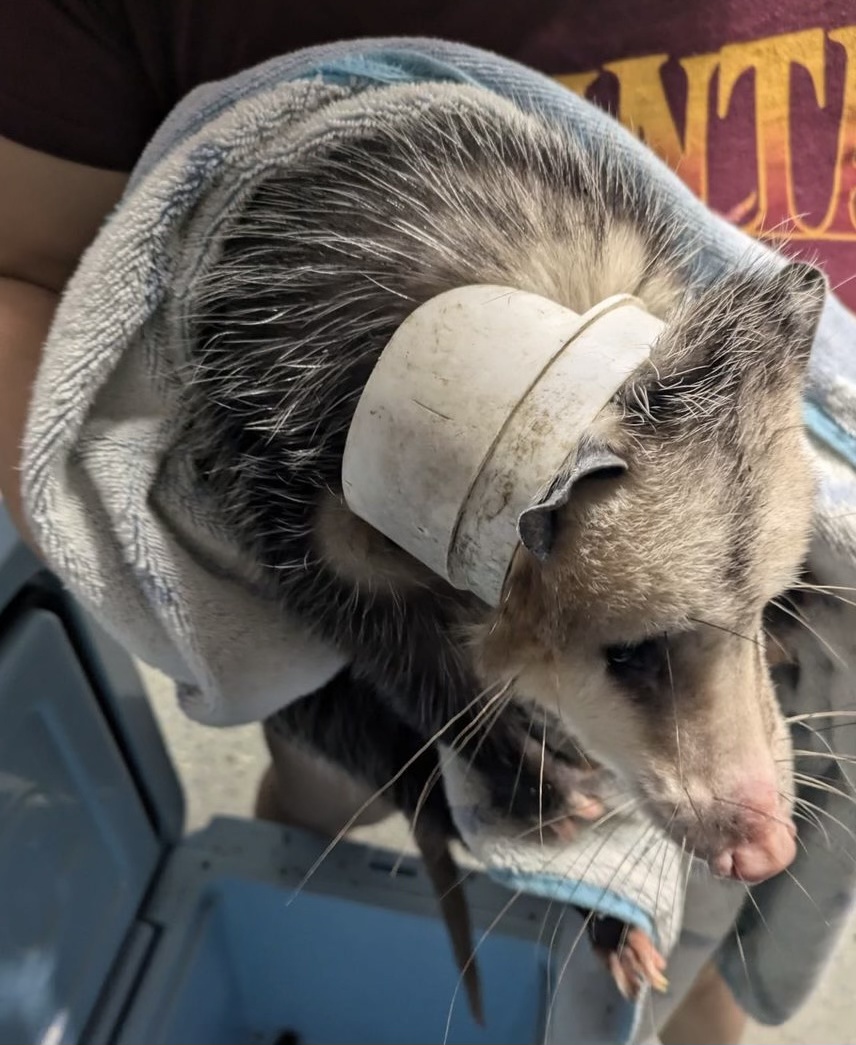
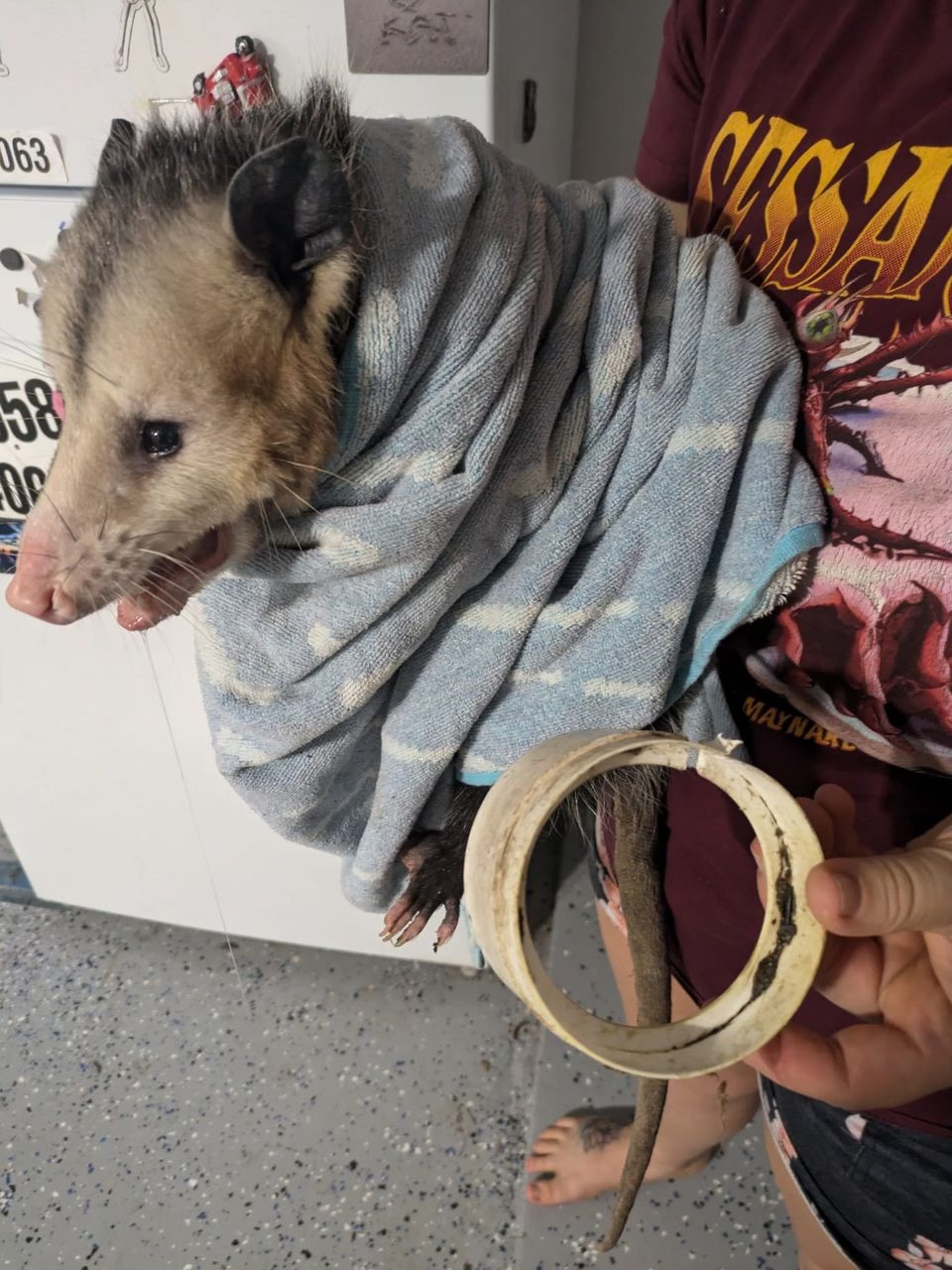
I’m emailing the company to ask them to create a more secure snapping feature or include an adhesive to prevent this from happening again. In the meantime, I am super-gluing my weather covers on and implore you to do the same. I will also be more diligent about picking up my feeders at night. – Kat Ojeda
And every so often chickens can turn the tables.
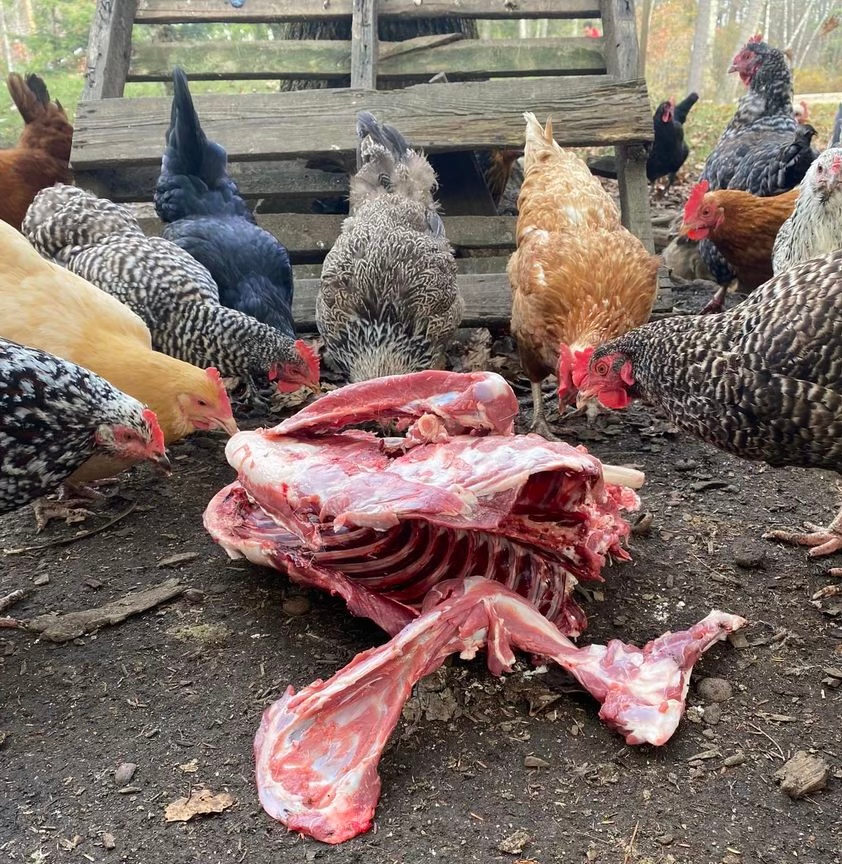
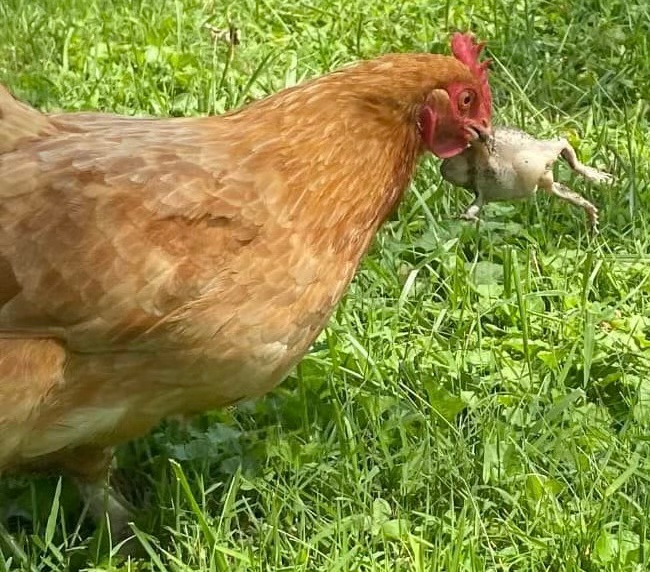
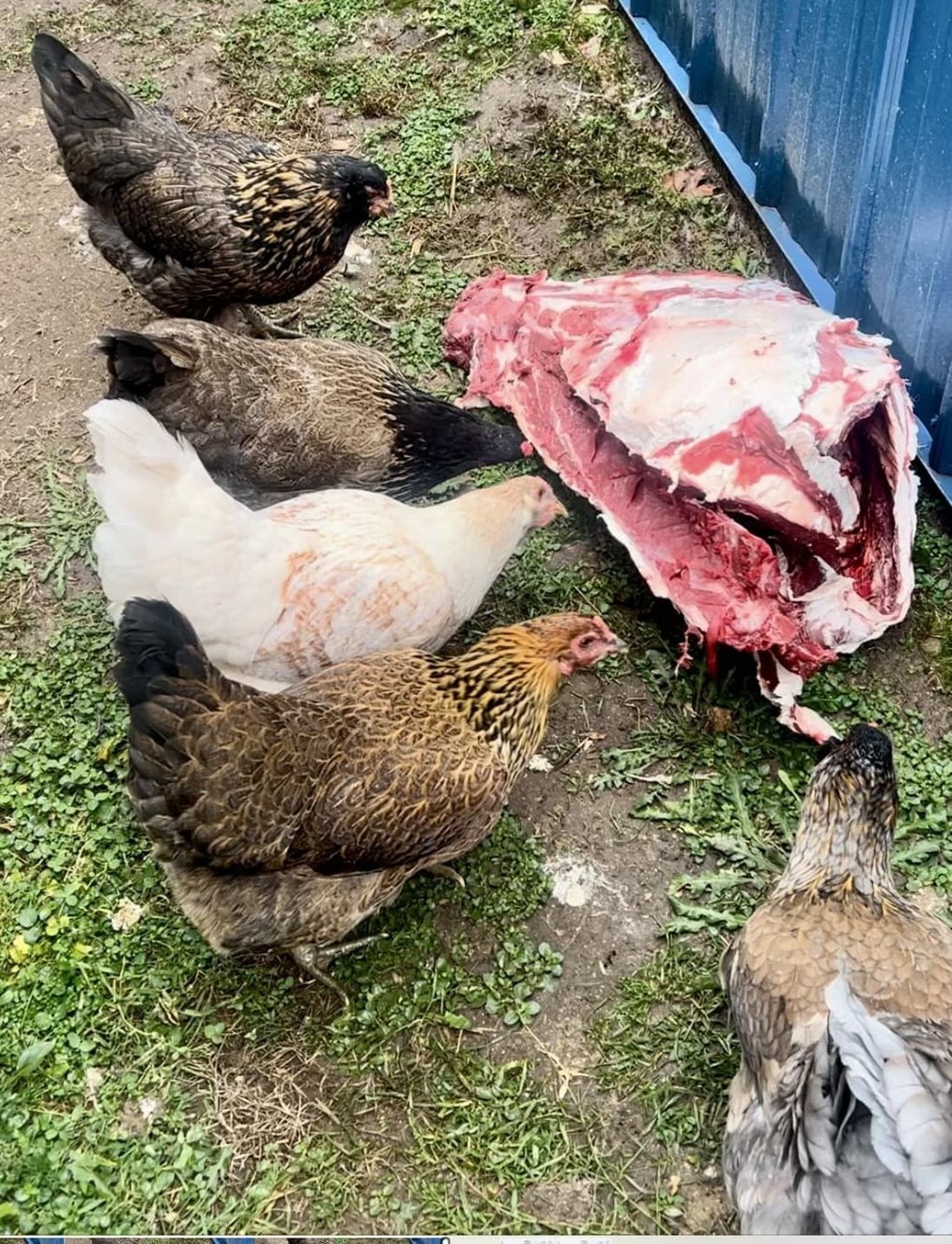
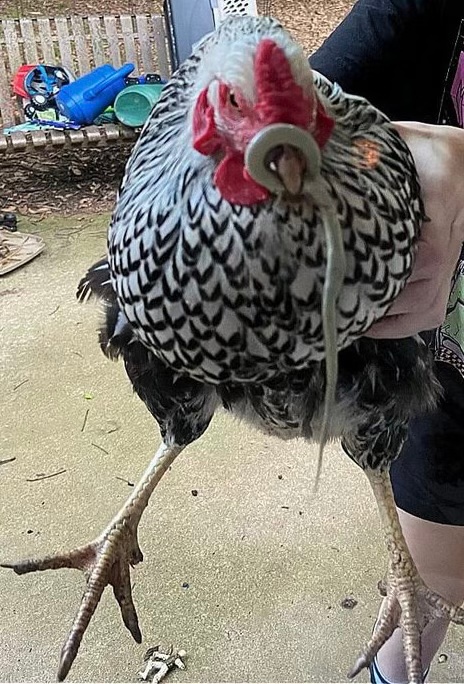
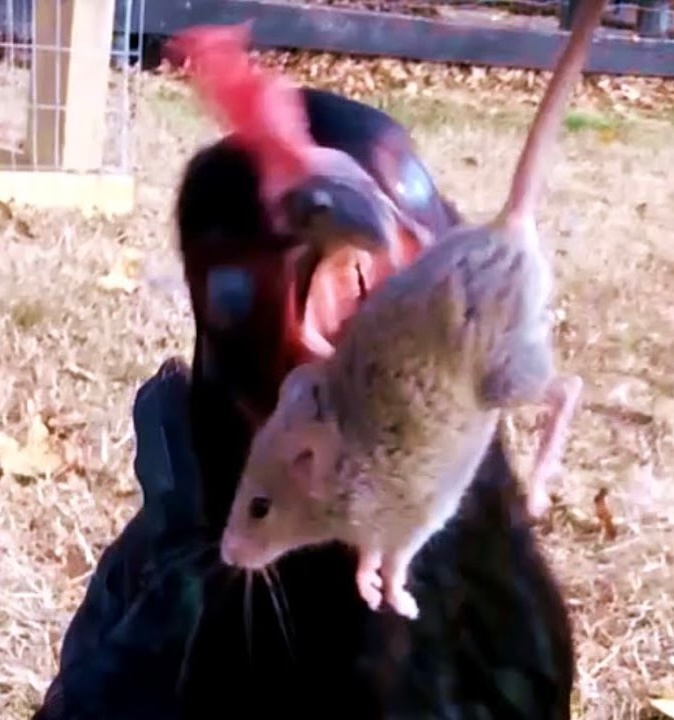
We often talk about the critters that eat our birds but can we talk about the critters our birds eat? I am throughly traumatized. It was Christmas Eve here in northwest Indiana. I went out to gather eggs and say “hey” to my flock. I noticed a few sparrows in the run and thought nothing of it. The sparrows were flying around, some of the flock were kinda jumping at them. Then all of a sudden pure chaos ensued. A sparrow landed on the ground. Lucille went nuts. In an instant there’s a puff of feathers in the air. Lucille had the sparrow and ran her fastest raptor run while all the others were chasing her and squawking. I chased her trying to free the sparrow when all of a sudden everybody stopped. Susie swallowed the sparrow whole and they literally all went back to what they were doing like nothing ever happened. All that was left for proof of this crazy story is little sparrow feathers everywhere. – Erin Elizabeth
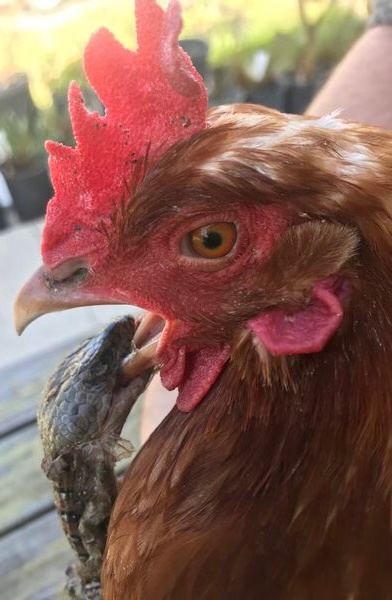
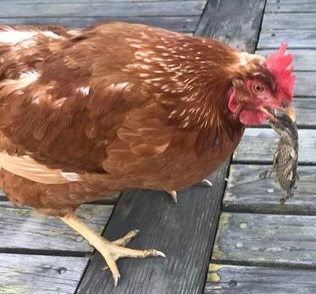
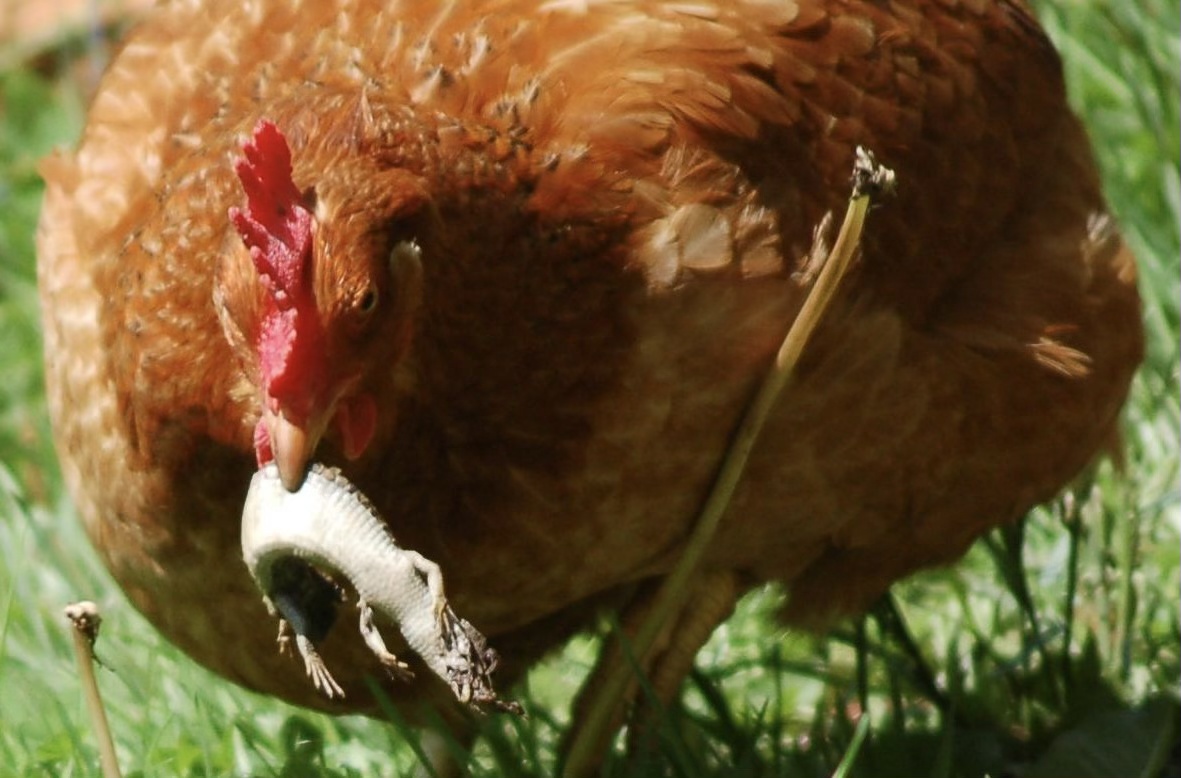
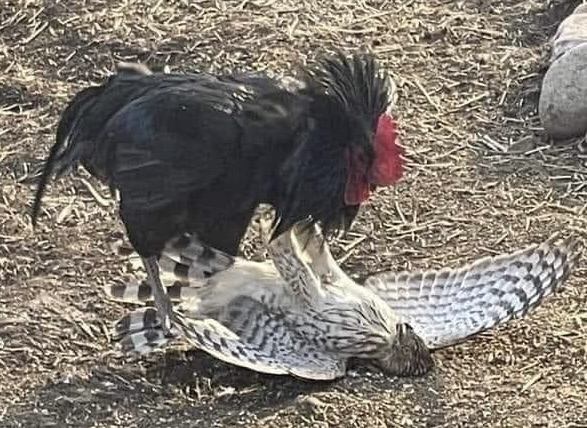
Photo credits: top to bottom: Kateri Felicity; unknown; Angela Boyd; unknown; Melissa Newman; Sheryl Rae Ware; Marion Lambert; Marion Lambert; Rolland Rueben
Thanks to everyone who shared their stories and photos. Featured photo credit: Charissa Hott.
If you’ve got a story or photos to share please drop me a line by using the ‘contact’ button on my homepage.
 Bitchin' Chickens
0 comments on “Chicken Keepers’ Encounters With Wildlife 2”