
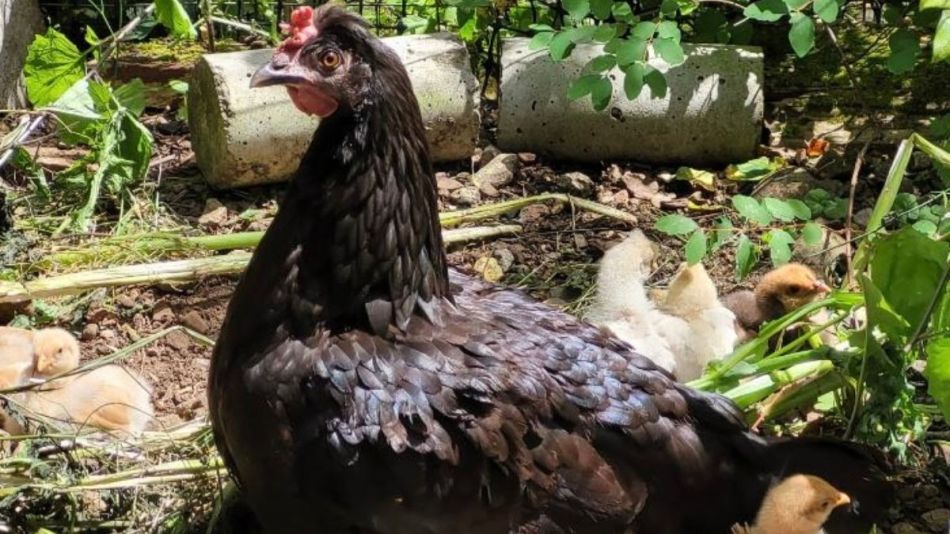
July 2012. That was when my first broody hen hatched chicks. In the intervening years I’ve had dozens of hatches but I still remember my first. My Buff Orpington hen, Mango, started to sit on eggs at an inopportune time – I didn’t have a rooster. Over the next couple of weeks I tried various methods to dissuade her, all to no avail. I finally threw in the towel and got fertilized eggs from friends and crossed my fingers that she would stay the course. She did.
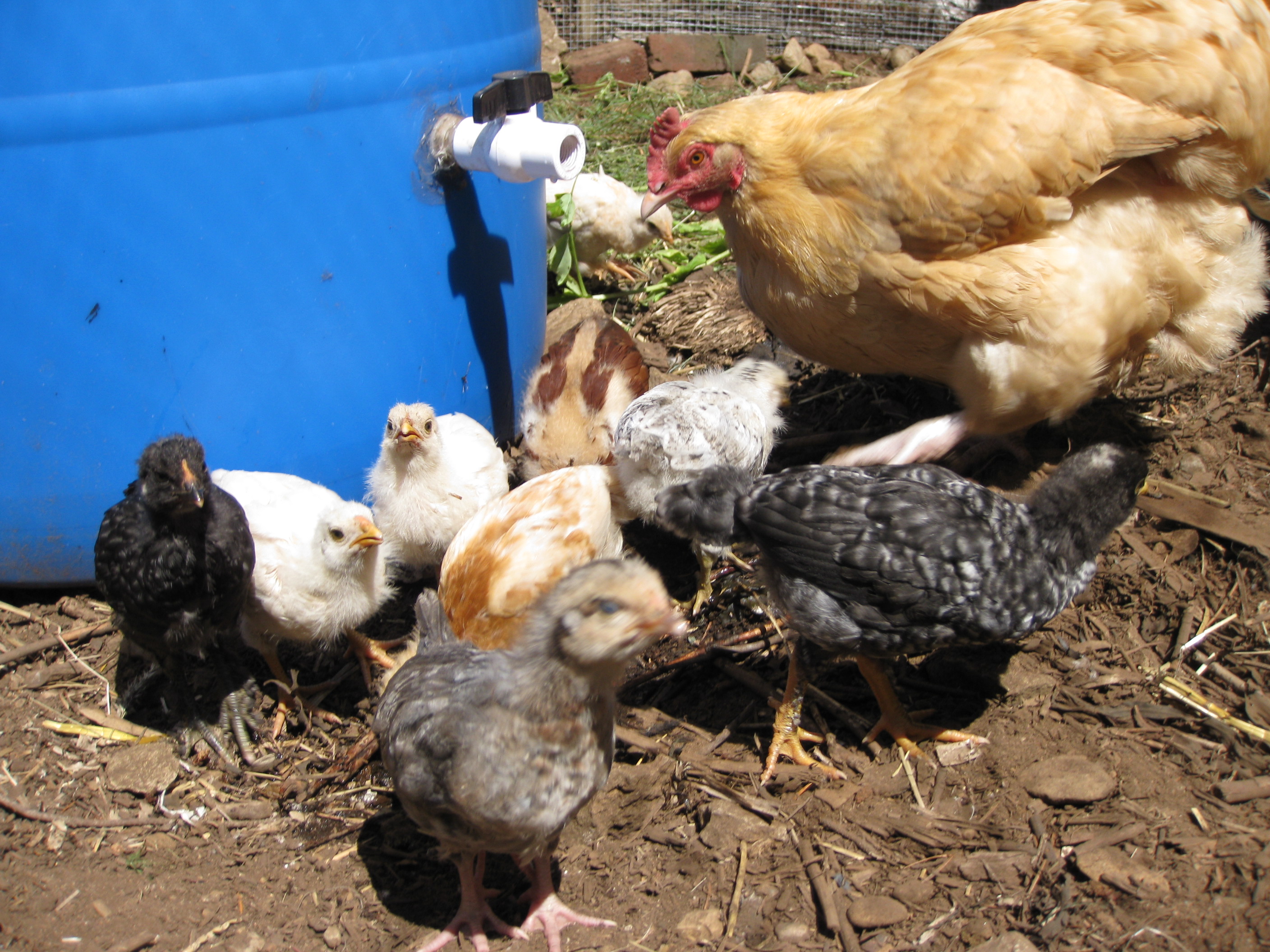
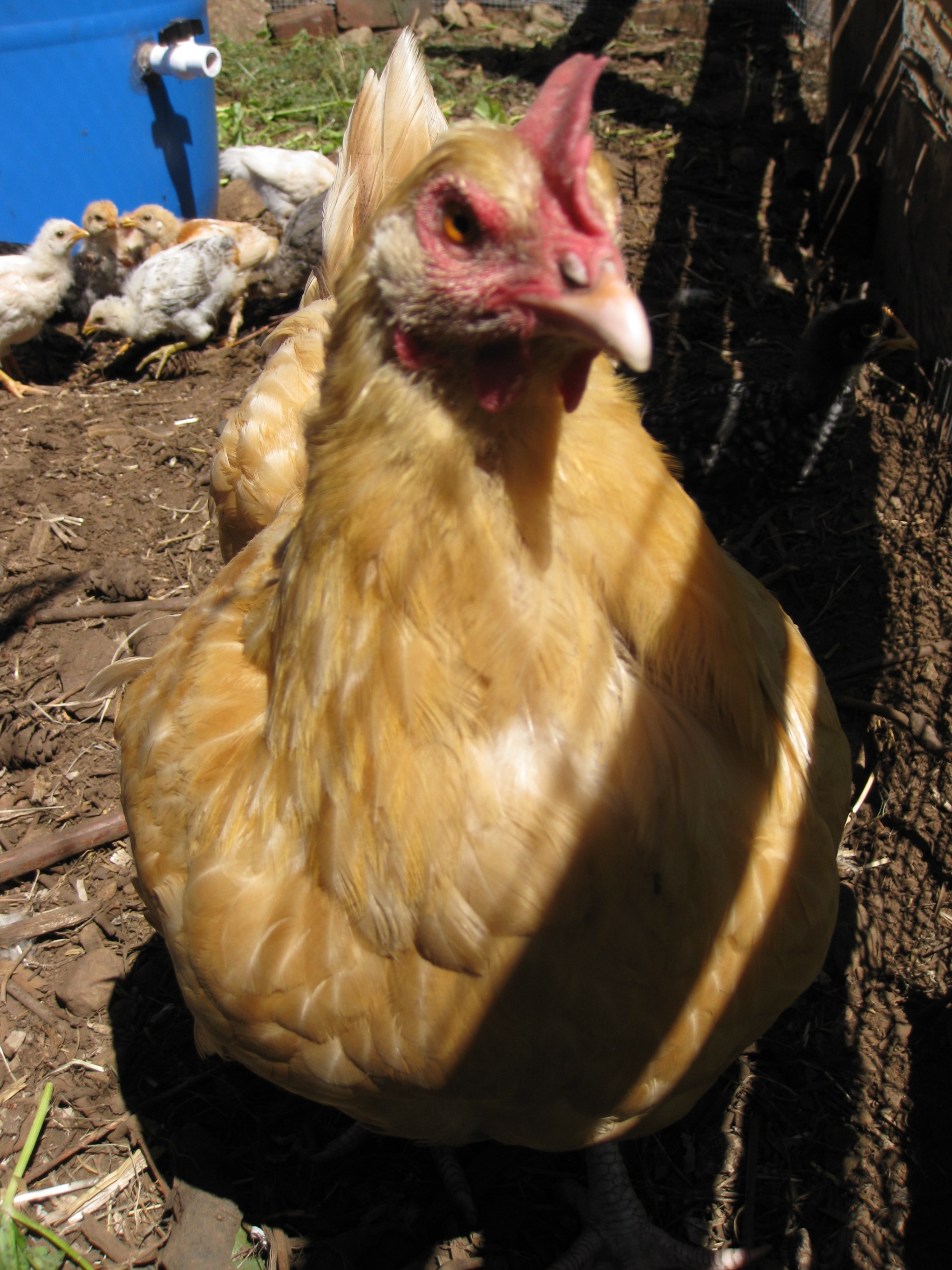
Mango & Chicks 2012
I purchased my first birds in 2005: six-week old pullets. They were still young but nothing compares to fuzzy chicks or witnessing a hen raise her own brood. After my first experience with Mango I was hooked. Chick season has become one of the highlights of keeping birds for me. Even with a broody hen there’s work on my part, but it’s worth it.
I remember those early days when I would have a hard time sleeping at night thinking about whether the eggs would hatch or not and, if so, how they‘d turn out. I’m a little more laid back now but it’s still a bit like being a kid on Christmas morning. As an adult there aren’t many opportunities to experience that kind of unbridled joy.
This year my first hen went broody in February, just after we’d had our one and only snowfall of the season. Not surprisingly it was way too early to be letting her sit on eggs. I had a couple of hens go broody in April but was able to thwart them. The month earlier I developed sciatica and it was all I could manage just to take care of my flock’s daily needs without thinking about dealing with chicks. In May, I wrenched my knee and tore my meniscus. The pain was excruciating and it took a fair amount of commitment to tend to my birds. It sucked being sidelined and I feared I might miss out on this year’s chicks.
When I had a couple of ‘good’ days with my knees I threw caution to the wind. I decided come hell or high water I wouldn’t miss the 2025 chick season.
Dealing with broody hens can be a bit like a soap opera or even a Shakespearean tragicomedy, full of missteps and bad outcomes. I was hoping when I embarked on this latest hatching season it would be full of happy endings and not the latter.
The Cast
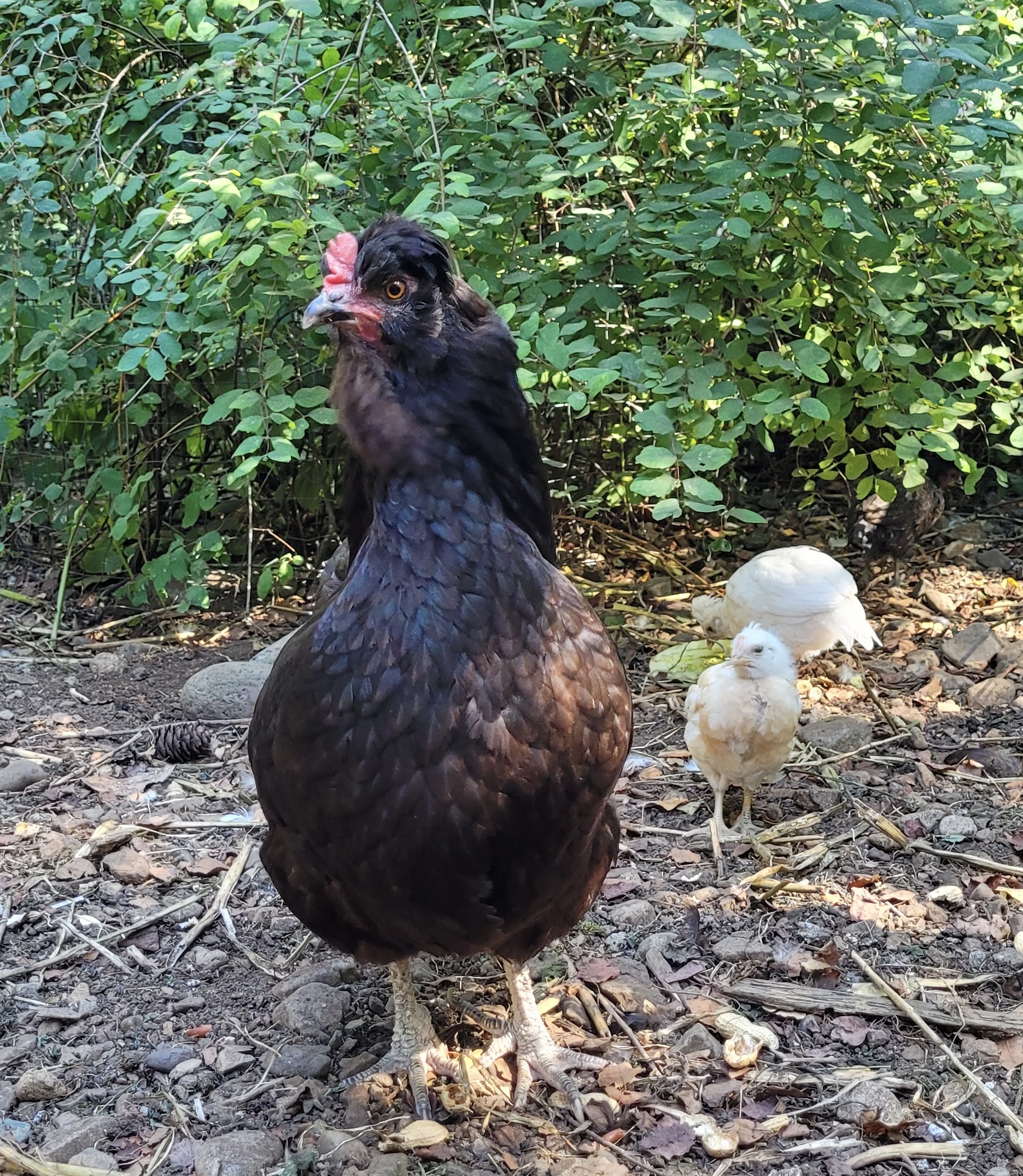
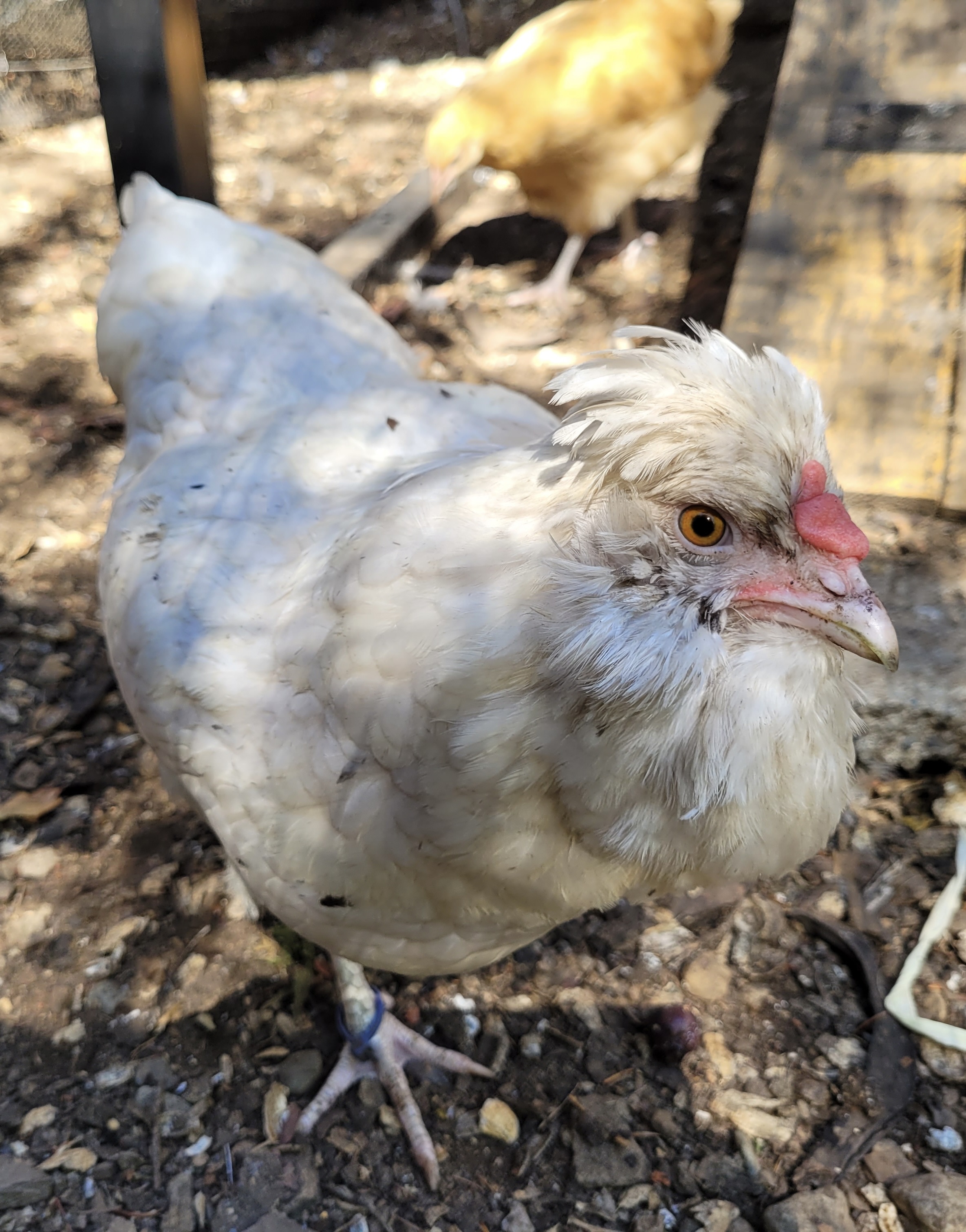
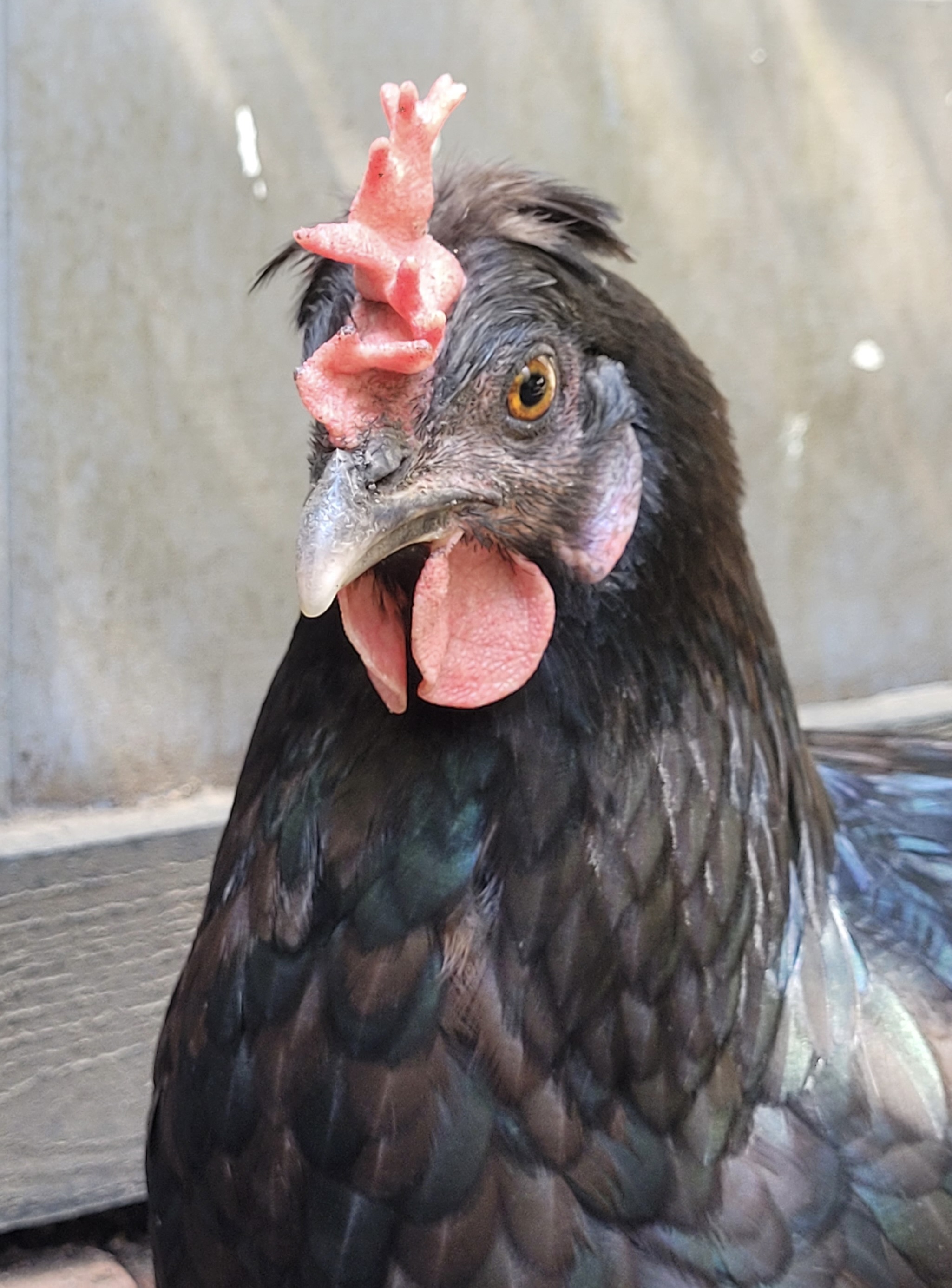
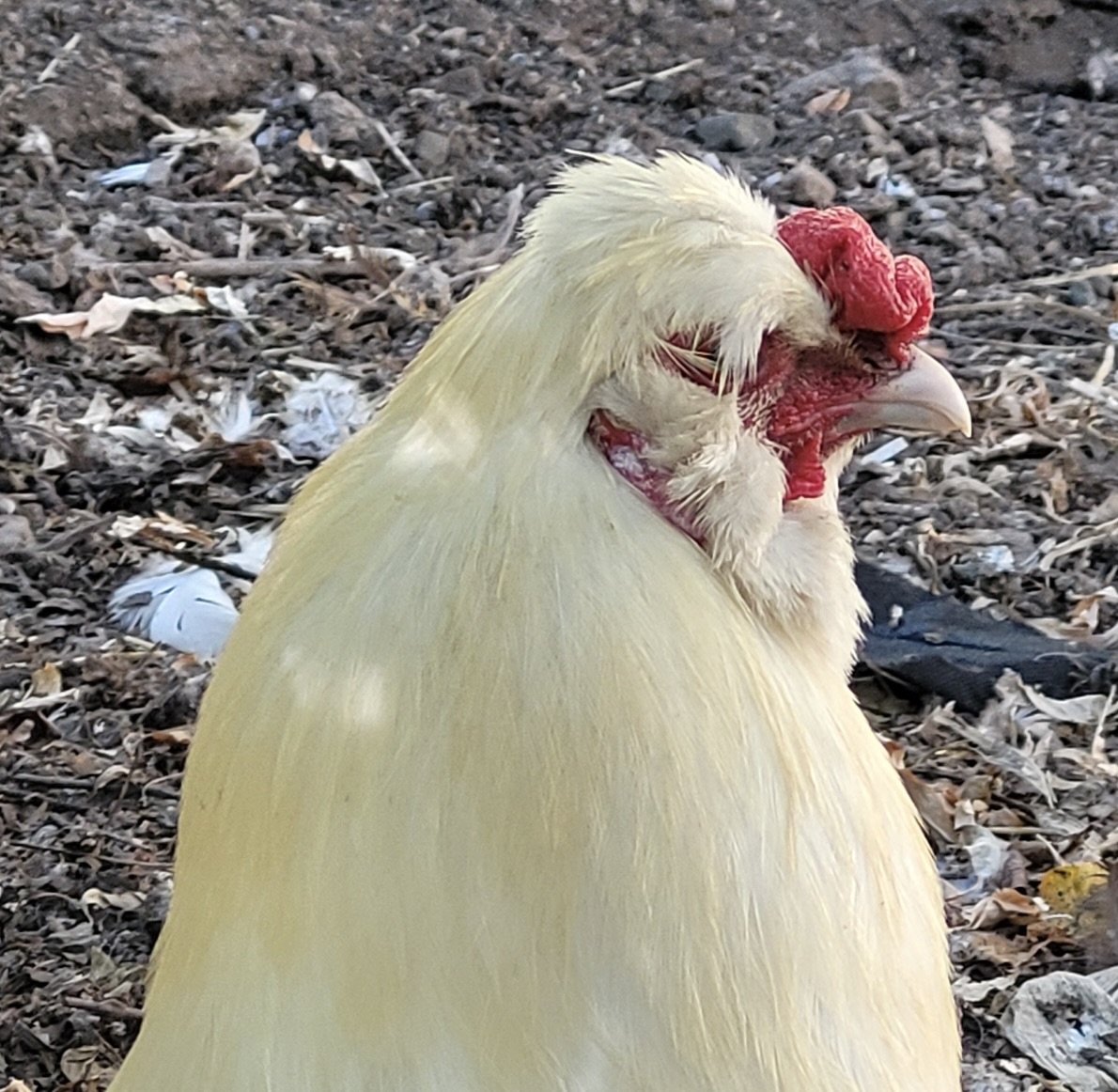
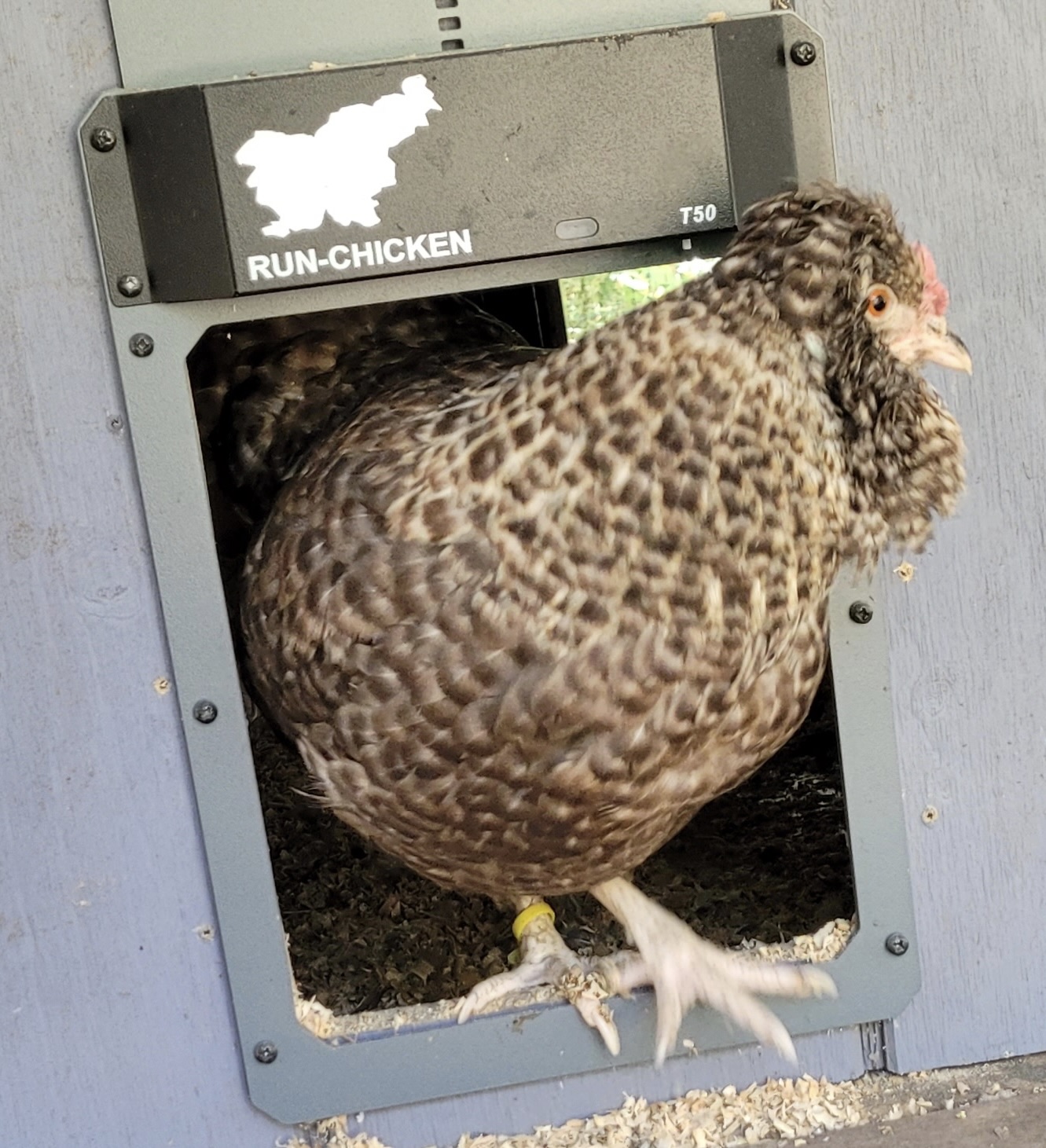
My Hens Olive, Aurora, Ember, Piggy And Rooster Kevin
Three of my birds had been broody for days so I planned to give them all eggs. The back up plan was if any one of them didn’t sit till the end I’d shift the abandoned eggs over to a sister hen. I had a new rooster so could use eggs he’d fertilized but I also wanted some new stock and something different. I contacted my neighbour Emma who had two pens: one with a Buff Laced Polish rooster with Legbar, frizzle and production red hens and the other with a Japanese bantam rooster with Buff Laced Polish hens. I also asked my friend Laurie for her barnyard mix eggs fertilized by a frizzle rooster.
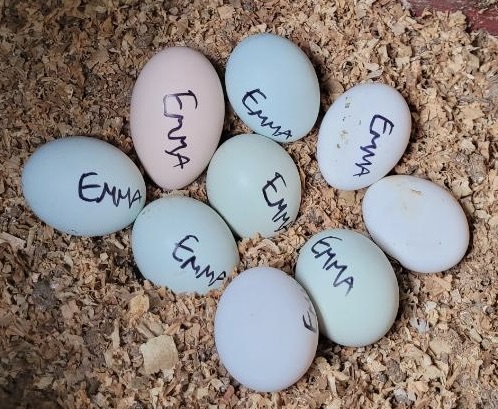
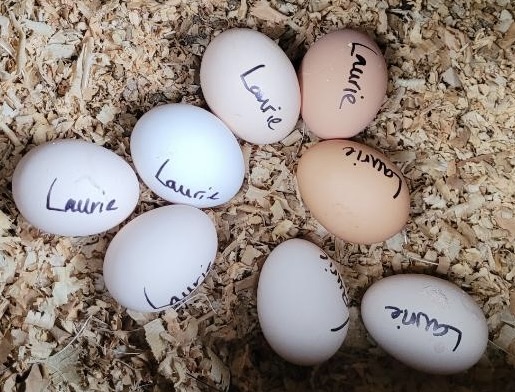
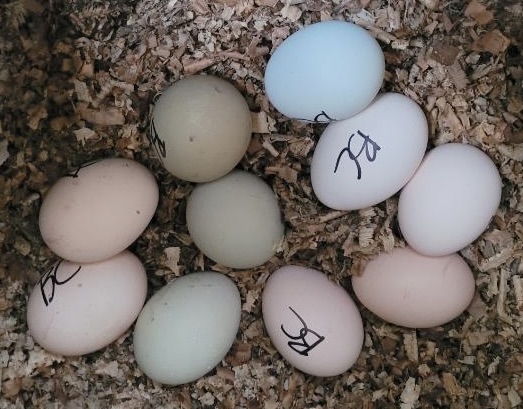
In the end I gave Olive nine eggs from Emma, another hen 8 eggs from Laurie and the third hen got ten eggs from my own birds. I also added two of my eggs to the first two hens. My goal was to get as many frizzled, crested or blue egg laying birds as possible.
Lesson 1: Hens Have A Mind Of Their Own
Things did not go quite to plan. I usually wait until hens have been broody for a few days then move them to a separate coop or dog crate at night where the eggs are waiting. I cover any windows or openings for a couple of days so it’s darkened and they don’t get distracted.

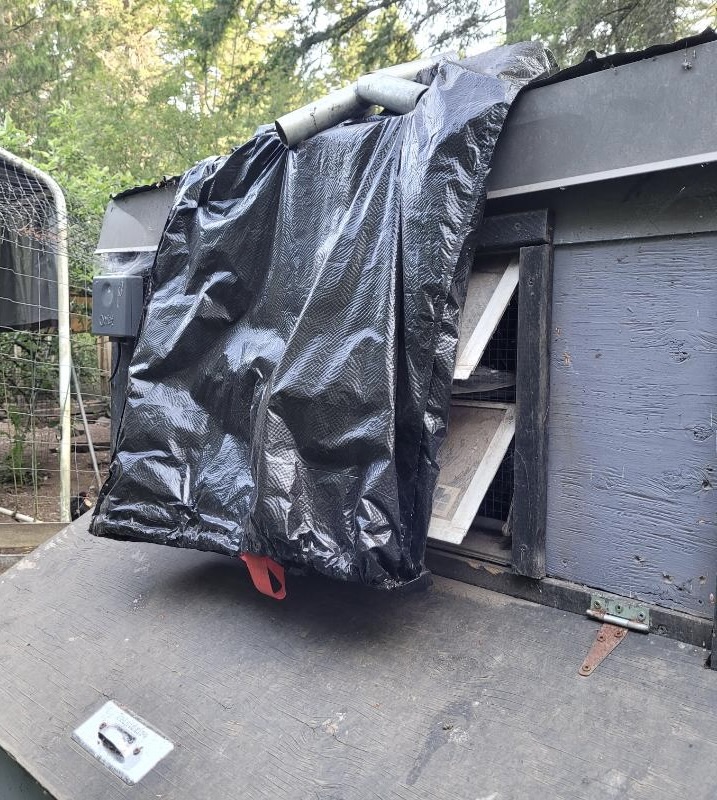
I followed the usual plan but the next morning all three hens were off the eggs, squawking to get back to where they believed their eggs to be – in the main coop. There was no point in trying to force them so I let them back into the pen and waited another day. Olive and Aurora were ready to sit but Ember was having none of it. I let her back in the main coop but the following night tried again and by the next morning she was sitting with no issues.
Lesson 2: The Best Laid Plans …
My proven strategy for success has been to have two or more hens sit/hatch at the same time. The rationale is that if one hen gives up before all the chicks hatch I can transfer the remaining viable eggs over to the other hen. I’ve also found that one hen usually finishes with her brood earlier, leaving the other to care for both sets of chicks.
After thirteen days of incubation, Laurie called to say her own broody hen had hatched one chick and abandoned one remaining egg. She didn’t have a broody hen that could incubate it so she asked if I would take it. Sure, but my only concern was if it hatched considerably sooner than the eggs under my hen it might trigger her to get off the remaining eggs.
The incubation was a bit eventful: Perfectly on cue, Laurie’s transplanted egg hatched, but also so did two of Emma’s – a full day early.
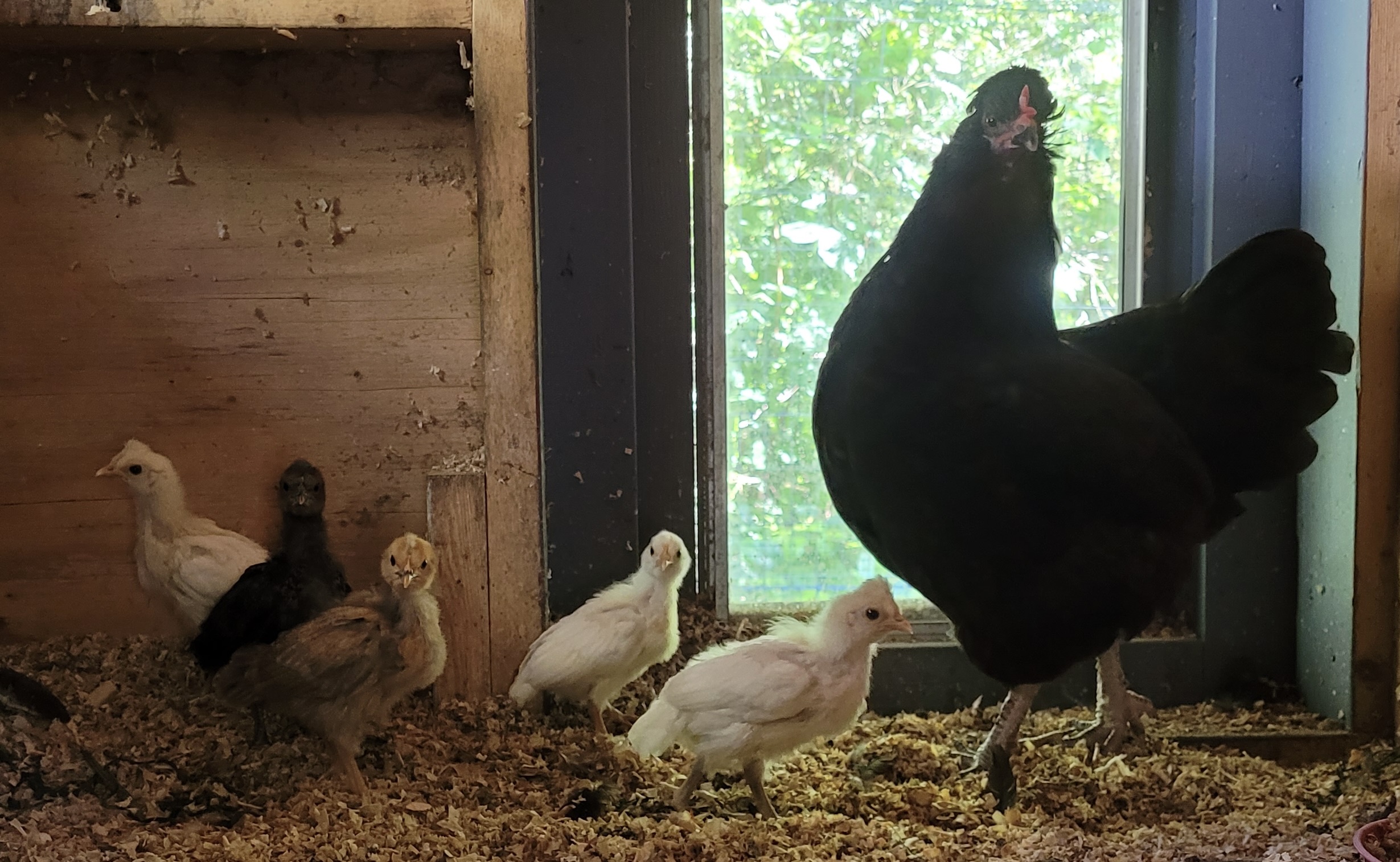
Olive & Her Chicks
Lesson 3: Chicken Math Of A Different Sort
I started off by giving each hen eggs from a different source with the goal of being able to identify the breed of the chicks after hatch.
As feared, Olive got off the nest leaving seven eggs, two of which had pipped. I managed to tuck the two pipping eggs back under her and move the others to Aurora and Ember.
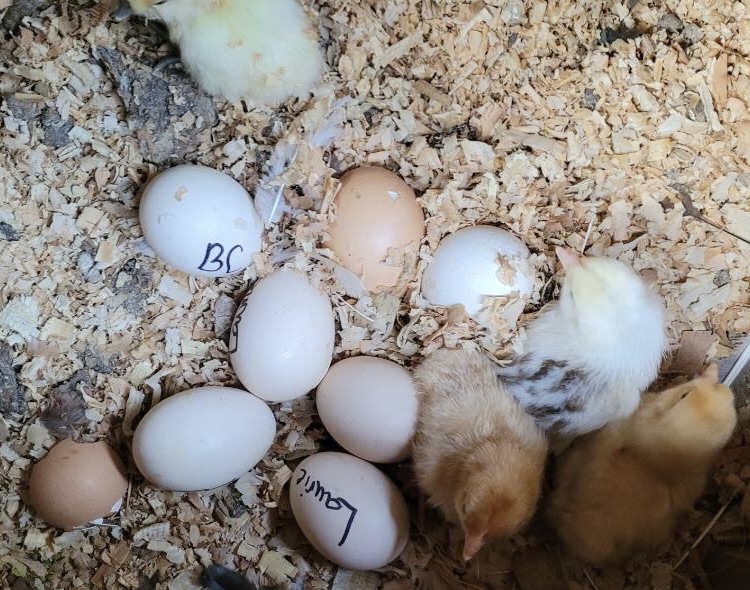
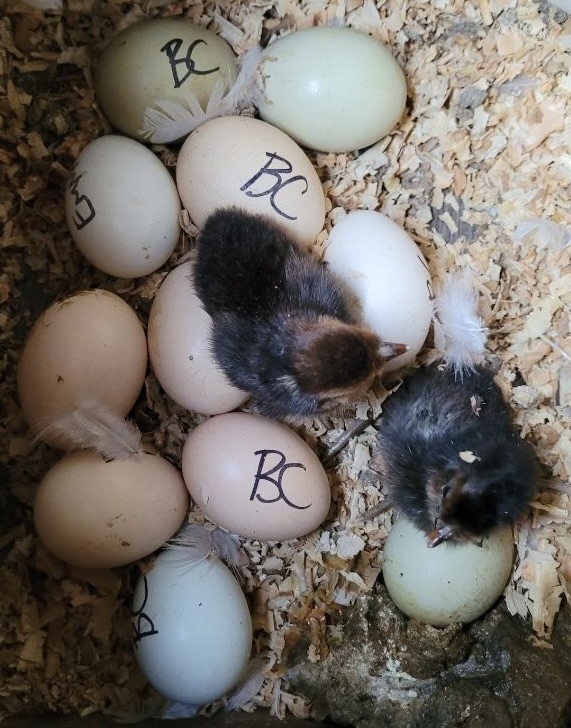
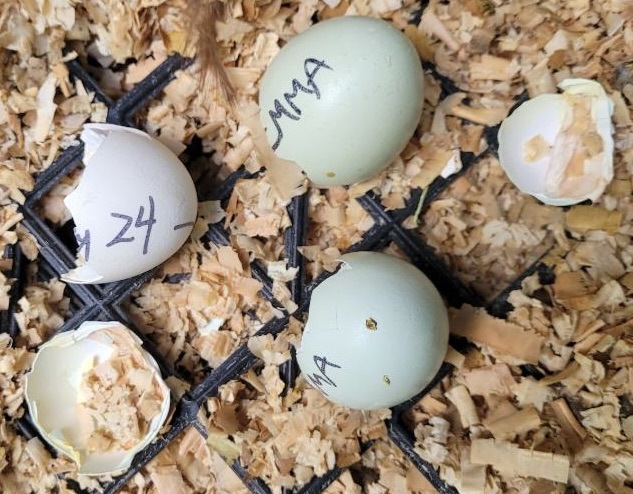
Aurora and Ember started sitting 24 hours apart. Just because all the eggs are set under a hen at the same time doesn’t mean they will all hatch at the same time. I’ve had as much as a four day spread. Just like Olive, as soon as Aurora had four chicks she got off the eggs which meant I had to put all my eggs in one basket, counting on Ember to stay the course. Unfortunately, she didn’t.
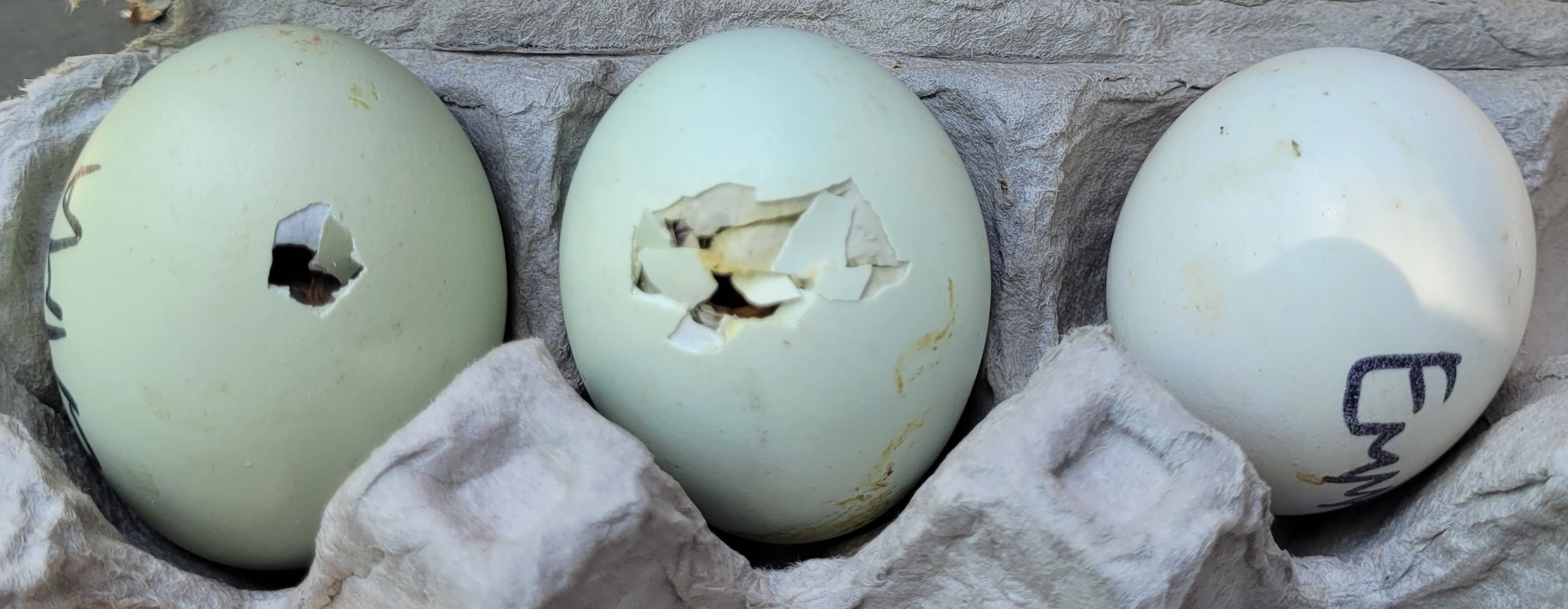
Abandoned Eggs
Lesson 4: Don’t Assume Your Hen Knows Best
There are various theories about what to do with ‘abandoned’ eggs. One is that hens somehow intuit non-viable eggs and keepers often just pitch those ones. I’ve often proved that philosophy wrong and do all I can to try to give them a chance. If possible I move them to another hen or incubate them during the day and return them to the hen at night. If they hatch when it’s dark the hen accepts them come daylight.
Lesson 4: Always Have A Back Up Plan
Once a hen is done with incubating there is no way to make her sit on eggs. I set up a makeshift incubator using a heating pad inside a plastic tote. A couple of them had pipped but had become shrink-wrapped in the egg – the white membrane had dried out, essentially gluing them to the egg. I used a little bit of warm water on my fingertip to moisten the membrane. The chicks were weak from being stuck. As the veins in the membrane receded I picked off small bits of the shell.
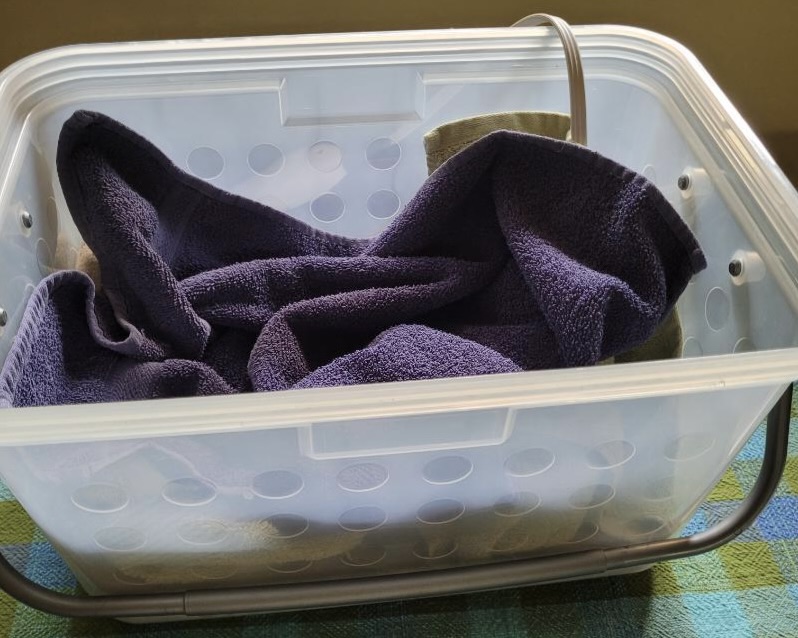
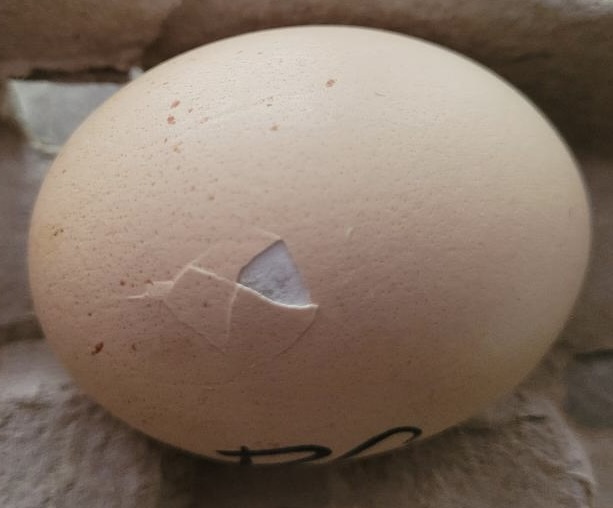
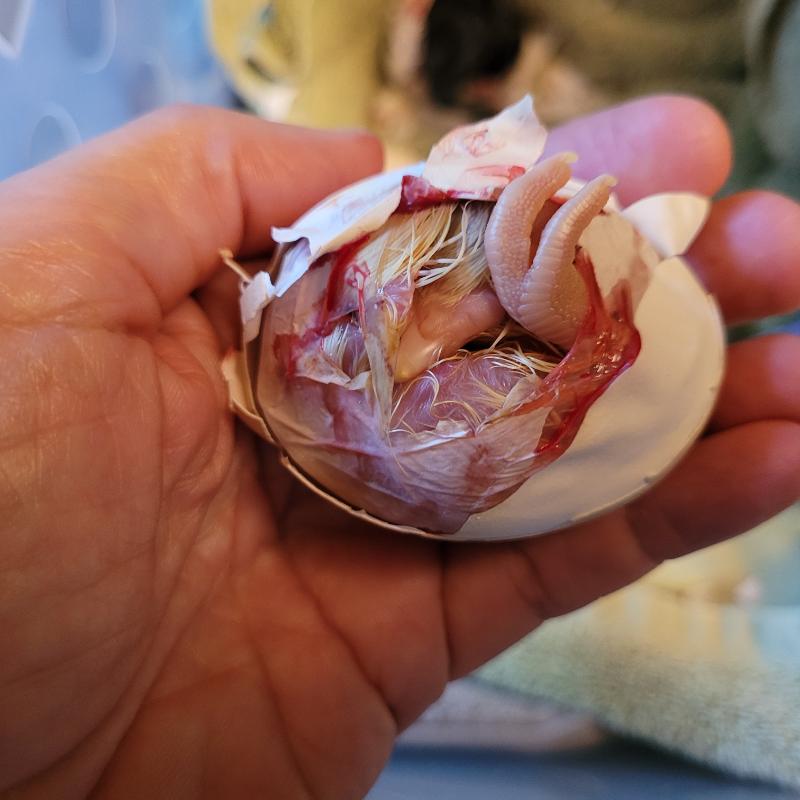
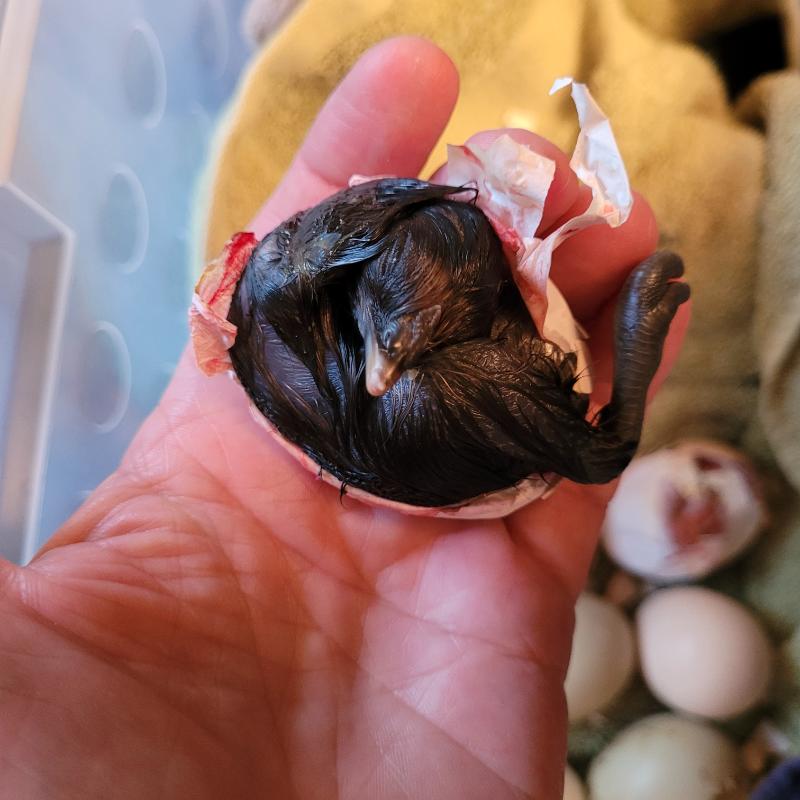
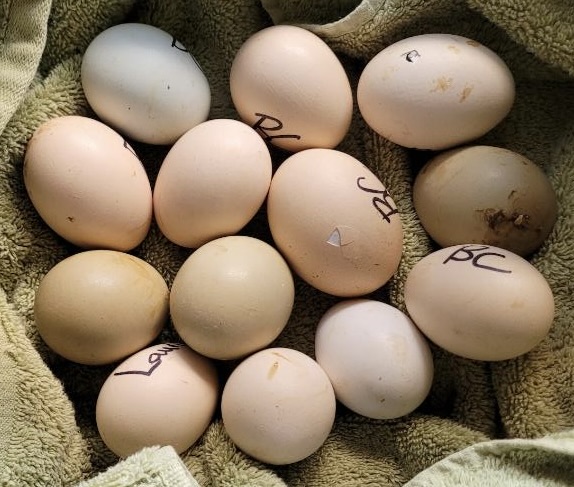
Once darkness fell my plan was to transfer the last eggs and the two hatching chicks to another hen.
Luckily I had several broody hens in my coop waiting for the opportunity to becoming mothers. Since I had a number to choose from I picked up Piggy, who had proven herself last year. Since there was no space left in my back coop I set up a dog crate in the supply area of my coop (separated from where my birds have access). I slid the eggs and the partially hatched chick under her, covered the openings with a towel so she was in darkness and stood there for a moment. All seemed well.
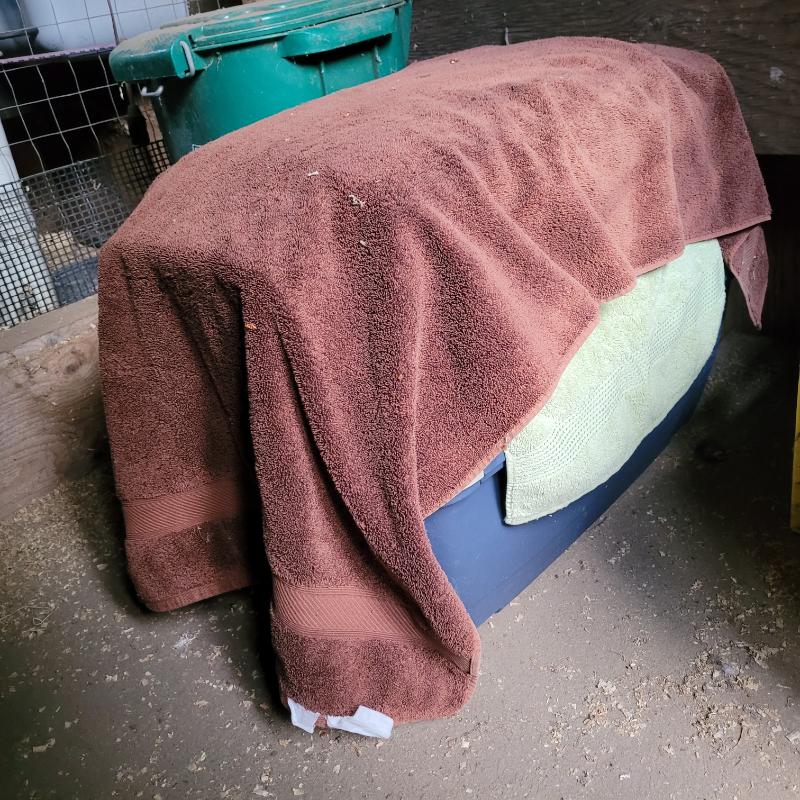
Lesson 5: Chickens Can’t Count
When I went out an hour later Piggy had moved all the eggs under her but the little black chick was laying in the shavings. My timing was impeccable. She was cool to the touch so I slid her under my hen hoping for the best. By the next morning Piggy was sitting and I didn’t want to disturb her. Since she hadn’t been sitting long I was confident she’d stay till any viable chicks hatched. Of the nine I put under her six hatched. The remaining three were unfertilized. The two assisted chicks were perfect with no issues such as curled toes.
Lesson 6: You Can’t Always Predict Chicken Behaviour
I’ve read heartwarming stories of hens who incubated their eggs and raised their chicks together, but haven’t experienced much of that. I have had hens incubate in separate nest boxes but have moved them to different crates after one bad experience. I had two hens in the same coop hatch at the same time. I happened to be there when one of them got off the nest for a drink. Each hen had newly hatched chicks as well as eggs. I guess the chicks panicked when their mum left the nest so moved over to the other hen. A fight ensued and I had to move one hen before the eggs got broken or the chicks got hurt.
I have had a couple of instances in which two hens and their chicks voluntarily moved into one crate together. I noticed that the chicks still recognized one of them as their mother, but quickly grafted onto the other once that hen decided to return to the main coop.
I wasn’t sure what I was going to do with Ember and Aurora once the chicks had hatched. They both moved out of the nest boxes and into the main coop keeping their distance – as much as they could given the floor space is 4’x4’. After a couple of days the two hens started roosting in one nest box with all 13 chicks under them.
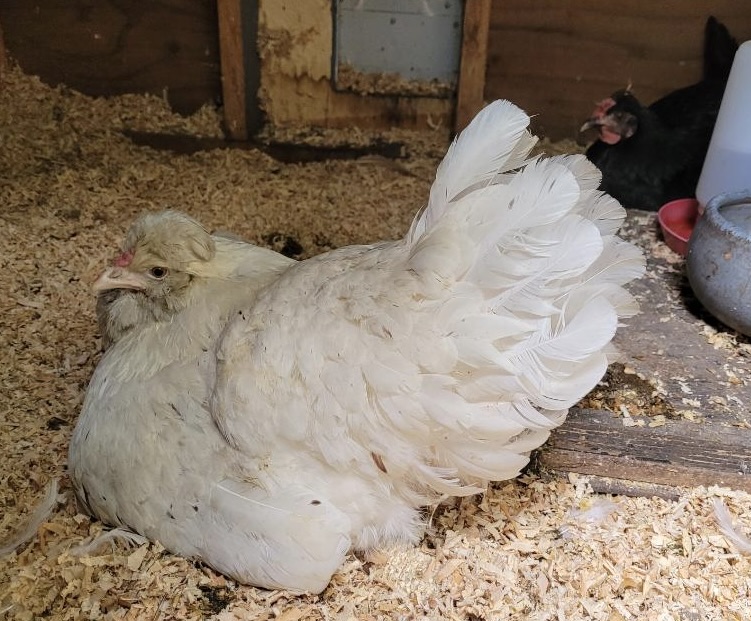
Lesson 7: Timing Is Everything
Ideally the chicks would have been let out of the coop daily once they were a few days old. Unfortunately our one snowfall of the season collapsed my car shelter and netting so they wouldn’t be safe from hawks until it was remediated.
I ordered a 10’x15’ carport shelter and had some friend help to assemble it. Until that was done I couldn’t net the top of the 15.5’x30’ pen so the hens and their chicks were in the coop longer than usual.
I moved the two co-broody hens to another secure pen for the few days until the structure and netting was installed. Unfortunately that meant Olive was stuck in the coop – at least she only had five chicks so it wasn’t too crowded.
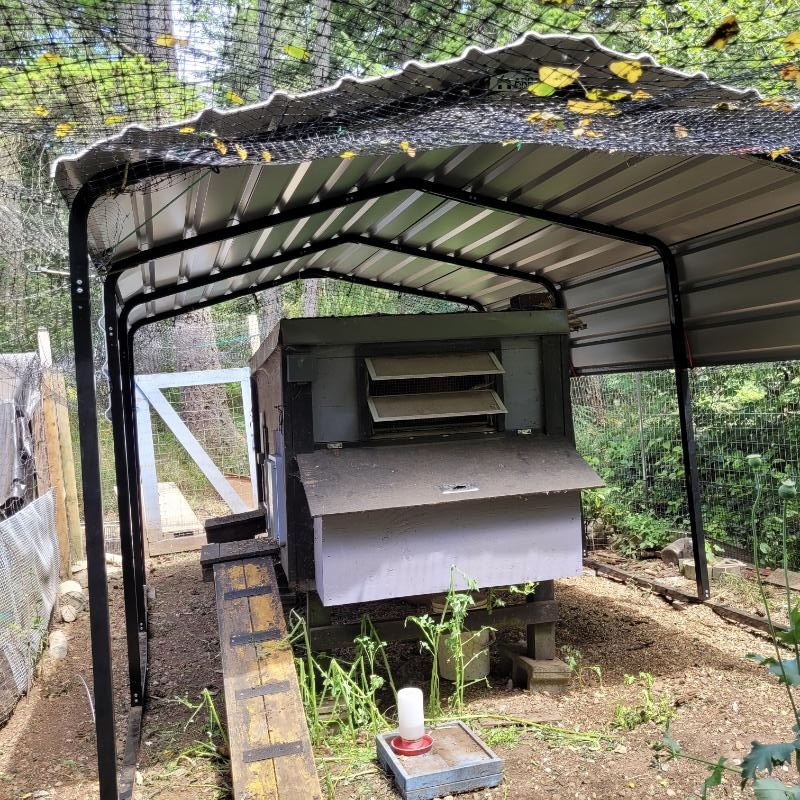
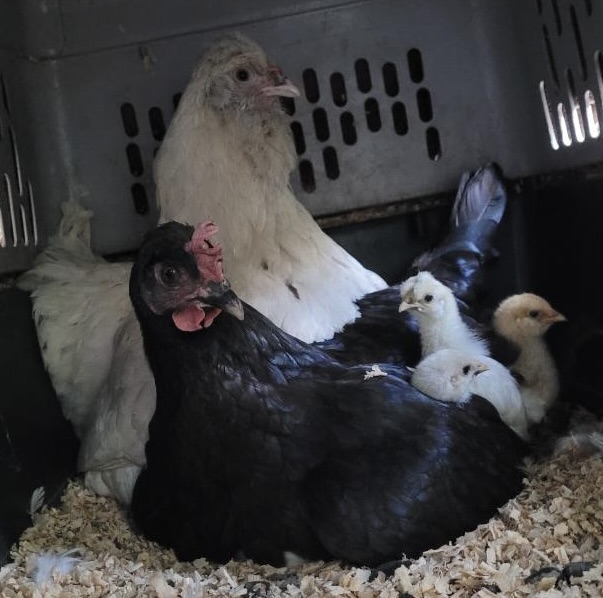
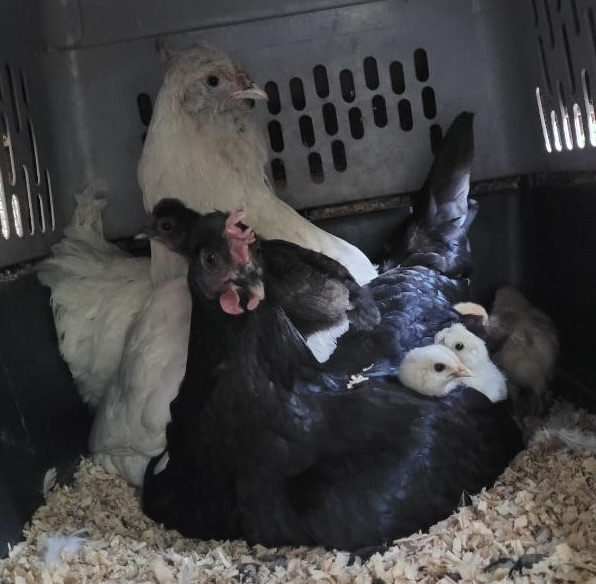
Newly erected carport shelter
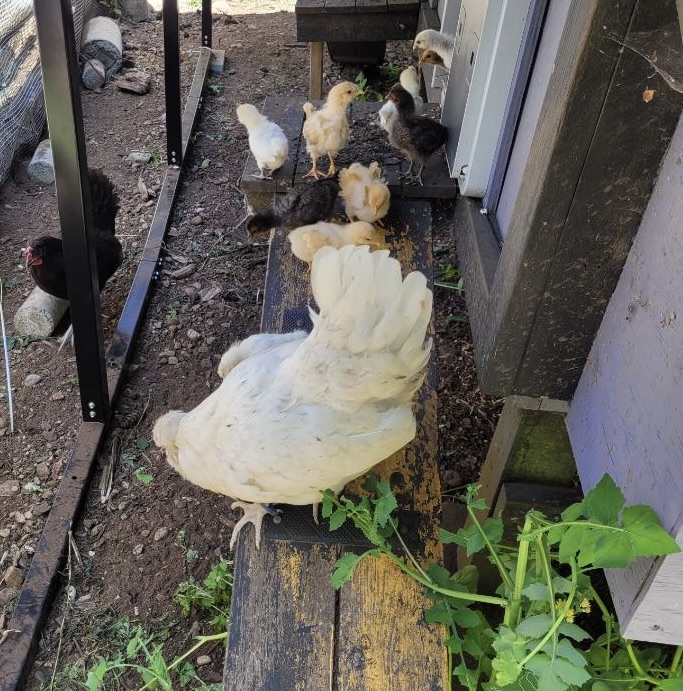
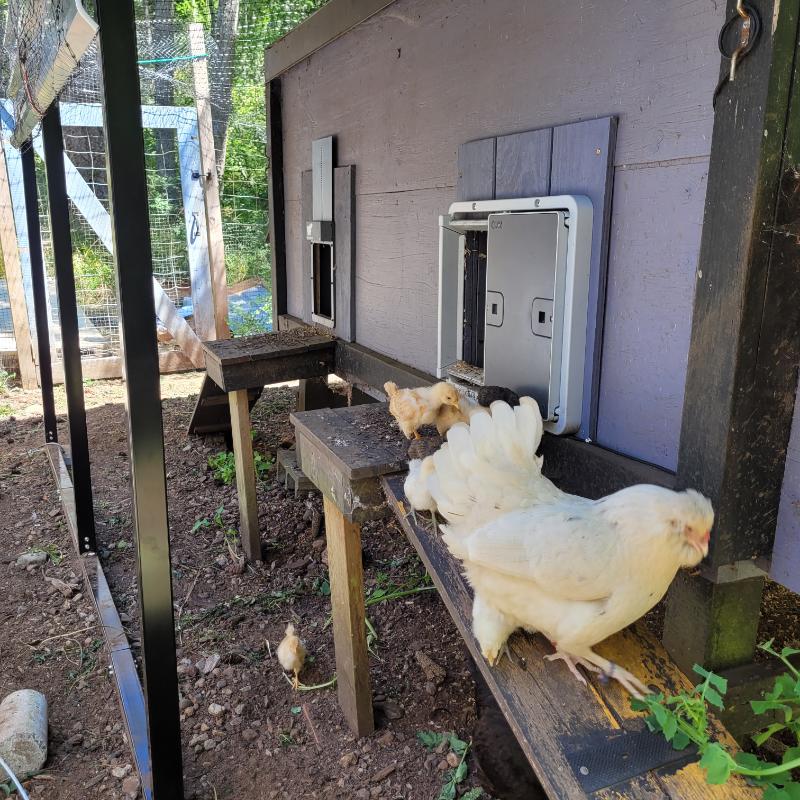
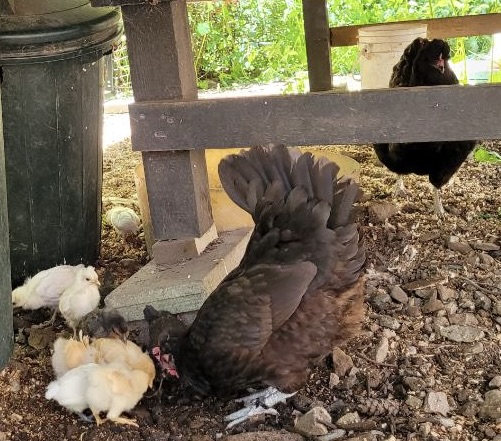
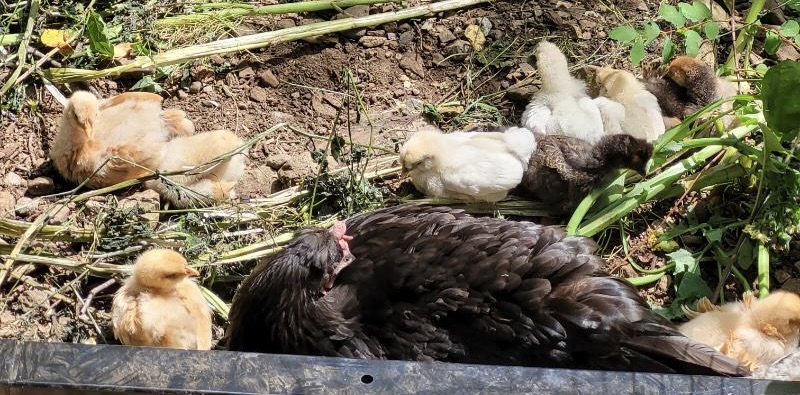
Babies first day out of the coop
Lesson 8: The Pecking Order Is Fluid
Once out in the pen I noticed that Olive and Aurora tended to dominate access to food and water and often made sure Olive stayed at her end of the pen. They didn’t bother the chicks and the bullying wasn’t serious.
When the chicks were about six weeks old Olive started pacing along the fence adjoining to my main coop and flock. My rooster would come chat with her. This is often a signal that she’s ready to leave her chicks. After a couple of days she moved into the side of the coop with the other two hens and, surprisingly, they didn’t push her out. I thought this might be a strategy to get her chicks used to sleeping in that section in her absence.
Shortly after that, the pecking order shifted and all three hens appeared to be on friendly terms.
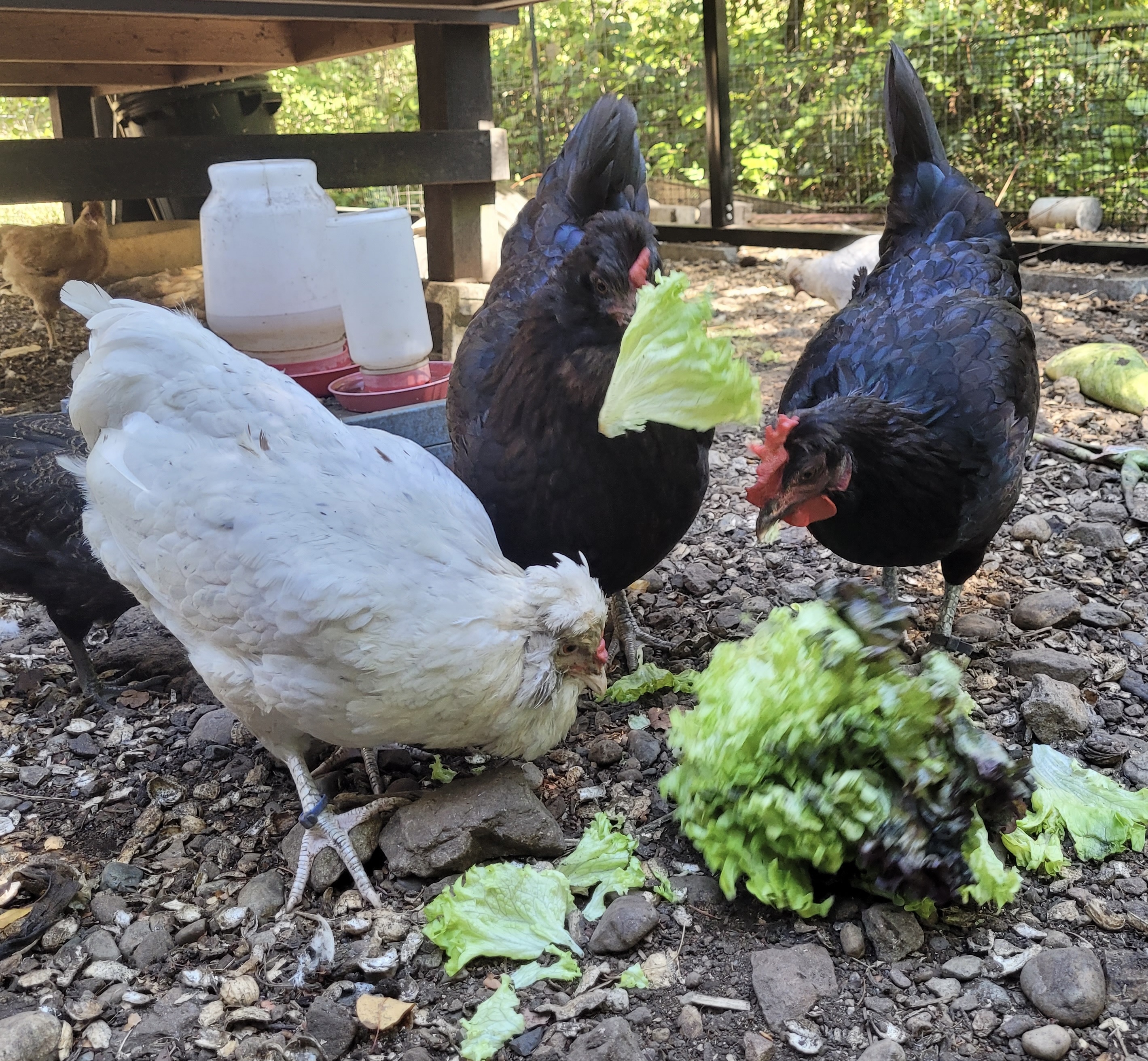
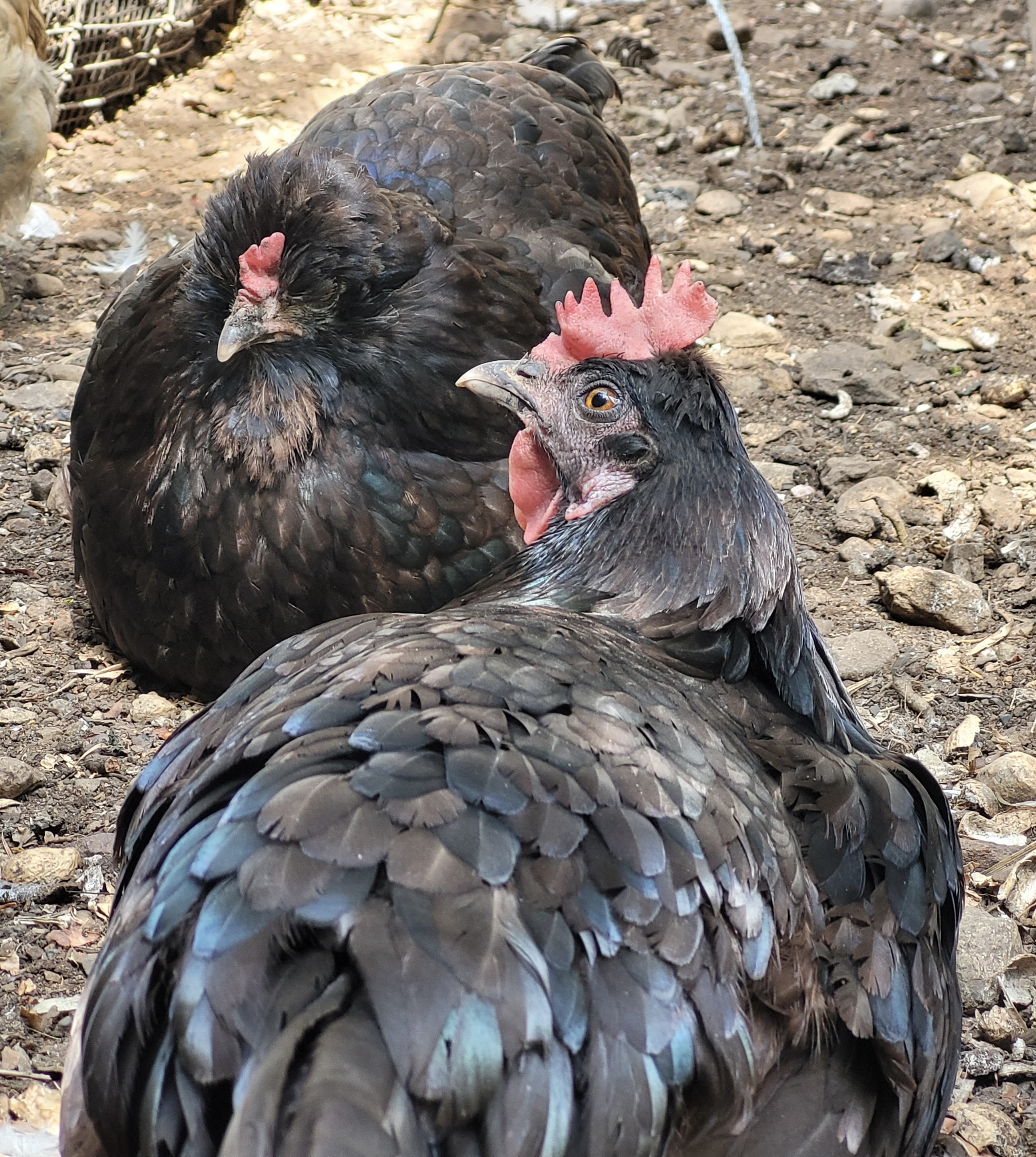
Around that time she, and then the other two hens, started laying again. Two weeks later, she went broody. After a couple of days I returned her to the main coop. That was enough to break her broodiness and it appeared she was happy to be done with her chicks. By then everyone was roosting in one side of the coop and continued to do so in her absence.
Lesson 9: Don’t Count Your Chickens Before Your Eggs Have Hatched
All the eggs were started within 24 hours of each other, but hatched over a period of almost five days! I marked each with a sharpie and as I moved them around – numerous times – I thought I’d kept good records of where they were. Turns out that wasn’t the case. When looking through my files they weren’t entirely accurate and I was left guessing about some of them.
- Total number of eggs 32
- Hatched 22
- Unfertilized 9
- Crushed 1
I ended up with about an equal number of chicks from each source (Emma, Laurie and my flock) but am not sure their exact parentage. It’s easy to identify some just from their appearance. I only ended up with two frizzles (unfortunately both cockerels): one from Laurie and the other from my own eggs, the little black chick that I assisted.
Since Piggy and her chicks were housed in my main pen it was easy to identify them. Five of the six came from my eggs. At first, they were in a dog crate and had daytime access to a 4’x9’ run within my 1200 square foot pen. From the time they were born they could experience being part of my flock, protected by fencing. Once they were a few weeks old they were integrated into the main flock. When Piggy headed back to the coop for good, the chicks followed.
I will update you with photos of the chicks as they’ve grown and how many turn out to be cockerels. A couple of years ago I had a hatch of 10 and eight were male! I’m crossing my fingers that I’m favoured with pullets this year.
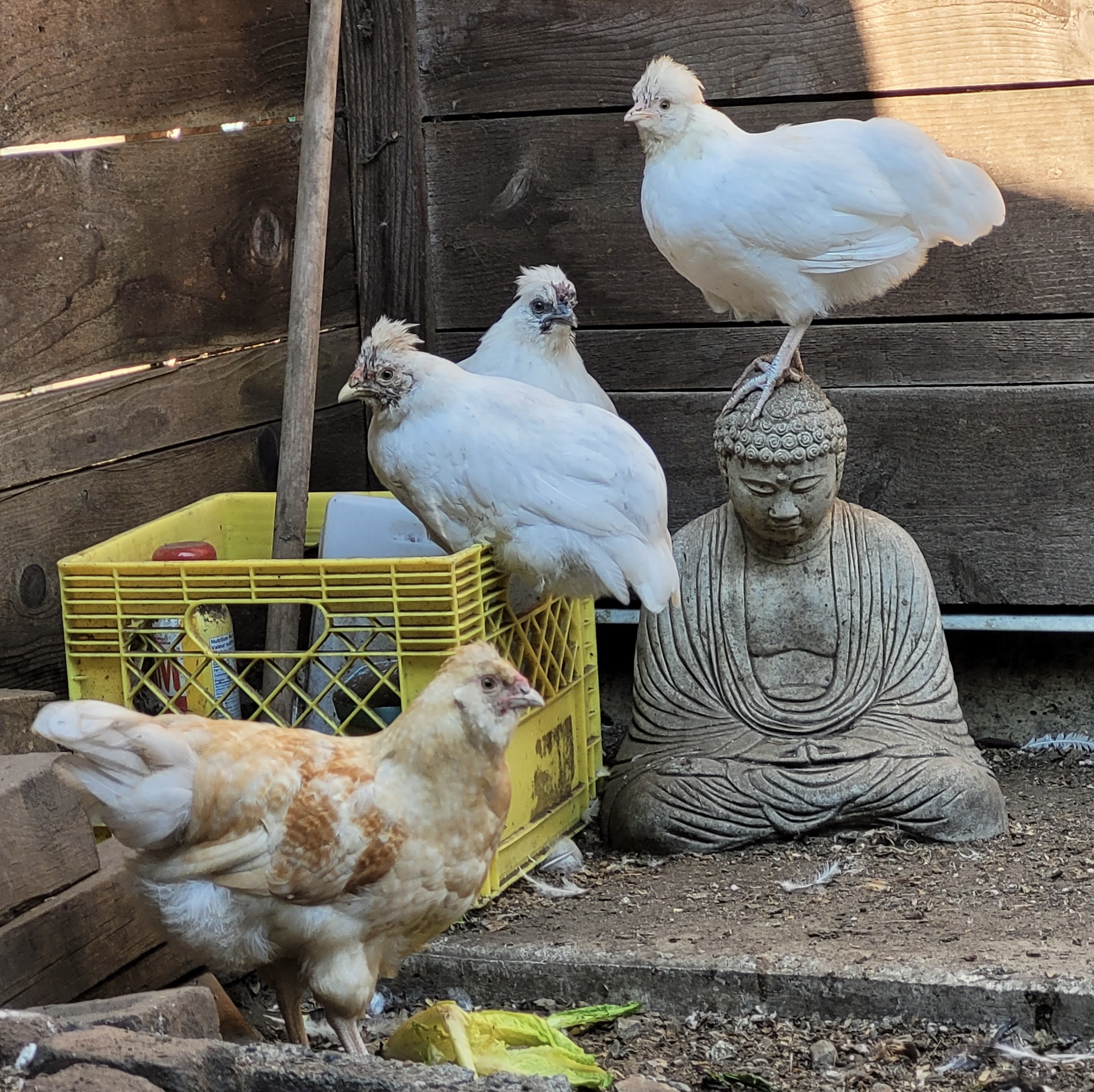
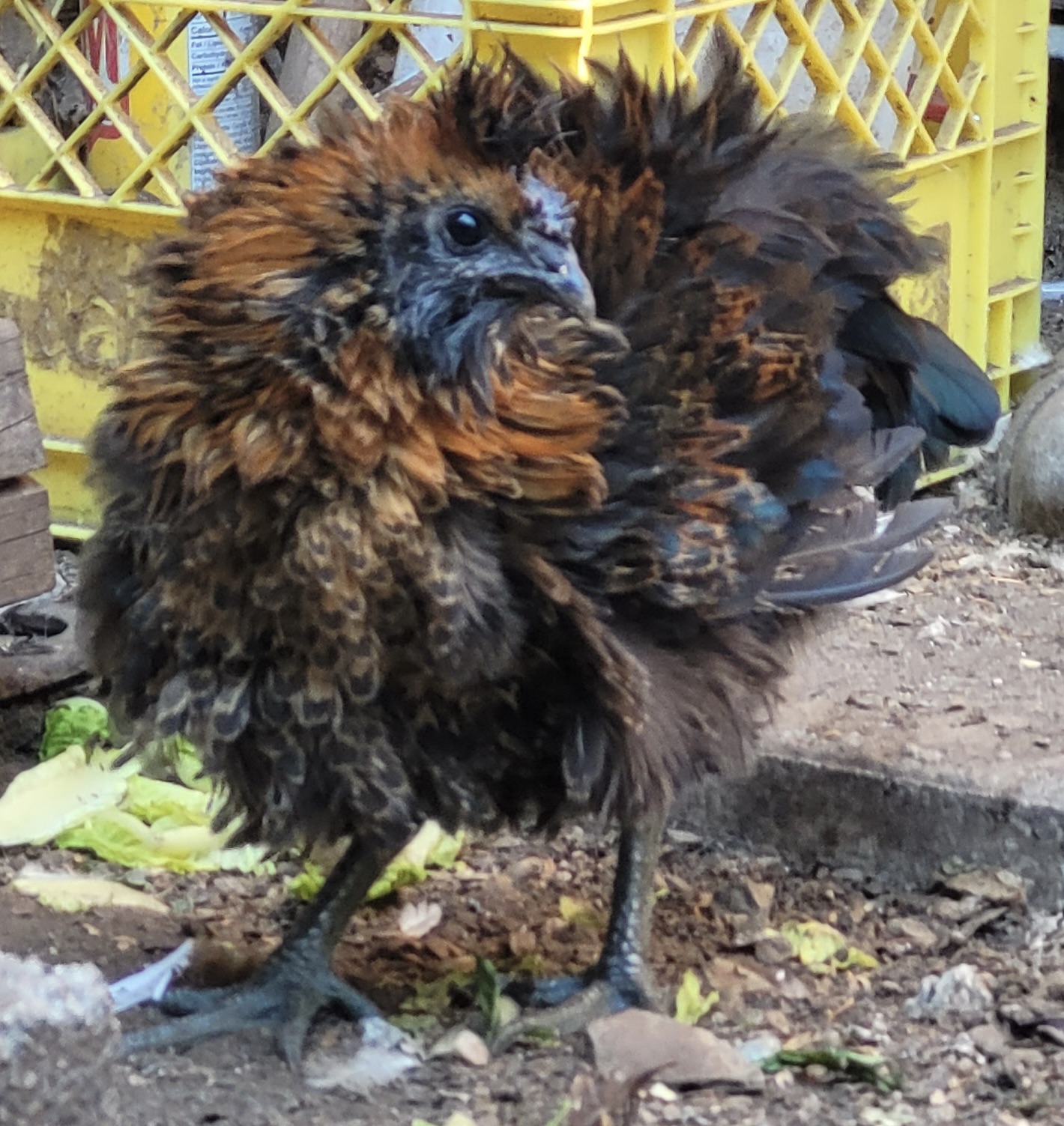
If you’ve made it to the end of this long saga, thanks!
“From broody hens to bold opinions — cluck yeah, we’ve got it all.”
 Bitchin' Chickens
0 comments on “Bitchin’ Chickens Broody Hens: Lessons Learned 3”