
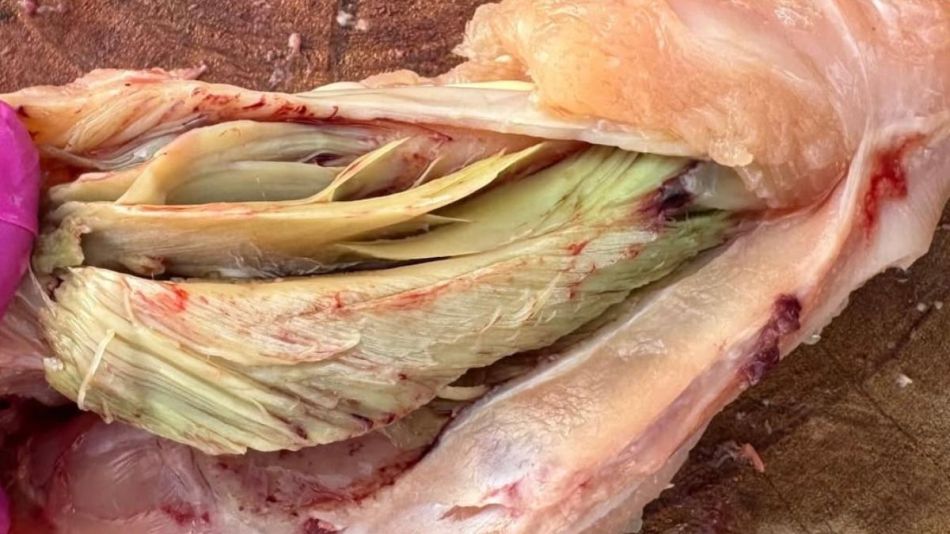
Green Muscle Disease (Deep Pectoral Myopathy) is a degenerative condition affecting one of the two major muscles in a chicken’s breast. Breeds like Cornish cross have very large breast muscles so when they flap their wings the muscle expands and the breast is sandwiched between the tenderloin and the sternum. This cuts off blood supply to this deep muscle and the resulting lack of oxygen leads to muscle death, and over time, the tissue turns a greenish colour due to the breakdown of hemoglobin. Think of it as the equivalent of bruising in poultry.
Risk Factors
Rapid Growth and Genetics
- Birds bred for fast growth and large breast muscles, such as commercial broilers, are more susceptible. Their large breast mass creates internal pressure that impedes blood circulation to deeper muscle layers during vigorous wing movement.
Sudden Wing Flapping
- Stressors such as loud noises, rough handling, poor ventilation or changes in lighting can cause birds to flap their wings. This physical stress increases pressure on the breast muscle making it more prone to oxygen deprivation.
Flock Management
- Densely populated barns and limited space restrict movement and make birds more reactive when startled.
Symptoms
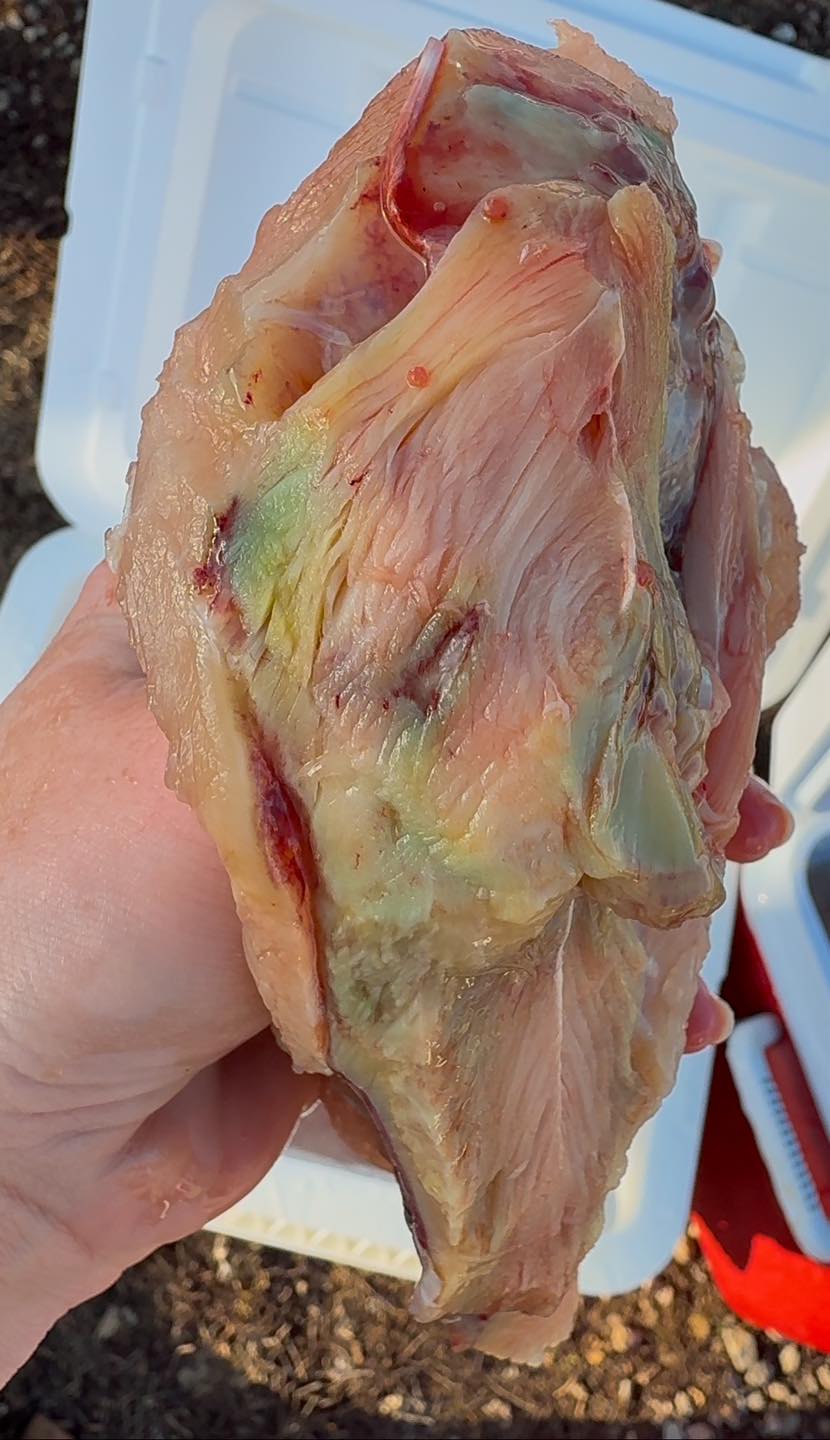
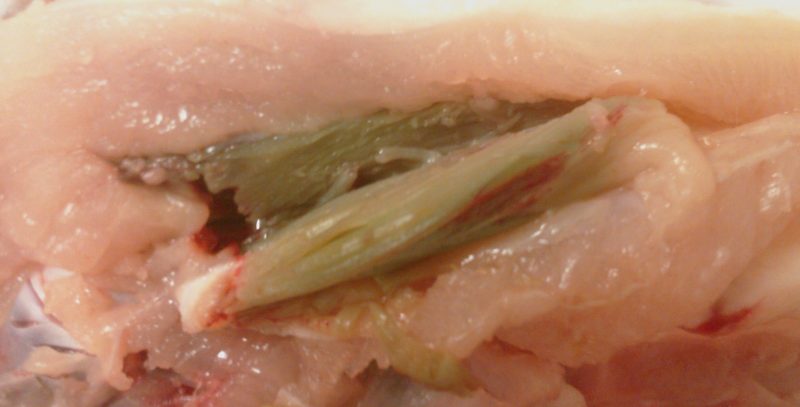
There are no obvious external signs in live chickens. It’s most commonly discovered during post-mortem processing when the greenish lesion is seen beneath the pectoral muscle. In backyard flocks, it might be noticed when processing a bird at home.
Prevention
Reduce Stressors Avoid loud noises, sudden movements and handling that could startle birds. Keep lighting gradual and consistent. Provide adequate space. Overcrowding increases the likelihood of wing flapping.
Genetic Selection Some poultry producers are exploring slower-growing breeds or selectively breeding for traits that reduce susceptibility to GMD. As a small flock keeper choose heritage or dual-purpose breeds if keeping them for meat.
Enrichment includes perches, foraging materials and natural lighting which can reduce stress.
While GMD is less common in backyard flocks due to slower-growing breeds and less intensive confinement it can still occur, particularly if birds are startled often or housed in small coops without enough space.
Although discoloured meat is unappealing, Green Muscle Disease poses no health risk to humans. More importantly, from my perspective, GMD is an issue of animal welfare and how some poultry are treated.
Citations
- Bilgili, S. F., & Hess, J. B. (2008). Green muscle disease in broiler chickens. World’s Poultry Science Journal, 64(3), 303–308.
- Siller, W. G. (1985). Deep pectoral myopathy: A penalty of successful selection for muscle growth in poultry.Poultry Science, 64(8), 1591–1595.
- Petracci, M., & Cavani, C. (2012). Muscle growth and meat quality issues in broiler chickens. World’s Poultry Science Journal, 68(1), 113–122.
- Bailey, R. A., Watson, K. A., Bilgili, S. F., & Avendano, S. (2015). The genetic basis of deep pectoral myopathy in broiler chickens. Poultry Science, 94(12), 2870–2879.
- Northcutt, J. K., & Buhr, R. J. (2019). Poultry muscle disorders and meat quality. University of Georgia Cooperative Extension Bulletin.
Featured photo credit: Nancy Cueva
“Breaking down chicken science, one cluck at a time.”
 Bitchin' Chickens
0 comments on “Green Muscle Disease In Chickens”