
I’m a bit of a stickler about language, not because I’m a snob but because words are important. When used properly they can convey exactly what you intended. Used erroneously, your audience might be left confused.
I often see threads in online chicken groups in which folks post a photo of an egg and ask “Is this fertile?” or “Is this fertilized?” as though those two term are the same. As it turns out, they are not and can mean the exact opposite.
We all know that an egg needs to have the contribution of a rooster’s sperm in order to potentially develop into an embryo. We call that process fertilization and the resulting egg is considered fertilized (and if not, it’s unfertilized). The tricky part comes into play when we use the words fertile and fertilized interchangeably.
Although they sound similar they are not the same thing. The former refers to a seed or egg that has the capability of developing. All eggs have the potential to develop, hence they are all fertile.
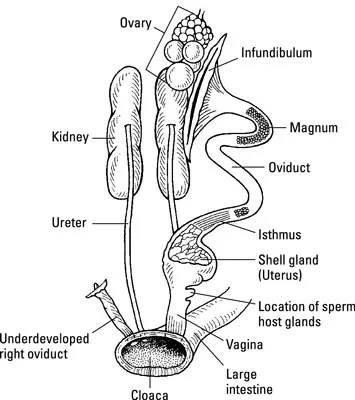
When a pullet reaches laying age, one by one the tiny yolks mature, so at any given time during her productive life, her body contains yolks at various stages of development. Each yolk receives nutrients through a network of blood vessels that surround the yolk. Within about two weeks, a tiny yolk grows to a diameter of about one inch. The network of vessels then ruptures to release the yolk from the ovary.
The two-foot long oviduct consists of five compartments, each with a different function. If fertilization takes place, it will occur as the egg passes through the oviduct’s funnel, the infundibulum. The window of opportunity for a fertile egg to become fertilized is very short. If the hen doesn’t mate or the sperm doesn’t connect with the egg prior to the shell being added there is no future chance of fertilization.
Here’s the distinction:
- Fertilized egg means a rooster has successfully mated with the hen and sperm has united with the egg cell inside the hen’s oviduct. At that point, the egg contains a zygote – the very first cell of a potential embryo.
- Just to set the record straight, a fertilized egg has the potential for life, but until it has been incubated it is just a cell. You will not be eating a baby chick. They don’t even start to develop until the eggs have been incubated at over 27c/80f degrees (and ideally 37c/99f degrees) for least a day or two.
- Fertile egg refers to the egg’s potential to develop into an embryo if it’s fertilized.

Left: ovum light spot on the yolk Right: ovum fused with sperm, by the time the fertilized egg is laid, many cells are divided on the surface of the yolk forming a blastoderm (bull’s eye)

- An infertile egg, on the other hand, comes from a hen who hasn’t mated with a rooster. It will never develop into an embryo and is what you typically buy in grocery stores.
Every fertilized egg is, by definition, fertile – at least initially. But not every fertile egg will remain viable to become fertilized.
“Eggs, experiments, and existential chicken questions.”
 Bitchin' Chickens
Good article – why I enjoy bringing in an incubator to a 5th grade class. Same class the Kindergarten class receives but when I get to the ‘cloaca kiss’ -suddenly the 5th graders’ eyes get round. Yep, the hen has the two ‘sex chromosomes’ – the Rooster now introduced as ‘Cock’ gets to have two testes. Removed they are still a rooster and called a capon.
LikeLike