
When I was looking to install a door on my secondary coop I contacted Omlet asking if they would send me a complimentary automatic door in exchange for an honest review on my blog. It took almost two months to hear back from them but they were quite easy to deal with, offering me the auto door, a smart control panel upgrade and a coop light.
There was an unforeseen issue in the shipping. I live in Canada and the Omlet headquarters are in England. It turns out they don’t ship to Canada and neither does their American distributor. At that point, I thought they’d say, “Sorry, it wasn’t going to be feasible”, but they made good on their offer and sent my parcel from the U.K. Unfortunately I was dinged $57 for import duties – something I, and I think the Omlet folks, weren’t expecting.
More than 18 months later, I’m totally happy with their products and continue to recommend them.
Omlet was founded by four students who met at London’s Royal College of Art when completing a postgraduate course in Industrial Design Engineering. During their final year, they developed the Eglu backyard chicken coop. That project morphed into a business that now includes products for chickens, dogs, cats and pet rodents.
In the fall of 2025 they launched a new product, an Insulated Stay Clean Chicken Drinker (what we in North America would call a Waterer). I was pretty confident, based on my experience, that this would be a quality product so I fired off an email asking if, once again, they’d send me one in exchange for a review. Within a day, they responded in the affirmative and let me know it would be several weeks till it would be shipped.
The unit, which retails for $99 USD, is available in two colours: Eglu Green or Sage Green. I chose the latter.
I live on a small island off the west coast of Canada, just north of Washington state. Our climate is mostly rainy in the winter, with short periods of snow and subzero temperatures. For those few days, although occasionally longer, I find it annoying to haul fresh water from the house out to my flock several times a day. It’s challenging because I’m not always home, the water can freeze over quickly or my birds can knock over the container.
I had been looking for a solution but was hesitant to use a heated waterer involving electricity. I was stoked when I found out the Insulated Drinker is made from an insulated reservoir sandwiched between two layers of heavy duty plastic. Tested at -20C it significantly increases the amount of time the water stays liquid in freezing conditions. The cups have to be swapped out with the nipples once the temperature hits -5C.
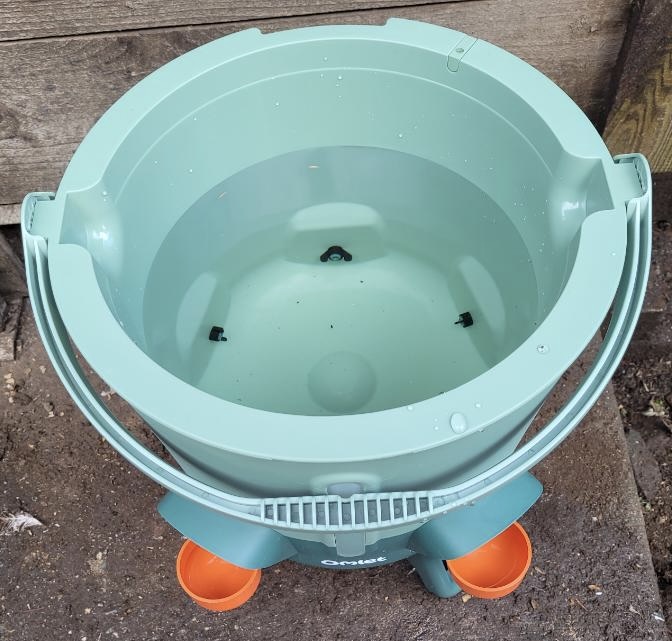
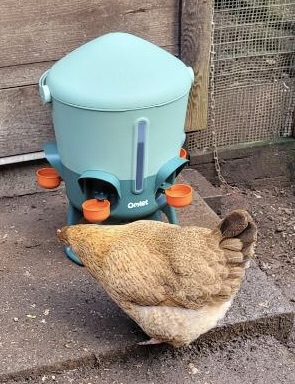
Photo credit: Bitchin’ Chickens
Just before Christmas I got a notice from UPS with the tracking link. I watched as my waterer made the journey from England to Germany to the USA before reaching Canada. I crossed my fingers that I wouldn’t be hit with a hefty bill for customs or the newly imposed tariffs. Much to my relief, the parcel was delivered right to my doorstep totally free of any charge.
The box was well packed; the components were neatly nestled along with a comprehensive instruction booklet (in English and translation in seven languages) with clear illustrations and a bag of six nipples and six cups (you can choose and change between the two drinking methods, and have a spare of each in case you ever need it).
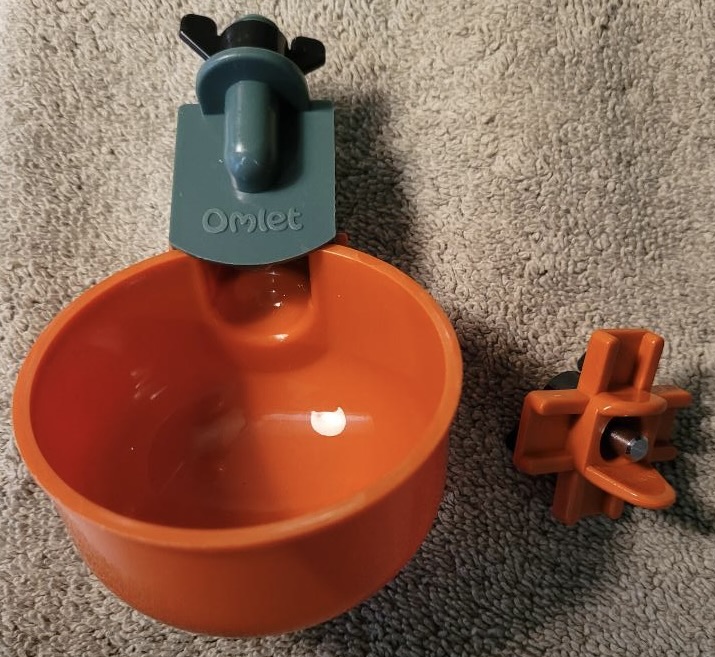
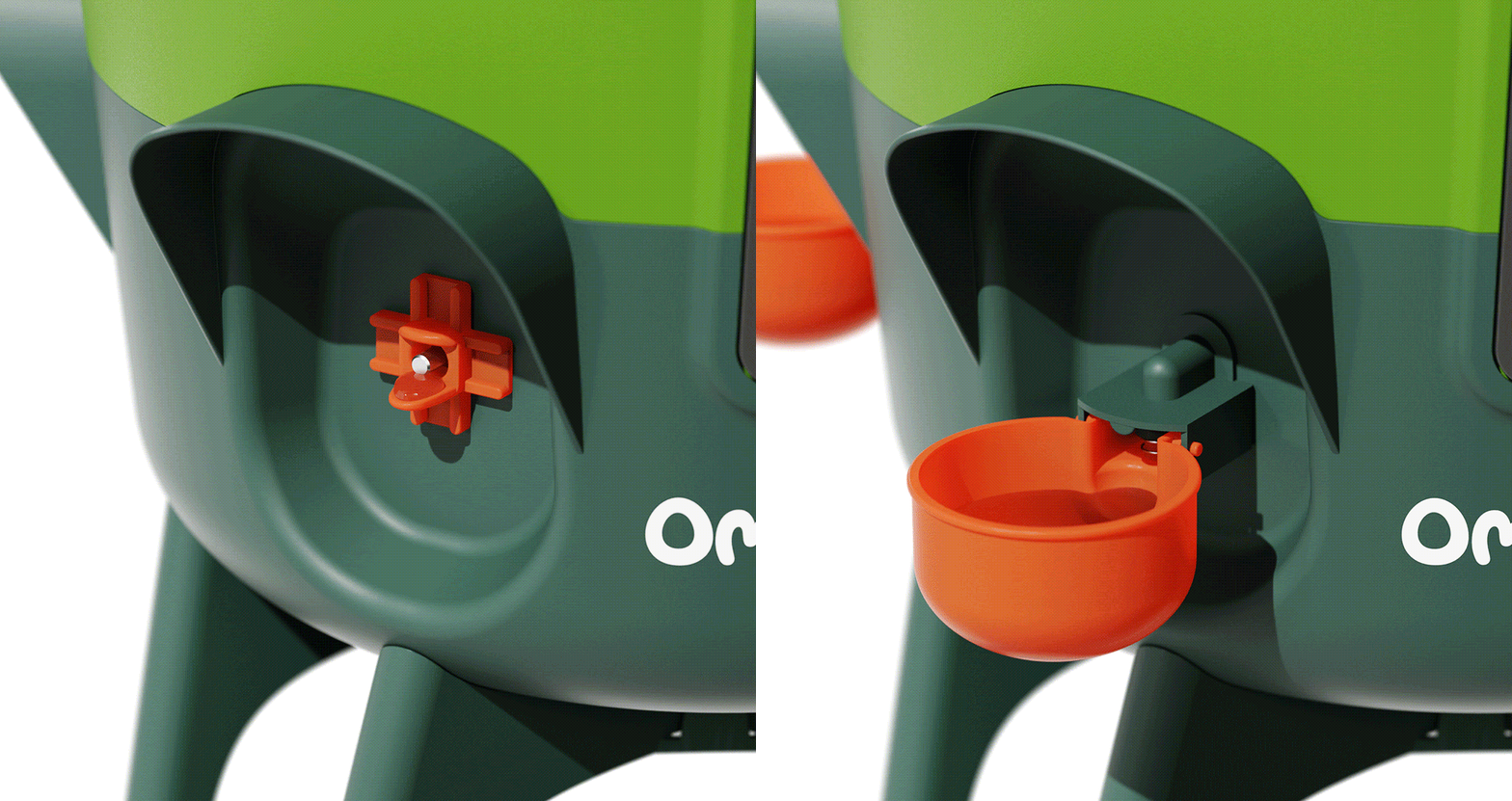
Photo credits: Bitchin’ Chickens; Omlet
It is incredibly easy to assemble, even for someone like me who tends to be impatient missing critical steps along the way. I installed the cups which were recommended for chickens not familiar with using nipples, which are required at temperatures below -5C. You can hang or situate the waterer on the ground. Again, I chose the latter and slid the three legs into the base. I appreciate raised waterers which tend to stay cleaner than those placed at ground level which tend to collect kicked up dirt and poop.
The water stays cooler in the summer and retards algae growth by blocking 99% of light. And keeping that water source clean is also important. Water is critical for life. Keeping your flock hydrated year round is a top priority. Dehydration can lead to decreased egg production, lethargy, weight loss, diarrhea, heat stress, organ failure and, even, death. Shared waterers can also be a vector for a variety of bacterial pathogens and parasites so easy cleaning is a must.
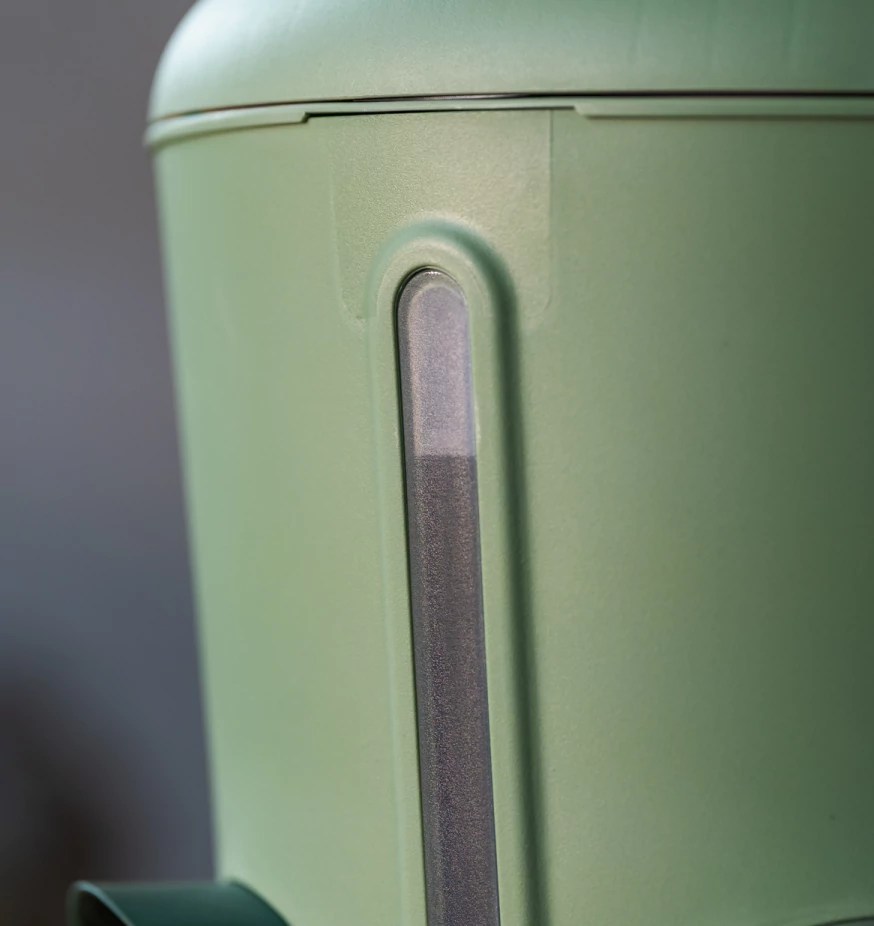
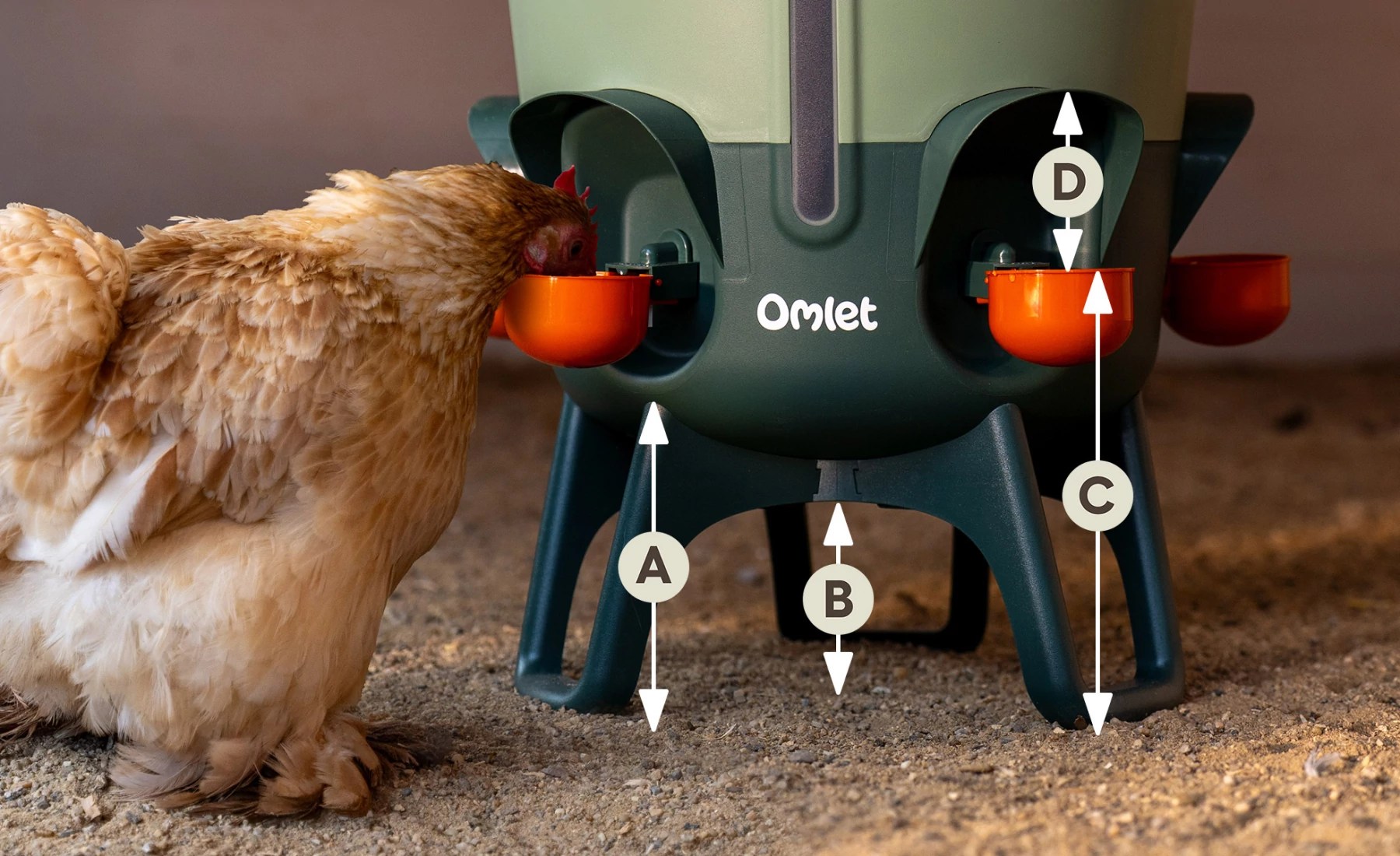
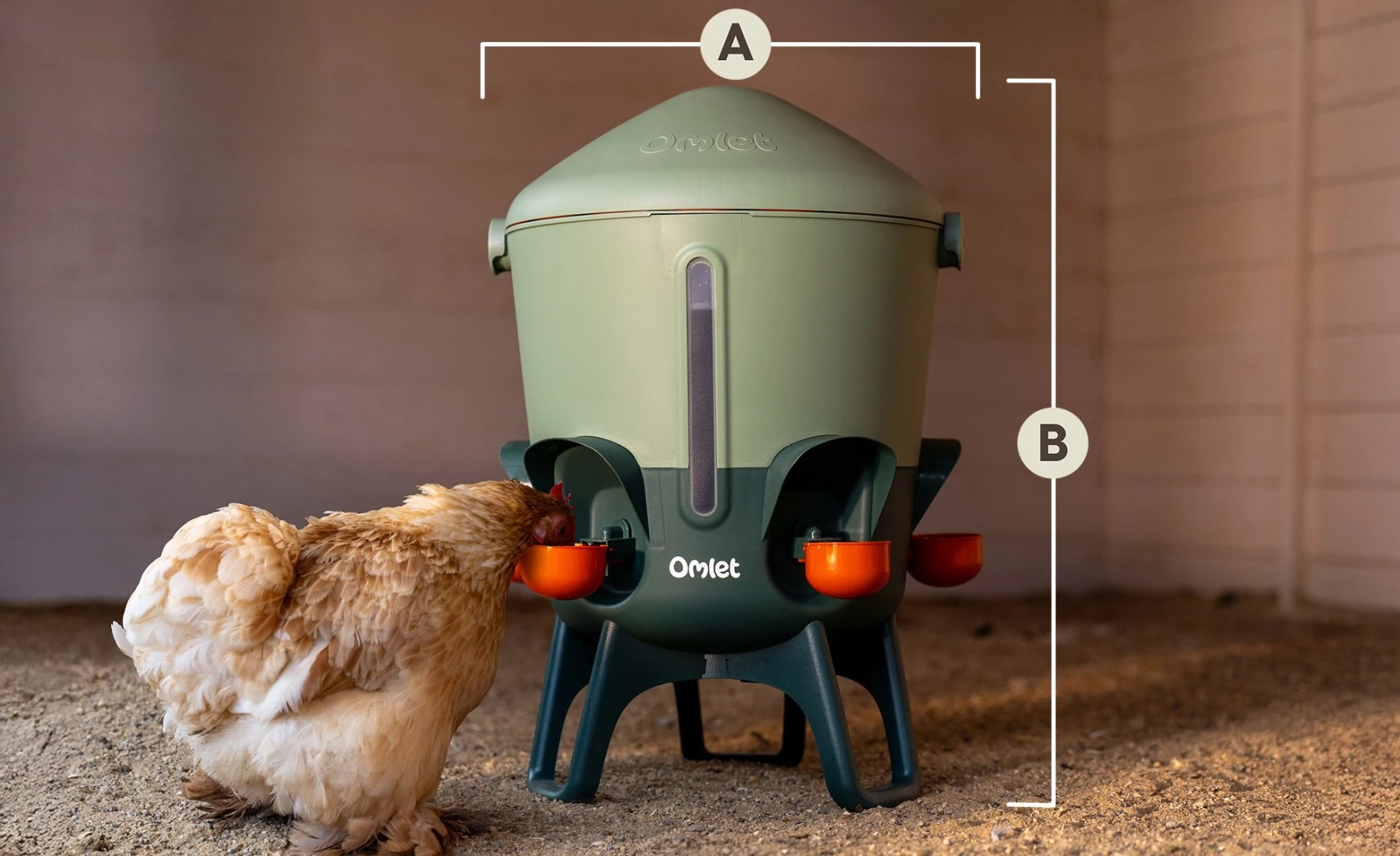
Photo credit: Omlet
The Omlet waterer features include:
- Made from safe BPA & PFA-free plastic, stainless steel bolts and screws
- Visible water level via a transparent window
- Suitable for all breeds
- Includes legs with option to hang
- UV stable
- Suitable for use with apple cider vinegar
- Rust and corrosion resistant
- Hose down or wipe clean
- Anti-topple design
- Easy to fill and carry
- Locking, sloped lid that deters birds from standing on top of it
- Recyclable
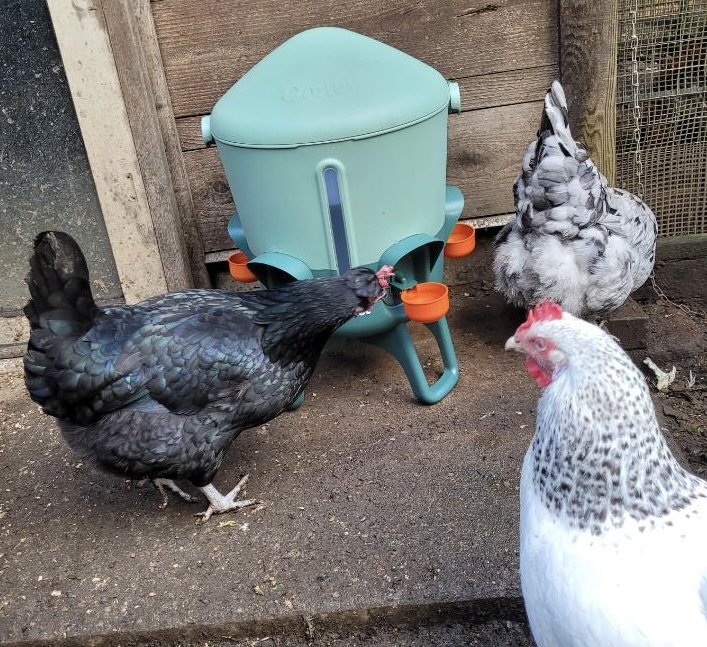

Photo credit: Bitchin’ Chickens
I’ve used the Omlet waterer for the last two months and I have to say that I’m totally happy with its performance. We experienced a slight dip in the temperature last month so I changed out the cups for the nipples. Unfortunately my flock required a tutorial on how to use them, leading me to revert back to the cups. As it turns out we’ve had a record-breaking warmer-than-usual winter so the nipples weren’t required. That also meant I couldn’t attest to the waterer’s performance in subzero temperatures, but I have no doubt I would be satisfied.
Thanks Omlet for creating another quality product for chicken keepers and the birds we love.
“Smart hens, messy coops, and the truth about keeping chickens.”
 Bitchin' Chickens
PLEASE BE AWARE:
I have made Omlet aware that in freezing temperatures the nipples freeze and become unusable for the chickens. This is very upsetting as the flock owner would not know unless they tested the nipples each day. Imagine thinking your chickens are hydrated when in fact they have no access to water. There are many comments online with the same complaint. I am horrified that Omlet did not pull this product, nor change
I have many Omlet products : 4 Auto doors, 2 large walk in runs, 3 Omlet coops etc.. and have been satisfied with everything.
I did suggest that Omlet needs to go back to the drawing board for use of this waterer in the winter and to make purchasers aware that that these things can happen. The product needs to be checked on daily in low temperatures.
LikeLike
Thanks for sharing your experience. Perhaps it’s more suitable in my climate where we rarely get subzero temperatures. I did use it when our temps reached -2C overnight and hovered around 0C during the day.
LikeLike
I purchased this waterer directly from England, at full cost and waited weeks for it to arrive. I had my fingers crossed that it would reduce the need to change the chicken water three times a day, since it has been below zero since New Years. It was in use for 2 days (Feb 23,24, nights at -12C) and the nipples were malfunctioning. Ice was forming along the surface of the water and along the inside of the walls all the way down to the nipples. The third night (-17) and the nipples were frozen solid. 😢
Denise in Napanee, Ontario
LikeLike