
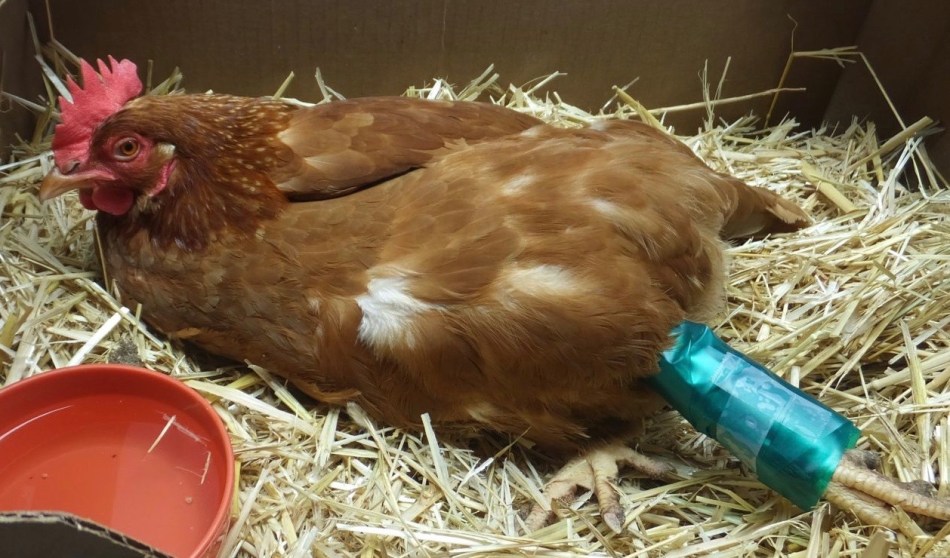
I’ve yet to experience dealing with fractured bones, but with my luck it may be on the future to-do list. If so, I’ll be informed and ready. Kidding aside, it is one of the common themes I see on Facebook chicken group posts: my horse, goat/I stepped on my chicken; my rooster got his foot caught in the door; my hen jumped off the roost bar and had a crash landing. You get it. The possibilities are endless with flighty creatures with hollow bones experiencing high force impacts or falls.
Fractures (broken bones) are a traumatic injury, which is not only painful, but can be crippling or lead to death. There are different types of fractures and several ways in which a bone can break. One that damages surrounding skin and penetrates the skin is known as a compound or an open fracture.
Broken Neck (Real Food RN) 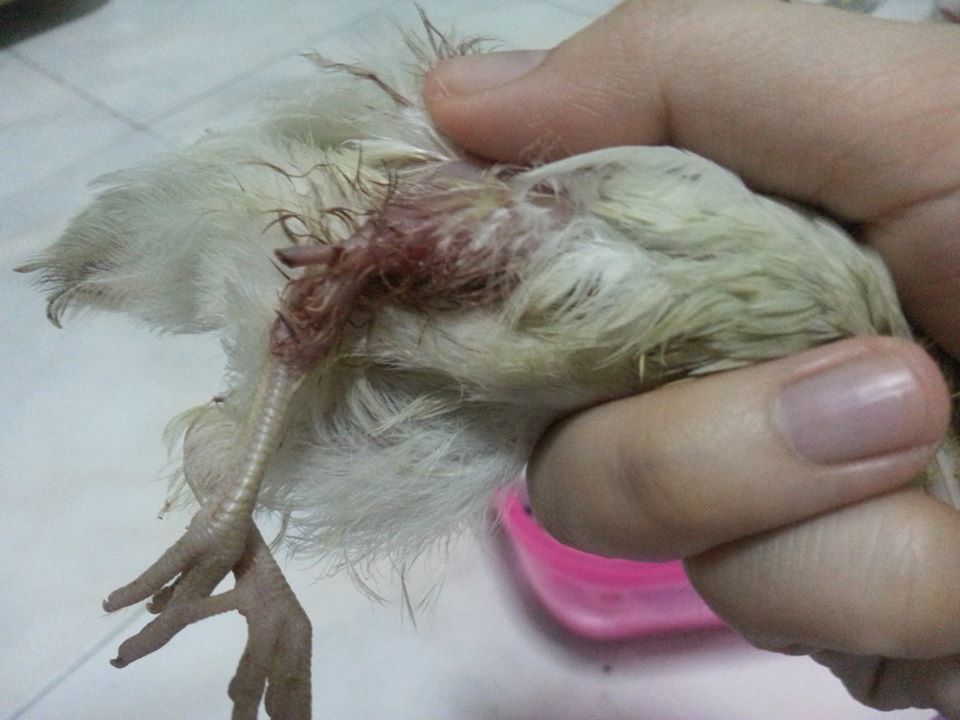
Compound Leg Fracture (BYC) 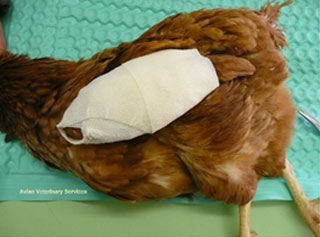
Broken Ulna (BHWT) 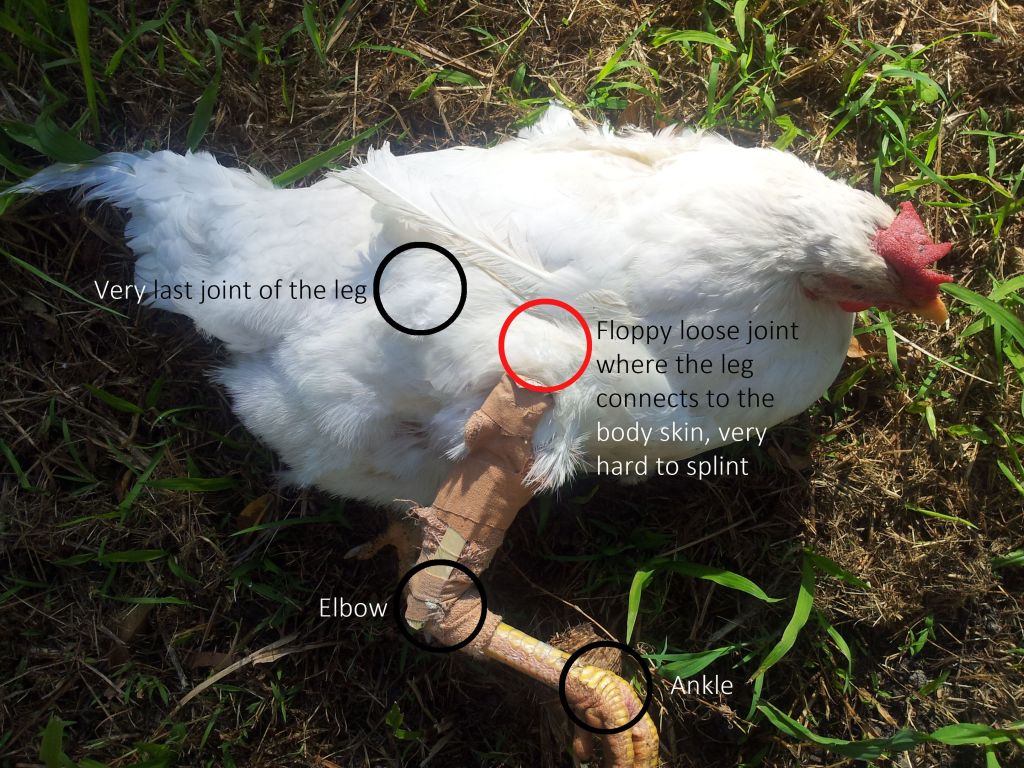
Types of Leg Fractures (BYC)
Laying Hens & Keel Bone Injuries
I am bothered when folks refer to their hens as slackers and free-loaders. If they understood the Herculean effort it took to make and lay an egg perhaps they would be more appreciative. Did you know that hens actually draw calcium out of their bones to make egg shells? If that calcium doesn’t get replaced or they are pushed beyond their capacity (i.e. artificial lights to force them to lay without taking long breaks) it can lead to osteoporosis. That, of course, is a risk factor for broken bones.
Some breeds of laying hens are susceptible to fractures in part due to selective breeding for increased egg laying: more eggs laid over a longer period of time. The push to lay more eggs on a consistent basis causes progressive bone loss from a hen’s skeleton as calcium is mobilized for egg shell formation. A laying hen’s need for calcium can exceed her body reserves by about thirty times. Keel bone (breastbone) injuries are commonly seen in commercial and high production layers.
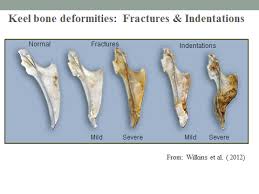
Keel Bone Deformities (Midwest Poultry) 
Keel Bone Injury (Poultry DVM)
Identifying a Broken Bone
Any bone is vulnerable to a fracture, but the most common ones are toes, legs and wings. Look for:
- Inability to walk, limping
- Dragging or twisted wing
- Swelling, heat or redness at site of the fracture
- Recently twisted toes (i.e. not curled toes in chicks)
- Green bruising, discoloured skin
- Weakness
- Muscle atrophy
- Decreased appetite
The question is are these injuries fixable and do you have the time to offer the care required? Like with any chicken health issue, are you willing to invest in getting veterinary care or will attempt a DIY fix? Regardless of which route you choose your bird will need immediate medical attention.
Treatment
Chicken bones heal just like ours: it’s a natural process that requires giving the bone optimal conditions to heal itself. Most birds may only require bandaging/splinting and a period of rest and physical therapy. If you have deep pockets, veterinarians can do x-rays, splints, metal pins and plates and even amputations, if required. A baby aspirin (81 mg) can be cut in half and offered for pain relief.
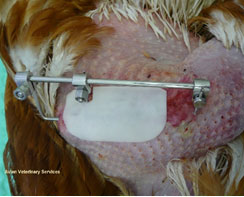
Wing Pins (BHWT) 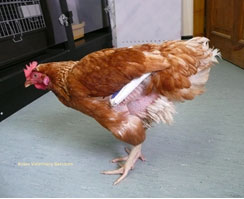
Wing Pins (BHWT) 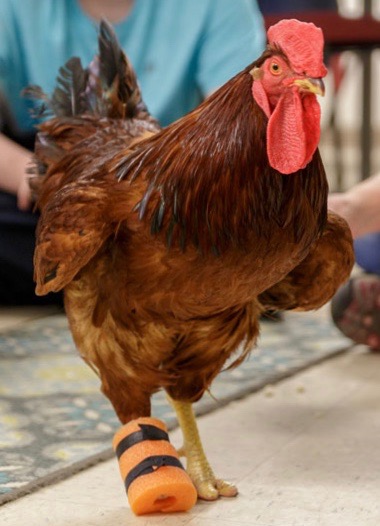
Foot Splint (Bunscombe County Schools)
Open fractures are more at risk of a secondary infection of the bone (osteomyelitis) and may require the use of antibiotics. Your veterinarian can recommend the optimal drug regime.
Types of Splints
- Figure 8 Wing Bandages are most suited for fractures of the elbow or carpal joint, or in young chicks. It is important not to apply the gauze strips or vetrap too tight.
- Schroeder-Thomas Splint is best used for fractures involving the shank and hock joints. It’s made of a wire with two right-angle bends next to the ring at the top of the splint, so that it runs parallel to the long axis of the leg.
- Robert Jones Bandage is used for simple fractures involving the hock joint. Heavily padded leg bandages can be used with or without additional splinting material.
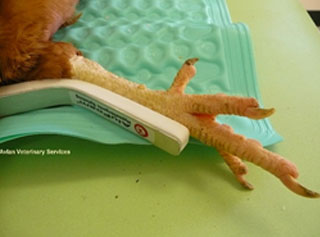
Leg Splint (BHWT) 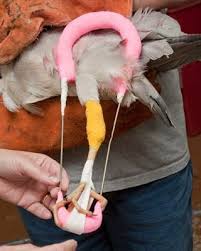
Schroeder-Thomas Splint (BYC) 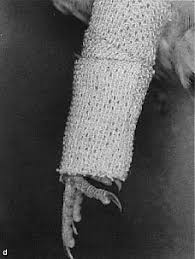
Robert Jones Bandage (Avian Medicine)
- Wood applicator sticks, tongue depressors, aluminum rods or even pool noodles can all be made into leg splints.
- Ensure that fractures are properly aligned in order to increase the chances of them healing properly, which usually only takes 2 to 4 weeks.
- Patients should be removed from the flock and kept in a crate or pen to reduce activity and potential bullying until they are healed.
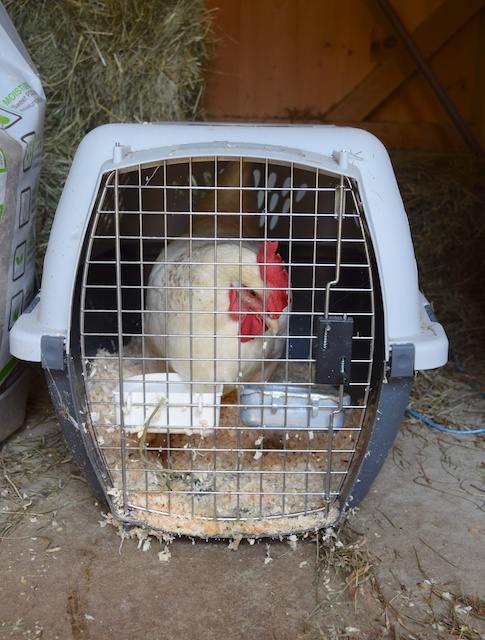
Chicken Infirmary (HenCam) 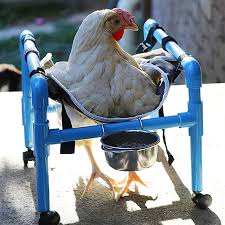
Chicken Wheelchair (Poultry DVM)
Prevention
- Be gentle when handling chickens.
- Always supervise children around chickens.
- Never try to catch birds by their legs.
- Avoid using supplemental light to force your hens to lay year round. They need breaks between laying.
- Be aware of your chickens when they around other types of livestock (e.g. horses, goats).
- Chickens love to be underfoot or stand in doorways, so be conscious of their location when you’re out with them to avoid stepping on, or closing a door on, them.
- Make sure your perches aren’t too high and that the coop floor is well padded with bedding.
- Roost bars should be less than 24″/60cm apart.
- Supplement your hens’ diet with Omega-3 fatty acids (e.g. oily fish; flax, hemp and chia seeds; soybeans; tofu; navy and kidney beans; seaweed; Brussel sprouts and walnuts).
- Provide oyster shells for calcium.
- Give balanced feed.
- Ensure your birds have enough room to exercise, which builds muscle and bone.
- Avoid overcrowding.
- Predator proof your coop and run.
- Train and supervise dogs around your birds.
Credits: Dummies; Poultry DVM; Universities Federation For Animal Welfare Featured Photo Credit: Backyard Chickens; BHWT = British Hen Welfare Trust
 Bitchin' Chickens
Very informative post. I learned a lot. I thought the part about calcium being pulled from their bones for egg production was a very good caution for your readers. I definitely will not be adding supplemental lighting to extend their laying into winter!
Quick question. There’s a photo of a chicken with an orange pool noodle as a leg splint in this article. What is wrong with the toes on its other foot ?! Is that a birth defect, a disease or the result of injury?
LikeLiked by 1 person
The rooster was being fitted for a prosthetic foot on the pool noodle side. He lost his foot and toes on the other foot due to frostbite. I used the photo as an illustration of how a pool noodle could be used as a splint.
LikeLike
Ah, frostbite. Ok, thanks. I was curious because it looked so strange. Imagine, prosthetics for chickens!
LikeLiked by 1 person
bonjiur.
Merci de m aider …..je suis en recherche désespérée. D un fauteuil roulant pour mon poussin qui vas vite grandir. Son soucis marche sur les coudes mais tient debout si je le maintien. Mon soucis ses doigts se recourbés sur eux même et u ai peur de ne pouvoir jamais la faire marcher.
English translation: I am desperately looking for a wheelchair for my chick who will grow up quickly. Her concern walks on her elbows but stands up if I hold her. My concern is her toes are curled on themselves and I am afraid I will never be able to make her walk.
LikeLiked by 1 person
It sounds like she was born with curled toes that never got fixed. There are ways you can make her more comfortable including making her a custom wheelchair. You can read the article I wrote about wheelchairs by typing that term into the ‘search’ box on my home page. How old is she? Is she eating and drinking normally? What’s her weight like? Are you able to keep her as a house chicken? You can also communicate with me directly by using the ‘contact’ button on my homepage. Good luck.
LikeLike
I think it is not advisable / recommended to give aspirin or common human pain killers to chicken, since it is likely to damage organs.
LikeLike
Agreed, it wouldn’t be my first choice, but in small amounts for a short period of time baby aspirin is an accessible painkiller. My recommendation would be to administer Meloxicam/Metacam, but that is not always possible, especially in emergency situations.
LikeLike