

This series is a partnership between Bitchin’ Chickens and Dr Vicki Bowes, vet/avian pathologist. We get together to chat about interesting chicken health issues that I have collected and attempt to come up with a diagnosis or treatment options based on the information we have, which often isn’t much.
Unknown Lump
I found hen like this and bathed her to get clearer idea of what was going on. Once she was soaked, a large tumor-like thing was visible which was clearly open from a pecking injury. I euthanized her. The pictures include everything that was outside of her. It wasn’t connected to her vent. – Gary Cochrane


Dr Bowes: It’s hard to tell what’s going on. Tumour? Uropygial gland impaction? It might involve the oviduct. I’d like to know how the lump was associated with her vent and exactly where it was located.
Green Poop

Dr Bowes: This is bile, not blood, and a sign that the bird is not eating. It’s a symptom of a more serious underlying condition.
Tapeworms
Our hen was confirmed to have tapeworm proglottids in her droppings. About 90 minutes after her first dose of medication she passed them. It was utterly destroyed and appeared as longer sections of the worm, and also something else that resembled yellow sesame seeds. Upon closer inspection, we became pretty sure that what we were looking at were individual gravid proglottids that had yet to be released. Our best guess is that the more yellow-tinged bits are the sections that are filled with eggs, and the white outer portion of the worm’s body is just less obvious in them due to their positioning. The next thing that had me puzzled though was what on earth caused it to be passed in pieces like this. – Sara Franklin
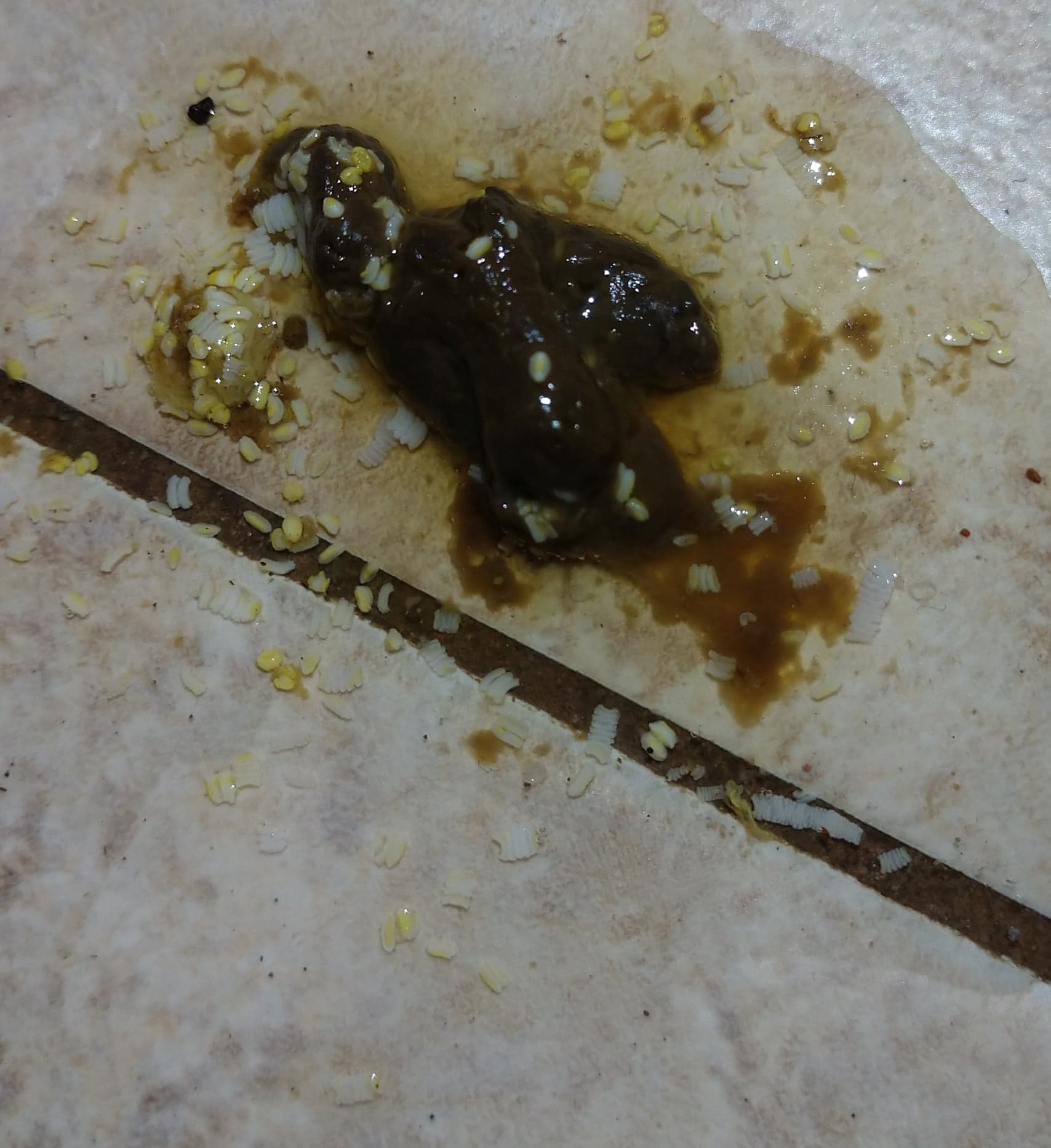

Dr Bowes: Some of the worms appear to have come out intact, while others broke apart. As the segments of the worm contract they push out their eggs through ports, hence the ‘destroyed’ appearance. There may be more than one species of tapeworms there.
Undiagnosed Death
I had a bantam hen who was surrendered to me because the owner said she wasn’t walking normally. She’s been walking completely fine since I’ve had her. She also had lice and was skinny but otherwise normal.
Today she was very off and I took her into my work (a vet hospital) but she died on the way. I took an X-ray but the doctors I work with don’t have experience with chickens. Is there anything abnormal on it? – Kim Marsman
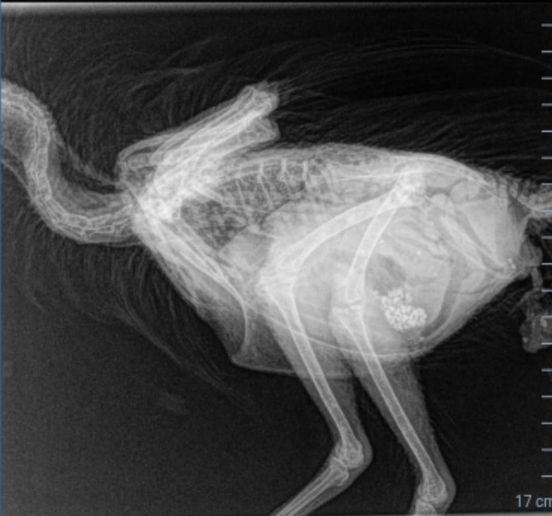
Dr Bowes: What lice treatment was used? Some products, such as Malathion and other organophosphates used at the wrong dosage are toxic. The positioning of the body for the X-ray obscures the abdominal cavity, but I don’t see anything obvious that would explain her death.
Unknown Bumps

Dr Bowes: I would need to know the texture and consistency of those bumps in order to make a diagnosis. Are they generated by the bird or attachments from something else?
Abscessed Ear

Dr Bowes: The ear is abscessed and full of caseous exudates. You can pop it out, wash with a disinfectant and keep clean. Apply a topical antibiotic like Polysporin.
Eye Worm
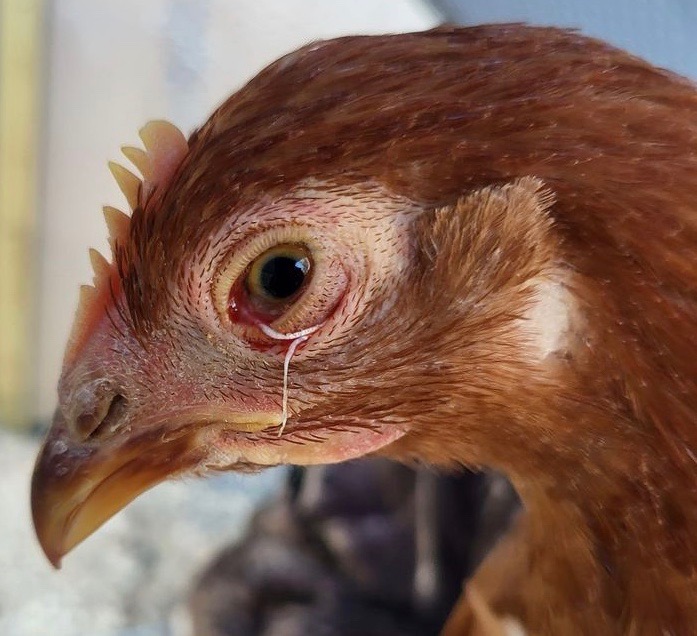
Bitchin’ Chickens: I presented this as an eye worm, remembering that several weeks ago I’d shown Dr Bowes another case in which she’d disagreed with me, saying that eye worms were delicate. At first she hesitated in identifying this as an eye worm as well because it appeared on, and not in, the eye. We did a bit of internet sleuthing and discovered some information she’d never seen before. “The eye worm is a small, thin white worm. It attaches itself in the corner of the chicken’s eye, underneath the nictitating membrane.” (Poultry DVM) Bingo, this is an eye worm.
Glossary
Bile: yellow or greenish alkaline fluid that is secreted by the liver, stored and concentrated in the gallbladder, and passed into the intestinal duodenum where it aids especially in the breakdown and absorption of fats
Caseous: cheeselike, especially in appearance, smell, or consistency
Exudate: a mass of cells and fluid that has seeped out of blood vessels or an organ, especially in inflammation
Proglottid: a segment of a tapeworm containing both male and female reproductive organs. The adults produce proglottids which mature, become gravid, detach from the tapeworm, and are passed in poop
Many thanks again to Dr Bowes for generously sharing her time and expertise to help me become more knowledgeable about chicken health issues. This series is my attempt to build capacity in the small flock community so that we are better able to provide care for our birds.
Featured photo: Amber Pittman
 Bitchin' Chickens
Eye worm photo is amazing! Thanks to all the people involved, you, and Dr. Bowes!
LikeLiked by 1 person
So much information. Knowledge can be scary, but always beneficial.
LikeLiked by 1 person
Yes, clearly chickens aren’t no maintenance pets. There is so much to learn about what can, and often does, go wrong.
LikeLike