
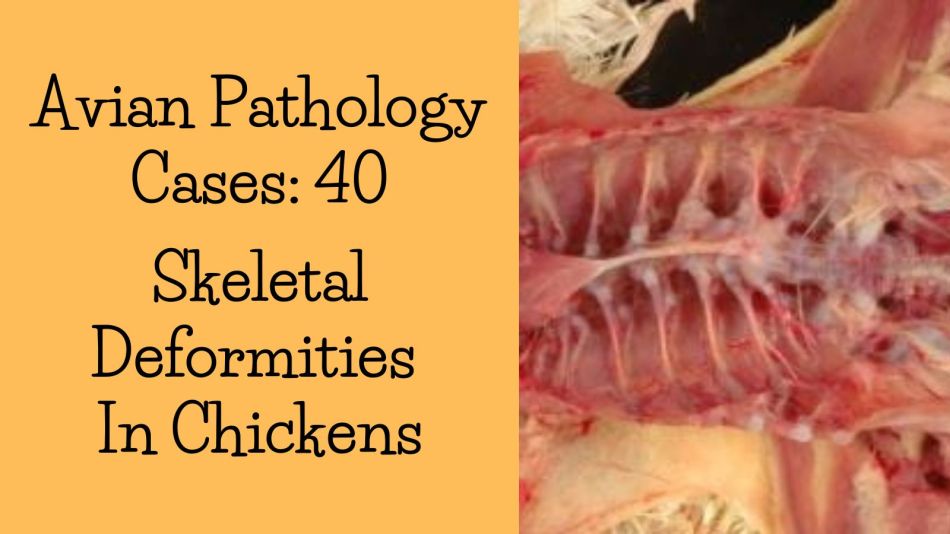
Many years ago I had a partner who was a massage therapist. In her treatment room were displayed posters of human anatomy, physiology and pathology. I became familiar with the spinal conditions called scoliosis, lordosis and kyphosis, so it was with interest when I discovered similar skeletal deformities are found in chickens.
This is my fourth post in the pathology series featuring oddities. I thought it would be interesting to dedicate a whole article on skeletal abnormalities in poultry.
Spinal Deformities
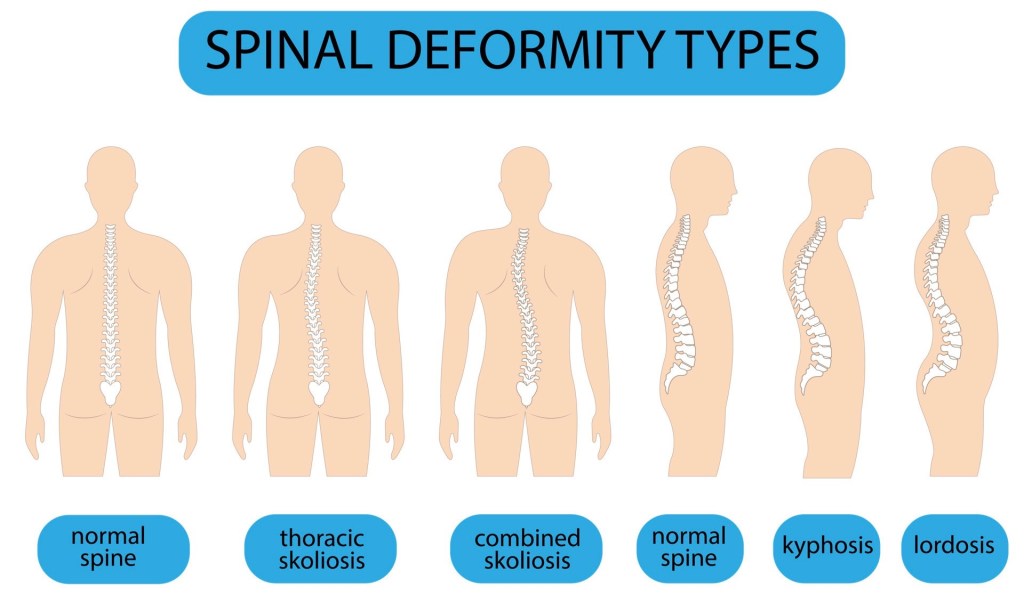
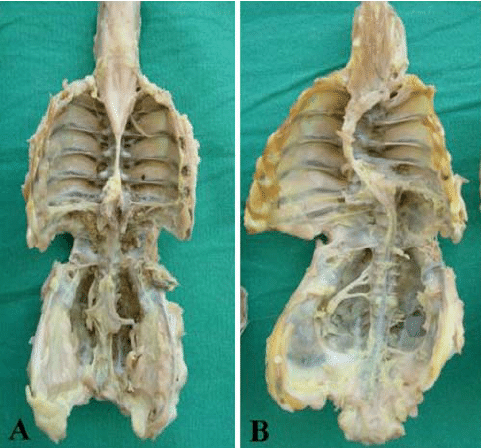
Scoliosis is a sideways curve of the spine. Everyone has normal curves in the spine, and when looked at from behind, the spine appears straight. Scoliosis appears as an abnormal S-shaped or C-shaped curvature of the spine.
Lordosis is the natural curve of the lower back (lumbar) area of the spine. In extreme cases the lower spine will have a deep curve causing the abdomen to stick out and causing the pelvis (hip areas) to curve back and up. The submissive squat that hens display in readiness for mating is also referred to as lordosis.
Kyphosis is characterized by an increased front-to-back curve of the spine and an exaggerated, forward rounding of the upper back that we might think of as ‘hunchback’.
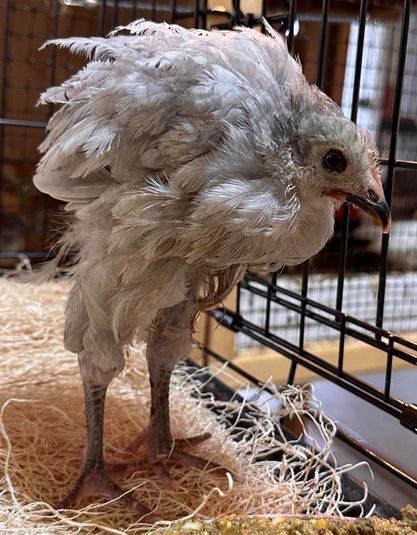
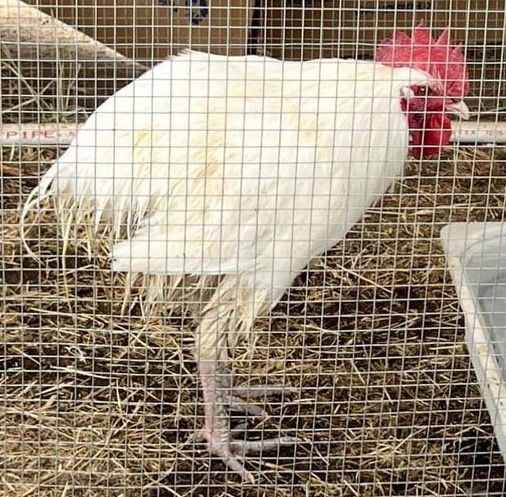
There is no one cause of these deformities in chickens, but they have been linked to poor diet or exercise, inbreeding, genetic predisposition, growth rate, injury and pineal gland deficiencies.
Kinky Back also known as Bacterial Chondronecrosis with Osteomyelitis (BCO), is a syndrome mostly affecting broilers, and occasionally turkeys. Necrotic areas of inflammation develop in the thoracic vertebrae caused by bacteria deposited through the bloodstream to the damaged vertebrae. Progressive damage occurs including enlargement of the vertebrae, which compress the spinal cord and damage to the nervous system. Symptoms include: sitting on hocks or rump, legs extended forward, use of wings to help in walking, or may walk backwards.
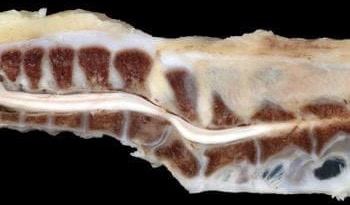
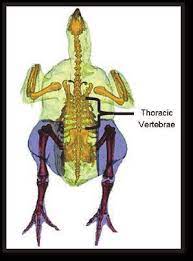
Photo credits: Merck Veterinary Manual; Poultry Practices
Here are some examples of spinal deformities I found in online chicken groups:
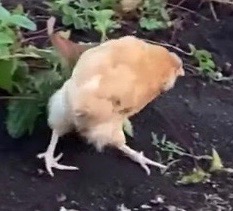
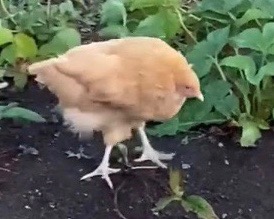
Scoliosis
This is a friend of mine’s Buff Orpington. She started looking curved at 4-5 weeks of age. She has a very pronounced breastbone on one side and a collapsed one on the other side; her shoulder bones are so different in size she forms a C-shape. Eating and drinking well, normal stool. – Brianna Rose-Hainer

Kyphosis
My hen was fine until she emerged from under the front porch very cautiously, with her neck stretched far out. When she straightened up, she was walking taller than the other hens, with her neck still stretched oddly. She looked like she’s trying to walk upright (like a person), but with her neck stretched out toward the ground. It’s very odd looking. I picked her up and she doesn’t seem to be in any pain, and I didn’t notice any obvious injuries other than her hunched back. – Doodle Roo
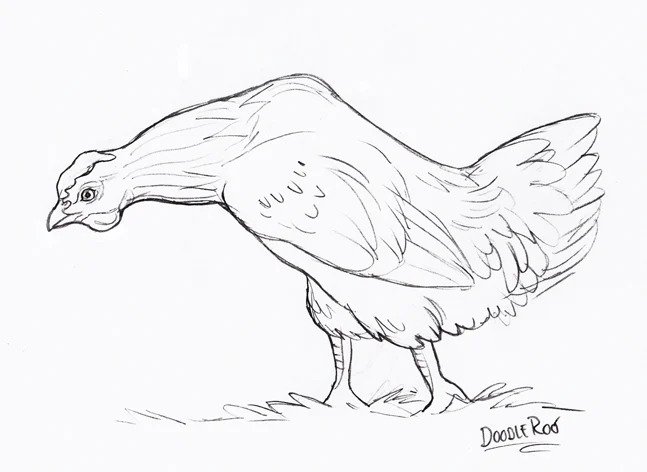
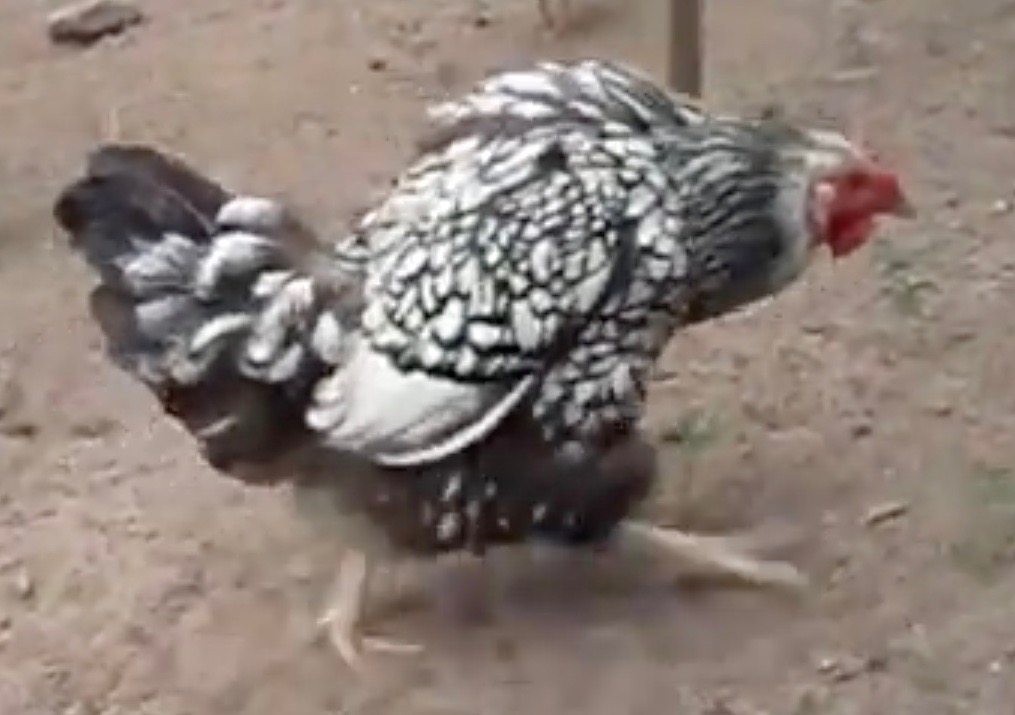


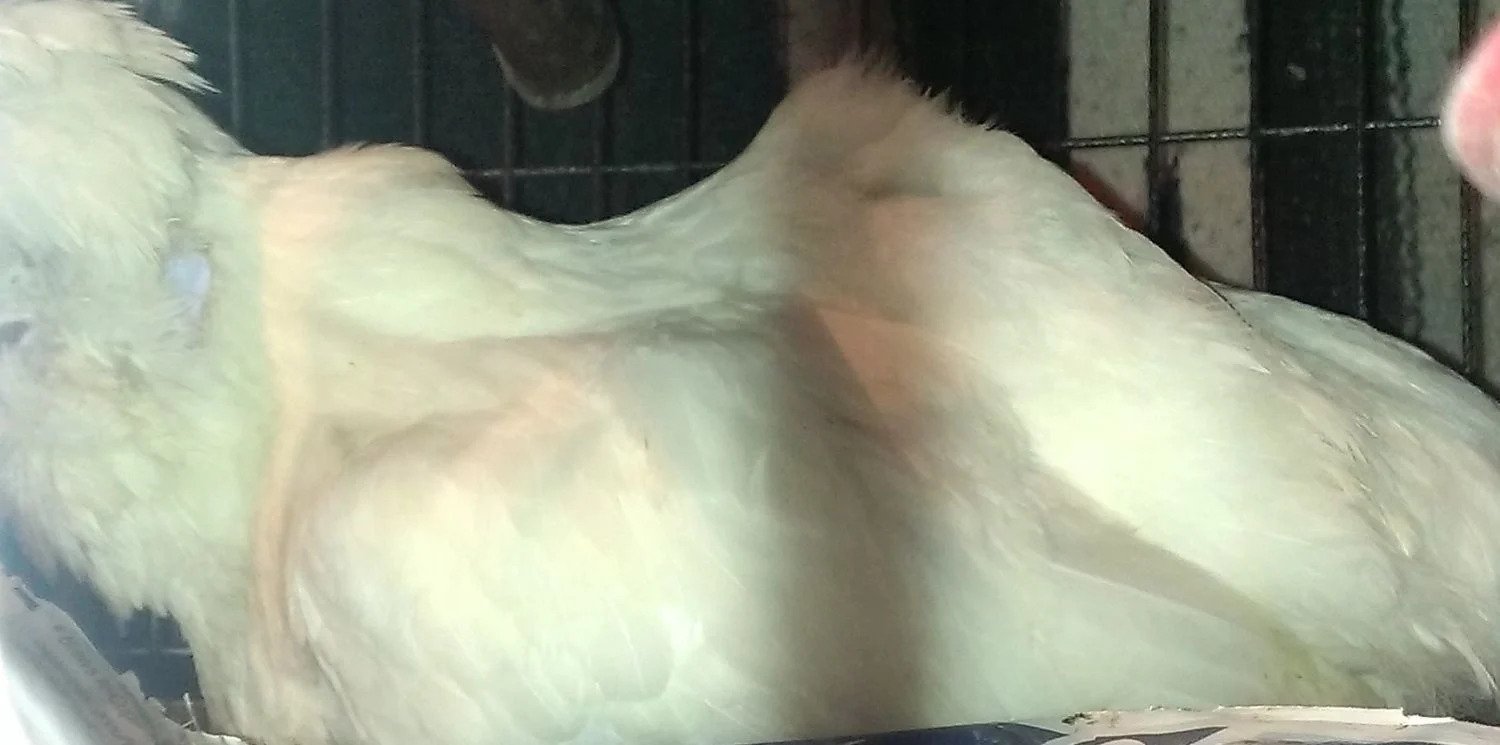
Photo credits: Alexa Kirksey; Kenna Sava; Unknown
Slipped Tendon
Slipped tendon (perosis) is an orthopedic condition, which occurs when the tendon slips out of alignment from the condylar groove of the hock joint. Once out of alignment, the tendon contracts and exacerbates the condition, accelerating the leg deformity and inflammation of the joint.
Slipped tendon can occur in one or both legs and usually appears as an enlargement of the hock joint, followed by varying degrees of twisting of the tibiotarsus and bending of the tarsometatarsus bones. Slipped tendon often occurs in young growing chicks, less than six weeks of age. It has generally been associated with nutritional deficiencies in the diet, but existing leg deformities, genetics and injury also influence its onset. When chicks are fed a diet deficient in manganese, biotin, choline, niacin, or folic acid, they have an increased risk of developing a slipped tendon.


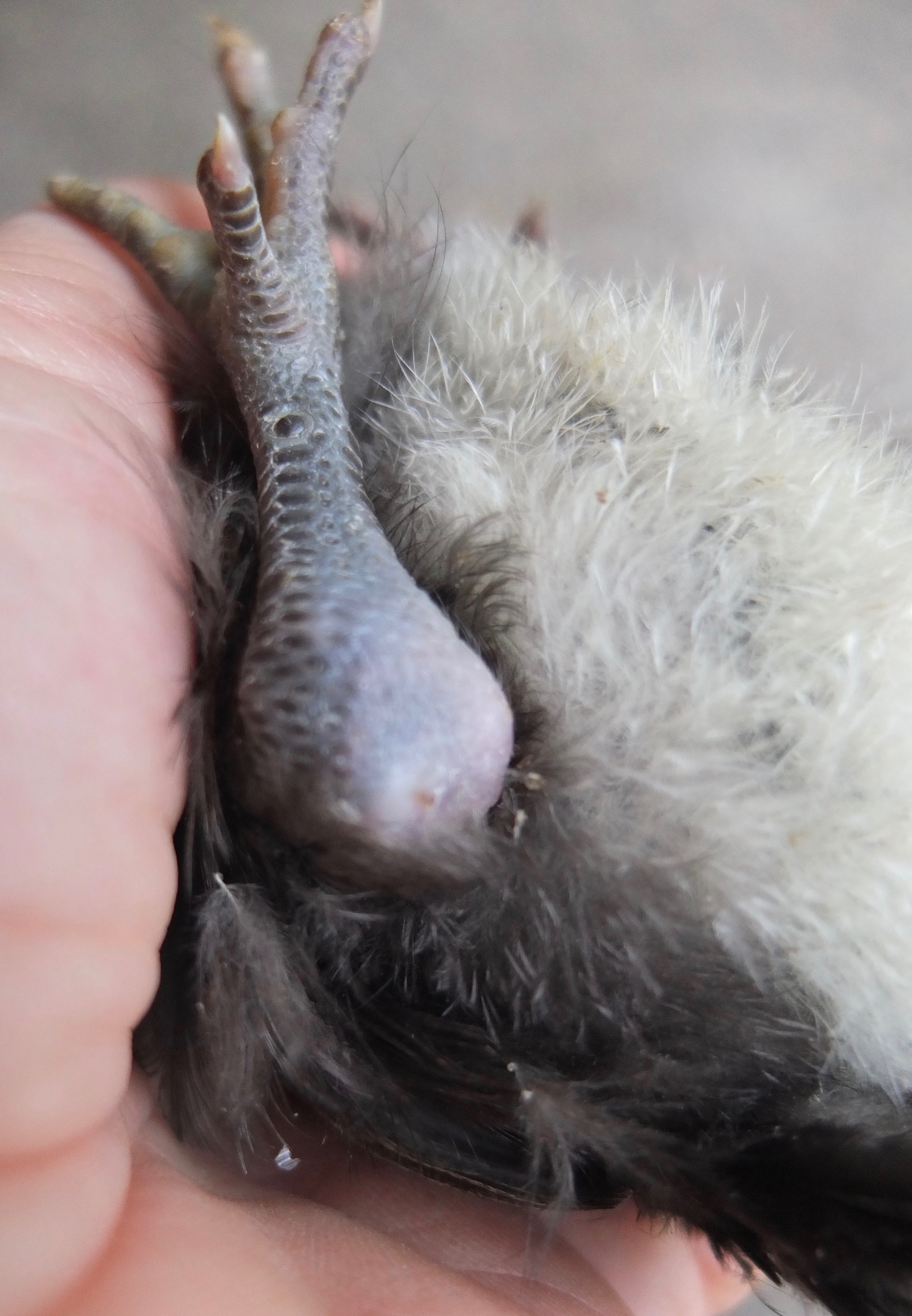
Photo credits: Melissa Rae; unknown; Bitchin’ Chickens

Have you ever seen a chicken consistently looking upwards or with a twisted neck? That condition is called torticollis, but most of us know it as wryneck or stargazing. It’s a common issue with chicks; not an illness, but a symptom describing an abnormal neck position in which a bird’s head and neck to appear twisted and tilted. Depending on the cause, affected birds may initially be unable to hold their head up on their own then get progressively worse. In adults, it is linked to head trauma and a number of different pathogens. Although the origin is a muscle issue it does affect the skeleton.

Wry Tail
There are two types of wry tail:
- Developmental: in breeds like Japanese Bantams and Seramas where cockerels’ tails can grow very fast and their feathers become too heavy for the still-developing muscles
- Skeletal: to do with a malformation of the pygostyle (parson’s nose), the fleshy protuberance at the end of the spine, consisting of several fused caudal vertebrae that support the tail feathers
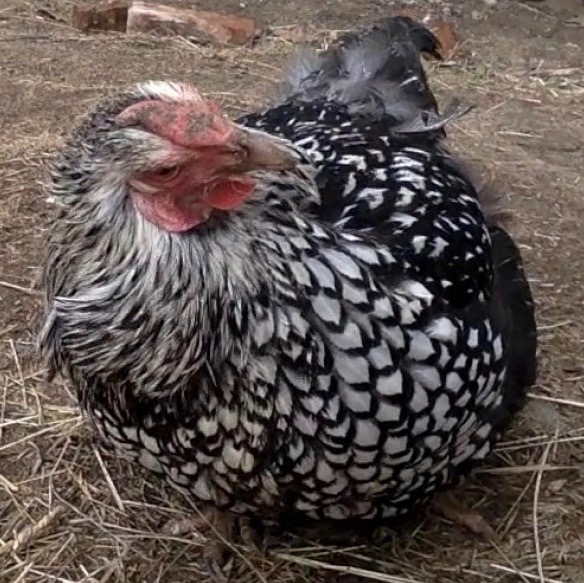
A chick with wry tail will often look normal throughout its early development, with the condition slowly becoming apparent, as the bird gets older. If the cause is genetic or developmental, you should be able to identify it by sexual maturity. Wry tail tends to become more pronounced as the bird matures and tail feathers grow in.
Being a structural flaw, wry tail cannot be treated or corrected.

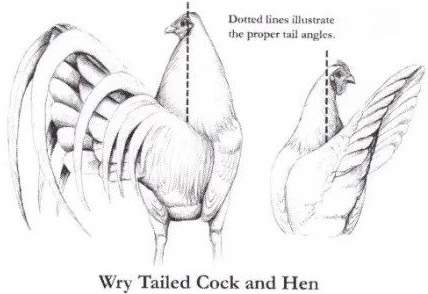
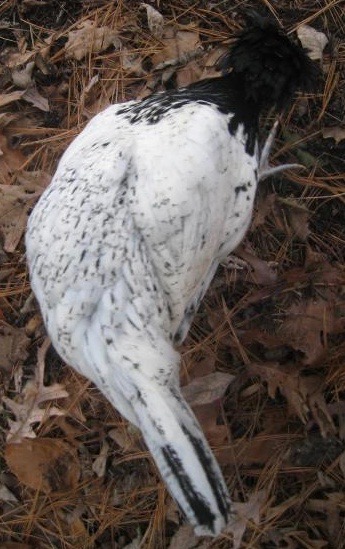
photo credits: Poultry Matter; Chicken Forum
Other spinal deformities that I’ve written about include vaulted skulls and crossbeak.
Credits: Dr Vicki Bowes DVM; Merck Veterinary Manual; Poultry DVM; Sigrid van Dort. Featured photo: Merck Veterinary Manual (scoliosis)
If you’ve got something you’d like to contribute to this post feel free to drop me a line using the ‘contact’ button on my homepage.
 Bitchin' Chickens
0 comments on “Avian Pathology Cases: 40 Skeletal Deformities In Chickens”