
This series is a partnership between Bitchin’ Chickens and Dr Vicki Bowes, vet/avian pathologist. We get together to chat about interesting chicken health issues and attempt to come up with a diagnosis based on the information we have, which often isn’t much.
We’ve been going through case notes, necropsy reports and photos to reach what Dr Bowes terms her ‘best guess’. We recently got together to sift through almost 30 mystery cases wanting to be solved. Most of them were old hat for her, although there were a few that presented some challenges.
I’ve grouped them by type. This file is called ‘What Goes In & Out Of Chickens’, a medley of all kinds of foreign body ingestion, poop, prolapse, and more, just waiting for Dr Bowes to give me her diagnosis. Again, she did not disappoint and I present them here for your learning.
Foreign Body Ingestion (photos: Kadie West)
Bitchin’ Chickens: I showed Dr Bowes the photos of a hen who ingested a very long strip of caulking, not because I needed to know what to do, but more to share the crazy stuff that chickens can eat. We both understood if that foreign body didn’t come out the way it went it – via the beak – that bird was a goner. Luckily, her keeper didn’t panic and had the patience to slowly work it out even when it seemed like it was so far down the digestive tract that it wouldn’t budge.
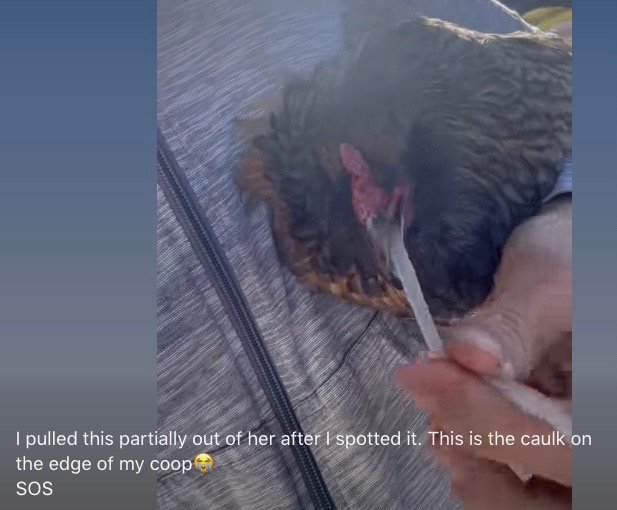
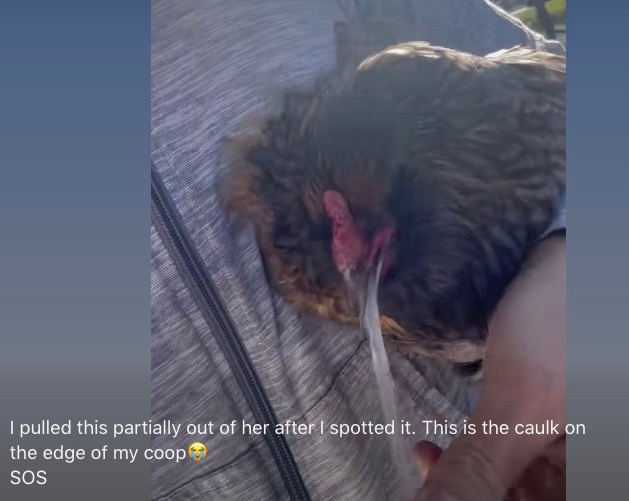
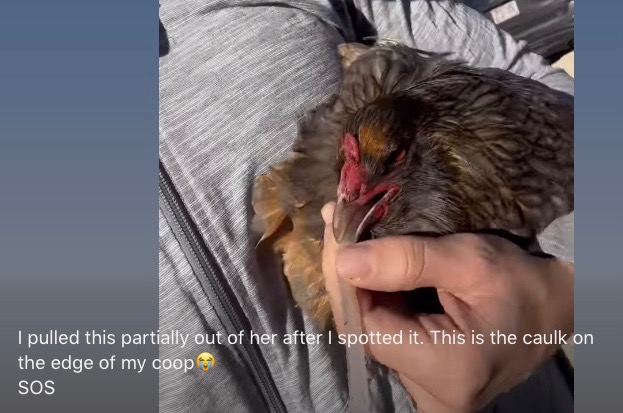
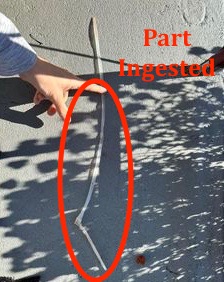
Dr Bowes did point out some things of interest: the kink in the caulking aligned with the distance it would have taken to reach the pylorus (the opening from the stomach into the small intestine). Next step would be the intestines, which would have meant a death sentence for the hen. Since that foreign body is not digestible the intestine would telescope around it in a process termed intussusception. Dr Bowes drew a rudimentary sketch on my note pad, instructing me to imagine it was like peeling back a pair of gloves, which results in the intestine folding back on itself and becoming devitalized.
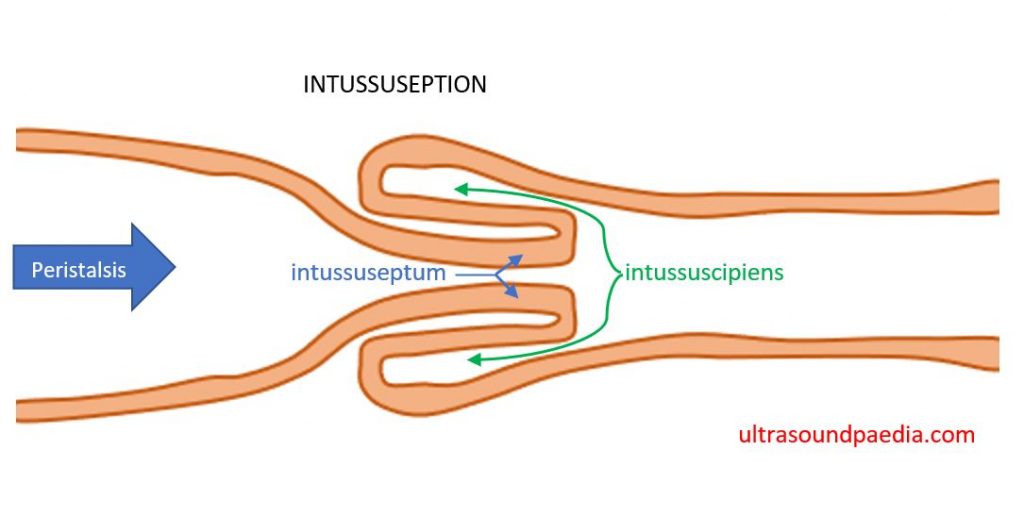
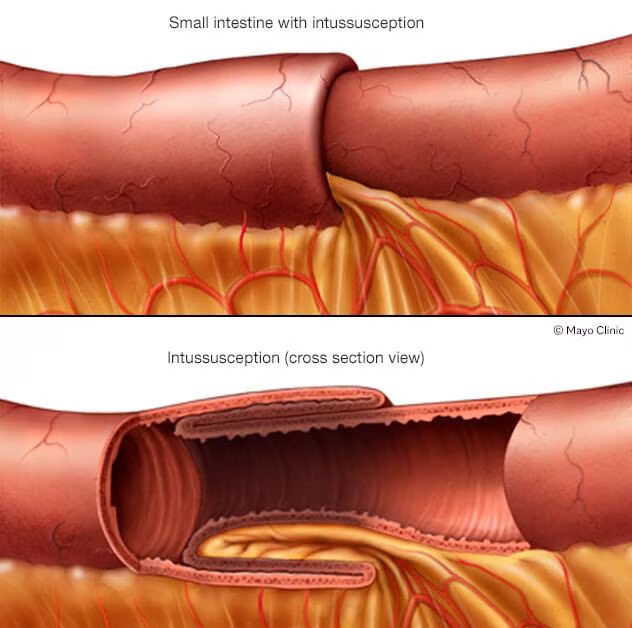
Dr Bowes thought intussusception would make a great word if we were playing Scrabble, but being a bit of a smart ass I remarked that it would require too many letters. I think it would be a better option for a spelling bee.
Poop Of All Sorts
I’ve never had kids and have probably only changed a handful of diapers in my life. As a chicken keeper though, I’ve spent careful watch on the outputs of my birds as it’s a great diagnostic tool to gauge the overall health of my flock, as well as of individual members. I’ve been collecting poop photos for awhile and asked Dr Bowes to weigh in on interpreting what they mean.

Dr Bowes: This is mucoid and orange, which is not healthy. If this came from a young bird I would think it’s the result of coccidiosis. If an older bird, I’m not sure.
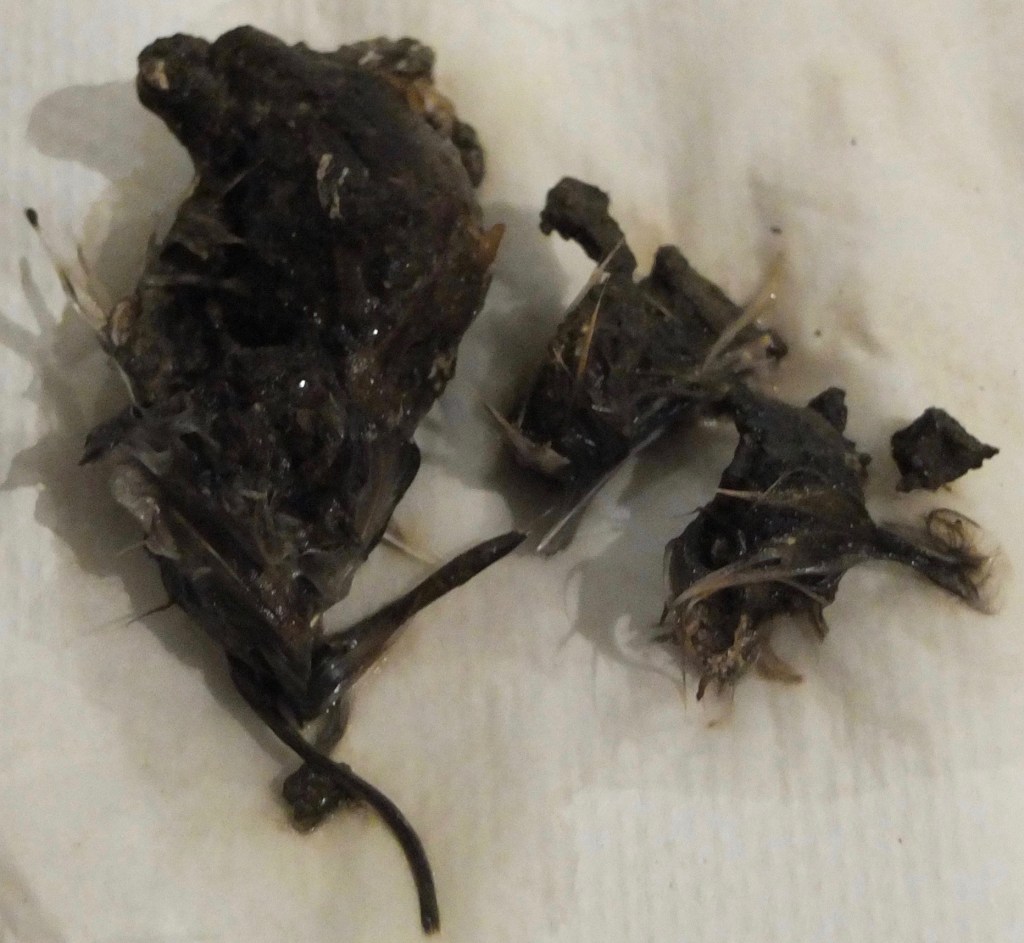
Dr Bowes: This looks like a foreign body that passed through undigested. Hopefully there is nothing else left of it in the digestive tract.
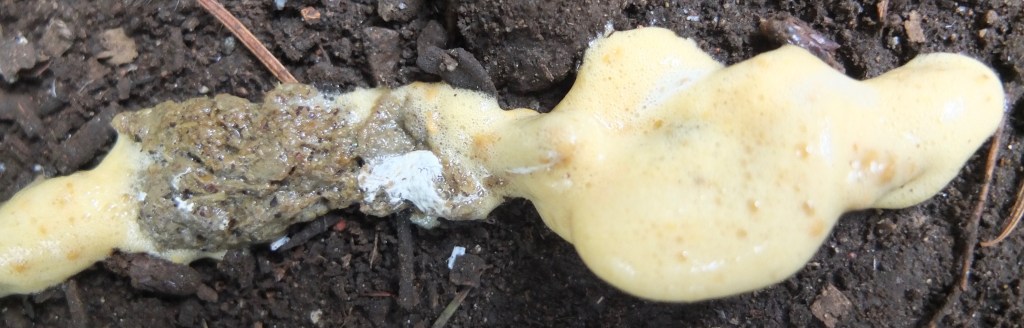
Dr Bowes: This is normal cecal poop.
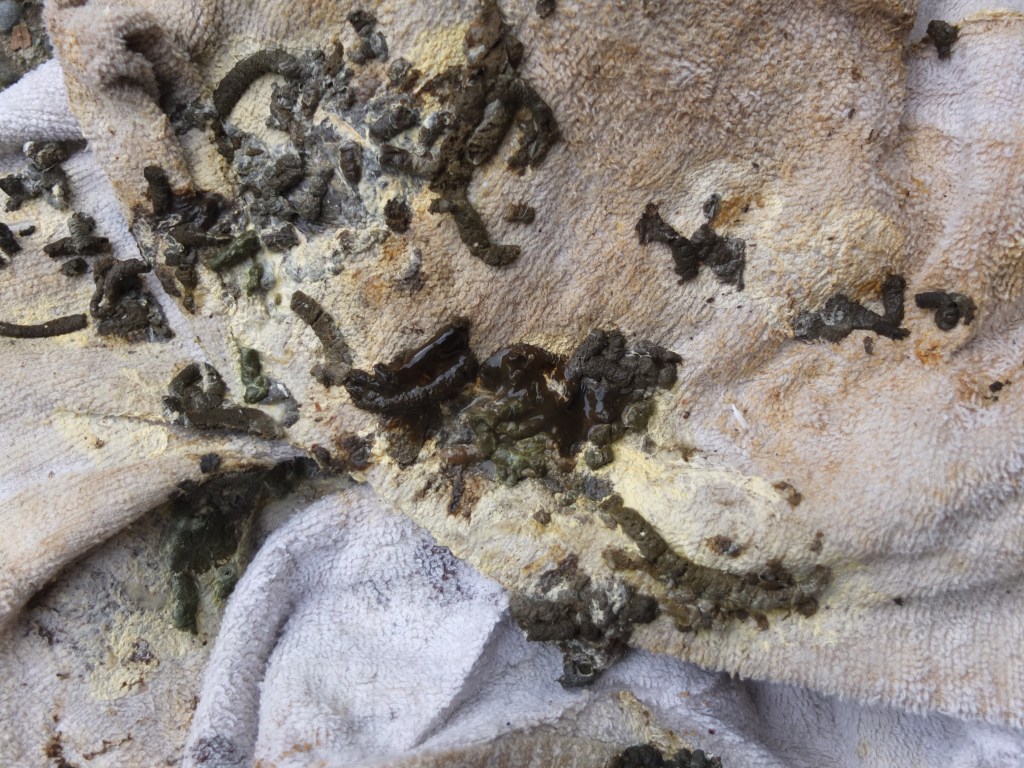
Bitchin’ Chickens: These are from a sick hen that I had in the sick bay and later, euthanized. She had salpingitis. Dr Bowes wasn’t sure why her poop was so small and segmented.
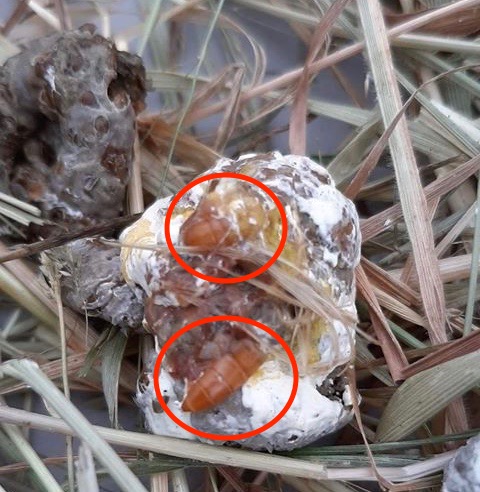
Bitchin’ Chickens: I was asked by a follower if this poop contained intestinal worms. On closer examination it is clear that the casings belong to insect larvae who developed after this was deposited outside the chicken’s body.
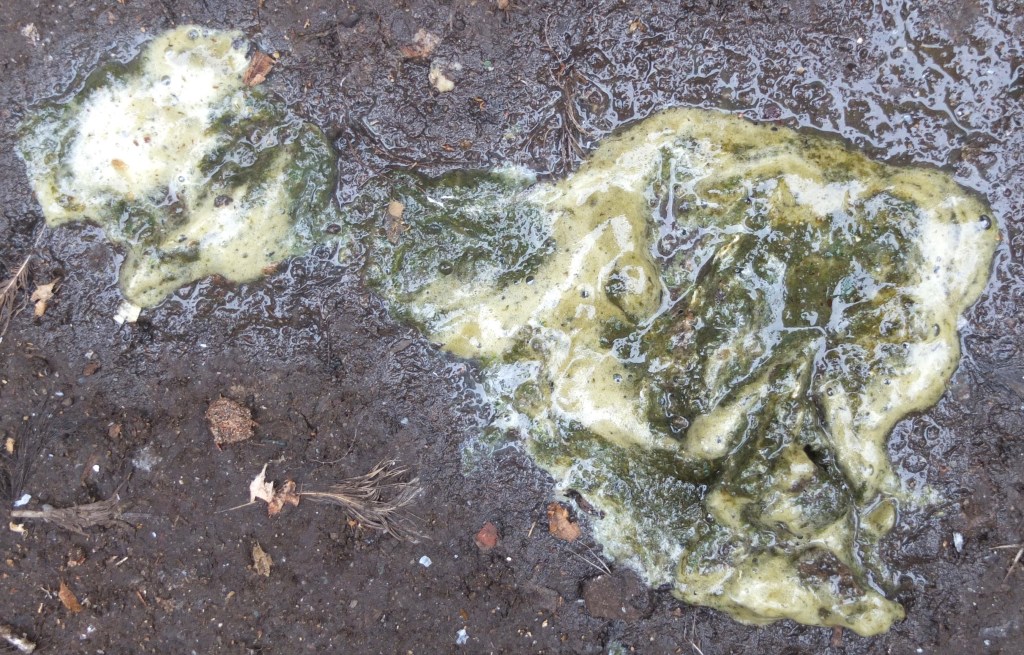
Dr Bowes: The yellow is cecal poop and the green is an indication of bile (i.e. the bird isn’t eating).
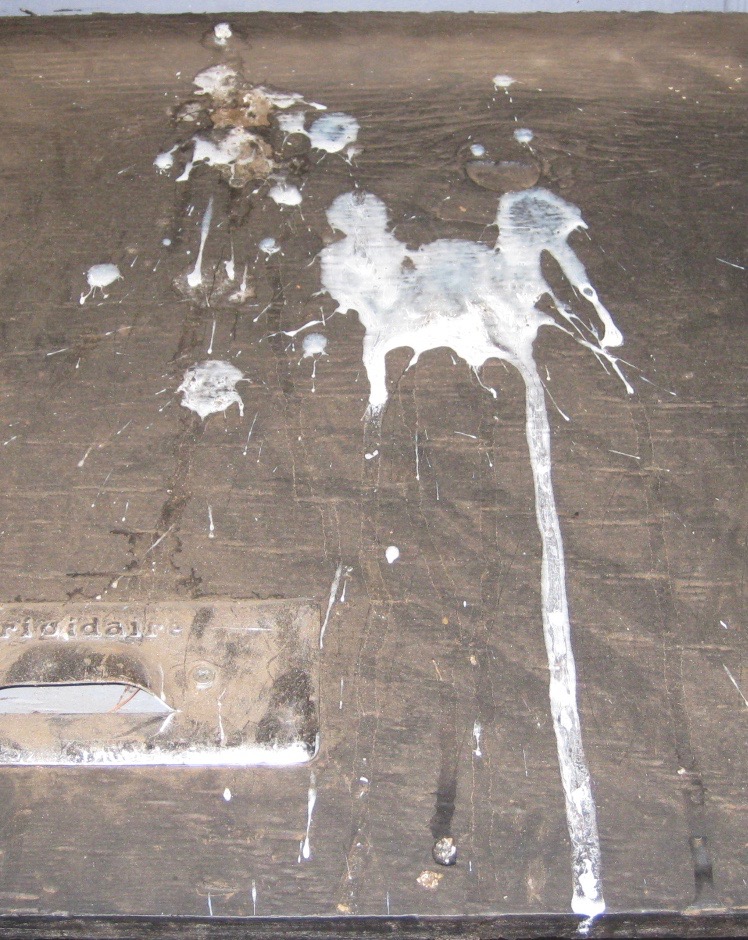
Dr Bowes: This is normal urates. If it was persistent then I would suspect a blockage. If it had been yellowish that’s a sign of liver disease.

Dr Bowes: I would need to know if this is urates or fecal matter. If the former, it’s a sign of liver disease and if the latter, indicative that the bird isn’t eating. Neither scenario isn’t good.
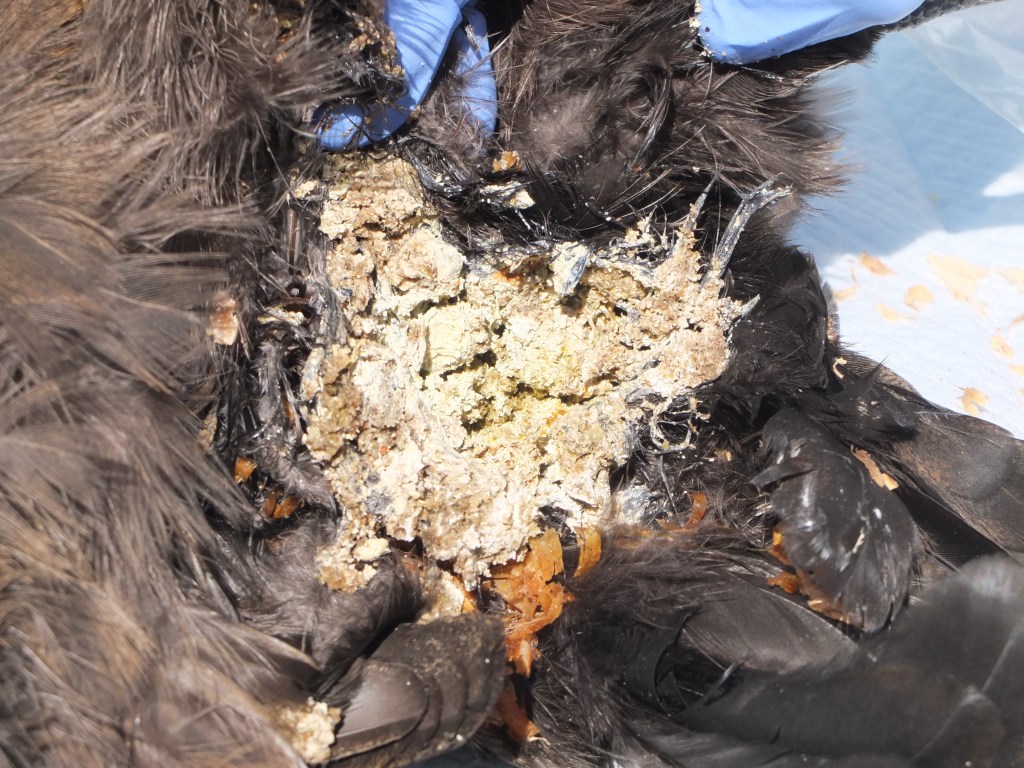
Bitchin’ Chickens: This photo is of one of my hens at the necropsy performed by Dr Bowes. There was significant accumulation of poop around her vent. The colour and texture suggests she wasn’t eating normally. Diagnosis: Marek’s Disease
Roundworms & Ruptured Liver
My 5-6 month old Lakenvelder hen passed yesterday. A few days before she died she became more lethargic, started eating less, her toes curled and she dragged her leg when walking. – Desirae Maguire
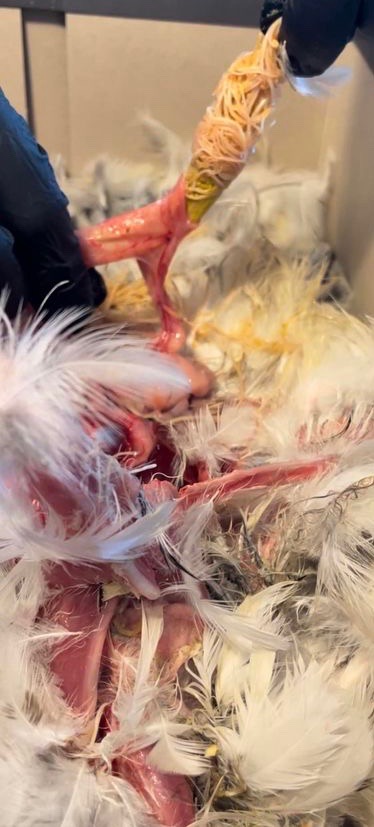
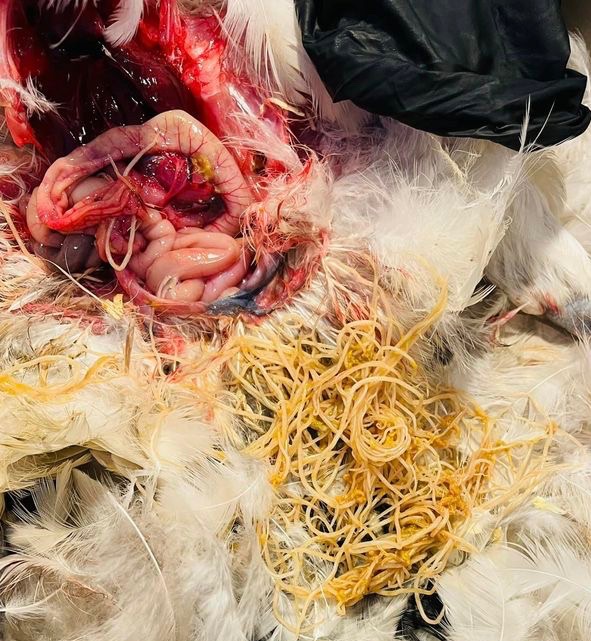
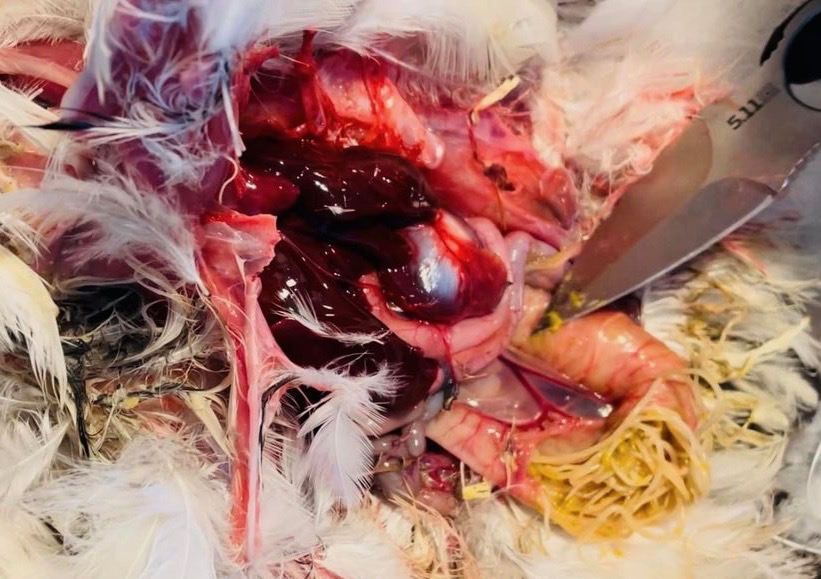
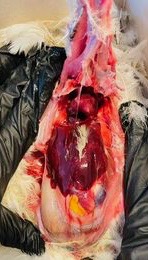
Bitchin’ Chickens: I wanted to know if the heavy roundworm load was enough to cause the young hen’s death. I was stoked when Dr Bowes pronounced these as the Winning Photos Of The Day. And even better, this one marks the 300th case we’ve presented!
Dr Bowes: Curled toes and sciatic nerve impairment can be symptoms of Marek’s Disease or riboflavin deficiency. Usually a healthy bird can co-exist with a worm load so I would be interested to know what else was going on. I don’t see evidence of peritonitis due to the worms. Looking at the necropsy photos I can see an area of hemorrhage. If it wasn’t due to post-mortem damage (i.e. a nick with the knife), then I think it was caused by a ruptured liver, which would result in death.
Prolapse (photos: Christine Tauti)
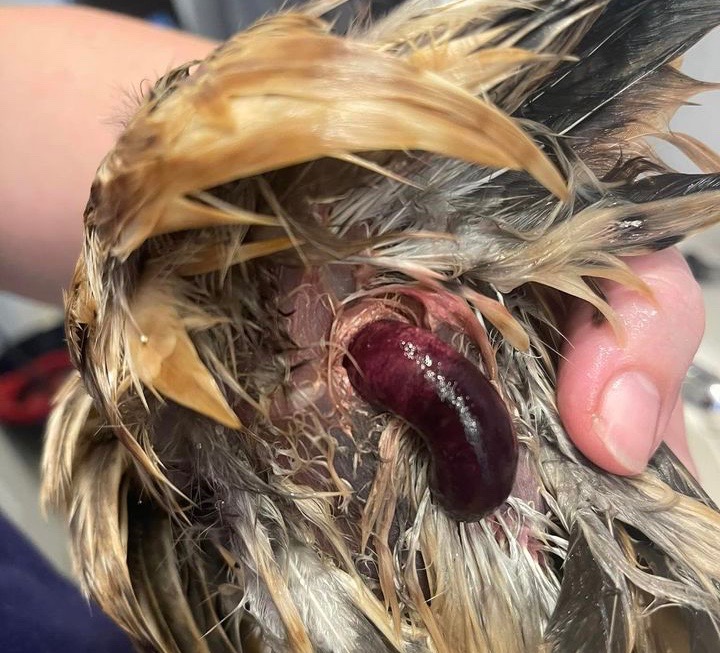
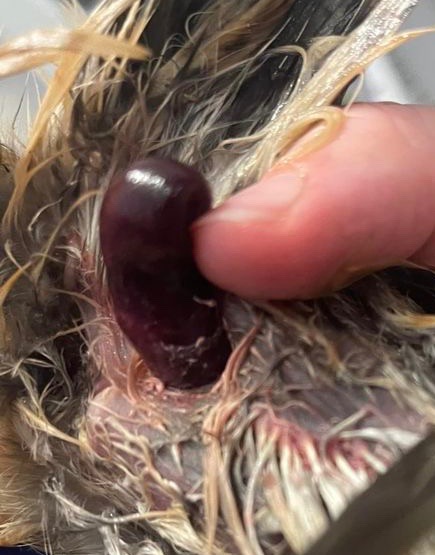
Bitchin’ Chickens: I was interested in this case because it’s the most unusual prolapse I’ve ever seen. I have no information as to the sex or age of the chicken.
Dr Bowes: I am assuming this is a rooster due to the small cloacal opening and there are no other anatomical structures that are compact and tubular in that area other than a penis. I would diagnose it as a phallic (penile) prolapse. You can treat it by applying white granulated sugar to the area, which will help shrink the tissues.
Well, that wraps up another edition of Show & Tell With Bitchin’ Chickens and Dr Bowes. I hope that it’s been a learning experience for you.
If you’d like help with a case drop me a line using the ‘contact’ button on my home page. Remember to wear gloves, take good close up photos from several angles and supply us with plenty of information (e.g. timelines, symptoms, medications, general flock health, etc) so we’re able to more accurately pinpoint what’s going on.
Thanks again to Dr Vicki Bowes for her willingness to share her wealth of knowledge and experience to build capacity and skills in small flock keepers.


Have you seen this? Just had to share! https://www.optimistdaily.com/2024/02/ai-deciphers-chicken-language-for-a-happier-flock/ When the world wearies, and society ceases to satisfy, there is always the garden ~Minnie Aumonier
Linda J. Wilk
LikeLiked by 1 person
I hadn’t seen it, so thanks for thinking of it. I’ll do a bit more reading on the subject.
LikeLike
I’m surprised to find that a healthy hen could survive that kind of worm load. Wow. Impressive.
Thanks again for sharing some interesting cases.
LikeLiked by 1 person
It was pretty amazing to see.
LikeLike