
Chickens have been domesticated for over 2000 years and can trace their origins back to four species of wild jungle fowl from Southeast Asia. Due to their versatility and ease of care they are, far and away, the most widespread and populous livestock animal, numbering almost 23 billion worldwide. They’ve been in North America for centuries having been brought by Spanish explorers to be raised for meat and eggs.
The American Poultry Association (APA) began defining breeds in 1873 which were published in the Standard of Perfection (SOP). Those birds were well adapted for outdoor production in various regions because they were hearty, long-lived, and reproduced well. It’s also why they became the backbone of poultry protein in North America until the mid-20th century.
Most of us small flock keepers would understand heritage to mean derived from old breeds and not modern production birds. It’s a term used loosely by hobbyists, but more strictly by poultry organizations.
In the 1920s, industrial-scale farming was introduced in which chickens became the first factory-farmed animal. Science and agriculture worked together to meet the increasing demand for poultry. Chickens were raised indoors in enormous numbers for egg production and meat, a practice which led to many breeds being sidelined in preference for a few rapidly growing breeds.
In less than a century there was a shift away from heritage birds to the newly developed hybrids. Using crossbreeding genetics chickens became egg laying machines or fast-growing sources of protein.
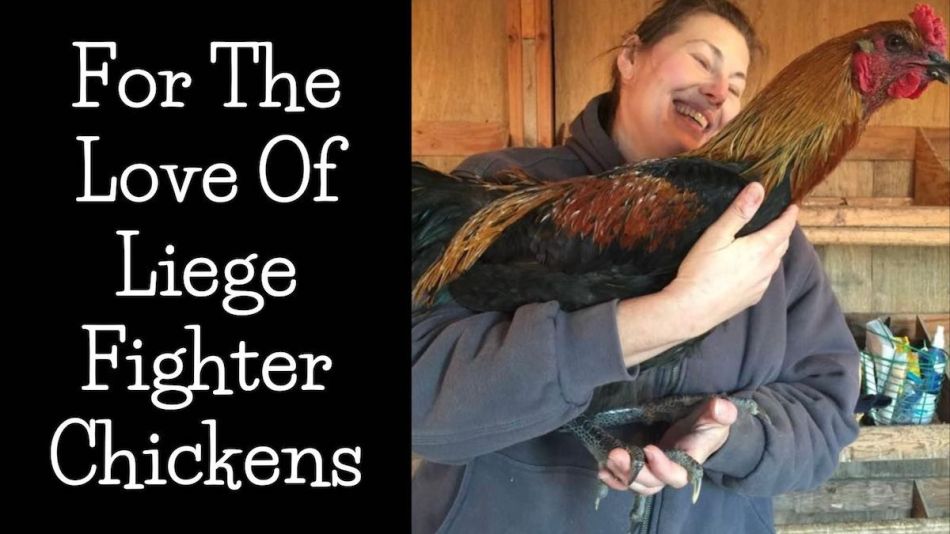
I’m not quite sure when I met Cheri Lyon, but I seem to recall she became a follower and asked me a question to pass on to my mentor, Dr Vicki Bowes, for advice. I became aware of her love of the endangered breed of chickens, the Liege Fighter, and asked her to write a post. Like many folks, Cheri felt like she wasn’t an expert, but I felt like she was the perfect advocate for the breed. It took over a year of coaxing, but she came through to educate and spread interest in small flock keepers to add a few to their coop.
Claire, thank you SO much for your patience with me on getting this written and to you! I was actually quite scared to write it because there are several people in the US who I deem more knowledgeable about this wonderful breed than me. I consulted with some of them and they were all excited and glad to answer questions. The Liege Fighter community in the States really is unique and special to me, as we all want to see this breed thrive and improve. They were almost extinct; a census performed by the University of Liege in 2010 found only 285 Liege Fighters left, which is another reason these birds are so special to all of us involved with them.
I currently have 60 chickens currently (all pets) with five roosters, the rest hens. Three of the boys are Liege Fighters and I only have seven Liege hens. The roosters are great with hens of other breeds. I don’t know if they would injure something small like an Ayem Cemani or Silkie when trying to mate, but they are protective of hens they consider are part of their flock. Liege hens are very dominant, in my experience. They will make sure other hens know they are in charge! I integrated some new Liege hens into an existing group of Liege and Iowa Blue hens and it took over six months for them to get along. There are still occasional tussles between new and old Liege hens.
I keep the Liege roos separate from other roosters as they like to fight and be dominant. It’s just in their genetics. I have two Liege roosters who get along and I can let them free range in the same space (Hercules is 7 years old and is in charge and Fiona is 3 years old). I can’t let my other Liege roo, Zeus, near either of them as he is one year old and wants to fight any roo that breathes in his direction.
I had to sell most of my flock back in 2016 due to health issues. I was diagnosed with leukemia and couldn’t handle all the work with the 500 laying hens I had as a business. I kept a few of my existing rare breed birds (Iowa Blue) and wanted to get more involved with breed conservation and have a different breed. I ran across Greenfire Farms and saw they were an importer of rare breeds. In 2017, I ordered twelve Liege Fighter chicks based on the description that they were tall and had big feet! I’m 6’ tall and wanted chickens that would be tall like me. I’ve been in love with them ever since. The roosters are great with people overall. They are docile and if handled, will be big pets. I have not had issues of them trying to attack a person (unless provoked).
Don’t let the name scare you. These are the gentle giants of chickens. Even though they have been dubbed “hawk killers” with video providing proof, they are some of the most friendly, curious, docile chickens on the spectrum. They are tough and impressive with a prominent brow that is fierce and penetrating and can reach heights up to 36” tall. Roosters can weigh 12 pounds, with hens being only slightly smaller at 9-10 pounds. One distinctive feature is their huge feet, which can be the size of a turkey’s. They also have huge spurs. They are a game bird so they stand upright on their long legs and look at you as if you should be scared of them. Their mass is primarily muscle with feathers that lay close to the body, as they don’t have much in the way of under fluff. Liege Fighters tend not to have wattles but if they do, they are typically very small and their comb is similar to a pea comb with three ridges.
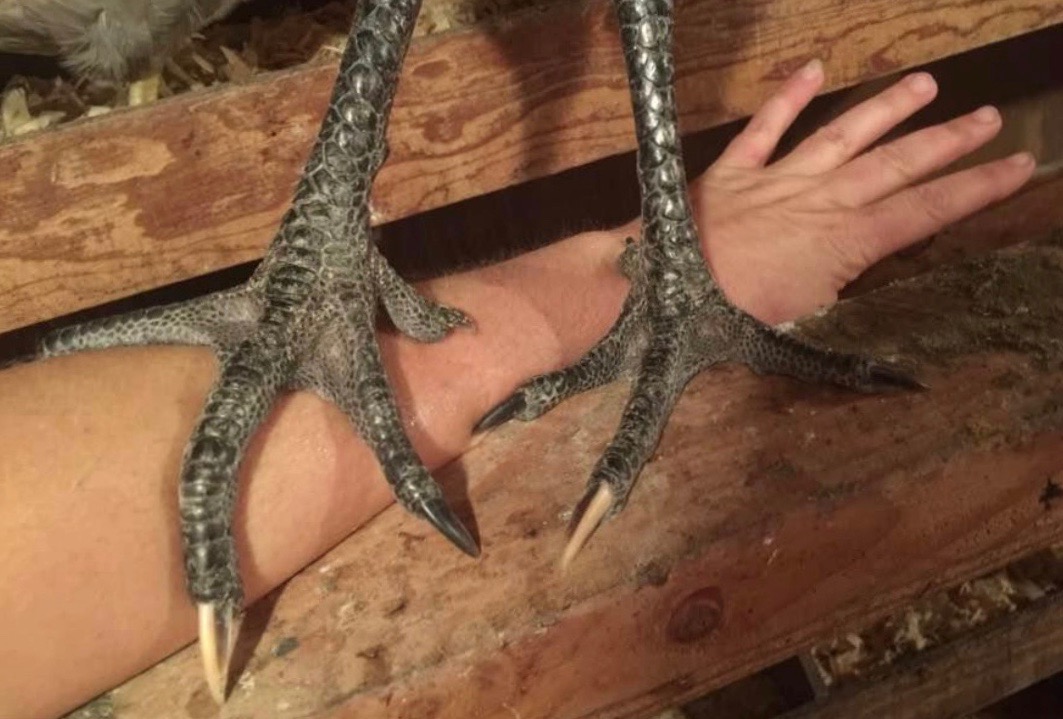
The Liege Fighter, or Luikse Vechter, as it’s called in its home country of Belgium is relatively new in the United States and had only one legal importer. (However, at the time of this writing, their popularity has grown and there may now be a total of three legal importers). Originally bred to fight and dominate in cock fighting rings using only their natural spurs, they were also used as meat birds. They are one of three remaining game fowl from Belgium; the other two being Bruges and Tirlemont. The Bruges Game was crossed with a large Asiatic breed (presumed to be Aseel or Malay) to produce the Liege Fighter in the mid to late 1800’s and named after the town of Liege, Belgium.
Originating from Europe, there are noticeable differences between American and European Liege. One important difference is the US lines are limited in colour and quality, which presents many challenges when trying to breed stock that meets the European standard of perfection. Another critical difference is the hardiness and disease resistance of Liege birds in the US. They have been less than optimal when encountering ailments that other breeds typically survive. I have spoken with other Liege enthusiasts who had birds succumb to respiratory issues or coccidiosis that didn’t respond to traditional treatments, such as antibiotics and coccidiostats. There are over 17 colour varieties accepted in the Belgian standard versus three options available in the US (black, blue and splash).
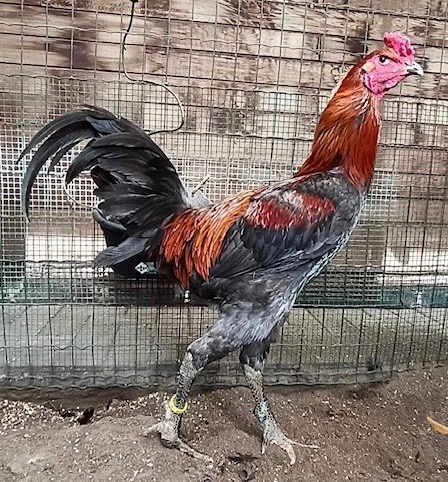
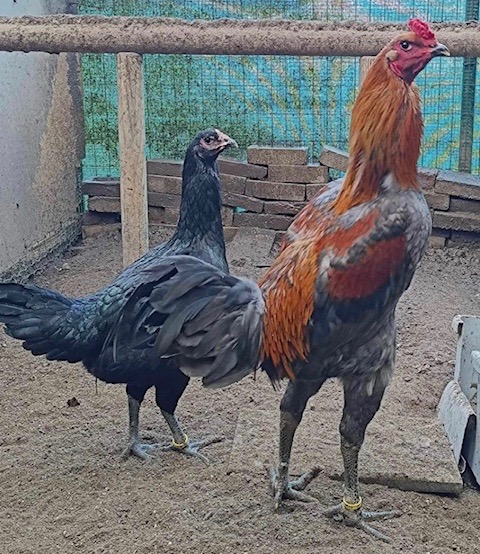
Photo credit: Andy Castelain
The hens lay light cream coloured eggs and seldom go broody. On average they lay 175-200 eggs per year, laying most consistently in the first two years of life. The eggs are noticeably longer and narrower than eggs laid by traditional laying breeds.
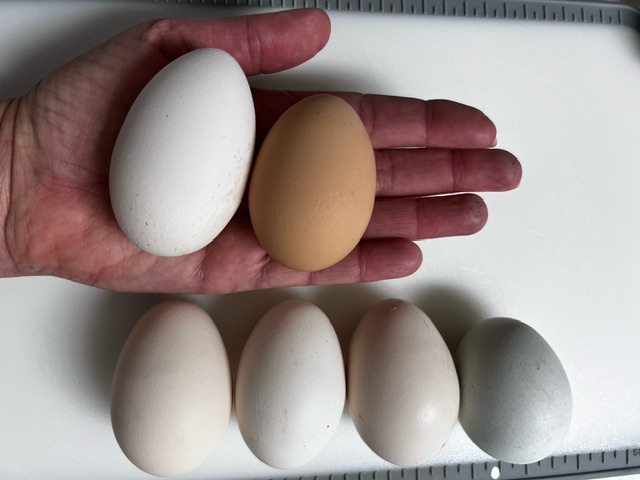
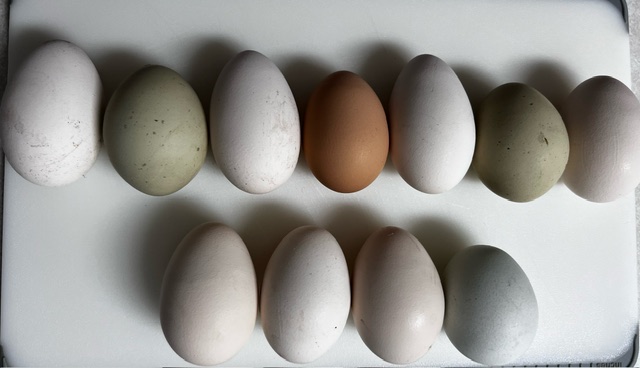
One thing I discovered is that Liege roosters tend to be 6-8 months old before they come into their confidence. If you are not accurate at sexing chicks, you may hear a first crow at 6-8 months instead of much earlier as other breeds exhibit. In my case, I had already used a female name and after hearing it for six months, he knew his name. So I now have a ginormous rooster named Fiona (13 pounds at three years old).
There are special measures that need to be taken into consideration before bringing home Liege Fighters. The first is the amount of space they will need; they are BIG birds and need more space on roosting bars as well as overall space in a run or building. Due to their heavy weight and size, roosting bars should only be around 36” off the ground so they don’t injure themselves when jumping up or down. Feeders and waterers also need to be higher to make it easier for the birds to reach instead of at ground level or just a few inches off the ground. If there is anything you do not want a chicken to get into or tear up, put it in a protective enclosure/container or somewhere out of reach. They have a knack for finding things they shouldn’t or jumping up higher than any bird (or possibly even any cat) has before!
Another factor that may not be mentioned or thought of is the amount of droppings a Liege produces. “Normal” sized chickens are little poop machines and cleaning their areas daily is required, so imagine caring for twice that amount! Liege droppings are the size of a medium or large dog. My veterinarian was very surprised after one of mine left a deposit during his check up. If you have limited space or do not have a proper area to compost or leave your droppings, it might not be advisable to have Liege Fighters as your chickens of choice.
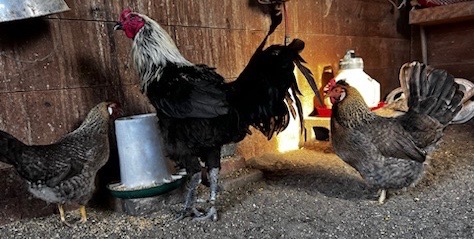
The demeanor and personality of Liege Fighters are second to none in regard to being easily handled and investigating everything they can get into. They are often underfoot checking out what you may be doing. My hens are very vocal and their voices are distinctive in being deeper and louder than other breeds of chickens. If you have anything in your hand, treat or not, they will eagerly try to get you to share it with them. Or they may even jump up to make sure it is not a treat. My Liege Fighters are extremely food motivated. They might be considered the Labradors of the chicken world as they always act as if they haven’t been fed in weeks and will gobble down whatever food is near them!
Nutritional requirements of Liege entail higher protein intake to keep their bodies healthy and optimal. The hens can even have a higher protein content in their diet. I feed my roosters a game bird crumble that is 22% protein year round. In the spring and fall, I supplement with raw hamburger to help with molting or seasonal stress/adjustments.
While the description of the Liege Fighter might make a person envision a colossal mean looking brute of a bird, they are some of the smartest and gentlest birds I have had the pleasure of keeping. All of my Liege roosters are extremely affectionate and must have daily Cuddle Time or give me a hug. I admit that mine are like guard dogs and stay very close to me. They will scare off a barn cat or another human if they get too close to what my boys think is an appropriate amount of distance. They will attack or run towards a human to try and keep me “safe.” However, if I am holding them or put my leg between them and the offending human, they are calm and do nothing. But they keep a wary eye on the other person and one of their feet touching me or leaning against me so I know I am “protected.” This may only be a trait of my Liege boys as I have raised all of them from day old chicks and perhaps they really do believe me to be their mom. As with any breed of rooster, it is always good to be cautious with them until you know their temperament.
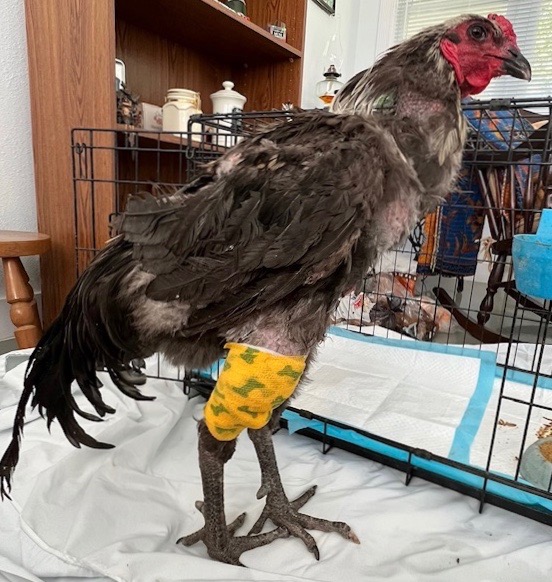
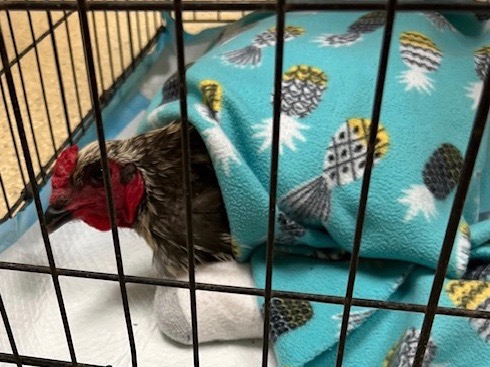
Liege are known for their toughness. I had an unfortunate incident when a fox attacked my flock. My boy, Fiona, fought back when the fox grabbed him and by the grace of God, survived! I was nearby and could chase off the fox and was ready to be crushed by the typical outcome of a fox rampage. Miraculously, Fiona was alive and only his leg had been damaged. The vet was able to sew his wound closed and after being a house chicken for several weeks, he was as good as new. I believe his ability to fight and survive was due to his size and the instinct kicked in to beat the daylights out of his fox opponent. Fiona is probably the biggest baby of the entire flock and demands constant attention, which he admittedly always gets. He loves to plop down on my lap and have a good back rub, whereupon he falls asleep and could stay indefinitely if I didn’t wake him up.
I love that rooster so much as he’s been through a lot. He had to wear a soft cast for the first week of his life because his leg/toes were abnormal and he didn’t walk properly. Once the cast came off, his leg/foot were normal and he was fine.

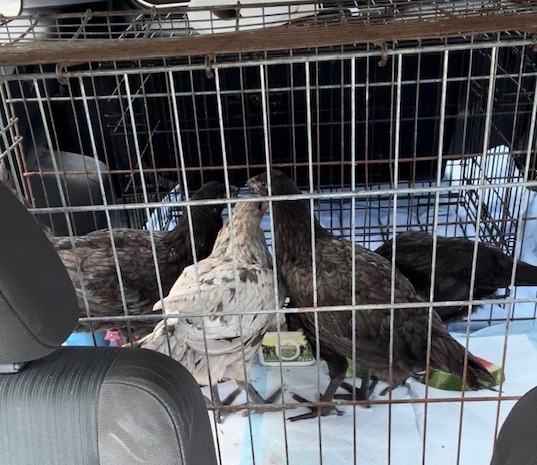
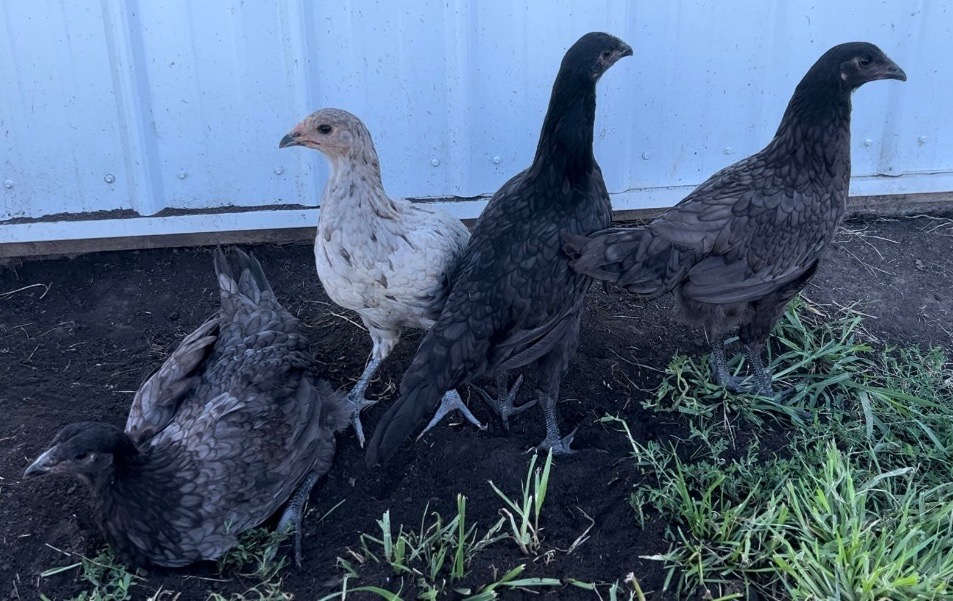
My Liege hens are an absolute delight. They follow me like puppy dogs and are always underfoot. I think sometimes they are intentionally trying to trip me so they can see if whatever is in my basket or hands is something they would like to eat. They are very affectionate and love to be held, oftentimes jumping up to sit on my lap or jumping on my shoulder (which is quite unexpected due to their size). My near obsession with this breed caused me to drive 14 hours and nearly 1000 miles in order to adopt four Liege hens. There was one splash hen in the group, a colour that I had not been able to produce. Since they are not easy to find in the US, I jumped at the chance to have these beautiful girls. They seem to know how much I loved them from the moment I saw them and have become my shadows, talking and chattering to me all the time and letting me know they need attention. The things some people do to have a chicken!
I have met so many wonderful people through joining a Facebook group called Liege Fighter/Combattant de Liege/Luikse Vechter/Lutticher Kampfen” from around the world. I have been impressed that all the other members are willing to answer questions about the breed and provide information. I feel that everyone who has Liege Fighters are truly striving to improve the quality and health of the breed (especially in the US), while supporting anyone who wants to raise a flock of their own Liege Fighters. Obviously, there are not many resources available in North America about Liege Fighters. There is no Liege Fighter breed association in the US yet, but there is much desire and interest to get one established. With the growing popularity of them and the active participation of those already raising them, more information is becoming readily available.
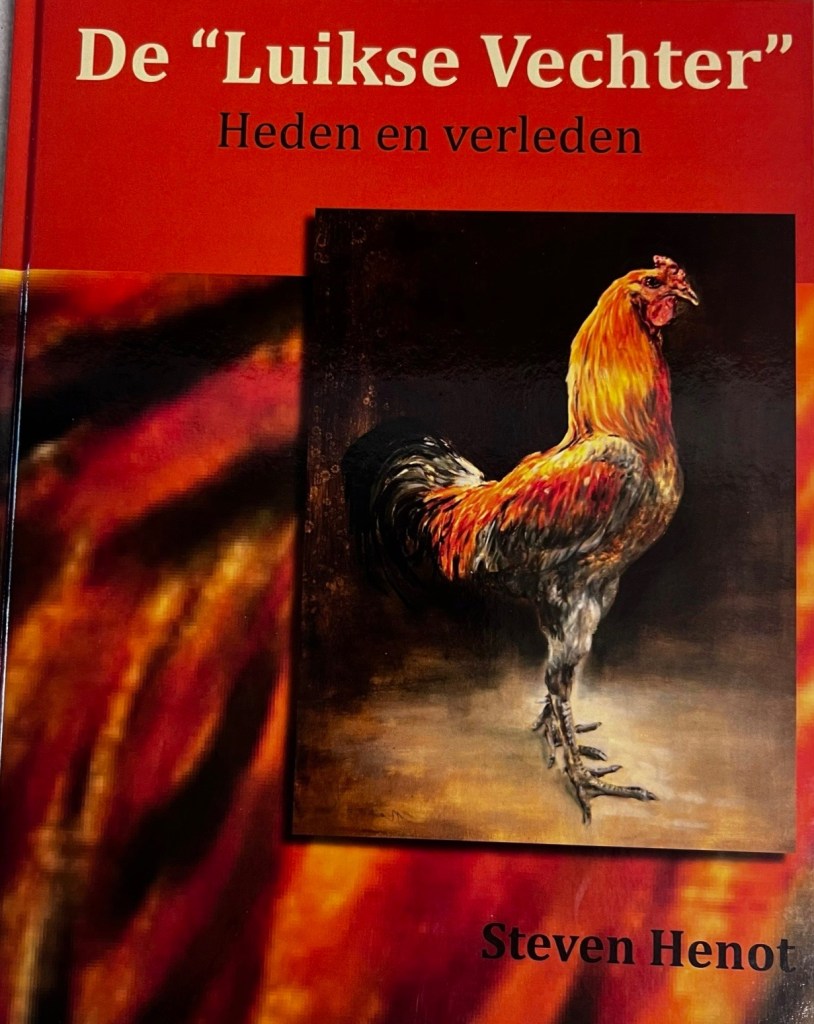
One breeder in Belgium has written a book about the history and highlights of this amazing chicken. It’s in Dutch and French so be aware that translation may be involved if you don’t speak those languages. “De “Luikse Vechter” Heden en Verleden” by Steven Henot has wonderful pictures, artwork, random facts and a beautiful overview of all things Liege Fighter.
There is an annual poultry show in Linter, Belgium that highlights Liege Fighters and the top breeders. This is an exhibition that I haven’t attended personally but seems to be a relevant part of the European Liege Fighter breeders/enthusiasts and showcases the best qualities of the breed and those who are dedicated to preserving this incredible chicken.
As with any chicken breed, there are pros and cons. I have been smitten with this particular one for several years and my love of Liege Fighters only continues to grow as I experience all they have to offer. They are truly a unique breed with their giant feet, charismatic height and weight, natural athleticism and willingness to be around people. I would recommend Liege Fighters to every chicken keeper to try as long as they have the space and could accommodate the surroundings for the best environment for these wonderful birds. They are a wonderful addition to keep your flock safe and keep you entertained nonstop.
Many thanks to Cheri for sharing her passion for Liege Fighters; story and photos used with permission.
Cheri Lyon is the one-person show behind The Trendy Chicken, her Etsy store that showcases fun apparel, hats and items that can be created and customized for you. When not working on designs/items to sell that will provide a better life for her chickens, she is spending quality time with them and spoiling them beyond belief. After being diagnosed with leukemia, Cheri’s ultimate goal is now to find a cure for ALV (Avian Leukosis Virus) and do research into effective holistic treatment methods for chickens. You can follow the funny and educational antics of her and her flcok on all social media platforms under The Trendy Chicken or her YouTube Channel.
 Bitchin' Chickens
My beautiful salmon faverolle rooster was recently killed by a fox, so I’ve been contemplating getting another. Liege Fighters are now officially my dream rooster! Thank you for the wonderful article and another wonderful post!
LikeLiked by 1 person
Is there anywhere you can find a list of liege breeders?
LikeLiked by 1 person
Contact the links in the article – they have Facebook pages that will point you in the right direction. Good luck.
LikeLike