
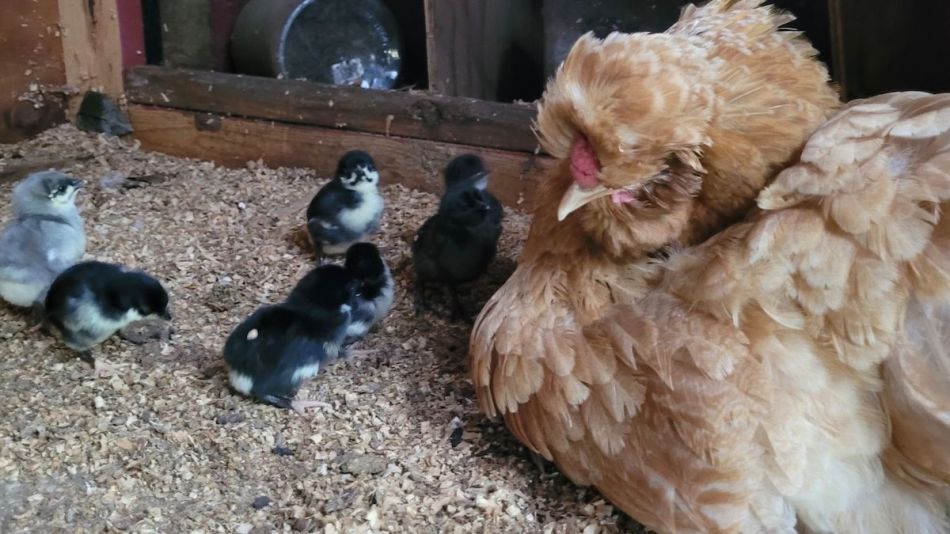
Dealing with broody hens can be a bit like a soap opera or even a Shakespearean tragicomedy, full of missteps and bad outcomes. I was hoping when I embarked on this latest foray of dealing with my flock during hatching season it would be full of happy endings and not the latter.
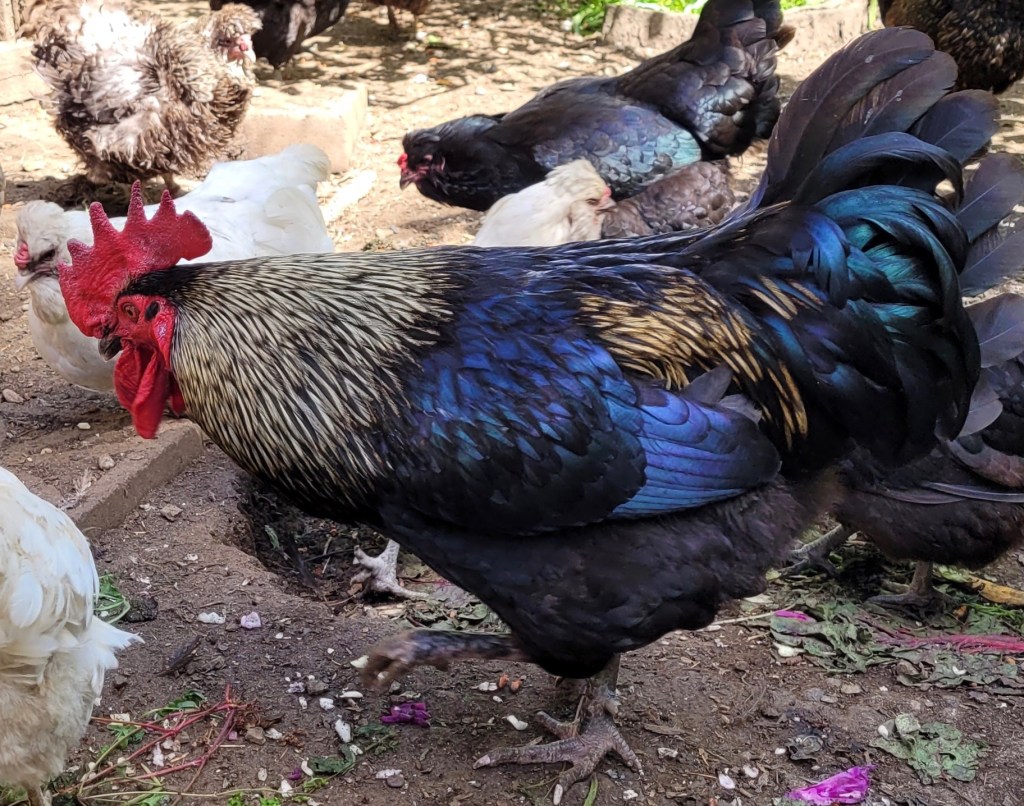
I’ll start out by saying that the tendency for hens to go broody is genetic and my flock clearly carries that maternal DNA. Some breeds like Silkies, Orpingtons and bantams are overrepresented in that department, but most of my girls are descended from Polish, Appenzeller Spitzhaubens and Ameraucanas. My rooster Hank is a first generation (F1) Olive Egger: Isbar (pronounced Ice-bar, also known as Silverudd Blå) crossed with Black Copper Marans. My last rooster was a smooth feathered Silkie-Easter Egger cross whose only obvious Silkie traits are his walnut comb, five toes and his ability to throw the odd melanistic (black skinned) or blue eared offspring. Some of my hens are his daughters so perhaps he contributed some broody genes in a flock already rife with them.
My proven strategy for success has been to have two hens sit/hatch at the same time. The rationale is that if one hen gives up before all the chicks hatch I can transfer the remaining viable eggs over to the other hen. I’ve also found that one hen usually finishes with her brood earlier, leaving the other to care for both sets of chicks. Unfortunately five weeks after my hen One Spot did the broody thing solo another hen, Buffy, went broody with no sister-hen to keep her company.
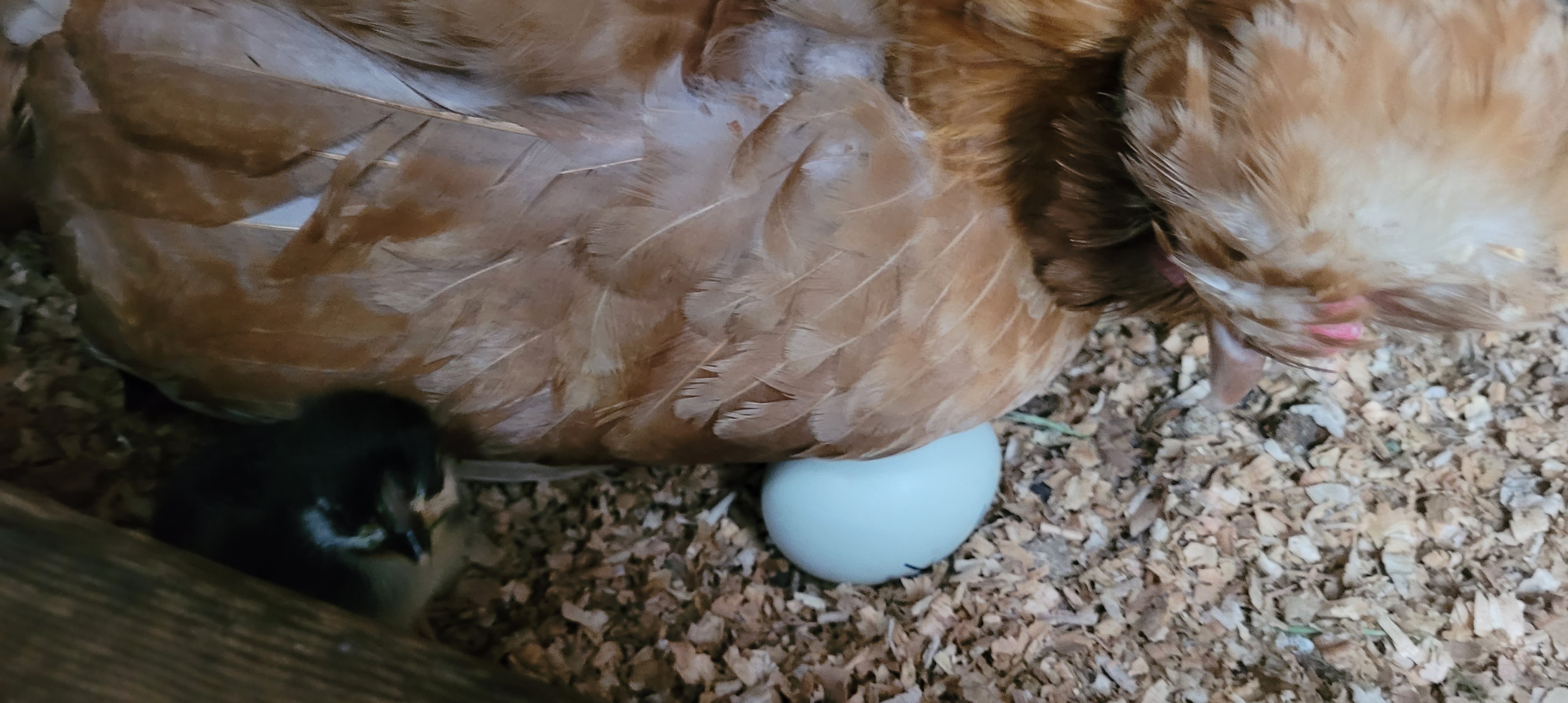
The incubation was a bit eventful: her first chick hatched, followed by three the next day. She, then, got off the nest leaving eight eggs sometime between 8am-12:45pm. There are various theories about what to do with ‘abandoned’ eggs. One is that hens somehow intuit non-viable eggs and keepers often just pitch those ones. I’ve often proved that philosophy wrong and do all I can to try to give them a chance. One egg was pipping so I slipped it back under her.
Lesson 1: Don’t assume your hen knows best. Listen to your gut when it comes to incubation.
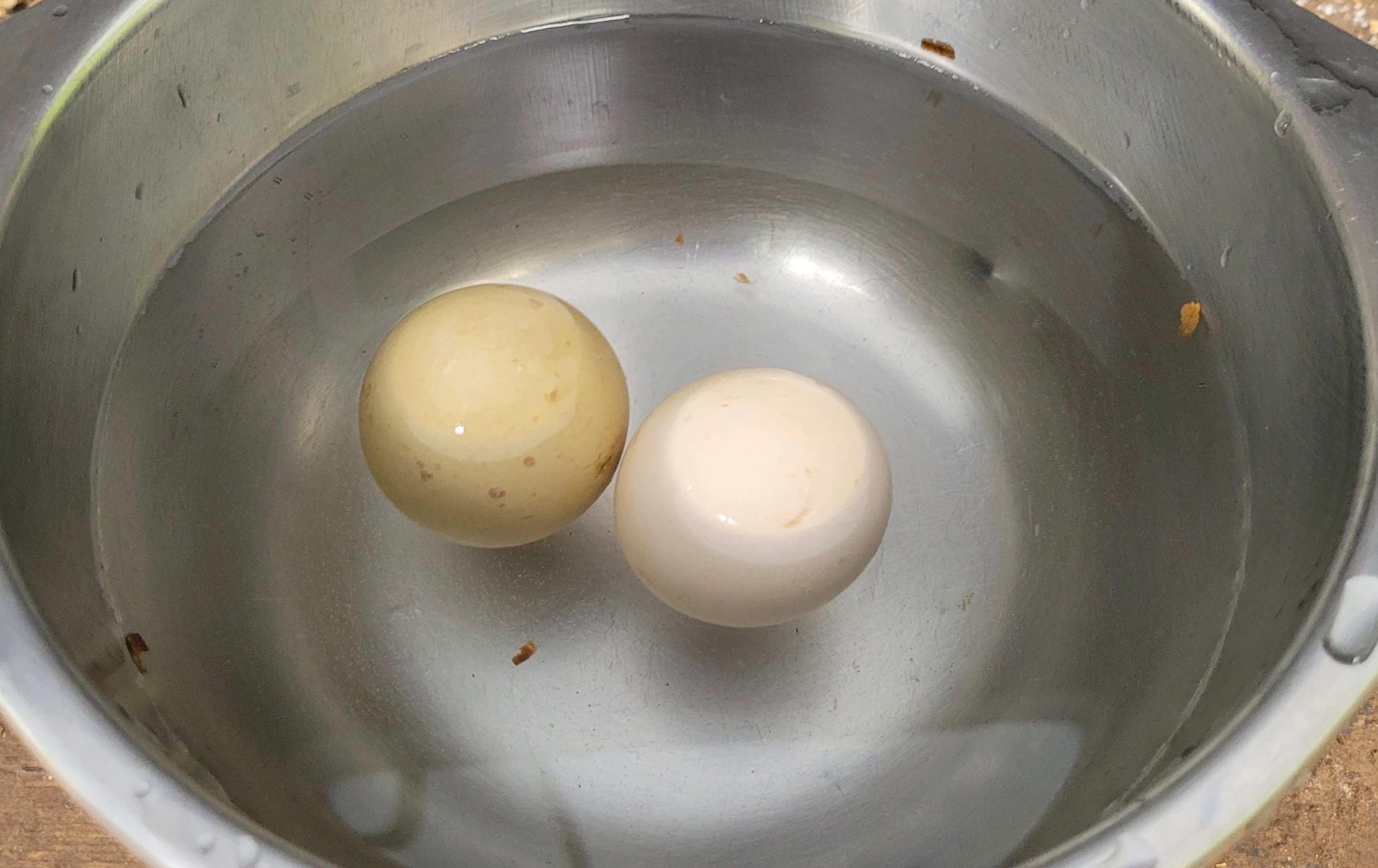
Some folks candle eggs, while others swear by the float test to determine if eggs are viable or not. The idea is you put the unhatched (and unpipped) eggs gently in a deep bowl of 100F/37.7C water and see if they sink, float high, float low, or float on their side to figure out which ones might contain a living chick or not. I floated the eggs and, frustratingly, they all looked about the same. I also tried another method: tapping the egg with my fingernail to stimulate the chick. On my second tapping one peeped so I added that one to Buffy’s cache. I also put one olive egg that I hoped would hatch under her. Both viable chicks hatched overnight; sadly, the olive one was unfertilized.
Lesson 2: There’s no foolproof way to always determine if there’s a viable chick in an egg. Even candling has its flaws (i.e. it can be difficult to see through dark eggshells).
A week into Buffy’s sitting Blue Ears went broody. Buffy was in the maternity coop (with One Spot in the other side) and Blue Ears was in a dog crate in the storage area of my main coop. I gave her a dozen eggs. Annoyingly in the first week or so, she managed to break two of them. Sometimes this happens by accident or can be a result of a hen looking for a good source of protein – in either case, the eggs get eaten so not to attract the attention of a potential predator who might smell a rotting egg.
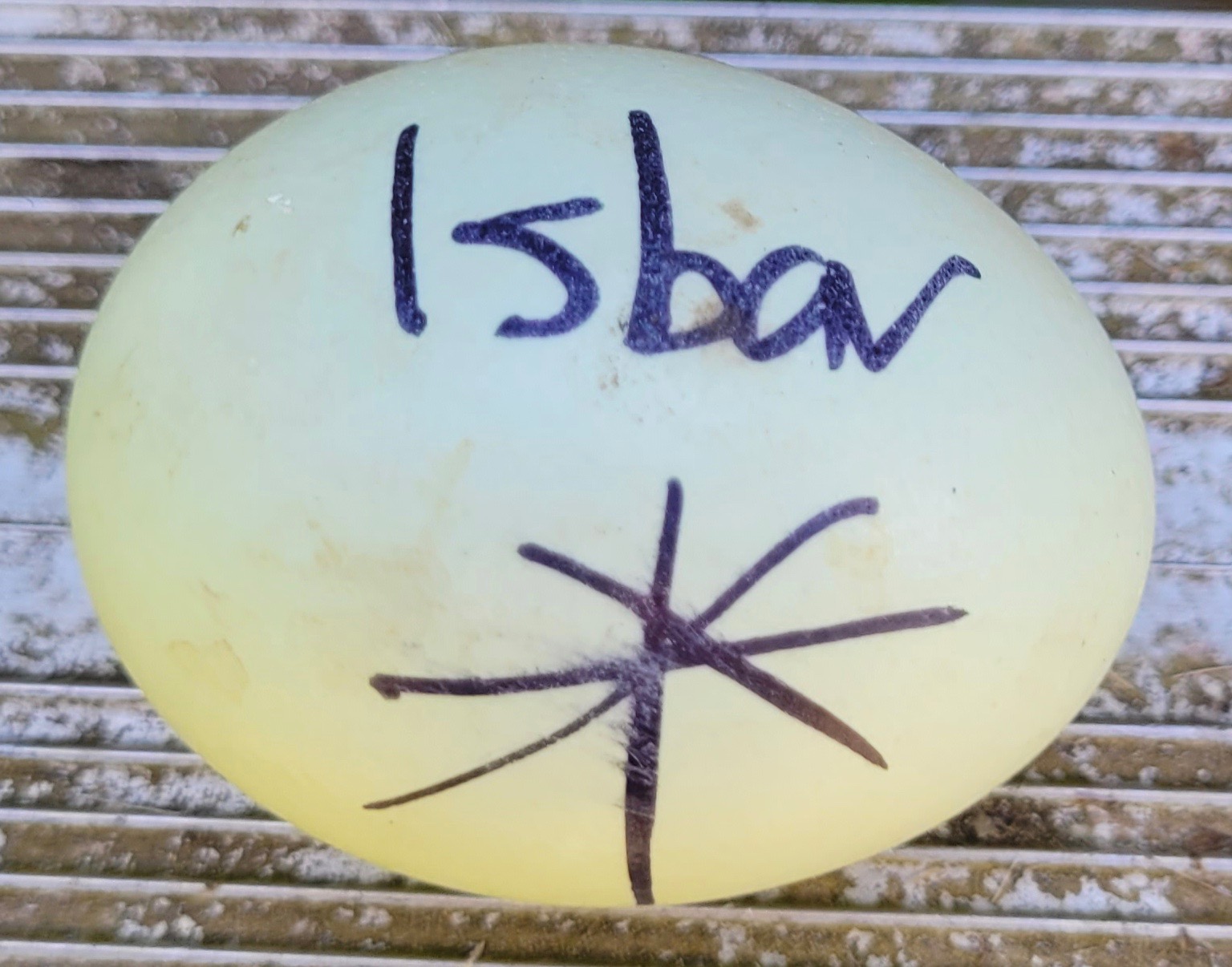
Since there were now only ten eggs I figured there was room under her for Buffy’s four remaining eggs. I wasn’t hopeful, but wanted to give them every chance possible. I marked them with a sharpie star and slid them under Blue Ears.

Thirty hours later not one had hatched. I reached under my hen and could only retrieve three of them. I cracked them open, only finding duds. The following day I saw that the remaining starred egg had broken and assumed my egg-breaking hen was responsible.
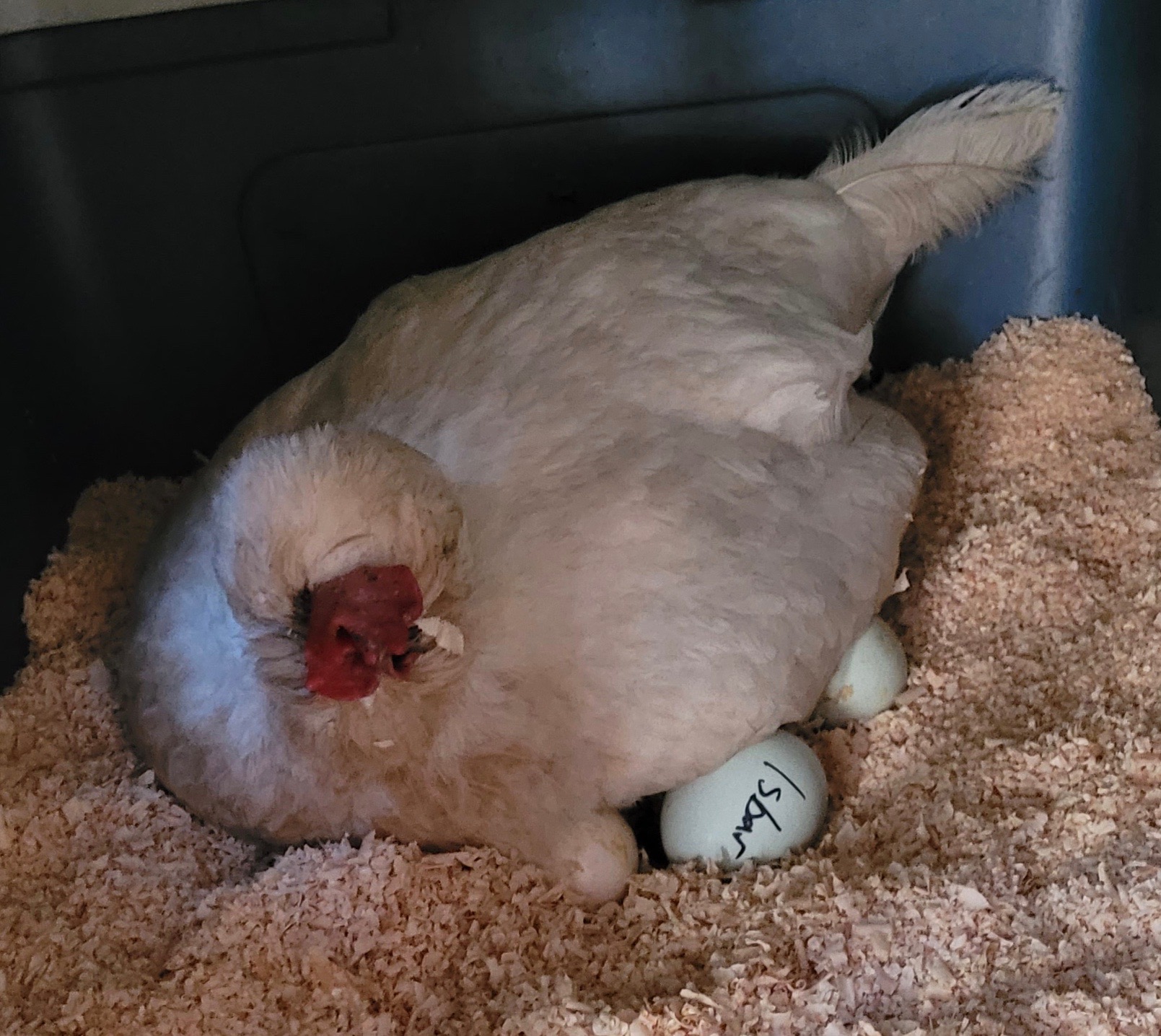
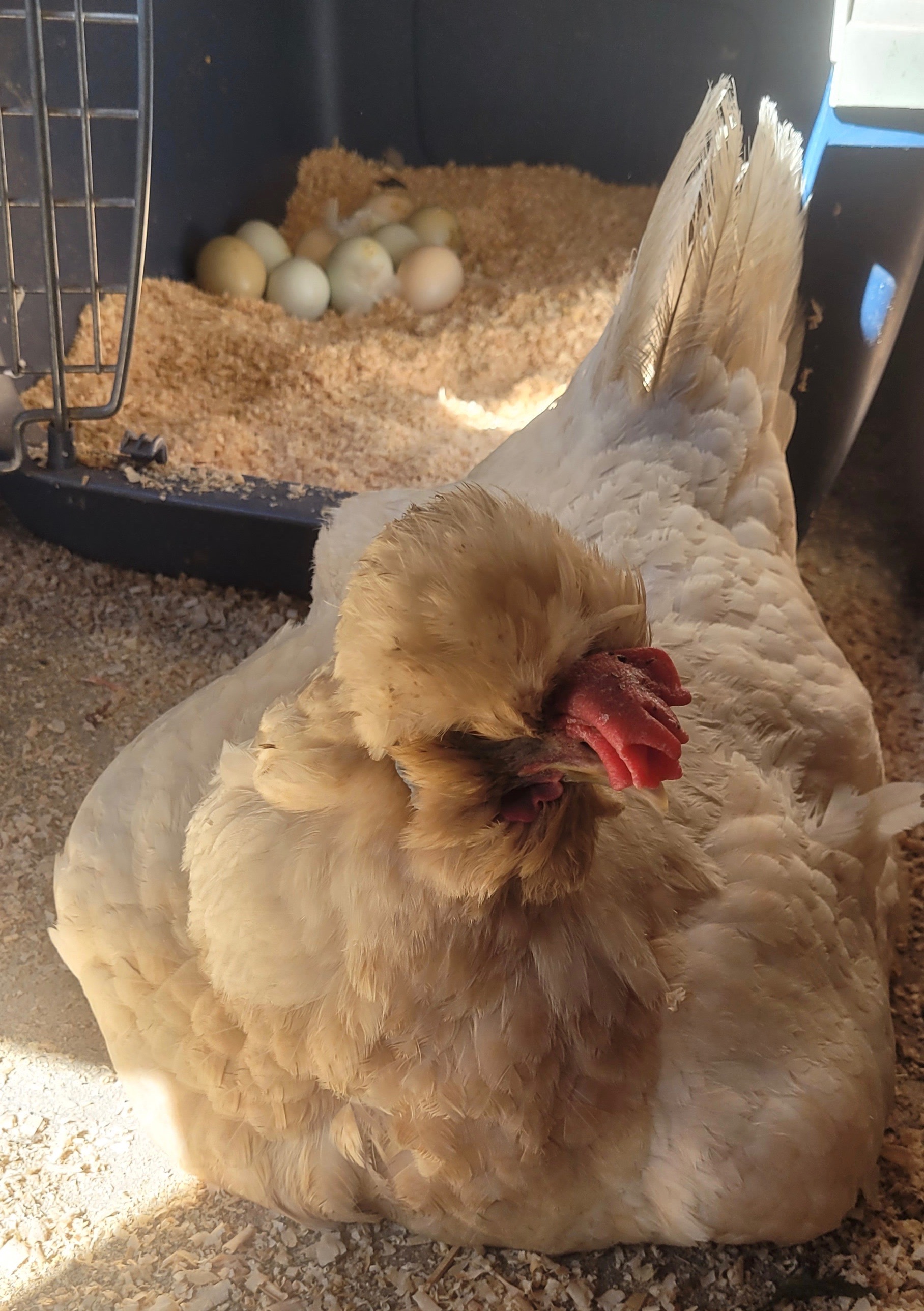
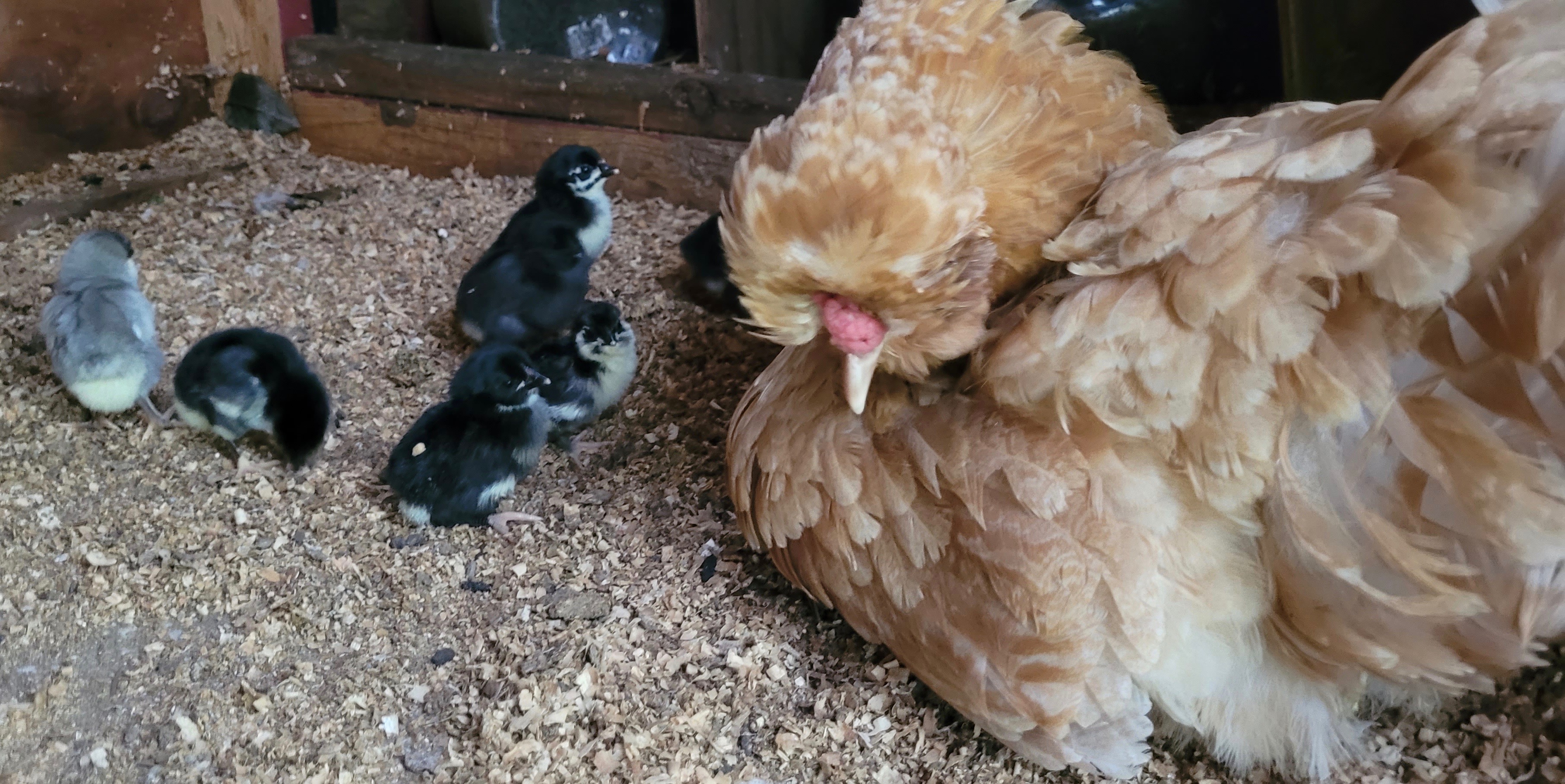
The next morning I found one chick, thinking it was an early hatcher for Blue Ears. It wasn’t until I checked the hatch dates that I realized this was the very late hatcher (day 25) from Buffy’s clutch. I considered giving her back to Buffy, but she seemed so much smaller than the other chicks. My greater concern was that Blue Ears might not be able to care for the chick and still sit be willing to sit for 3-4 more days until her own chicks hatched. I put the baby back under Buffy at bedtime and was relieved to see she was accepted by her mum and seven siblings.
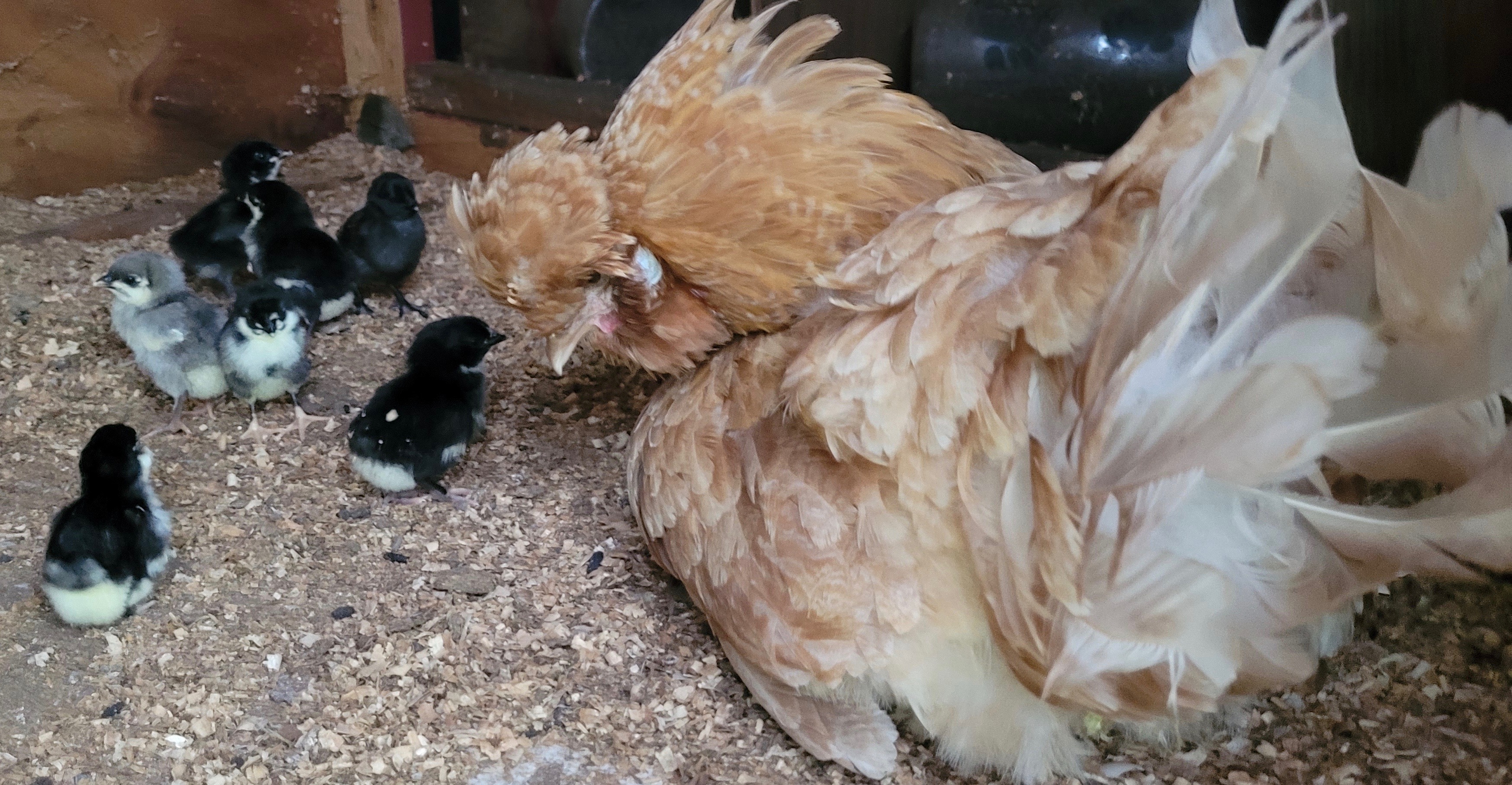
Lesson 3: Always check the dates when you put eggs under a hen and the expected hatch date.
Blue Ears gave up the chick quite happily and went back to incubating her own brood. Like the previous clutches, this one also experienced some glitches. I’ve often had chicks hatch on day 19 or 20, but not consistently over the expected 21 days. Her first chick emerged on day 22 and three more on day 23. I wasn’t hopeful with the remaining five eggs. One pipped at bedtime on day 24.
By the next morning it was still in the same position having been shrink-wrapped by the dried out white membrane trapping her from moving. It was before 7am and I only had a few minutes before catching my bus, and then ferry, to work. I went into assistance mode: quickly peeling the entire eggshell and membrane from around the chick. The veins had all receded so I felt it was safe and the only way to save her. I tucked her under Blue Ears and hoped for the best.
While I was at work my partner checked twice and seeing my hen sitting assumed all the chicks were under her. Jan is not a chicken person; that’s not to say she doesn’t like them but really doesn’t know much about chicken care. After her second visit she told me everything looked normal and all she could see was a large black poop. As you can guess, that poop turned out to be the limp, half-buried-in-shavings chick that was now cold to the touch.
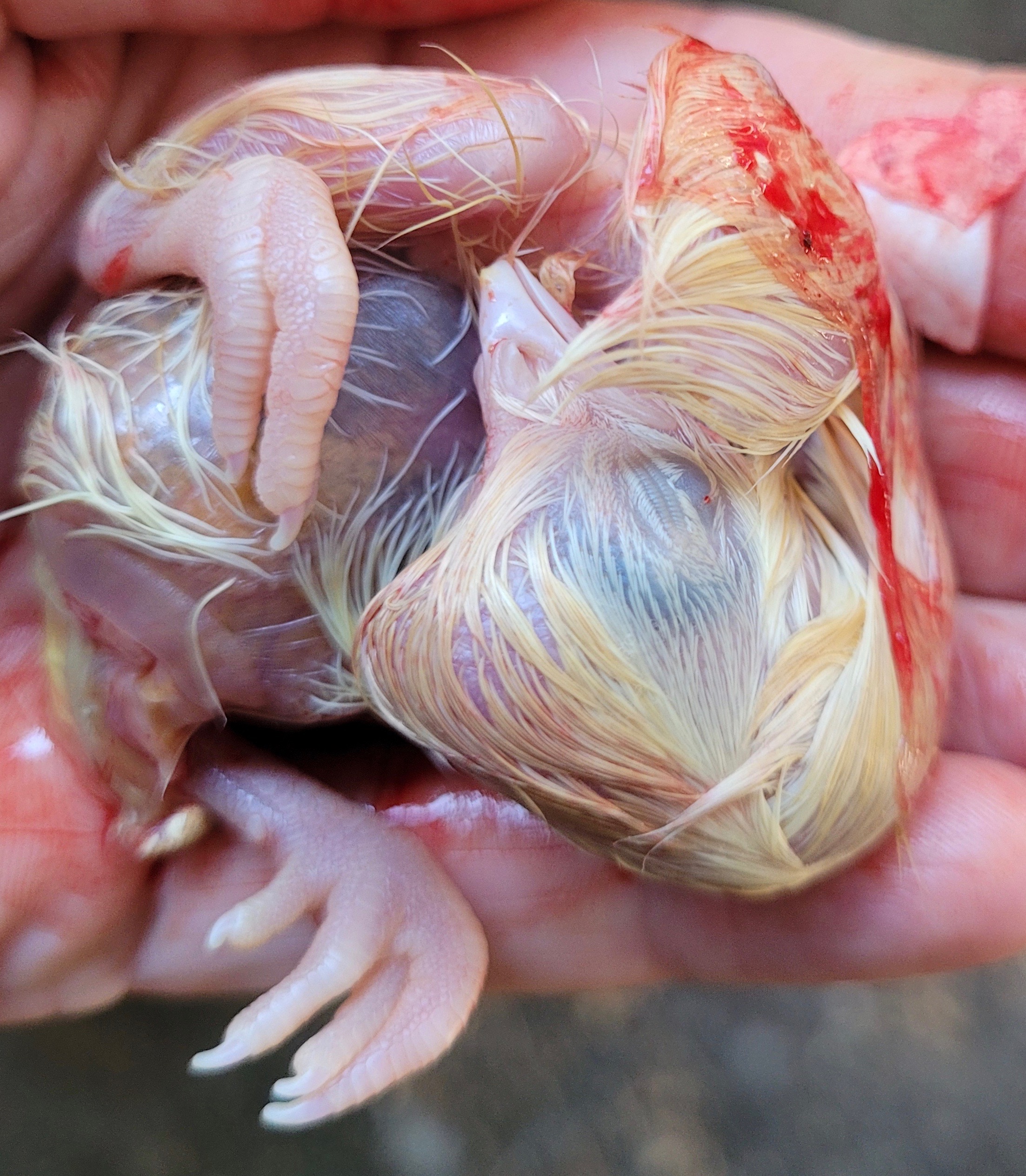
I have to give her credit; Jan jumped into action and set up a heating pad and an infirmary for the little one. When I came home the chick was alert and chirping up a storm. I lifted it up only to find it had curled toes, something I’d never had to deal with in my flock. The condition can be caused by genetics but mostly is attributed to incubation issues. If caught early it can be fixed; otherwise, that bird would have deformed feet for the rest of its life.
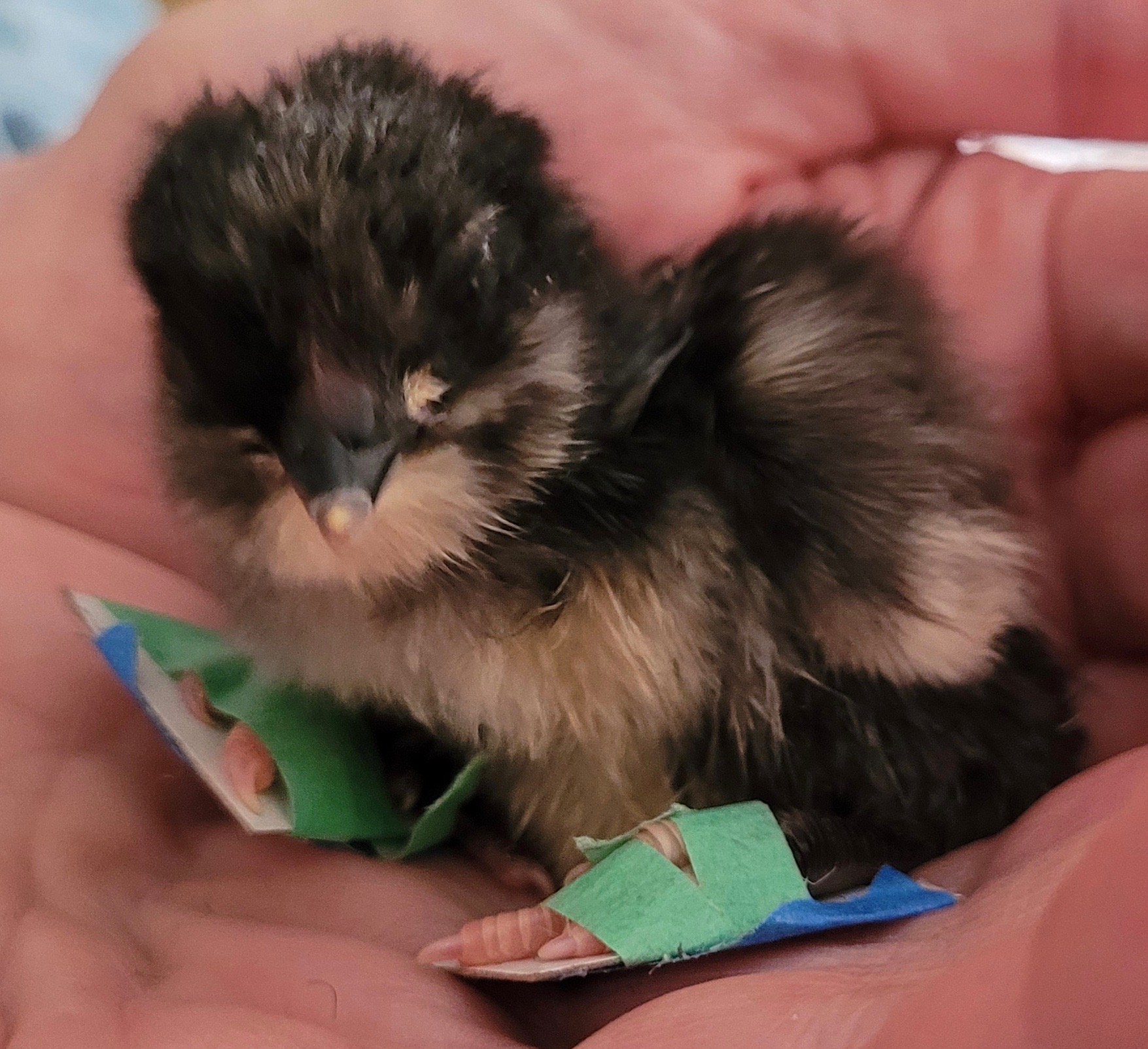
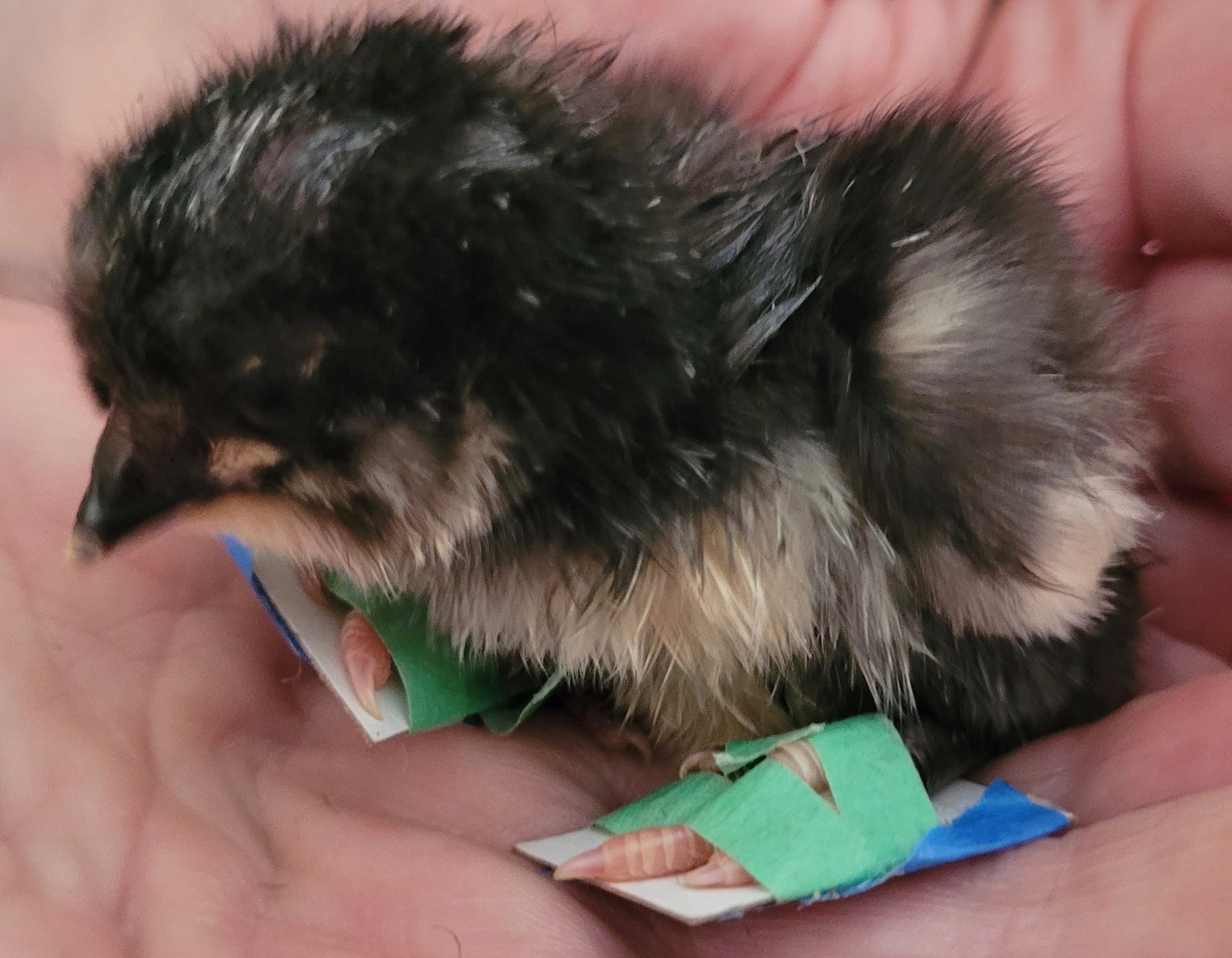
Lesson 4: Time is of the essence when addressing health issues.
We set about making little shoes out of boxboard and taped her toes into the correct position. It was awkward for her to move, but that was her only option at a normal life. At bedtime she was tucked back under her mum with her siblings. They were in a 4’x4’ coop without outside access so she didn’t have to motor much to keep up with them. She was half the size of the first-born and wasn’t as fast as the others. That said, there was no bullying and her mum made sure she ate and drank. After 48 hours one of the ‘shoes’ fell off on its own and we removed the second one, relieved to see both sets of toes were now straight. (Check out the video here)

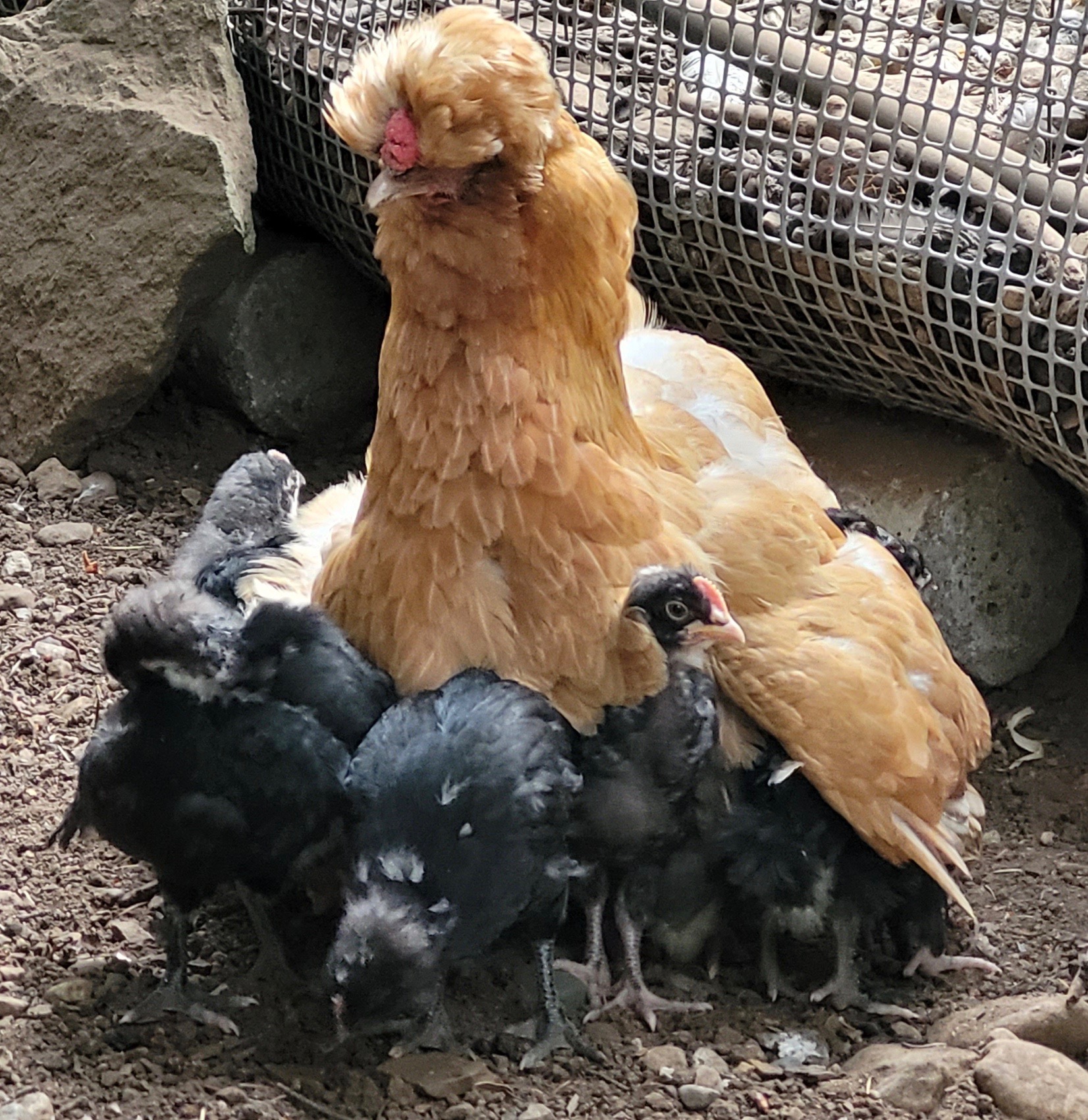
I moved One Spot and her four chicks to the main coop and 30’x40’ run and gave Buffy and Blue Ears each one side of the 8’x4’ grow out coop. Their first encounter with each other was a bit dramatic as they asserted themselves and claimed their territory.
Within a few days both sets of chicks were able to navigate down the ramp and out to their 15’x30’ pen adjacent to the main flock. I find that housing the chicks next to my flock results in an easy integration when the hen is ready to go back home.
Lesson 5: Don’t be complacent about predators and pests
For the last couple of years I have been battling rats around my coop. Sometimes I’ve gotten the upper hand but lately they’ve been winning. My main coop‘s foundation is concrete and for many years it was a fortress against rodents. I keep food inside the coop and water outside. Rats used to tunnel under the foundation and scrounge up bits of food on the ground. I’d block up their tunnels with rocks and used snap traps around the coop with some success. I would only put them down at night and pick them up at first light, or situate them under a box so that wild birds couldn’t get in. I refuse to use poison.
About a year ago, I noticed a shift in species: Norway Rats (diggers) were replaced by Roof Rats who found a way in along the roof line. I closed the feeders at night and set more traps inside the coop (out of the reach of my flock). I would catch some, but they were replaced by more.
Last winter, I moved my grow outs from the back coop to the main coop. A couple of months later I opened the empty coop to discover a very tidy nest – those pesky rats had found a way in there as well.
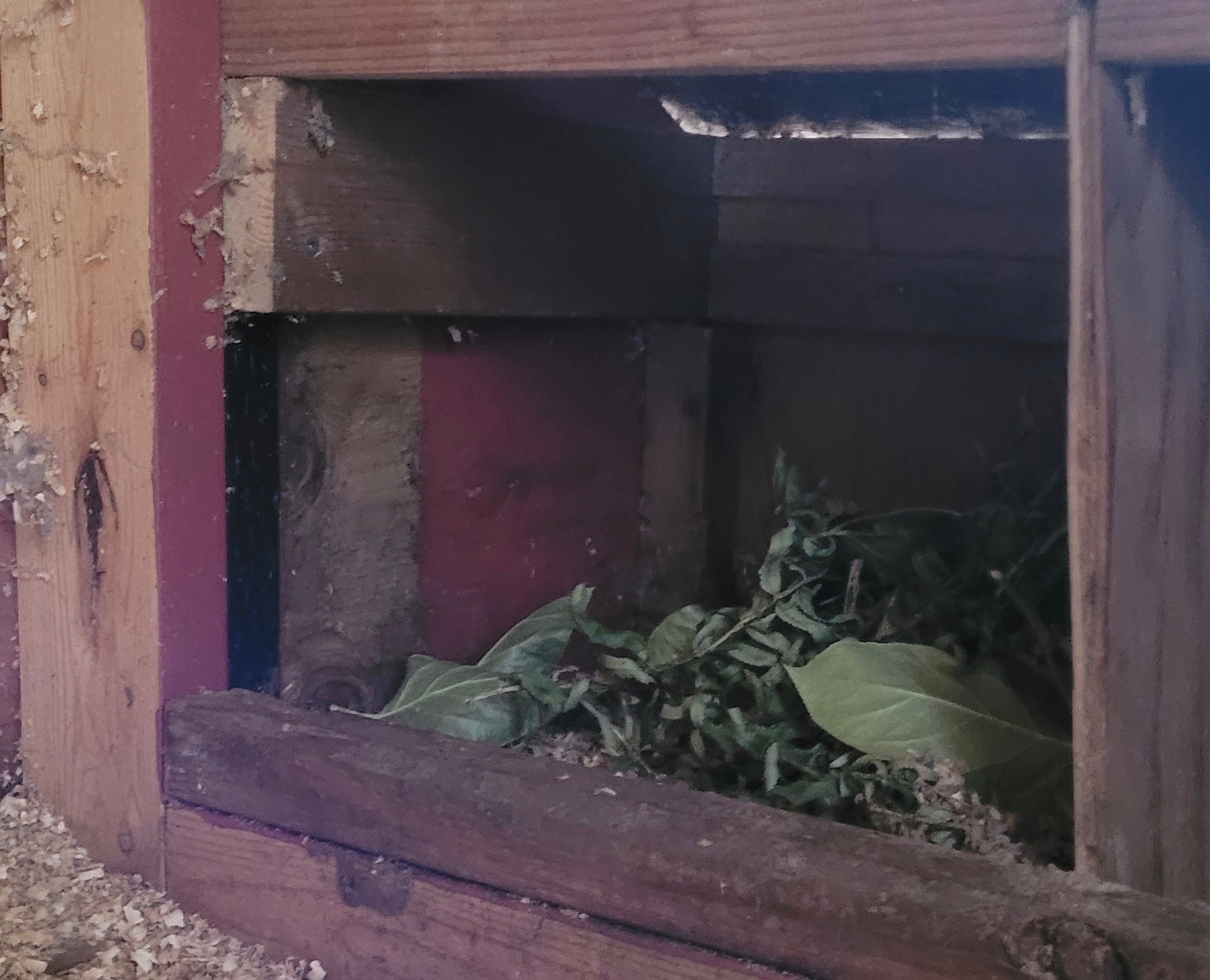
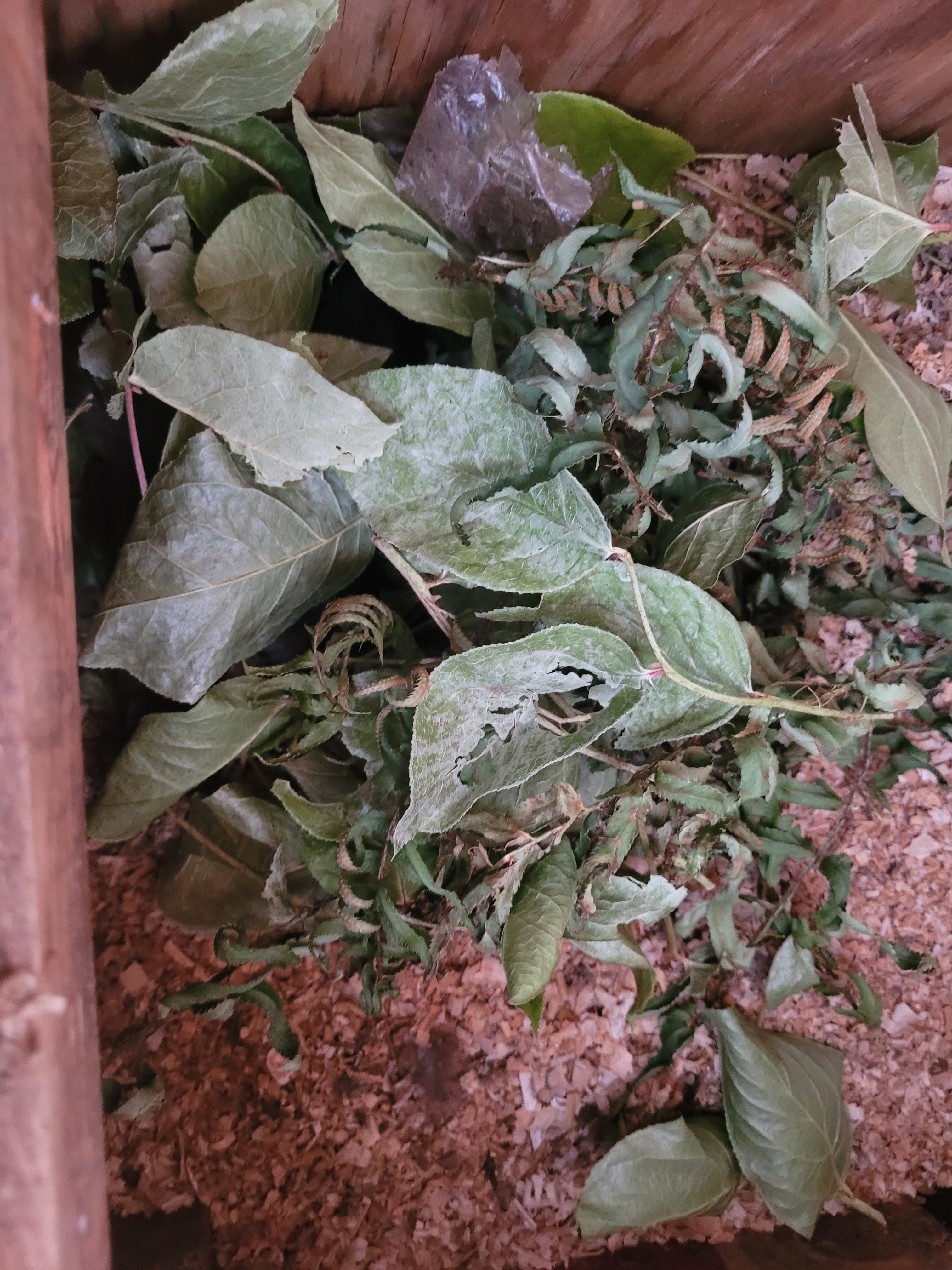
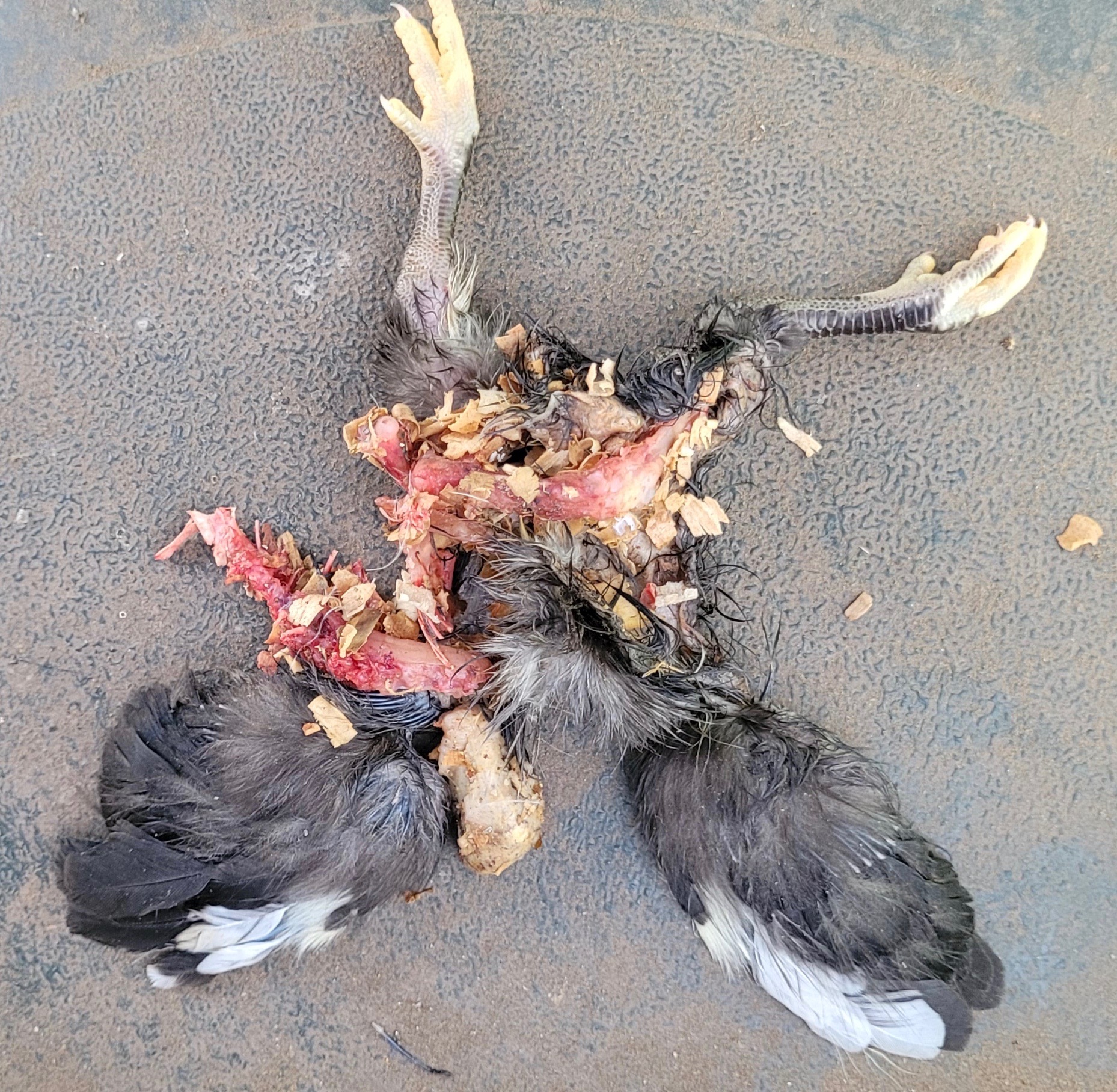
I set various traps to no avail. They pooped around them, letting me know of their presence but thumbed their noses at my attempt to eradicate them. I couldn’t figure how they got in but once Buffy was settled in I added remediating any potential openings on my to-do list. Unfortunately I didn’t get to it in time: rats came into my broody coop and killed one of Buffy’s seven-day old chicks, stripping her body clean.
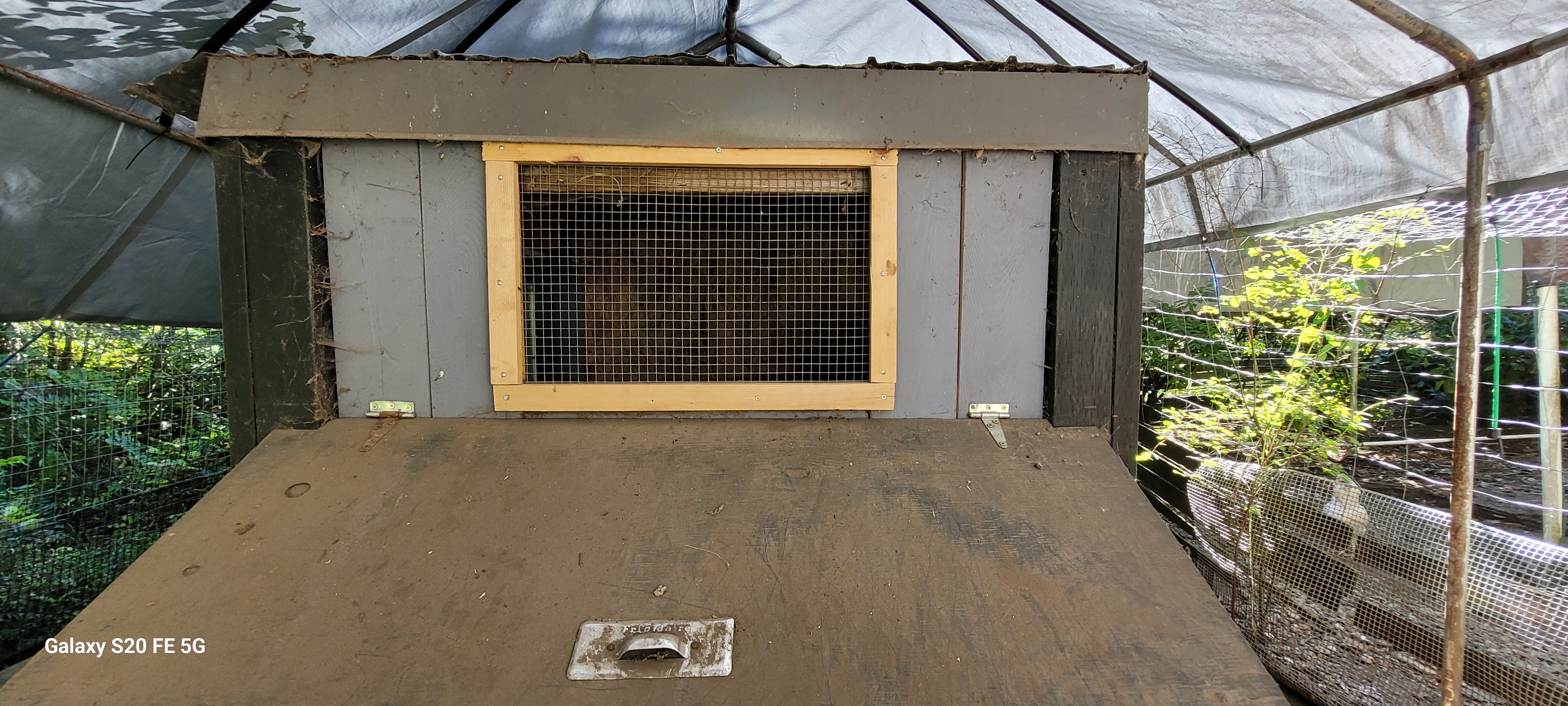
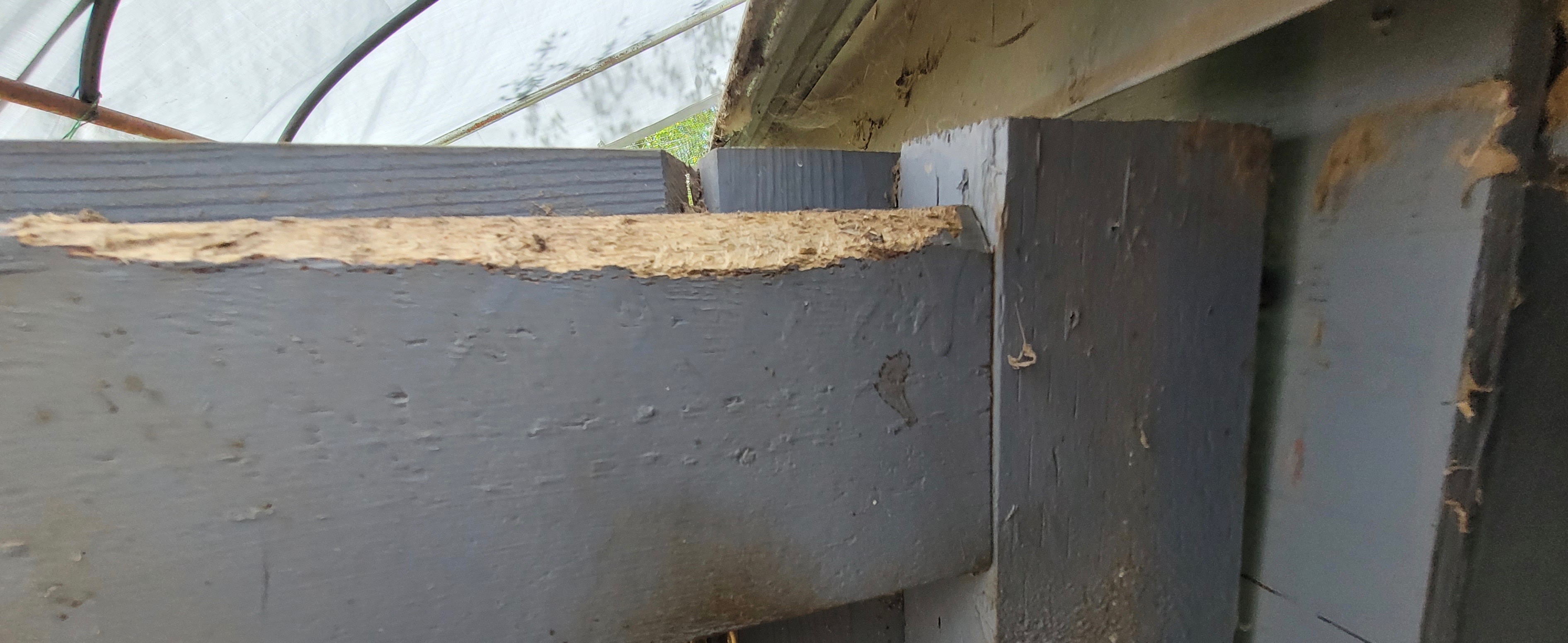
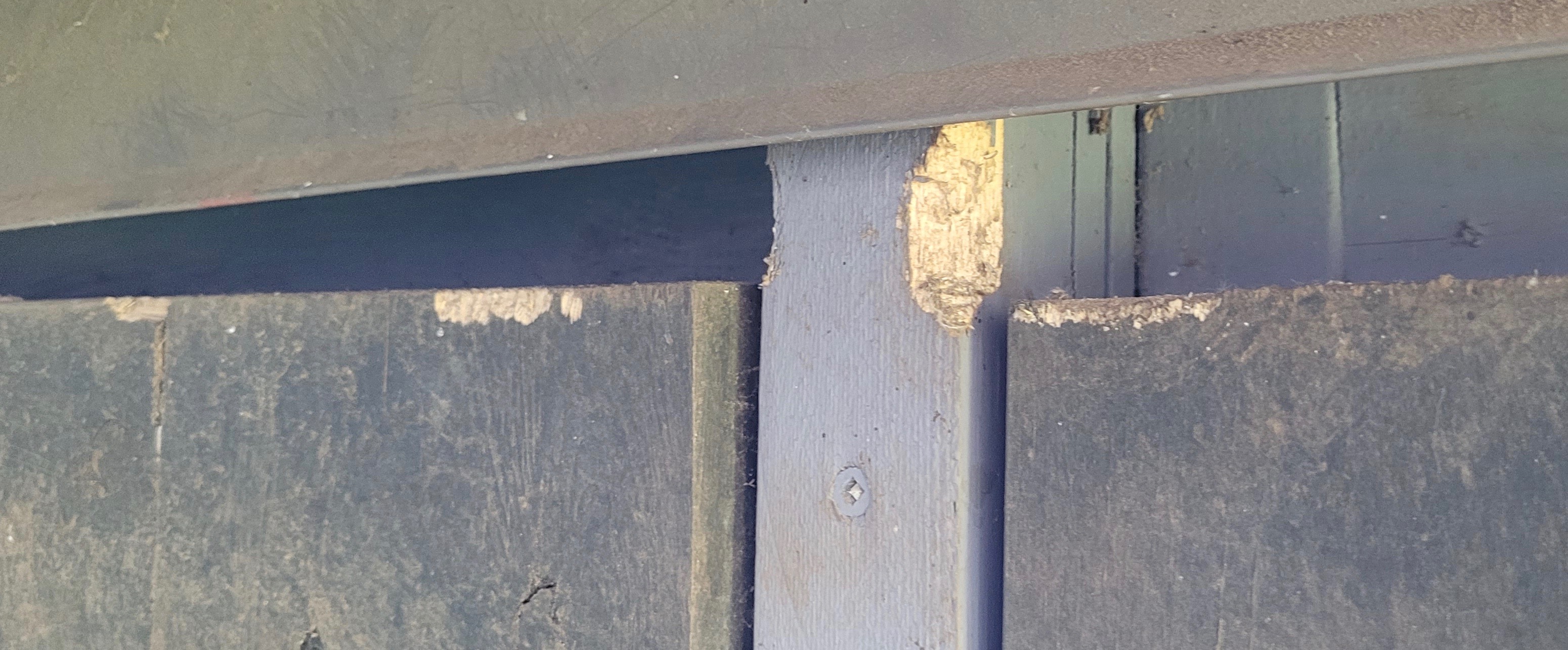
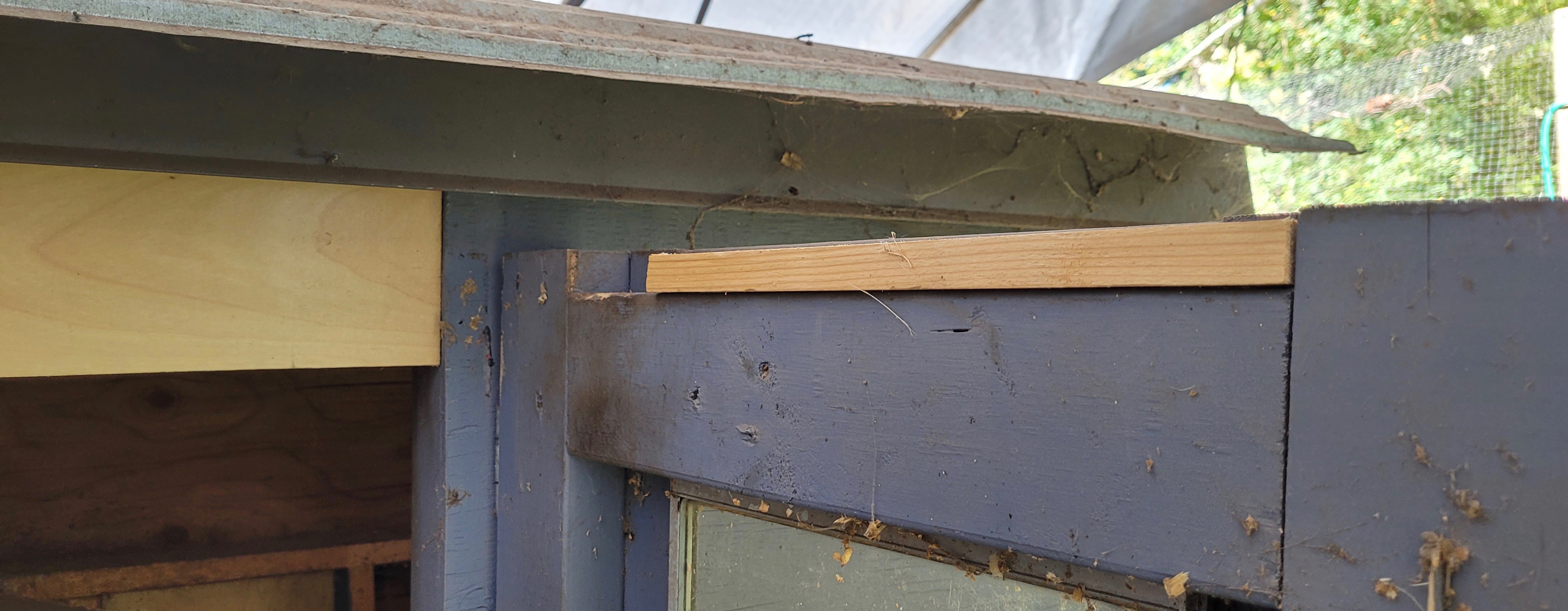
That evening Jan and I removed the vent where I thought the rats might be coming in and covered the opening with hardware cloth. Just as we were finishing she noticed a small gap at the top of the door frame. From the outside it looked like it fit tightly but there was enough space for a rat to scoot along and squeeze into the coop. We also saw that they had enlarged the hole with their teeth. It was the last thing we wanted to do, given we were experiencing a heatwave, but we figured out a way to block off the opening. The coop was now rodent proof and I check it nightly to see if have continued to foil them.
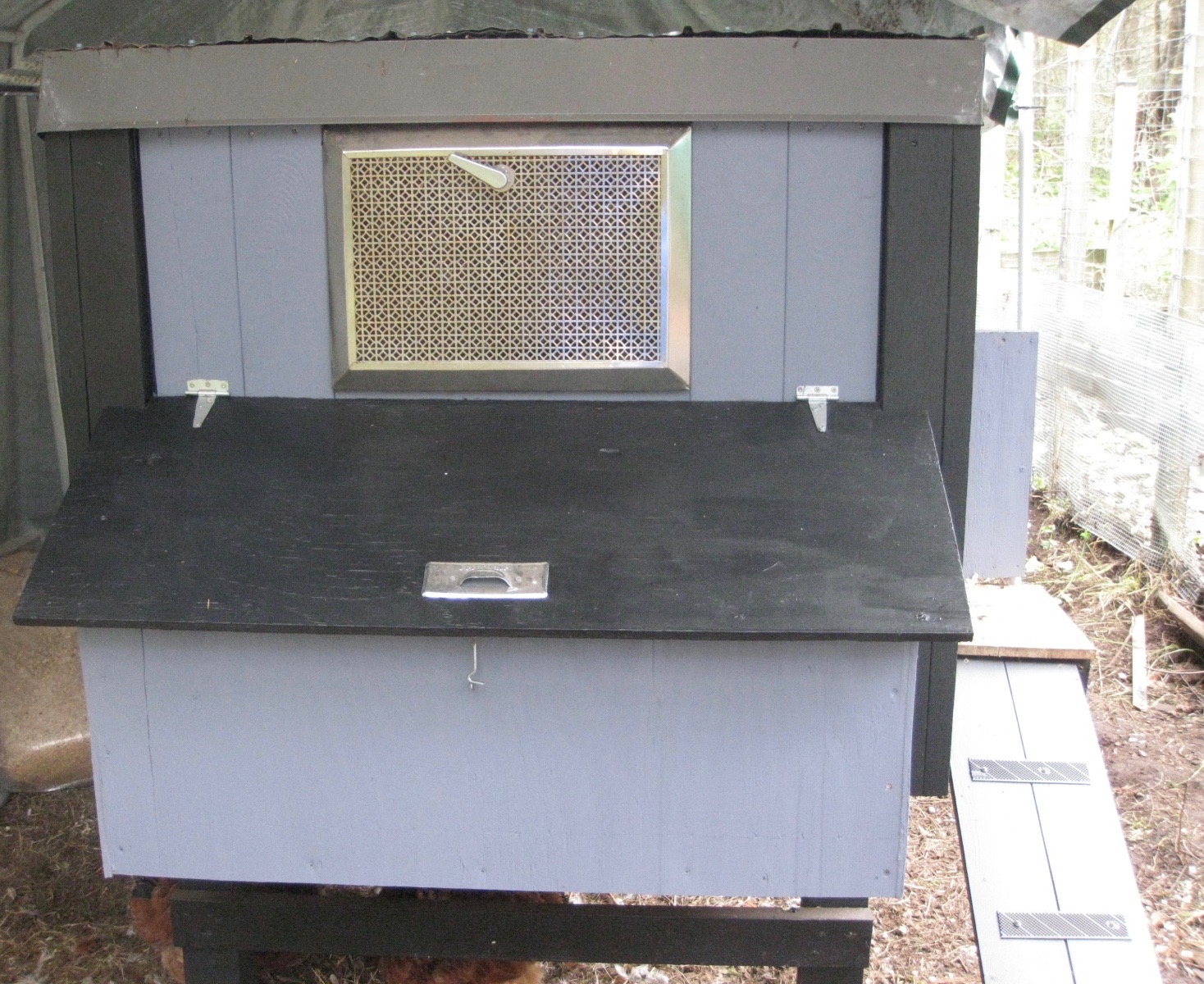
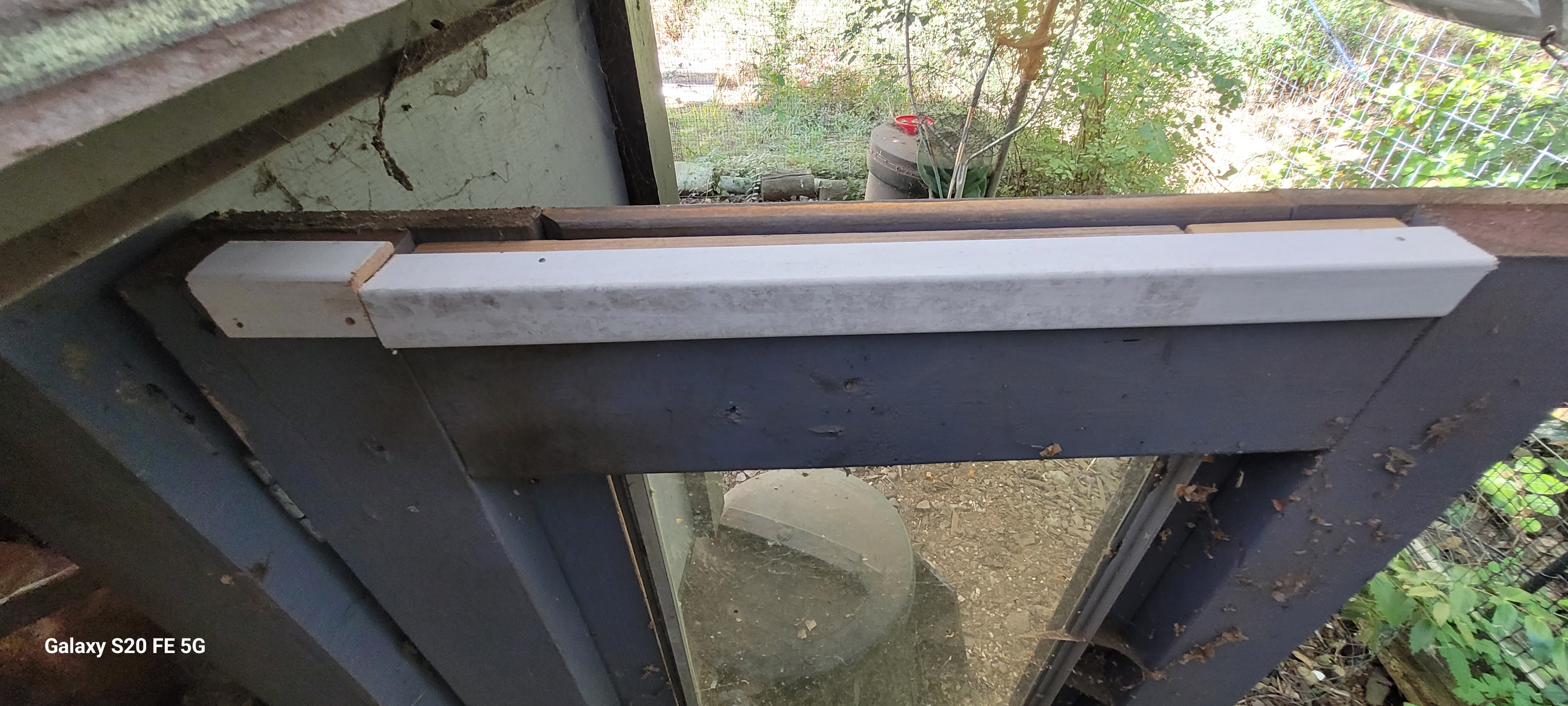
Buffy must have experienced some level of trauma after that event. Although she would go into that side of the coop during the day to eat or drink she clearly didn’t want to sleep there and most nights I would find her in the other compartment with Blue Ears and her chicks.
Lesson 6: The Law Of Averages (Or Don’t Count Your Hens Until Your Chicks Are Sexed)
I’m no math whiz (confession, I squeaked by with 52% in my grade 10 math class) but lots of chicken keepers rely on the Law of Averages when calculating the sex of their chicks. If you’re not familiar, it’s the belief that something is sure to happen at some time because of the number of times it generally happens or is expected to happen. The relevance here is that many keepers think there’s a 50-50 chance of hatching cockerels and pullets. In reality, a coin toss may end up with 50-50 heads and tails, or another combination such as 0-100 or 25-75.
Generally speaking my hatches have been close to 50-50, with some lucky ones where I have hatched more pullets than cockerels. Last year I only had two hatches with a total of ten chicks and guess what? Eight of them were cockerels!
This year it looks like a bit of the same: One Spot hatched three cockerels and one pullet, while Buffy’s hatch of seven appear to be five, maybe six cockerels and just one or two pullets. The saving grace is the one confirmed pullet is a frizzle. Of Blue Ears six chicks (two grey splash, two white splash and two black) there is closer to a 1 cockerel: 1 pullet ratio. I’ll keep you posted with my skills at sexing them at this stage.
I have three more batches of chicks to report on: Piggy and Copper are curretnly sharing one side of the broody coop, each with two six week-old chicks. One Spot with her second kick at the can hatch of seven is on the other side.
And as you might have guessed, there was more drama and lessons to be learned with those three hens. As the chicks get bigger I’ll post about them and my experience with dismal hatch rates, grafting chicks to a broody hen, assisted hatches, attempting to remedy curled toes and sadly, some chicks that didn’t make it.
 Bitchin' Chickens
Excellent article. Thank you
LikeLiked by 1 person
Thanks, yet again for another informative, educational and entertaining post!
LikeLiked by 1 person
Tough post to read about – the trial and tribulations of hatching chicks. And the darn rats. Ugh. Here’s hoping next round goes more smoothly.
LikeLiked by 1 person
So very interesting. I have never kept chickens, but enjoy learning about them through your posts. I live in an apartment on the top floor of a highrise and we are battling mice and ants! Keep up the wonderful posts please.
LikeLiked by 1 person
Thanks for the feedback. I’m always glad to find out non-chicken keepers get something out of my blog.
LikeLike