
For more than three years I’ve gotten together with Dr Vicki Bowes, vet/ avian pathologist on a regular basis to pore over files in my memory stick loaded with interesting chicken health issues that I’ve collected for her expert opinion. She refers to it as ‘Show and Tell’, ‘Best Guess’ or, more recently, ‘Gorefest’ and has done a good job at making diagnoses given the information we have at hand. Sometimes all we are provided with is a short paragraph from the chicken’s owner, other times nothing more than a photograph.
My job is to write them up to share with my readers as a form of skills building for small flock keepers.
We met up recently to look at almost 60 cases. I’ve attempted to curate them according to the area of the body affected. These ones are grouped together as they all involve some form of lumps and bumps.
I pulled multiple ‘things’ off of my poor Karen today. Do you have any idea what these are?! – Jess Winters
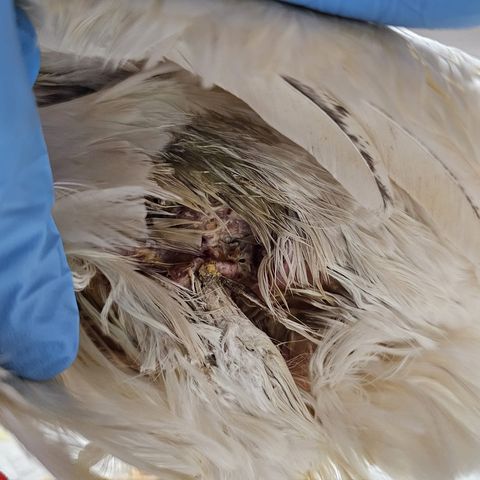
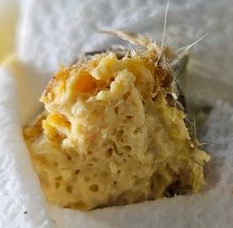
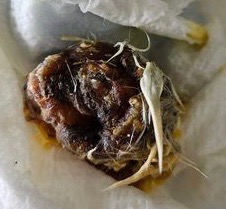
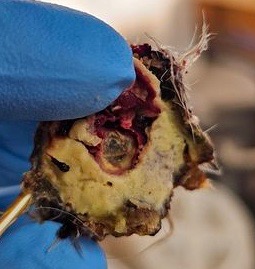
Dr Bowes: It appears to be dried caseous material, scabs from a healing injury. Some of the spots appear to be circular like a bite. Keep it clean and apply antibacterial ointment.
What is wrong with my hen and how do I treat it? She is 5- 6 months old, hasn’t started to lay yet. The yellow stuff is stuck to the tissue around and inside the vent. I inserted a Q-tip into her vent, unblocking it so she was able to poop. I was able to dig this out but there is still lots left. It feels like rubber. – Novella Casady
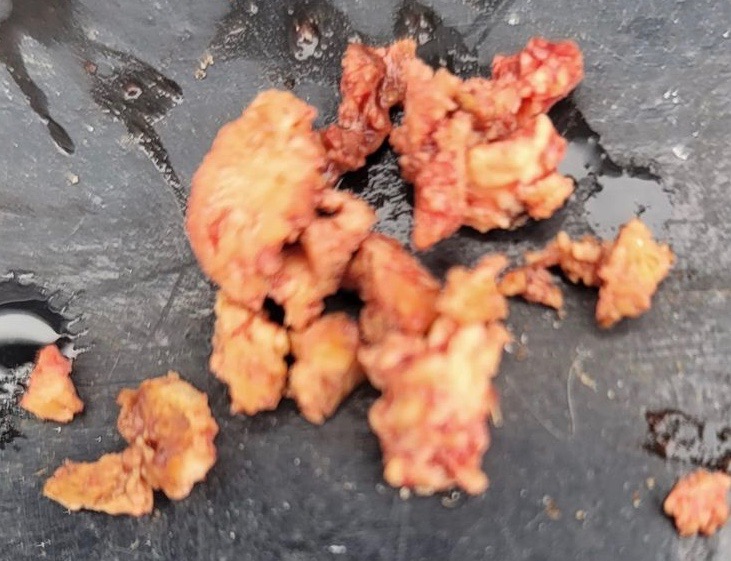
Dr Bowes: The material is dry and firm, causing the impaction. She has salpingitis, a bacterial infection of the oviduct. You might try antibiotics before she starts laying.
Undiagnosed Lumps
Please take a look at these nodule-looking things under our rescue chicken’s wing. Are these tumours? – Jane Wilson
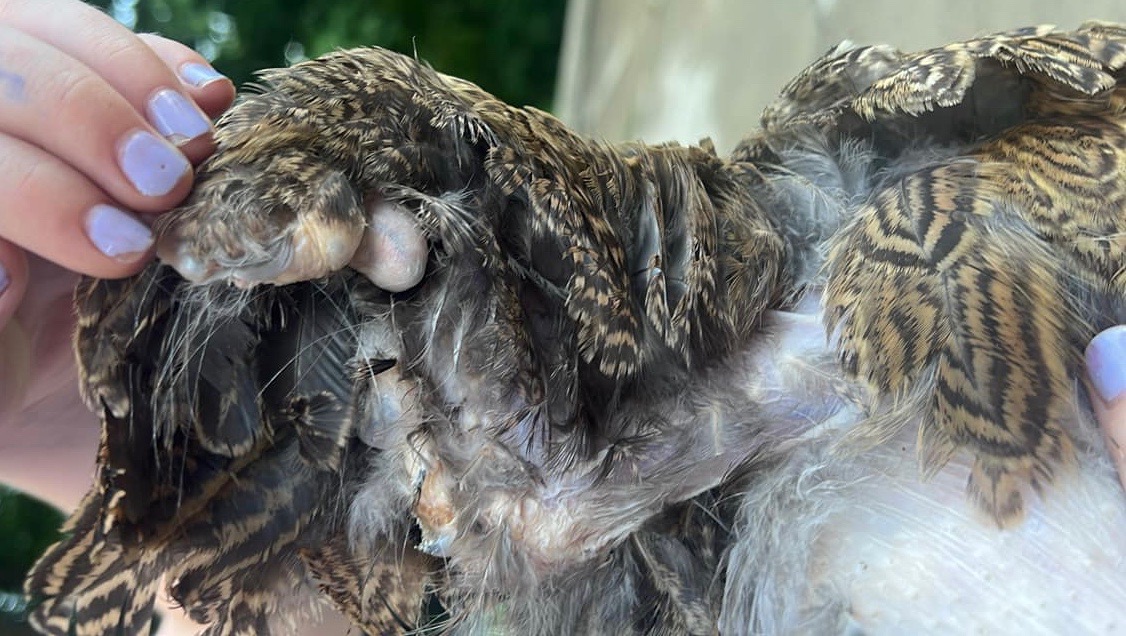
Dr Bowes: It could be a number of things: xanthoma, squamous cell carcinoma, impacted feathers or an abscess. You would need a biopsy for an accurate diagnosis. You can monitor by measuring them at two week intervals to see if they have changed at all. I’d also like to know if they are hard or soft, moveable, etc.
Necrotic Area
We did a check of our hens today and discovered this. Any ideas what this could be? She’s still acting, eating, and pooping normally. We’re soaking her in warm water and Epsom salt at the moment. – Caitlin McCoy-Sutherland
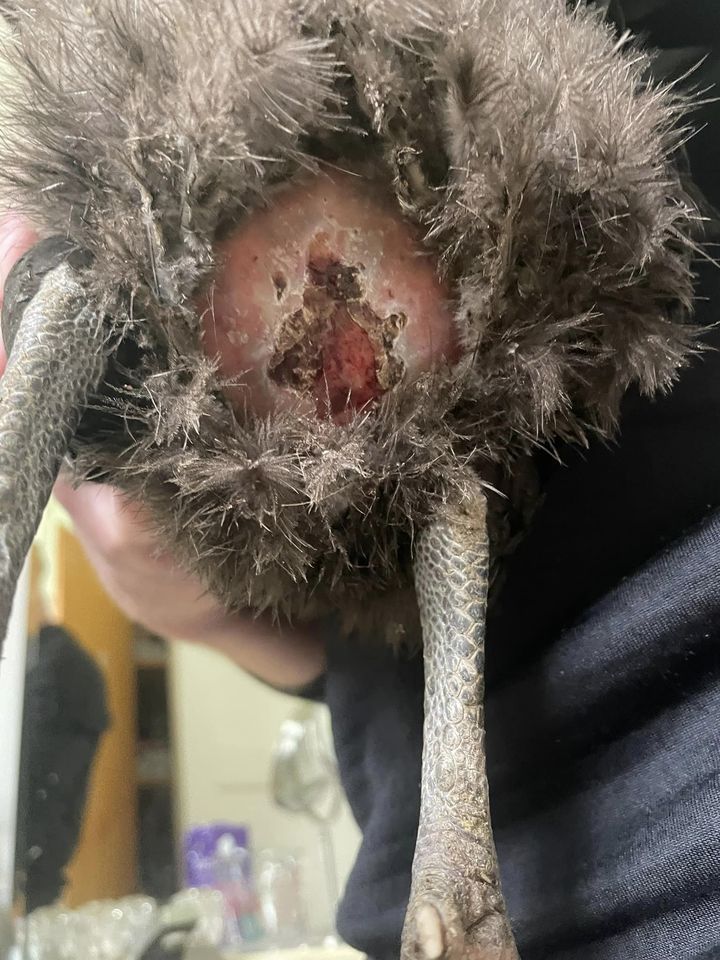
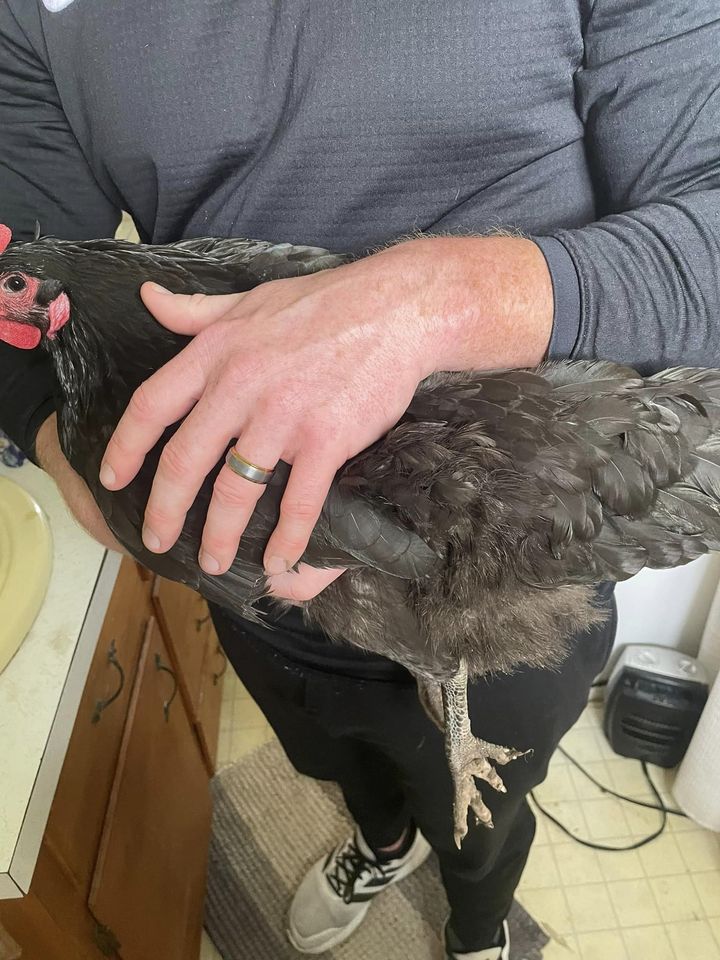
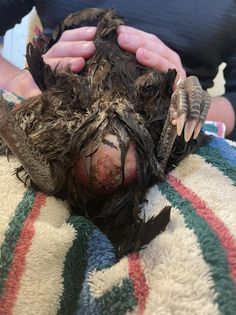
Dr Bowes: It looks like a mass and abnormal skin that has been abraded. Is it hard or soft? Is her perineum protruding causing urine scald? Keep the area clean and monitor for changes.
Fowl Pox (Brenda Outlaw)
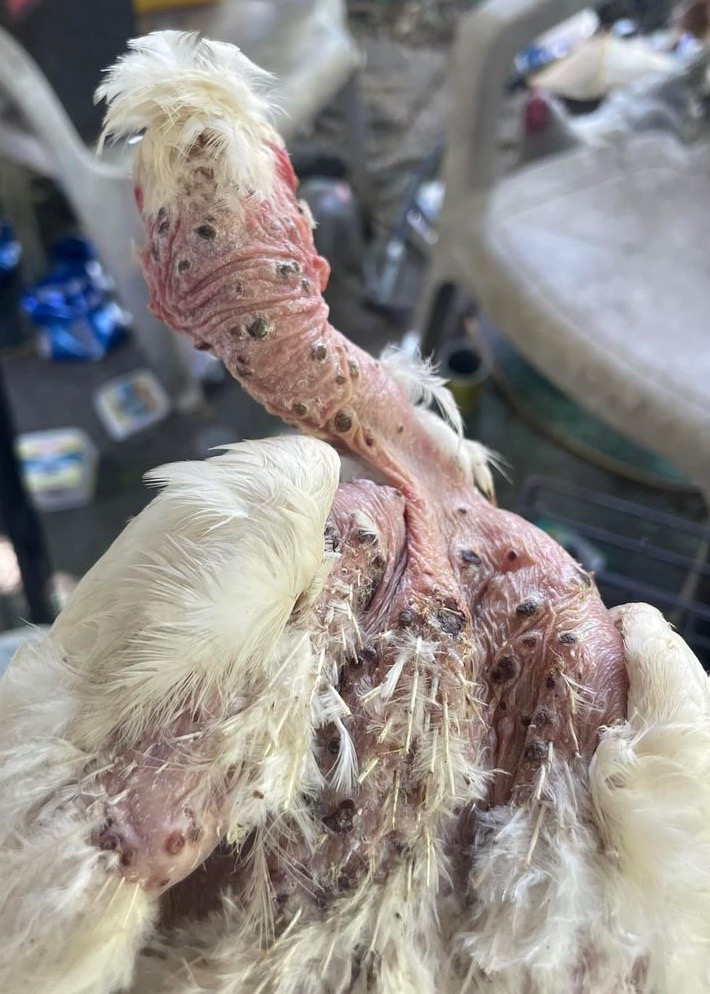
Dr Bowes: This is a case of fowl pox, which is highly contagious. Provide supportive care and deal with the contamination (i.e. isolate the bird, apply Betadine or diluted Iodine on scabs and remove dropped lesions which transmit the virus). I would recommend that you vaccinate your flock now, which can be done during an outbreak. I’m curious about the bird’s feather loss.
Squamous Cell Carcinoma (Candi Lewis Kidd)
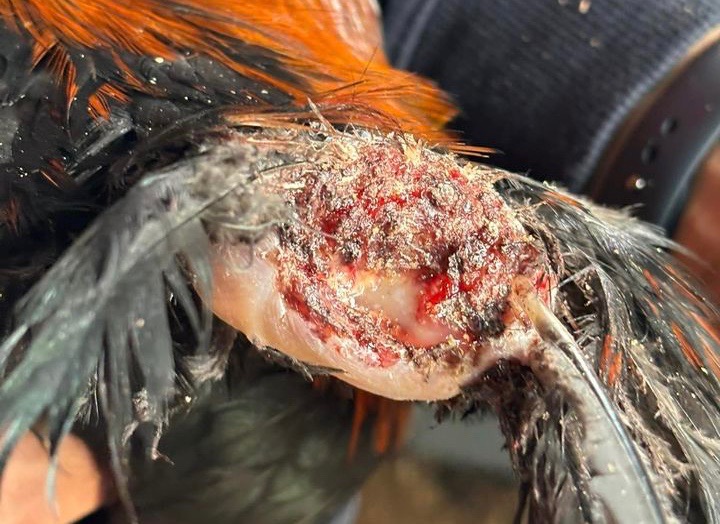
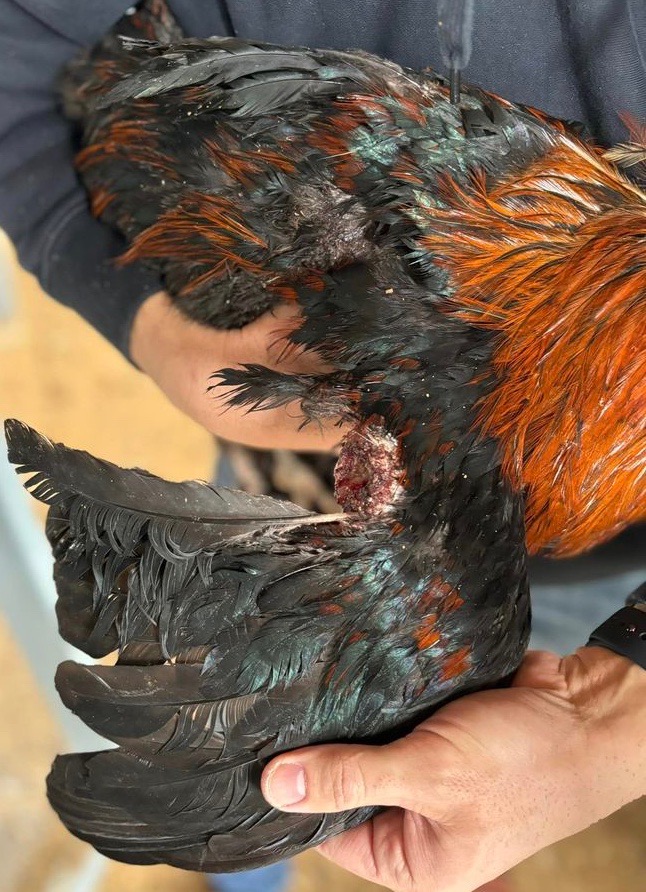
Dr Bowes: The mass is proliferative, abraded and hemorrhagic. I would diagnose squamous cell carcinoma. SSC can develop as the result of an injury. Recommendation: humane euthanasia
Glossary
Caseous: cheeselike, especially in appearance, smell, or consistency
Xanthoma: a skin condition in which certain fats build up under the surface of the skin. They are raised, waxy-appearing, frequently yellowish-colored skin lesions.
Well, that wraps up another edition of Show & Tell With Bitchin’ Chickens and Dr Bowes. I hope that it’s been a learning experience for you.
If you’d like help with a case drop me a line using the ‘contact’ button on my home page. Remember to wear gloves, take good close up photos from several angles and supply us with plenty of information (e.g. timelines, symptoms, medications, general flock health, etc) so we’re able to more accurately pinpoint what’s going on.
Thanks again to Dr Vicki Bowes for her willingness to share her wealth of knowledge and experience to build capacity and skills in small flock keepers.
Featured photo credit: istock
 Bitchin' Chickens
I’m sorry for the chickens who are featured here. I do hate to see anything suffer, but I am grateful their keepers shared these photos, so the rest of us can learn about these things.
LikeLiked by 1 person
I think most new chicken owners are surprised when they realize that chickens are vulnerable to so many diseases, predators and parasites. I’m hoping by reading posts in this series that they are better prepared and understand more of basic chicken anatomy, physiology and pathology.
LikeLike