
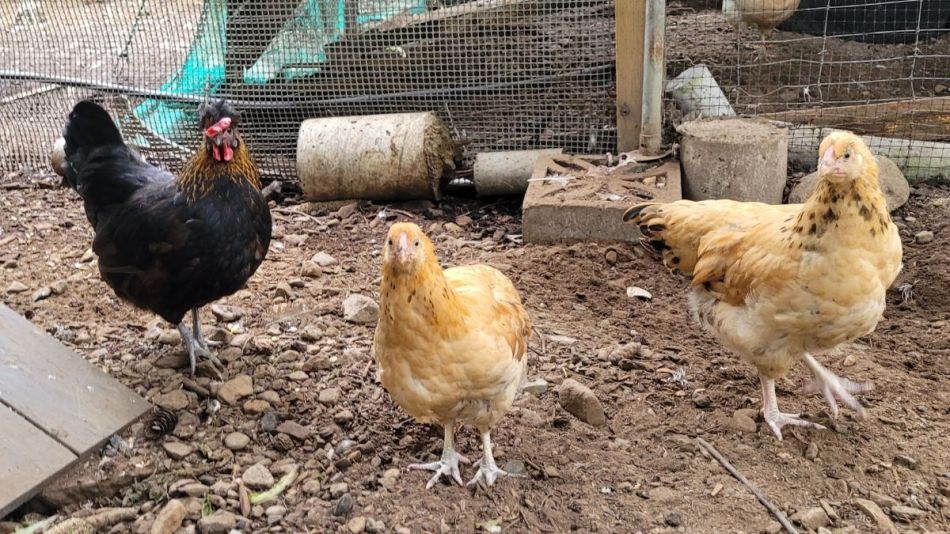
Similar to menstruating co-workers or friends, some of my hens have appeared to sync up their cycles of broodiness. That’s not surprising as both conditions are triggered by hormones.
Last year, Piggy and Copper went broody around the same time, which happened to be an inconvenient time for me. They hung on for about ten days before throwing in the towel. Piggy managed to go broody later in the season at which time I did give her eggs.
Three months ago, the duo went broody in adjacent nesting boxes screeching at anyone who came close to them. I’d already had three, not so stellar, hatches this year and was hoping for one more kick at the can at hatching some blue egg laying frizzles. Three days into their broodiness I transferred them into dog crates, sharing a space in my coop, inaccessible to the rest of the flock.
I set up some food and water and left their crate doors open during the day and locked them at bedtime. I could tell who got up to eat and drink by the number of poops left behind.
My rooster at the time, Hank, is an F1 (first generation) Olive Egger who, at 13 months old, was very active with the hens. I expected a near perfect hatch rate and have been sorely disappointed that it seemed to result in a lot of talk but no chicks. For whatever reason the hatch rate has been low (@54%). The chicks he has produced lean towards the Marans side of the family: they are predominantly black, with single combs and wattles, some with lightly feathered feet. There are no crests, muffs and beards that I love in many of my hens.
I opted to get some eggs from a friend to introduce some new genetics into my flock. Last summer, Carole gave me 13 eggs fertilized by her Isbar (pronounced Ice-bar, also known as Silverudd Blå) rooster. The hens were mostly blue egg-laying Opal Legbars and Isbars. Sadly, the fertility rate sucked: only two of 13 eggs hatched: Hank and his half-sister, a purebred Isbar. I was hoping that was a blip and this year’s viability might have improved.
I put eight of Carole’s eggs (Isbar x with Sussex, Barnevelder, and some barnyard mixes) under Piggy. I added three of my blue eggs to the mix. In an attempt to achieve my goal of some more frizzles I gave Copper six pinkish and cream eggs of my own that I hoped might have been laid by my frizzled hens. Although her parents are standard sized she’s on the small side, so six seemed a reasonable number.
On day 19, two days early, I was surprised to see a black chick with Piggy. The following morning another hatched. And then I waited. And waited. Ordinarily I’d be more concerned, but given that my other hatches this year were consistently late (day 22-25) I thought it was par for the course. By day 23, Piggy was making noises about getting up and leaving her eggs. Her littles were anxious to get out and explore the world. Given that Copper is small and no other hens were broody I had no option of sticking those remaining eight eggs under a surrogate. I usually don’t candle the eggs because I’ve not always seen the telltale signs of a developing chick, even when there has been one. I candled all the eggs that Buffy and Copper had been incubating: eight from Carole and seven of mine and every single one of them was unfertilized!
Grafting Chicks
Copper had been sitting for so long I didn’t want her to have to end up with no chicks. Piggy only had two chicks and I couldn’t imagine taking one to give to her sister-hen. I scrambled for a solution. At 10pm I started posting in our community Facebook groups asking if someone had incubating eggs close to hatch day or day old chicks they would donate to Copper. My friends Thomas and Elizabeth came through, offering me two two-day old chicks.
The next evening I headed over to their place. They lifted the hen off her nest and I spotted seven fluffies. I tried to choose ones that didn’t resemble mine, so scooped up two chipmunk-striped chicks, hoping they turned out be pullets.
Years ago, I took a fruit tree grafting workshop. The idea is you take a branch from a tree that you want to grow and attach it to an existing base of the same/similar species. There are different techniques for how to go about the procedure to obtain the optimal results. My first go-round resulted in three pear and apple trees that are now more than a decade old. My second attempt was a dismal failure, in which, the graft didn’t take and fell off the base.
I’ve always imagined that grafting chicks to a hen who hasn’t hatched them is somewhat similar. Regardless of your intention or preparation everything has to fall into place for there to be a happy outcome. I hadn’t attempted this before, but I’ve read plenty in online chicken groups: from the horror stories of hens killing chicks to amenable hens that were born to be mothers. I was hoping Copper would fall into the latter category, or at least not be aggressive towards them. At worst, she might ignore them and I could return them back home.
I had left Copper one egg to sit on (day 24) until I got the chicks the following day. She hadn’t seemed to notice the other eggs were gone. It was dusk, but just to be on the safe side I covered the crate opening with a towel so it would be dark for the next 12 hours. I slid each chick under her, removing the lone egg at the same time. I stood there for a few minutes. Complete silence. Coming back later, silence. I took this as a good sign because it meant the chicks were under her and she wasn’t kicking up a fuss. By the next morning, she was happy as a clam.
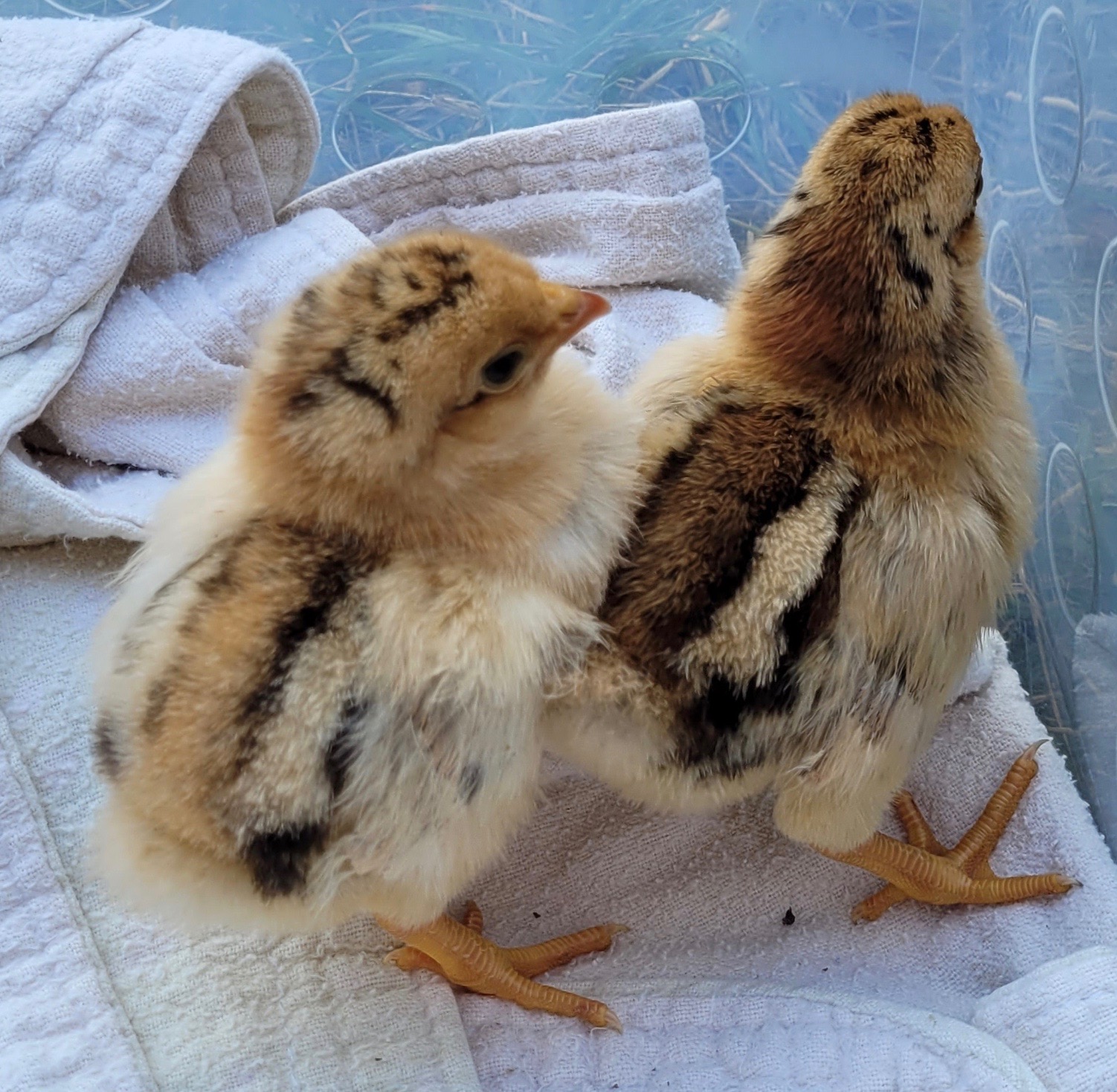
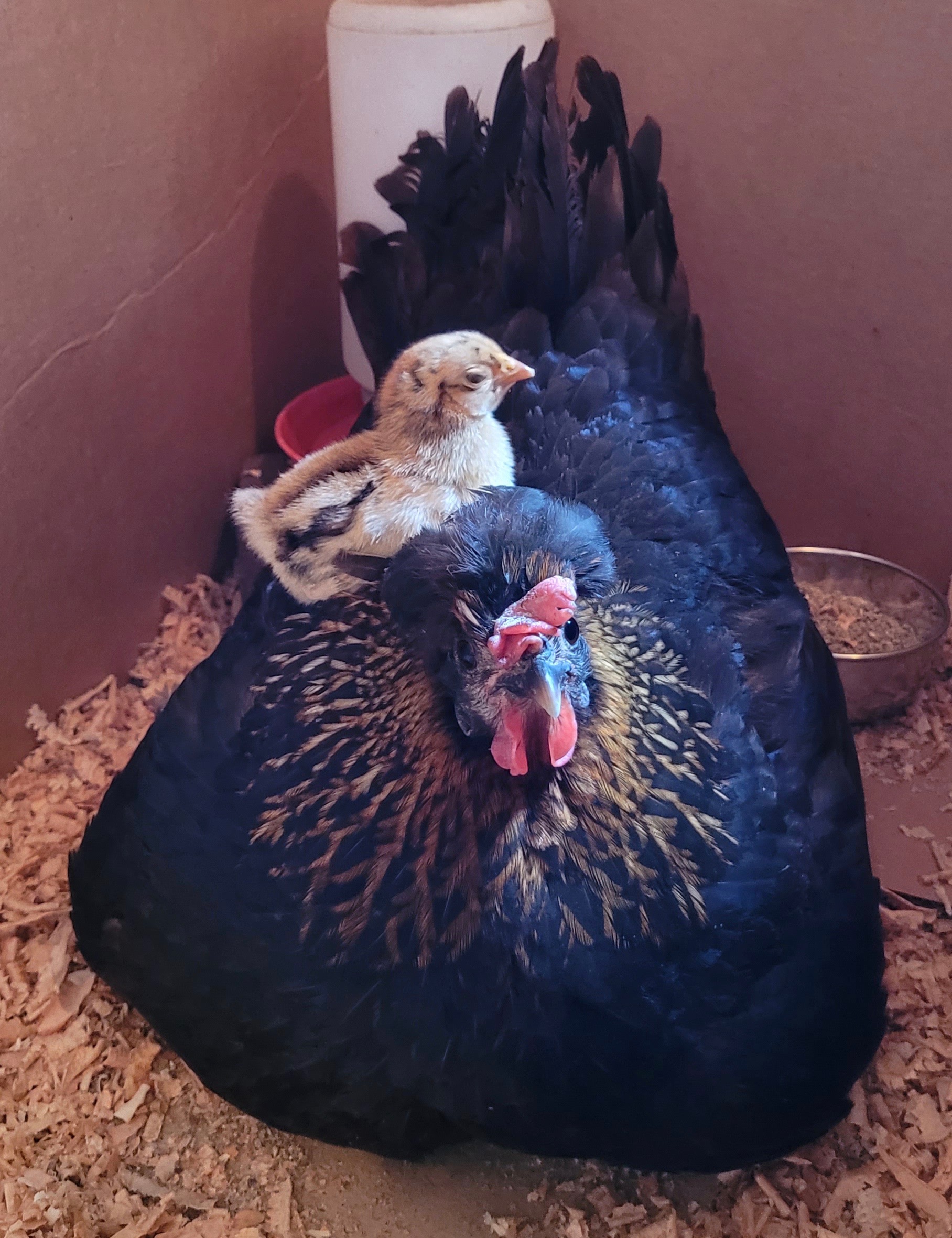
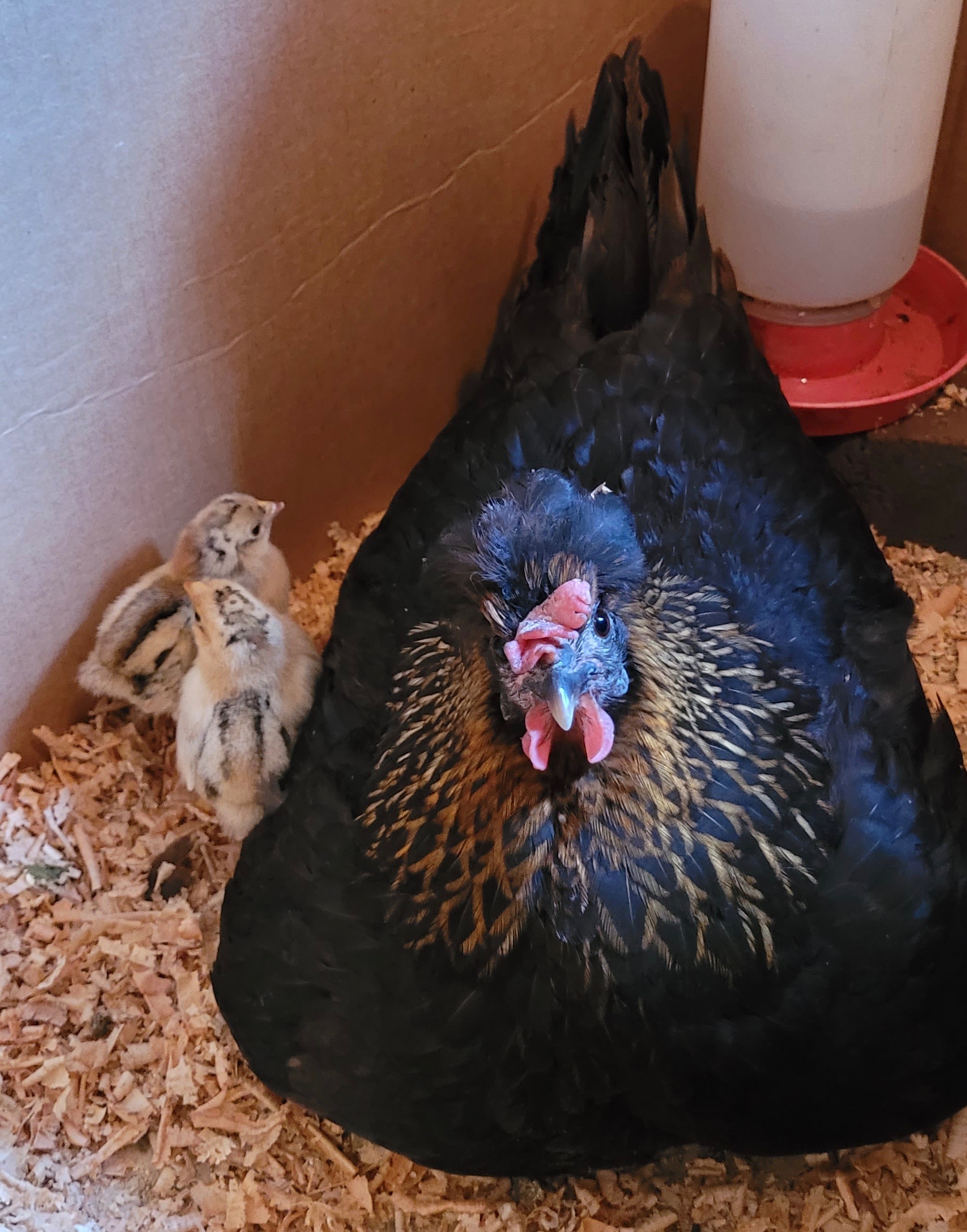
A few days later I moved Copper and her chicks from their cramped quarters to a 4’x4’ coop that is one half of a 8’x4’ maternity duplex, adjoining to Piggy and her brood.
When the chicks were @10 days old I opened the doors on each side of the coop to let them all out. If my coop wasn’t raised with a long ramp to the ground I would have done it sooner. They all need to be able to get up and down without assistance as I’m not always home to monitor.
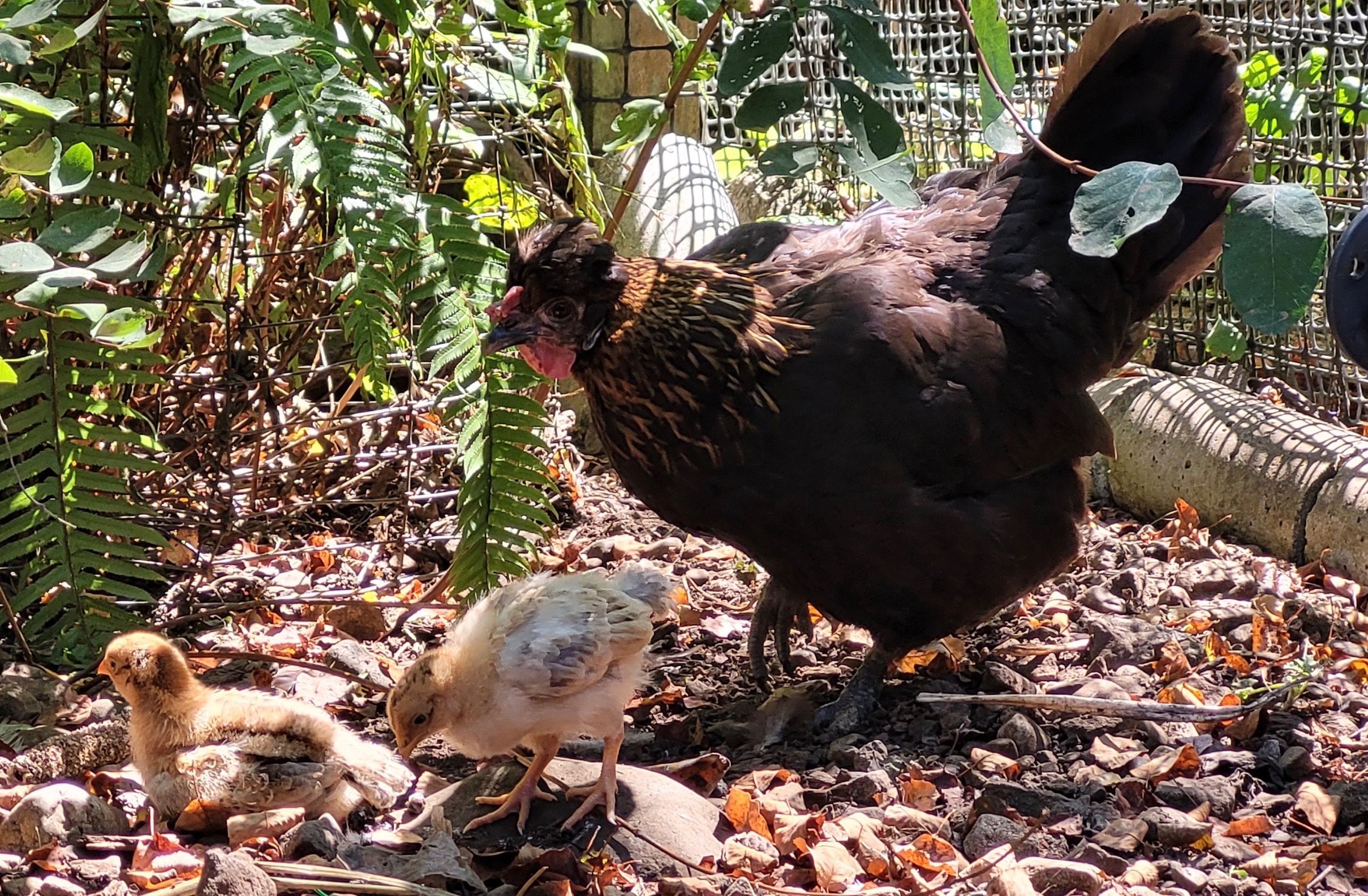
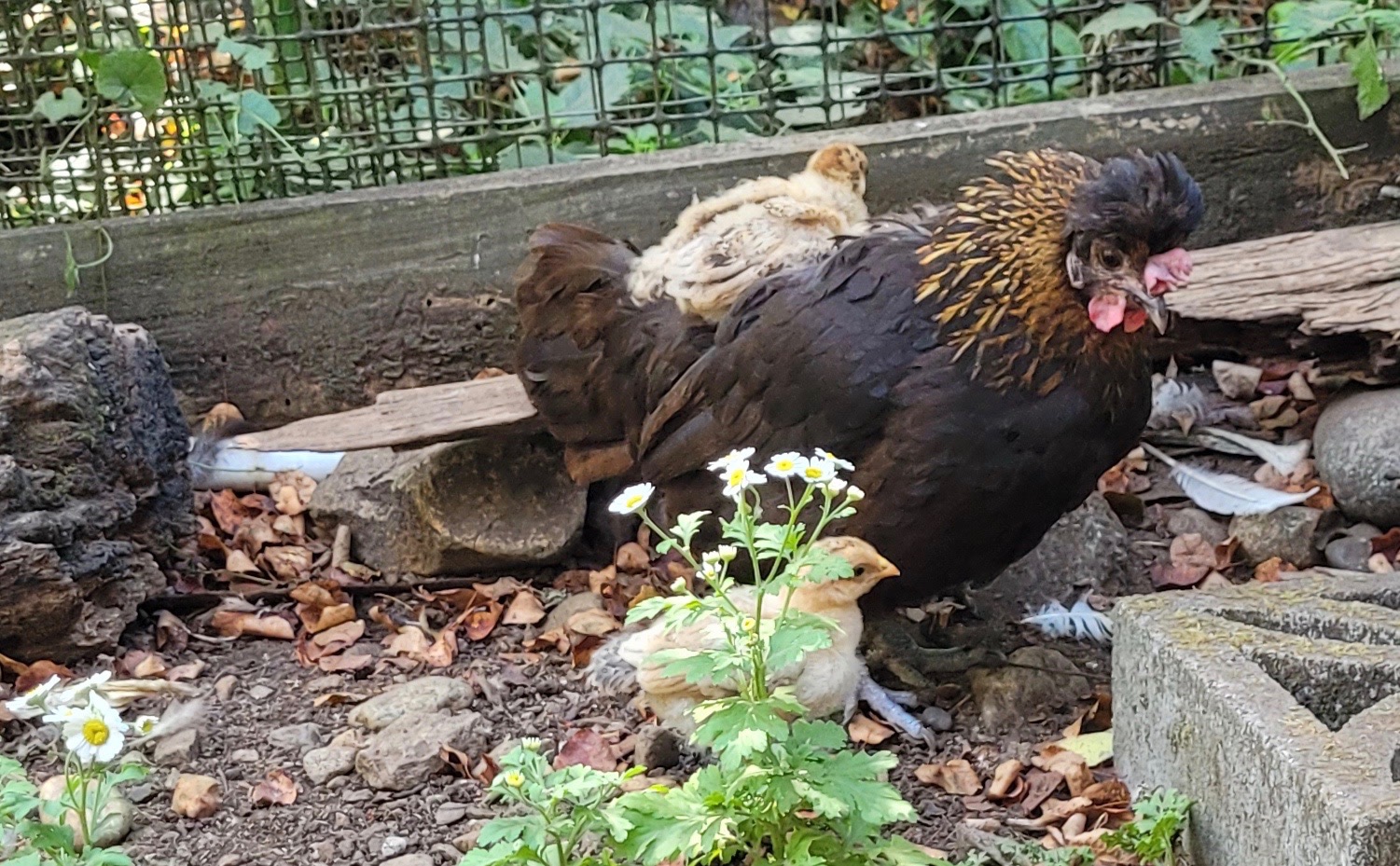
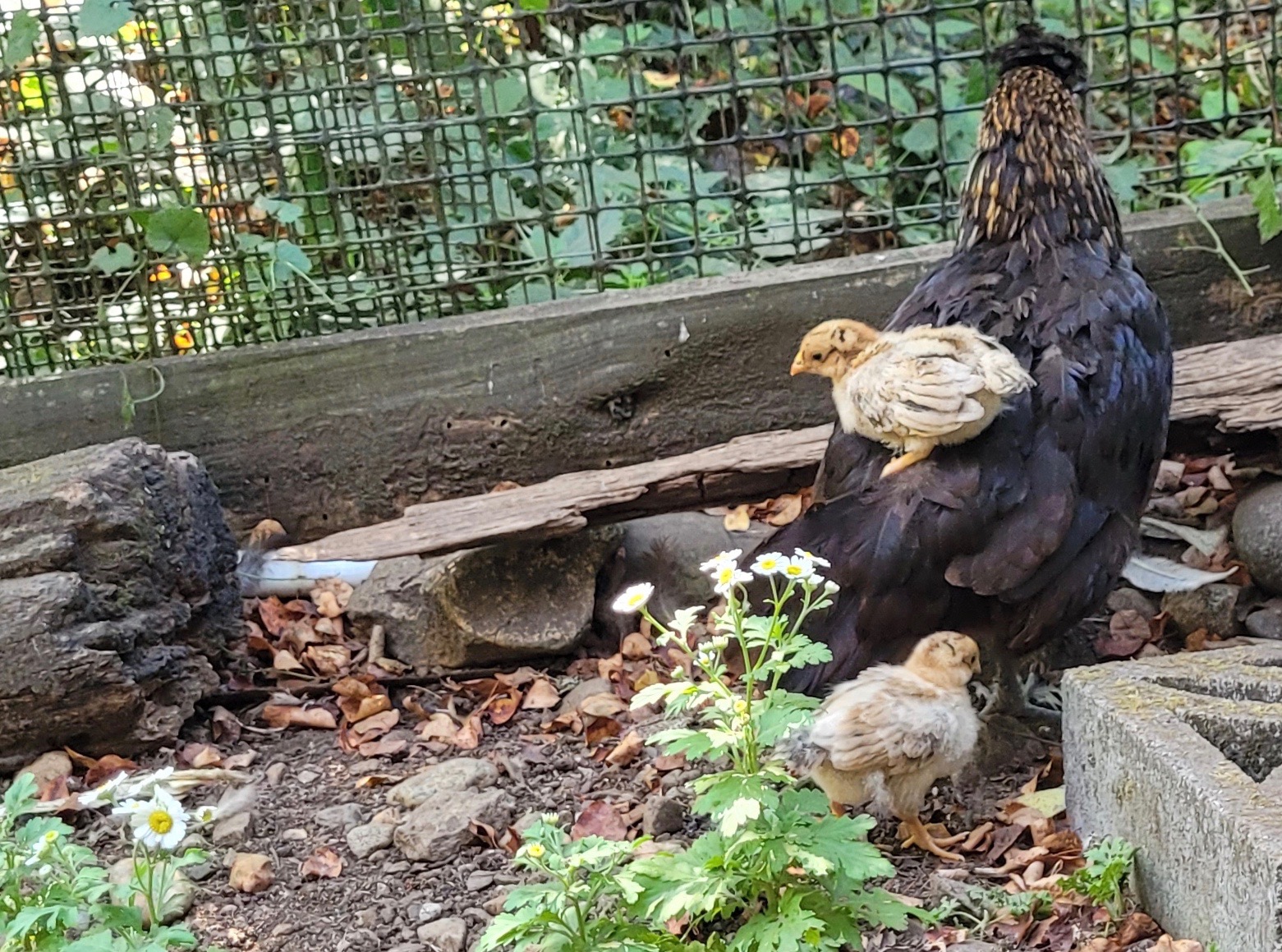
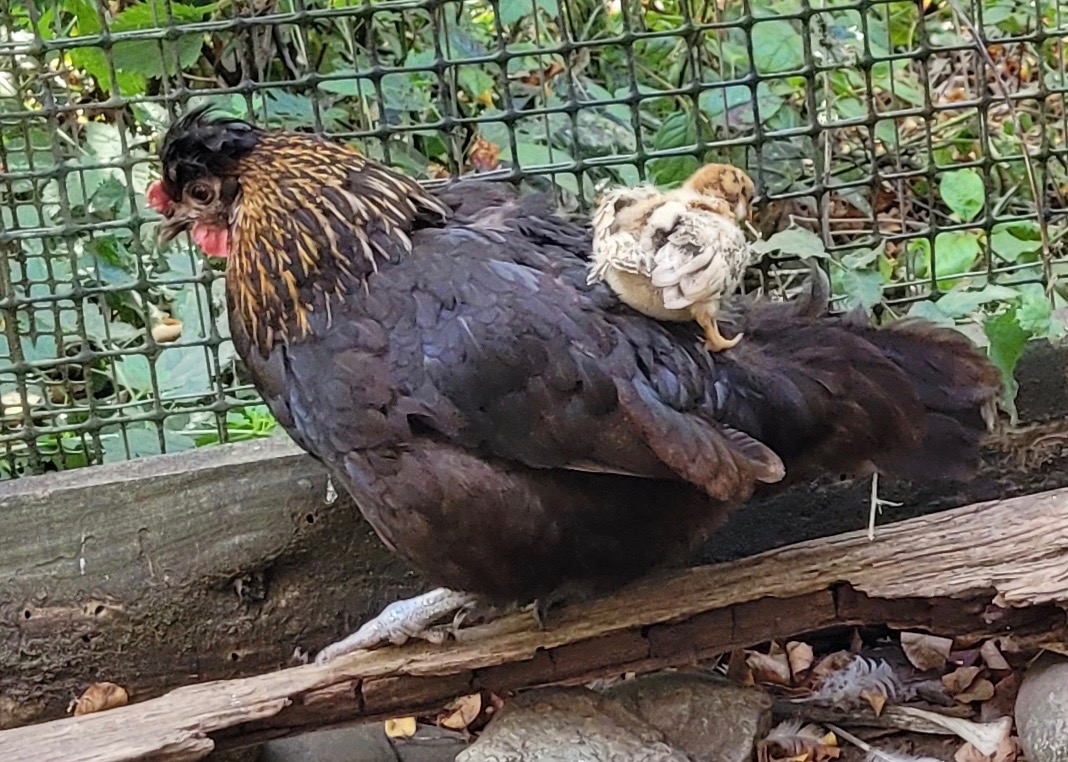
I was a bit concerned that Piggy, who has gained a reputation for being bossy with other broody hens might dominate smaller Copper. As it turns out Copper quickly asserted herself as no pushover and the hens co-existed quite happily. Within a couple of days Piggy ditched her quarters and moved in with Copper. Each hen and her two chicks slept in their own nest box, but there was no issue competing for food and they all hung out together as one family.
When their chicks were about a week old my hen, One Spot, went broody for the second time this season. I set her up in a dog crate in my main coop and once Piggy and Copper moved in together I transferred her and the eggs into the vacant half of the maternity coop. I’ll write about the many challenges of One Spot’s hatch in another post, but suffice to say, they all got along and despite the size difference between the chicks there were no issues.
Surprisingly, Piggy and Copper stayed together with their four chicks for many weeks. I think they were so dedicated because for several weeks there was a Cooper’s Hawk hanging around their coop every day, twice a day. The pen is secure, but that added a level of stress on the otherwise happy family. (Check out the hawk alert here)
When the chicks were 10 weeks old, and almost the same size as their mums, I moved them all back to the main coop housing my flock. Now, two weeks later, the hens still haven’t pushed their chicks to be fully independent and seem quite content to stay with them awhile longer.
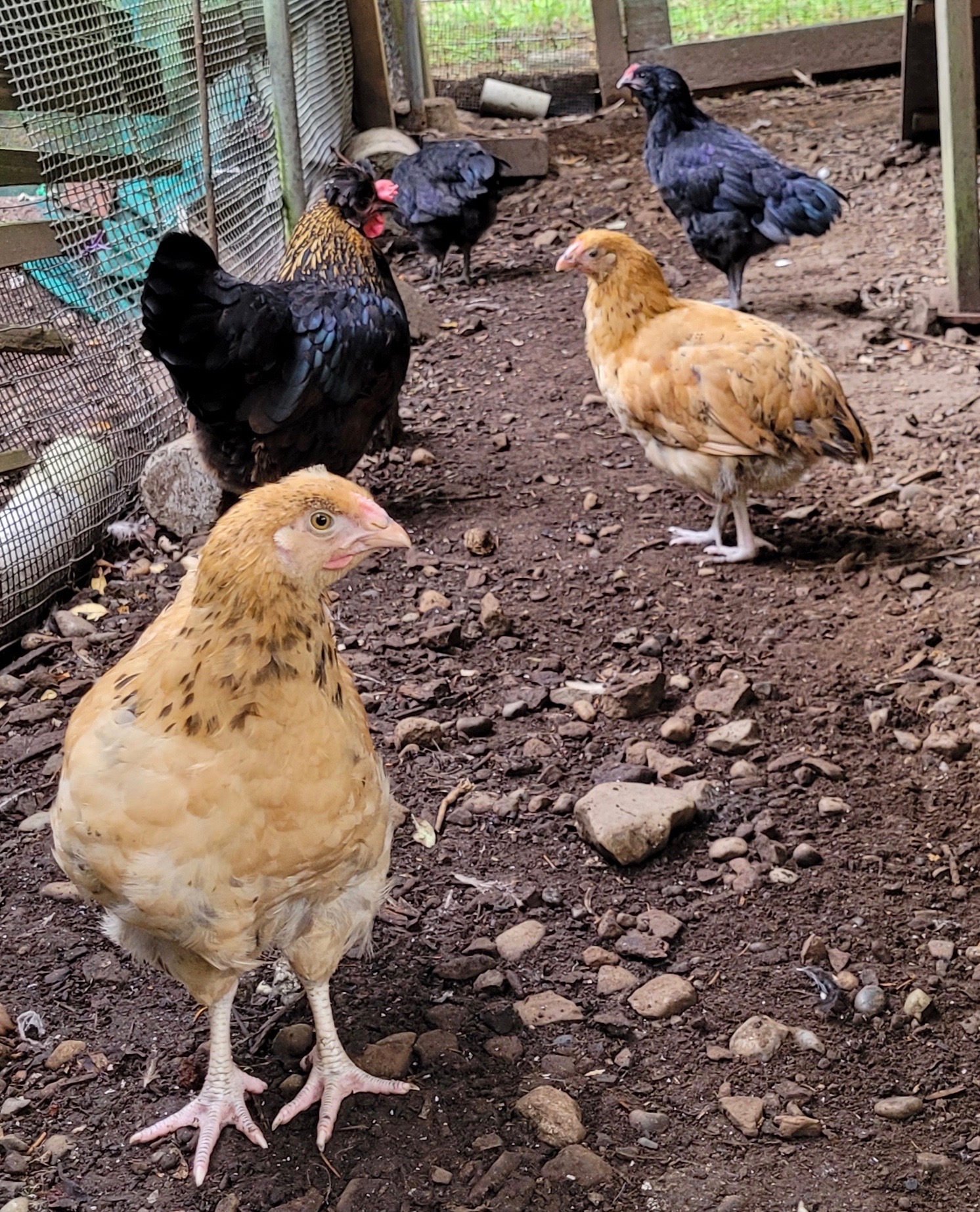
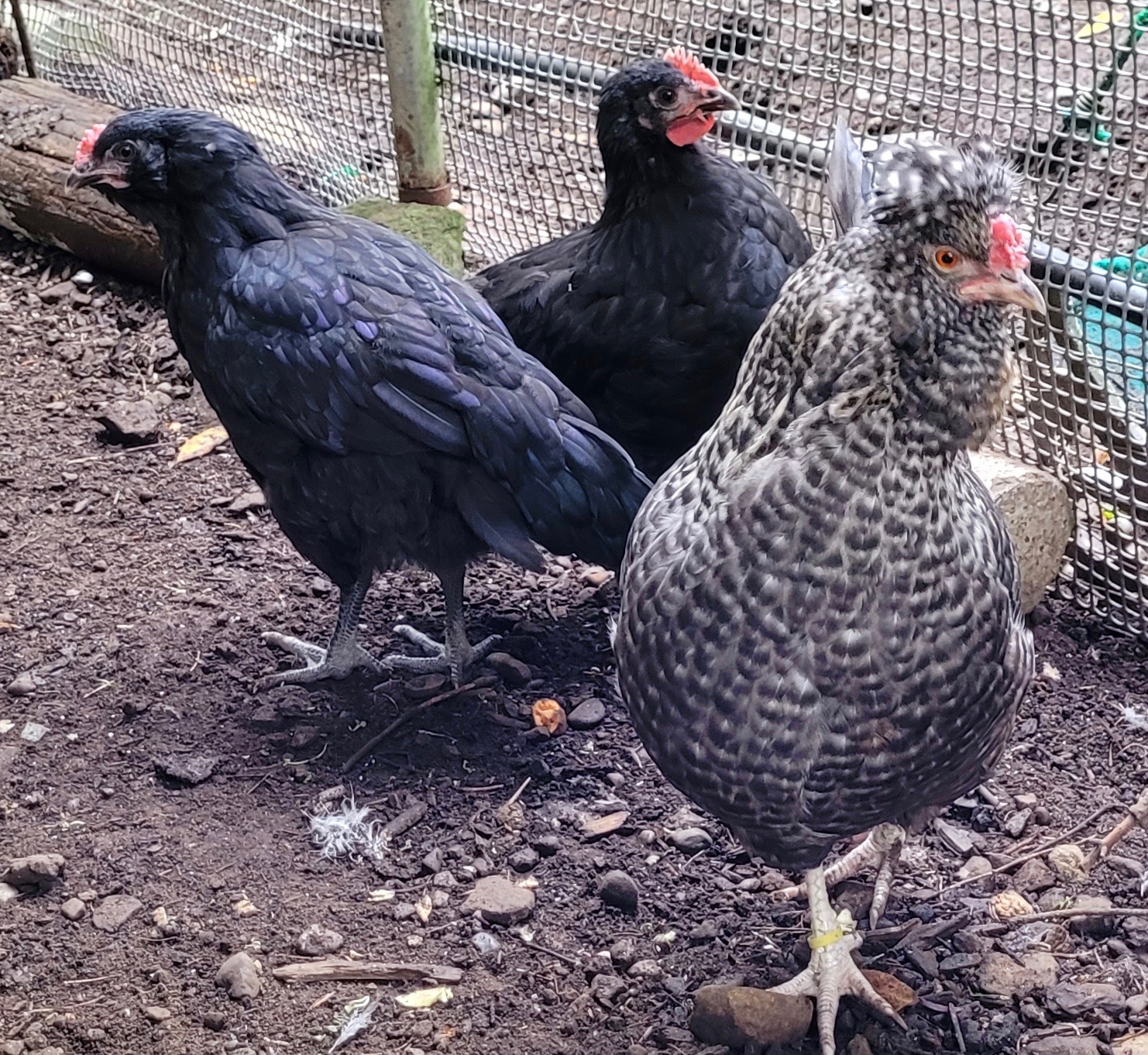
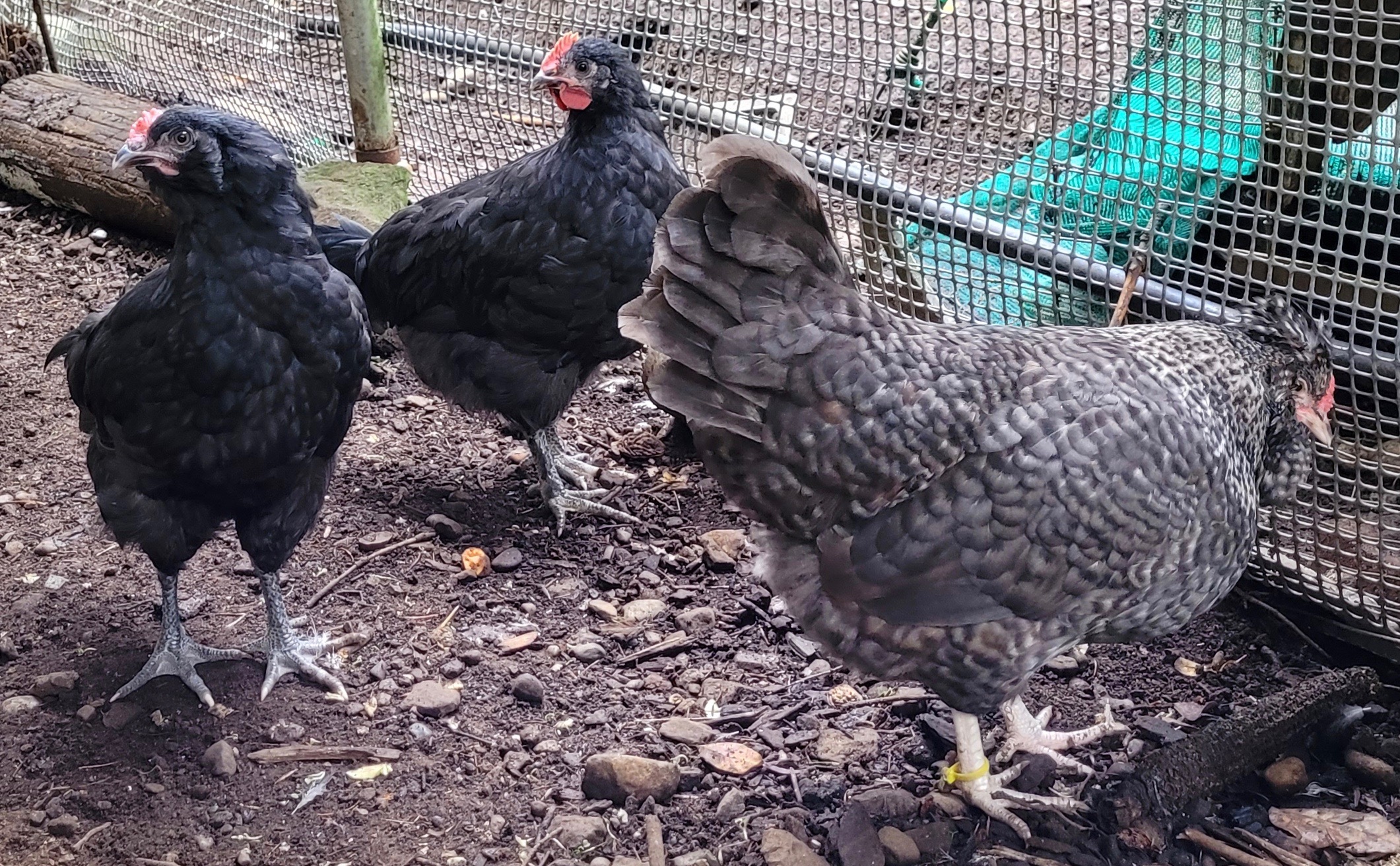
“From broody hens to bold opinions — cluck yeah, we’ve got it all.”
 Bitchin' Chickens
well done chicken mamma!!!!
LikeLiked by 1 person
I have a 4-year-old Black Copper Marans hen named Reggae who goes broody at least once a year without fail and she is relentless about it. I have put her in a crate for 3-5 days to try to break her and she will go straight back to the nesting boxes when I release her. Whether there are eggs to sit on or not! Last year this went on for over six weeks. She has successfully raised three clutches of chicks but none of them have been her own eggs. The last clutch was from Anthony’s fertilized eggs as we didn’t have a rooster at the community garden. We got 12 eggs and 8 hatched but six were roosters. We kept one rooster, Hudson.
She is such a good mama hen and I’d love to get some chicks that were genetically related to her with the hopes that they would be good moms too. Plus she lays the most beautiful chocolate brown eggs. Hudson is most likely an Olive Egger as his dad is from Blue Egg laying stock. Hudson’s two sisters lay blue and green eggs but their moms laid light brown eggs. Hudson’s mom laid a darker brown egg.
Because of the high rooster rate last time the community garden isn’t interested in letting Reggae hatch more eggs. But I just got my very first own home and quarter acre lot! I’m taking Reggae with me when I get my coop built and I hope she will go broody again this spring.
LikeLiked by 1 person
Congrats on your new home. It will allow you some independence to do what you want. I’m glad to hear Reggae is going with you.
LikeLike
awww, that’s wonderful. I’m so glad you were able to get a couple more chicks ! And the pics are so cute ! I love to see the chicks jumping up on top of their mom. Thanks for sharing this with us – Alicia
LikeLiked by 1 person
Chick season is the best
LikeLike
Claire, would you please let me know if you’re seeing my comments ? I know I hadn’t been around for a while, so things may have changed here, but I seem to be having trouble leaving comments. At least, I’m not sure if they’re actually going through.
Could be the recent update on my phone. Everything looks different now ! Thanks, Alicia
LikeLiked by 1 person
Yes, all your comments have been posted – thanks for your feedback.
LikeLike
I swear that broodiness is infectious! As soon as one does it, it spreads through the coop like wildfire making the rooster unhappy and the keeper resort to chain-mail gloves!
LikeLiked by 1 person