
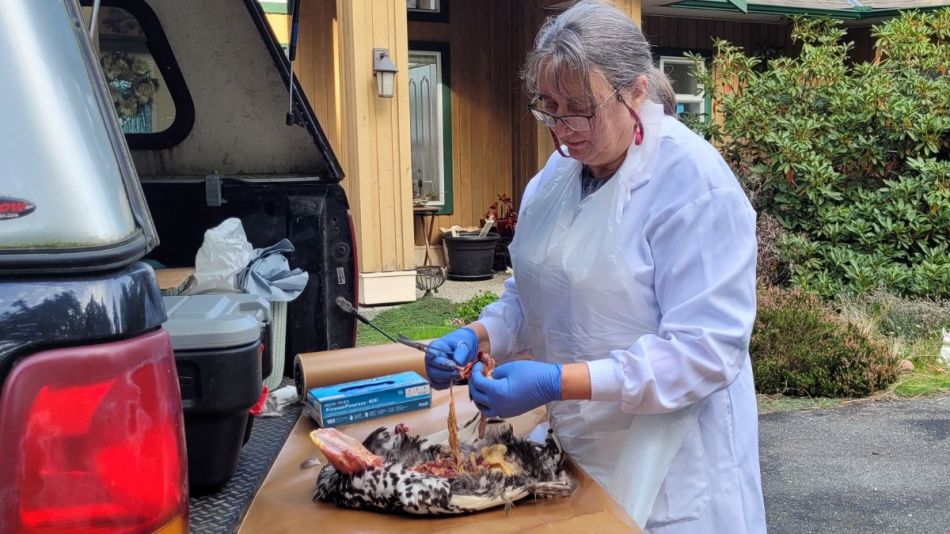
I get together with my mentor Dr Vicki Bowes, vet/avian pathologist throughout the year to look at chicken health issues that I’ve come across and store on a memory stick. She does her best to point out what’s going on with those birds and comes up with the most likely (and sometimes definitive) diagnosis. A couple of times I’ve mentioned having experienced a recent loss in my flock and each time she asked if I brought the body, or at least froze it, for her to look at. It feels a bit presumptuous to expect someone who works in the field to do a pro bono necropsy, but she assured me she was happy to provide the service as a learning experience for both my readers and me.
After that I started freezing specimens. I have a large food freezer and recently was hoping to divest myself of the four bodies taking up space. Two were from my flock and the other two came from friends Tracy and Keith’s birds.
As a bit of a back-story, Dr Bowes worked as an avian pathologist for the Ministry of Agriculture in the lower mainland of British Columbia for more than three decades. I live on a small island two ferry rides away; her future retirement home is here as well. We get together when she’s here, which sometimes makes me feel a bit like I’m cutting into her time off. As it turns out she really loves what she does and by the end of the day I felt like I should be charging her for the entertainment value my birds brought her. All kidding aside, we had a good time and again, I learned a lot just by watching her perform.
I’ve divided these posts into two cases each. I started off with my own birds in a separate post and then moved on to Tracy and Keith’s, both of which originally came from my flock.
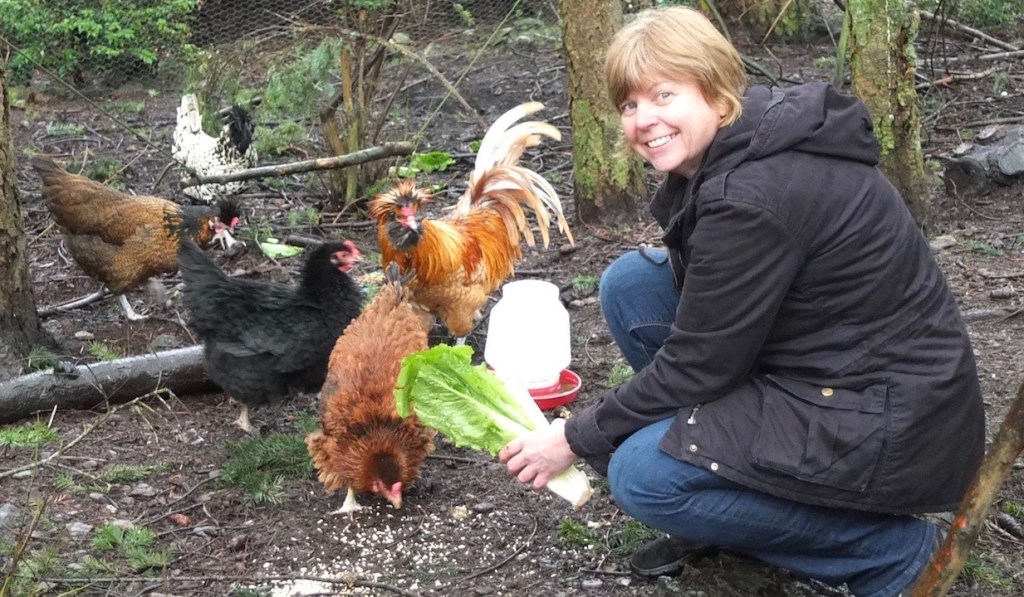
Tracy with Sophie (front) and Billy
Billy, Appenzeller Spitzhauben x Easter Egger Rooster, 6 years old
Tracy noticed that Billy seemed a bit ‘off’, but then seemed to improve. We experienced two unusually cold snaps last winter and after the second one they found him dead in the coop.
Dr Bowes’ findings included:
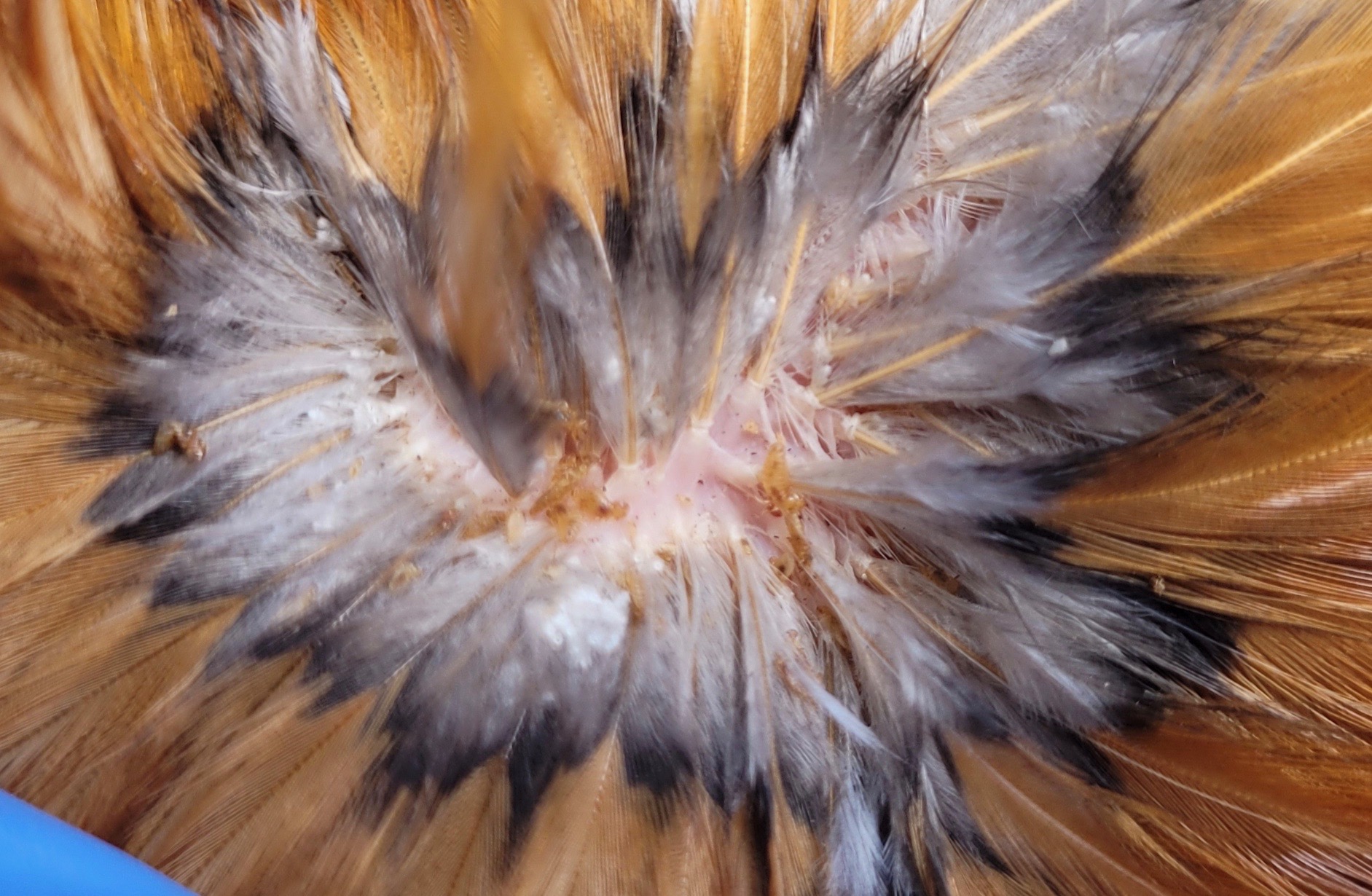
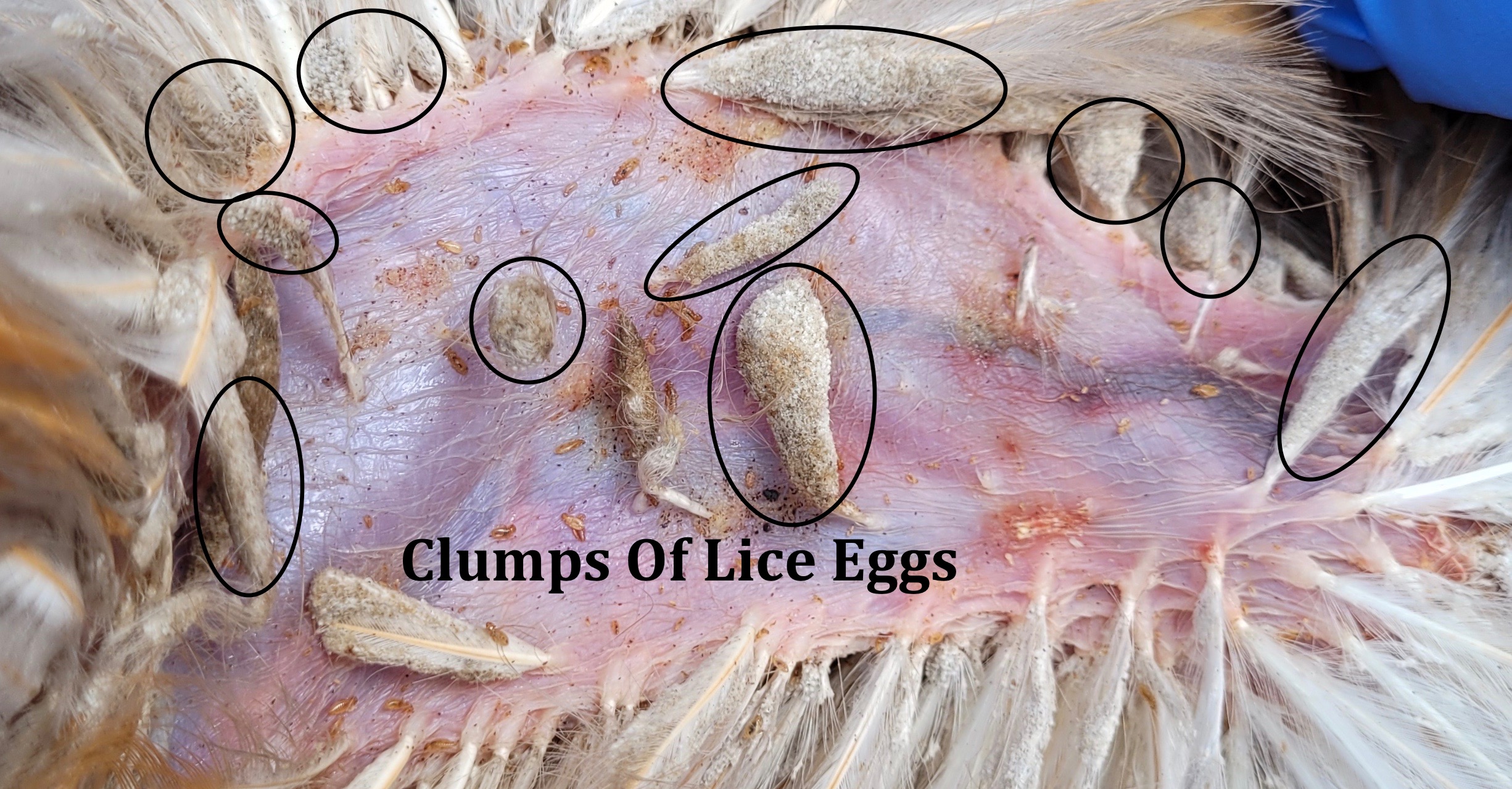
- An external exam revealed he not only had scaly leg mites he was infested with lice and nothern fowl mites. They create physical irritation, but were not the cause of death. More likely, they are an indicator he was in poor health and not dust bathing enough to control external pests and parasites.
- Dr Bowes recommends using an insectide like Debantic both to clean/spray the environment, in their dust bathing area to kill lice and mites and topically on the bird.

- Body condition: poor
- Serous atrophy
- Regressed testes (a sign he was too sick to mate)
- Crop had feed in it
- Proventriculus not bleeding
Dr Bowes’ protocol is to examine the exterior of the body before cutting open the patient and lifting off the sternum to examine all of the internal organs, first in situ, then remove them one by one to feel and look at them from all angles.
The last thing she does is look in the mouth and throat. And that’s when we hit upon the answer.
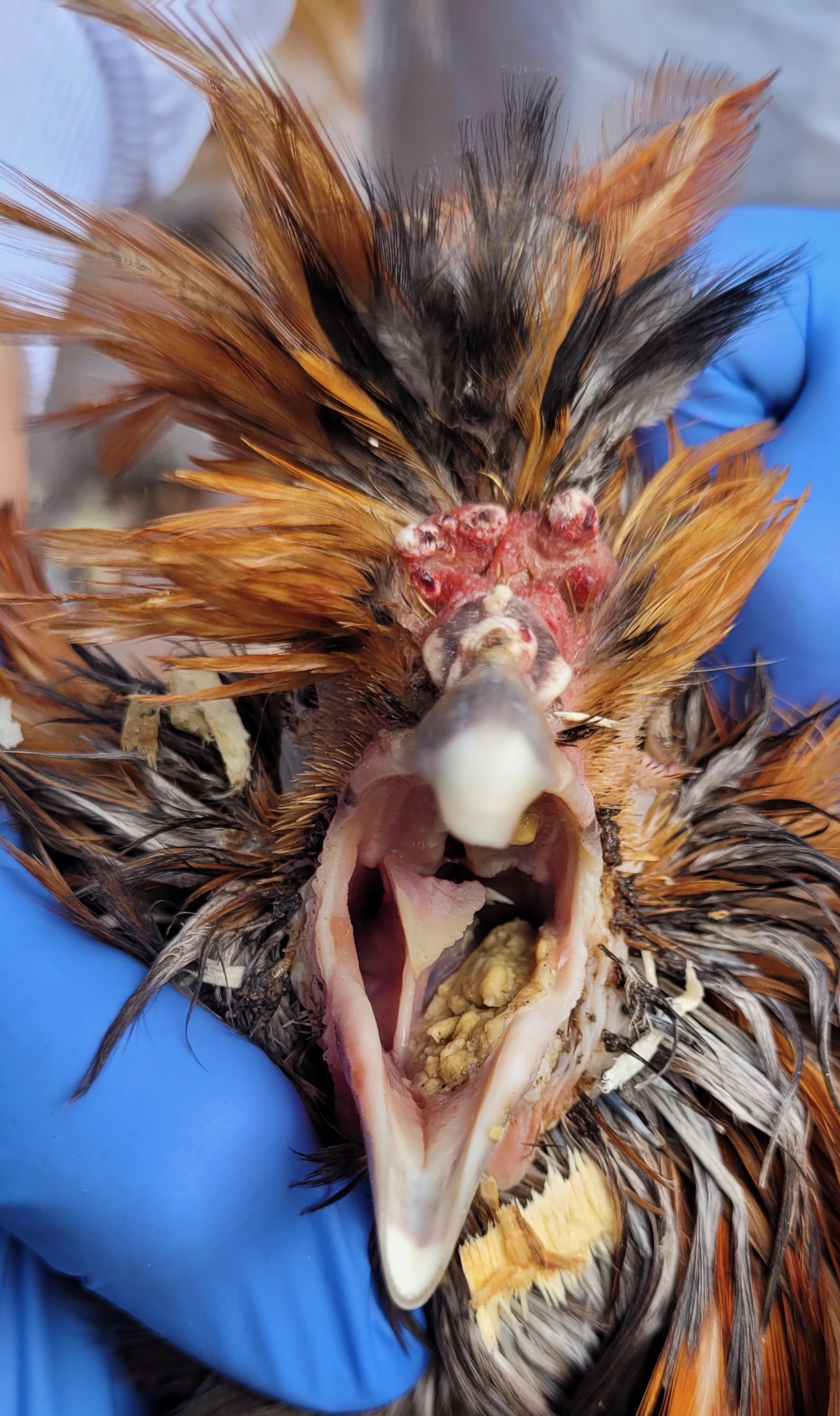
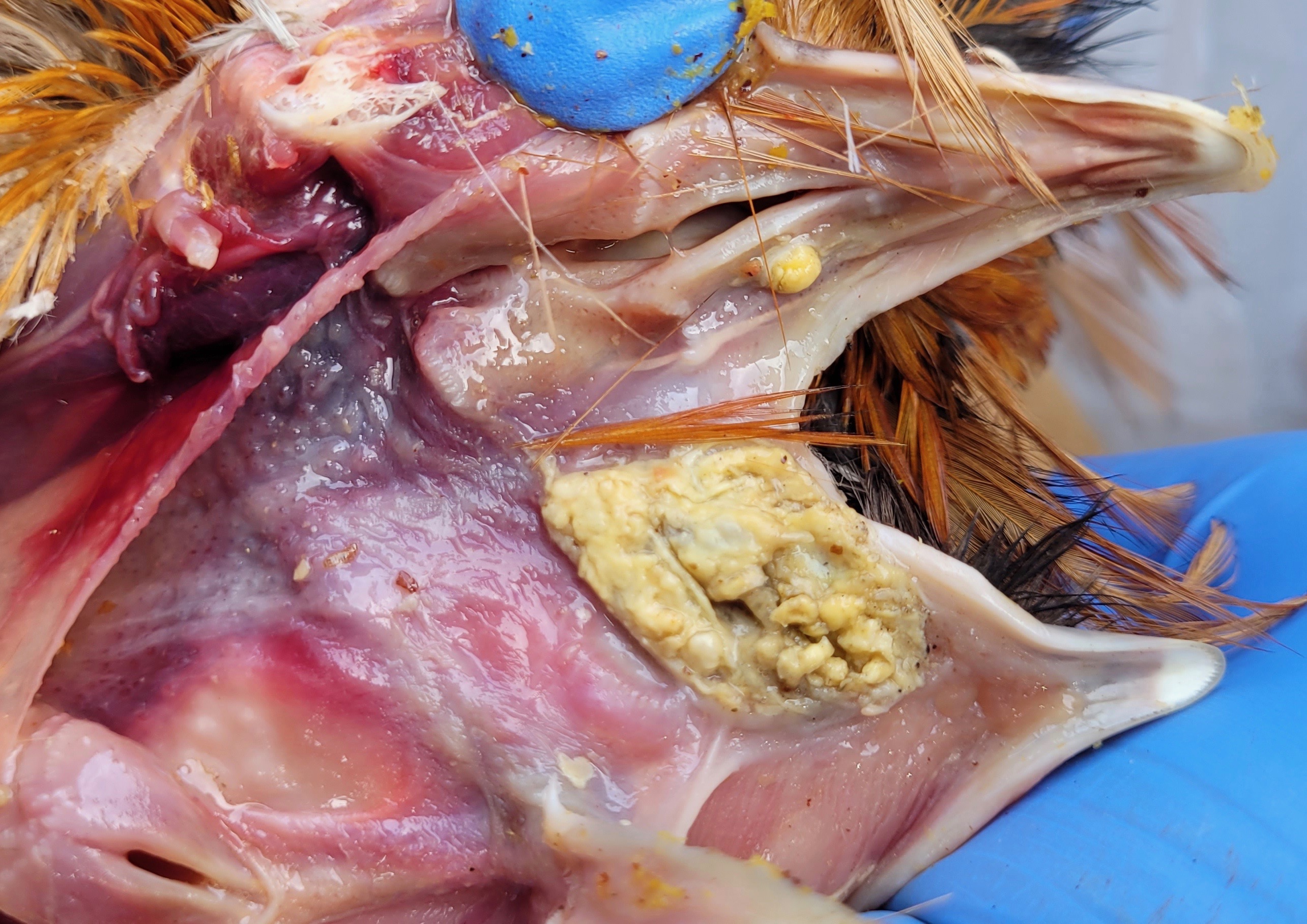
A large amount of yellow stuff filled his mouth, the telltale signs of trichomonosis (canker). The protozoal infection would have impacted his ability to eat and drink. My hen (featured in Tailgate Necropsy 3) was also diagnosed with trichonomosis, but hers was a more dramatic case.
Sophie, Barnyard Mix Frizzled Hen, 6 years old

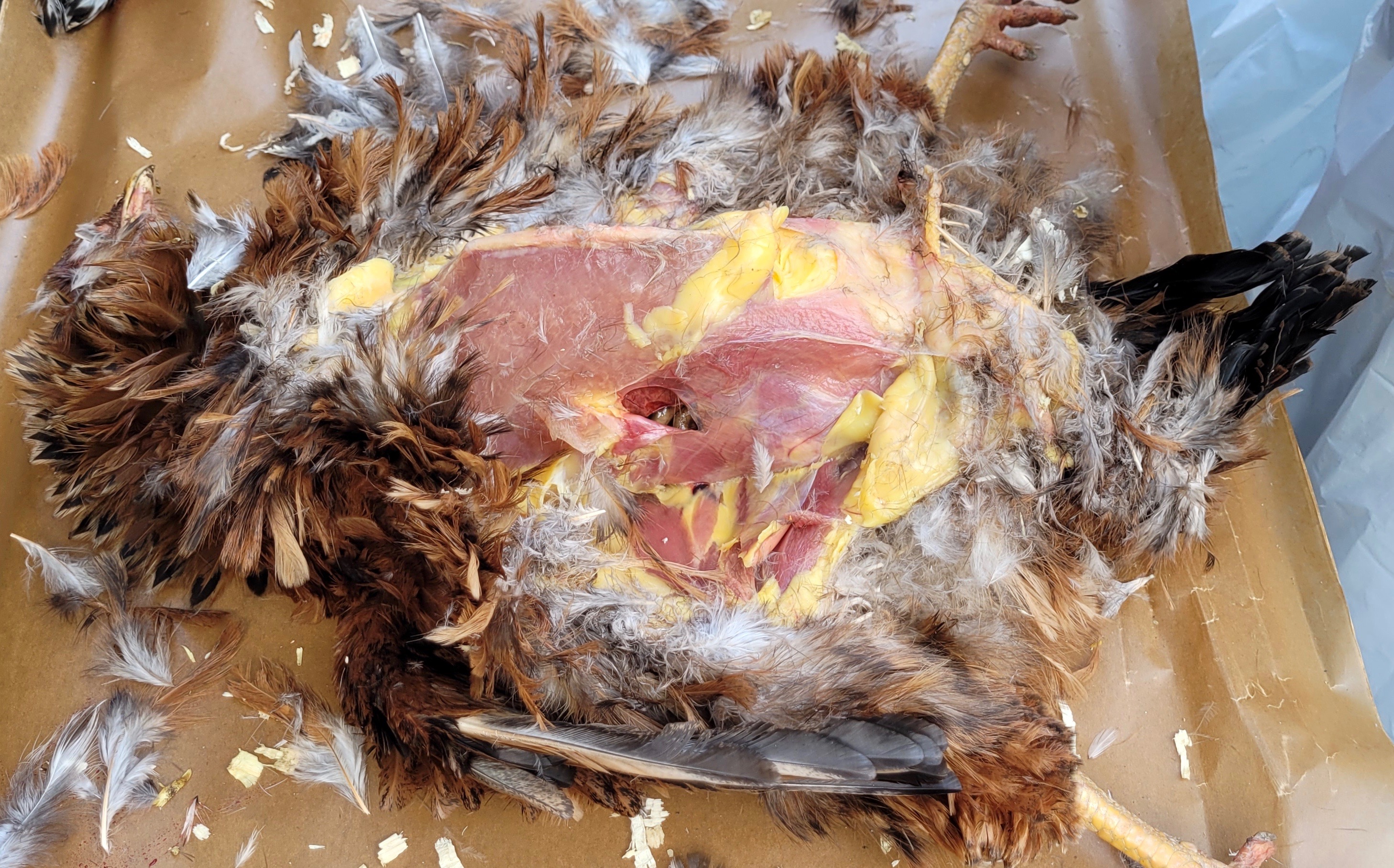
Findings included:
- Some lice and nits were found, far fewer than Billy
- Good body condition, healthy amount of fat
- Crop was green and full of fluid
- Friable (crumbly) liver

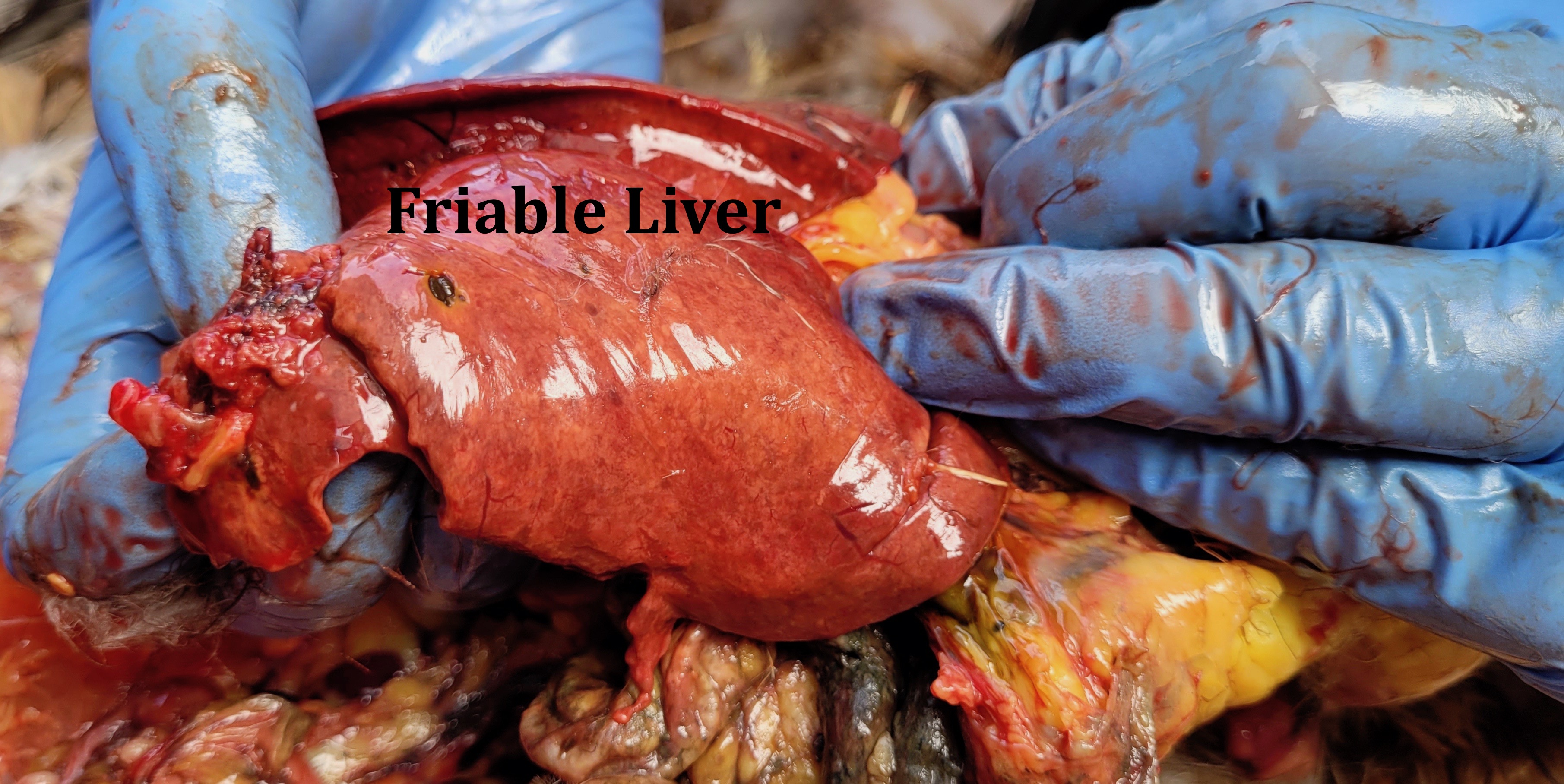
- Intestines were hard, lumpy and clumped together making it difficult to unwind them
- A number of small white oviduct tumours
- Resolving hemorrhagic tumours originating in the oviduct
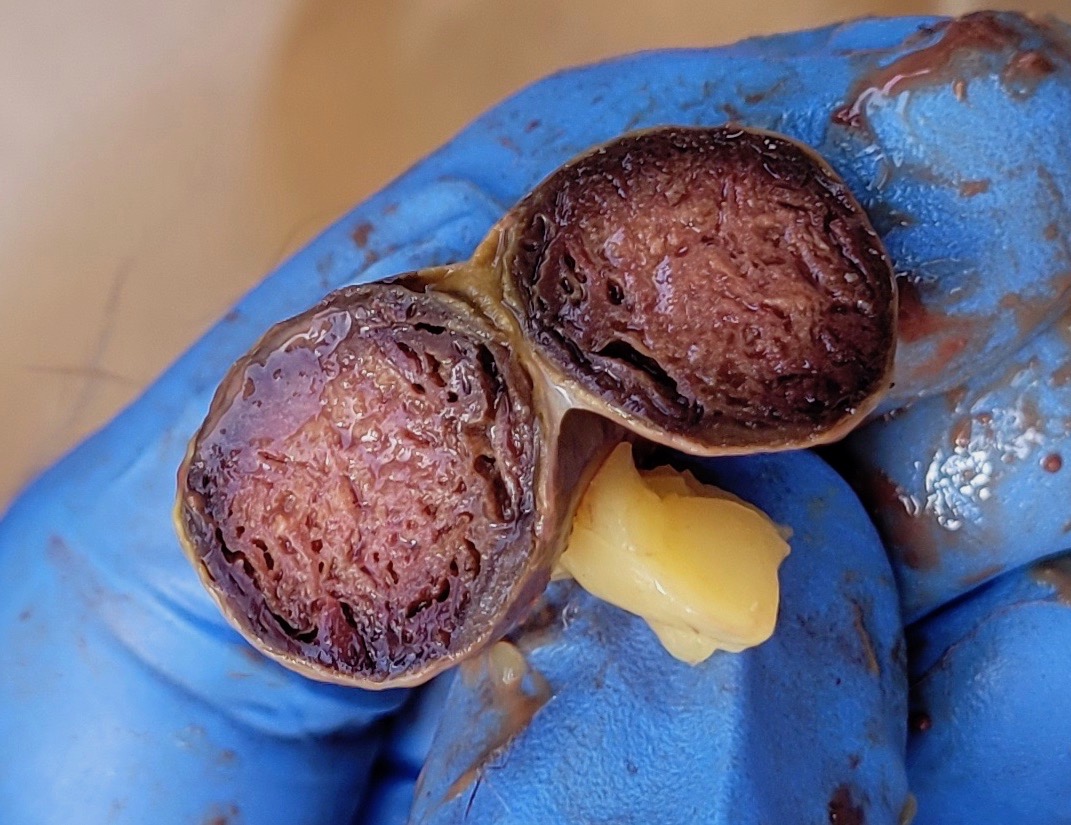

- Diagnosis: Avian Leukosis (due to her age we could rule out Marek’s Disease, which affects much younger birds).
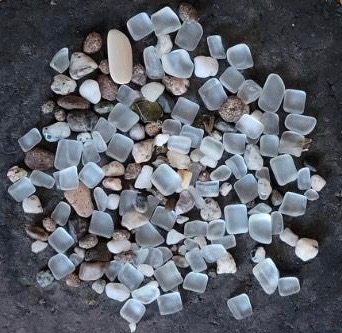
- Of interest to me was that her gizzard contained small stones which are normal as chickens use them to grind their food, as well as a number of tiny bits of glass. On closer examination all the glass was about the same size, square shaped with smooth edges and I wondered what the origin of the glass was and how long it took to grind it down. Billy also had some in his gizzard, but very few in comparison.
- Here’s a new one for your chicken vocabulary: “Gastrolith (noun) a small stone swallowed by a bird to aid digestion in the gizzard”

Once again, my appreciation goes out to Dr Bowes for generously sharing her time and expertise to further my knowledge of small flock health issues. I try to pass on everything I learn hoping to improve the overall health of small flocks everywhere.
 Bitchin' Chickens
That is an astonishing amount of glass – Alicia
LikeLiked by 1 person
Dr Bowes has a collection of interesting stuff she’s found in chicken gizzards. Now I’m curious to find more ‘cool’ things that chickens eat.
LikeLike
Fascinating! OK, I admit I’m a necropsy freak. While it is sad to see the passing of a creature, necropsy is a way forward to understanding “what went wrong” and working towards understanding the process and hopefully avoidance of future incidence, thank you Sue
LikeLiked by 1 person
I’m glad you get something out of them. Some folks are grossed out at seeing the inner workings of chickens, but it’s a critical piece in learning about the pathogens, diseases and injuries that affect them.
LikeLike