
I recently got together with my mentor Dr Vicki Bowes, vet/avian pathologist to do necropsies on four birds I’d had stored in my freezer and to look at necropsy photos I’d collected or that folks had sent for Dr Bowes’ opinion. We motored through four reports from vets and eight DIY necropsy files.
When we opened the first photo in the first file Dr Bowes perked up, saying that “It was super interesting and unusual” and that “We were off to a good start”. Even though we’ve spent hours looking at cases over the last three years I’m always learning something new. It’s harder to challenge a pathologist with more than 35 years experience, so I’m happy when I come up with something of interest. I hope that all of our work also presents a learning experience for small flock chicken keepers.
Cornish x Meat Bird (Holly Linda)
We processed our Cornish cross birds today and this one bird had the following:
- Huge grainy liver
- Very dark almost grainy/speckled blood
- Very pale head, comb, wattles, legs
- Heart, lungs and other organs looked ok
- Normal growth
We did not keep the bird for consumption just to be on the safe side.


Dr Bowes: There was laddering on the intestines and distention of the intestinal tract. Thanks for showing the spleen. This is a case of cholangiohepatitis, a form of liver disease that also involves the biliary system. It can be related to a bacterial intestinal infection or necrotic enteritis. Any bird with a condition compromising the liver shouldn’t be eaten.
Red Pyle Old English Game Rooster, 10 months old (Deb Watt)
Symptoms:
- Quieter then usual
- Eating and drinking
- Monitored for a few days
- Seemed to have an impacted crop, not emptying overnight
- Comb looked bluish
- Quit crowing
- Lost weight and seemed weak
- Put into ICU unit
- Worked on impacted crop with mineral oil
- Gave a few doses of Metacam (pain med)
- Crop stasis improved within 48 hours
- Gave BeneBac probiotic
- Ate well
- His comb mostly returned to normal color when his crop issues improved


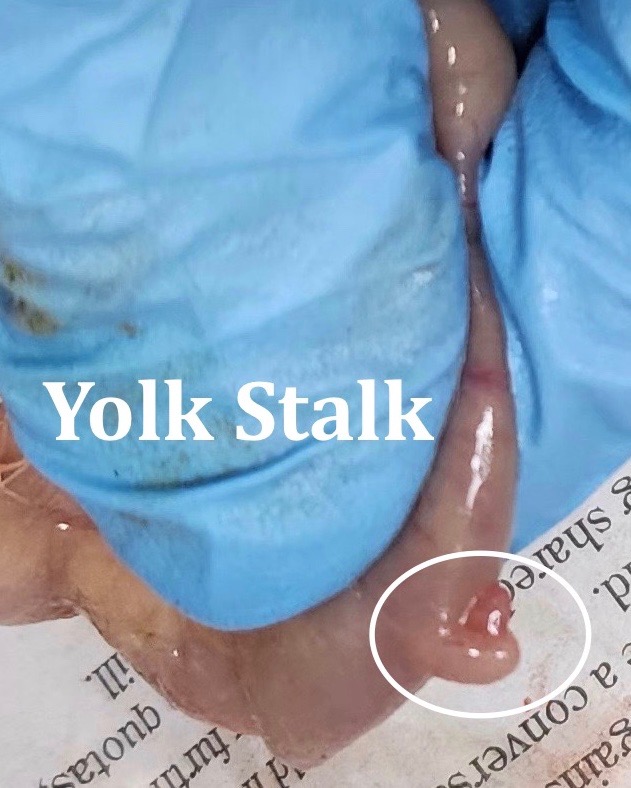
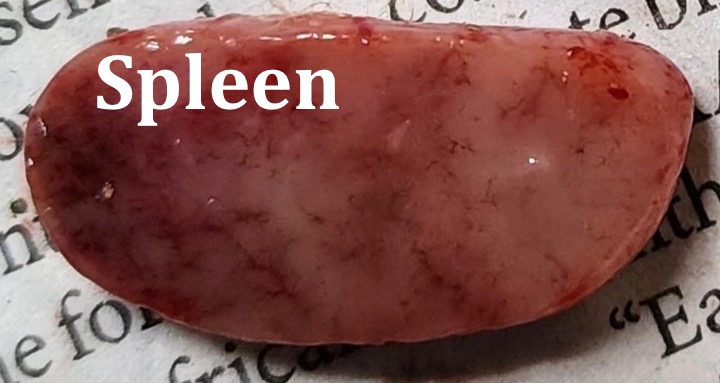
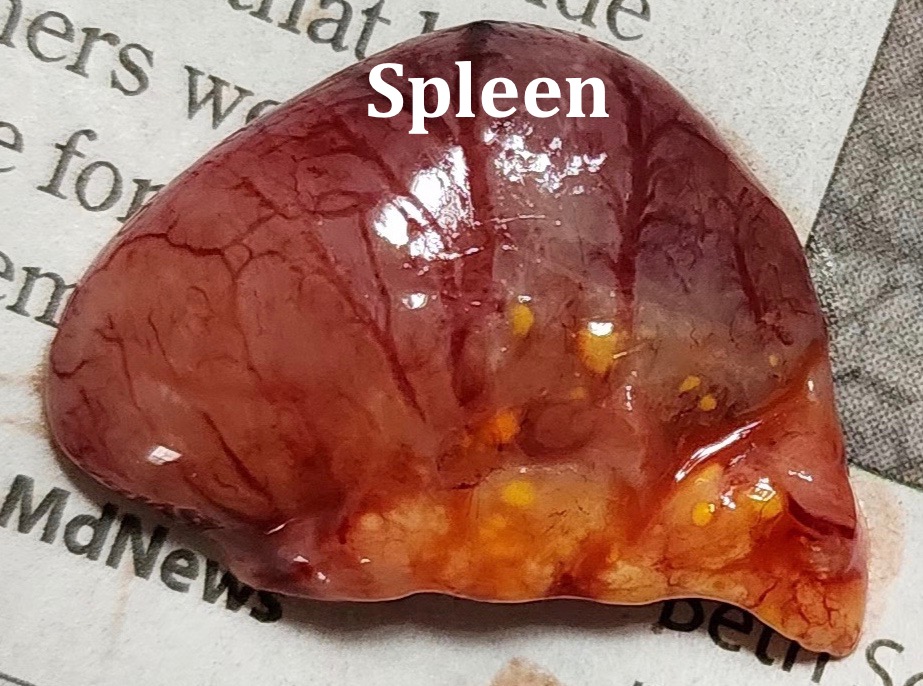
Necropsy Findings:
- Trachea and esophagus appeared normal
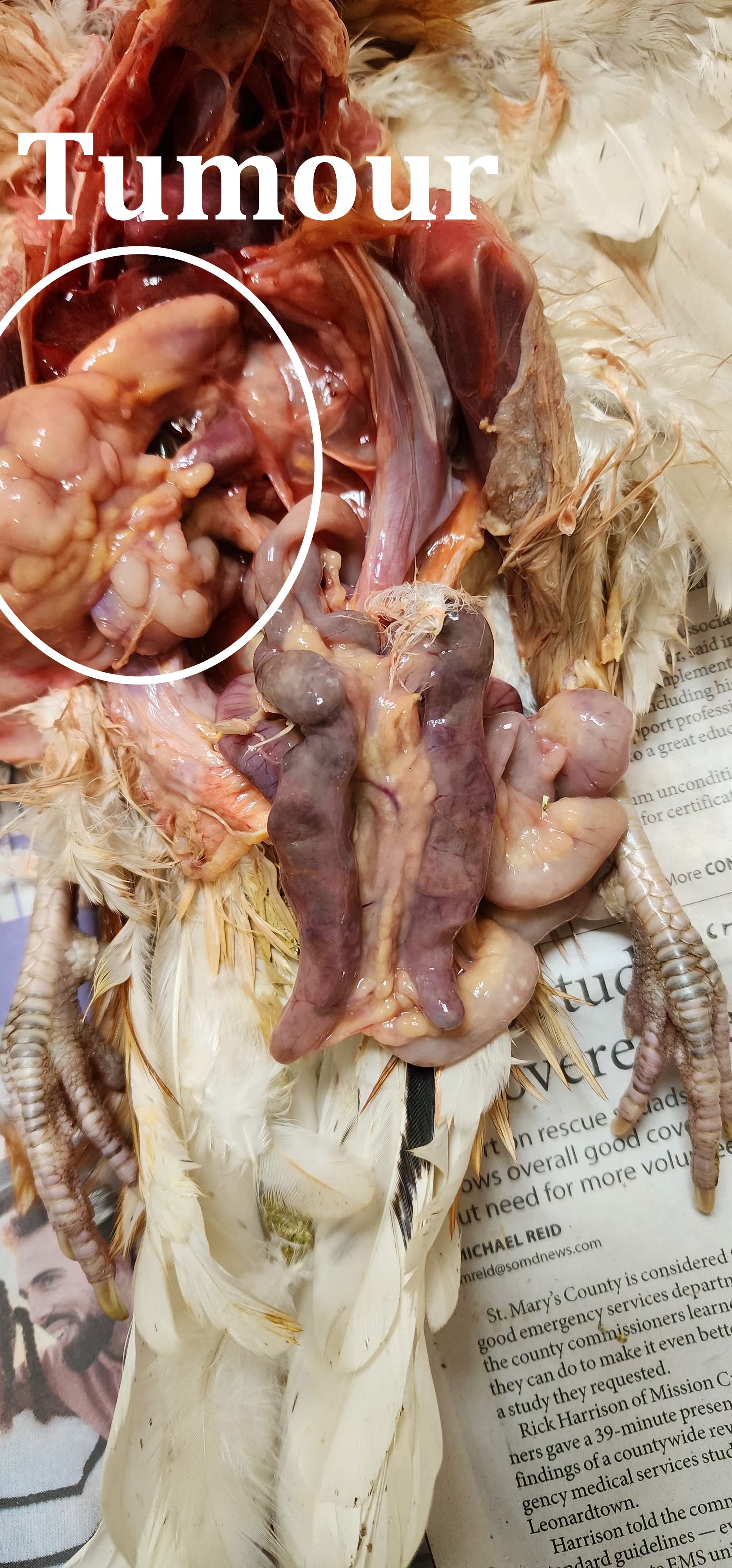
- Small growth on intestine
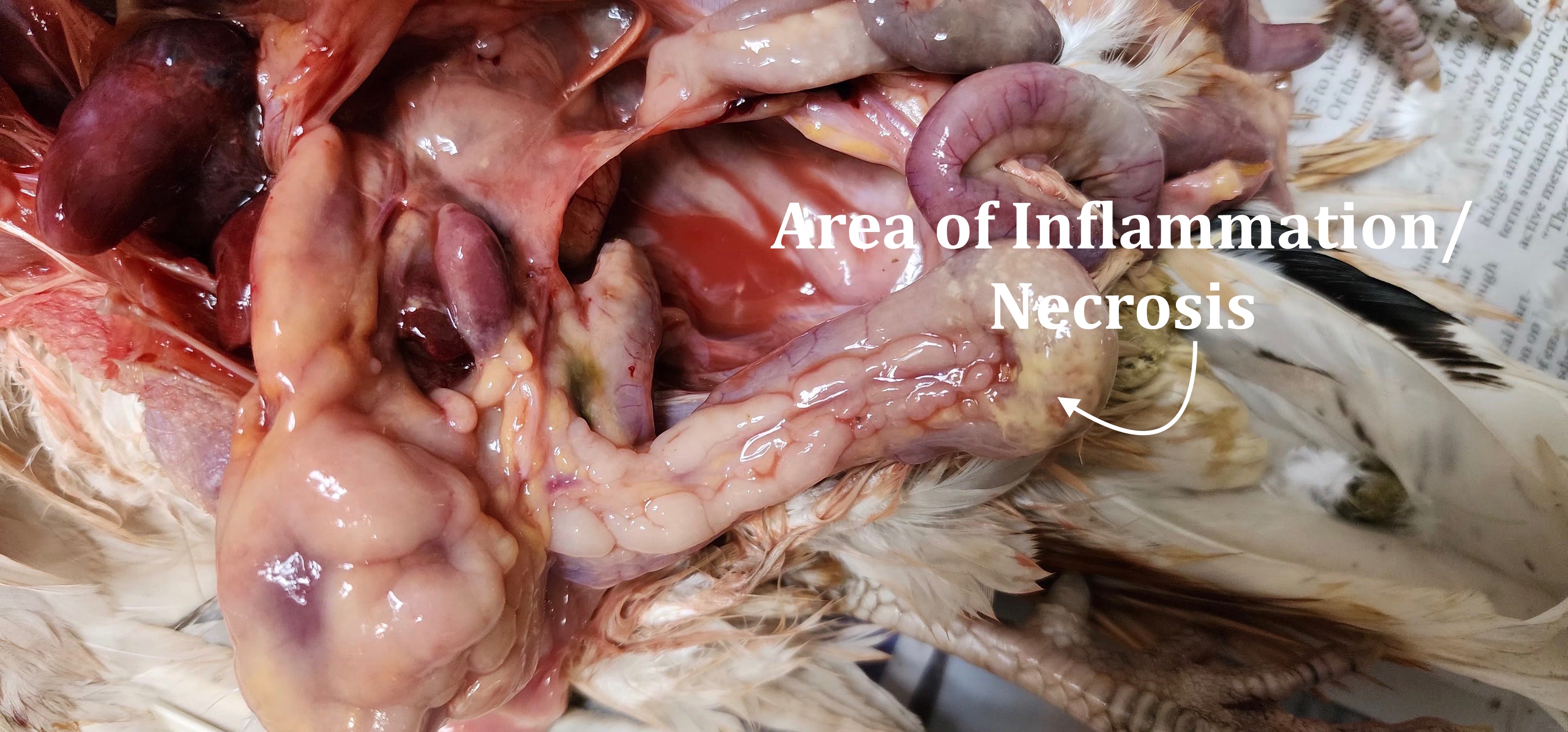
- Discolouration of spleen and intestinal loop (The fluid in the abdomen wasn’t there when I first opened him up)
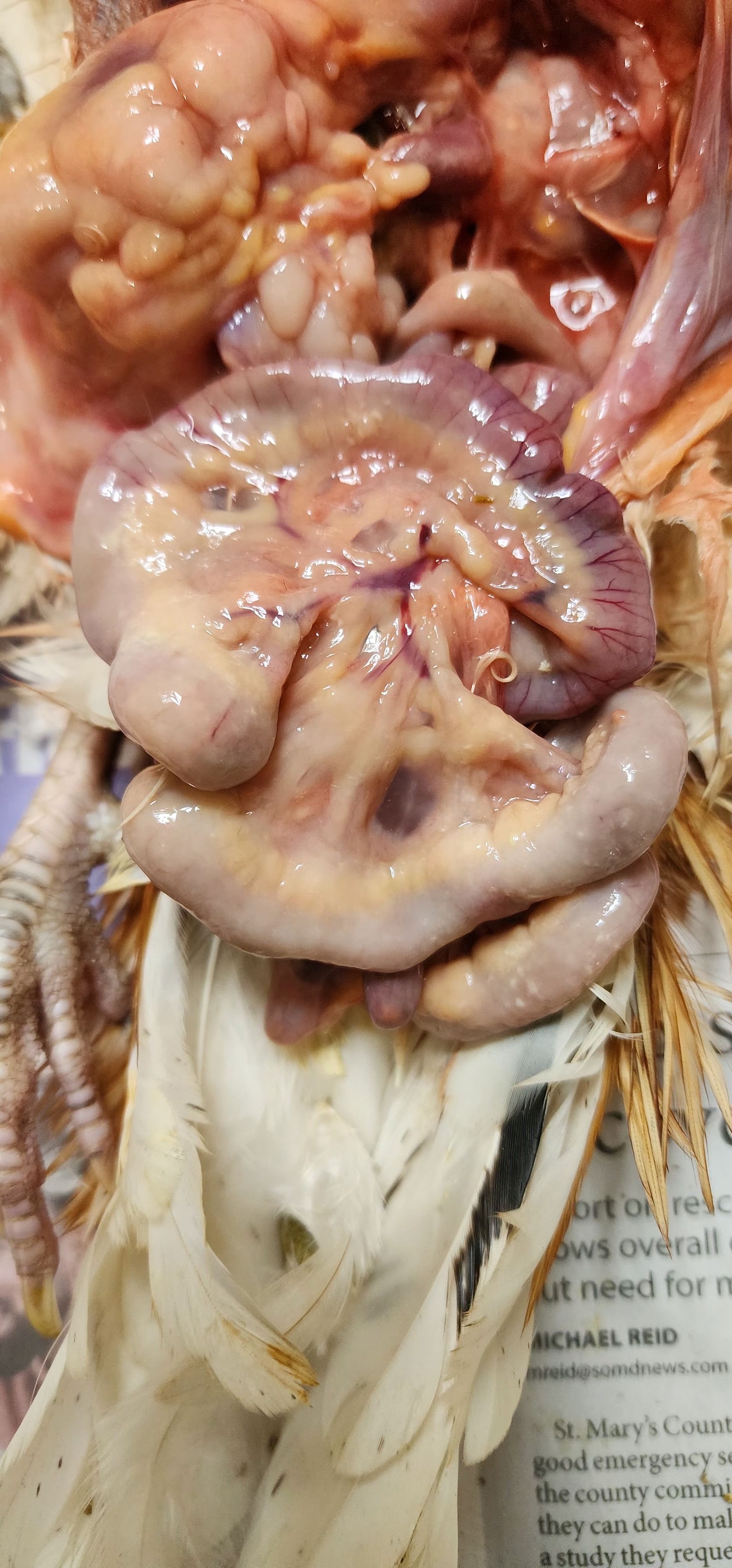
- Intestines seemed normal on top but grayish in lower section with the creamy colored spots along the bottom wall
- Gizzard, proventriculus and crop empty
- Cecum filled with hard clay like material
Dr Bowes: The testes were active with cholesterol aggregates on them. His abdomen appears mushy. The pale material looks to be a mesenteric tumour. There is an area of necrosis and inflammation in the abdominal loop that could be a tumour. Microscopic work would narrow the diagnosis between a metastatic testicular tumour and a malignant liposarcoma, a type of cancer that originated in the fat cells. Those tumours have the appearance of fat, but are not.
BTW: The ‘small growth’ is a yolk stalk, a normal feature in all chickens. It is the conduit for yolk to be absorbed by the embryo during development.
Hen, 14 months old (Shannon Antonio)
Symptoms:
- History of mycoplasma in the flock
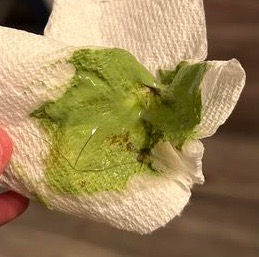
- Poop started as pastel green liquid, then eventually cream coloured liquid
- Stopped making any noises
- Unstable on her feet, eyes closed and she looked as though she was dead. Then she would pop up and slowly walk around like she was improving.
- Puffed up feathers
- Prominent keel, emaciation
- Hadn’t laid eggs since last year
- Bottom of the pecking order
- Vet euthanized her and performed a necropsy
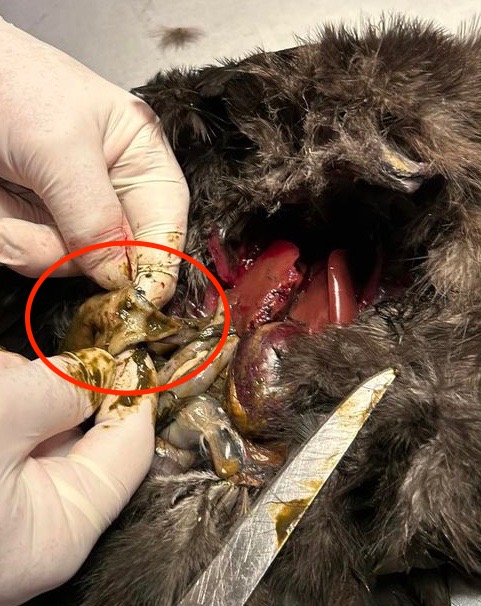
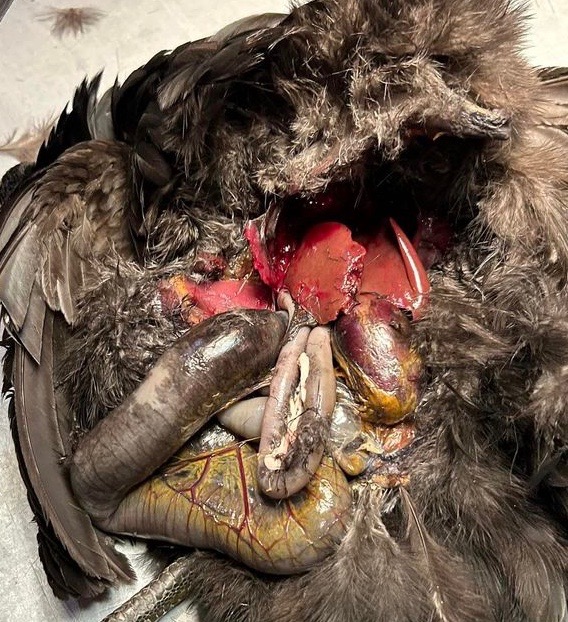

Necropsy Findings:
- Ballooned, intestines full of brown, nasty smelling liquid
- Thickened area of intestine that narrowed
- Crop and gizzard were full, no grit present
- The vet cut into the gizzard and out shot the same brown fluid that was in the intestines
Dr Bowes: The green poop is bile, a sign she was not eating. The yellowish poop was cecal expression. There is inflammation or a tumour on the intestine, which could be intestinal lymphoma. We call this condition an ‘intestinal accident’ in which there is torsion in the intestine so it flips or twists causing an obstruction. There is no prevention or treatment.
Glossary:
Biliary: relating to the bile ducts
Liposarcoma: cancer that develops in fatty tissues
Lymphoma: a type of blood cancer that affects the immune system, specifically affects white blood cells called lymphocytes
Necrotic enteritis: an enteric disease of poultry characterized by patches of necrotic tissue on the intestines
Stasis: Stoppage or slowdown
Well, that wraps up another edition of Show & Tell With Bitchin’ Chickens and Dr Bowes. I hope that it’s been a learning experience for you.
If you’d like help with a case drop me a line using the ‘contact’ button on my home page. Remember to wear gloves, take good close up photos from several angles and supply us with plenty of information (e.g. timelines, symptoms, medications, general flock health, etc) so we’re able to more accurately pinpoint what’s going on.
Thanks again to Dr Vicki Bowes for her willingness to share her wealth of knowledge and experience to build capacity and skills in small flock keepers.
Featured photo credit: Wildpixel


Very informational and informative as always! Disappointed to see you using an AI generated image for the header.
LikeLiked by 1 person
Thanks for the feedback. I try to avoid AI, but it’s sometimes difficult to find appropriate images for this series. I’ll keep your comment in mind when searching for new images.
LikeLike
All the cases you share are so interesting and educational. I appreciate you both. Thank you!
LikeLiked by 1 person
Thanks for the feedback, it’s much appreciated.
LikeLike
I really enjoy this series. Thank you for doing this. – Alicia
LikeLiked by 1 person