
For more than three years I’ve gotten together with Dr Vicki Bowes, avian vet/pathologist on a regular basis to pore over files in my memory stick loaded with interesting chicken health issues that I’ve collected for her expert opinion. She refers to it as ‘Show and Tell’, ‘Best Guess’ or, more recently, ‘Gorefest’ and has done a good job at making diagnoses given the information we have at hand. Sometimes all we are provided with is a short paragraph from the chicken’s owner, other times nothing more than a photograph.
My job is to write them up to share with my readers as a form of skills building for small flock keepers.
We met up recently to look at almost 60 cases. The first seven posts were organized according to the area of the body that was primarily affected. This last bunch is a grab bag of what was left and some observations I’ve made from reading posts in online chicken groups.
Fecal Float Test (Bitchin’ Chickens)

This is the wrong shape for coccidia, its probably a roundworm egg
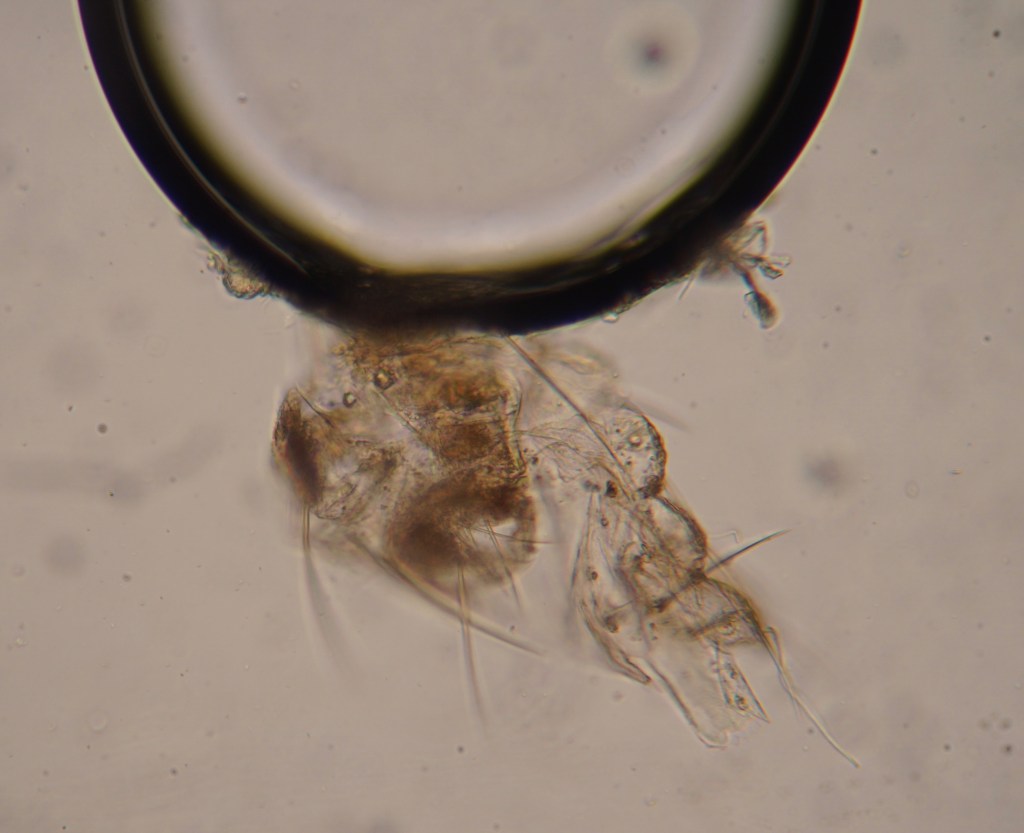
That’s an air bubble with what appears to be an exoskeleton of an insect
Fecal Float 2 (Debra Watt)
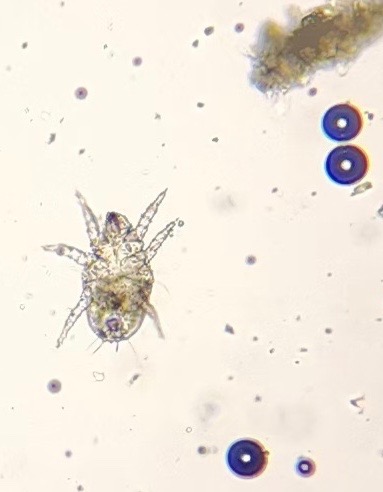
Mite nymph (could be a feed mite that was picked up in the soil)
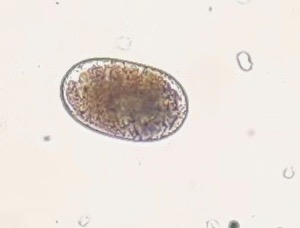
Oval shape, thin capsule: roundworm
Congenital Defect Of Spur
Looks like the spur on her foot got jammed into her. Should I just leave it? Or if I need to take it out, how would I go about doing it? – Mindy May
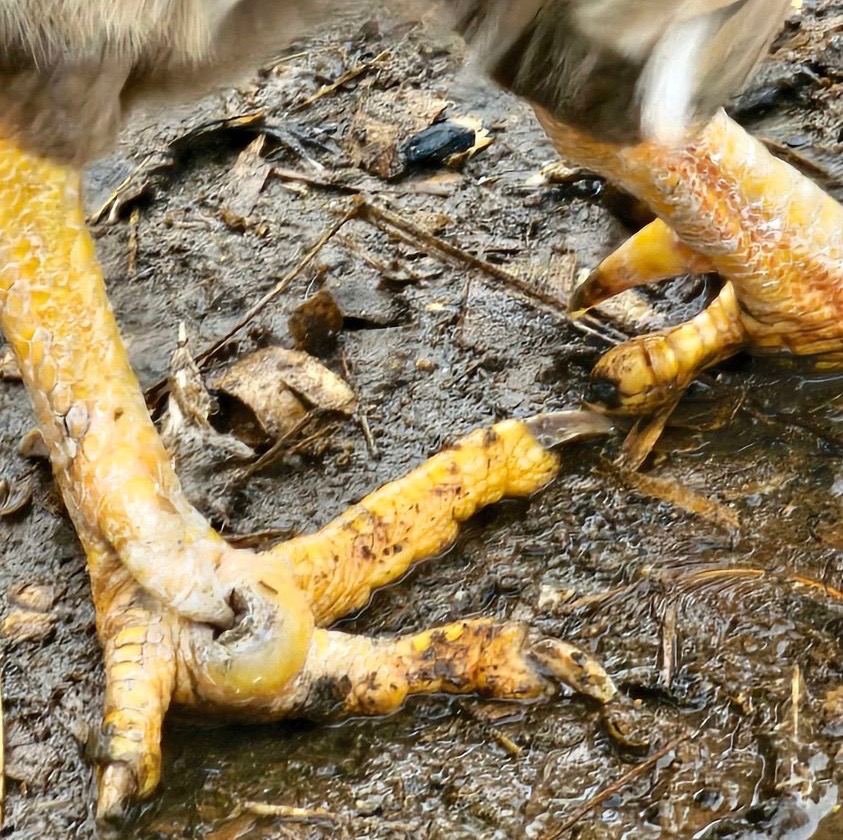
Dr Bowes: This appears to be a congenital defect. Trim or grind it, debride the scar tissue around the hole. You don’t want that to grow into the joint.
Spur Injury
Is this an avulsion of the spur capsule? I’d like to know if it is common (I’m not experienced in poultry medicine) and how would you treat a lesion like this – Angelica Gobbi
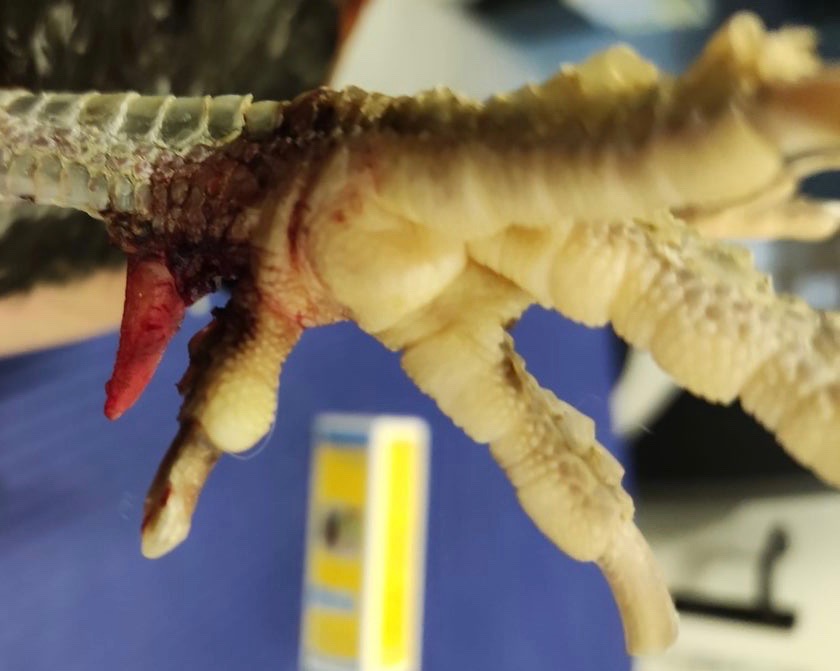
Dr Bowes: The horny part is missing exposing bone and vascular tissue. It needs to be cleaned, covered and kept dry. Is there damage to the base? If not, it should regrow. The bird will experience pain, as there are nerve components involved. You can apply an ice cube to help the blood vessels retract.
Favus (Ringworm)
Bitchin’ Chickens: One of my followers sent me an email with photos of her hen and asked for my advice. I wasn’t planning on seeing Dr Bowes for awhile, so I suggested that her hen might have favus and to treat it as a fungal infection. I’m relieved to present a happy ending story.
I’m posting an update on my chicken with the eye issue. I posted in mid- November 2023 when I came home from an extended trip. Her eye was a mess. I appreciate all of the support and ideas you shared. I put together a treatment plan based on your suggestions. I started with Lotrimin and warm compresses three times a day. A couple of weeks later, I began using black tea bags and Terramycin. It must have been fungal and bacterial. I tried like the dickens to extract hard pus, but I was not able to.
She also became infested with mites during the process. I had her isolated by that point, so they didn’t seem to spread to the flock. I used Premo poultry spray on her, her little hospital, the whole coop, and the other girls until I was confident things were under control. I also used diatomaceous earth (DE) on her little hospital. I know that is going to bring out lots of criticism, but the mites were bad, and I weighed the pros and cons.
This is the most chicken drama I’ve had in 30 years of raising chickens. She seems to be doing fine now and has regained use of the eye. She’s been back with the flock since December 13th. The pics are from Nov. 14, Nov. 29, Dec. 13 and Jan. 7th.


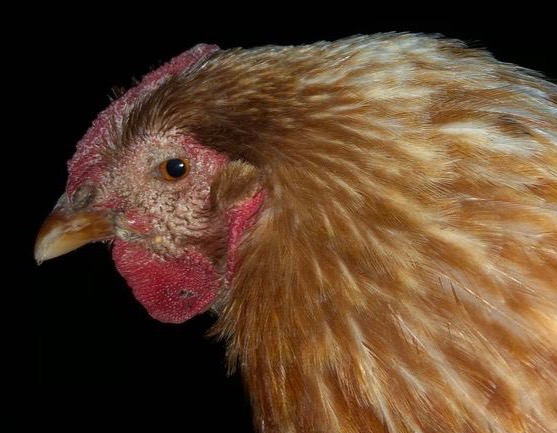
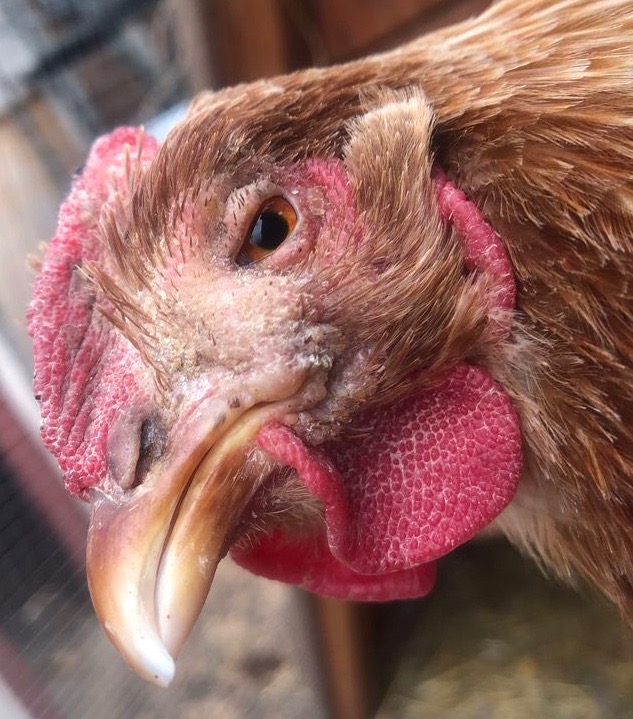
Thanks again for your suggestions. I was glad to see her through. I might not have been able to give her as much attention as I did if it happened when I had different work obligations. I also couldn’t afford to take her to a vet. I think we all have to make the choices that are best for our situation. – Cheryl Distaso
Dr Bowes: If I had seen the worst photo first I may have suggested euthanizing your hen. I’m glad that you were able to treat her so she could make a full recovery. It’s important to keep the eyelids clean by washing the area with a disinfectant soap. I’m curious as to whether she had any other symptoms and if she was the only one who got it. Has her cornea been affected?
Bitchin’ Chickens: A note about the use of DE. Both Dr Bowes and I feel it has it’s place in the fight against external predators when used externally (i.e. on the bird’s skin, in their dust bath) and not given externally. In the many years Dr Bowes has been a pathologist she hasn’t seen evidence that DE causes damage to the respiratory systems of chickens as a result of inhaling it.
Bitchin’ Chickens: Here’s another case sent to me by one of my followers:
Jessica Tinkham: I googled and came across your site. I think it is an ingrown feather however I am unsure what it is and what to do. Any advice or suggestions in either category that you’re comfortable within your scope. It does seem attached but with the dark red I’m thinking some inflammation must be present. I am an occupational therapist, I know human wounds but not roosters.
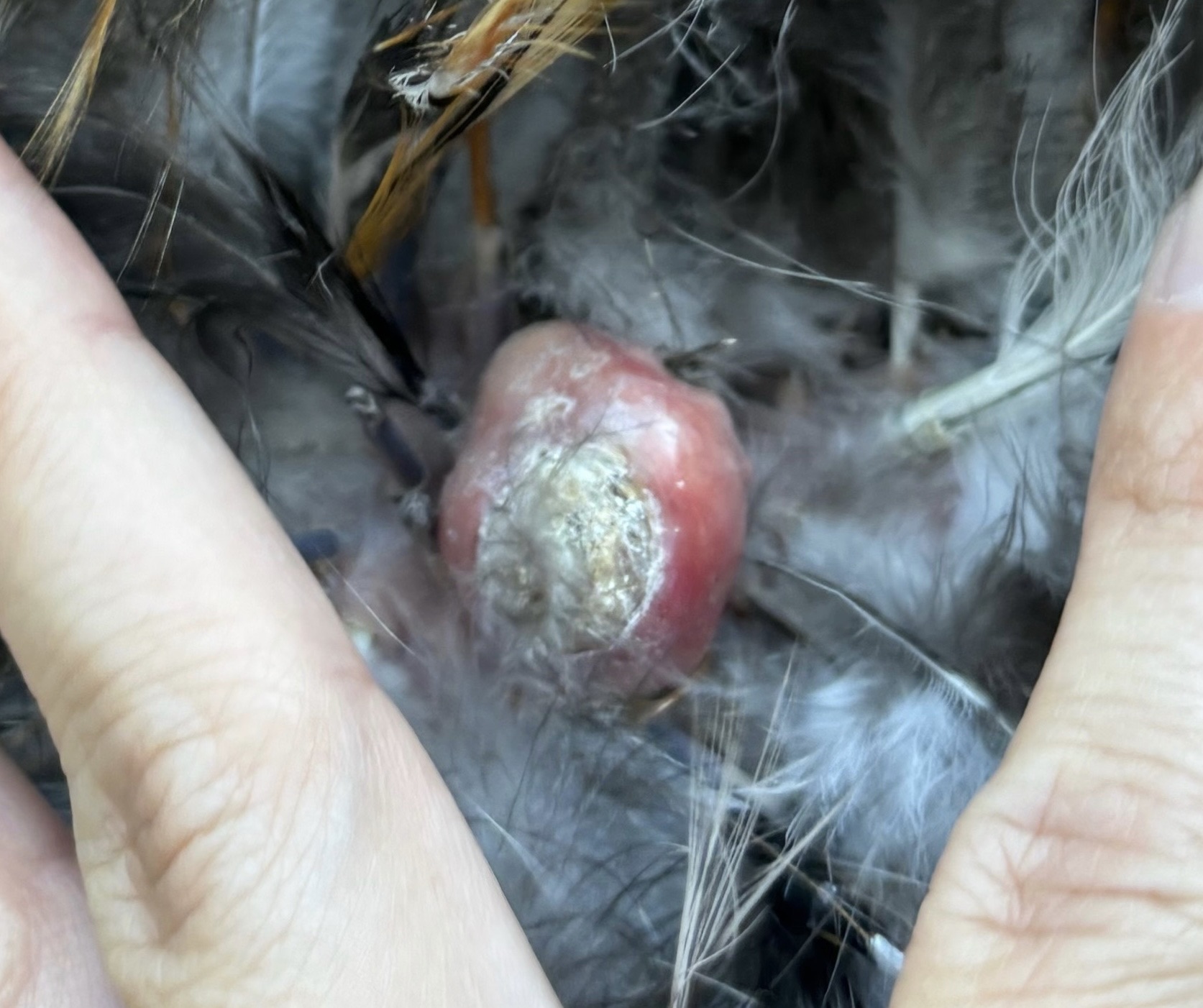
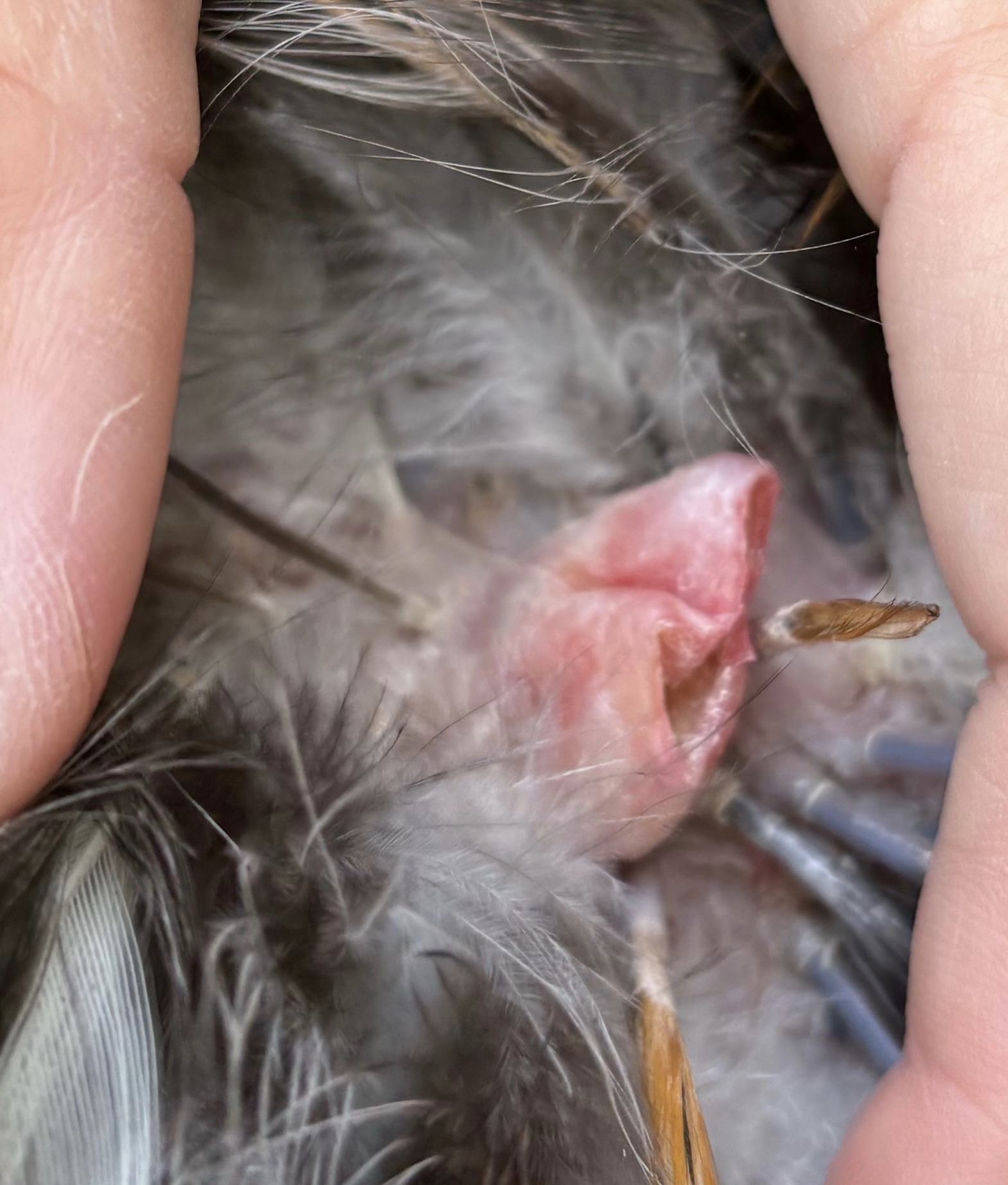
BC: It does look like a feather follicle cyst. Is it hard or soft? Can you soak him with Epsom salts to see what comes out of it?
JT: This morning I was able to soften it with warm water and Epsom salt. I loosened it enough so that I was able to pull out the core and it actually was so big that it left three holes. It came out as one big ball then I had to scoop out what looked like mashed potatoes. I was able to debride the cavity and washed it out with warm water to get it completely clean. The skin immediately shrunk down and there was no bleeding involved. My boy sat there the whole time and didn’t even make a peep. It now just looks like a flap of extra skin.

JT Update: I’m sure I’m not the only email that comes through and when you say yes to doing something, you are putting something else aside. I can’t thank you enough for your time. He is now a first time dad to a set of three week old chicks. – Jessica Tinkham
Well, that wraps up another edition of Show & Tell With Bitchin’ Chickens and Dr Bowes. I hope that it’s been a learning experience for you.
If you’d like help with a case drop me a line using the ‘contact’ button on my home page. Remember to wear gloves, take good close up photos from several angles and supply us with plenty of information (e.g. timelines, symptoms, medications, general flock health, etc) so we’re able to more accurately pinpoint what’s going on.
Thanks again to Dr Vicki Bowes for her willingness to share her wealth of knowledge and experience to build capacity and skills in small flock keepers.
Featured photo credit: Stockai
 Bitchin' Chickens
Another good one ! That feather follicle thing was wild. – Alicia
LikeLiked by 1 person