
For more than three years I’ve gotten together with Dr Vicki Bowes, vet/ avian pathologist on a regular basis to pore over files in my memory stick loaded with interesting chicken health issues that I’ve collected for her expert opinion. She refers to it as ‘Show and Tell’, ‘Best Guess’ or, more recently, ‘Gorefest’ and has done a good job at making diagnoses given the information we have at hand. Sometimes all we are provided with is a short paragraph from the chicken’s owner, other times nothing more than a photograph.
Dr Bowes and I have featured various poultry in our posts: turkeys, ducks, geese, quail and even a peacock. This one is all about poultry, except chickens
Deformed Poult
This is my 9 day old blue slate turkey poult that required assistance to hatch. It appears to have anencephaly, missing half the head shape, with bulging eyes. Its eyes respond to bright light but does not respond to sound. One eye is unsalvageable and the eyelid doesn’t close, still bulging but has flat spot. The eyes need flushing and appear to have a film over them. I expect it will die, but want to know what happened – Melissa Smith
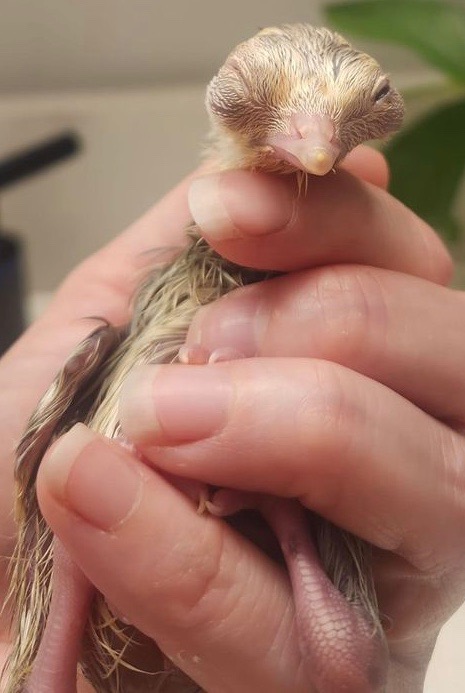
Dr Bowes: This is an embryonic developmental anomaly which could be the result of a genetic or incubation issue. Sometimes normal chicks require assistance to hatch, while others, like this poult, would not have hatched on its own.
Muscovy Infection
What is wrong with my muscovy? She developed a bump under her chin a couple of days ago and it’s gotten bigger. She’s not eating but can drink. This is what the inside of her mouth looks like. Is the boney looking thing a foreign object or a part of her? – Meadow Masers
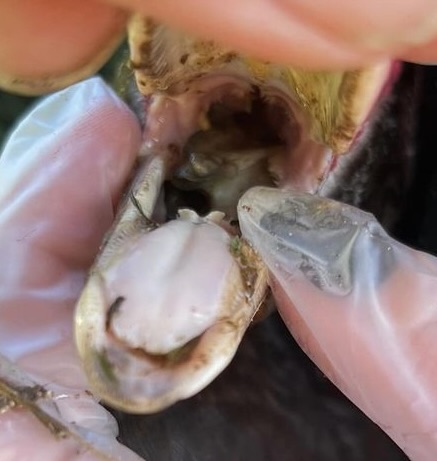
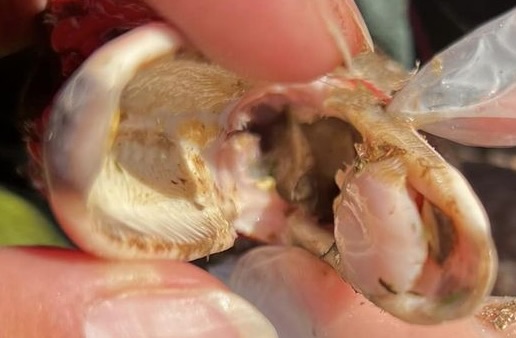
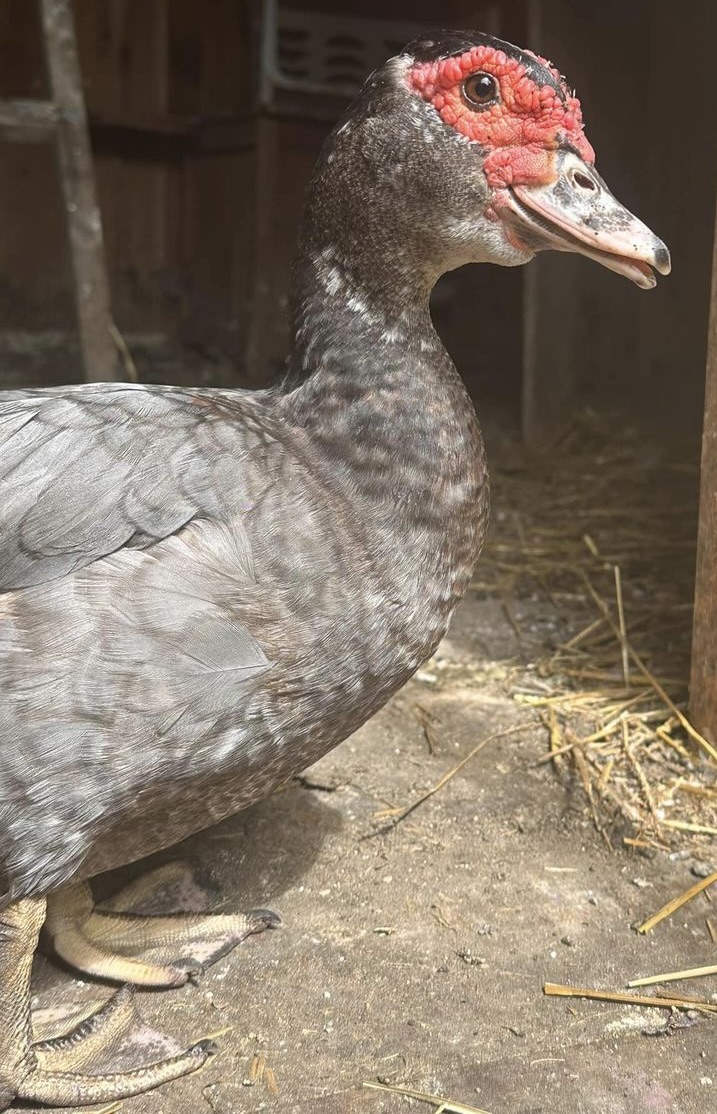
Dr Bowes: The back of her mouth looks necrotic with erosion of the hard palate. There could be a foreign body embedded in her mouth. Is she trying to swallow? Does she display any behaviour related to the lump? The infection needs to be removed and she should be treated with antibiotics.
Ostrich Bumblefoot
I’m wondering if my ostrich has bumblefoot? They are on grass and moved every 2-4 days. It doesn’t look like bumblefoot photos I’ve seen. – Erica Ritchie
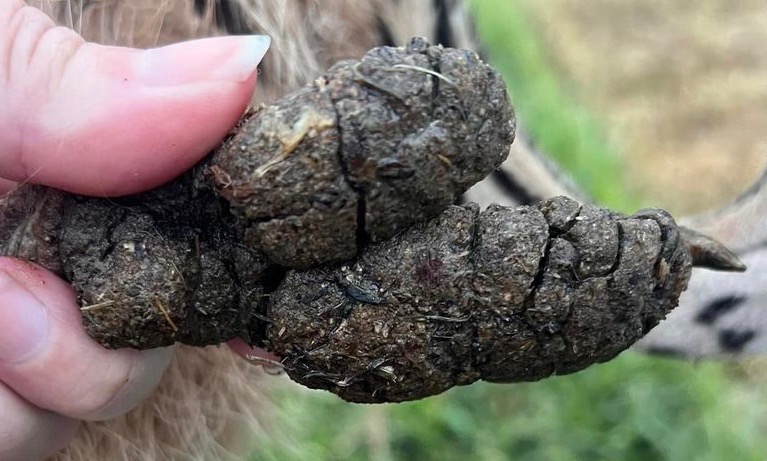
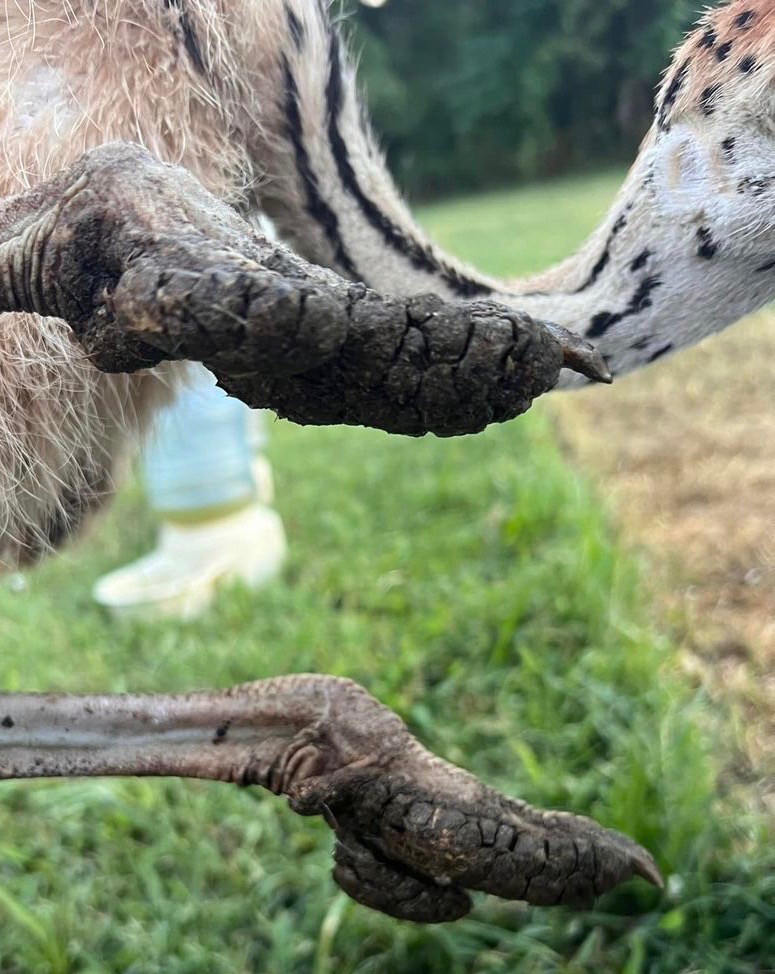
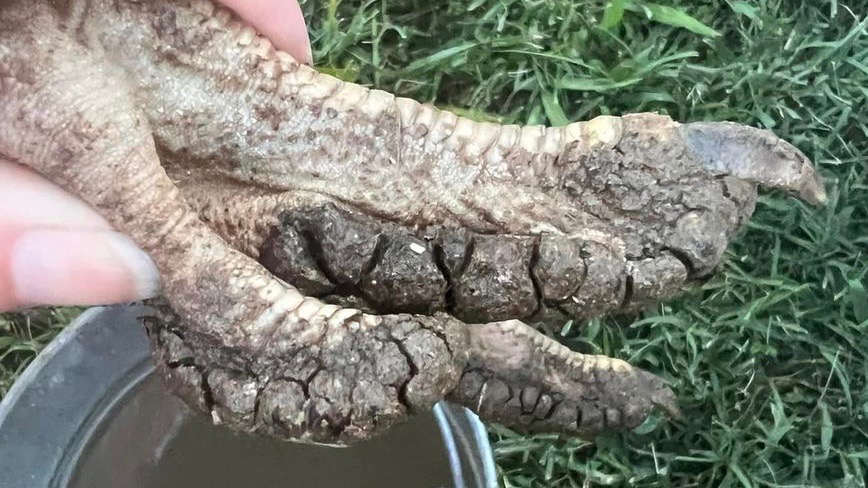
Dr Bowes: It is bumblefoot. She needs to stay off wet grass or litter. Keep her feet dry and try sand as a substrate.
Turkey Arthritis
I have two meat turkeys that live with chickens. One turkey has a swollen right leg (less so on the left side). The skin appears to be split open in anterior area, similar to edema in heart failure patients. Its not moving much. The feathers were hiding the upper leg joint that is blackened and three times the size of the other leg. The black colouring extends down the leg. Could this be from a snake bite? – Kristen Lynn Coats
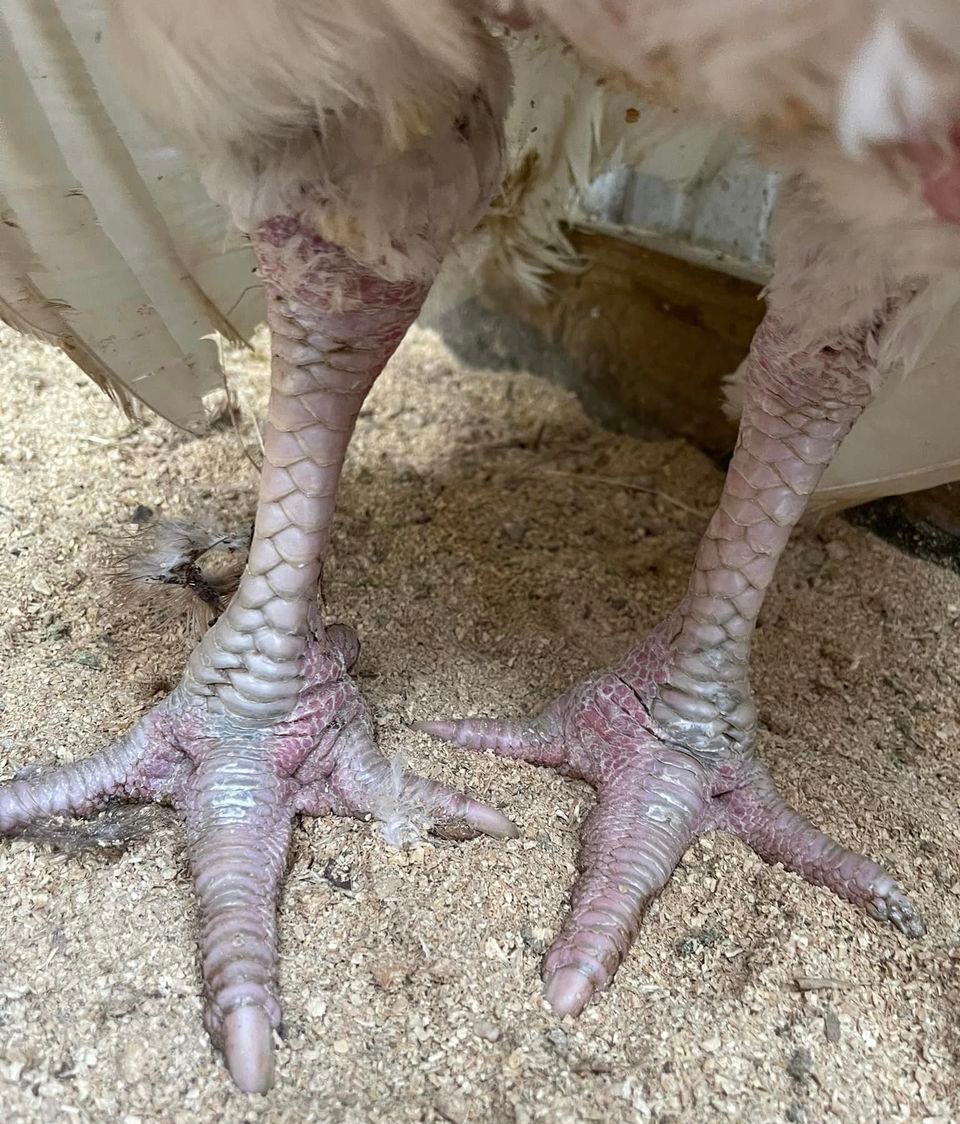
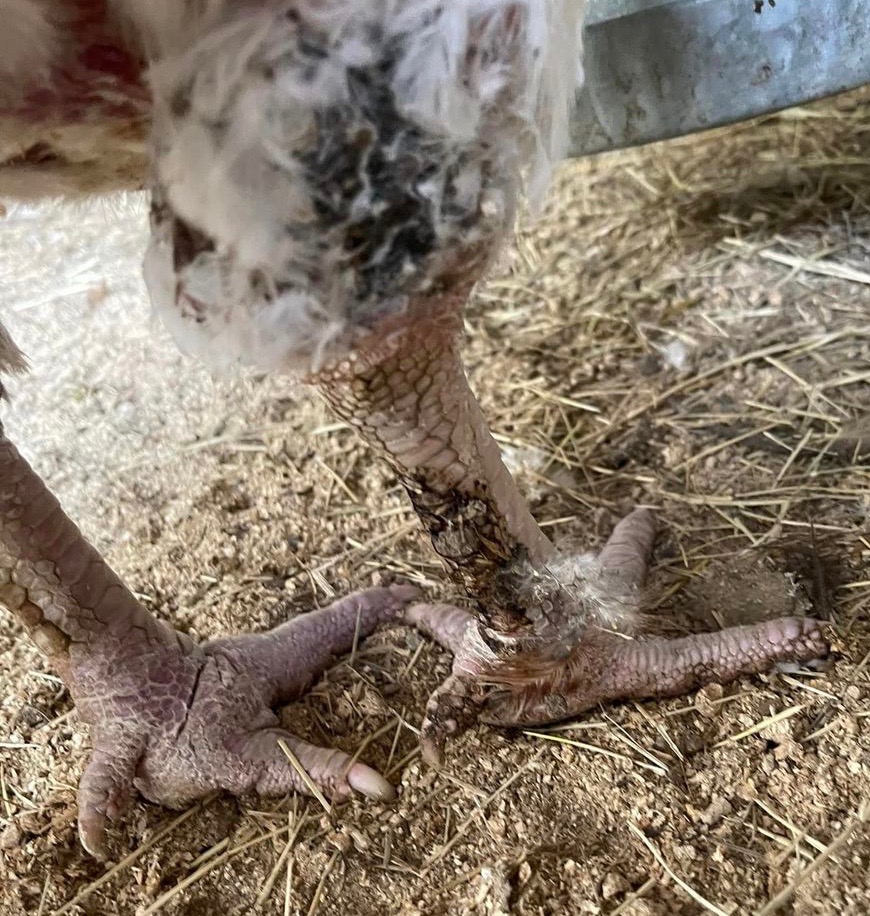
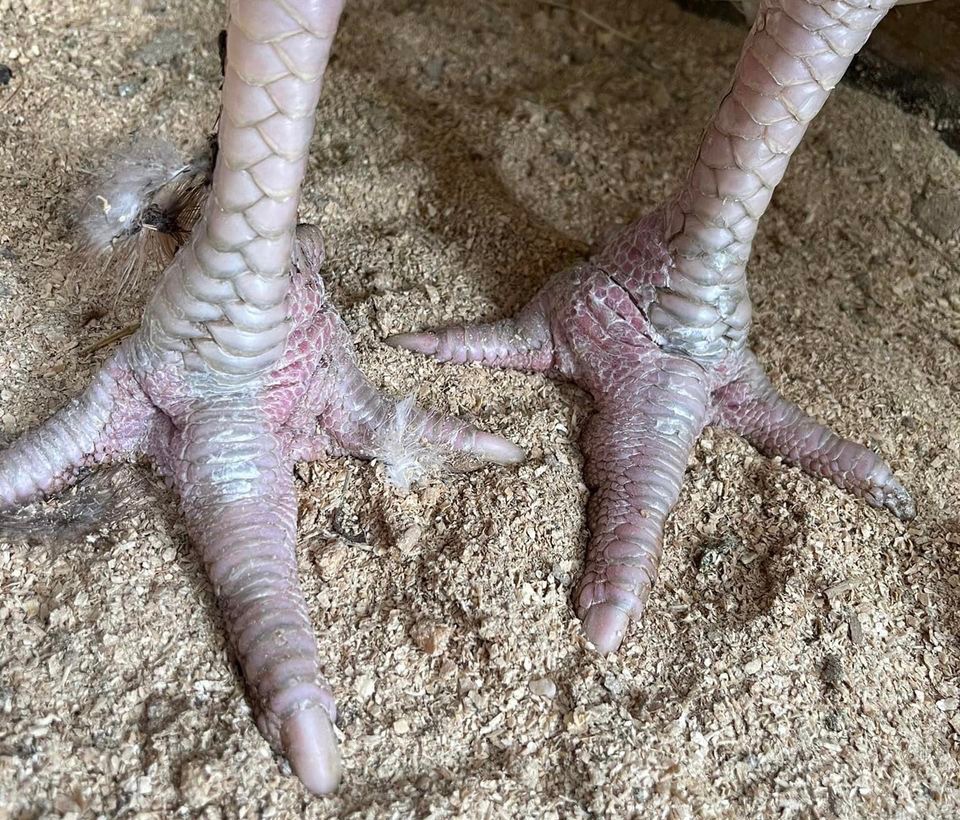
Dr Bowes: I would diagnose this as septic polyarthritis (multiple sites). People can get rheumatoid or osteoarthritis, but in poultry arthritis can be the result of a skin-breaching injury in which Staph travels along the tendons to the joints. Wet litter can contribute to foot pad erosion allowing openings for infection. Calves can get arthritis in their joint due to navel infections. Is the area soft or hard? Staph responds to penicillin.
Turkey Lung
This is a DIY necropsy of a 7 month old chocolate heritage tom turkey. There was large fatty tissue covering his chest and the front of his throat. His lungs were pink with black spots. No symptoms of blackhead disease – Katina Choinière
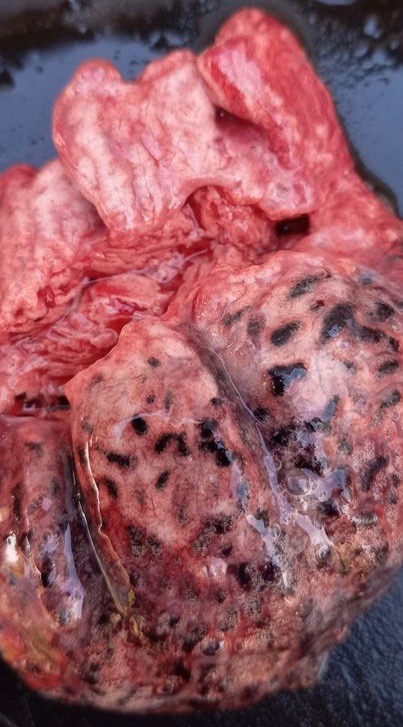
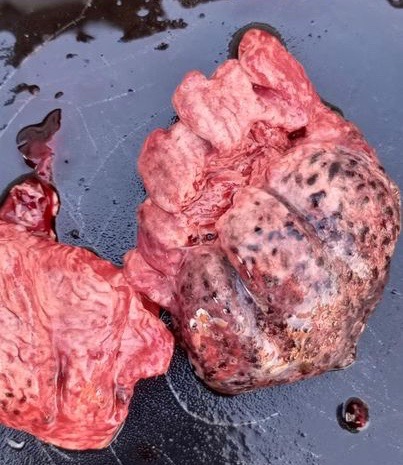
Dr Bowes: There are bulging focal areas of hemorrhage. The demarcation between normal and abnormal tissue is interesting. The lungs are overinflated with pulmonary hemorrhage and aspiration of blood. A cross-section photo of the lungs would help with a diagnosis. Is the hemorrhage interstitial (in the tissue) or in the airways? This appears to affect the airways. Fungal infections can block the airways and erode blood vessels causing bleeding. It’s interesting only one lung is affected.
Turkey
I have a friend who has a 6 month old turkey with growths that we can’t figure out. They’ve been there several weeks and are now getting larger. Can you please me some insight as to what these are and if there is any way to treat her? – Anonymous
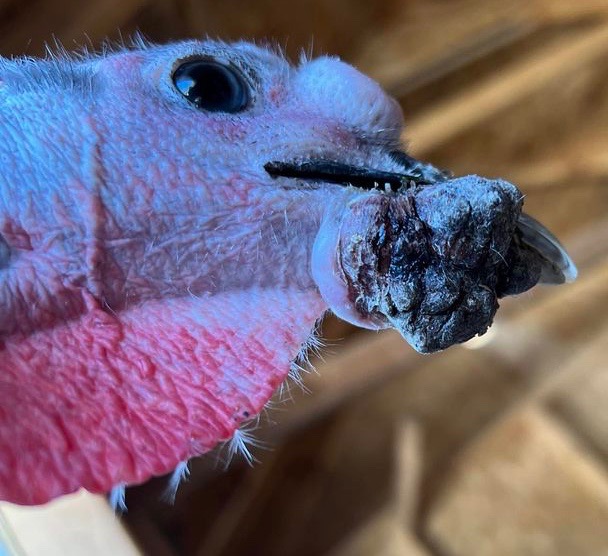
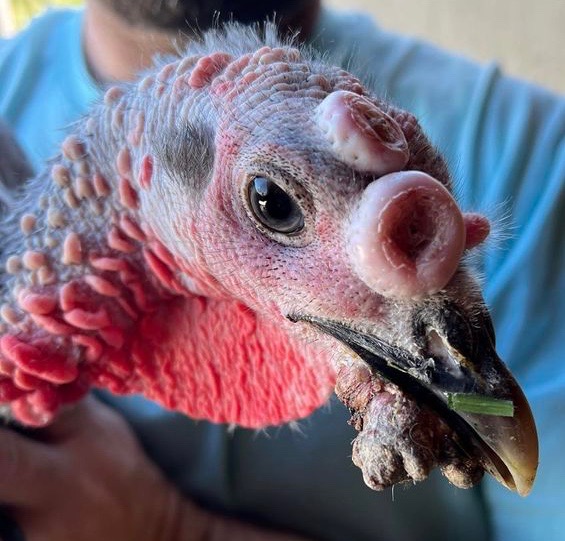
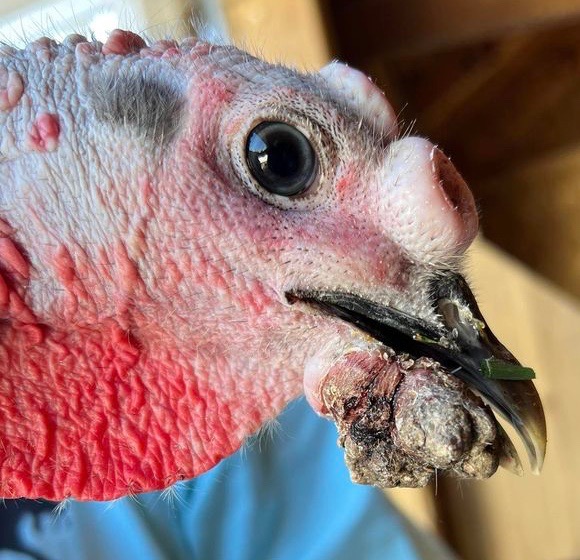
Dr Bowes: The crater mass is indicative of dead vascular tissue. My concern is the mass encompassing the lower beak that appears to be different. You can debride it to see if you can remove some of it. Recommendation: humane euthanasia
Bumps On Bill
I have a 10 month old black swan. I just noticed these bump running down the top of her beak. – Rhonda Walch
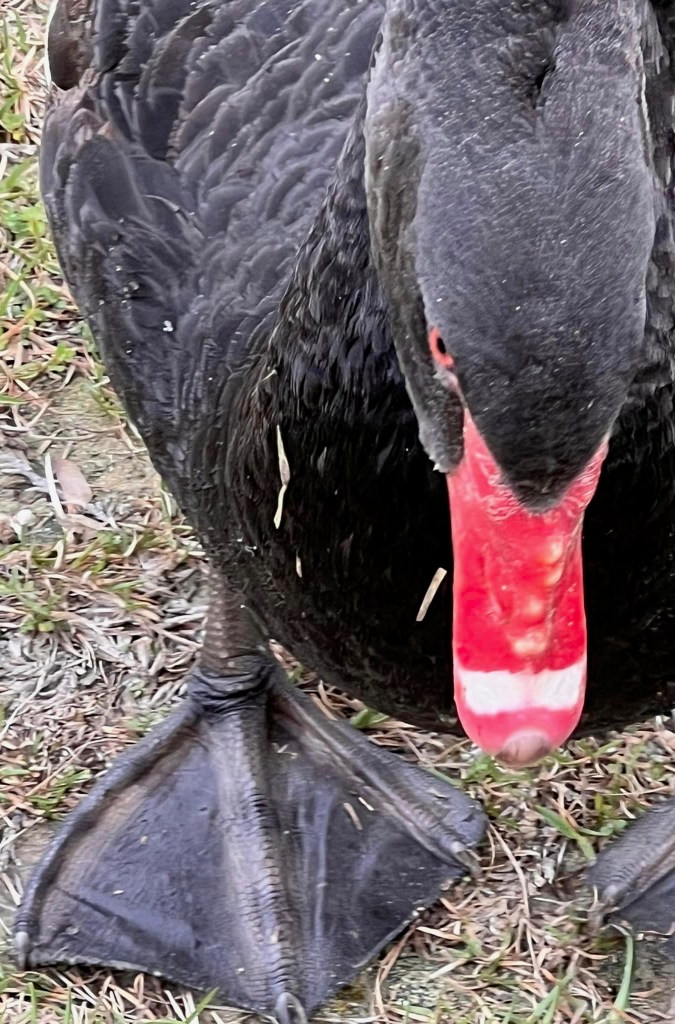
Dr Bowes: Look at the inside of her mouth. The upper beak is comprised of a thin boney structure covered by keratin so you need to rule out an abscess or infection. Are the bumps hard/soft? Have they changed in size? Are they moveable? Do they cause pain if you manipulate them? I’ve never seen this before.
Quail Joint Issue
I need help with my 3½ year old quail. Zorro. He started limping, holding one leg off the ground. I found a bump on the outside of his hock. It looks like a blister, but it’s hard. His leg is fine, no swelling, bruising, cuts or bumblefoot. He’s eating and drinking. I would think it was an injury, except his daughter came down with exactly the same thing this summer. I left her untreated hoping it would heal. Eventually, she got worse and lost a lot of weight, so I euthanized her. I’ve put Tylan and Poultry Cell in his water, and gave him a drop of Metacam. I don’t really know what else to do. Any ideas what this is? – Fiesta Cranberry
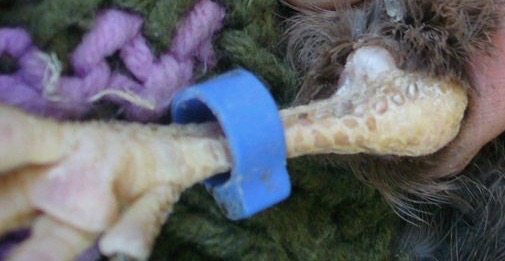
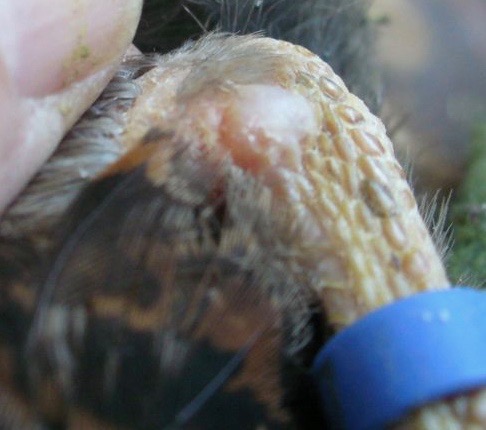
Dr Bowes: If the bump is soft it is synovial fluid from a blown joint capsule. If it’s hard it is coming off the bone, which is an odd location. Monitor to see if it changes in size or consistency. It’s a mystery why his daughter would have the same condition.
Goose Beak Injury
My goose was attacked by a raven while sitting on an egg this morning. What should I do to medicate her beak? I’m shocked and wouldn’t have guessed this could happen but I watched it happen as I was running out there. I have moved her to prevent additional attacks. – Catherine Christian
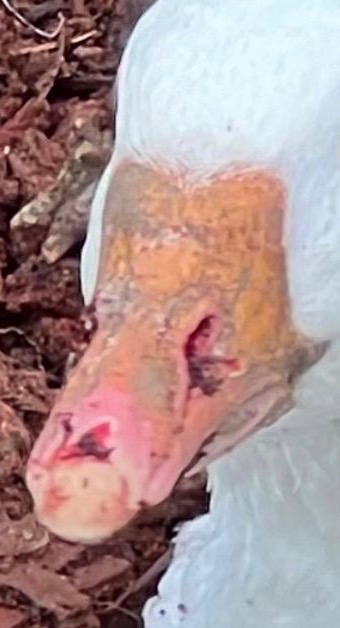
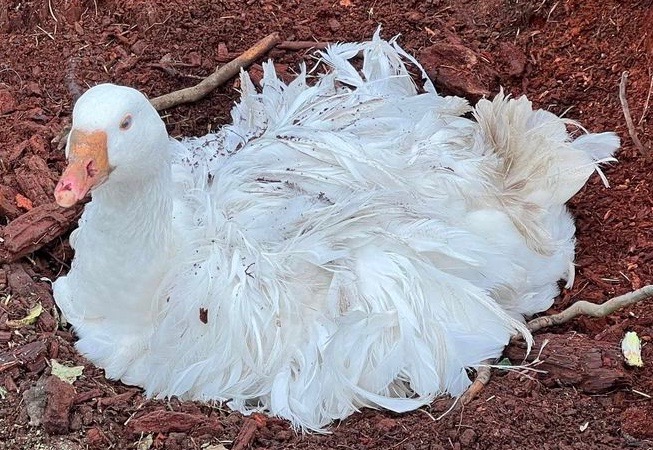
Dr Bowes: The location looks like she sustained damage to the soft tissue and keratin, rather bone. Apply an antiseptic soap or Detol, not an ointment because you want to keep the nares open. Administer pain meds. The bill should granulate and she should make a full recovery.
Glossary
Anencephaly: condition in which an organism is born without parts of the brain and skull
Debride: remove damaged tissue or foreign objects from a wound.
Granulate: the development of new tissue and blood vessels in a wound during the healing process.: a tiny cluster of white blood cells and other tissue
Septic: infected with microorganisms, especially harmful bacteria
Well, that wraps up another edition of Show & Tell With Bitchin’ Chickens and Dr Bowes. I hope that it’s been a learning experience for you.
If you’d like help with a case drop me a line using the ‘contact’ button on my home page. Remember to wear gloves, take good close up photos from several angles and supply us with plenty of information (e.g. timelines, symptoms, medications, general flock health, etc) so we’re able to more accurately pinpoint what’s going on.
Thanks again to Dr Vicki Bowes for her willingness to share her wealth of knowledge and experience to build capacity and skills in small flock keepers.
Feature photo credit: Blue Pearl Pet Hospital
 Bitchin' Chickens
More great cases. Thank you!
LikeLiked by 1 person
I never tire of learning about the many things that can go wrong and how to handle them. Thanks to you both! – Alicia
LikeLiked by 1 person
And thanks for the feedback.
LikeLike
Fascinating, thanks
LikeLiked by 1 person
I appreciate her interpretations.
LikeLiked by 1 person
Dr Bowes has been a gift in my life
LikeLike