

Several months ago a staffer at the World Animal Foundation contacted me to correct a stat I’d used regarding the global chicken population. They included a link to a lengthy article by Talitha Van Niekerk on their website to back up their claim.
I recently asked if I could reprint that article. The WAF suggested I post an abbreviated version with a link to their site. It turns out that recommendation was a good one as the original article is quite long, full of stats and graphs. Here’s a shorter version with some of the highlights and a link to that post.
Chickens are probably the most highly consumed protein source on earth and also the most badly abused farm animal with the worst management practices. There are several billion chickens worldwide, but we still turn a blind eye to their treatment, factory farming abuse, and cruel slaughter process.
I enjoy a nice roasted chicken as much as the next person, but after learning how mass production has influenced the quality and quantity of chickens being raised in factory farming setups, I am seriously considering a veggie roast instead.
There are several billion chickens raised specifically for human consumption, either as meat or egg-laying hens, to meet the world’s domestic chicken needs. But how many chickens are in the world?
And if you think I’m exaggerating, here are a few shocking statistics about the domestic chicken population of the world and what fate awaits how many chickens each day.
How Many Chickens Are in The World
Chickens are one of the most populous animals on the planet, and their numbers continue to rise every year. In 2000, there were 13.9 billion chickens. By 2021, this number jumped to 25.8 billion. And now, in 2022, we have around 26.56 billion chickens worldwide.
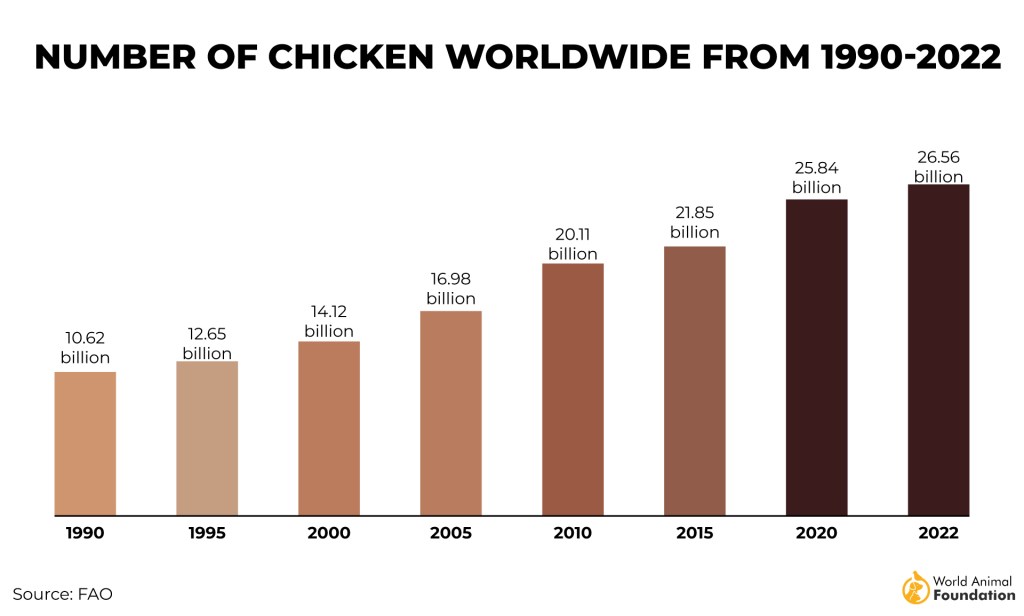
According to Stats of 2022, There Are Almost 26.56 Billion Chickens in the World (FAO)
Ultimately, the Food and Agriculture Organization (FAO) statistics show that there is a global chicken population of 26.56 billion chickens alive on earth on any given day.
This number is subject to some flexibility as new chickens are hatched, raised, and slaughtered each day. The chicken factory farming industry is a never-ending machine that keeps satisfying global production needs for slaughtered chickens.

The Latest Stats Show US Is the Leading Country in Broiler Chicken Production With 9.22 Billion Chickens (The Humane League)
Most of the US chickens account for meat production in the US chicken industry. Most get slaughtered within 40 to 42 days; therefore, at any given time, there exist 1.522 billion chickens in the US.
A large number of chickens are kept in factory farms, so the figure doesn’t quite cover backyard chickens or small-scale farmers.

The US Chicken Availability Per Person Has More Than Doubled Since 1980 (USDA)
Chickens are now being slaughtered at a much younger age than before (previously, these 40-day-old chickens were considered immature and without enough meat on the bone). The average American consumed 107.6 pounds of chicken in 2017.
305 Million Hens Are Used Annually to Lay Eggs (PETA)
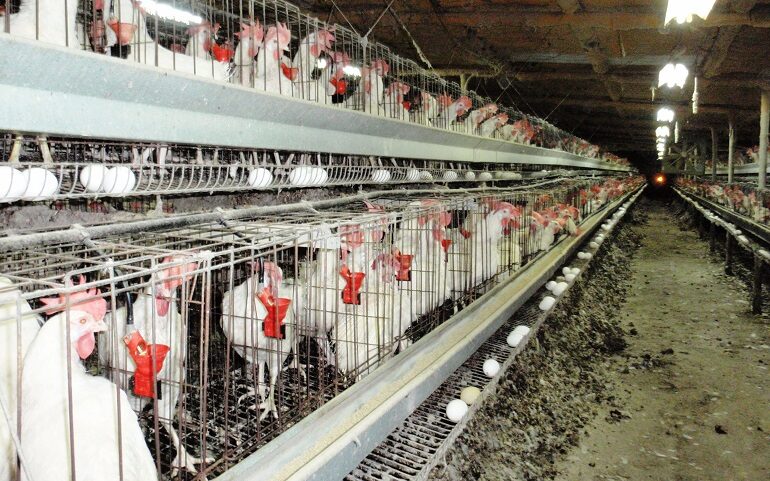
Laying hens such as the Golden Comet (which is a specialized breed) produce about 300 eggs each per year, with the US’s egg consumption resting at 92.6 billion eggs in 2022 on United Egg’s charts.
Of course, laying hens are placed on a double light cycle to ensure the hens lay more than one egg per day, cutting the 300 eggs per year figure to 300 eggs in much less than a year.
But hens only have the capacity to lay a finite number of eggs in their lives, after which it’s slaughter for these hens that are “laid-out.”
Before Covid-19, 8% of US Households Owned a Chicken (FAO)
Before the pandemic hit, an average of only 8% of US households had their own chickens; however, following the Coronavirus pandemic, this number has increased significantly, and the current rise in egg prices will surely see this trend continue.
CoopedUpLife writes that at least 13 million US households have their own flock of backyard chickens, and they can keep these anywhere in the US, with 93% of densely populated cities allowing chickens to be kept.
Backyard chickens can, at times, create an unknown variable in chicken numbers, but there is a definite upward trend in people keeping their own flocks for home slaughter and egg production in the US.
Even the global bird flu crisis and rising grain costs have not deterred Americans from keeping their own backyard chickens, with the number of chickens kept domestically increasing by half since 2018.
There Are 4 Chickens per Person on the Earth (FAO)
We have outnumbered ourselves by at least four to one (chickens to humans) by breeding more and more chickens for slaughter and to produce eggs. We should be grateful chickens are much smaller than their prehistoric cousins, the dinosaurs.
Simply put: If we all eat four chickens each on the same day, the world’s chicken population would become endangered. Yet all these chickens, millions of birds in the poultry industry, can’t seem to satisfy global hunger or meet the continuous demand for protein production.
With some people, like pollotarians, only eating chicken and other poultry, the ratio of humans to chickens in the entire world will soon become turned around. Pollotarians eat mostly chicken, and Healthline finds chicken to be a healthy meat source.
According to a USDA Report, There Are 373 Million Egg Laying Chickens in the US (USDA)
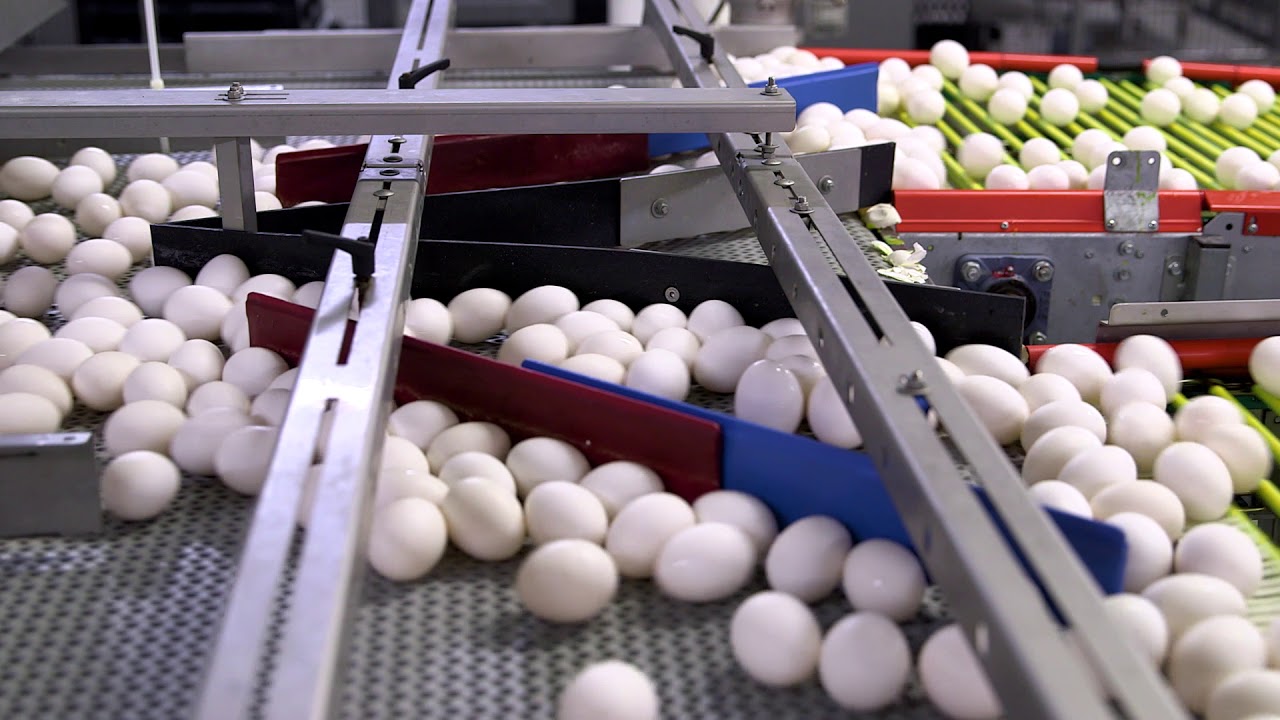
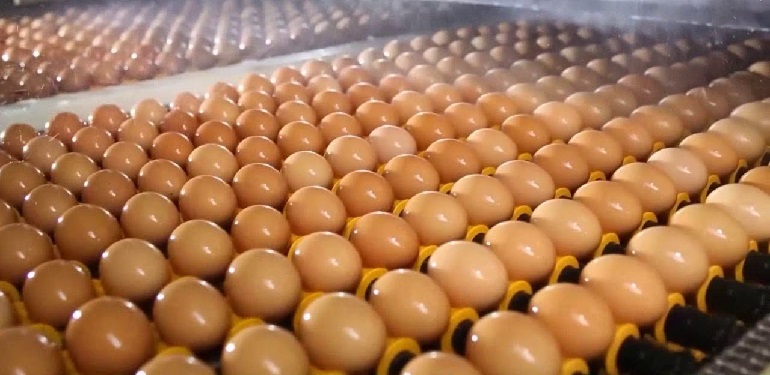
There are more than 373 million egg-laying hens in the US, according to the USDA Chickens and Eggs report, which predicts the future totals of eggs and chickens for slaughter in the US poultry production industry.
Broiler Hatching Eggs Are Produced by 62.5 Million Hens in the US (FAO)
The USDA reported numbers to ensure egg production is sustained: 62.5 million egg-laying hens are bred in the US each year, which produce 8.10 million broiler-type pullets (fertilized eggs) for the next generation for rearing.
Africa isn’t far behind in raising chickens as it’s a favoured meat source and a cheap form of protein. Overall, Africa produces 2.07 to 2.08 billion broiler chickens each year for slaughter in the commercial chicken industry. However, Africa has many more backyard chickens and small-scale private chicken farming setups that produce even more chickens that aren’t accounted for.
The Leading Egg Producer State Is Iowa (CoopedUpLife)
Of all the US states, Iowa has the highest chicken population and is a leading producer with the most eggs at 17.1 billion eggs produced annually, which is 15% of the total US egg production. Just in February 2022, this state produced a whopping 1.07 billion eggs. (source)
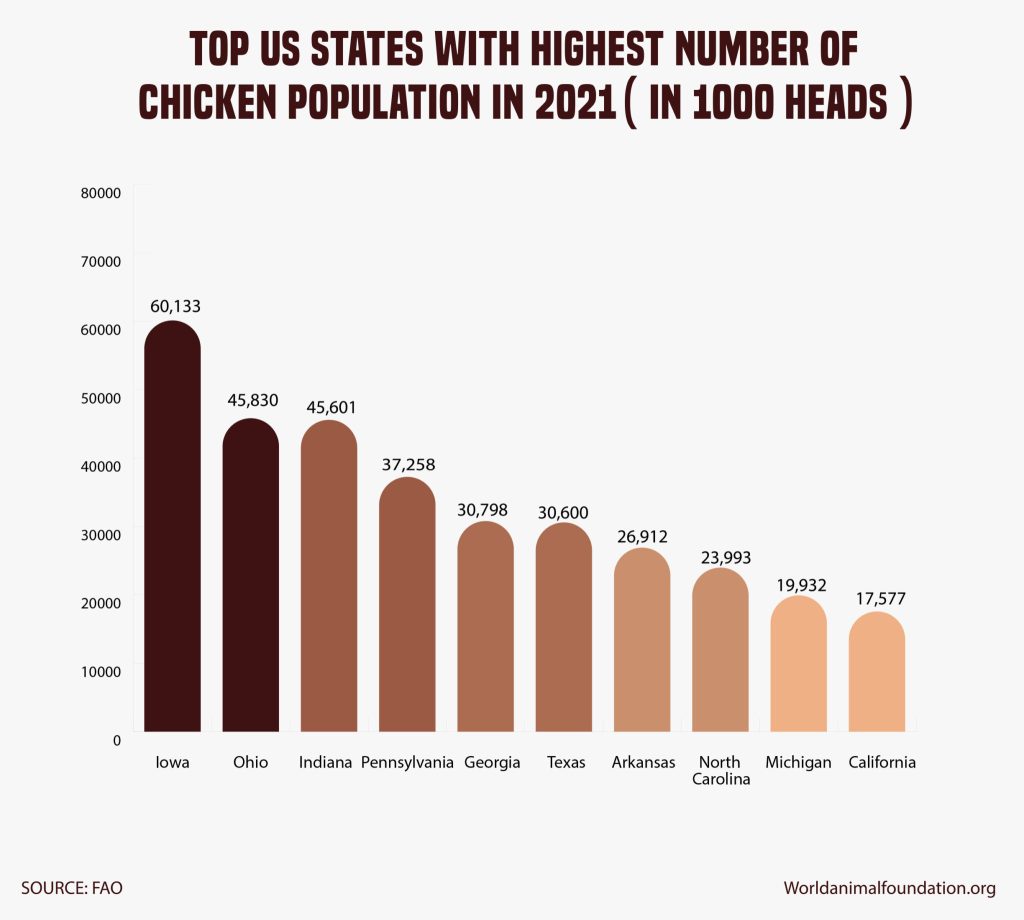
One in six eggs is from Iowa in the US, and Iowa boasts 58,195,000 layer hens to produce these eggs, as boasted by the Iowa Egg Council. Each 100 layers have to produce at least 81 eggs daily. Wonder what happens to the 19 hens that don’t lay on a particular day?
The Top Producer of Broiler Chicken in the World Is the US (USDA)
Laying hens make up 389 million animals of the US’s total chicken production for 2021. These hens don’t all produce table eggs, and many lay fertilized eggs to hatch broiler chicks, which are reared for meat and slaughter. (source)
The HumaneLeague reports that 9.2 billion broiler chickens were slaughtered in 2021 in the US, which is only a part of the chickens in the world.
In 2020, 111.6 Billion Eggs Were Produced in the US (Sentient Media)
America produced a total of 111.6 billion table eggs in 2020, while 2021 saw this drop to 96.9 billion.
Table eggs are unfertilized eggs, and the layer hens produce these in a production line setup of cages where each hen is stuffed in a small cage where they eat and drink on one side, with the eggs dropping onto a conveyor belt on the other end for collection. The hen can’t move her wings, and her health suffers.
Eggs that are intended for hatching (aka fertilized eggs) are rarely hatched by hens; these eggs are instead placed in large egg-hatching machines where a constant temperature is maintained to ensure more eggs hatch successfully.
Chicken hatchlings are kept in large sheds with UV lights where they are fed a high protein feed to encourage maximum growth in as little time as possible.
Chicken Abuse and Slaughter
The reality of chicken abuse and slaughter is a dark and troubling aspect of our food system that is often hidden from view.
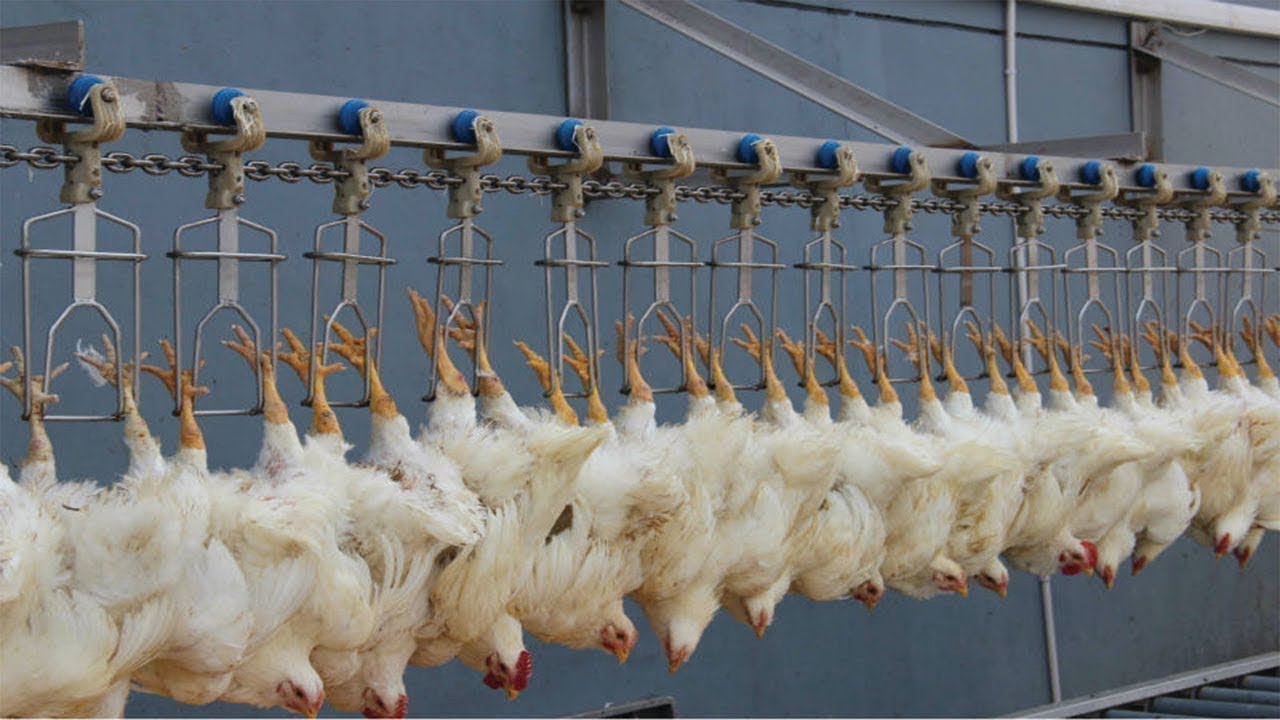
The Number of Young and Mature Chickens Slaughtered Is up 7% and 13%, respectively (USDA)
The USDA reports that more chickens are being slaughtered, with the biggest increase in slaughter among young stock (less than 10 weeks old).
Broiler chickens aren’t a breed of chicken, but rather a mixed breed of Cornish chickens and other chicken breeds.

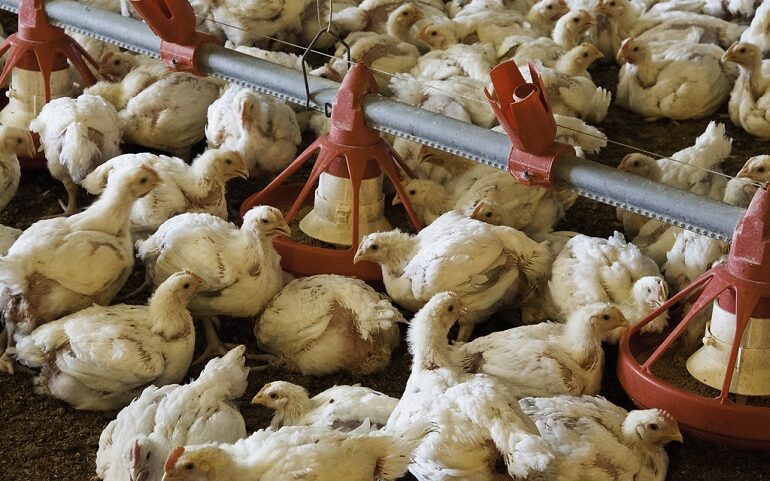

These chickens are killed once they reach an optimal weight in as short a time as possible. Broiler chickens are usually slaughtered at the age of six weeks at a weight of 4-5 pounds, according to AnimalWelfare.
In the early 1900s, it took a chicken 120 days to reach ideal weight, but today, these chicks are fattened up to 4-5 pounds in just around 40 days (and even less) and then slaughtered. (source)
Thanks to the World Animal Foundation for allowing me to reprint excerpts from the original article, used with permission.
Talitha Van Niekerk is a writer and content creator.
The WorldAnimalFoundation.org is a leading digital platform advocating for animal rights, responsible pet ownership, and compassionate awareness. WAF is not a non-profit organization, and we neither accept nor solicit donations or charitable contributions.
 Bitchin' Chickens
My family eats very little chicken anymore. I wish I could go vegetarian but I’m not sure with my health issues that require a high protein diet if I could do it. Our chickens are beloved pets and while it seems crazy to some, I refuse to be a source of pain or stress for my flock! I may not be able to save them all, but for those in my care they will be loved and appreciated for the wonderful creatures they are!
LikeLiked by 1 person
I always want to applaud and like your posts, as I love your writing so much and am so interested in your work…but this article was so disheartening and almost heart-breaking compared to both your own flock and certainly my little beautiful girls! No comparison! How could we draw figures on the beautiful flocks of the many wonderful personal flocks across the country, where even the animals who are eaten are respected and venerated for the gifts they give to their families? And what about those of us who don’t eat our family birds, but allow them to live as long as possible, giving us what they can, respecting each egg given? This post broke my heart. My wish is that no chicken would ever have to be subjected to the torture depicted here. I’m realistic, I know we won’t do away with these practices…but I wish I wouldn’t have to look at them (sigh).
LikeLiked by 1 person