
For more than three years I’ve gotten together with Dr Vicki Bowes, vet/ avian pathologist on a regular basis to pore over files in my memory stick loaded with interesting chicken health issues that I’ve collected for her expert opinion. She refers to it as ‘Show and Tell’, ‘Best Guess’ or, more recently, ‘Gorefest’ and has done a good job at making diagnoses given the information we have at hand. Sometimes all we are provided with is a short paragraph from the chicken’s owner, other times nothing more than a photograph.
My job is to write them up to share with my readers as a form of skills building for small flock keepers.
We met up recently to look at over 30 cases. I’ve attempted to curate them according to the area of the body affected. These ones are grouped together as they veer towards the gory part of our work.
Coccidiosis
I had an interesting death in my flock. I didn’t get amazing photos as her cavity was quite immaculate, but I did photograph her bowels and what came out.
It was a 6 week old silkie chick that became slower and a dirty bum. Still eating little bits, drinking. Last night she stopped moving inside the hospital room and fluffed up, eating far less, drinking still, poops were watering or mushy water. Tonight she was wobbly and unable to stand, looked like she was in tremendous pain. So I euthanized her and opened her up.
Her intestines were inflamed with gas and her cecal tubes were extremely swollen and rock hard. The tonsils were not inflamed. They were the tiniest openings, maybe 1mm in diameter. Her cecal tubes were filled with rock hard poop, I thought they were rocks or wood. – Kris Crestajo
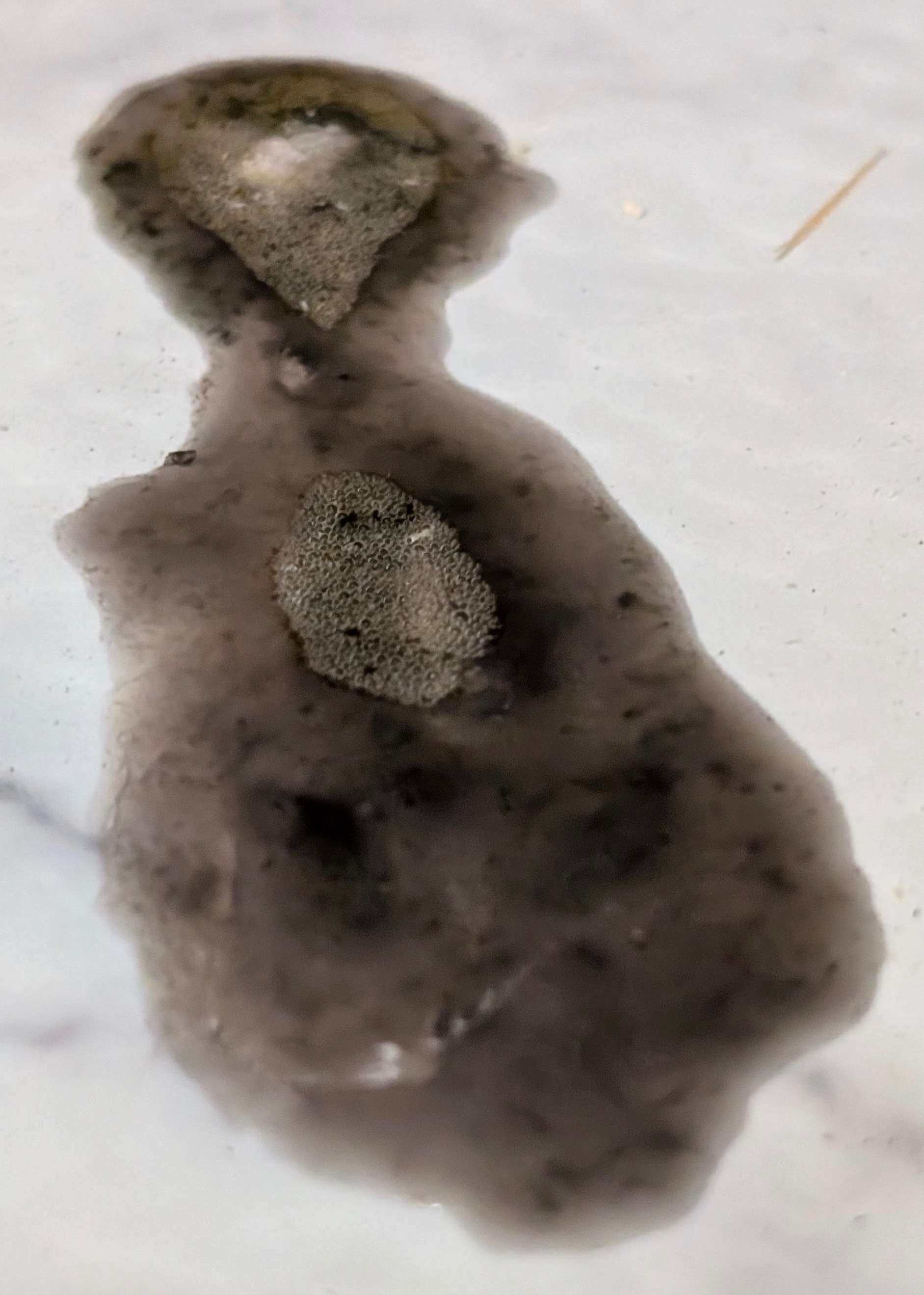


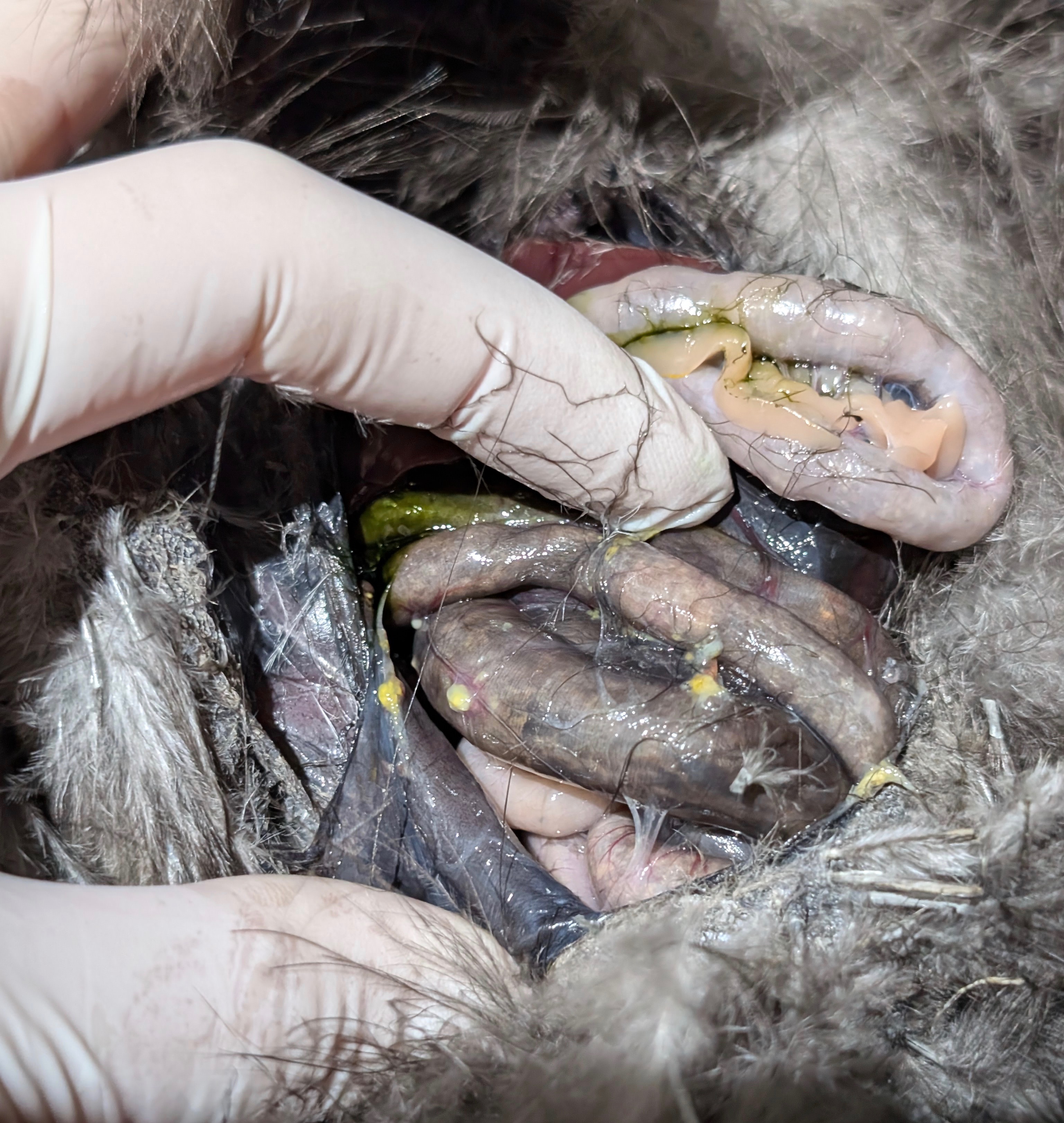
Dr Bowes: The poop is thin and watery. The cecal pouch cores appear dry and hard and if cut open probably contain fibrin. The protozoa that causes coccidiosis, Eimeria aservulina can affect the upper duodenum and present like this. I would recommend treating for coccidiosis with the highest dose of Amprolium (Corid). I’m curious if any other chicks were affected.
Butchered Rooster
I found this in a rooster that I processed. No health history. There was liquid coming out of his belly. The attached part is all hard, and some circular blobs I’ve never seen before. – Samantha Dunn

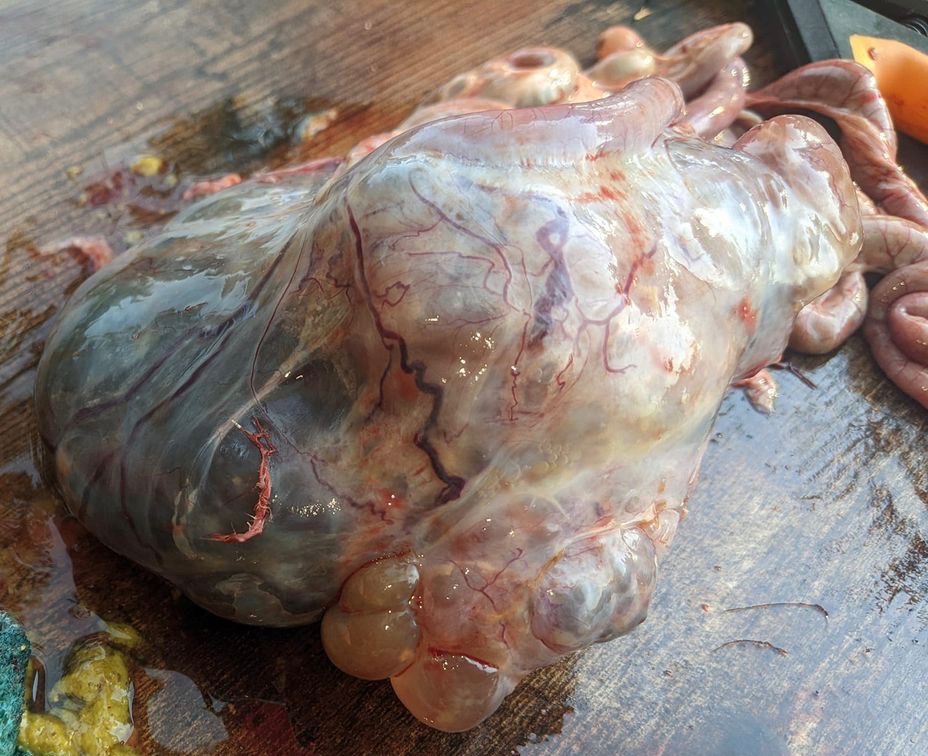

Dr Bowes: The cystic cavity is vascularized and his air sacs are filled with fluid. I need more information including photos of his heart and cross-section views of his air sacs. Don’t eat any birds that have ascites as it comes from a compromised liver. Any bird with diseased filter organs (i.e. liver, kidney) should not be consumed.
Strangulated Toes (Lisa Kelly)
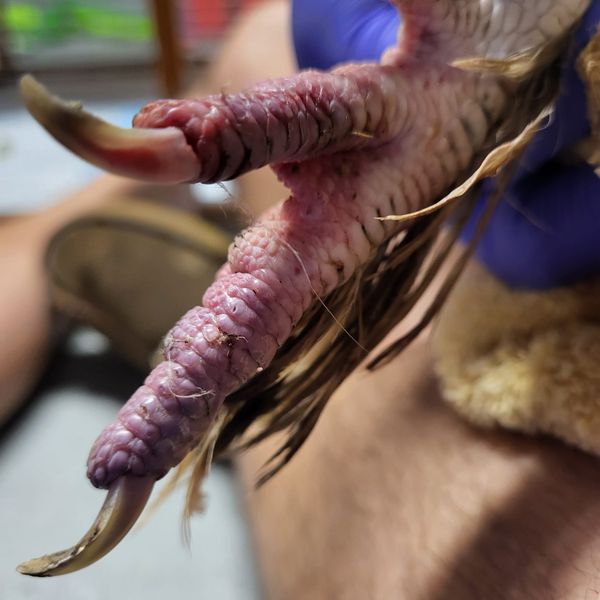

Bitchin’ Chickens: This is a condition that Dr Bowes and I have dealt with a number of times before. Monofilament and string can get wrapped around chickens’ tongues, legs and toes cutting off the blood supply. Without intervention that can lead to necrosis and amputation of those body parts. In this case it’s important to cut as much of the monofilament as possible. It may not be possible to get under it, but cutting at least one end and trying to pull it out might work. The leg is congested, but still has a blood supply. This bird also has unrelated bumblefoot which should also be treated.
Missing Toes
I thought I was dealing with bumblefoot and scaly leg mites, but it’s been going on for several months. What am I doing wrong and how can I help her? – Teresa Johnston
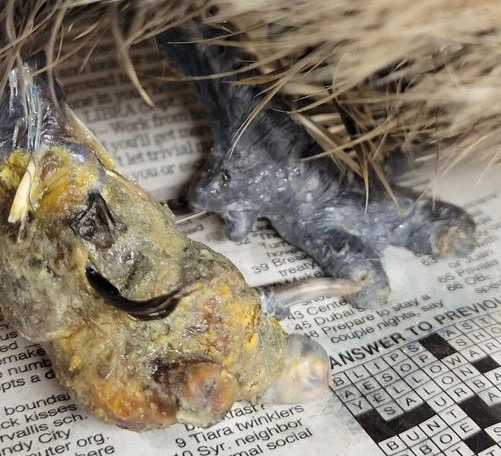
Dr Bowes: There are several reasons why toes fall off: strangulation (constriction of the blood supply), frostbite and gangrene. A vet could debride the infected tissue and prescribe antibiotics. An x-ray would indicate if there is involvement or the bones or not (gout). If you can’t get veterinary care it becomes a question of quality of life and humane euthanasia.
Strangulated Tongue
My 8.5 week old chick got a human hair wrapped around something underneath her tongue, which caused some injury to that area. The local chicken nurse got as much of the hair out as she could but said the chicken has canker. The stuff she removed that she identified as canker just looked like wet chicken food to me. She has no bad breath, no foul odour. The next day her whole tongue fell off. Can a chicken live without a tongue? Will she aspirate every time she eats or drinks? – Melissa Paige

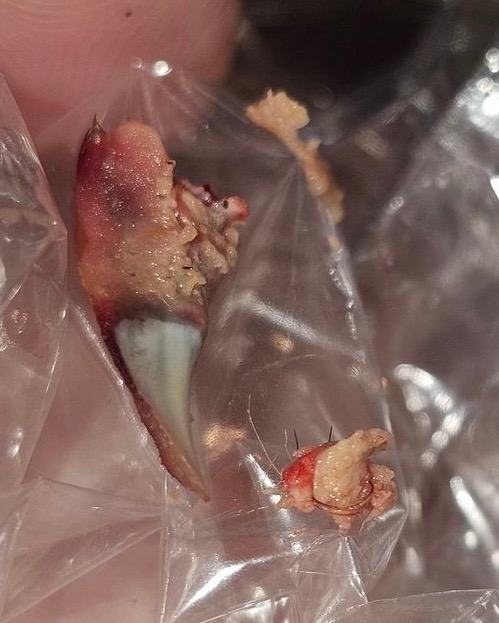

Dr Bowes: This is not a case of canker. The hair wrapped around the tongue constricting blood flow which resulted in it becoming necrotic and dropping off. Yes, she can live without a tongue. Pellets and crumbles would be easier for her to eat than crumbles. She’ll learn to throw her head back to eat. Aspiration is her biggest risk. Antibiotics would be recommended while the tongue heals.
Well, that wraps up another edition of Show & Tell With Bitchin’ Chickens and Dr Bowes. I hope that it’s been a learning experience for you.
If you’d like help with a case drop me a line using the ‘contact’ button on my home page. Remember to wear gloves, take good close up photos from several angles and supply us with plenty of information (e.g. timelines, symptoms, medications, general flock health, etc) so we’re able to more accurately pinpoint what’s going on.
Thanks again to Dr Vicki Bowes for her willingness to share her wealth of knowledge and experience to build capacity and skills in small flock keepers.
Featured photo credit: istockphoto
 Bitchin' Chickens
0 comments on “Avian Pathology Cases: 62”