
One of the things I enjoy about this blog is my ability to connect with folks around the world. I’ve written about artists and crafters who feature chickens in their work from all across Canada and the USA, Britain, The Netherlands, China, Palestine, Israel, Vietnam and Indonesia. I’ve done a case study about a duck in Australia and a profile of an Inuit woman keeping chickens in Greenland.
This post is about Jim and Somatra who have bantam chickens in Cambodia. If your knowledge of geography needs jogging Cambodia is bordered by Vietnam, Laos and Thailand. It’s rather fitting that I feature a couple from Southeast Asia because that’s where it all began; chickens, that is. Chickens are descendants of Southeast Asian jungle fowl. Due to thousands of years of domestication those fowl evolved into modern chicken breeds, large and small, that have now spread all across the world. In fact, they are now the most populous bird on the planet.

I’m American and my wife is Cambodian. Our plan, after I retired in 2016, was to split our time between Cambodia and the USA. We bought an under construction villa there in 2017. We went between the two countries until our return trip to Cambodia in September 2019. We were booked to fly back to the States in the first week of April 2020. It’s the hottest month here, so we normally try to get out before the worst of the heat. We live in Siem Reap, home of the world famous Angkor Park (Angkor Wat, Angkor Thom, Ta Prohm, Bayon are some of the well known temple sites).
Covid-19 hit before that return flight. The tourist group tours were dwindling even before that. We could see this was going to be a bigger problem before our return date. We thought we might need to stay here until the scare was over because lots of people in the tourist industry were suddenly unemployed and somebody might try to break into our villa. Our plans didn’t really matter because the airlines cancelled our ticket two weeks before the scheduled return date. We do have an airport here that could normally get us to Bangkok, Thailand, but that airport was suddenly shutdown.
Getting out of the country meant taking a 320 km trip to Phnom Penh for flights that were always being rescheduled or cancelled. We’d have to stay in a hotel before our flight, which also might be shut down. We decided to stay and ride the pandemic out. It became one full year and then another before any travel was possible. We just kept deciding we weren’t going back yet. It was three years until we could find a reliable flight and a reopened hotel in Phnom Penh. We remain here five years later.
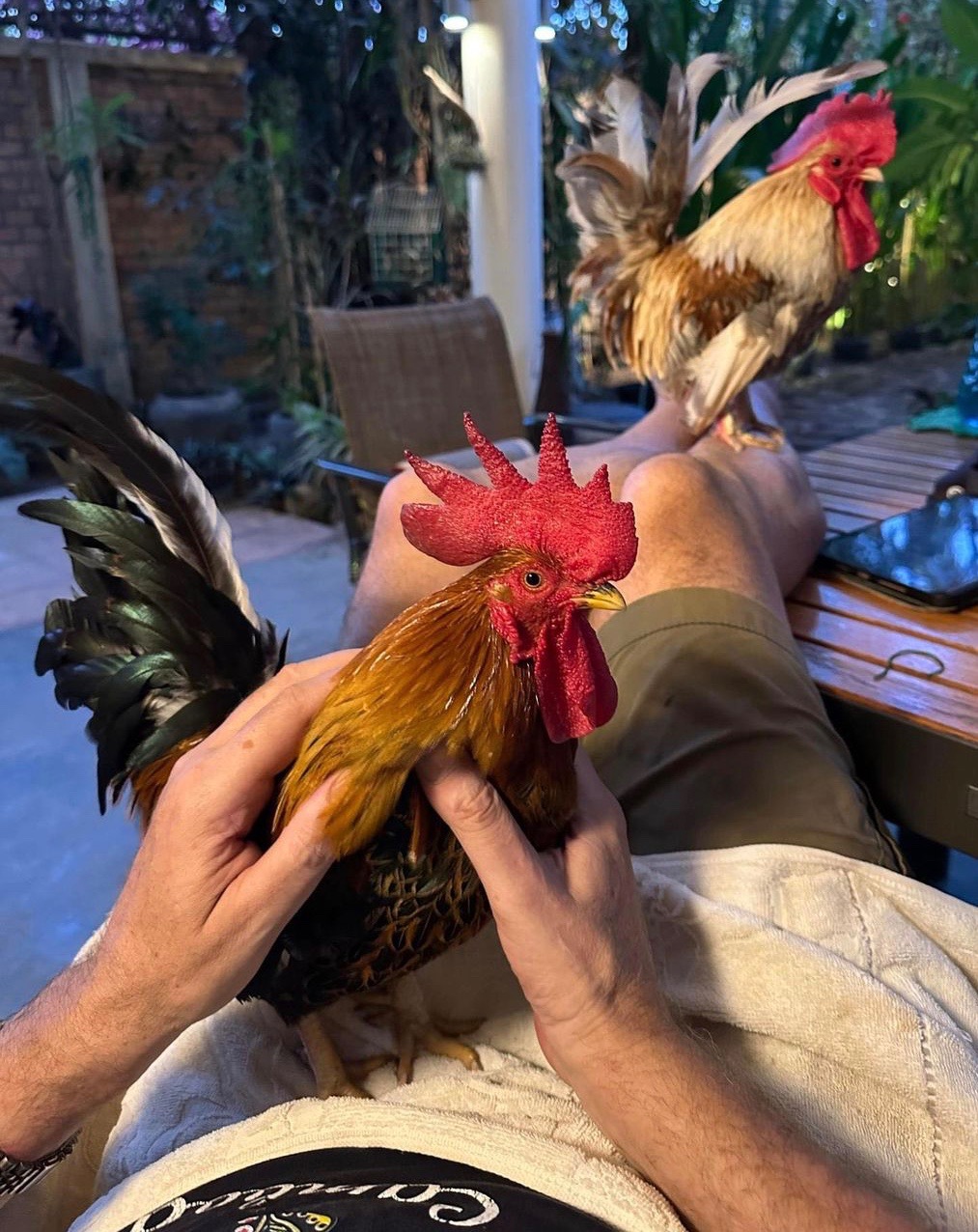
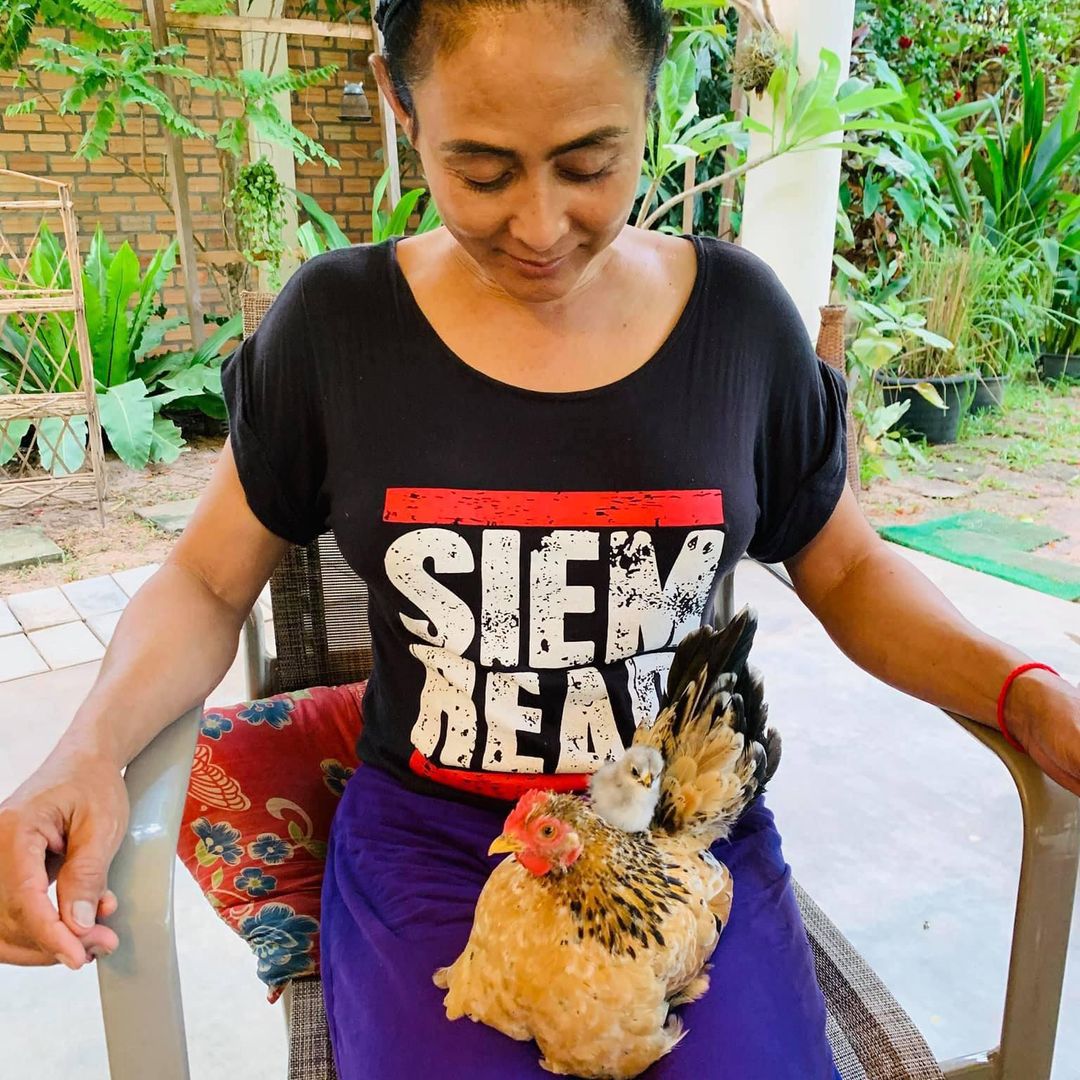
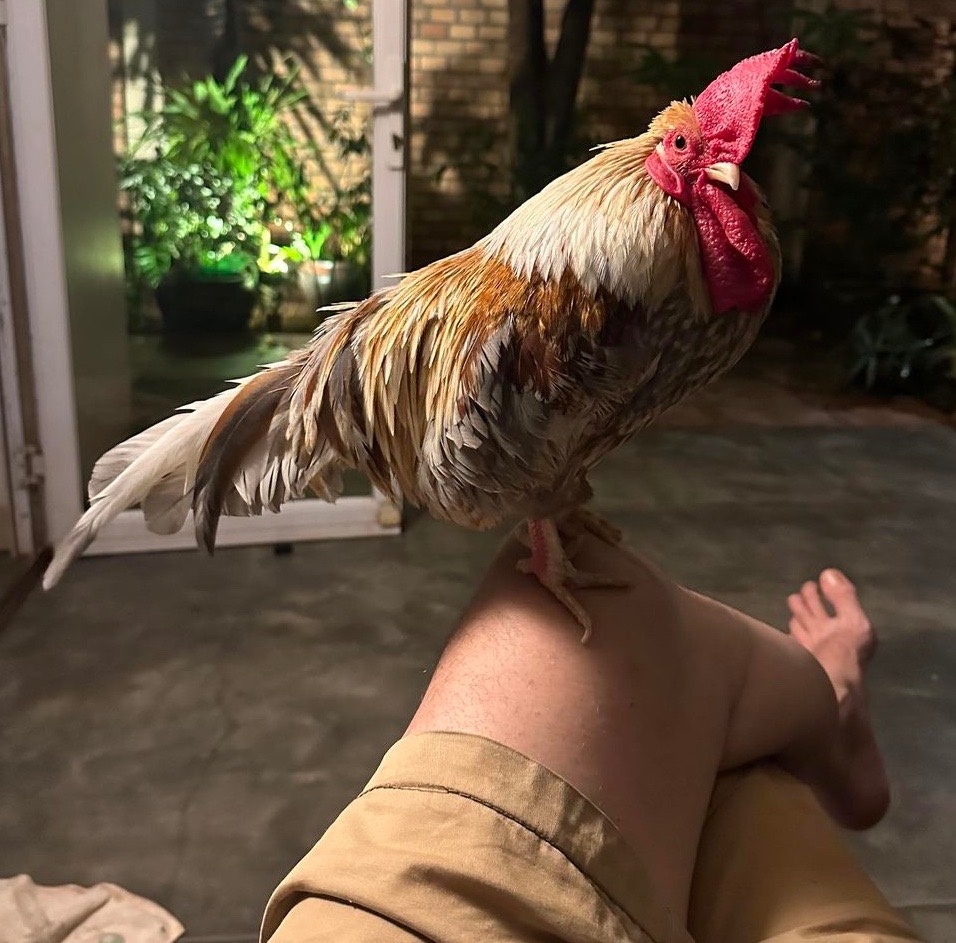
In 2020 we bought some Japanese bantam chickens. From a small flock it grew to 17 chickens a couple years later. These chickens are not common in Cambodia and we gave away a rooster or hen several times to people we thought would appreciate them as non-meat birds. I deeply regret doing that. In the case of Gangster, we finally had to demand my wife’s brother bring that rooster back to us.
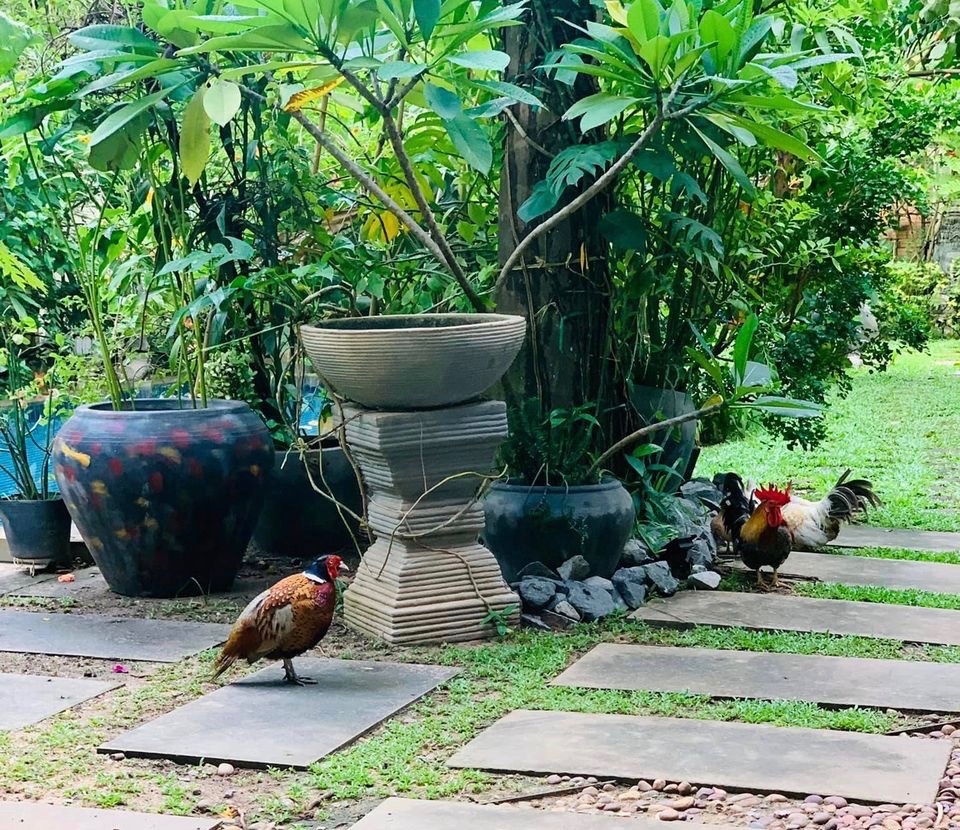
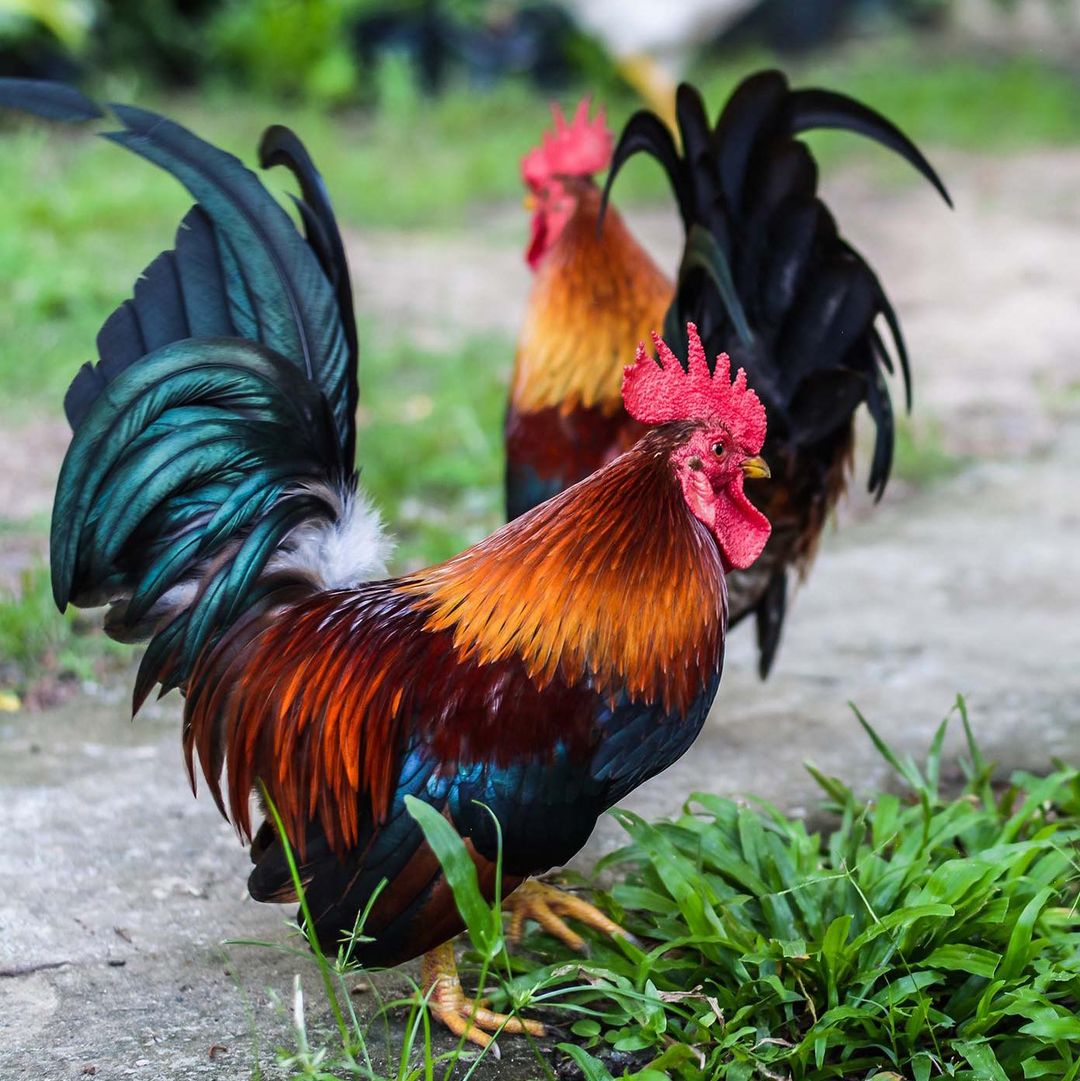
We’ve had many problems with our chickens so are now down to three. The symptoms vary all over the map. Two roosters became blind before passing with no apparent change in their pupils. We do have a veterinary clinic here called Animal Mama that examined all of them, but any treatment is usually for secondary symptoms that call for antibiotics. We have fecal testing done every month, and usually during the rainy season there is coccidia and roundworms.
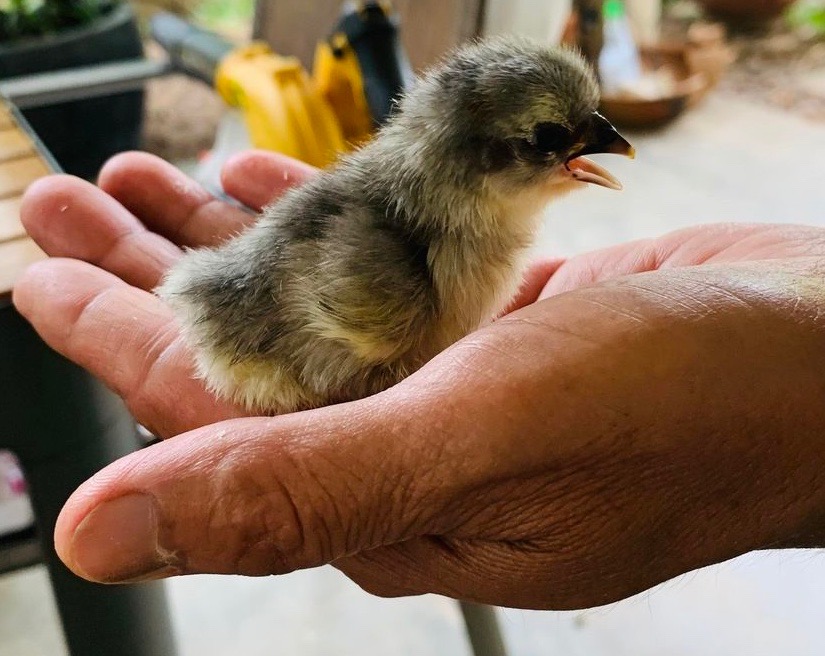
We once had a chick stuck after a 90° turn in our PVC drainage pipe in the yard. I, being the tallest, could reach down the furthest, but the pipe was too small for my arm to go far. That left my wife to help, but after several attempts she couldn’t reach the chick and, even if she could, its natural inclination was to run away. If that happened the chick would go from the PVC pipe to a much bigger concrete drainage pipe on the road. At that point, we would not have any option to save it. If the chick wasn’t rescued soon the daily afternoon rainstorm would drown it.
I sat in my office that overlooks that PVC drainage pipe with dread. I knew I could find several young Cambodian men to quickly to dig out to that PVC pipe and they could cut the pipe up to get access to the chick for $50. But, if we broke that pipe up, we’d have no drainage for our yard. Most certainly, our ground floor would be flooded with water. It’s happened before several times for other reasons and then we had to fix the drainage.
Luckily, my wife tried again and was able to scoop the chick up. Maybe it was because after the 90° turn, it was so dark the chick couldn’t see anything. It was continuously peeping for rescue and didn’t care whether it came from the hen or not. After that rescue, I wept in my office like a baby, saying “Thank you” to something like divine providence to intervene. I wasn’t a religious person then, but I did pray to some God with the question, “What shall I do? Rescue the chick at any cost or flood my house with water?” I’m glad I didn’t have to choose. File this story under Traumatic Events With Chickens. I have had other chickens die, but this is the worst one because there was an opportunity to change the outcome.
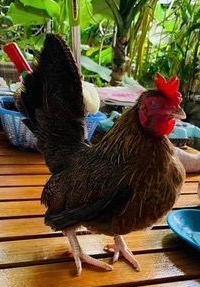
Little Brownie was the runt of her flock, the smallest hen we’ve ever had. I still remember how she had to run twice as fast to keep up with the rest of the flock. She had a sour crop and fowl pox in her first year. She survived that and eventually became the last hen of her rooster. She’s now gone, and I still ask, “Why?” She’s buried in our yard. My wife says she will be reincarnated. I hope so.
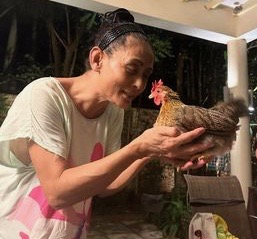
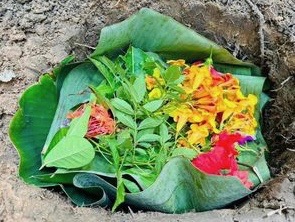
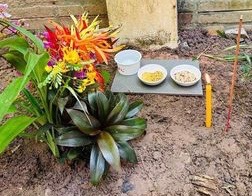
We’ve never had any elaborate coops for our chickens. We have up to four cages meant for dogs. All of them have something above the floor for roosting, and sometimes we made partitions to separate overly aggressive roosters from their hens so nothing would happen in the morning.
We have lots of neighbours who keep chickens for eggs and meat. I put out grains for them every day. The roosters know this because they always crow near our wall that coincides with the time I go out.
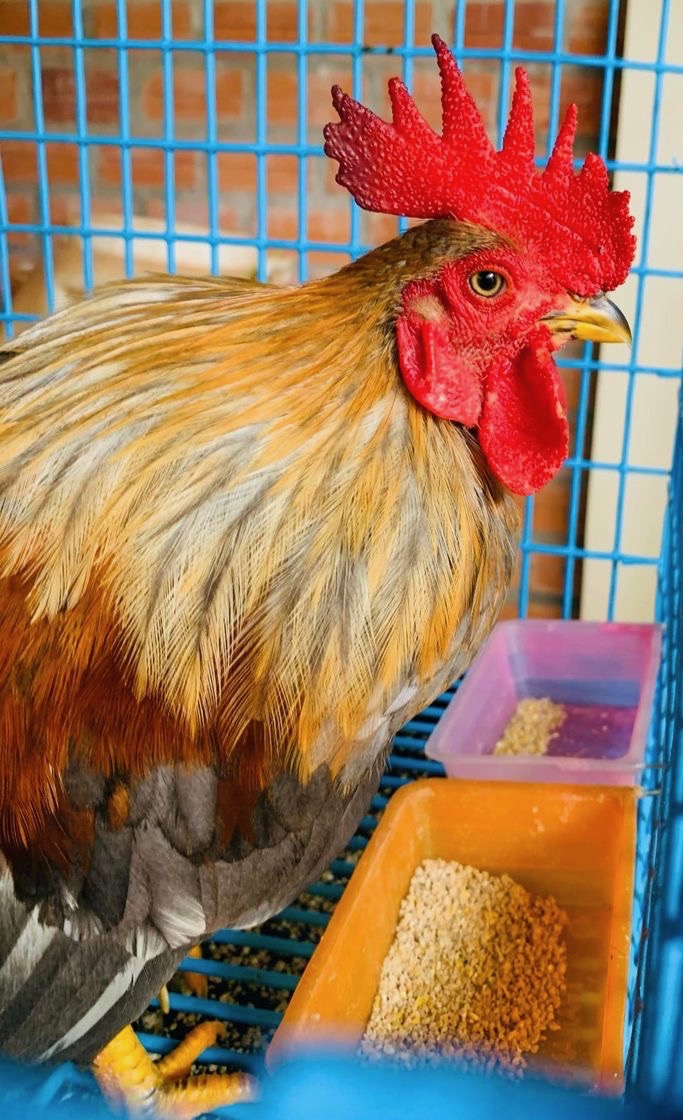
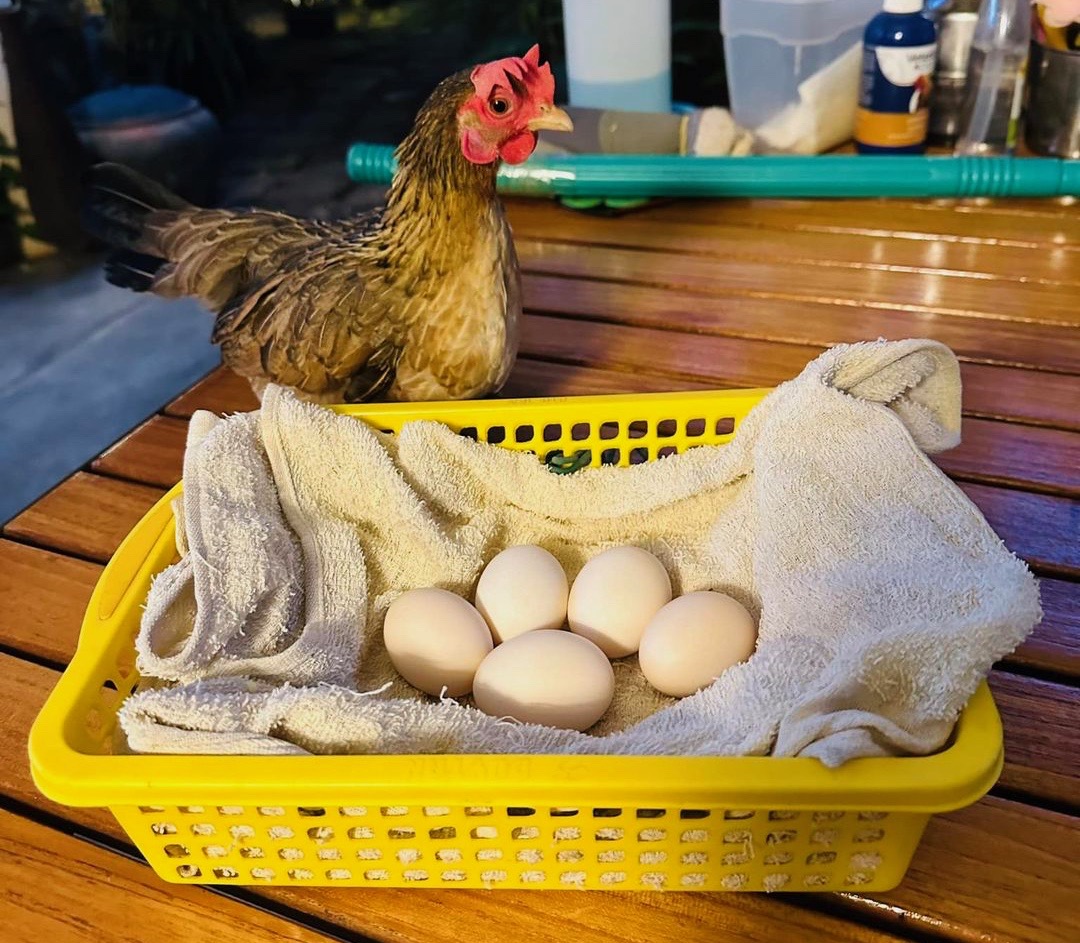
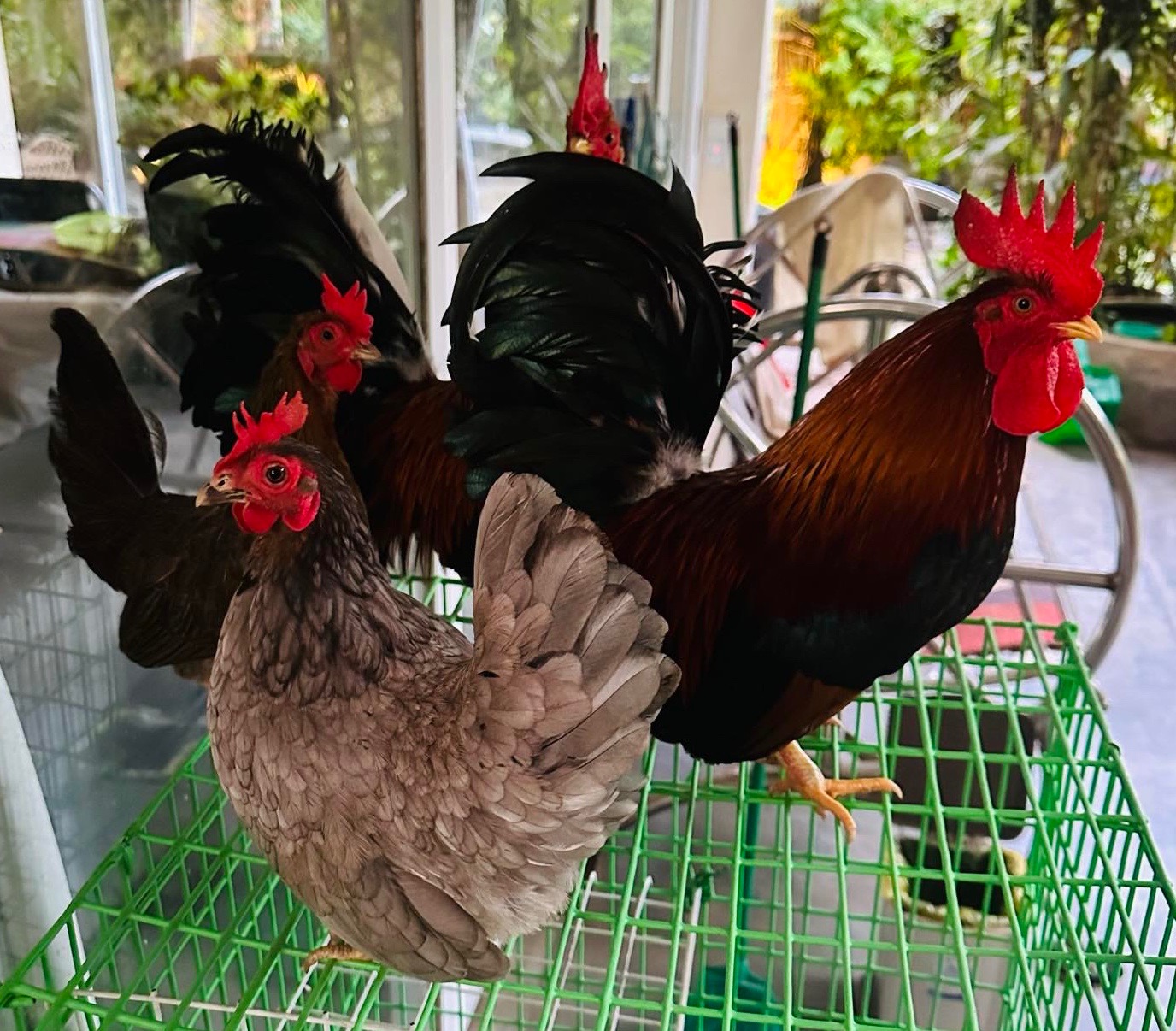

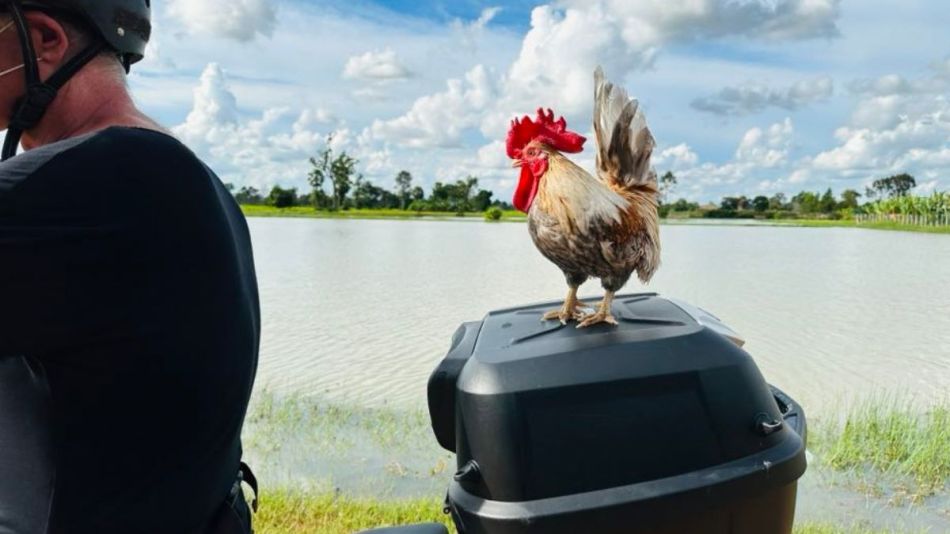
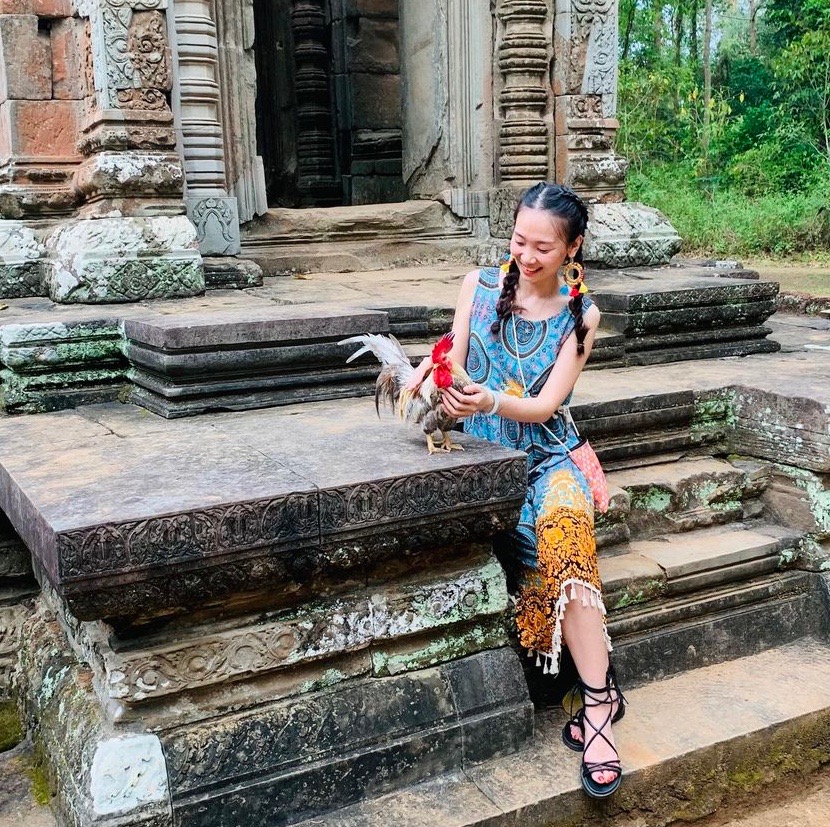
Angel is a house chicken because his mother died a few days after being attacked by a dog. She didn’t have any puncture wounds and seemed fine but shaken up a bit. The strange thing about her death, which was sudden, is she started eating the only egg we put into her clutch from another hen.
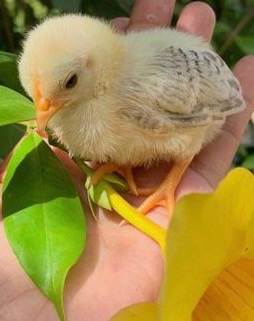
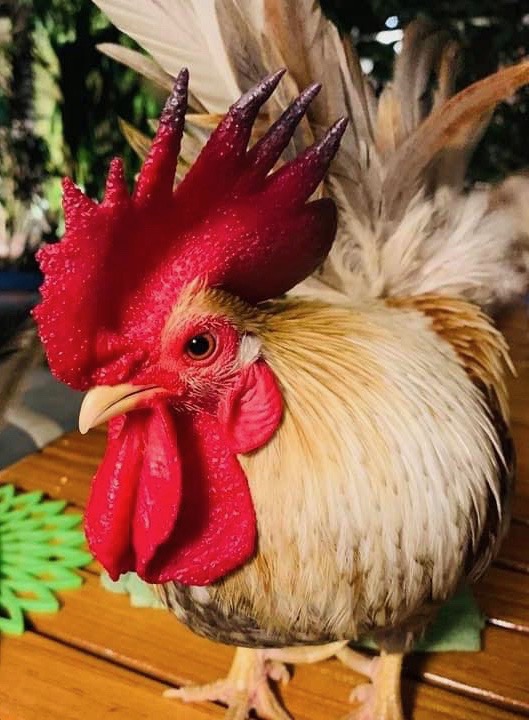
We take Angel into town or the countryside a lot.
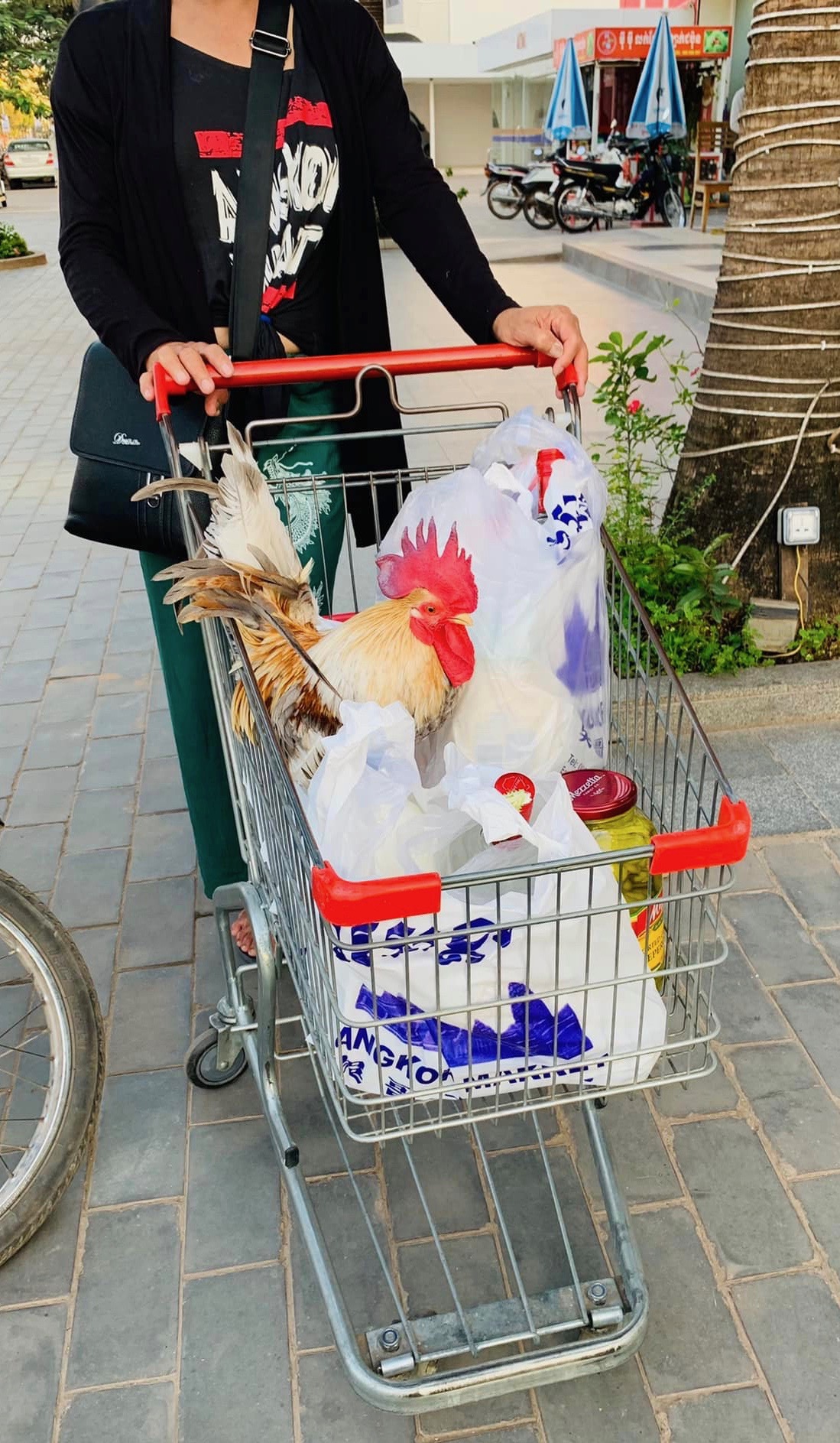
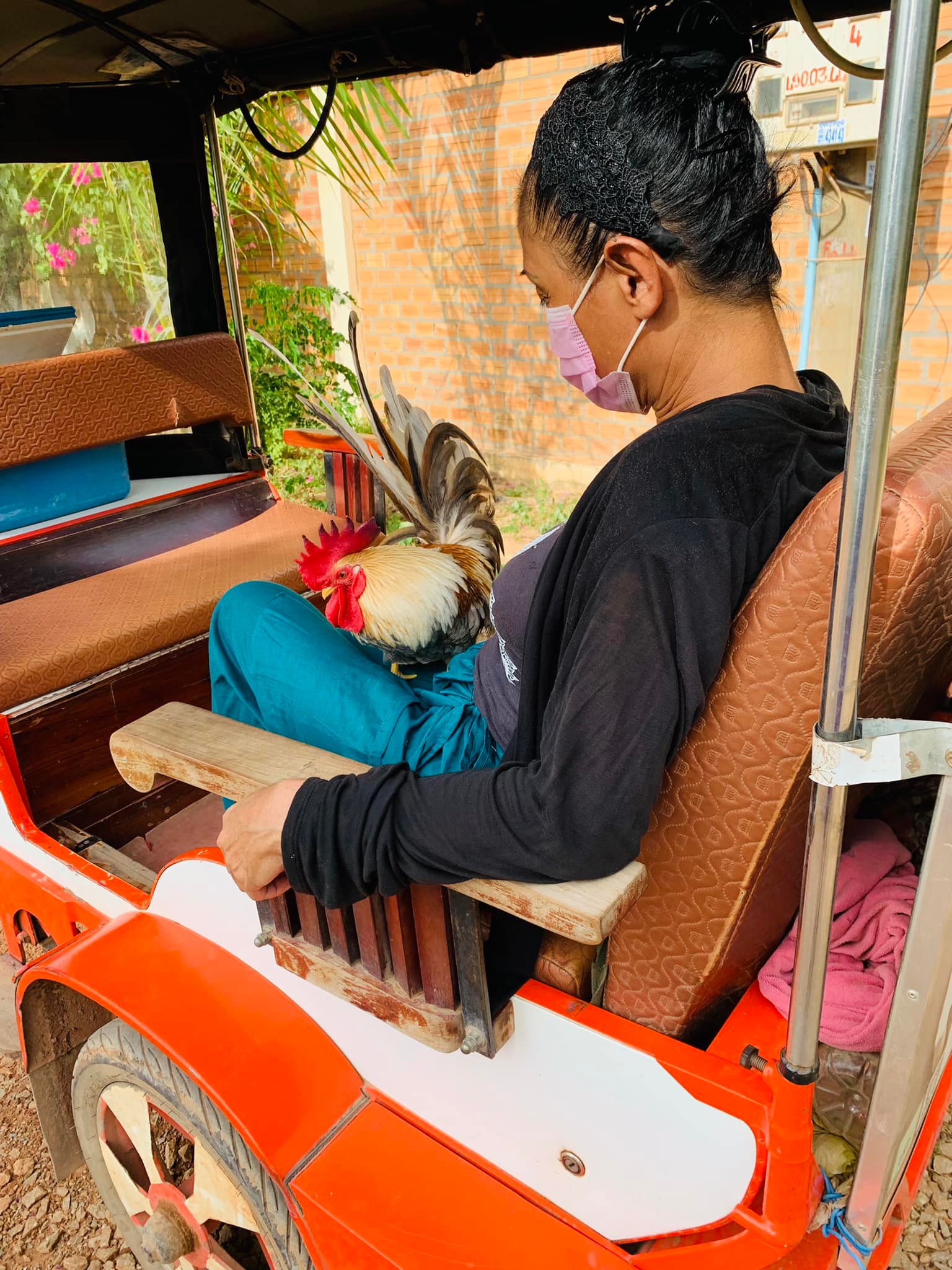
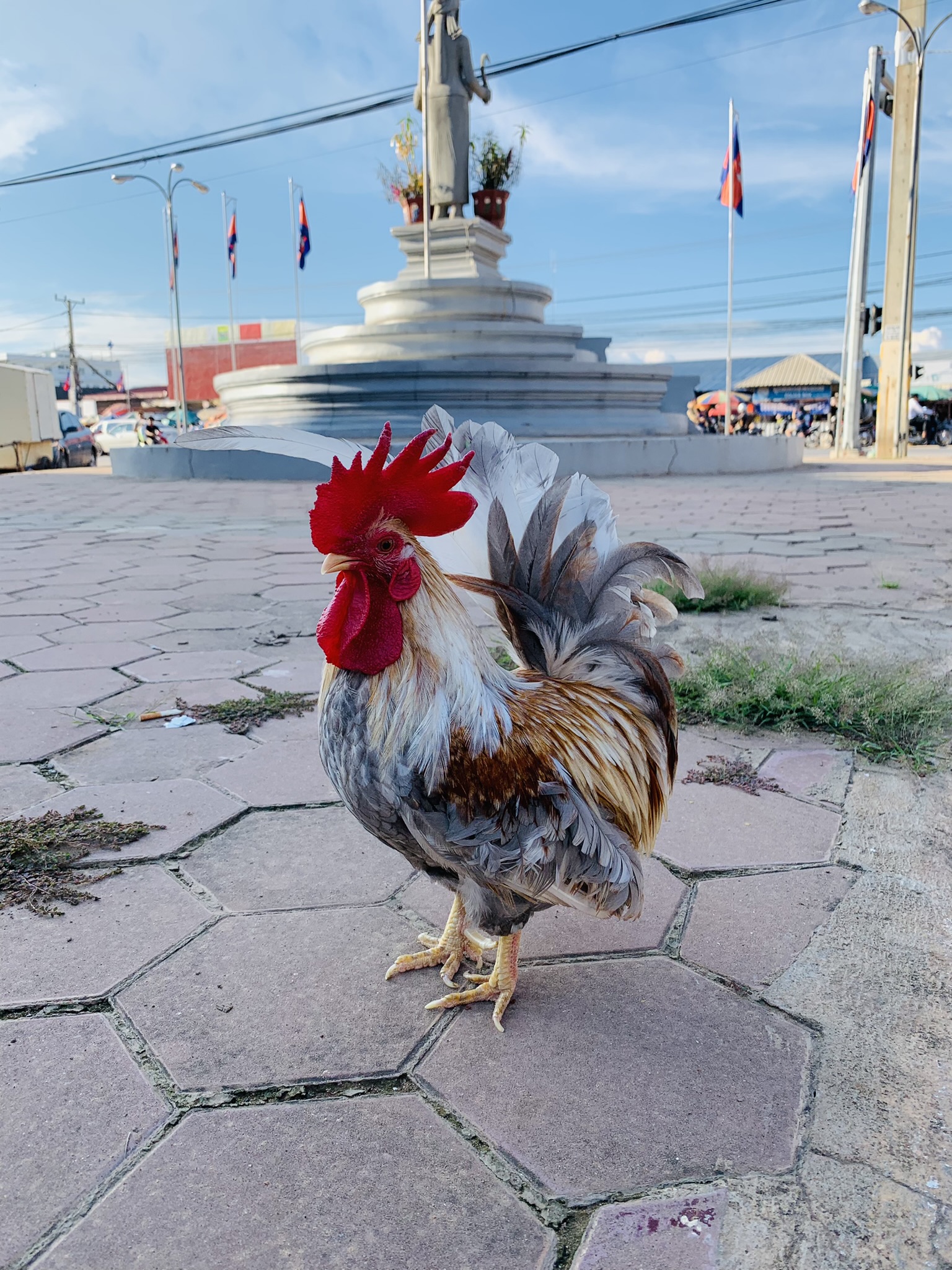
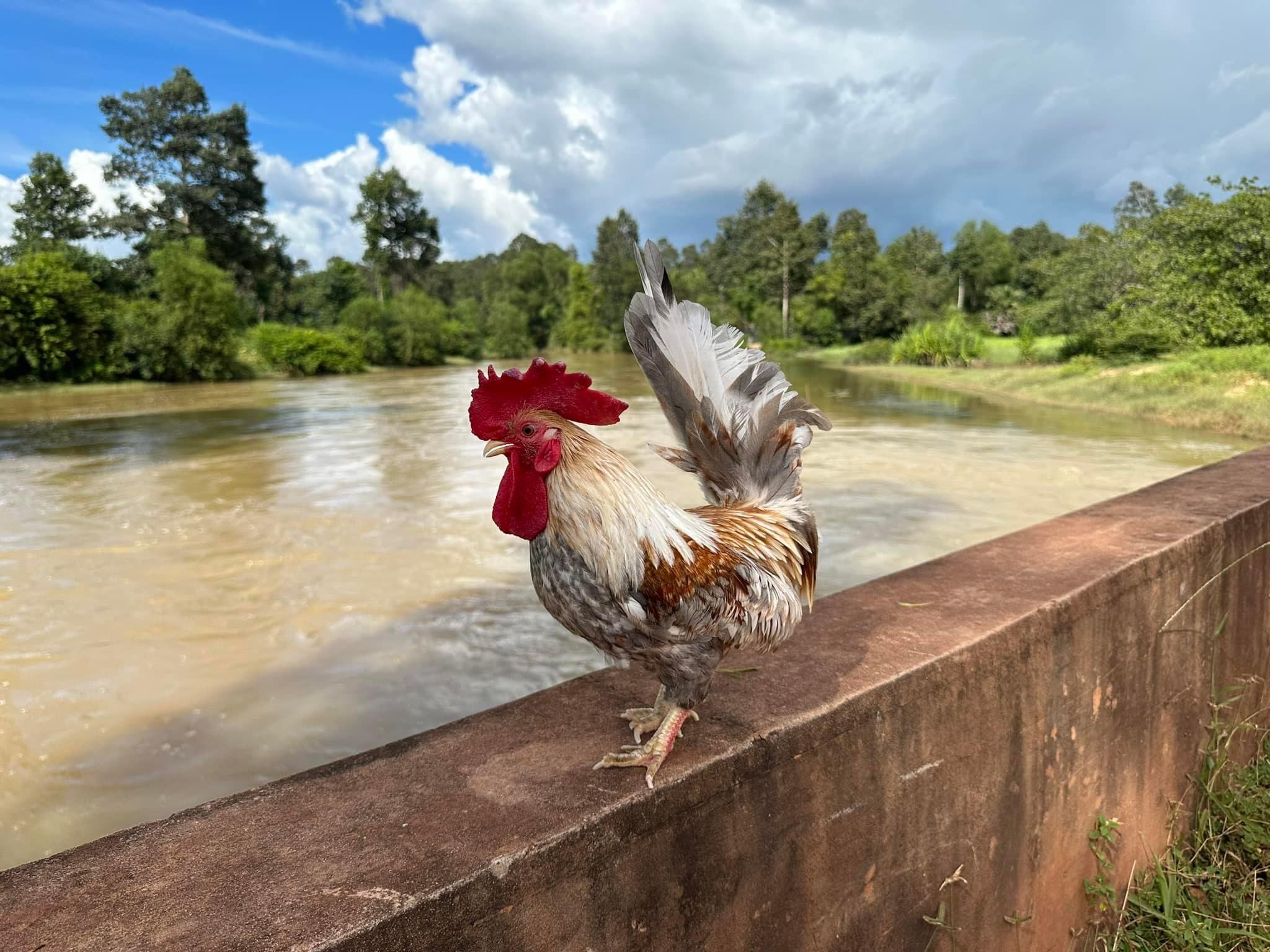
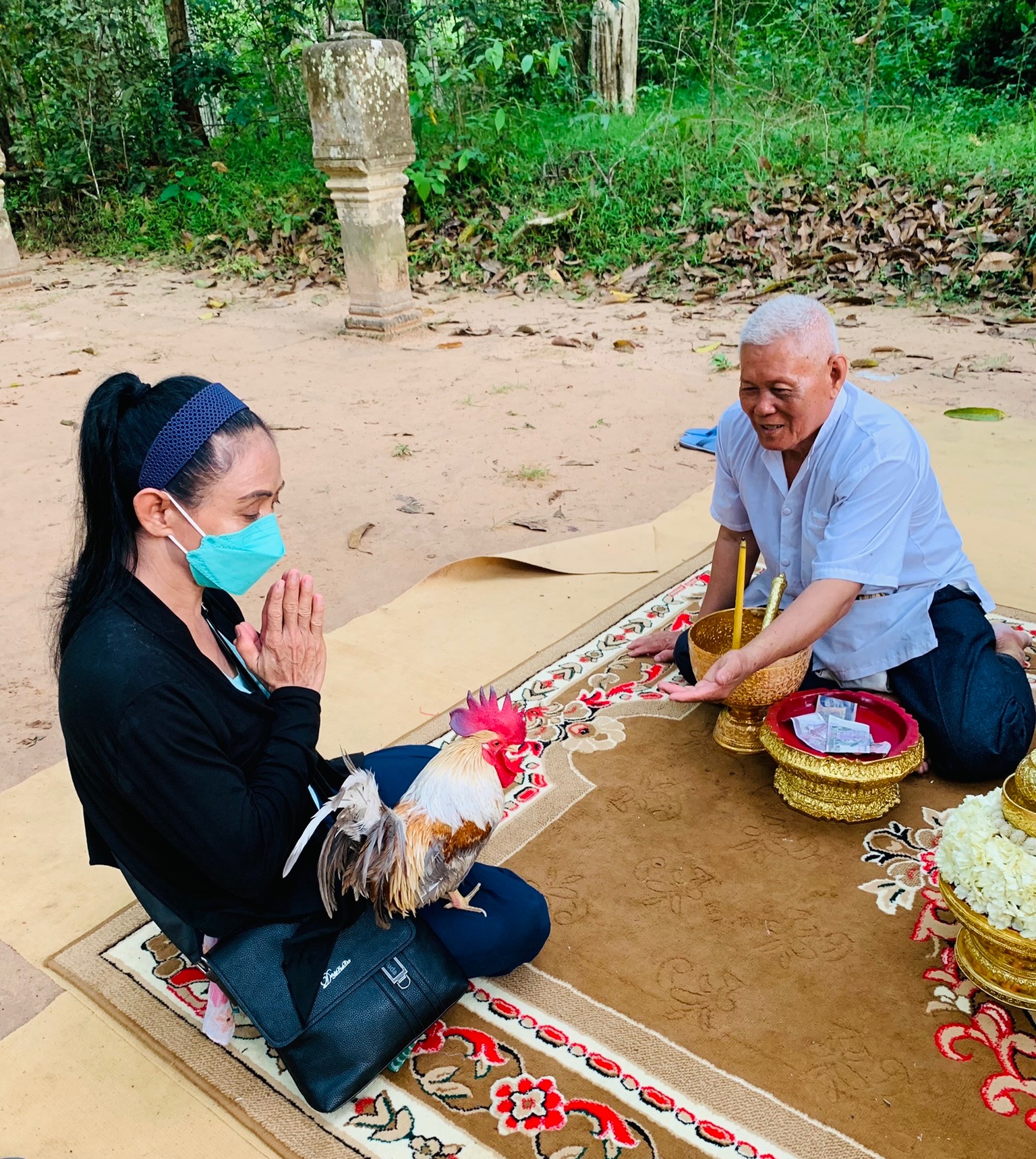
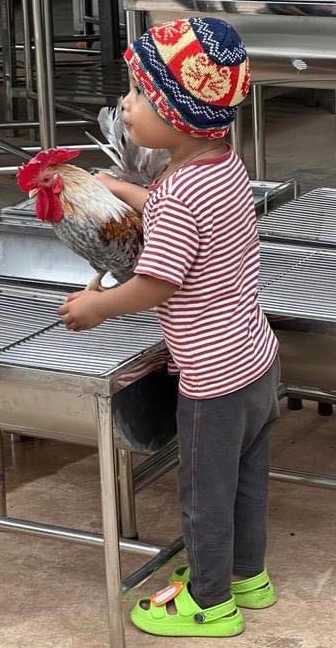
Despite the fact that chickens are something Cambodians have or see every day, the most common question is, “How can a chicken be so like a dog?”, meaning a pet. Angel doesn’t like any of our other chickens, but he has no fear of any human that wants to touch him or pick him up. A young Cambodian child that met Angel and was able to pick him up and cried when we had to leave.
Thanks to Jim and Somatra for sharing their story and photos, used with permission.
 Bitchin' Chickens
Thank you for the interesting story! So from your experience was it just bad luck or is it hard to raise and keep healthy bantam chickens in Cambodia? I am renting a villa near Battambang with a yard of 600sqm and was thinking of raising few chickens (but no roosters-too noisy…)just for fun. But I would not want to get myself into dealing with so many catastrophic events ending in early deaths after getting attached….
dave
LikeLike
I think there is a learning curve to understand how to deal with some illnesses, but others may be genetic or not treatable. We do have 2 veterinarians around here that will look at our chickens, but I think treatments for things beyond parasites is often just dealing with secondary symptoms. We also have a feedstore with just about any available medicine, antibiotic, or vaccine for chickens, and all of it is available over the counter. We do have fecal testing done for our chickens monthly to catch parasites. Coccidia and round worms are very common, especially in the wet season. The chickens that went blind, I haven’t a clue what happened. I thought of Marek’s disease, but the pupils didn’t present any symptoms, nor would we have been able to treat it. Over the last 5 years we’ve had up to nearly 20 bantam chickens and due to deaths, we are now down to 3. Japanese bantam chickens generally live 5-7 years. The three we have left are now 5 years old. The others were mostly beyond 4 years old. I think the thing you need to get used to is that chickens will be around for a relatively short time in comparison to cats and dogs. For common treatments we have on stock (either from Amazon or available from our veterinarians pre-mixed in a concentration suitable for chickens) the following:
Rooster Booster Poultry Cell: vitamins/minerals. From Amazon.HealthyGut Probiotics for Chickens: Oyster Shell (calcium supplement for laying hens): From Amazon. Our feed store has the oyster shell too.Vetericyn Plus Poultry Care Spray: for sores/wounds. From Amazon.
Premo Guard Poultry Spray: Plant based treatment for Mites, Fleas, Flies, and Lice. We’ve only had one case to treat so far. From Amazon.Corid: For coccidia. From Amazon, but our veterinarians have provided another medicine when they thought the chickens were becoming resistant to Corid. Fenbendazole: for roundworms. From our veterinarians.For tapeworms, our veterinarians have provided some medicine that I can’t remember. We’ve only had a positive test for this once. Some of the things above from Amazon may be available or have substitutes on Lazada Thailand. Most chicken feed stores have mixtures with antibiotics. The only other thing we have seen in a couple chickens that needed treatment is sinus infections, which in some cases were removed by our veterinarians and treated with antibiotics. We’ve had several cases of dry Fowl Pox. These birds are isolated and if it’s the dry form it will go away over time.
LikeLike