
Water is critical for life. Keeping your flock hydrated is a top priority. Dehydration can lead to decreased egg production, lethargy, weight loss, diarrhea, heat stress, organ failure and, even, death. And keeping that water source clean is also important. Contaminated waterers can be a vector for a variety of bacterial pathogens and parasites so easily cleaning is a must.
When I first got chickens in 2005 the only thing I needed to purchase for my new flock was a waterer. I live on a small island and the local pet and feed shop had a limited selection of poultry supplies. I ended up buying a galvanized waterer.
This post is intended to help you choose the best waterer for you and your flock keeping in mind cost, durability, and ease of cleaning.
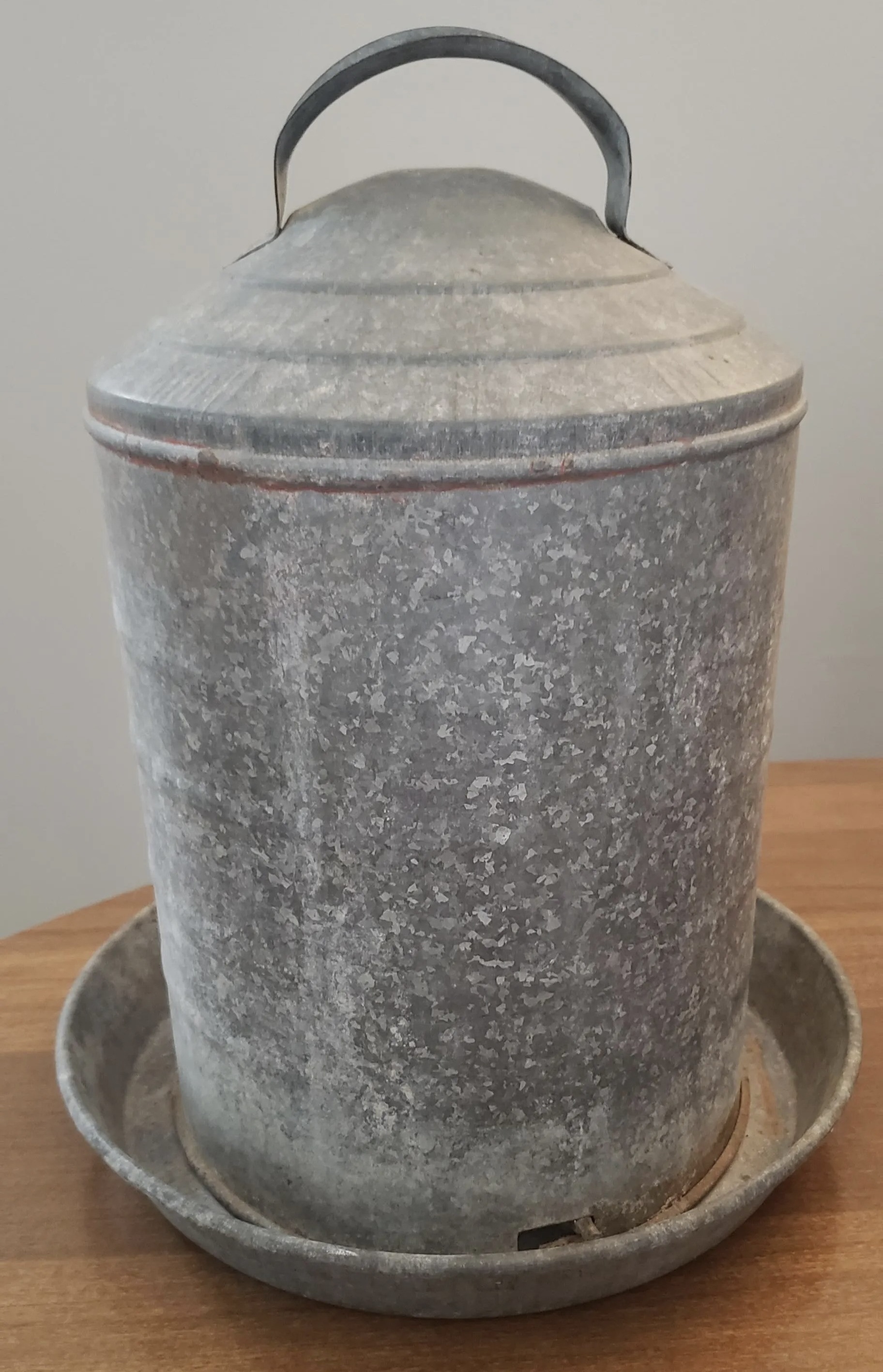
Galvanized 3 gallon ($50 USD)
Cons
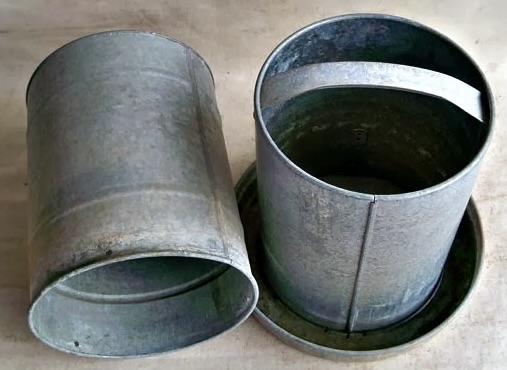
This style tends to come in 2-5 gallon models with the top part sliding over the bottom. The inner sleeve, once filled in the upright position, is covered by the outer shell.
- There is a handle at the top, but you’ll quickly find that if you lift it when full will separate from the bottom half.
- This type can’t be suspended above the coop/run floor as the two halves won’t hold together.
- Metal will rust over time.
- In winter, moisture between the two pieces can freeze making it difficult to refill.
- For those of you who use apple cider vinegar it can corrode metal waterers.
Plastic – Chick Size ($10 USD)
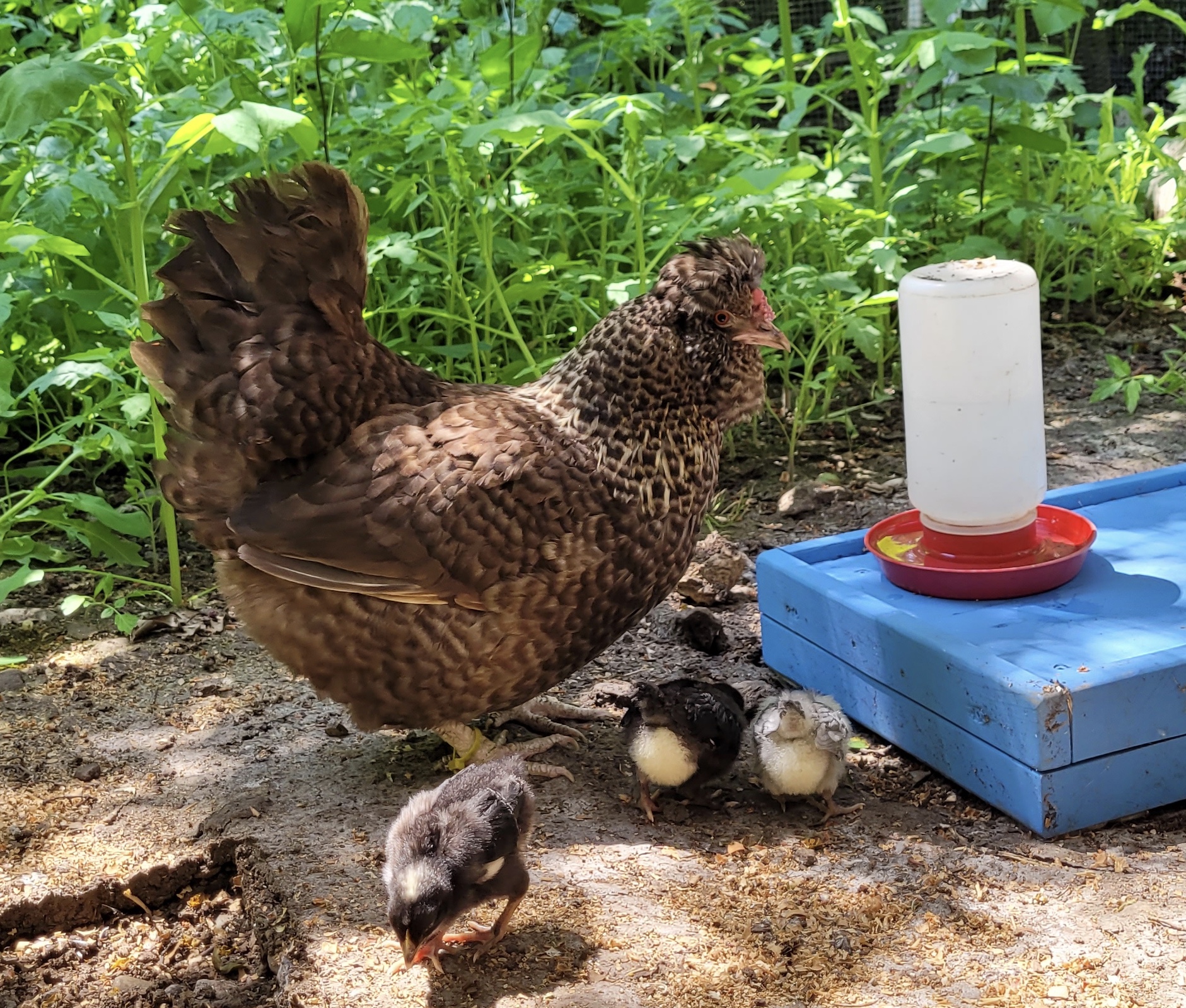
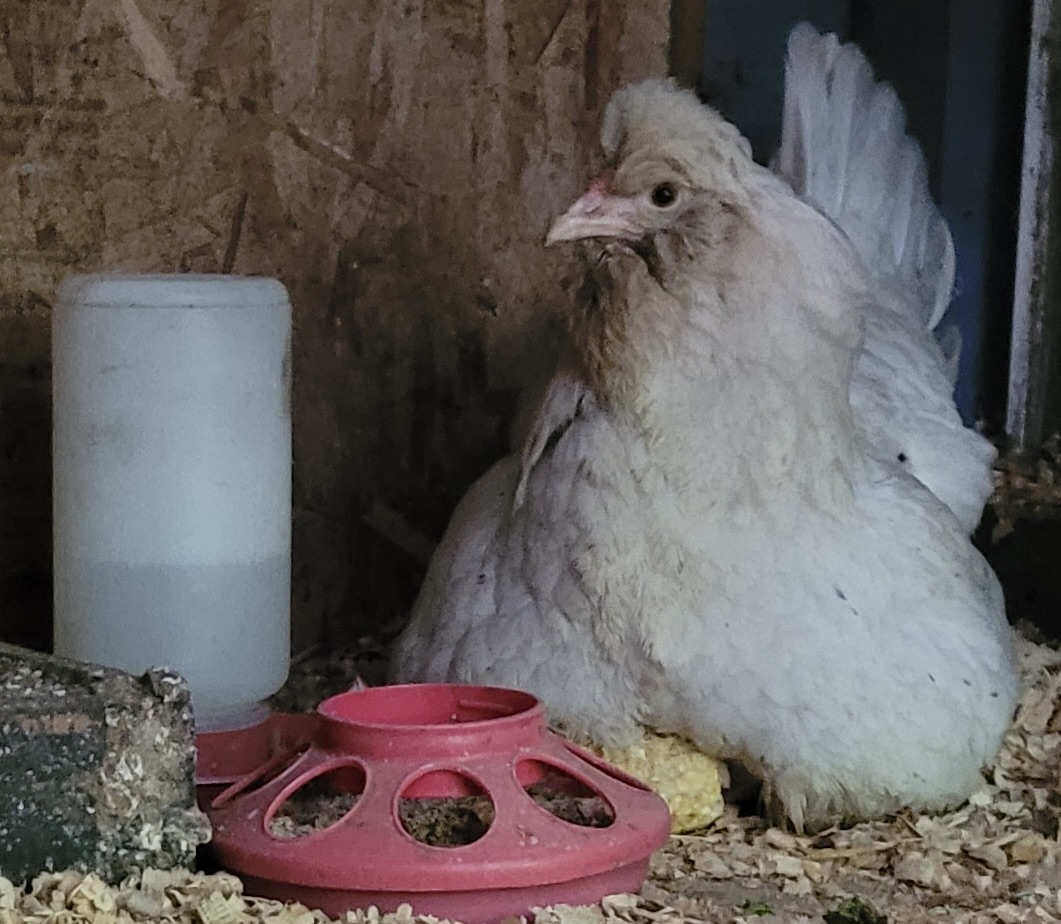
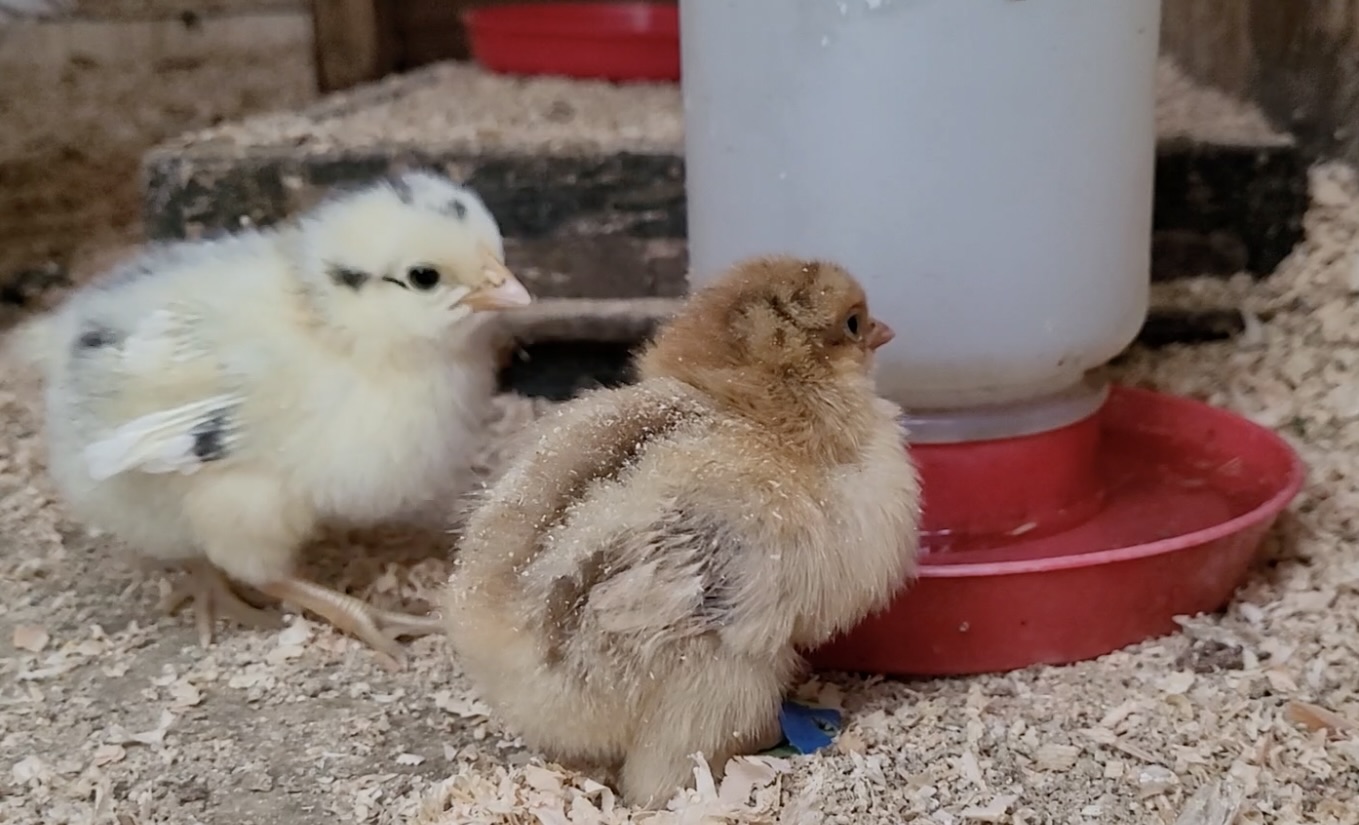
Photo credits: Bitchin’ Chickens
Pros
- Although the base is screw-style I have never had a problem threading them.
- They are perfect for small chicks that might fall into the tray of larger sized waterers and drown.
- I use them for my whole flock.
- They are ideal for broody hens who don’t drink much and are often confined in a smaller coop.
Cons
- The smaller opening makes for more difficult cleaning; my skinned knuckles can attest to that.
Plastic 1 Gallon ($25 USD)
I have a number of these and find they are pretty useful. Over time, I have broken either tops or bottoms. Because they not all are the same brand it has been a challenge to thread them as easily as I’d like.
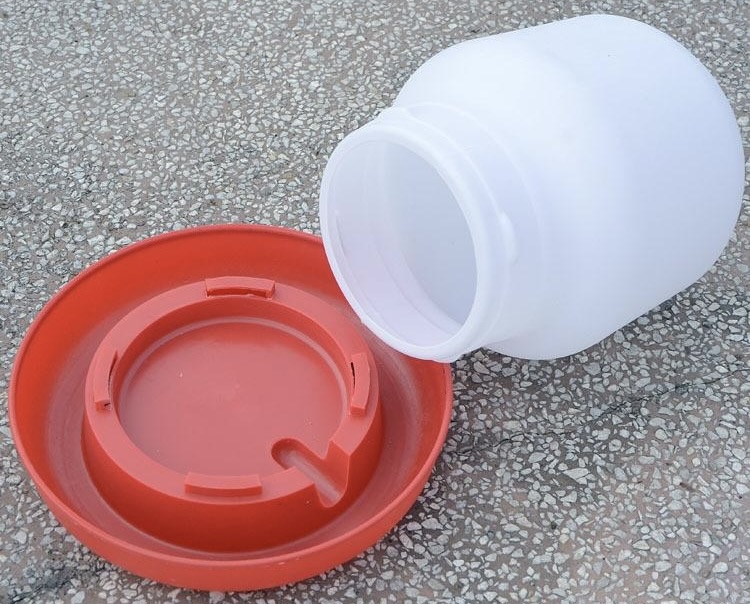
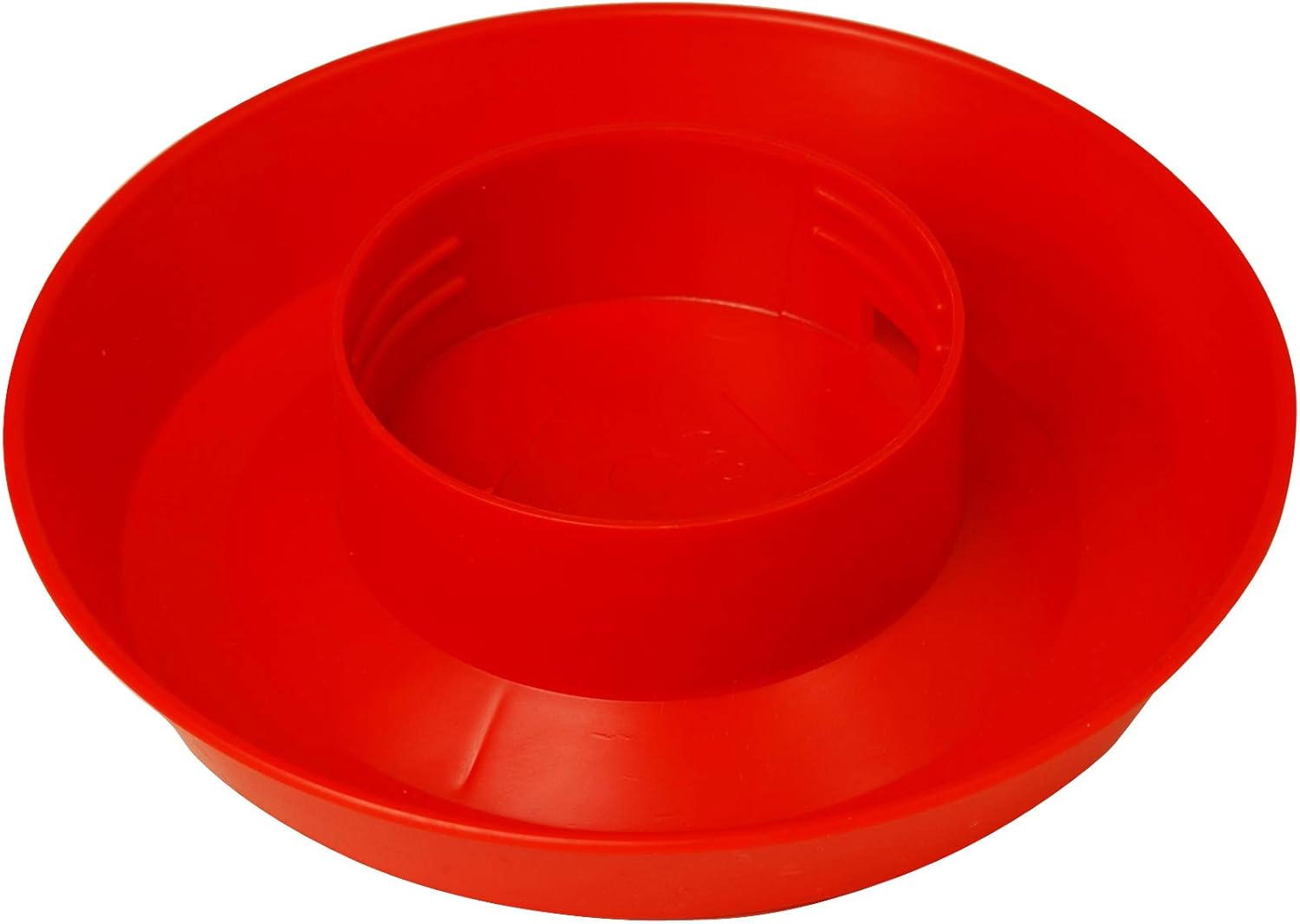
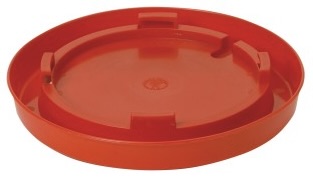
Plastic Water With Slide Base; Screw Base; Slide Base
Pros
- They are a reasonable weight when filled.
- Easily fit in your kitchen sink or plastic tote for deep cleaning.
- Slide type bottom tray are easier to clean and to attach to top
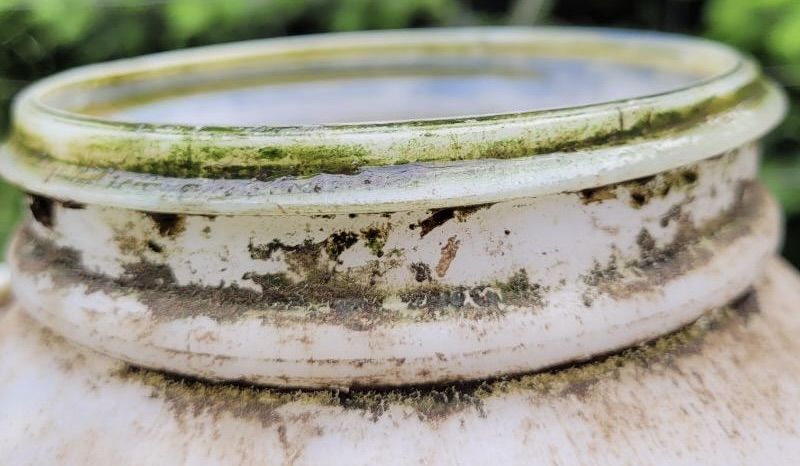
Threads can harbour dirt and algae which require regular cleaning
Cons
- Can split in freezing weather.
- Break easily if dropped when full (it’s happened more than I’d like).
- The screw-bottoms can be hard to clean.
- Sometimes difficult to thread properly.
Little Giant 3 gallon ($36 USD)
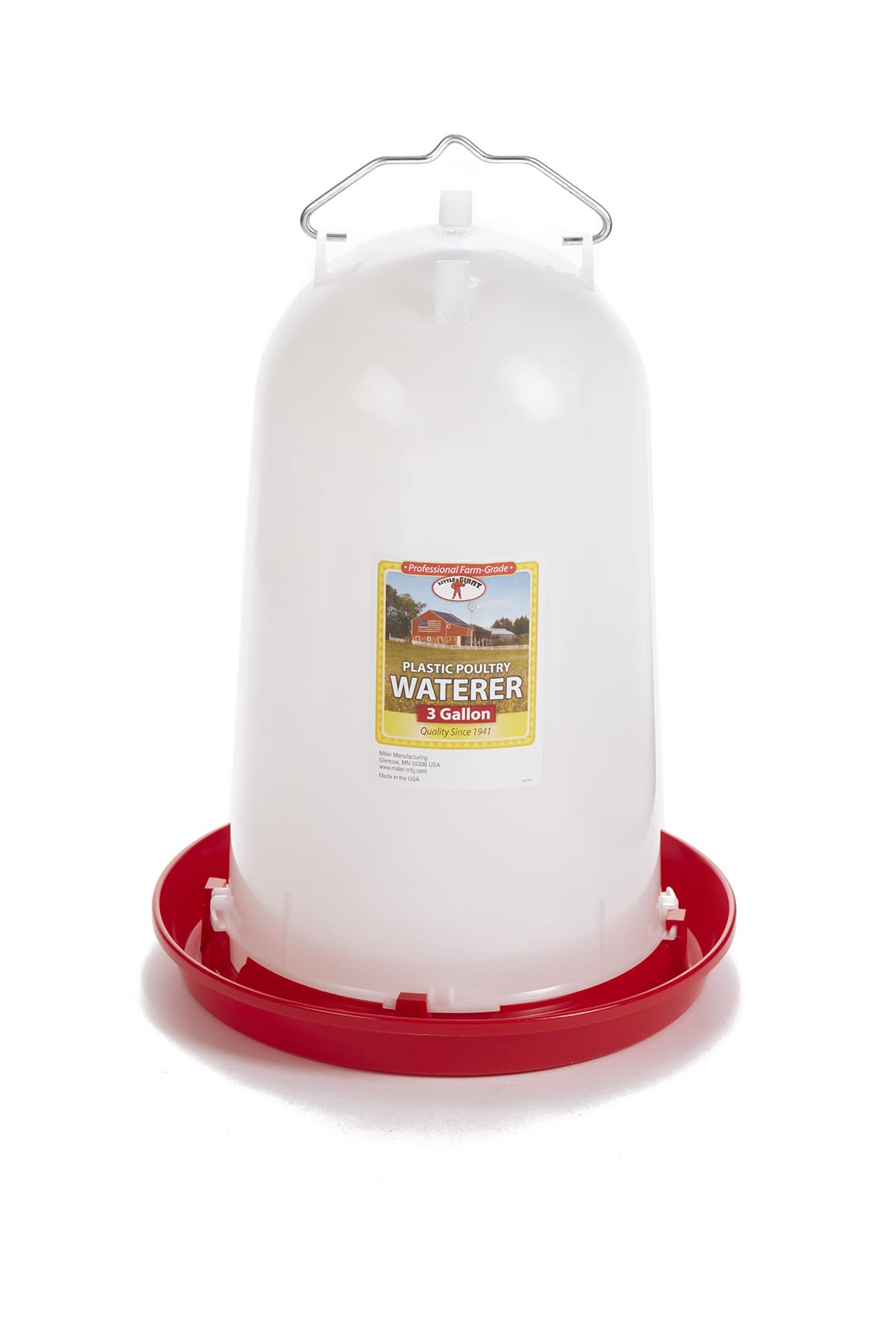
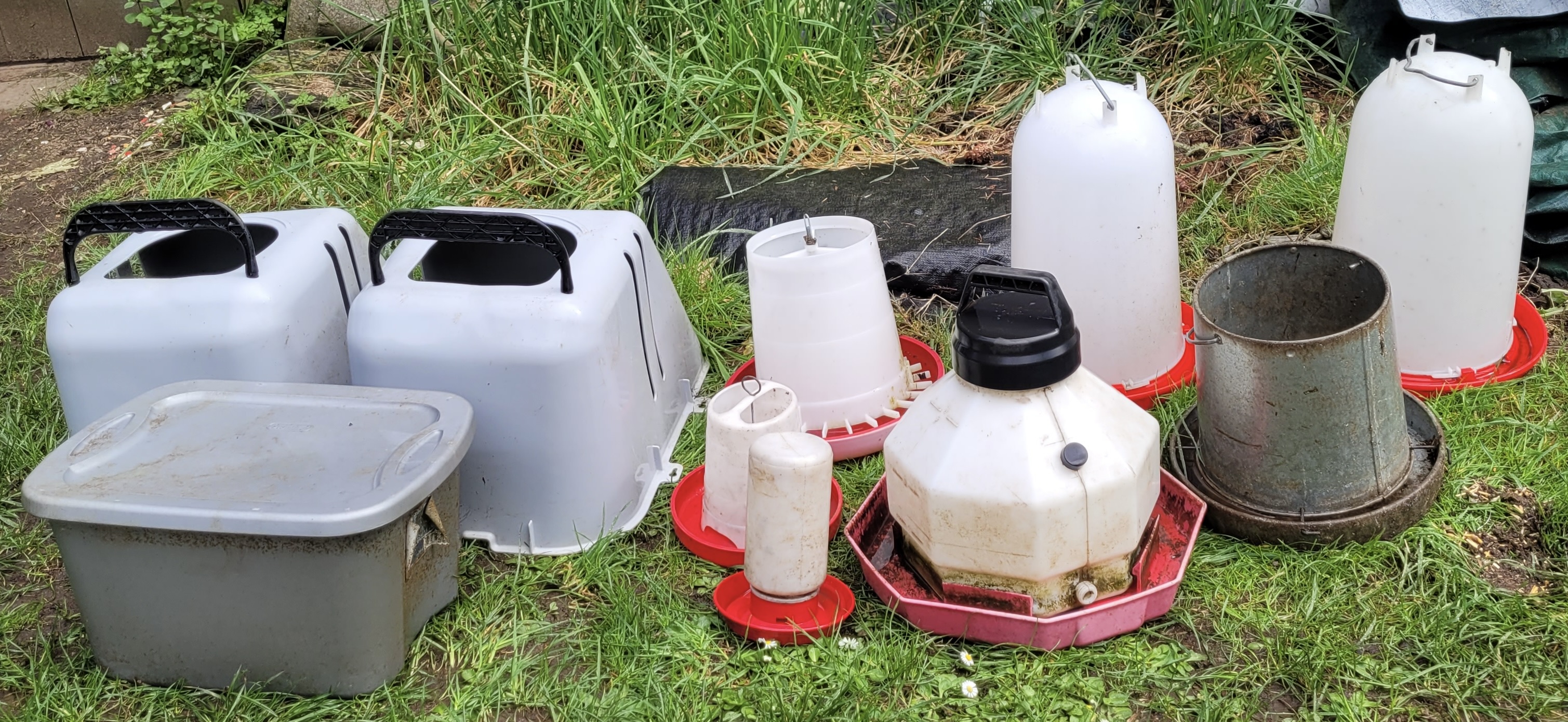
Fifteen years into chicken keeping and I’d never tried the larger style plastic waterers. That is, until recently, when I was given a pile of chicken supplies from a community member who had rehomed their flock. In the bunch was a small chick waterer, a two styles of 3 gallon Little Giants.
Pros
- Unlike my galvanized model that had to be filled in the upright position this one is designed to be filled from the bottom. There are four small plastic knobs on the top that allow it to sit level in the upside down position. Once the bottom tray has been removed (slide, rather that screw style) you can fill it as much as you want (I usually don’t do more than 2/3 because of the weight), reattach the bottom then carry to your destination. Once there, grasp the handle and flip into the upright position.
- Not many areas that would make it difficult to clean (i.e. ledges, screw threads, etc)
Cons
- It’s unwieldy to clean indoors. It’s ideal if you live in a climate where you can deep clean easily outside using a scrub brush and hose.
Little Giant 3 gallon ($48 USD)
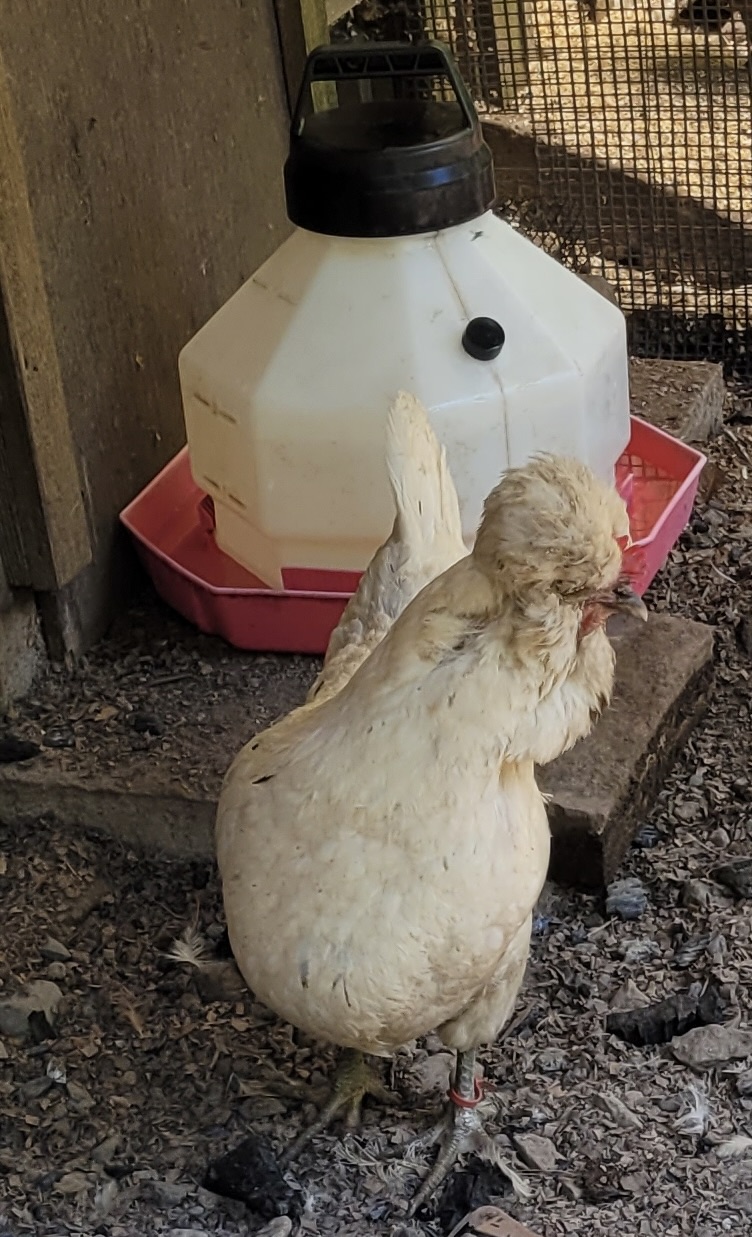
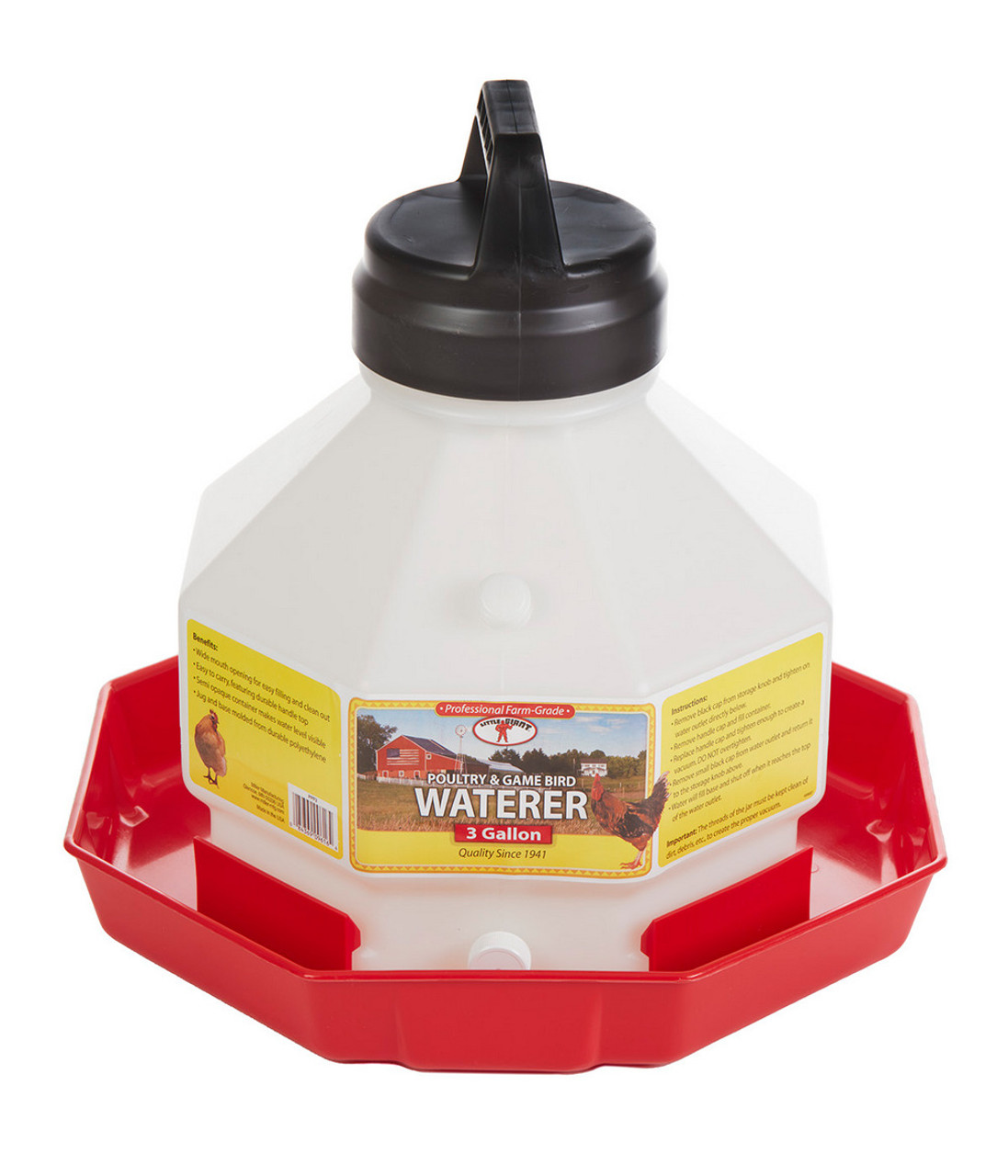
Pros
- Heavy-duty with strong handle
- Large opening in the top allows for easier cleaning
This one was from the freepile that I got and, as you can see, required a bit of cleaning.
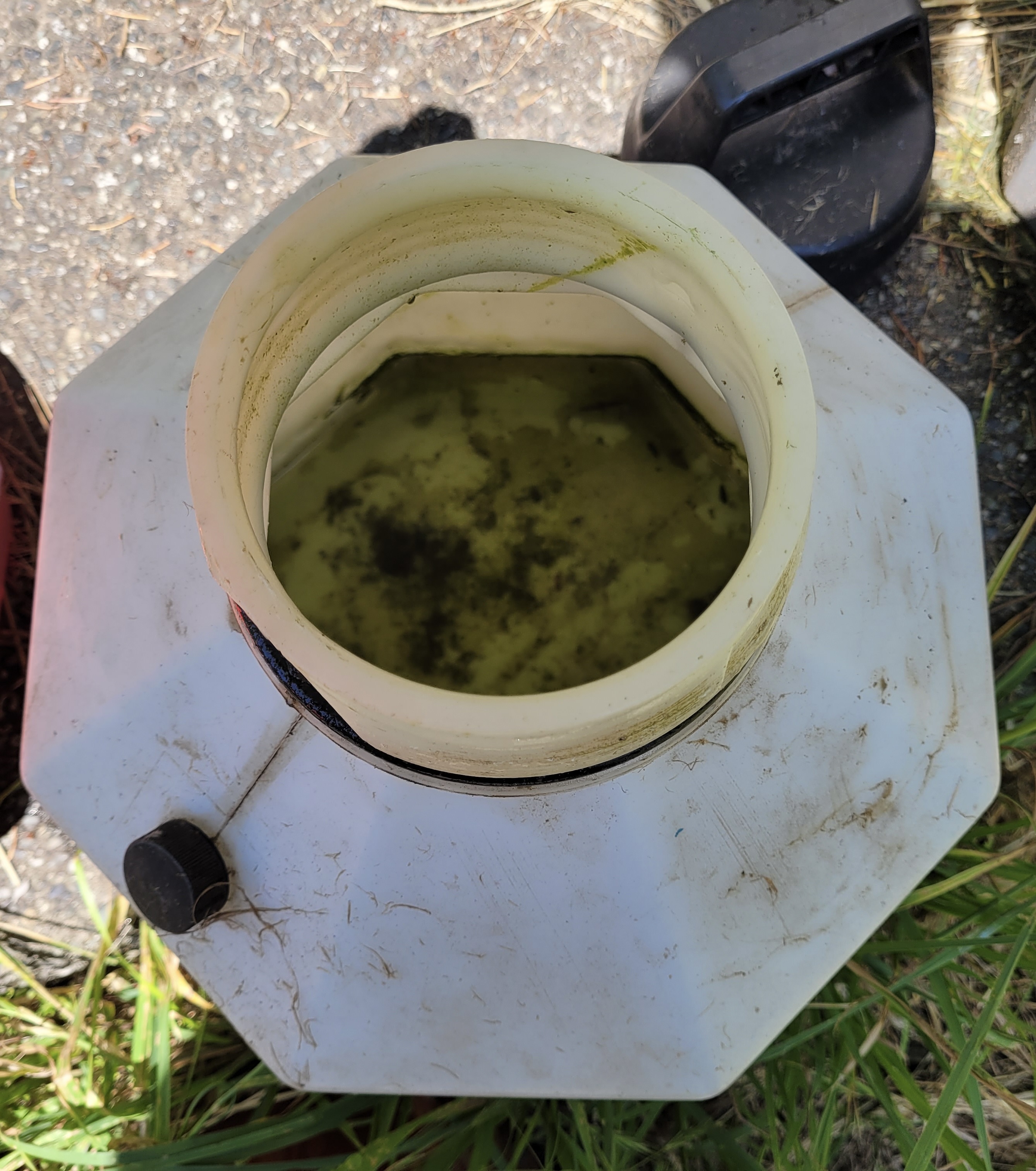
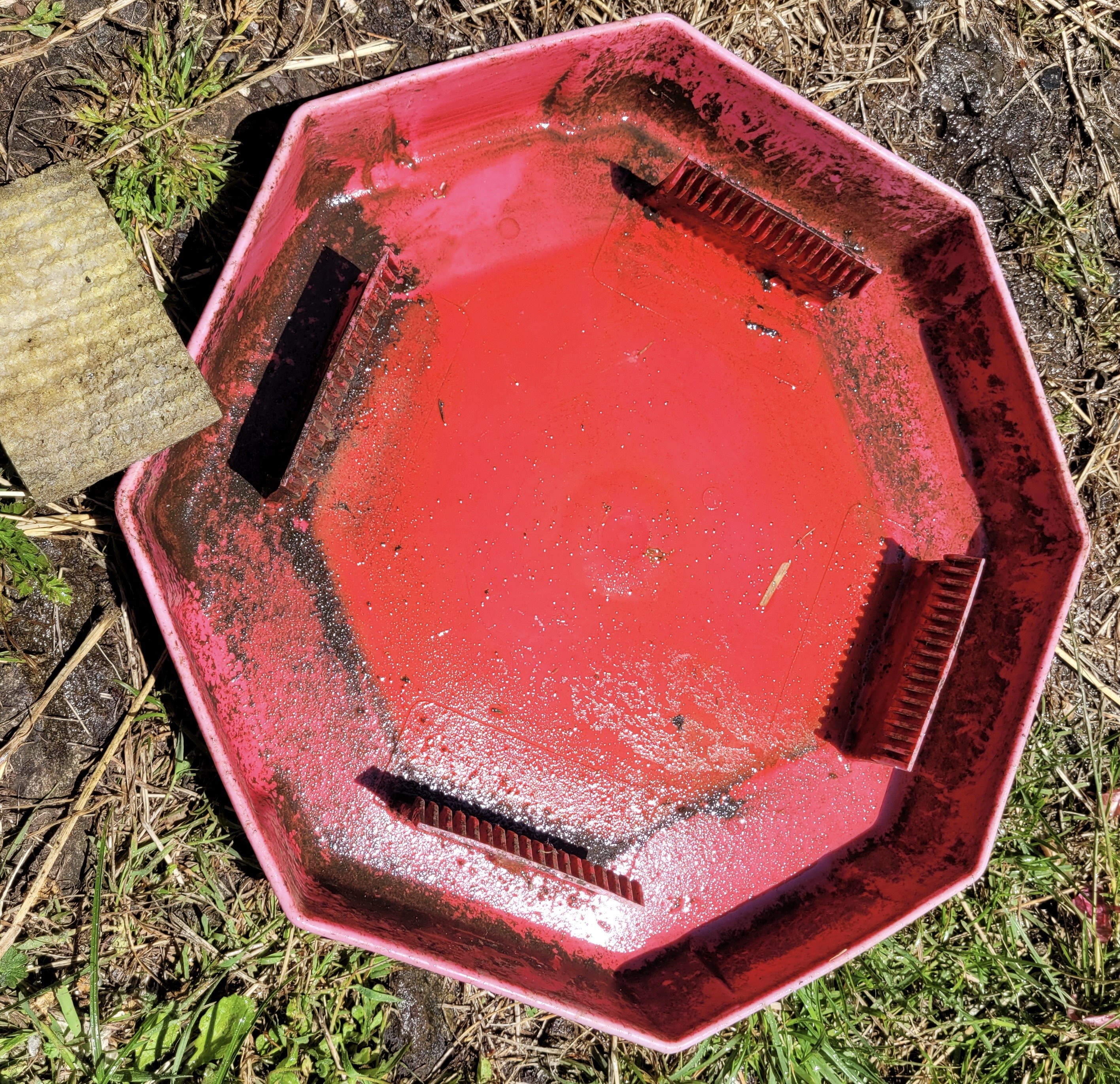
Cons
- Both the top and bottom are octagonal which means more corners and surfaces to clean, especially on the inside
- The top clips into four brackets in the base, which are difficult to clean without a scrub brush
- The unit must be filled in the upright position. The bottom opening can be covered by a screw cap, while in transit. Once in place it can be removed and attached to a threaded knob at the top.
Poultry Supply 3 gallon
I contacted Owltra in the USA to see if I could snag a complimentary rat trap in exchange for writing an honest review. As it turns out the company was on board but they don’t ship to Canada. They passed my request on to their Canadian distributor, who were more than happy to oblige. Not only did they offer me a rat trap but also sent a mouse trap, a waterer and feeder. I was blown away by their generosity.
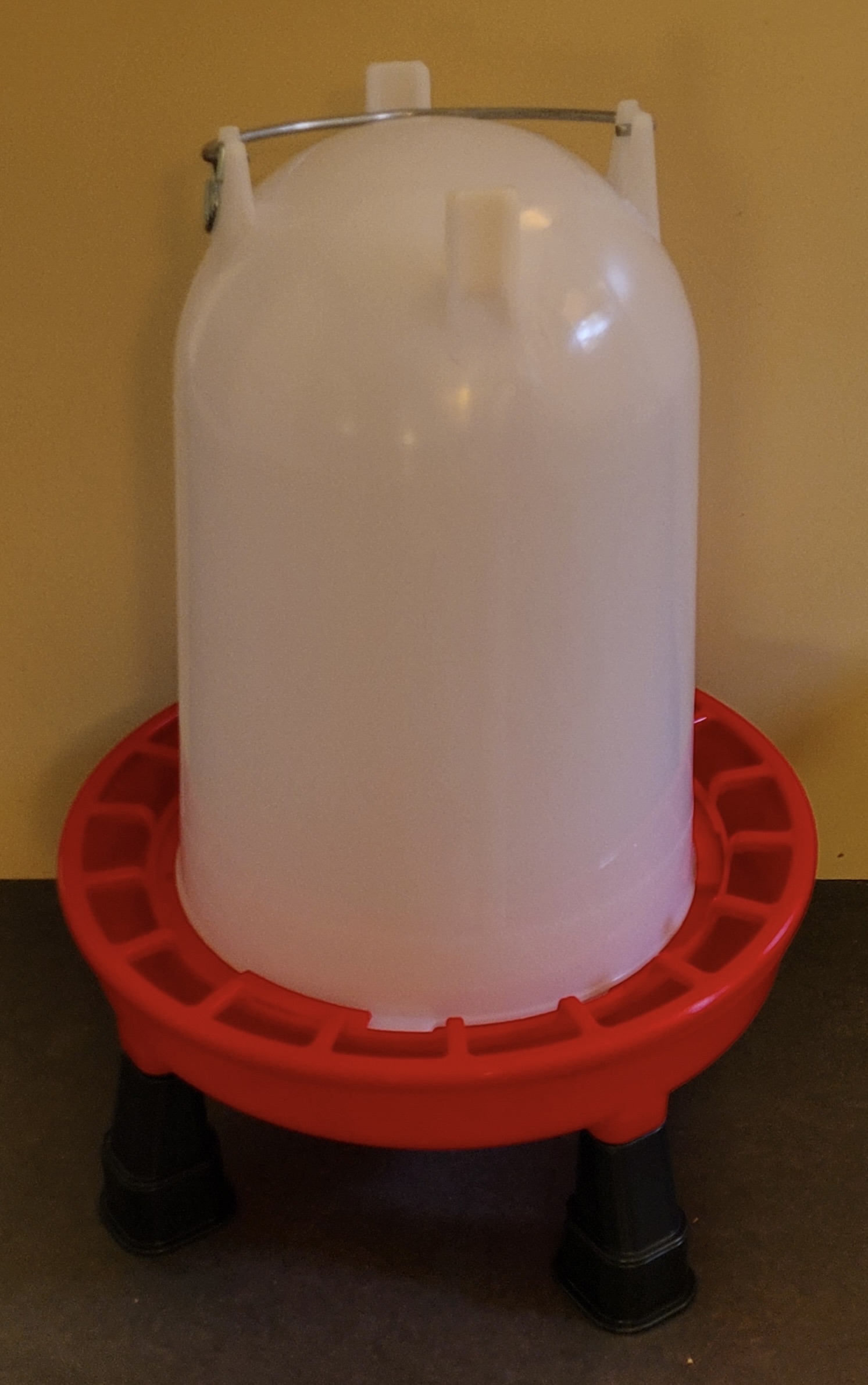
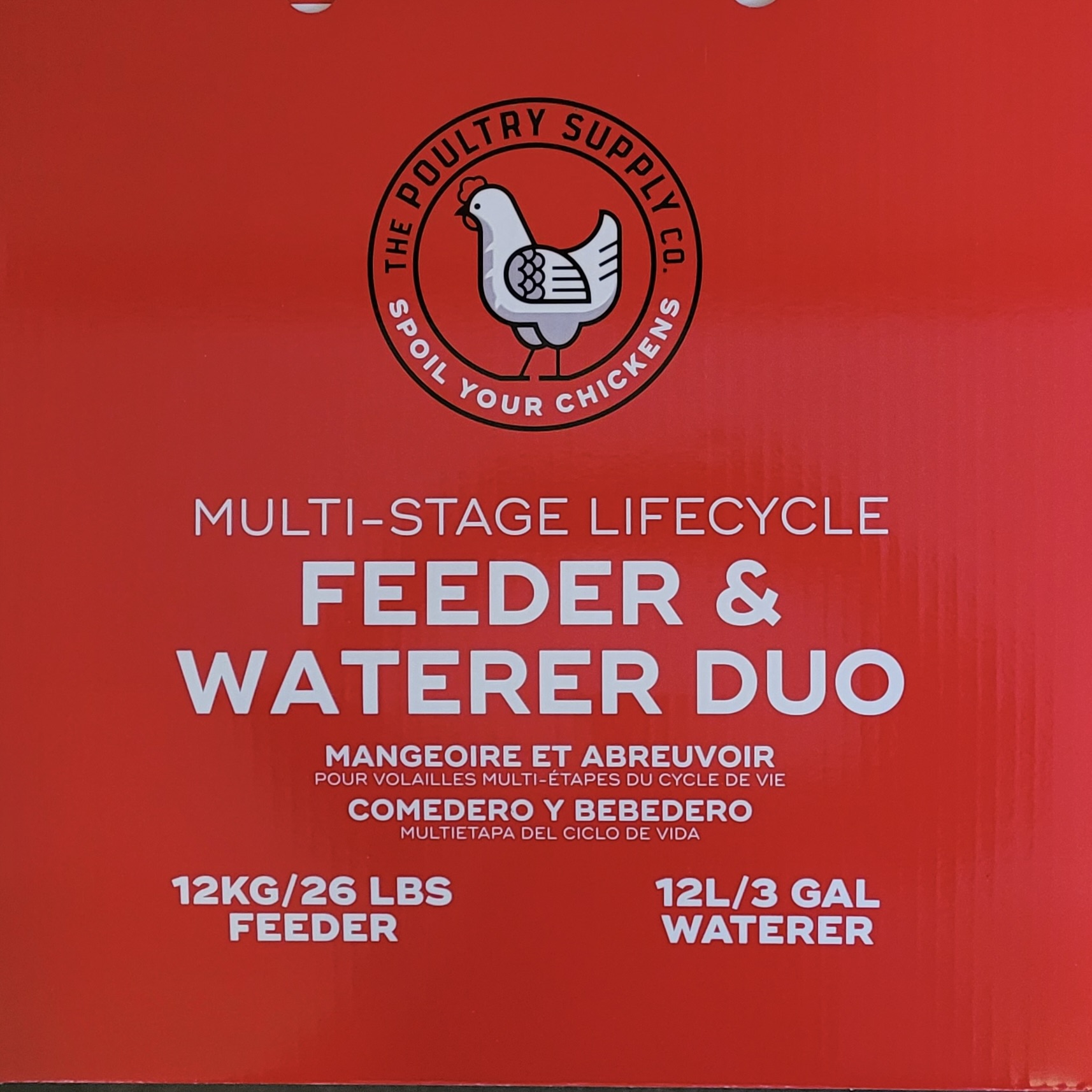
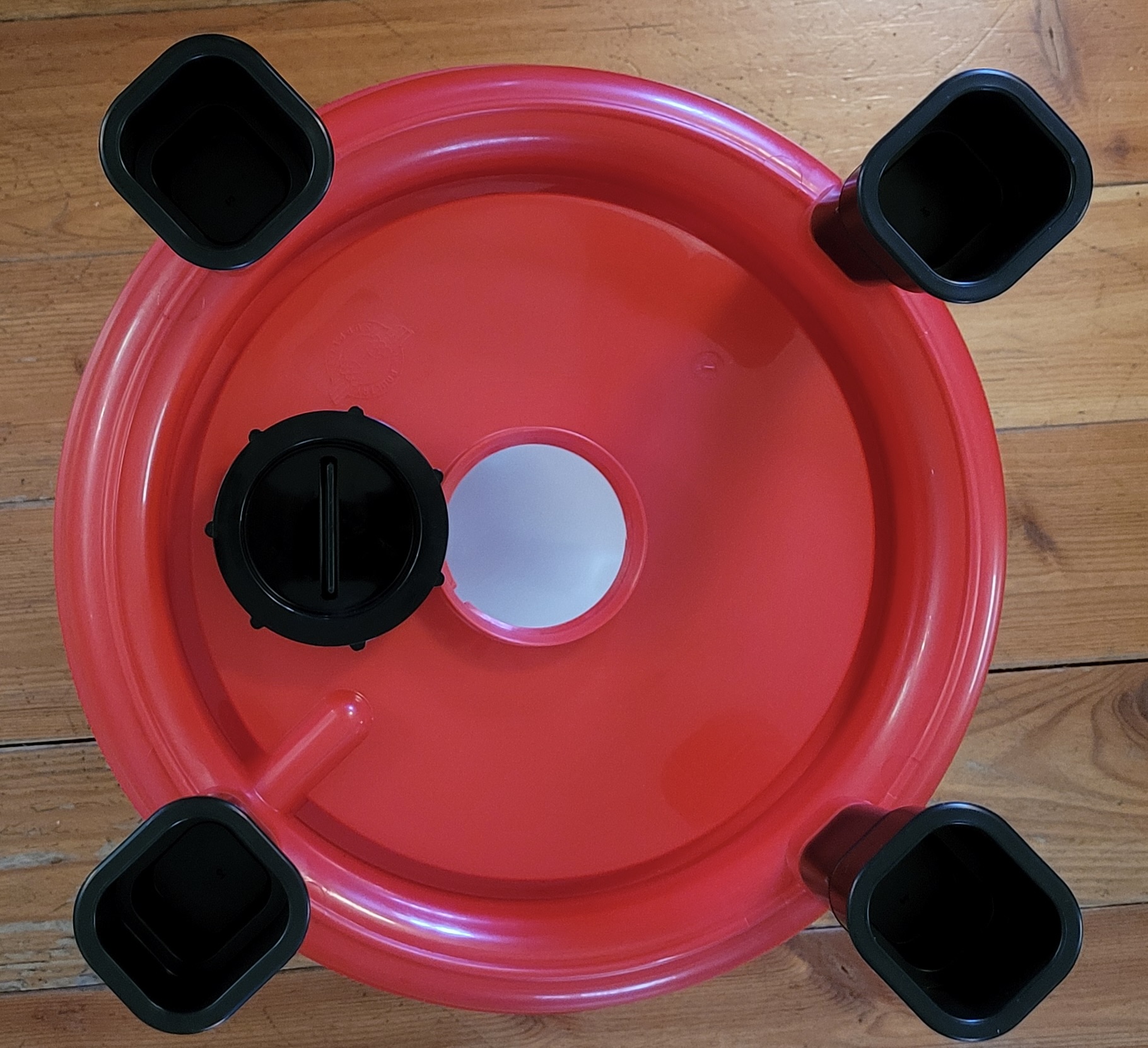
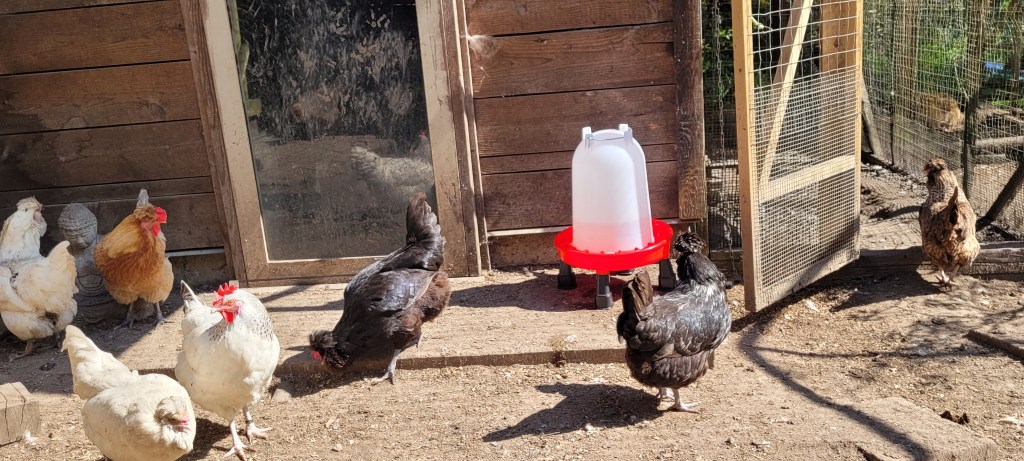
Photo credits: Bitchin’ Chickens
Pros
This waterer is similar to the Little Giant but has two additional features that I appreciate:
- You don’t have to detach the bottom when filling. There is a plug in the bottom which is easily removed. Again, like the Little Giant, I carry it upside down then flip it into the upright position once I get into my chicken enclosure.
- It can be set directly on the ground or raised on four detachable legs. This is great if you want to prevent small chicks from falling into the reservoir. In the raised position it gets less messy from dirt being kicked in by my flock.
Cons
- Although there is a plastic mesh guard that fits around the tray I wouldn’t use this with small chicks in case they got caught in the grid and drowned.
Omlet Insulated Chicken Water 2.9 gallons ($89 USD)
I been the recipient of complimentary products from Omlet so when they launched an Insulated Stay Clean Chicken Drinker (what we in North America would call a Waterer) I asked if they’d be willing to send me one to test. I was pretty confident, based on my experience of their auto coop door, that this would also be a quality product. I was stoked when I found out the Insulated Drinker is made from an insulated reservoir sandwiched between two layers of heavy duty plastic which makes it ideal for both hot and cold weather. Tested at -20C it significantly increases the amount of time the water stays liquid in freezing conditions. The cups have to be swapped up with the nipples once the temperature hits -5C.
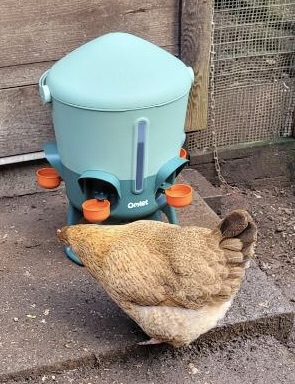
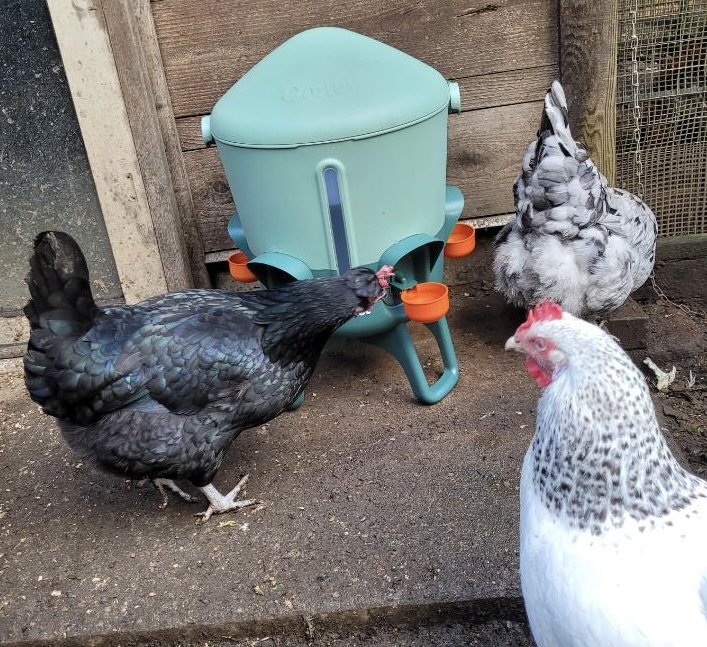
Photo credit: Bitchin’ Chickens
Pros
- Made from safe BPA & PFA-free plastic, stainless steel bolts and screws
- Visible water level via a transparent window
- Suitable for all breeds
- Includes legs with option to hang
- UV stable
- Suitable for use with apple cider vinegar
- Rust and corrosion resistant
- Hose down or wipe clean
- Anti-topple design
- Easy to fill and carry
- Locking, sloped lid that deters birds from standing on top of it
- Recyclable
I’ve used the product for several months and have no cons to report.
Nipples ($14/10) and Cups $18/5 (USD)
There are a number of DIY water systems that include nipples and cups that I will address in another post. I did have one nipple waterer but only one of my hens ever used it. I think these options are easier to introduce to birds when they are young and before they become acclimated to another style of waterer.
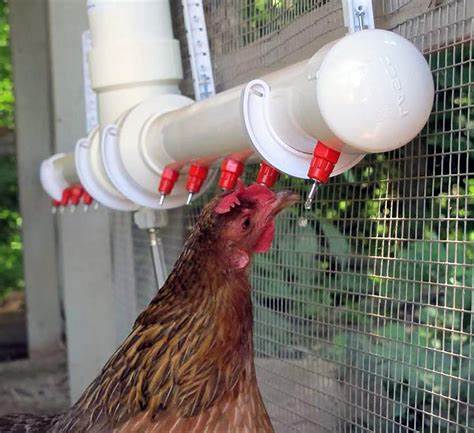
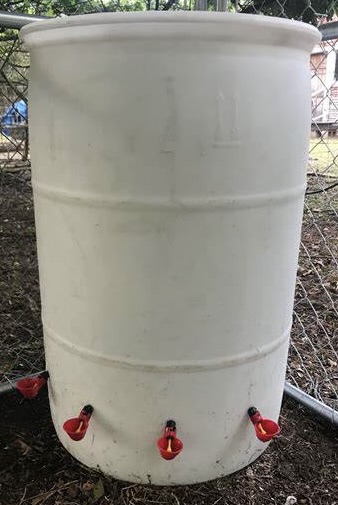
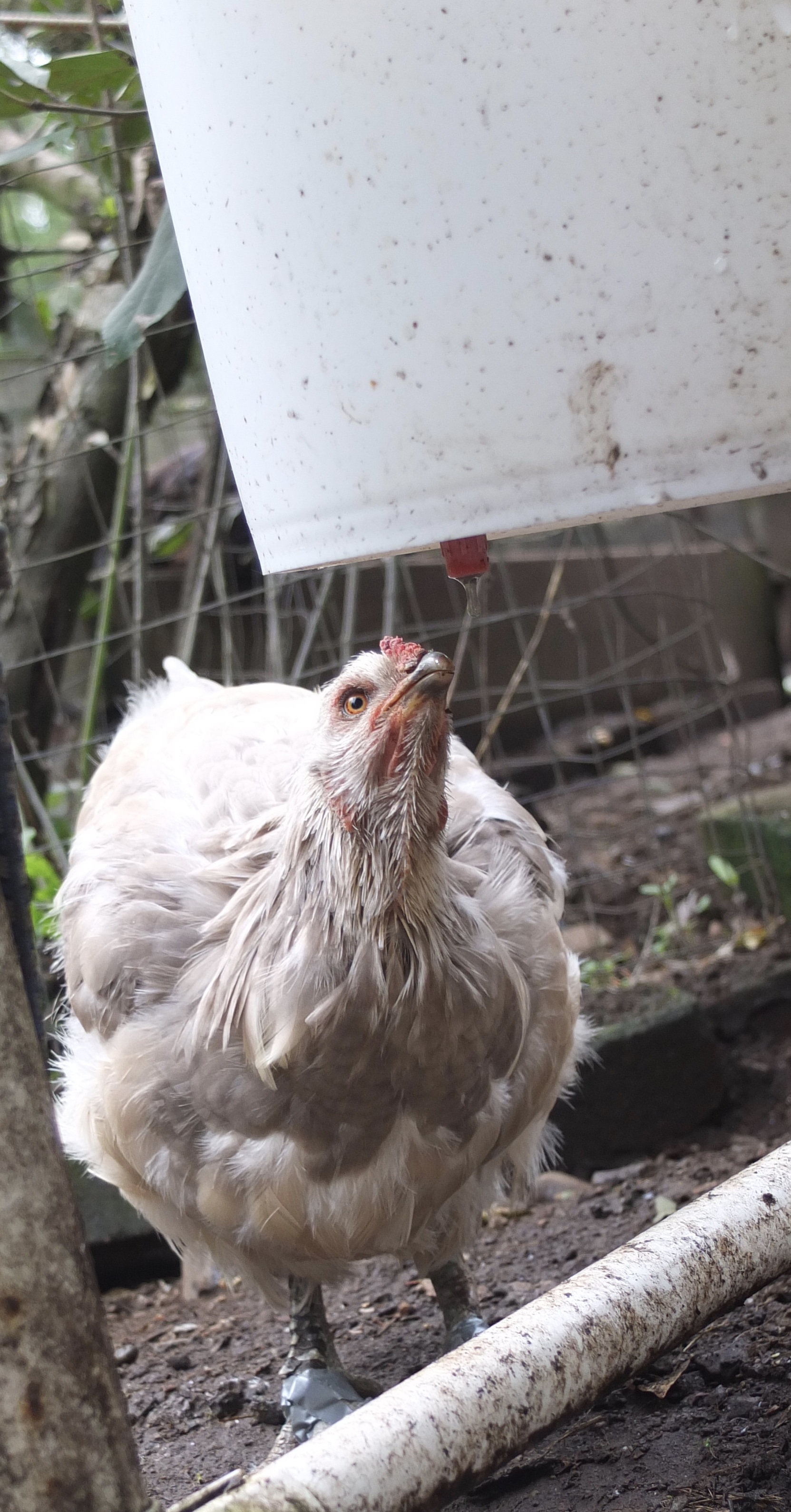
Since these systems usually involve large barrels, PVC pipes and tubing I wonder how, and how often, folks clean them.
“Smart hens, messy coops, and the truth about keeping chickens.”
 Bitchin' Chickens
I use rooster booster and I wonder if the metal or plastic interfere with that, as in does the rooster booster corrode the metal or plastic?
LikeLike
Rooster Booster is a vitamin supplement and shouldn’t corrode either plastic or metal. Apple cider vinegar on the other hand shouldn’t be used with metal waterers.
LikeLike
I use two different waterers for this reason. A Farm Innovations heated 2-gallon that I can suspend with rope during the winter months, and a 3 gallon galvanized metal waterer in the summer.
The 3 gallon galvanized metal one has only given me one problem that I noticed wasn’t on the cons list, if it’s placed at ground level the reservoir gets filled with dirt or poop, I set it up on two landscaping bricks to avoid the issue, and it works great.
LikeLike
Thanks for the feedback. I find all waterers, regardless of what they are made from, if placed directly on the ground fill up with dirt/poop.
LikeLike
I have used every one of these waterers and found that using big, white containers with cups (in summer) works best. We dump and clean out every couple of days. Of course, the chickens prefer the dirty, muddy water from the buckets we dumped!
LikeLike