
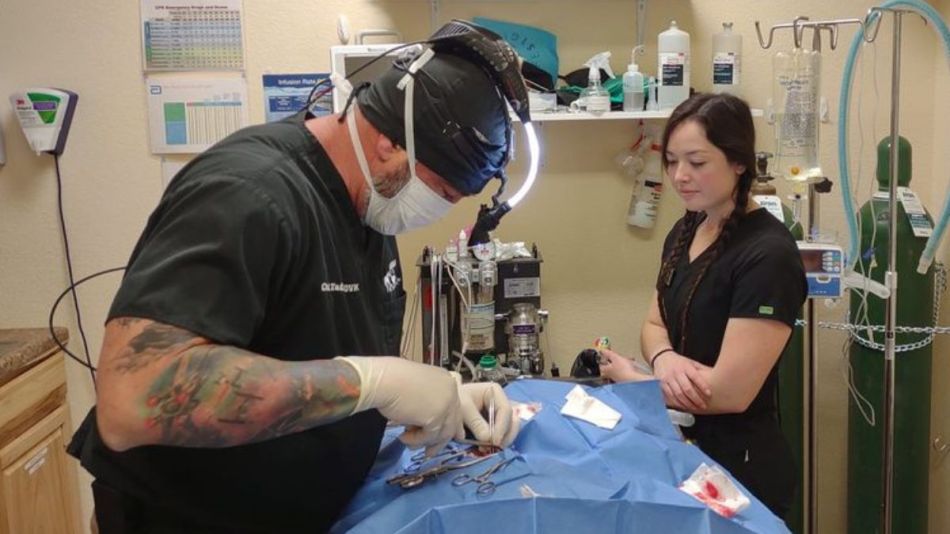
Caponizing is the process of surgically castrating a rooster usually before he reaches sexual maturity, typically between 6 to 12 weeks old. This is usually done to improve meat quality, as capons develop more tender, fatty meat due to reduced hormone activity. An unintended side effect of this procedure is the suppression of male secondary sex characteristics, including aggression and, often, crowing.

These testicles were not removed during surgery but upon necropsy. Credit: Bitchin’ Chickens
I’m not a proponent of folks doing at-home surgery unless absolutely necessary when veterinary care is not possible in life-or-death circumstances. Sometimes chicken keepers unintentionally end up with a rooster when they can only have hens (i.e. HOA rules). My advice is to find him a forever home where his crowing won’t be an issue but for some they have already become attached and are searching for ways to keep him. One such potential solution is to have castration surgery performed by an experienced vet.
Crowing is driven by testosterone, so removing the testes reduces hormone levels that can trigger the behaviour. Results can vary:
- Some capons never crow.
- Some may still make occasional noise, though usually less frequent and less forceful than intact roosters.
- If caponizing is done later in life or incompletely, crowing may persist.
- No method is guaranteed to completely silence a rooster once he’s reached sexual maturity.
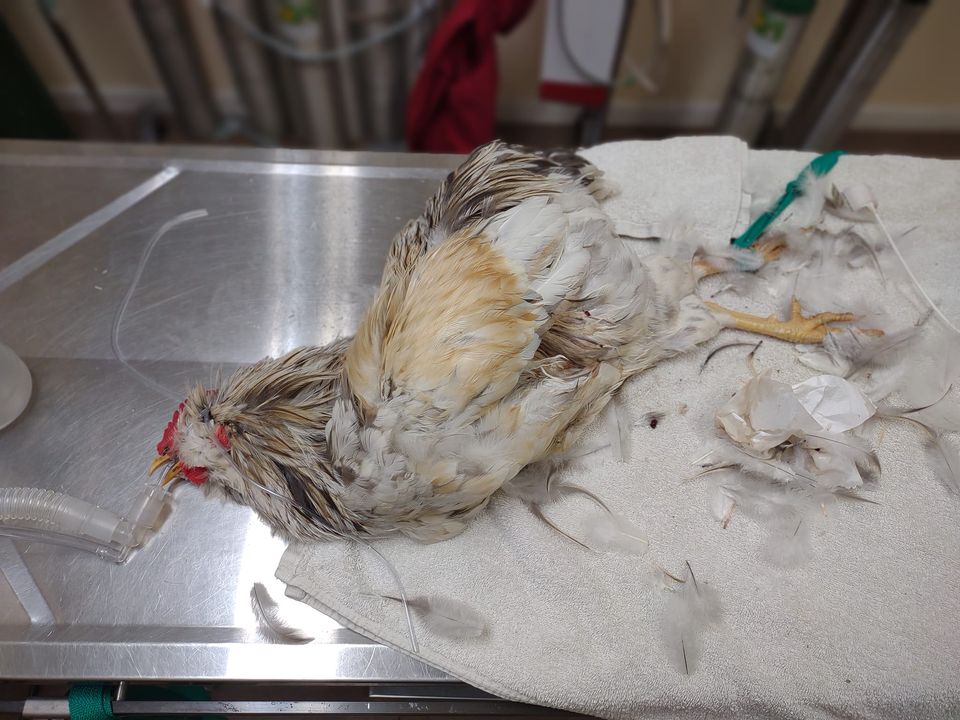
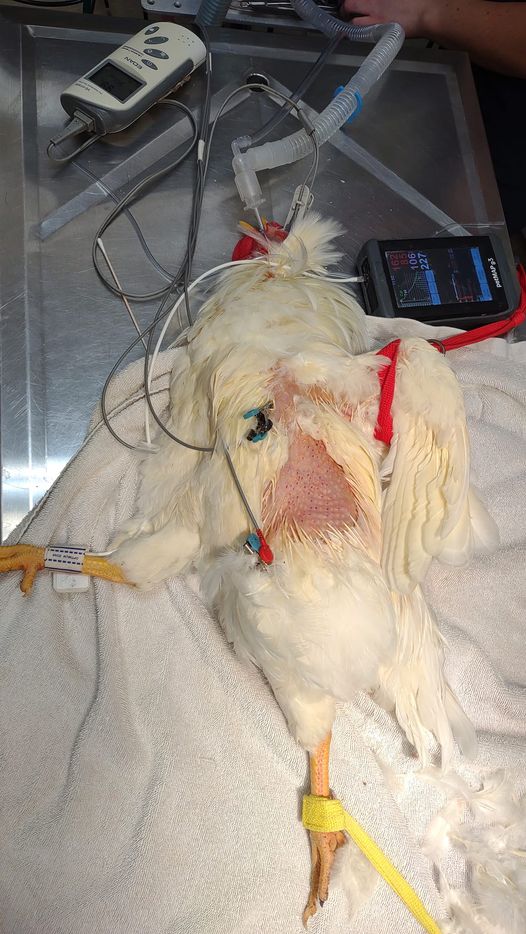
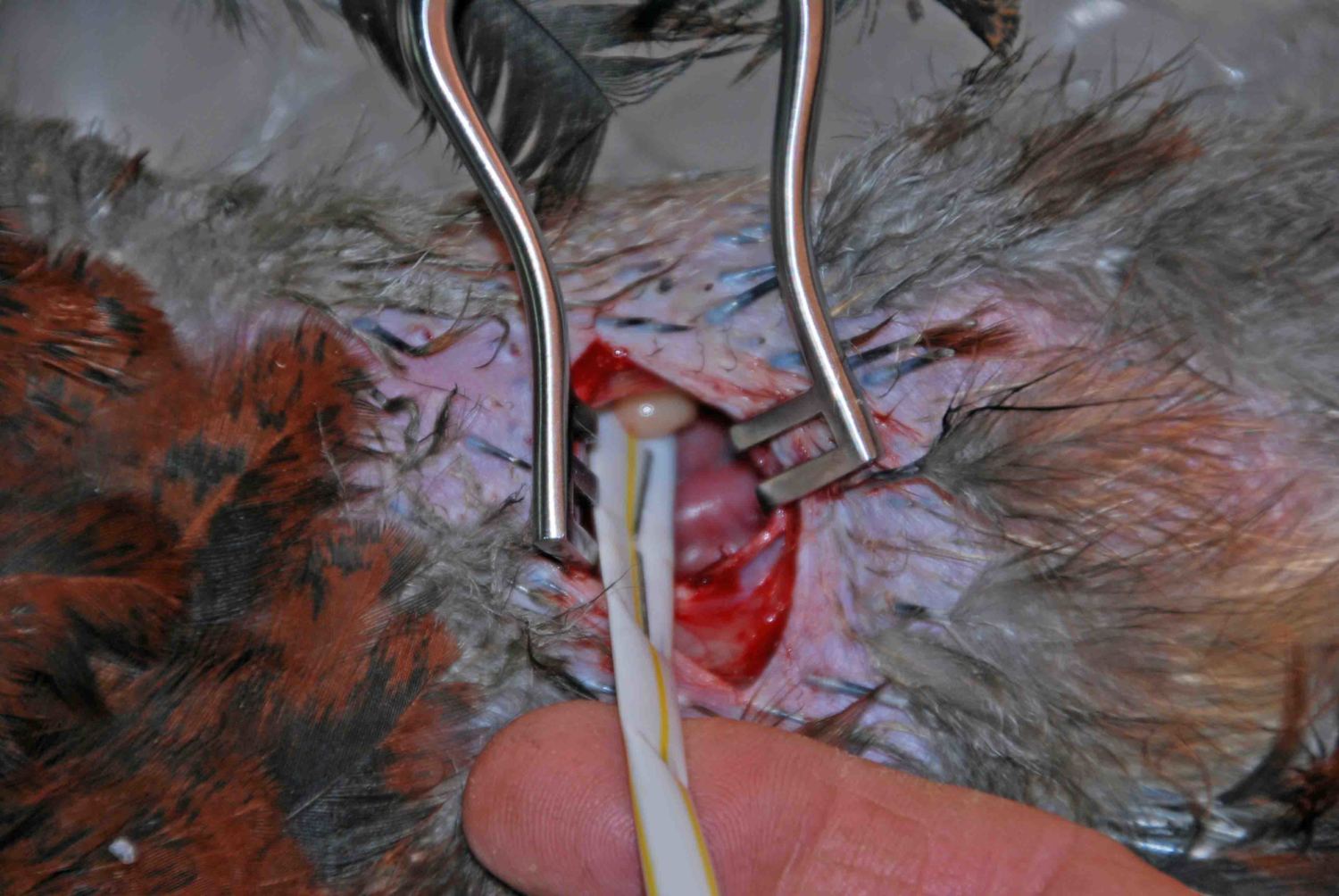
Photo credit: Tabby Road Animal Hospital
Traditional Caponizing
A cursory search for at-home/farm caponizing reveals a pretty brutal picture – no anaesthesia, pain, potential infections, and sometimes death – all in the pursuit of creating more desirable meat.
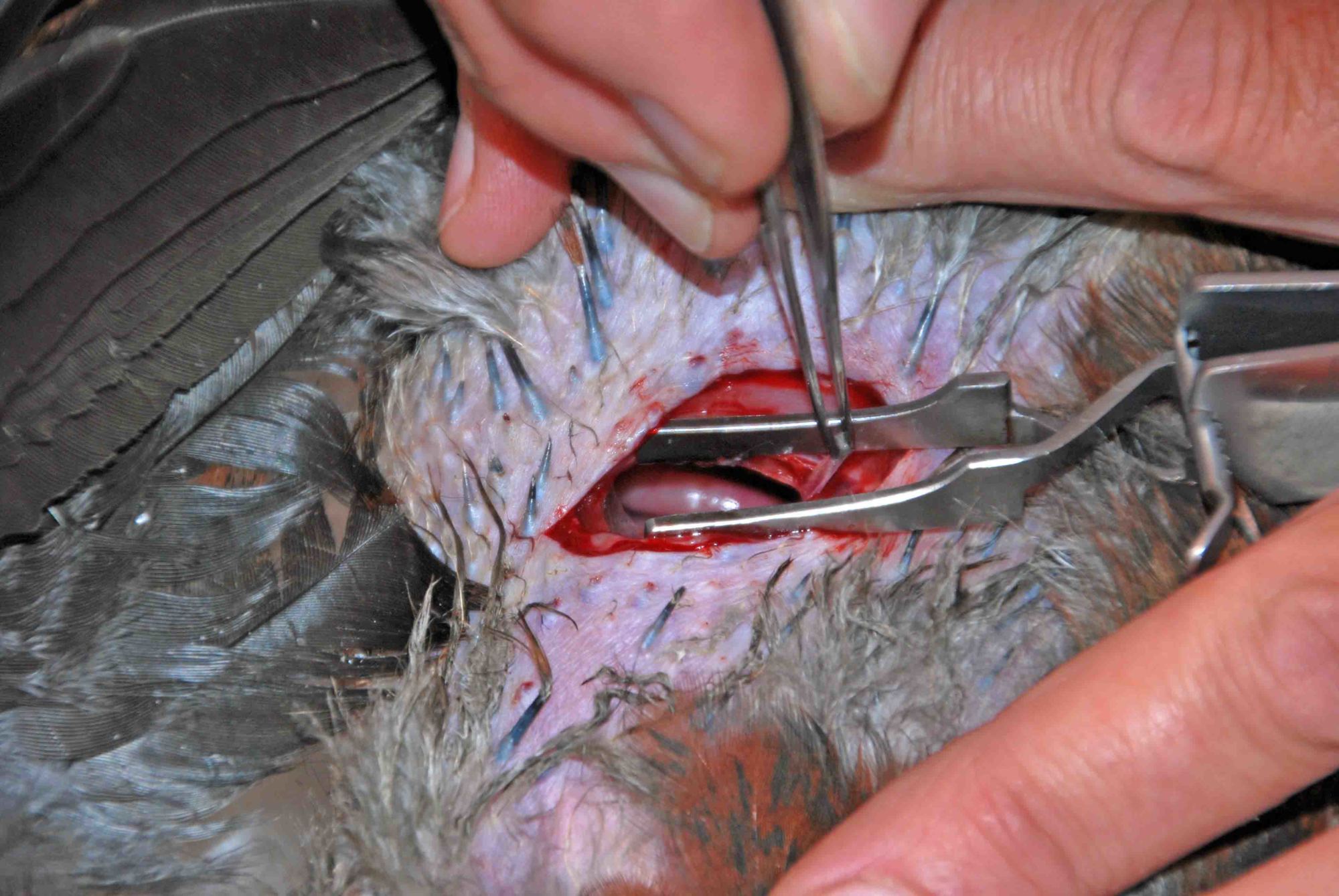
To make a cockerel a capon, a caponizer must restrain the 3 to 6 week old bird by tying weights to its wings and feet to prevent movement and expose the rib cage. Then the caponizer cuts between the lowest two ribs of the bird and spreads them apart with a special tool to open up access to the body cavity. Last, the caponizer searches for the testes, each about the size of a grain of rice, and rips them free of their connective tissue with a small slotted spoon–or, in some cases, a tool made out of a loop of horse hair. – Alex Yablon
Risks
Castration is a delicate, invasive surgery that requires skill and knowledge of avian anatomy. Risks include:
- Pain and suffering: Without proper anesthesia and post-operative care, the bird can suffer.
- Infection or death: Surgical complications are common, especially when done by amateurs.
- Incomplete removal: Leaving part of the testicular tissue can allow hormones (and crowing) to persist.
Due to these risks, many countries—including parts of the U.S., Canada, and the UK—discourage or even restrict the practice on welfare grounds.
Animal welfare laws vary by region, but many prohibit unnecessary surgical alteration of animals for convenience or aesthetic reasons. If you’re considering caponizing:
- Check local laws and veterinary regulations
- Consider the ethics: Is it humane to perform surgery simply to eliminate noise?
Today, caponizing meat birds is increasingly seen as outdated and controversial, especially given the availability of less invasive alternatives.
Alternatives
If your goal is to reduce or eliminate crowing, consider these options instead:
- Rehoming If roosters aren’t allowed where you live, the best solution may be to rehome your rooster.
- Coop Remediation Soundproofing and covering the windows aren’t foolproof but can help muffle the early morning noise. Some folks bring their rooster into the garage or basement each night to minimize the early morning crowing.
- Breed Selection Some breeds are naturally quieter. If you need a rooster for flock protection or breeding, consider a calmer breed.
- Crow Collars Specially designed velcro collars can reduce the volume of a rooster’s crow by limiting the expansion of the neck. They don’t completely silence the bird, but they’re non-surgical and reversible. The risks include the collar getting caught on something that leads to strangulation of the bird.
While caponizing may reduce crowing, it is a serious surgical procedure with substantial ethical, legal, and health concerns. For most small flock chicken keepers, the cons outweigh the pros. Humane alternatives— rehoming or coop remediation—offer more practical and ethical solutions.
Thanks to Dr Chad Zadina of Tabby Road Animal Hospital for the use of their photos, used with permission.
 Bitchin' Chickens
Hi. Hope you’re feeling better. Just thought I’d point out a little glitch I found while trying to give your post if five star rating. I accidentally touched the fourth star and that was it. I wasn’t able to correct that it just had to stand. So, just so you know: ⭐⭐⭐⭐⭐. M
LikeLike
We all make mistakes, I won’t hold it against you 🙂 All kidding aside, I’d take 4 stars over none.
LikeLike