
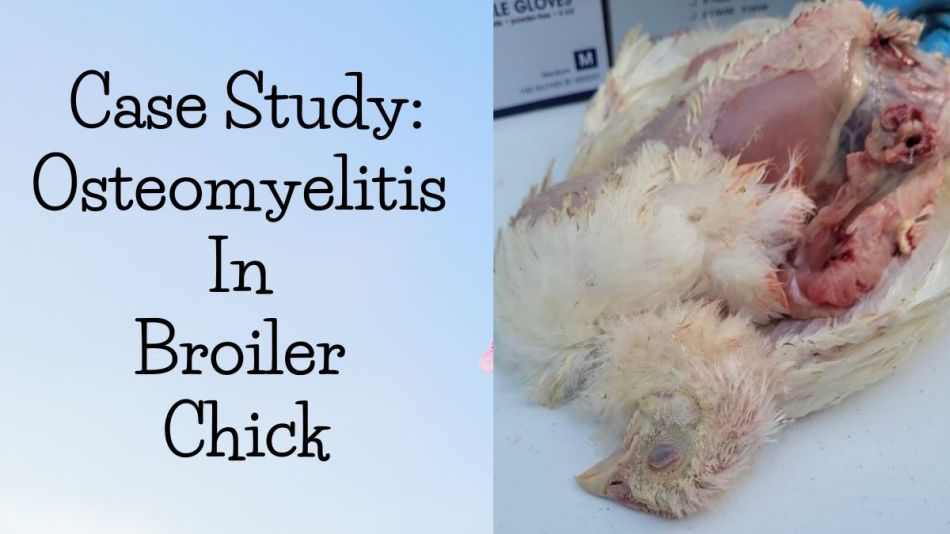
Last weekend I participated in a humane euthanasia workshop led by Dr Vicki Bowes. As newbies we weren’t let loose on live chickens. Rather we practiced on 4 week old meat birds that had been euthanized in a CO2 (carbon dioxide) chamber just beforehand. We were then given deceased chicks to learn cervical dislocation without being concerned about inflicting suffering on the birds if we didn’t get it right the first time.
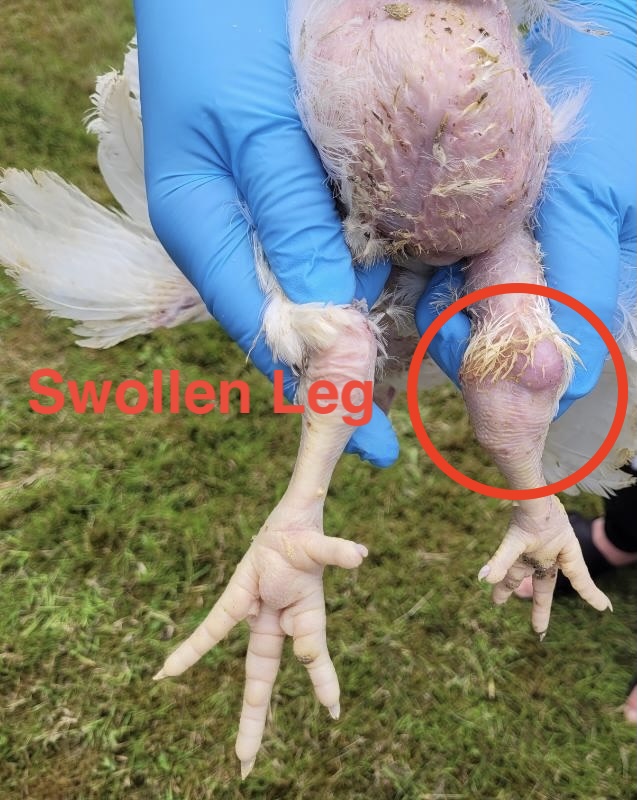
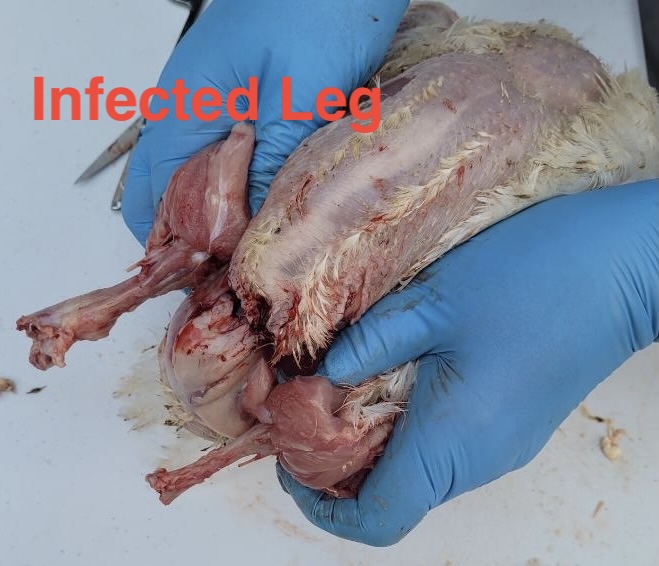
I have no direct experience with meat birds and was pretty appalled, as were the other participants, by the sorry state of the subjects of our workshop. The ten Cobb broilers, at only 29 days old, were almost ready for butchering. The ones we got were clearly culls that the farm were happy to sell off. As someone who is used to curious and alert chicks these young birds were totally inactive and made no attempt to stand or explore the confines of their crate. They were missing belly feathers. One of them had viral arthritis affecting its legs and another had one grossly swollen leg.
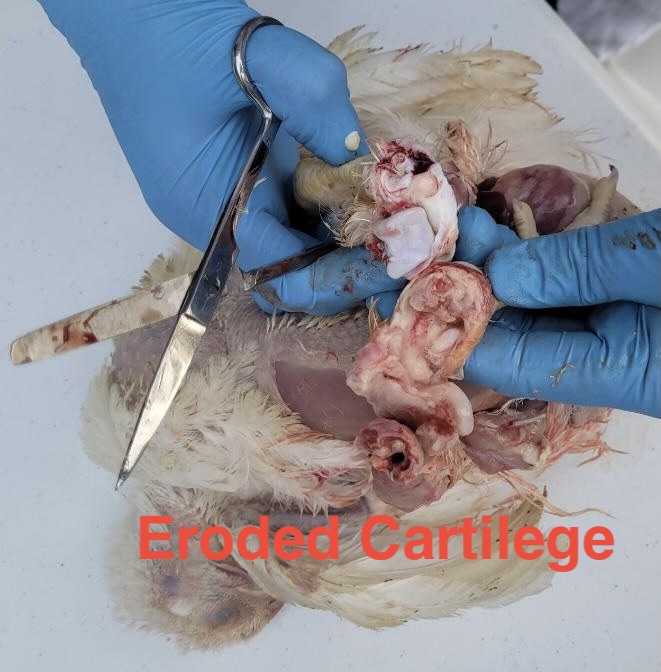
At first Dr Bowes thought the latter chick had a fracture that was healing. She cut open the flesh of the leg and discovered that upon putting pressure on the swelling it was filled with pus. The fibrin squeezed out was reminiscent of spray foam.
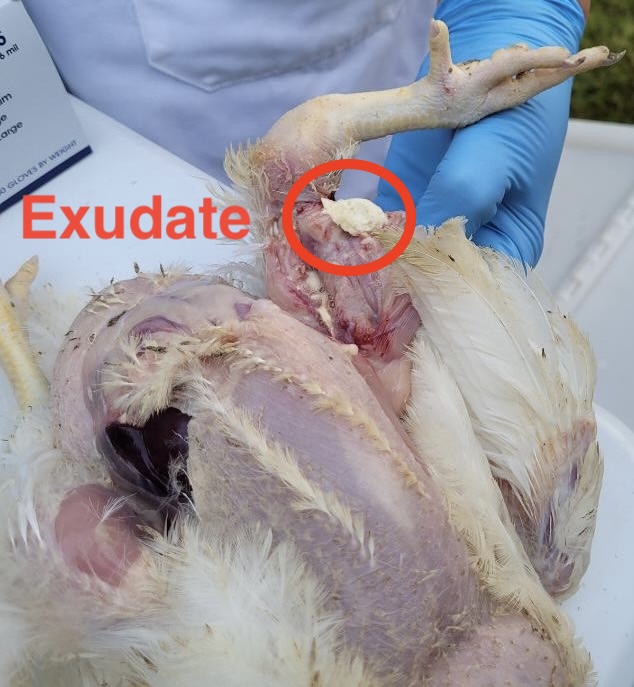
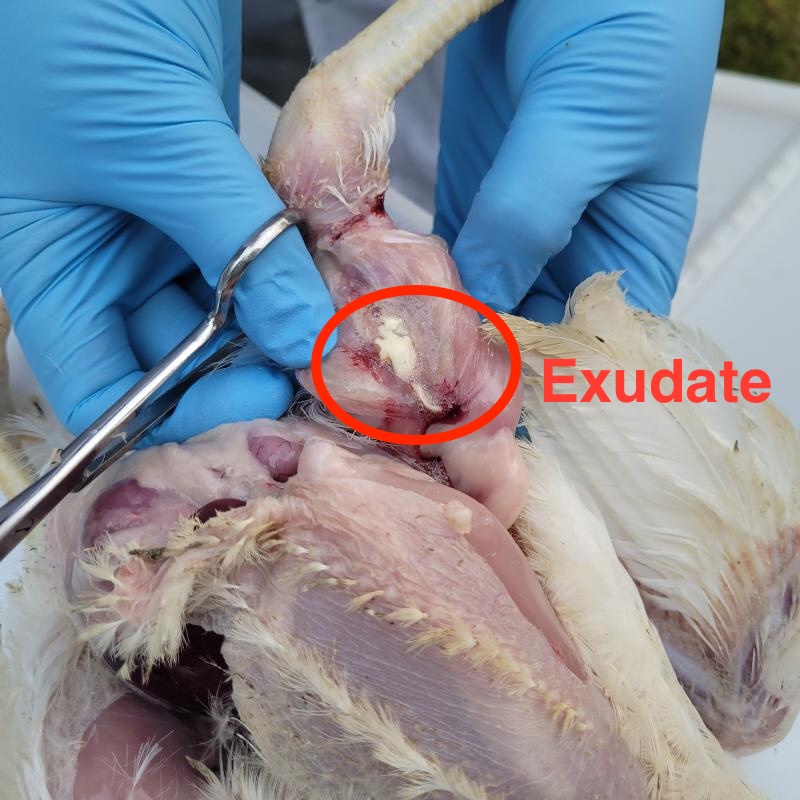
In addition to the purulent exudate the cartilage of the hock was eroded and the distal tibiotarsus was grossly enlarged.
Upon examination of the heart the pericardium was adhered to the epicardium.

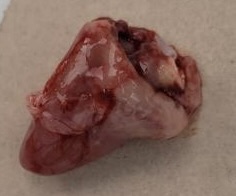
Dr Bowes felt confident that the chick suffered from an infection of enterococcus bacteria resulting in osteomyelitis. Although we didn’t spend much time with the chicks premortem it would have been lame due to the involvement of the growth plates of the long bone of the leg.
Enterococcus is a type of bacteria that is a normal part of the gut flora of chickens and while typically harmless, certain strains can cause disease, particularly in broiler chickens. Enterococcus cecorum is an opportunistic pathogen, especially if birds are stressed, immunocompromised or live in unsanitary conditions.
Symptoms can include skeletal issues like osteomyelitis (inflammation of the bone marrow) and vertebral osteoarthritis. Infections can also manifest as septicemia (blood infection), potentially leading to endocarditis (inflammation of the heart’s inner lining) and neurological issues.
It is normal for the bacteria to be contained within the intestines. If it leaks through the cells of the intestinal walls it travels through the bloodstream causing illness. Our chick’s infection found a site to reproduce in the bone marrow, a highly vascular and protected area. The abscess was the result of the body’s attempt to wall off the infection. In other cases the infection can be found not just within bones but also the spinal cord.
At only 29 days old, this chick must have been affected not long after hatch for the bone to be so grossly deformed in such little time. It’s unlikely the farmer was unaware of the health issues of both chicks. Given that meat birds are usually harvested by six weeks there isn’t an economic incentive to treat affected birds.
Glossary
Endocarditis: inflammation of the heart’s inner lining
Epicardium; the inner layer of the pericardium and the outer layer of the heart wall
Exudate: a mass of cells and fluid that has seeped out of blood vessels or an organ, especially in inflammation
Fibrin: an insoluble protein formed from fibrinogen during the clotting of blood. It forms a fibrous mesh that impedes the flow of blood
Osteomyelitis: inflammation of the bone marrow
Pericardium: double layered sac that enclosed the heart
Septicemia: blood infection
Thanks to Dr Bowes for offering the workshop and for her willingness to provide another learning opportunity for both me and other small flock keepers.
If you’re wondering what happened to the birds after the workshop I offered to take them home for the local scavengers. A family of six ravens, vultures and a couple of bald eagles feasted on the nine meat birds the next day. Dr Bowes suggested that we dispose of the infected chick in this case to avoid any potential risk to other birds.


 Bitchin' Chickens
The stuff of nightmares. The stuff most people refuse to think about. It is so easy to become innured to pain and suffering when it isn’t happening to us or our loved ones. This is a sobering reminder of that for me.
LikeLike
Very educational, thank you! I was reluctant to attend the euthanasia workshop when it was held in my area because I thought it would just emotionally upset me too much. But after reading your account of it I should have attended as it sounds like I could have handled it okay. But those poor meat birds … what awful suffering for them in the short time they are alive.
LikeLike
I was relieved to know that we were working on deceased birds because, I have to admit, it did take a few attempts to sever the spinal cord. Practicing on the toy first helped as well. Seeing meat birds in person was an eye opener. Unfortunately that is what many of us, unknowingly, are eating if we buy rotisserie chicken from a grocery store.
LikeLike