
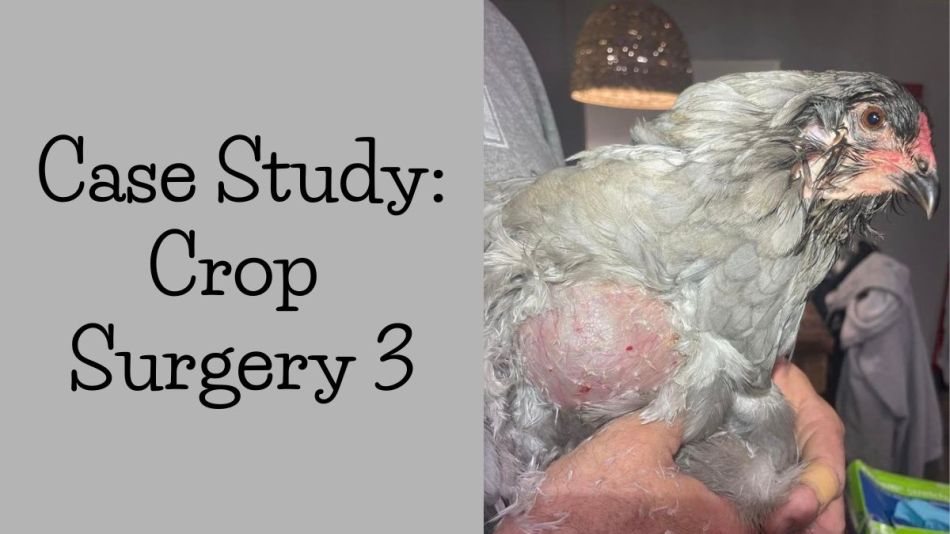
Understanding your chickens’ digestive system will help you navigate any problems that might affect it. The crop is located on the right side of the upper chest of the chicken. If it’s firm it’s full. A healthy full crop should be about the size of a plum, full at bedtime and empty in the morning. A full crop at night is a good thing; if it’s still full in the morning that’s cause for concern.
Various crop issues can affect digestion, which can be serious, or even life threatening.
Sour crop: Occurs when the crop empties slowly, allowing food to sit, ferment and develop a yeast infection (candida albicans). The crop feels large and squishy, not firm. You may hear gases or gurgling if you touch it. I don’t have a great sense of smell, but if you do, your bird’s breath might smell bad.
Impacted Crop: An impacted crop will be firm and large like a tennis ball, may be tender to touch and does not empty overnight. The result of a severe impaction is certain death.
In dealing with any major chicken health issues, particularly surgery I’d recommend taking your bird to the veterinarian. DIY medical care usually doesn’t stem from a lack of compassion, but is borne out of necessity due to lack of access to an Avian Vet or funds.
If you do attempt crop surgery be as prepared as possible by having all the right equipment for the job: Meloxicam (painkiller); scalpel, dissolvable sutures, disinfectants, antibiotics and a topical anesthetic, if possible. You’ll also need a helper or two with strong stomachs (and maybe another to document your handiwork).
This is the first-hand account of DIY surgery performed by Dewana to save not one, but two, of her hens.
I take my job as an animal mom very seriously. Back in the spring we were growing our own mealworms, and wheat and barley fodder for our chickens and ducks. Last spring, I noticed my Easter Egger hen scratching at her chest. She was eating and drinking but when I picked her up, her crop was huge and hard. I immediately realized she had sour crop and an impacted crop.


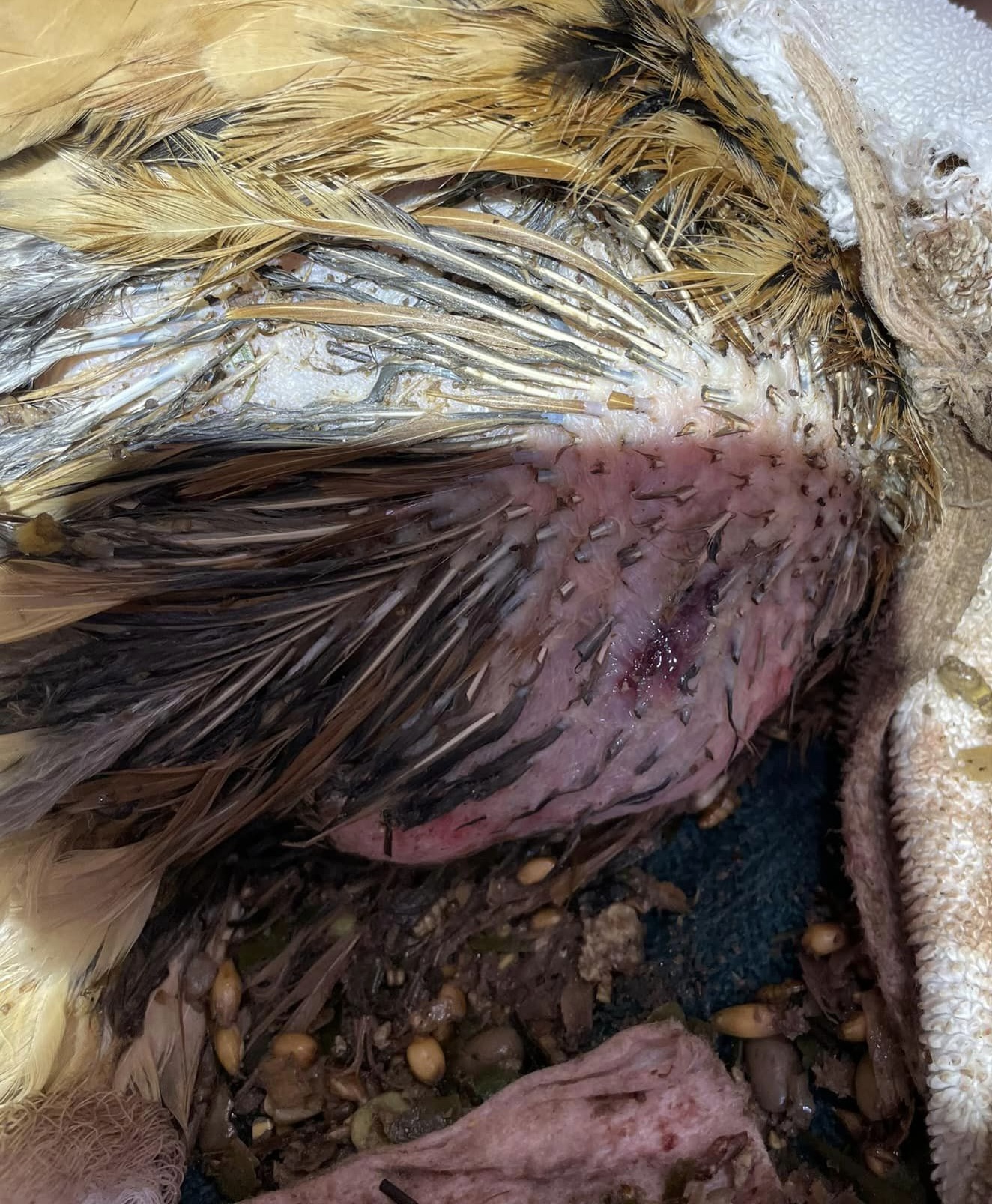
I tried all of the techniques that I had read about including massages, olive oil, coconut oil, colace, turning her upside down, flushing with water, but nothing worked. After two days of massaging and trying to flush out the contents, I came to the realization that she was not going to survive without the surgical intervention. We said our goodbyes just in case the surgery was not successful.


Forty-five minutes later, her crop was emptied and closed up and she was standing. We ended up removing 1/2 pound of seeds, long grass and clover that she had eaten in the yard. The contents got bound up and caused an impaction. The next few days were touch and go, but with a few days of seclusion, antibiotics, wound care and a soft diet she was good as new and returned to the flock.
I immediately stopped feeding the flock fodder.


Fast forward six months when I noticed my Buff Brahma making the same scratching motion. I checked her crop and it was hard and impacted. We tried all of the minimally invasive techniques yet again with no success. Her wattles were pale and she was getting weaker. We decided surgery was the only option to save her life.

Unfortunately, impacted crop is common amongst free range chickens, but knowing the symptoms and how to treat it can save their life. Otherwise, it is a very long and sad death as all of the food that they eat gets bound up in their crop and never makes it to their stomach so they literally die of starvation.
We really hope to never have to do that surgery again and our feather babies live long healthy lives.
Thanks to Dewana Lynn O’Neal-Mardis for sharing her story and photos.
 Bitchin' Chickens
May I ask what is flock fodder?
LikeLike
Fodder consists of sprouted grains such as barley, lentils, alfalfa, and oats.
LikeLike
For the crop surgery supplies, what topical anesthetic is recommended and can we get it over the counter?
LikeLike
Lidocaine, and it’s only available by prescription.
LikeLike