
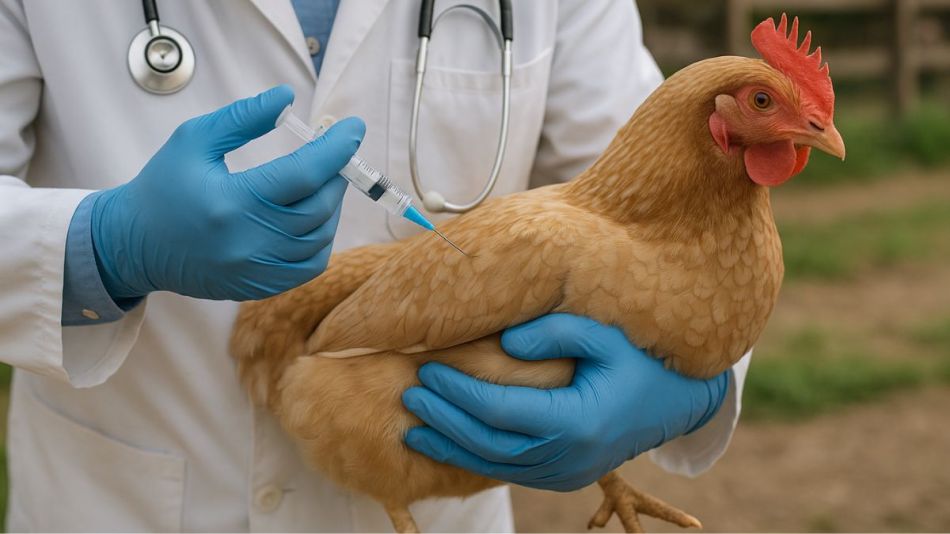
I’m a big proponent of small flock chicken keepers understanding an array of chicken illnesses and injuries in order to provide at-home care when appropriate. I have a pretty well stocked first aid kit and have addressed a number of health issues in my flock. I have taken a couple of birds to my vet for antibiotics but, fortunately, haven’t required more serious help.
My recommendation is to establish an on-going relationship with a vet who can provide effective care for your flock. Sometimes that isn’t an option whether the issue is lack of availability or finances. I’m not keen on folks undertaking at-home surgery or more invasive care on their sick birds. That said, if giving one of your birds injections is your only option then here are some tips.
Administering injectable medications to chickens may seem intimidating at first, but with proper knowledge and technique, backyard chicken keepers can confidently give life-saving treatments. Injectable medication is often necessary when oral or topical methods are ineffective, when rapid absorption is needed, or when treating serious infections like respiratory diseases, coccidiosis, or bacterial infections.
Why Use Injections?
Injectable medications offer several advantages:
- Faster absorption into the bloodstream
- More accurate dosing than mixing in water or feed
- Bypasses digestive issues, ensuring the drug reaches full potency
- Useful when a chicken is too sick to eat or drink
Common injectable medications include:
- Antibiotics (e.g., Tylosin, Oxytetracycline)
- Anti-inflammatories
- Vaccines
Types of Injections
Subcutaneous (Sub-Q)
- Injected under the skin
- Common for vaccines and fluids
- Site: Back of the neck
Intramuscular (IM)
- Injected directly into muscle
- Used for antibiotics or pain meds
- Site: Breast muscle (preferred over leg due to risk of nerve damage)
Intravenous (IV)
- Into a vein (not recommended for at home use)
DIY Equipment Checklist
- Syringes (1 mL to 3 mL, depending on dose)
- Needles (22–25 gauge; 5/8″ to 1″ for most applications)
- Alcohol wipes
- Gloves
- Towel (for securing the patient)
- Proper medication and dosage instructions (consult vet or reliable poultry source)
Preparation
- Calculate the Correct Dose: Use weight-based dosing (mg per kg of body weight); Overdosing or underdosing can be harmful
- Draw the Medication: Use a sterile syringe and needle; avoid air bubbles in the syringe
- Restrain the Chicken Gently: Wrap in a towel with wings snug; have a helper hold the bird, or use your arm to secure the body against your side
How to Give an Injection
Subcutaneous Injection (Back of the Neck)
- Pinch the loose skin at the back of the neck
- Insert needle at a shallow angle (just under the skin)
- Inject slowly and withdraw
- Gently massage the area

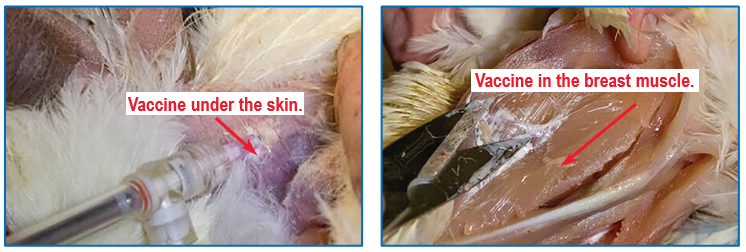
Image credits: BYC; The Poultry Site
Intramuscular Injection (Breast Muscle)
- Choose the meaty part of the breast, avoiding the keel bone (breast bone)
- Insert the needle perpendicular to the muscle, about 1/2″ deep
- Inject steadily and remove
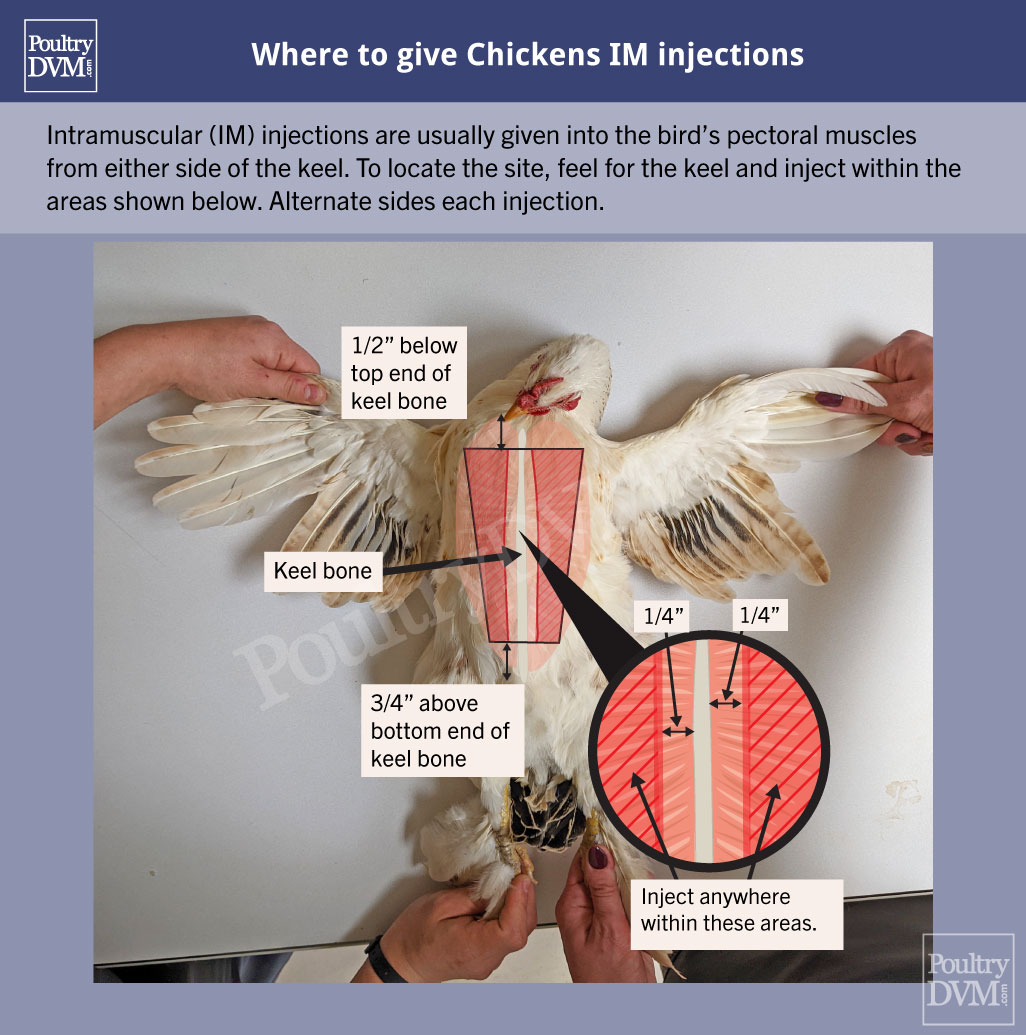

Image credits: Poultry DVM; The Poultry Site
Tips
- Warm the medication to body temperature (hold syringe in hand for a few minutes) to reduce discomfort
- Stay calm
- Label medications and syringes clearly to avoid mix-ups
- Keep detailed records of what was given, when, and where
- Alternate sides of the breast if giving repeated doses
Common Mistakes to Avoid
- Injecting into the leg: risks hitting the sciatic nerve
- Using dull or reused needles
- Giving injections too close to bone or joint
- Forgetting to check for expiration or proper dosage
When to Seek Veterinary Help
- Unsure of diagnosis or dosing
- Chickens not improving after 24–48 hours
- Difficulty restraining or injecting safely
- Need for IV or complex procedures
 Bitchin' Chickens
The only thing I would have added is to pull back on the syringe just a bit before injecting the medication. If you pull back and get air you may have gone through the skin and would not be giving the bird any medication. This situation would be more likely with a subcutaneous injection, especially if feathers were obstructing your view. If you pull back and get blood you may be in a vein or other blood vessel. Do not inject the medication and instead pull the needle out of the bird and try a new location.
LikeLike
Thanks for the tip.
LikeLike