
Over the last twenty some years I’ve had three Standard Poodles. For those of you who assume that most dog breeds that have shortened tails or prick ears were born that way I’m sorry to say that its most often the result of surgical procedures to dock tails and crop ears. When I got my dogs it was difficult to find Poodles with natural tails so I had to search for breeders who did not engage in the practice. You don’t have to own a dog to understand that they use their tail for communication, balance, movement and emotional expression.
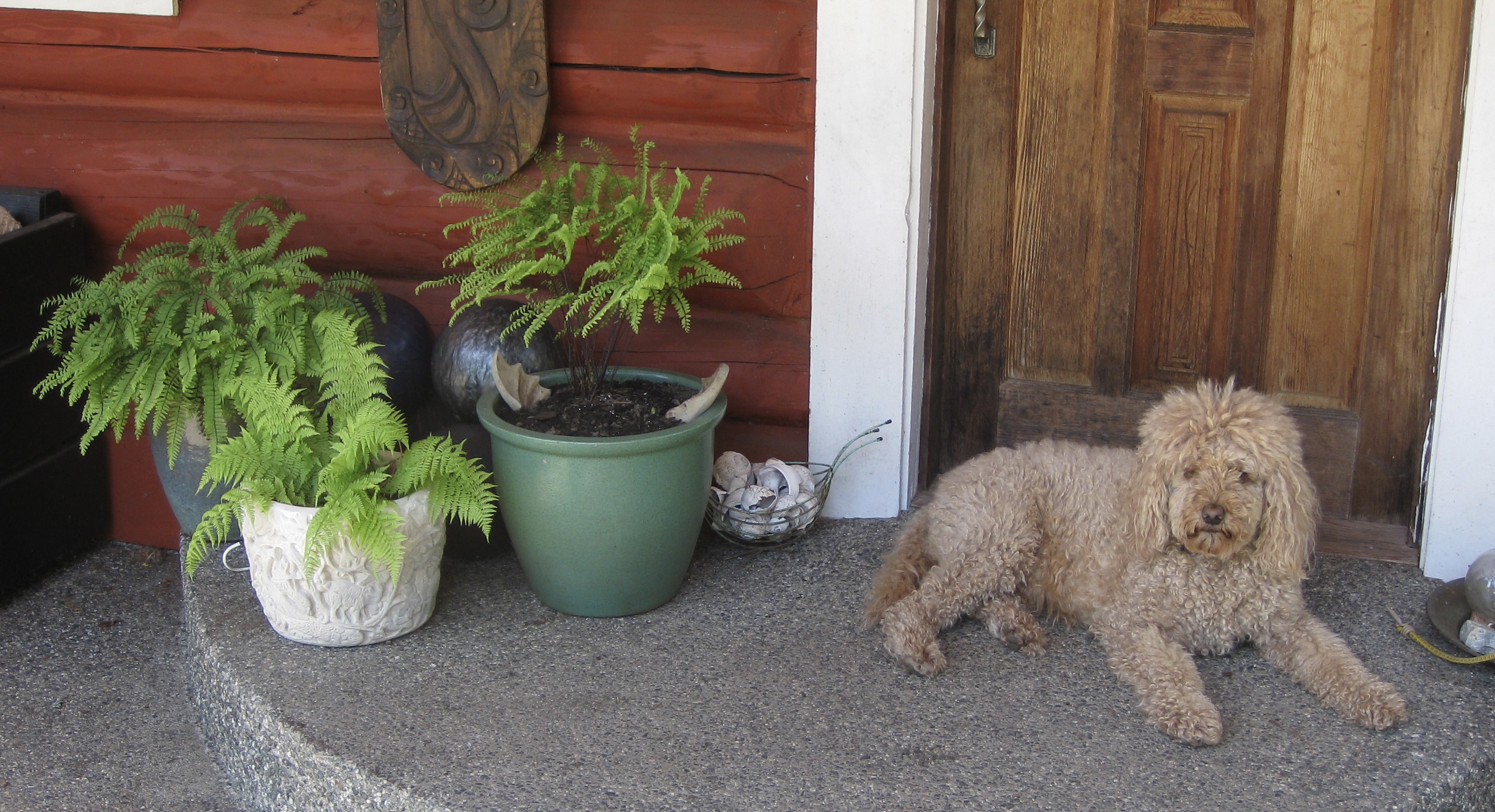
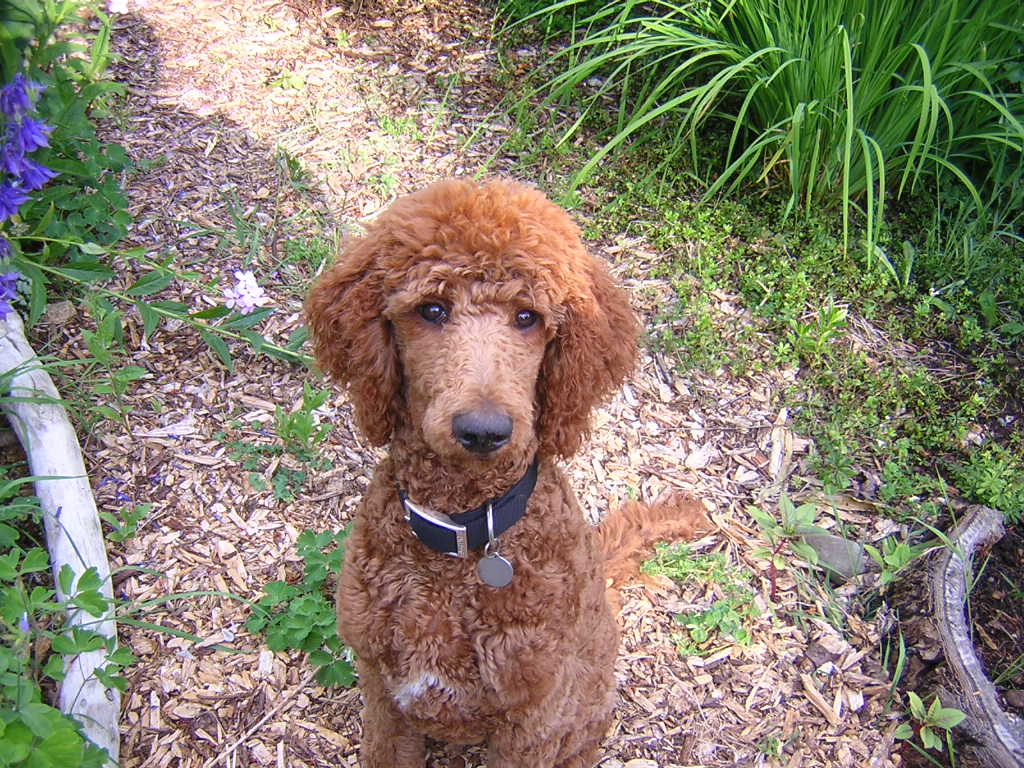
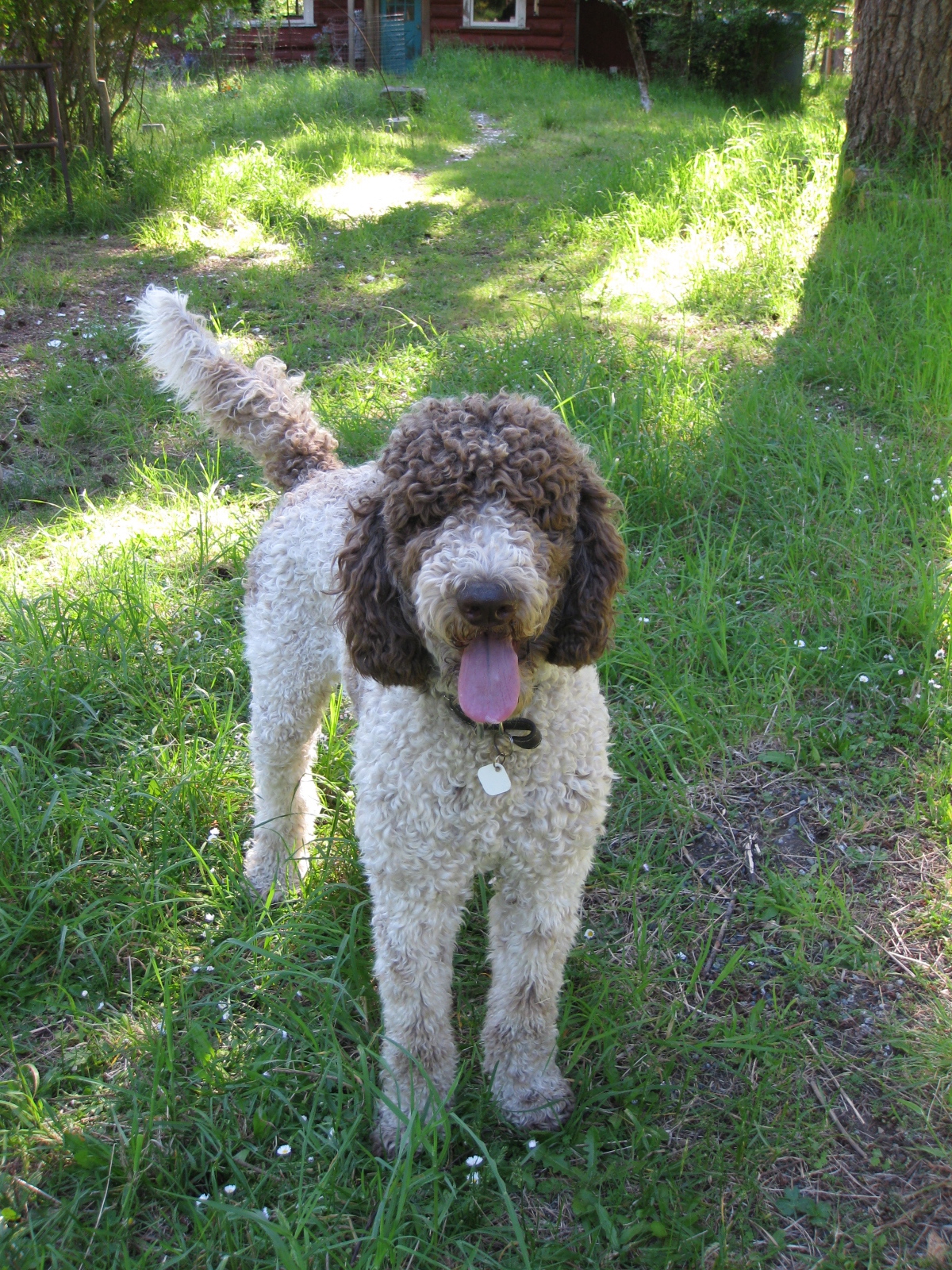
Photo credit: Bitchin’ Chickens
If you spend any time with your flock you’ll also know they explore their worlds with their beaks: forgaging, eating, breaking up food for their chicks and preening.
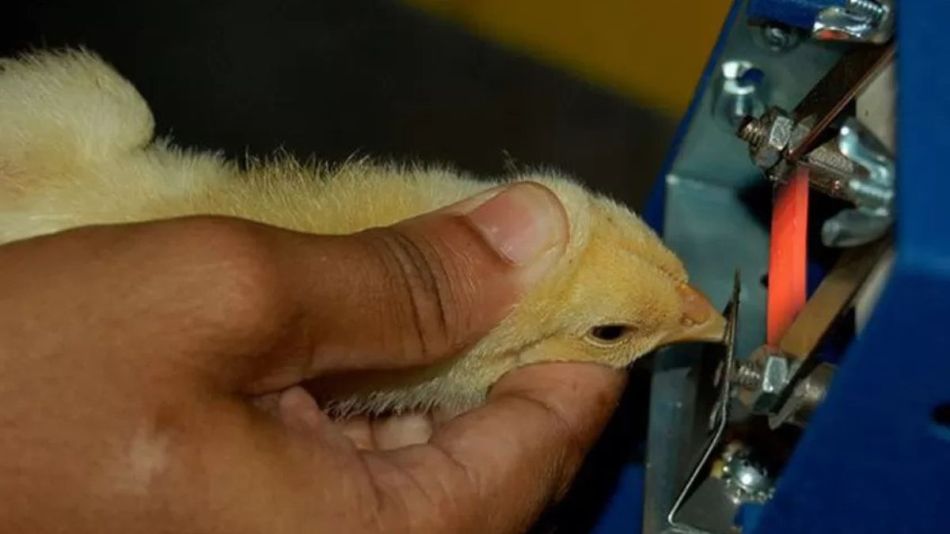
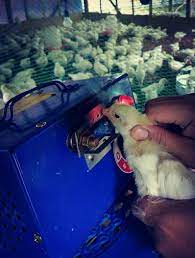
Debeaking, or beak trimming, is a common practice in the commercial poultry industry, particularly in egg-laying operations. It involves the partial removal of a bird’s beak, usually with a heated blade or infrared technology, to reduce harmful behaviours such as feather pecking and cannibalism in densely housed flocks. While proponents argue it’s a necessary management tool, critics raise serious ethical concerns.
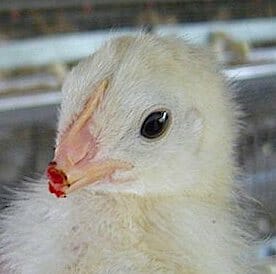
Debeaking typically occurs within the first ten days of a chick’s life, sometimes even on the day of hatch. The procedure removes one-third to half of the upper and sometimes lower beak. Newer methods use infrared light to damage the beak tissue, which later falls off naturally, and are claimed to be less painful than traditional hot-blade trimming.
The beak is a complex, sensitive organ rich in nerve endings. It is essential for natural behaviours such as foraging, preening, pecking, and nest building. When the beak is altered or damaged, chickens may experience chronic pain, sensory deprivation, and behavioural changes.
Ethical Concerns
Pain and Suffering Studies have shown that both acute and chronic pain can result from the procedure, especially if done improperly. Neuromas, painful nerve growths, may form at the site of trimming, similar to phantom limb pain in humans. Any routine procedure that causes lasting pain or impairs natural behaviours fails to meet basic standards of humane treatment.
Loss of Natural Behaviours Debeaking impairs a chicken’s ability to perform instinctive activities such as pecking, preening, and manipulating food. In nature, these behaviours are crucial for mental stimulation and social interaction. Denying birds these essential behaviours for the sake of productivity is morally questionable.
Root Cause Avoidance Debeaking is seen as an easy fix to the widespread problem of overcrowding and stress in commercial farms. In natural or well-managed environments, feather pecking is uncommon. The behaviour emerges primarily in confined, barren systems where chickens cannot express normal behaviours.
Commercial Farms vs Small Flocks
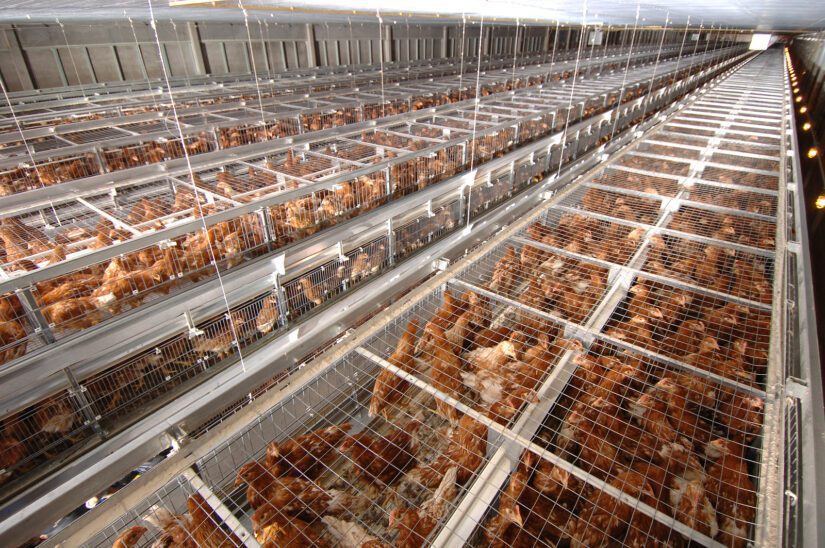
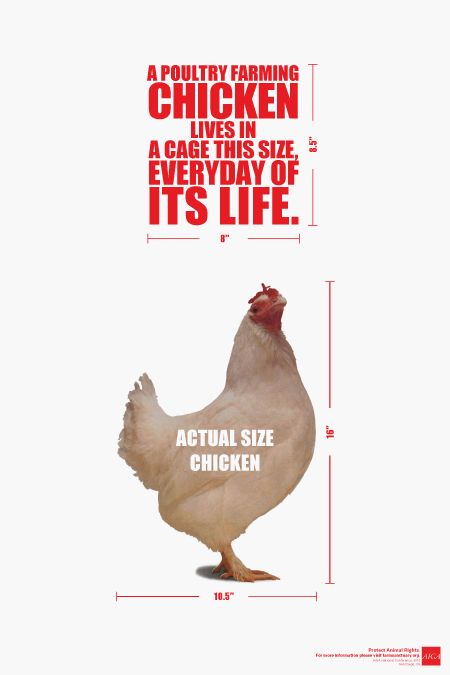
Commercial farms are often massive operations, commonly housing thousands of birds in a single barn. Many egg layers live their entire lives in small cages and, suffering from unrelenting stress, peck out at their neighbours. In those flocks, outbreaks of feather pecking and cannibalism can spread rapidly, causing serious injury or death. In that context debeaking is seen as a preventative tool that protects the assets of their owners. As small flock owners we have the option of refusing to purchase birds that have been debeaked.
Alternatives
- Enriched environments: Adding perches, dust baths, and foraging materials reduces stress and redirects pecking behaviours.
- Lower stocking densities: Reducing crowding lowers competition and aggression.
- Selective breeding: Breeding lines less prone to feather pecking may reduce the need for beak trimming.
- No-trim policies: A small but growing number of farms raise birds without beak trimming, often under higher welfare certifications.
- Boycott breeders that routinely engage in this practice. As we push for ethically produced eggs we also need to advocate for other humane treatment of chickens, including banning debeaking.
A Debeaking Story (Annissa Harsma Valencia)
Buyer beware post: I bought sixteen 16-22 week old Production Reds in North Texas. I drove over an hour with my two kids to pick them up. The seller’s son helped put them in my XL dog crate. He picked them up by a single wing and tossed them in the crate in the back of my van. My 6 and 8 year old kids were horrified, as was I. We don’t handle animals that way. I told him to take it easy. He didn’t stop and I scrambled to help pick them up and load them gently. I got them home and put them in a separate coop from my flock but it was getting late and light was fading.
The next morning, I went to check on the birds. I noticed that they all had their upper beaks cut, some worse than others. Some had grown into a cross beak. Three have an injured leg. Debeaking is a barbaric practice and not necessary if you give your birds adequate space.
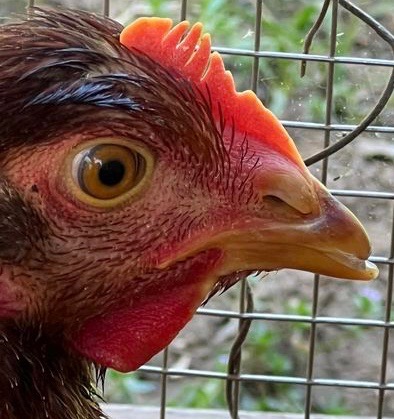
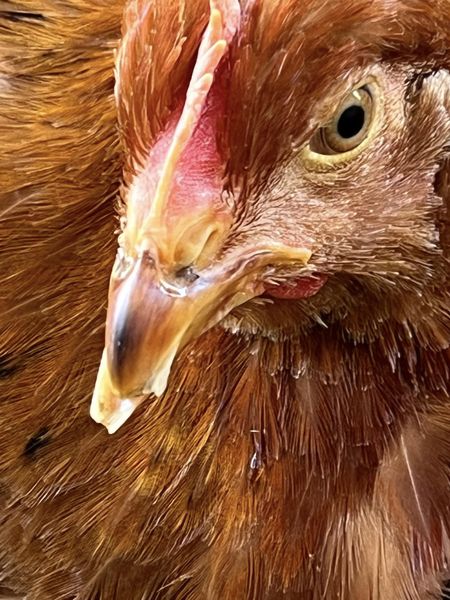
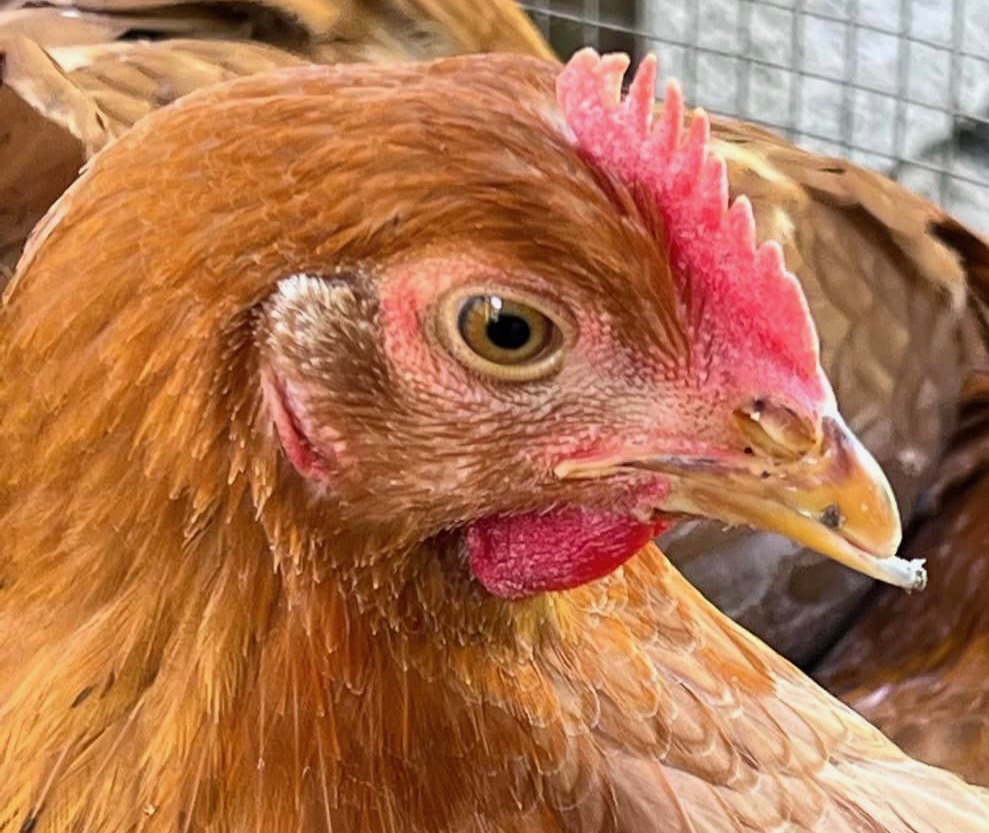
Photo credit: Annissa Harsma Valencia
I’ve watched these birds all week and they struggle to forage or eat mealworms from the ground. It’s like bad hand-eye coordination. They have no true beak tip to pick at specific things they want. If they eat food from a full feeder they can get it because, if they miss their target, they grab the piece next to it.
We need to stop this practice. Why keep a backyard flock of healthier happier chickens if you are going to mutilate them just like conventional chicken farmers? They deserve better and they are healthier if they can forage and eat grass. I’m sad for these birds and explained my disappointment to the seller. I could drive an hour each way to return them. I won’t do that. I saw how they are cared for there. They can live their disabled lives on my farm with proper care, just like all creatures deserve.
The only way to stop this practice is to stop buying chickens with cut beaks. I have had chickens for 15 years and have bought chickens from great people. This is the first time I’ve seen cut beaks but I have heard of it and been told it’s becoming more common as the demand for backyard flocks grows. If you are buying chickens, make sure they come unmutilated so that they can live a normal chicken life with a functioning beak. We need to stop such a cruel practice.
 Bitchin' Chickens
Debeaking should just be illegal no matter what, it is like debarking a dog. It is just wrong and cruel!!!
LikeLike
Thank you for sharing this with your readers. I didn’t know much about the practice until I got my first little flock of 8 and discovered that 5 of them had been debeaked. I was horrified.
Everything the contributing author stated about these hens struggles is true. I’ve seen it for myself. These poor girls cannot grasp, pierce or tear their food. They are less able to defend themselves or preen effectively.
I didn’t know what to look for when I got them and although I care for them very much and am glad they live with me,I don’t think I would ever knowingly bring home debeaked chickens in the future.
LikeLike