
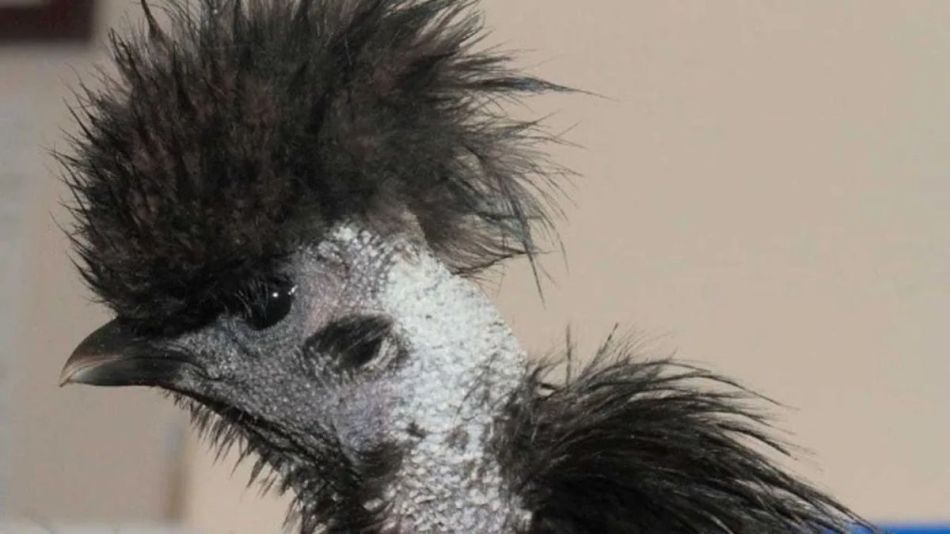
Depluming mites (Knemidocoptes gallinae) are a tiny yet serious parasite that can cause significant discomfort and damage to backyard and commercial poultry. These mites burrow into the skin at the base of feathers, leading to inflammation, feather loss, and distress for the affected birds.
Depluming mites are microscopic, burrowing parasites. Unlike red mites or northern fowl mites, depluming mites live under the skin, not on the surface.
They burrow into the feather shafts and surrounding skin. It causes damage to the skin and feathers. The mites feed on the fluid that oozes out as a result of the burrowing. The constant burrowing causes intense irritation and pain and often results in the bird pulling out their own feathers. Depluming mites are usually found along the back, neck, head and wings of the bird. These mites require a host to survive and can’t survive in the environment. They will spend their entire life on the bird and give birth to live young instead of laying eggs.
Primarily affecting chickens they can also infest other poultry and are most active in spring and summer due to warm and humid conditions.
They can often be confused with overmating from roosters since they both can result in bare spots of missing feathers along the head, neck and back of the bird.
As you can imagine, depluming mite infestations are painful and stressful for birds. Chronic infestations can lead to anemia, malnutrition, and long-term feather damage.
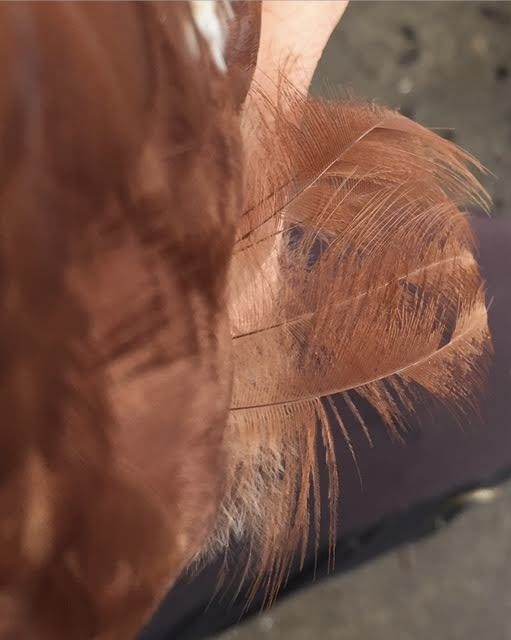
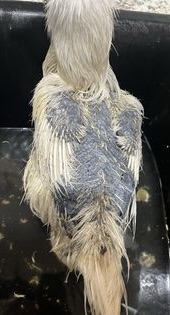
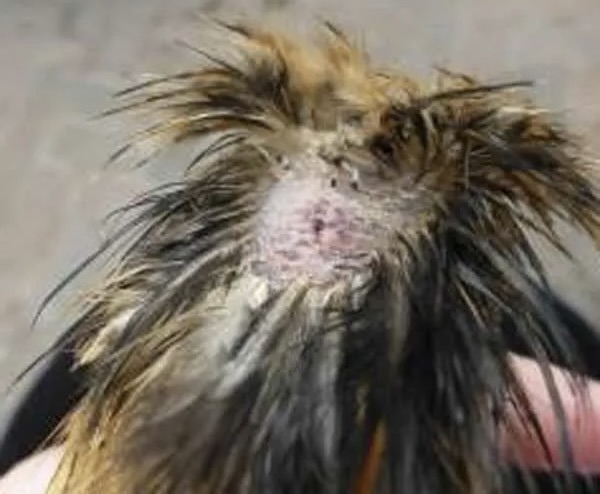
Photo credit: Sarah Crawford; Unknown
Symptoms
- Feather loss, especially around the neck, back, vent, and thighs.
- Constant feather-pulling or self-plucking behaviour due to intense itching and irritation.
- Red, inflamed, or crusty skin at the base of feathers.
- Decreased egg production and weight loss due to stress.
- In severe cases, open wounds or secondary infections from excessive scratching.
Transmission
- Mites spread through close contact with infected birds.
- Contaminated bedding, nesting materials, and housing can harbour mites.
- Wild birds and rodents can act as carriers.
Diagnosis
- Visual examination may suggest infestation, especially when birds show self-plucking behaviour.
- A vet can confirm diagnosis by examining skin scrapings under a microscope.
- Depluming mites are difficult to detect without microscopic confirmation because they live under the skin.
Treatment
- Topical or oral ivermectin
- Sulfur based dusting powder.
- Pyrethrin-based sprays are less effective on burrowing mites.
- Treat all birds in the flock to prevent re-infestation.
- Repeat treatments may be necessary to break the mite lifecycle.
Prevention
- Regularly clean and disinfect coops, roosts, and nesting boxes.
- Use diatomaceous earth or poultry-safe mite deterrents in bedding.
- Quarantine new birds for several weeks before introducing them to the flock.
- Monitor flock behaviour regularly for signs of excessive preening or feather damage.
Depluming mites may be small, but their impact on flock health and comfort is significant. Maintaining a clean environment, practicing good biosecurity and acting quickly when symptoms appear can help protect your chickens from these irritating and harmful parasites. Always consult a poultry-savvy veterinarian when treating suspected mite infestations to ensure safe and effective care.
References
- Ministry of Agriculture, Fisheries and Food. (2013). Manual of Poultry Diseases. UK Government.
- Ruff, M. D., & Norton, R. A. (1997). “Avian Mites.” In Diseases of Poultry (10th ed., pp. 1089–1108). Iowa State University Press.
- Merck Veterinary Manual. (2024). Knemidocoptiasis (Depluming Mite Infestation) in Poultry. Merck & Co., Inc.
- University of Florida IFAS Extension. (2019). External Parasites of Poultry. Publication ENY-289.
- British Poultry Veterinary Association. (2022). Guidelines for the Control of Mites in Laying and Backyard Flocks.
Featured photo credit: British Hen Welfare Trust
“Where poultry science meets poultry sass.”
 Bitchin' Chickens
These things are so horrible! So glad you all are spreading the word— it took me forever to find out what they were when my chickens had them.
LikeLike
I also learned it tends to affect chickens with softer feathers, especially frizzles, cochins, easter eggers and the like, more than those with traditional hard feathers (sussex, barred rock, etc.) They tend to be indicators if there are mites in the flock.
LikeLike
wow, what horrible little creatures !
great article, packed with lots of good information
thanks claire!
LikeLike