
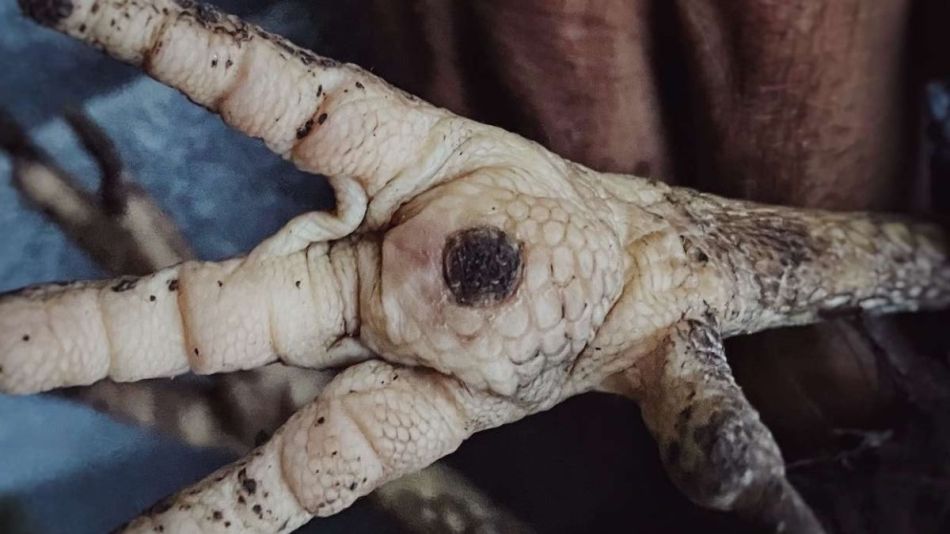
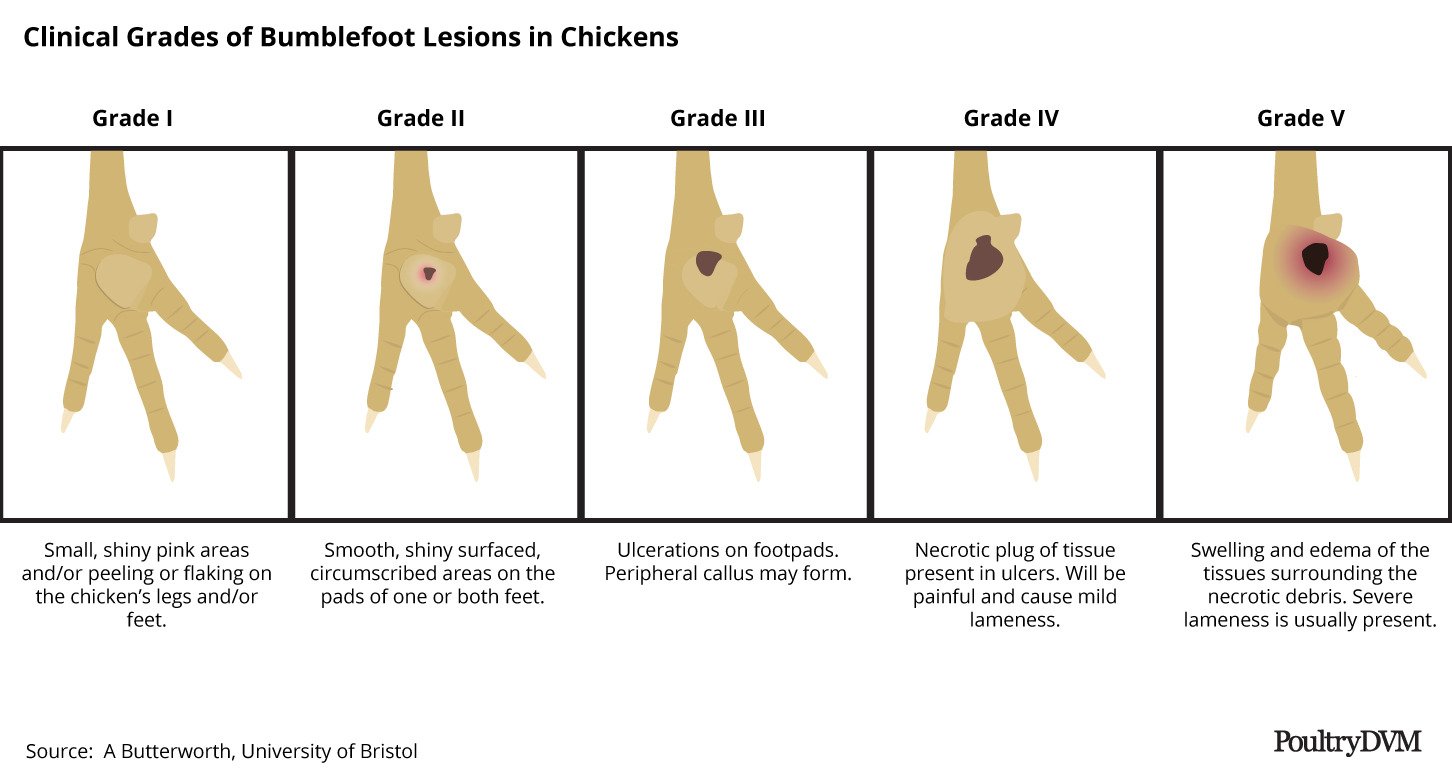
Bumblefoot, or pododermatitis, is a broad term that includes any inflammatory or degenerative condition affecting chicken feet. Severity is graded using a 5-point scale, usually related to whether or not there is an accompanying infection. Once infection sets in, the disease quickly progresses.
If you watch your birds you know they are constantly on the move, foraging, scratching in the dirt and digging dust bath holes. All of that wear and tear can cause problems for their feet. Bumblefoot is caused by consistent, uneven, or excessive pressure on the bottom of the bird’s foot, combined with conditions that lead to the breakdown in the outer skin of the foot. Scrapes or cuts in the footpads allow bacteria in the soil or coop to infect the inner tissues. Think of it like pressure ulcers or bedsores in people.
I used to think that it was a Staphylococcus aureus bacterial infection, and it most commonly is, but can also involve several other bacteria including Streptococcus sp. and E. coli.
The following is a case involving bumblefoot treatment.
I just wanted to share my experience treating my rooster with bumblefoot. I’m an Emergency Room Physician Assistant and while much human medicine can usually be applied to my dogs and horses, chickens seem to be an alien species.
I noticed he was limping about a month ago and then shortly thereafter he was wanting to lay down everywhere he went, had very low energy and was hardly eating. He has always had abnormally large, puffy feet since he was a chick so I didn’t immediately suspect bumblefoot. Once I got him inside and checked it out he did have a couple of those little scabby looking things. It was actually already worse than I’d realized, his foot and even leg was hot to the touch.
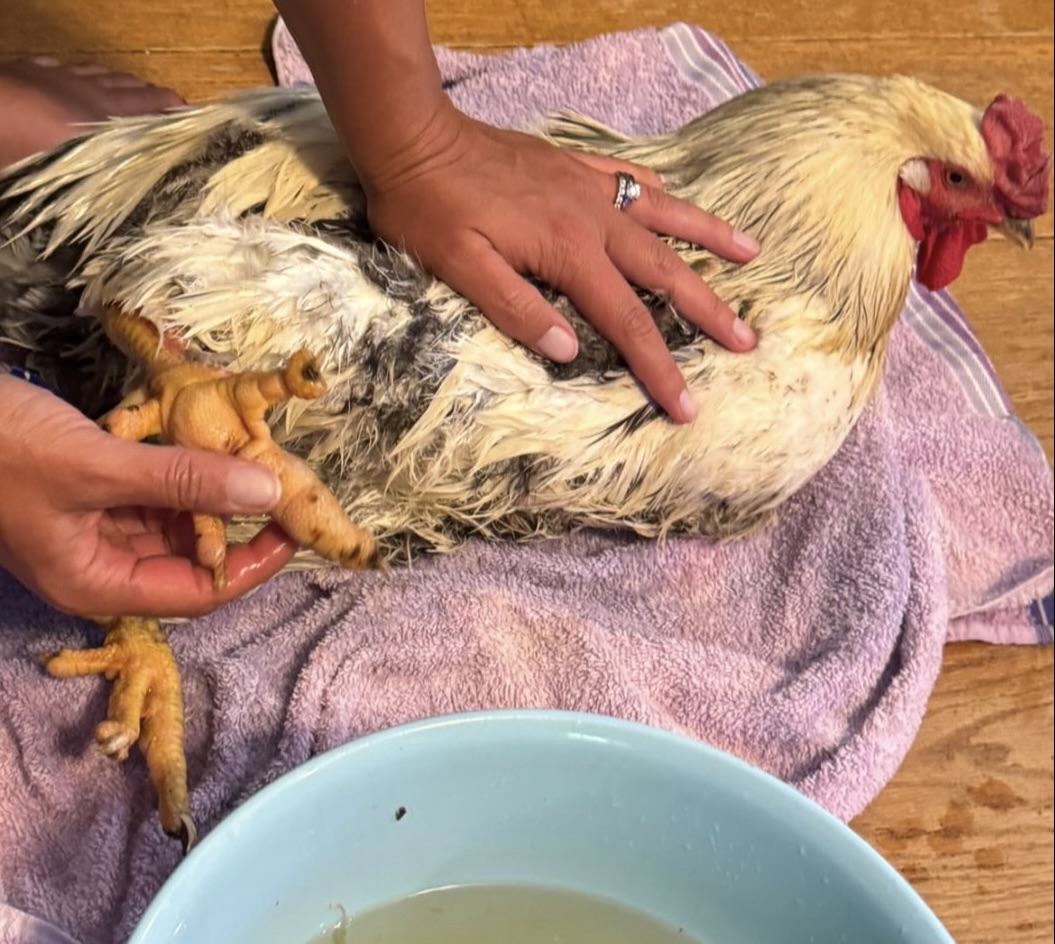
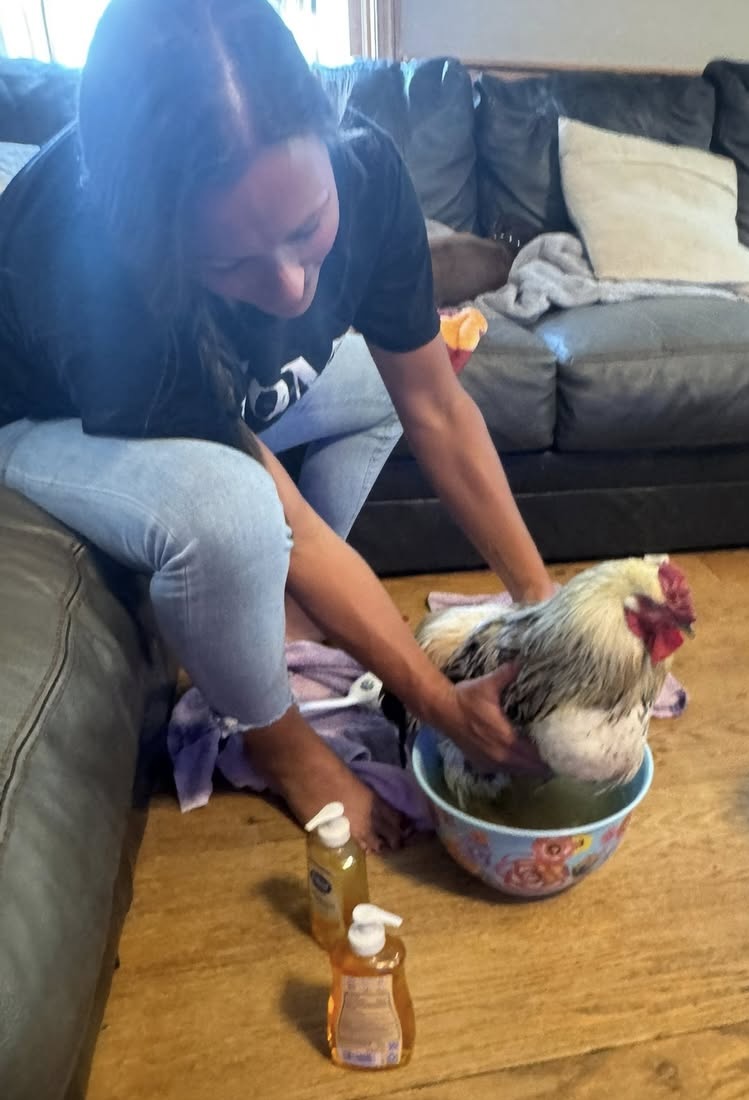
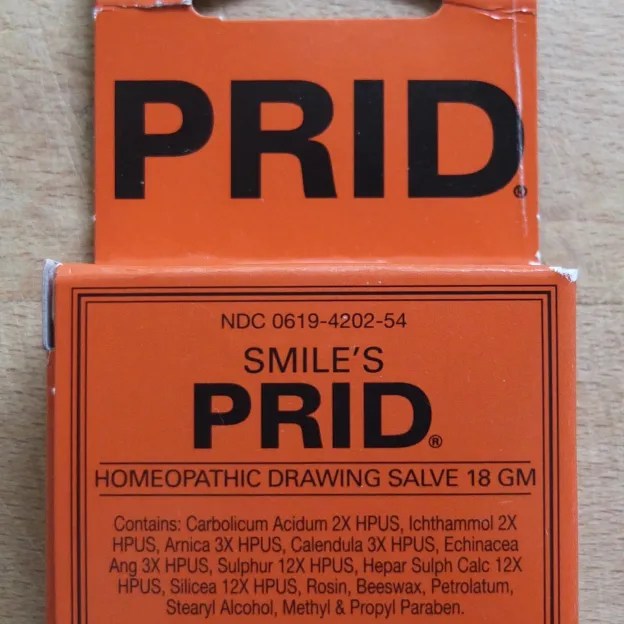
We soaked them in hot water and Epsom salt, scrubbed his foot with Dial soap and used some sterile forceps to dig around a bit under the lesions. We soaked his feet again, applied a large amount of the drawing salve Prid, and then adhered a large bandaid to wrap around the bad toe and then some self-adhesive bandages as a larger dressing for the entire foot.
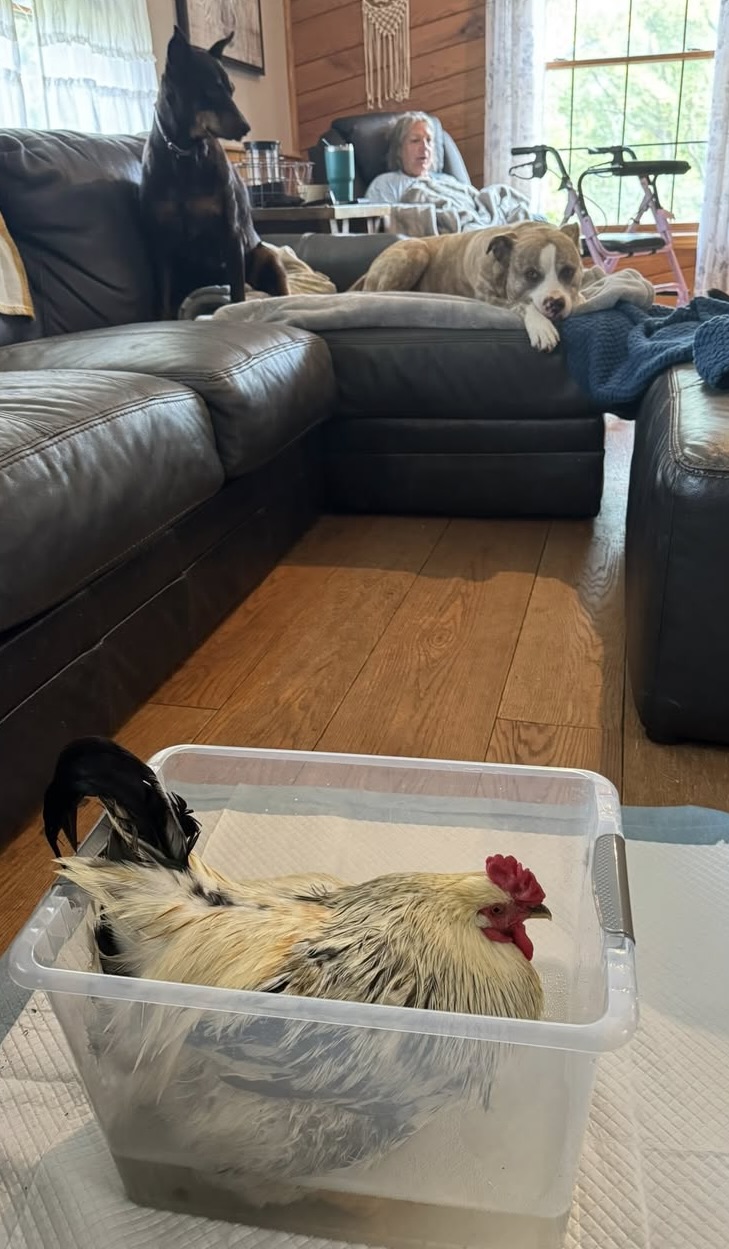
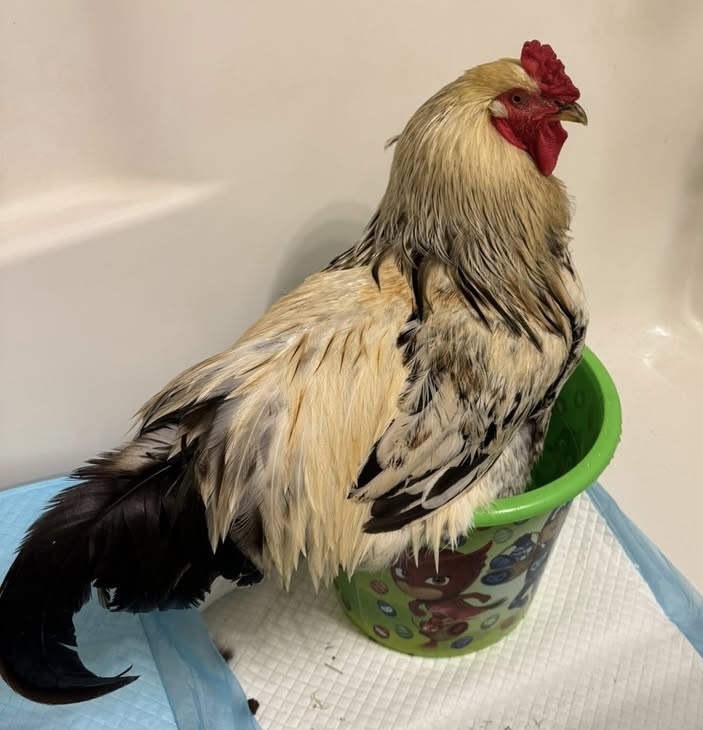
For the first few days I kept him in a large dog crate inside the house so he could rest. We gave him electrolytes and he started coming around within days.
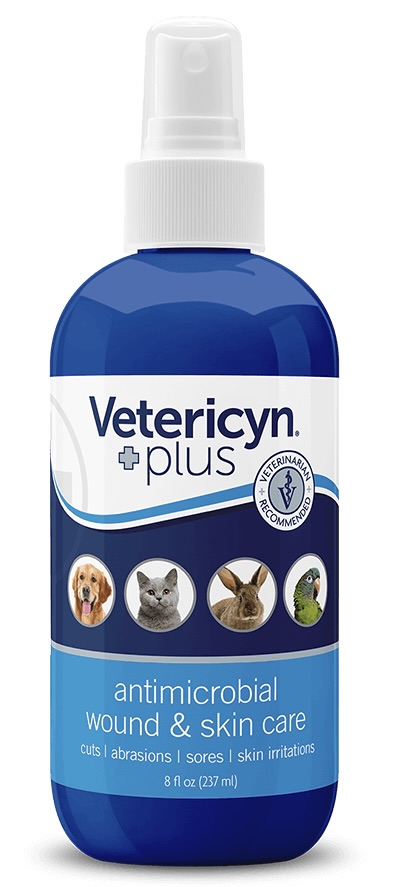
We removed the bandages, soaked the foot in Epsom salts and Betadine, reapplied Prid and dressed it twice daily for one week. We removed all that curdy pus and expressed what we could every time. After we seemed to have gotten out all the pus and caseous material we could, we started soaking, removing and picking off any scabs, scrubbing with Vetericyn, soaking again and then applying the Vetericyn Gel + triple antibiotic directly into the wounds and then covering it. I pried them open with forceps and squirted triple antibiotic directly into the hole. I started letting him go one or two days between repeating. A month later he is almost back to normal.
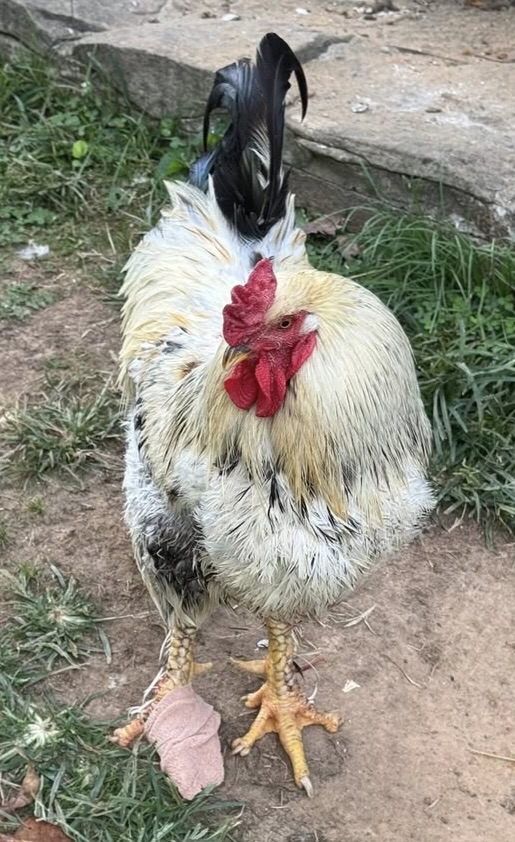
My partner and I both work, have small kids in sports, and I care for my mom with dementia so I’m not going to pretend we were as consistent as I would like to have been. Sometimes we went three or four days between dressing changes. I think lots of people have the assumption this is a quick fix – just pick off the scabs, soak and dress a few times. It probably is that easy sometimes but I believe he would’ve died of cellulitis leading to sepsis had we not taken it so seriously.
Thanks to Kelsey McKinney for sharing her story and photos.
“Where backyard birds meet biology.”
 Bitchin' Chickens
Thanks for this very helpful and practical post on dealing with bumblefoot! I love how specific you are, and also how reality based re daily life! Thanks once again!💖😍👏
LikeLiked by 1 person
Absolutely agree with being a hands on procedure. It does help to have some sort of emergency/vet knowledge to understand what to do when you start using cutting blades or forceps. I certainly had the vet tech background and thus was fairly easy for me to care for the sick ones out of 80 chickens. It also helps tremendously to have extra hands to hold the chicken needing help and to keep it in comfort. Ideally would be to have the chicken in isolation afterwards but many times we just didn’t do that. It just depended on the severity of the lesion.Hardy chickens figure it out and most of the time they are ok to be left with the rest as long as the bandage held and ithers are not attacking the sick chicken. It did take several times to check and reclean, reapply antibiotic ointment, and rebandage with many of my cases.
Kudos to Kelsey and her family for sticking with it and in helping their rooster heal.
LikeLike