
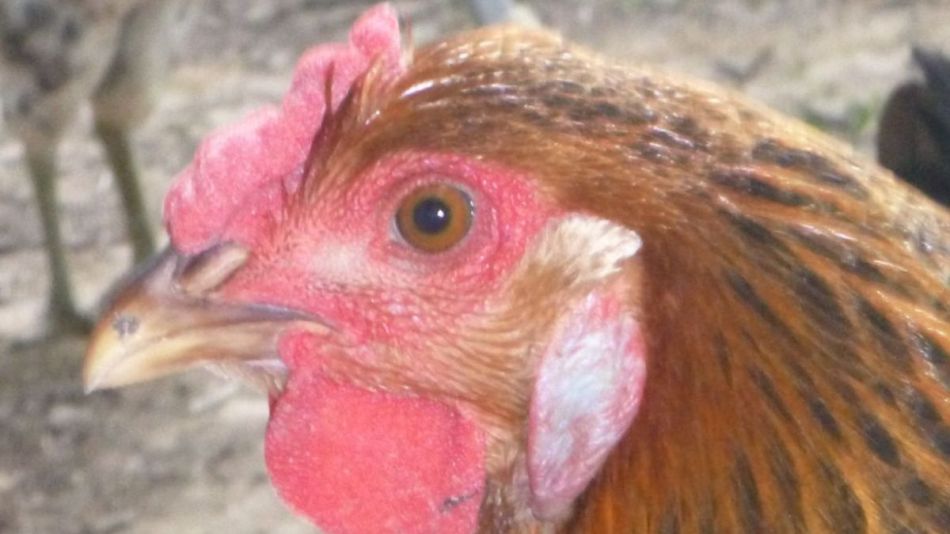
Let’s be honest – most people don’t notice their chickens’ ear lobes until someone points them out. Then suddenly, you can’t unsee them. Those smooth little patches below the eyes can be white, red, blue, or somewhere in between – and they’re more than just decorative.
Chicken ear lobes have a lot to say about hearing, genetics, and even eggshell colour.
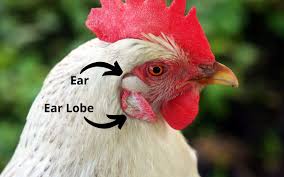
The Function of Ear Lobes
- Chickens have three parts to their ear: an external opening (hidden by feathers), a middle ear, and an inner ear.
- The ear lobe sits just below the external ear opening. It’s fleshy and vascularized, helping with temperature regulation around the head.
- While it doesn’t directly affect hearing, the lobe area plays a small role in protecting the ear canal from debris and infection.
- Like combs and wattles, ear lobes are sensitive to hormones – meaning they can change colour slightly with age, health, or reproductive status.
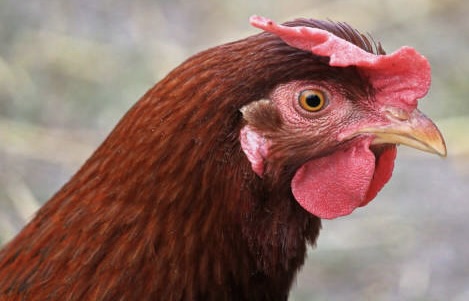
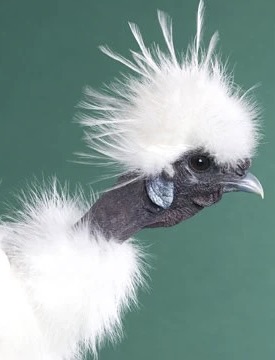
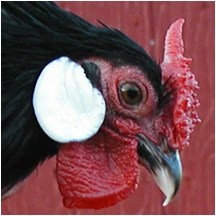
Photo credits: iStick; My Pet Chickens; Chicken Wiki
The Genetics of Ear Lobe Colour
Ear lobe colour is controlled by multiple genes that influence pigment production and blood vessel visibility.
- The primary pigments are carotenoids (yellow to orange) and porphyrins (red). The balance between these, plus skin transparency, determines lobe colour.
- White ear lobes are typically due to a lack of carotenoid pigment and the presence of reflective structural tissue beneath the skin.
- Red ear lobes come from blood vessels and pigment-rich skin layers influenced by the same hormonal and genetic factors that colour the comb and wattles.
- In some breeds (like Andalusians or Ameraucanas), blue or slate-coloured lobes are caused by the dermal melanin gene (Id) that darkens skin pigment.
Breed standards often specify ear lobe colour as an identifying feature. It’s one of those telltale signs of purity in exhibition birds.
Ear Lobes and Egg Shell Colour – The Mythical Correlation
You’ve probably heard this old chicken keeper’s rule: “Red ear lobes mean brown eggs; white ear lobes mean white eggs.” It’s mostly true but not always.
- The correlation comes from shared genetics that affect both skin pigment and eggshell pigment production.
- White-lobed breeds like Leghorns usually lay white eggs, while red-lobed breeds like Rhode Island Reds lay brown eggs.
- However, this isn’t a direct genetic cause-and-effect. The genes for ear lobe colour and eggshell pigment are linked through breed selection, not the same allele.
- Exceptions exist: Penedesencas and Empordanesas have red ear lobes but lay dark brown eggs, while Araucanas and Ameraucanas may have blue or slate lobes and lay blue or green eggs due to the Oocyan gene (O) affecting biliverdin deposition.
So, ear lobes can hint at what colour egg to expect, but don’t rely on it.
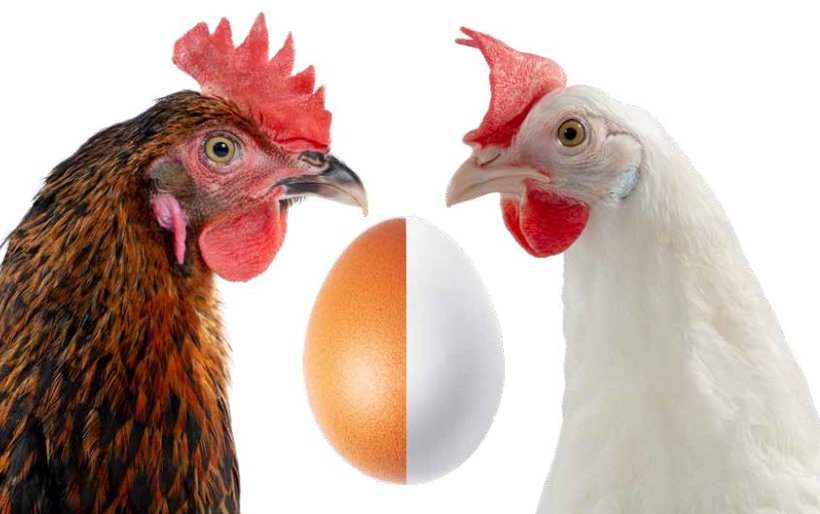
Photo credit: Hendrix Genetics
What Ear Lobes Can Tell You About Health
- A sudden colour change in the lobes can signal issues: pale lobes may mean anemia, parasites, or poor circulation.
- Purplish or bluish lobes can indicate respiratory distress or low oxygen levels.
- During moult or broodiness, lobe colour often fades temporarily as hormone levels drop.
Just like combs and wattles, lobes are little health barometers right on your chicken’s face.
Ear lobes are quietly fascinating – a genetic echo of both ancestry and physiology.
Next time you’re admiring your hens, take a second look at those ear lobes. Whether red, white, or blue, they’re one more clue that tells the story of where your chickens come from and what they’re capable of.
- Crawford, R. D. (1990). Poultry Breeding and Genetics. Elsevier.
- Hutt, F. B. (1949). Genetics of the Fowl. McGraw-Hill.
- Romanov, M. N., & Weigend, S. (2001). Analysis of Genetic Relationships Between Various Populations of Domestic and Jungle Fowl Using Microsatellite Markers. Poultry Science, 80(8), 1057–1063.
- Leeson, S., & Summers, J. D. (2005). Commercial Poultry Nutrition. Nottingham University Press.
“Bringing science to the coop — one experiment at a time.”
 Bitchin' Chickens
Thanks for the interesting post on earlobes!
LikeLike
There’s no end to interesting facts about chickens
LikeLike