
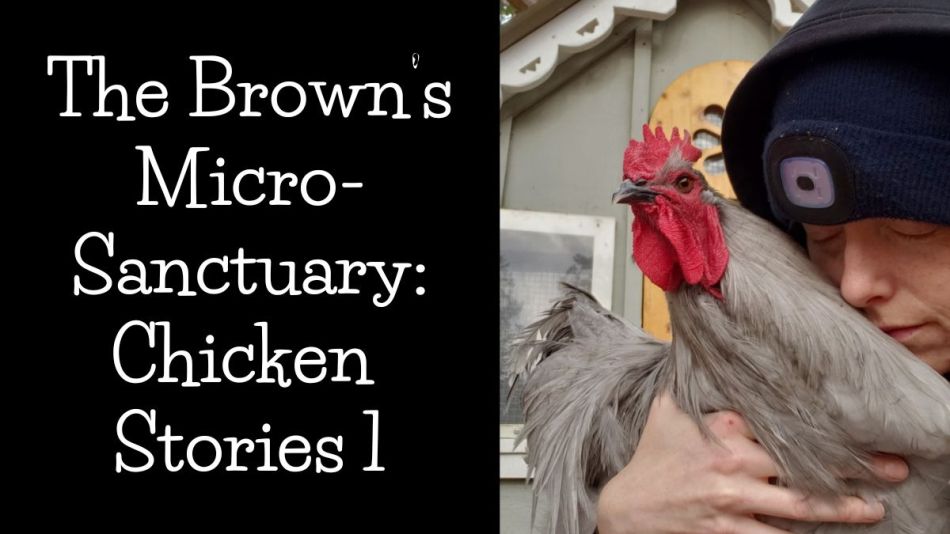
Loads of sites come up in my feed. Some I scroll through, others I block and a few catch my interest and I click through to their page. Sanctuaries usually grab my attention and I often reach out to offer to post about their work on my blog. So far, I’ve profiled several rescue groups: in England, Australia, the USA and Canada.
I reached out to fellow Canadian, Temara, who expressed interest in chatting with me. It took a bit till she had the time to sit down and answer the questions I sent. She apologized profusely for the delay but I understand that folks running a rescue are busy 24/7 and don’t have a lot of spare time. I suggested that I scroll through their Facebook page to see what I could use to save her some time. This is my eighth profile in my series about chicken rescues.
What is your origin story?
We started adopting chickens in need in the early 2000s. My mom grew up with pet chickens and our house already had a spacious coop on the property. We fixed it up and took in chickens in need. We didn’t intend to become a rescue or sanctuary, we just knew we loved them.
In the beginning, we’d often see ads in the newspaper classifieds where chickens were listed as “good for the soup pot” or something awful like that. We’d go get them so they could live in peace.
I remember once, my dad’s friend brought home hens from a livestock auction who looked like survivors of battery cage egg farms. He offered them to us to take home for our flock. I used to believe “farmers loved their animals” (when I was 14) so I assumed their baldness must be normal. Only to later see how they blossomed afterwards with proper care.
Most people grow up with the lies animal agriculture tells about itself. I, too, had blinders on, even when the truth was looking me in the face. Even though we were effectively a microsanctuary, it took some maturing before I started to see the industry’s lies for what they were.
Feeling so compelled to try and help the billions of birds suffering, we began to do whatever we could to help. In doing so, we got to know other sanctuaries and supporters and connected with a community of kindred spirits.
We have a 2 acre property just outside of Cambridge, Ontario located about five minutes outside of two cities. We focus on helping chickens of all kinds, in addition to our dogs.
Funding?
A combination of donations, fundraising from events, sales of chicken diapers that we sew, and our personal funds.
Who is involved?
I do the primary caregiving with help from the chickens’ grandma if I am away. We have a wonderful community of volunteers and supporters as well.
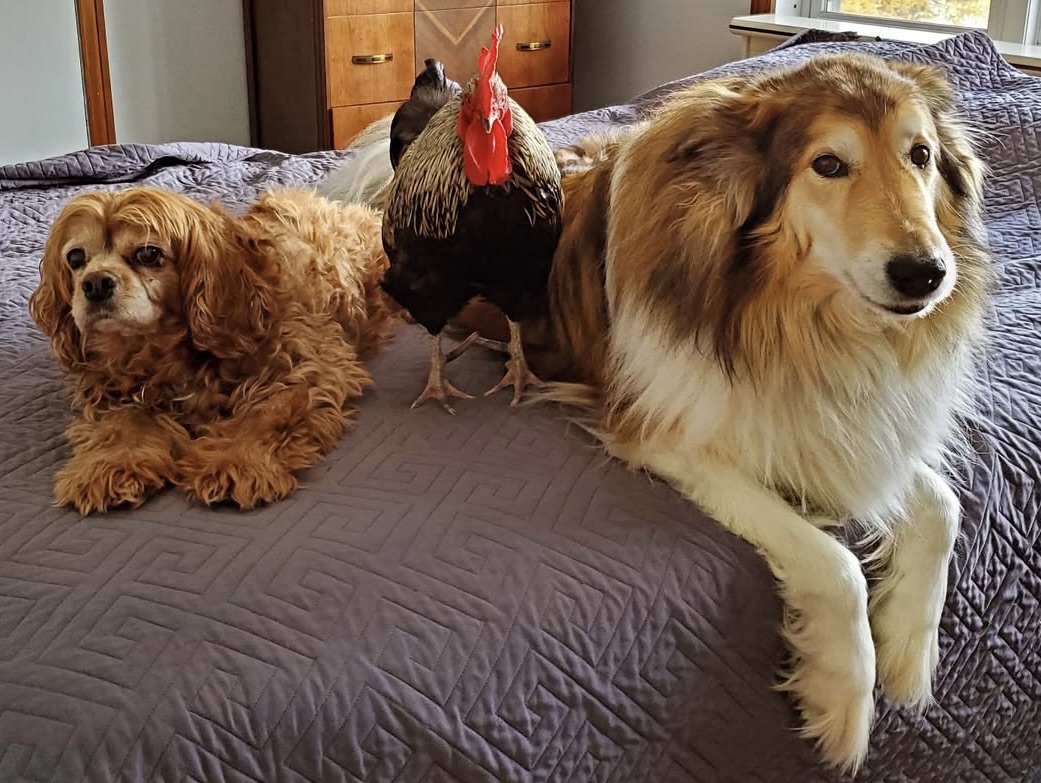
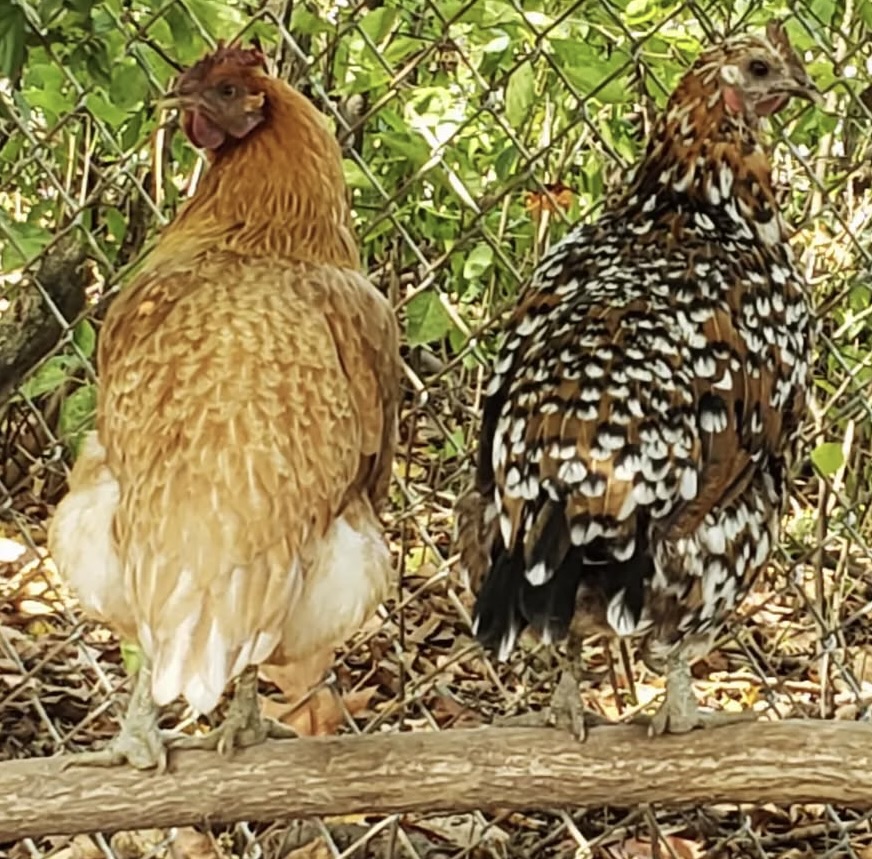
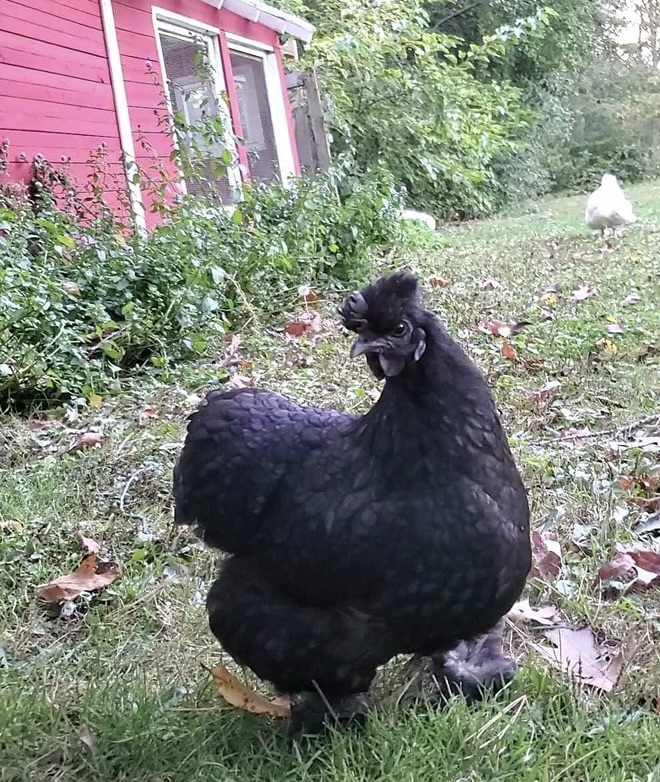
Daphne (right) and her mother, Teresa, are an inseparable pair. They became part of our family several years ago and have always been side by side since. Neither are fond of the camera despite being so beautiful. They prefer to run away. I’m treasuring this one picture I managed to get!
Happy 8th Birthday Edith! We’re so so lucky to have you in our lives!
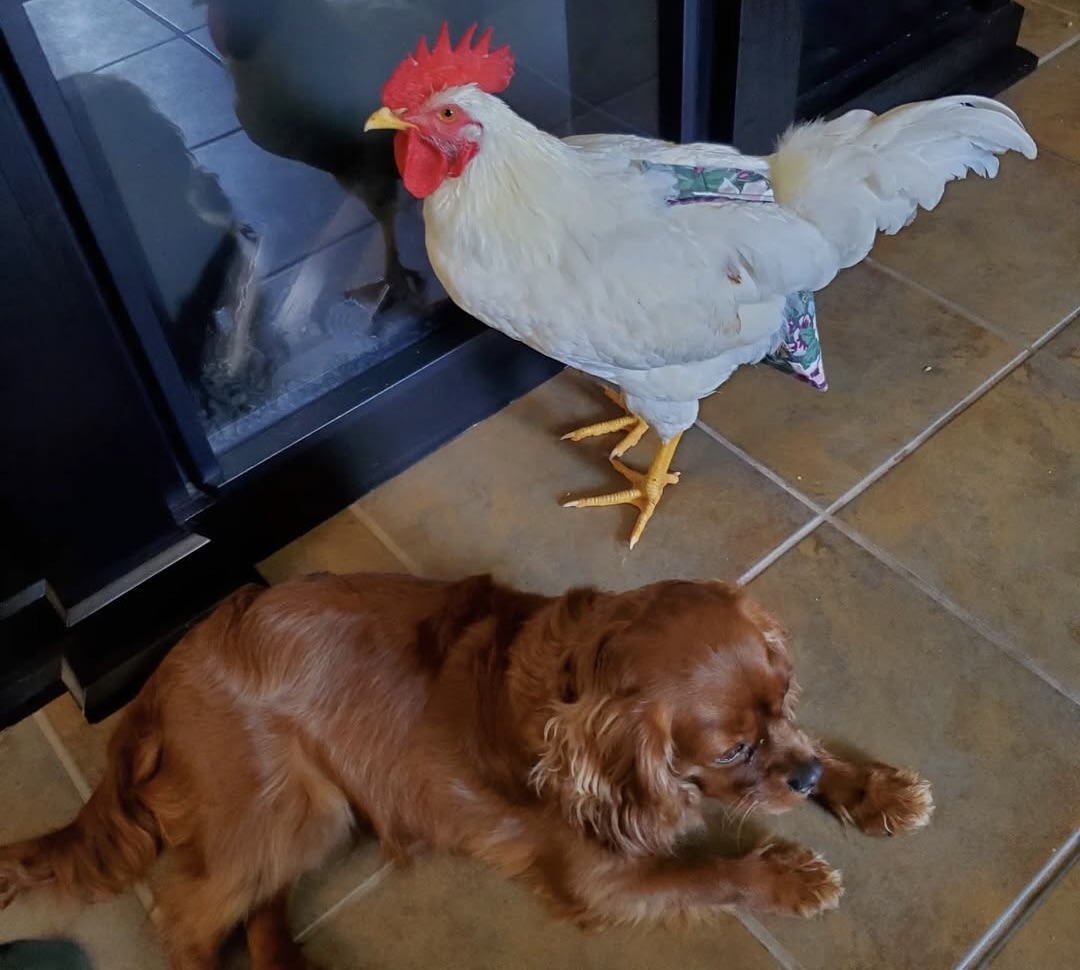
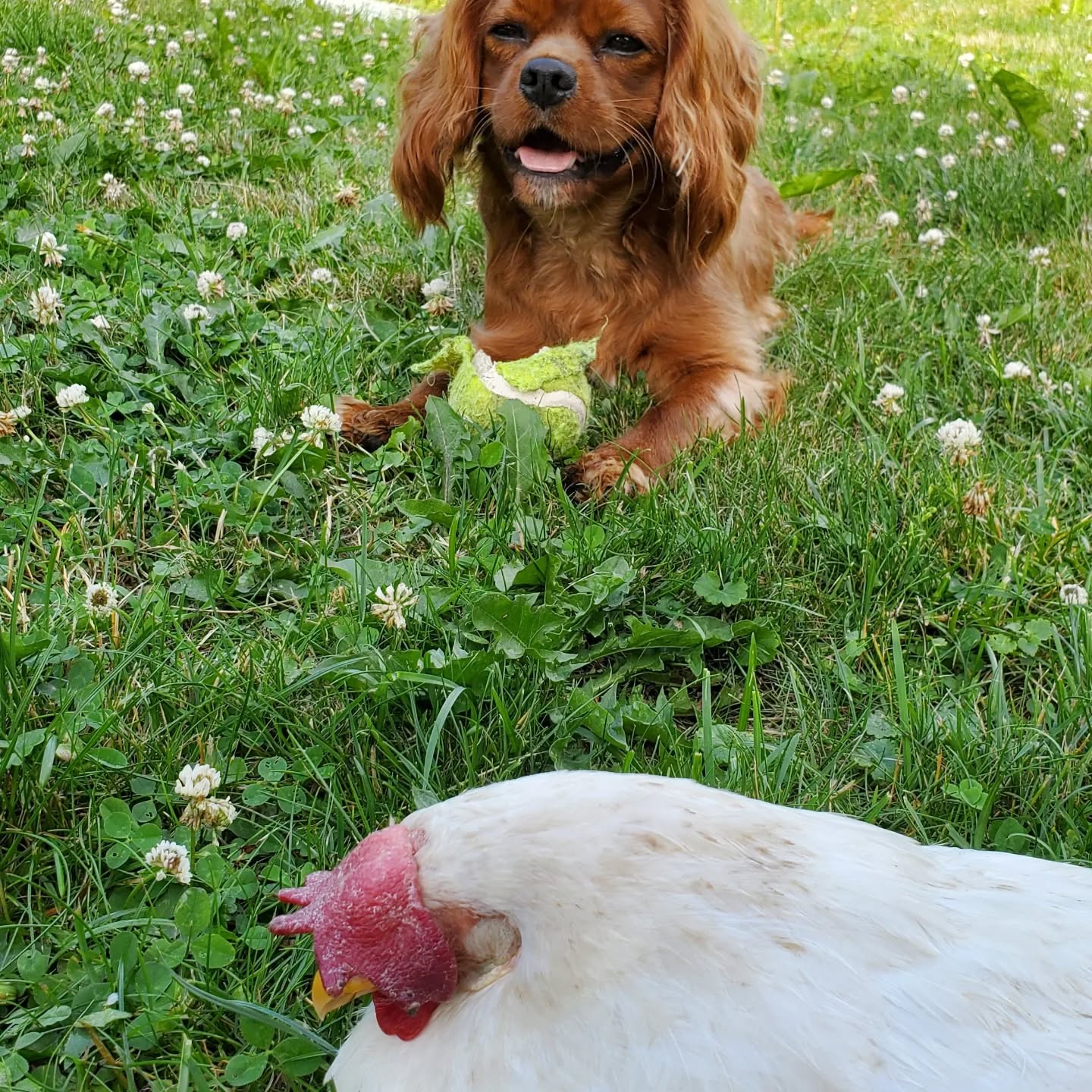
Edith is a Cornish cross hen, which means, above anything else, she loves snacks, foraging for snacks and puttering around in search of more snacks. Don’t worry, we keep her on a strict diet! That’s why she’s still with us so long. When Edith’s not thinking about food, she just wants to relax and snuggle. She brings us so much joy with her silly shenanigans or the way she runs when it’s supper time.
Edith came to us when she was about a week old. She was originally purchased by a guy who wanted to feed her to his snake. Thankfully the snake said “no”. Then this sicko went about all the other abhorrent ways he thought would be fun to take her life. Thankfully, a family intervened and helped Edith find sanctuary.
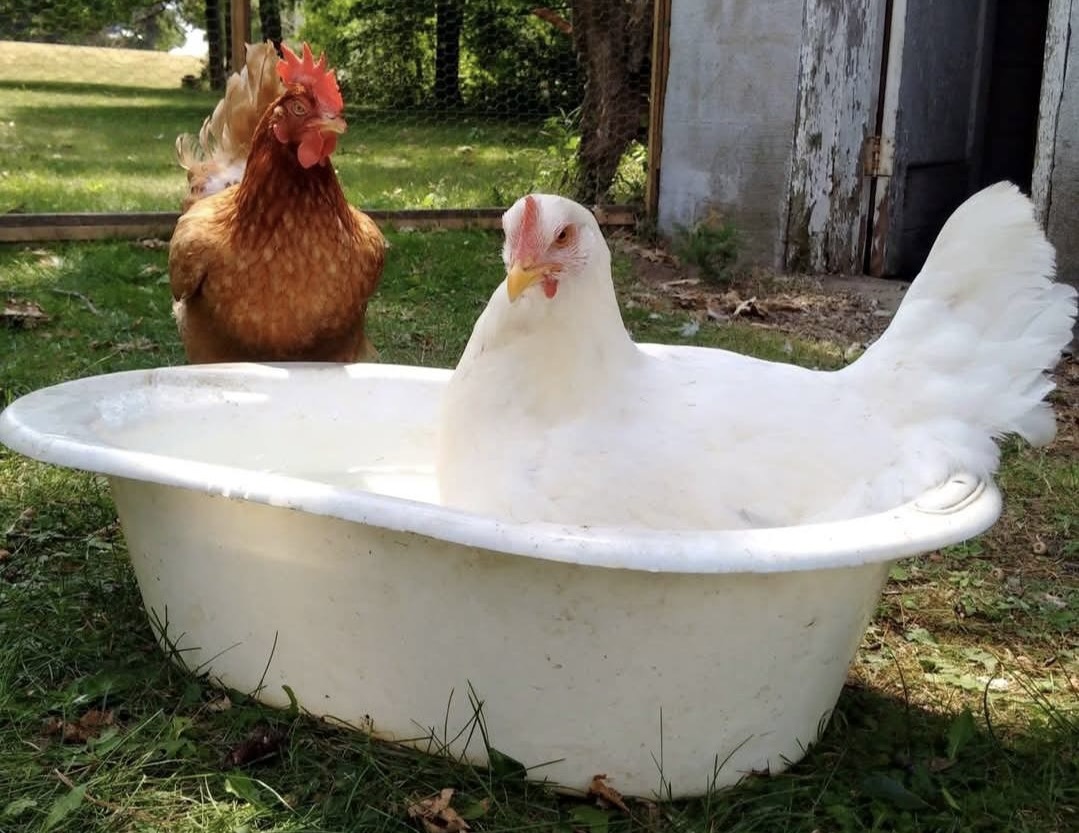
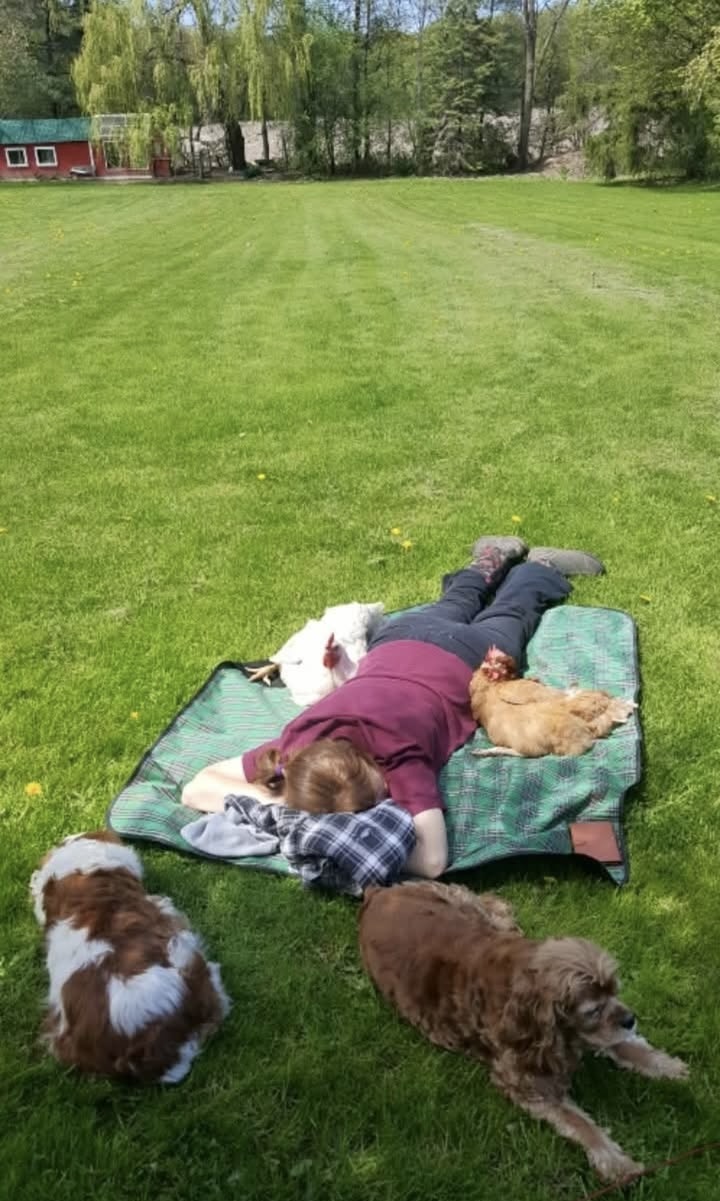
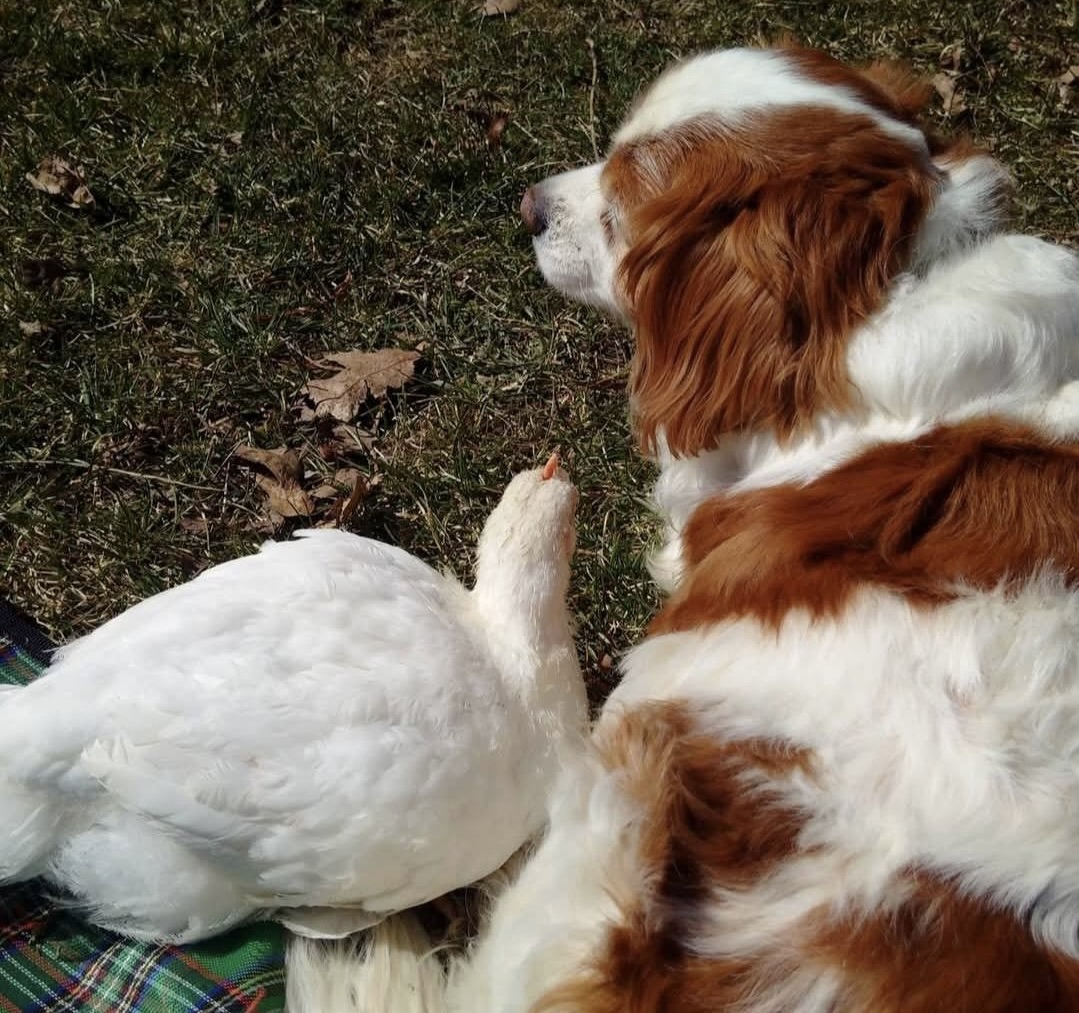
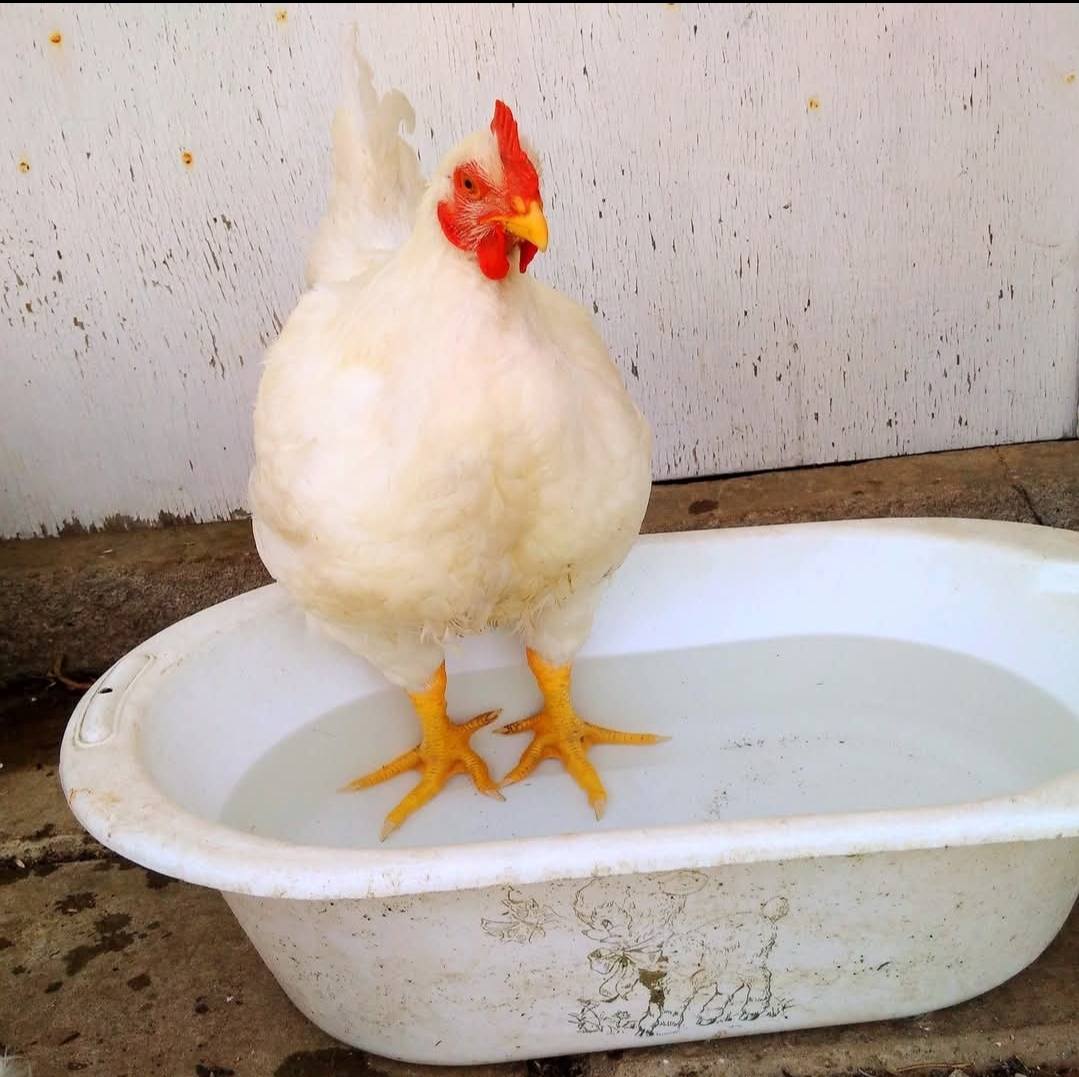
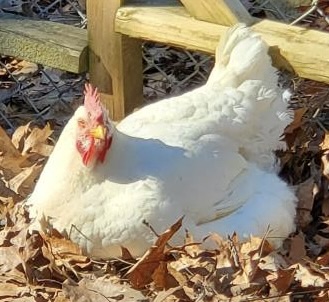
Chickens like Edith are typically used for their flesh. They’ve been bred to grow really big, really fast. Their lives are ended when they’re just babies, after 6-8 weeks. They’re still blue-eyed and peeping at that age. Edith has lived fifty-two times longer than most like her. Imagine all the joy the world is missing out on by supporting animal agriculture. But Edith’s birthday is a happy day so I’m determined to be celebratory! It’s rare to find chickens like Edith to be around that long. We cherish every minute spent in her company.
PSA: farmers will refer to Edith’s breed as a broiler but that is crass and obscene. We respect Edith’s dignity as a living individual, which is why we use the technical name: Cornish cross.
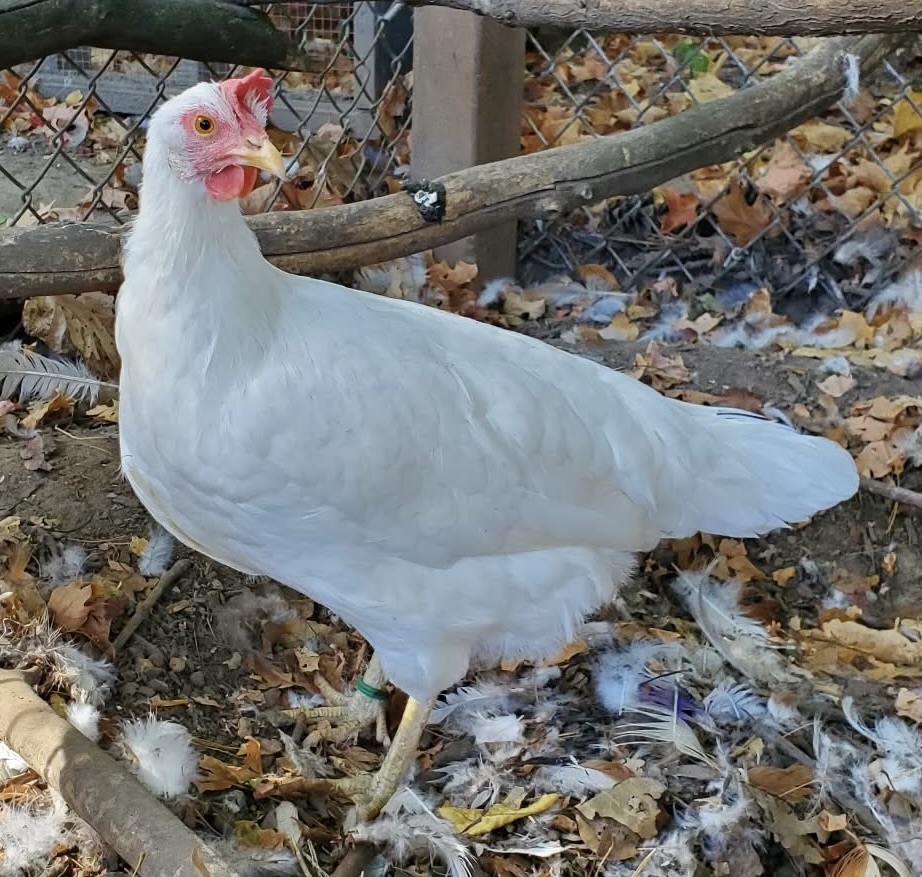
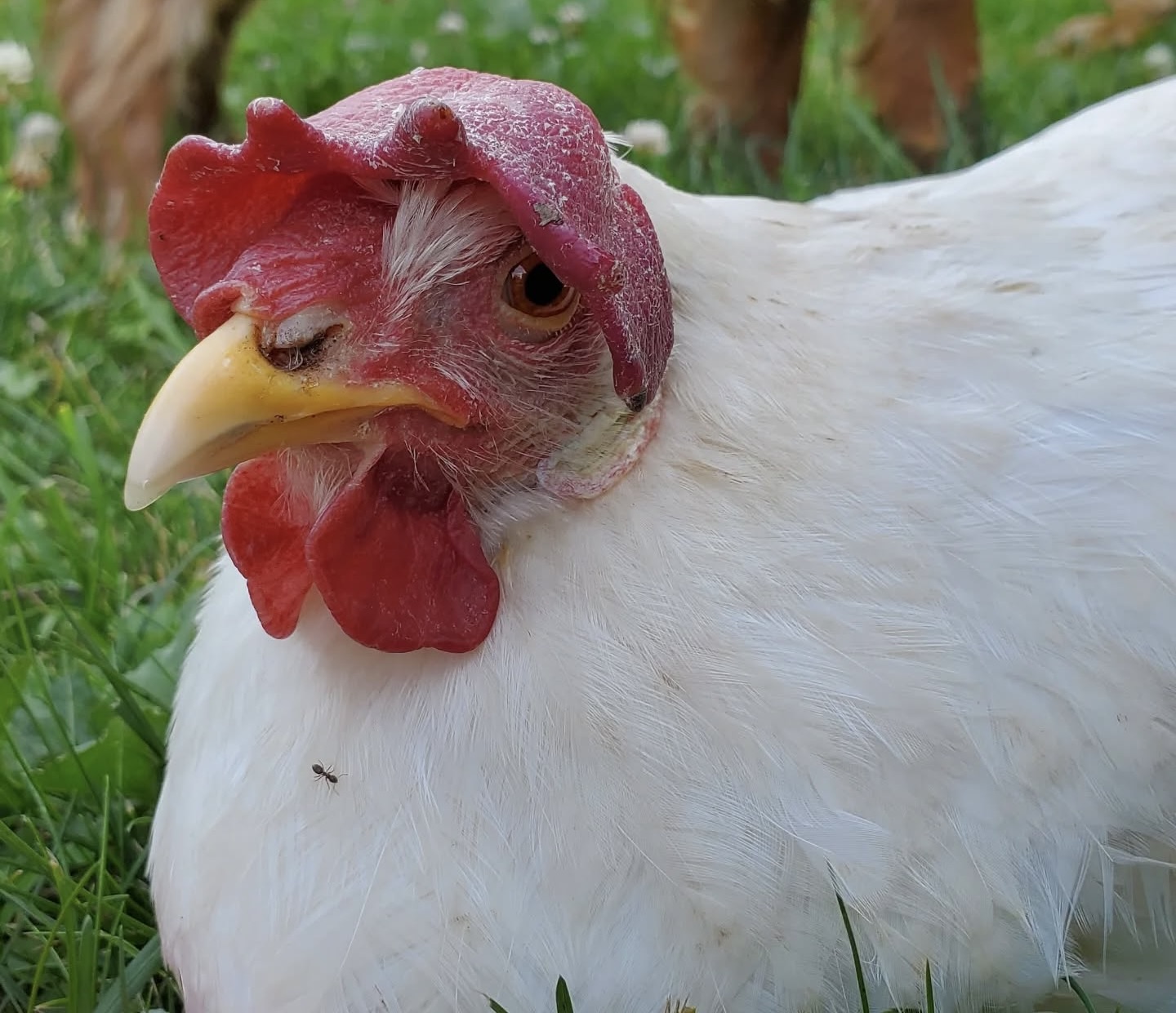
This is a post to appreciate our tiny wee Elsie. She had two bouts of illness this summer and we are so grateful she’s back to her adorable self. She’s such a special soul. Elsie battled egg yolk peritonitis and then a bad respiratory bug that had her feeling really yucky. We’ll soon need to get her another hormone implant to prevent any more nasty EYP. But just look at her. That cuteness! Tell me if it’s all too much.
You won’t believe Poppy’s glow up. She is a perfect example of why there is no such thing as an ethical egg. You may have heard of hormone implants for chickens to stop them from laying eggs. Poppy received one several weeks ago after she developed a nasty case of egg yolk peritonitis. She went from looking like she might pass away to feeling strong and looking luminous. Instead of eggs forming and exiting her body the usual way, eggy liquid was building up in Poppy’s abdomen. She could have as much as 400 mL or more extra build up in a few days. That’s a lot when you weigh less than two kilograms. It’s an excruciating condition that put Poppy’s body under a lot of pressure. Breathing, eating, walking – all of it became challenging.
Poppy had the fluid removed via syringe. She also received antibiotics, pain relief and a hormone implant. These are, sadly, not cheap but they work miracles. It saved our beloved Poppy’s life, which is priceless. In many cases, after a hen receives an implant, they’ll molt, shed their old feathers, and grow new ones. I promised Poppy I wouldn’t share pics of her mid-molt scruffy phase.
My theory about the post-implant is it’s like their bodies are finally free of the toll excessive egg production takes. They can instead invest resources towards their own needs, like growing new beautiful feathers. They are also way more chill overall, as they’re not constantly scrambling for food. Conditions like Poppy endured are not rare. Another hen in our flock, Cordelia, was dealing with it and received an implant at the same time. She still looks scruffy from molting though.
We see so many conditions on a regular basis where hens suffer from diseases relating to having been bred to lay so many eggs. Reproductive cancers and EYP are the most common, even in a sanctuary setting. I don’t think most people really understand how messed up their bodies are due to egg production. This is not natural. Getting hens hormone implants to stop egg production is a game changer, especially when they save lives like Poppy’s. It’s like we’re finally freeing them from egg farming.
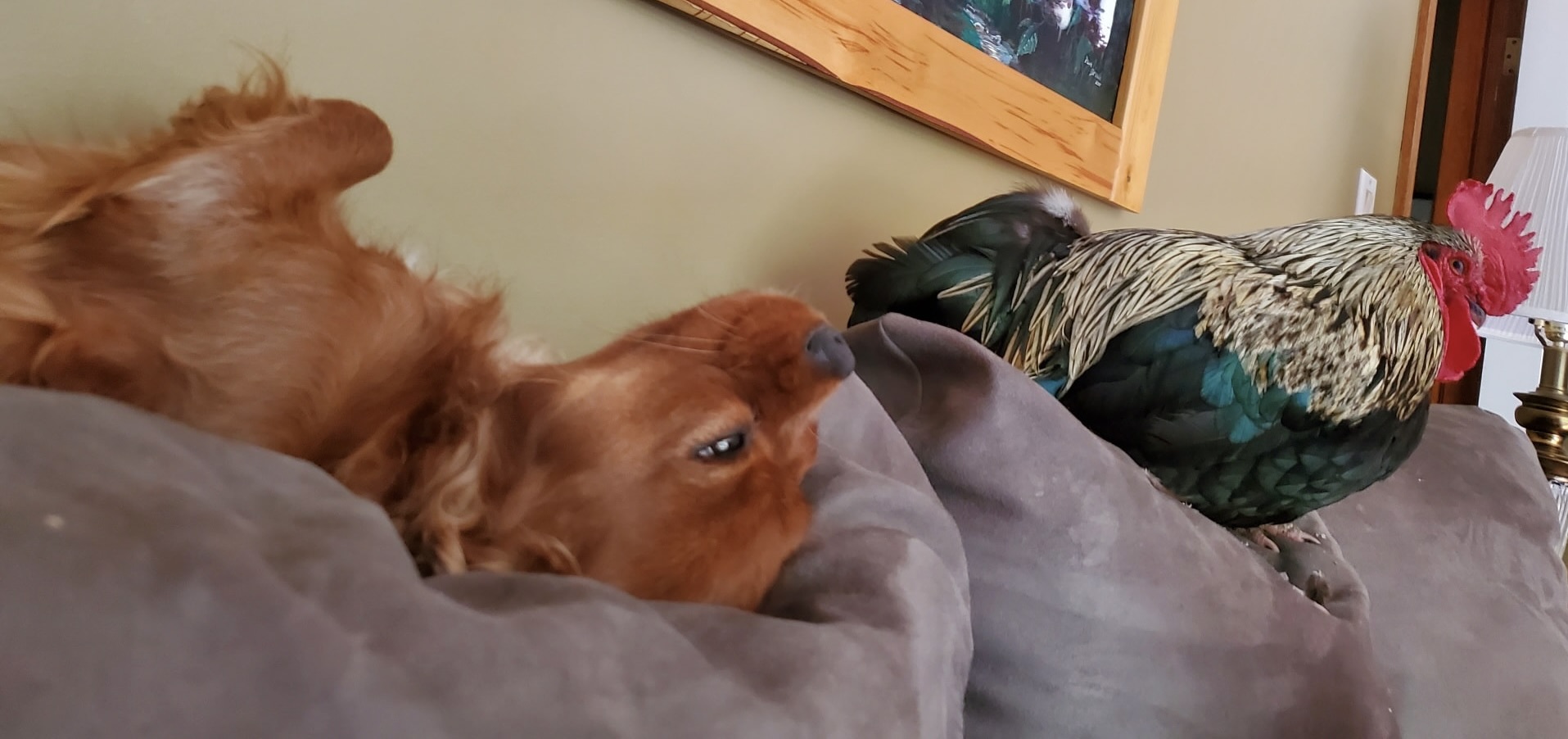
We’d like people to consider starting their own microsanctuary and trying to help animals with what they have as well. You don’t need to have a large rural property. Our house rooster Steve showed how much chickens can be a loving and integral part of a home. Our house chickens also help to break myths and stereotypes that have helped others see chickens in a new light. Where they are living beings capable of so much love and joy. There are so many in need and not enough places for everyone to go.
If anyone wants more information on how to adopt a house chicken (the poop question is usually their first thought), please feel free to connect with us or your local sanctuary.
Thanks to Temara Brown for sharing her story and photos, used with permission. Stay tuned for future posts about the Brown’s Microsanctuary.
If you have a story to share drop me a line using the ‘contact’ button on my homepage.
“Saving one chicken won’t change the world – but it’ll change theirs.”
 Bitchin' Chickens
0 comments on “The Brown’s Microsanctuary: Chicken Stories 1”