
I’m an educator by trade, experienced with curriculum development and public speaking. I’ve learned over the years that as much as I know about a subject I’m by no means an expert. I’m always looking for ways to learn more and to be better at what I do. When I started blogging about chickens I’d already had birds for almost a decade but I still wanted to explore the world of poultry keeping.
When the Covid-19 shutdown first hit I had more time on my hands since I was able to work at home. In addition to writing full length science-based articles for this blog, I started posting small snippets of information on my Facebook page, a platform more appropriate for folks scrolling through competing sites.
These posts consisted of short stories, photos of health issues and quizzes. I stumbled across my ‘minis’ files recently and thought I would post some of them here.
Hen Ovaries
The reproductive tract of a hen is divided into two major parts: the ovary and the oviduct, which are central to the formation of eggs. A pullet is born with two ovaries, but as she matures the right ovary remains undeveloped and only the left one becomes fully functional. That ovary contains all the undeveloped yolks the pullet was born with, which represent the maximum number of eggs she could lay within her lifetime.
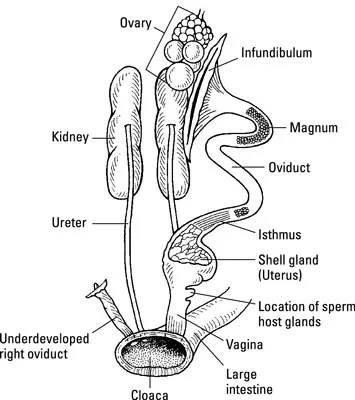
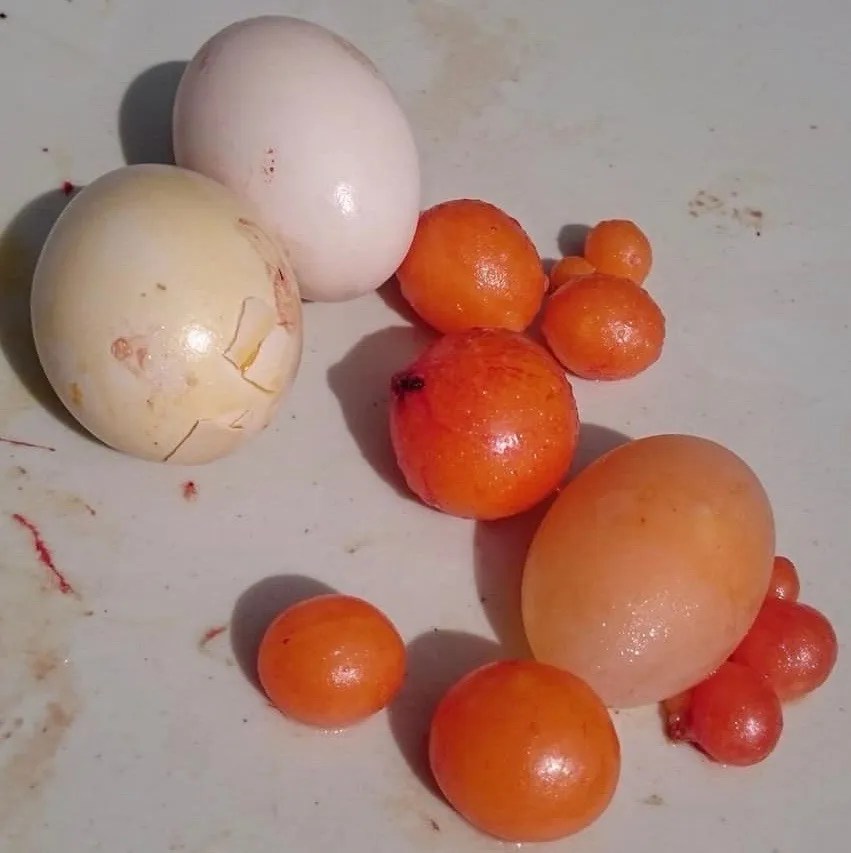
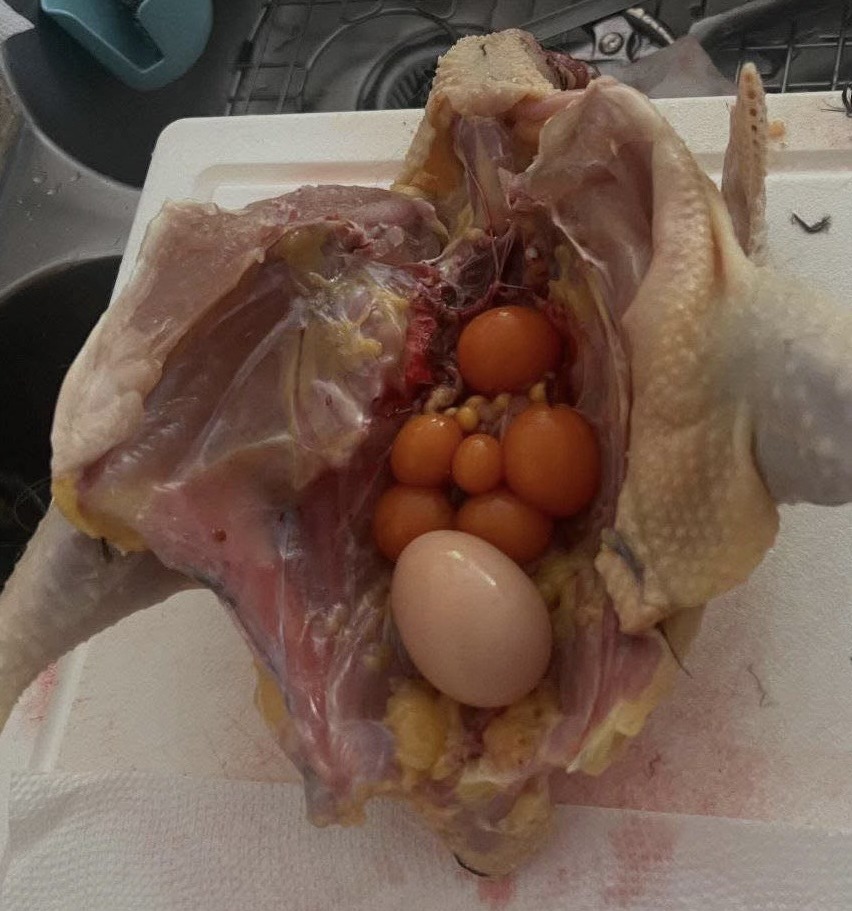
Photo credits: Liza Jane; Michelle Marie Ferreira
More mysterious than the age-old question ‘Which came first, the chicken or the egg?’ is the marvel of that perfect little orb that most of us eat and take for granted. An egg is made from the inside out and here’s a quick tour on how that miracle of nature happens.
Bird eggs look very simple, but looks can be deceiving. All eggs, from the enormous ostrich to the tiny hummingbird, require shells that are sturdy, yet porous. An eggshell must protect the embryo inside while allowing oxygen to pass in and carbon dioxide to go out. It must also keep out bacteria that would kill the embryo.
While inside the hen’s body, the yolk is surrounded by the albumen, or egg white, and then covered with two membranes. The albumen serves as food for the developing bird. Next, tiny knobs are deposited on the outer membrane in an even pattern.
The outer layer of the shell is made of calcium carbonate, the same as calcite or limestone. Calcium carbonate crystals are deposited on the knobs of the outer membrane and connected by a matrix of protein for strength. Between the crystals, pores allow gases to pass through.
All eggshells start off as white or brown. If you’ve got hens that lay blue or green or speckles that’s because pigments are overlaid on top of the shell. Just before the hen lays the egg, it receives an outer cuticle coating, also called ‘bloom’ which is intended to protect the developing embryo from bacteria.
The saga of the crazy eggs continues. My Isbar hen has always laid large eggs but lately she’s been producing double yolkers. This egg was laid fully intact, but here’s the amazing part: it actually cracked before it was ever laid.
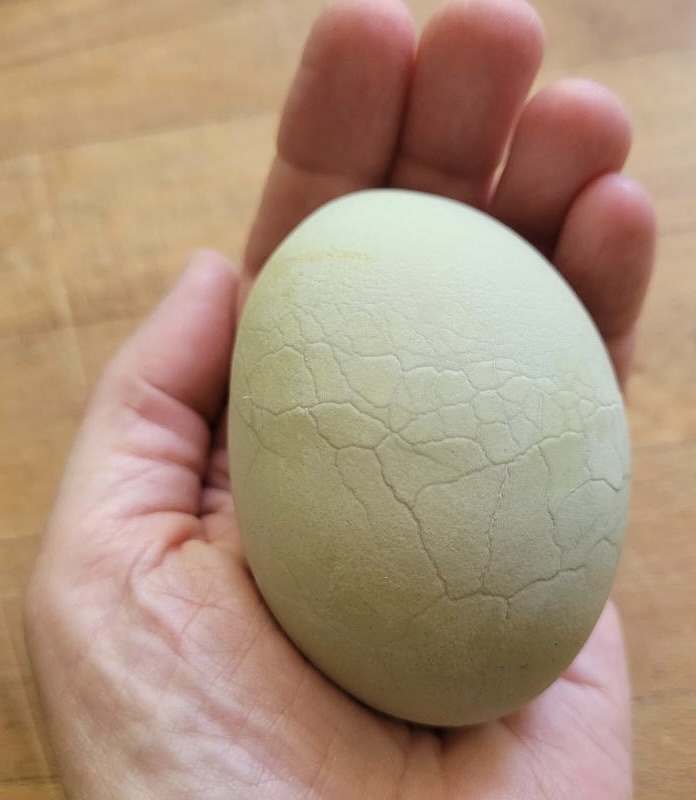
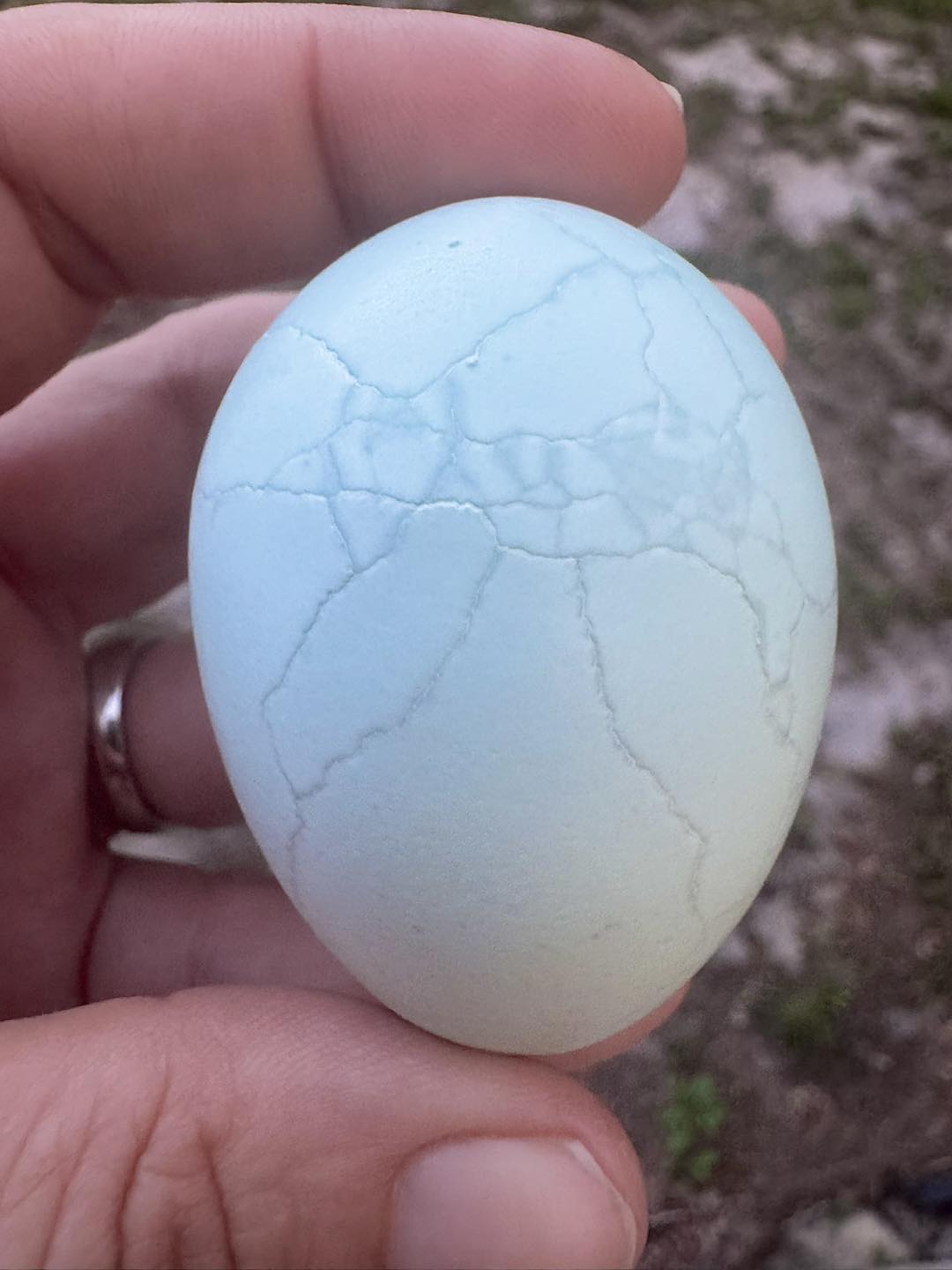
I don’t know if there is official scientific term dedicated to this uncommon phenomenon, but they are usually referred to as body checked eggs – when the developing egg is bumped or compressed in the shell gland. Another way to describe it is supplemental calcification – a natural patch job from within.
In cases like this, if an egg cracks inside the hen but still has time, the hen’s body can actually seal those cracks by layering on extra calcium before the it’s laid. The result? A fully formed egg with visible evidence of nature’s remarkable ability to heal itself.
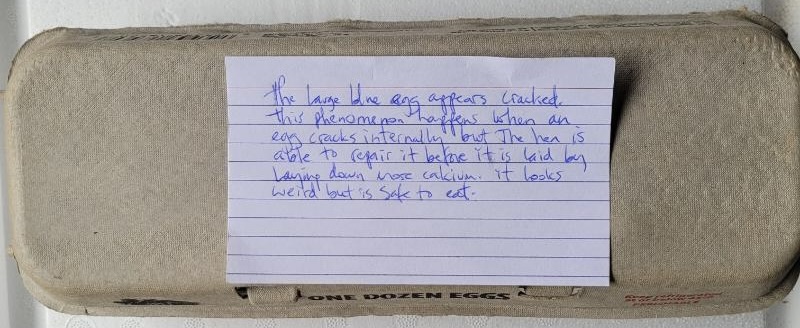
I’ve had to leave a little note on my egg carton so my customers don’t think they were duds.
Chicken is the most widely consumed meat in North America, and chicken eggs are the most popular food eggs. It seems that not only do people appreciate the by-products of chickens, but so do the birds themselves.
Egg eating is a behaviour you’ll want to prevent, or at least, nip in the bud before it becomes an entrenched bad habit. In my experience it usually starts as a result of when an egg get accidentally broken and then, a curious hen pecks and develops a taste for it. Who would blame her? Eggs are full of tasty protein and vitamins and their shells are a good source of calcium. Chickens play follow-the-leader and often join in on the action of sampling broken eggs.
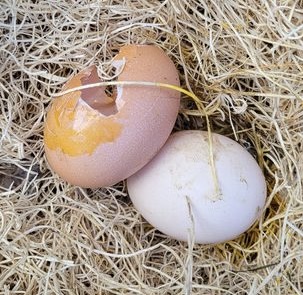
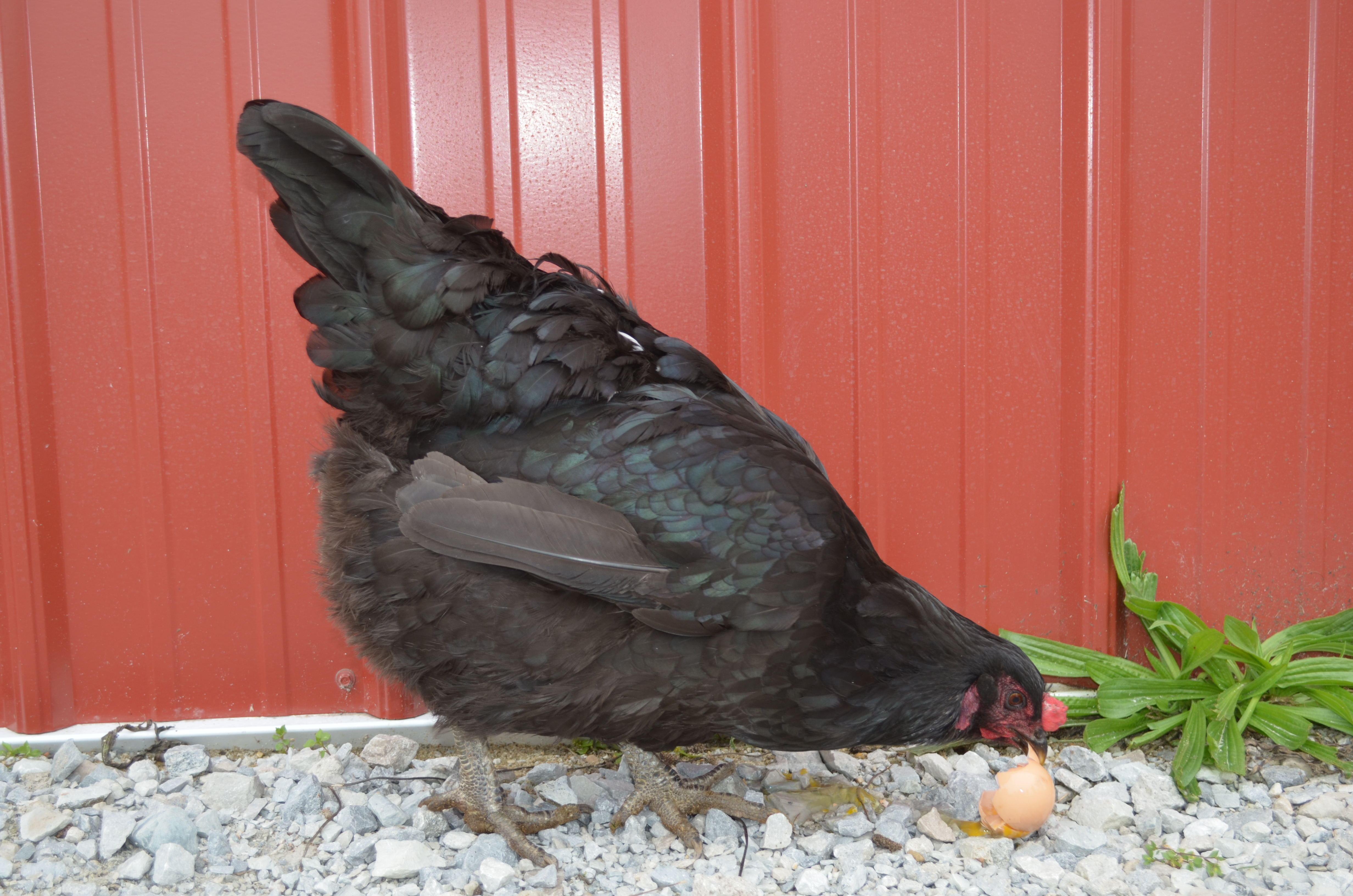
Photo credits: Moriah Graziani; Taya Harding-Baker
Before pointing an accusing finger confirm that your birds are actually eating their eggs. Rule out predators such as snakes, skunks and rats, first. Sometimes it may be just one hen that is the problem and it might take a bit of detective work to catch her in the act. Check the nest boxes for broken shells and remnants of the inside of eggs in the bedding. Look for dried yolk on beaks and feathers on your birds’ heads.
I’ve had egg eaters in my flock and managed to deter them. If you understand chickens’ motivation for eating eggs and can curtail their opportunities you’re likely to prevent or resolve the behaviour without resorting to drastic measures.
“Where nerds and hens flock together.”
 Bitchin' Chickens
0 comments on “Fun Facts About Chickens 2”