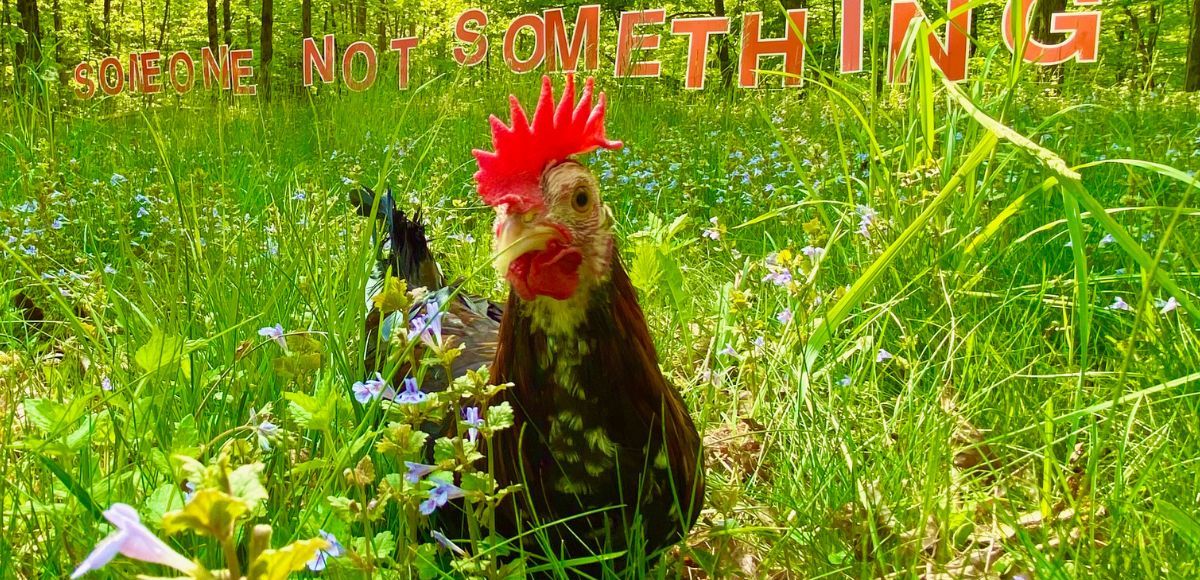

Loads of sites come up in my feed. Some I scroll through, others I block and a few catch my interest and I click through to their page. I’ve profiled several rescue groups in Canada, the United States, England and Australia for my blog. I reached out to the Institute For Animal Happiness, a sanctuary in New York State, and asked if they were interested in doing an interview with me.
From experience I know that folks running a rescue are busy 24/7 and don’t have a lot of spare time. I sent IFAH founder, Rebecca, some questions to structure this post and she happily sent me the following.
I became an animal rights activist at the age of 10, when I met a chicken for the first time at a summer camp. Upon returning home to NYC, I informed my family I was no longer going to eat animals. That was in 1978.
Before founding IFAH, I lived and worked in NYC, participating in community activism, working a multitude of jobs by day, and being devoted to experimental art (music, dance, theatre and film) by night.
One day I got on a bus that dropped me off on a dirt road upstate that led to a farm animal rescue. I began volunteering; life shifted course. The next ten years were spent in the trenches of rescue, care and advocacy work at several organizations.
The Institute was unofficially founded in late 2008 when I brought home Nelly: a 6 year-old rooster with horribly deformed feet who wasn’t getting any care or attention at the animal rescue where I was working. I started to learn a lot about speciesism – and the arbitrary hierarchies we ascribe to different species – from this experience. He lived the next ten years in my care, until his passing from old age. Over the course of that decade, at each animal rescue job, I found herself bringing home chickens that needed more attention and care. A need was identified. A mission took shape. A rescue was born.
The Institute found its name and got a website in 2013. A song was recorded to raise funds to cover costs (it doesn’t, but it does buy a bag of feed once in a while). Around that time I met my partner Brian and we added one, two and then three hand-built coops to our rented yard, as more birds were rescued. The Institute became a 501c3 Non-Profit in January of 2019. In 2022 IFAH moved to its own permanent location in Rhinebeck, NY.
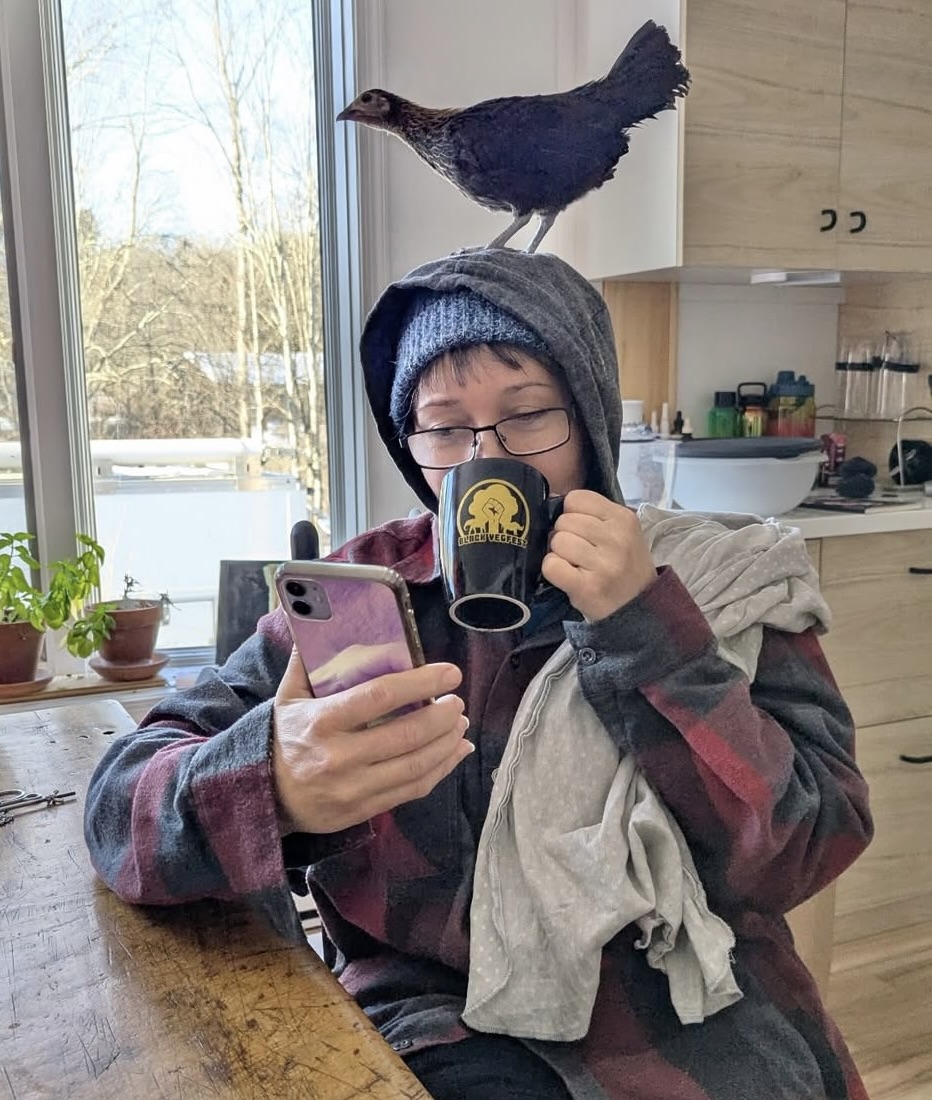

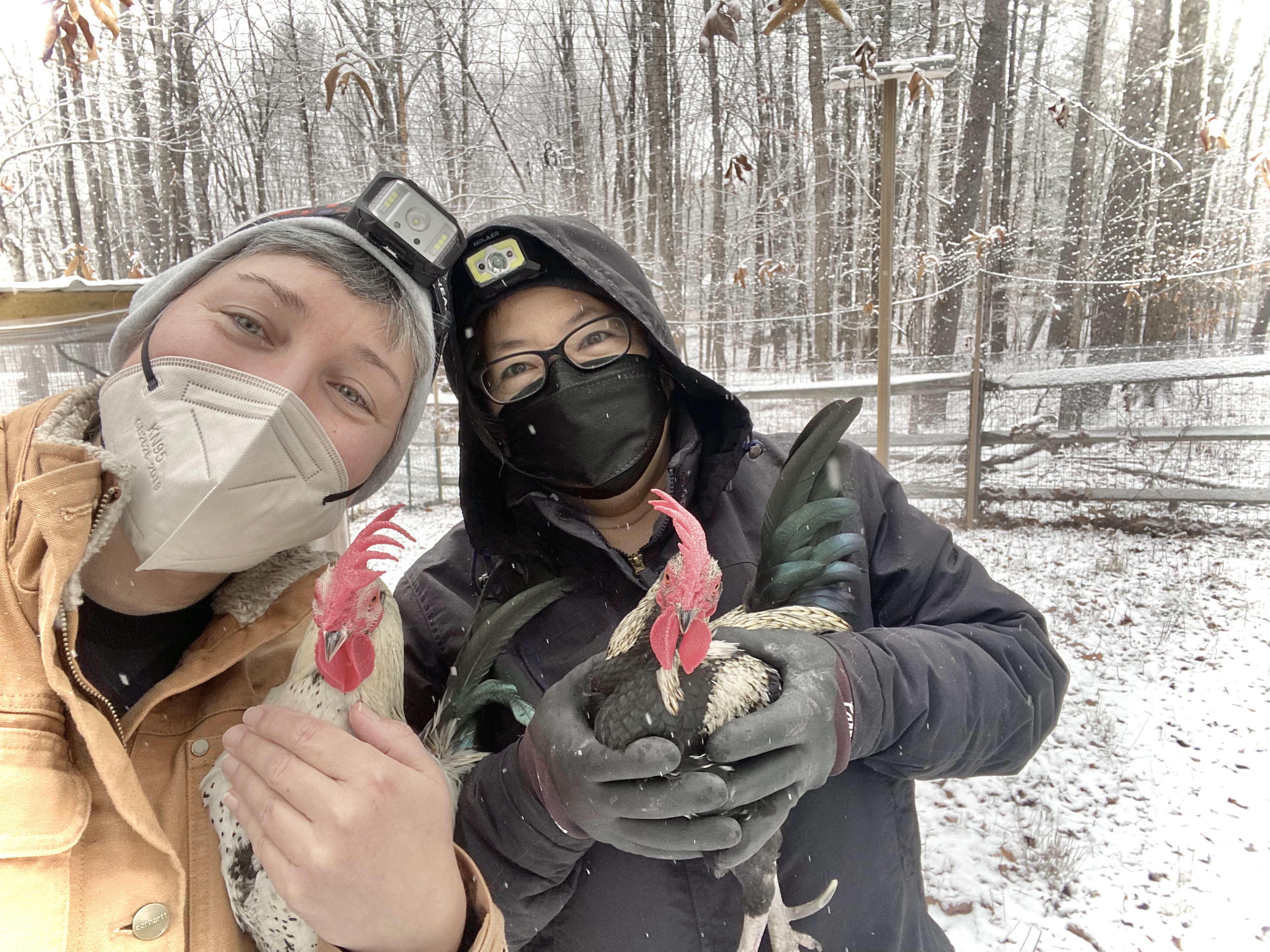
We began this journey in Woodstock, NY, and our early days saw us just renting small cottages and setting up our backyard rescue in Kingston, N.Y, then for a short time in California, Saugerties, NY, and Woodstock, NY. We were not an official non-profit in those days and as a renter just trying to survive, the micro-sanctuary was designed to be portable and was all portable structures we could move, if and when needed. At our last location in Woodstock, the landlord granted us permission to build three small coops, and a non-profit was founded and fully set up by 2019. By 2022, we received enough support to purchase a stable permanent home for IFAH and now we are in Rhinebeck, NY.
We specialize in farmed avians: chickens and ducks, birds typically used for food and by “animal agriculture” in food production – who are killed by the billions per year and don’t get enough support or help. We have become a bit known for our innovative work helping disabled chickens and ducks, who are really hard to support properly and their care needs are incredibly demanding and intense. At any given time, about 1/3 of our residents are disabled. We actually have our first rescued turkey moving in next month. They are not disabled but having cared for them in the past at other rescue/sanctuary jobs, I am so excited to finally be settled enough in our new location to welcome one here.
My partner, Brian Normoyle, has a day job working for a small non-profit (vegan and animal-focused) publishing company, Lantern Publishing and Media. He has been the backbone of operations at the Institute, and became a founding member of the Institute via his steadfast work – building handmade coops, and being a force behind the clean-up and rehabilitation of the neglected property we moved to in 2022. He just finished building three new massive predator-safe runs. His many skills have helped the Institute be able to survive and keep going. He has since been made President of our board.
To run a small sanctuary and care centre is to wear a million hats. I am the primary live-on-site caregiver (along with three dedicated part-time support staff) and work long 14 hour days that involve administering medical care, taking birds to veterinary hospital visits, cleaning the four coops and runs and maintaining them, cleaning the special care room for disabled birds daily, loads of laundry per day and more related to caregiving – but also do all the administrative tasks, communications, fundraising efforts, social media posts and things that teach about the work and advocacy we do, website updates, payroll, supply ordering, fundraising merch mailings, assist my partner with grant applications, and so, so, so much more. At times I do speaking engagements. I also founded and run a weekly free vegan food distribution in nearby Kingston, NY – where we now feed on average 130-150 meals per week FREE to local community. That program – The Happy Cart – is a natural fit to our work as we advocate for the betterment of life and society for all beings, human and non-human, and we teach how interconnected that wellbeing is.
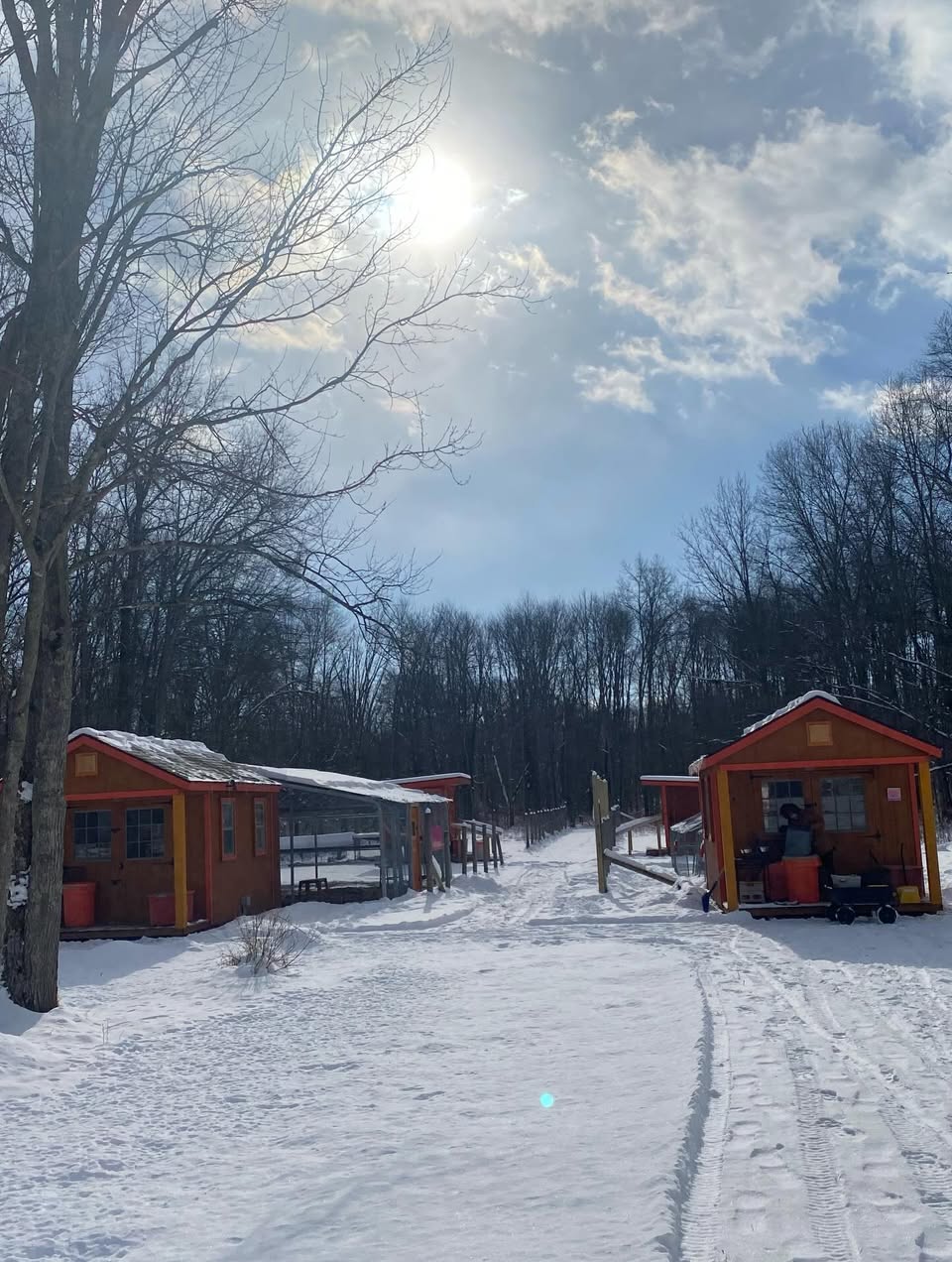
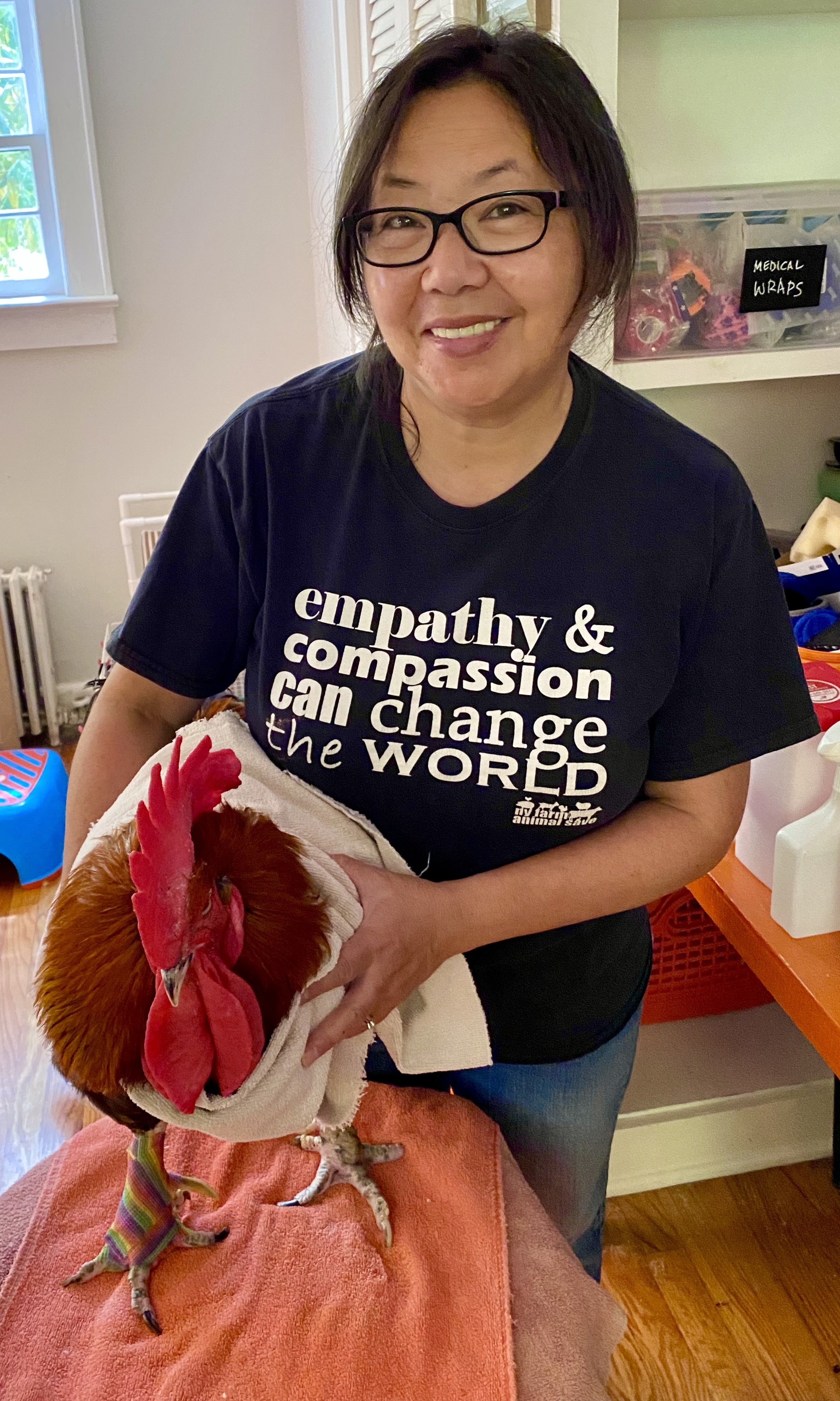

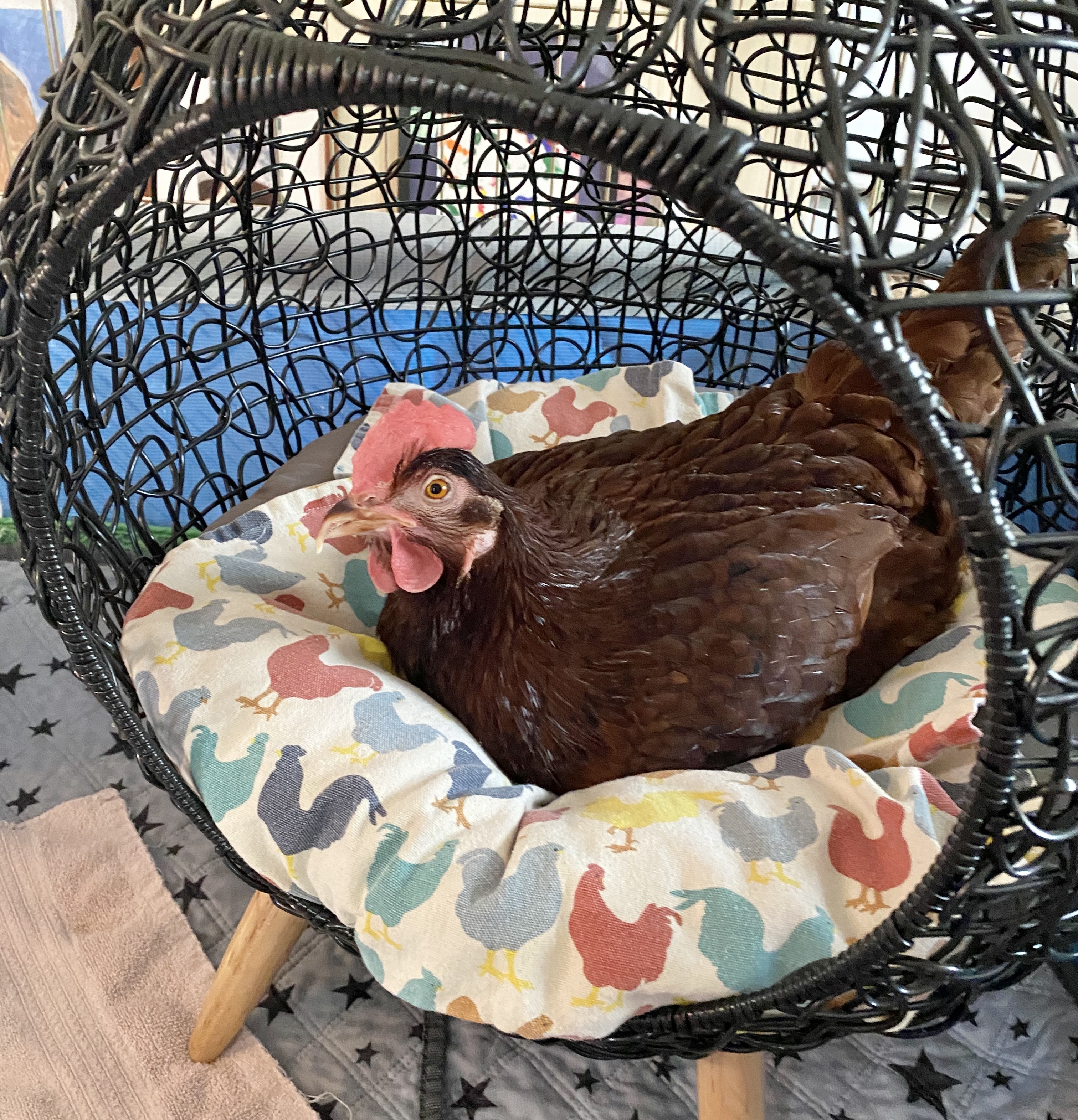

We have been lucky to get grants from organizations that support both vegan advocacy and animal rescue, which have helped us survive and get to where we are now, including a big grant to relocate to a permanent home for this organization when we lost our previous location – a rental. But funding is terribly hard to come by – especially when the subject you are advocating for is an animal deemed a “food product” and not considered worthy of care. It’s an uphill battle constantly to get by from year to year. We have held some large-scale events which – while created to benefit community with access and education, have created some revenue for us – Hudson Valley Vegfest, and also an arts event called Kingston Animalia. Since the pandemic, the venue we used has closed so we have been on pause ever since. In creating the Happy Cart free food program, we have found that many grant sources consider that program more funding-worthy than farmed bird rescue and care, so that program helps us as an organization survive. We are just settling in from the three year rehab effort that our relocation involved and starting to wrap our minds around longer-term survival and sustainability. In the meantime, small fundraisers on social media and contributions from kind individuals are helping us eek by. I work unpaid – just for room and board and a monthly stipend of about $350. One really has to believe in this work to do it because funding just isn’t there.
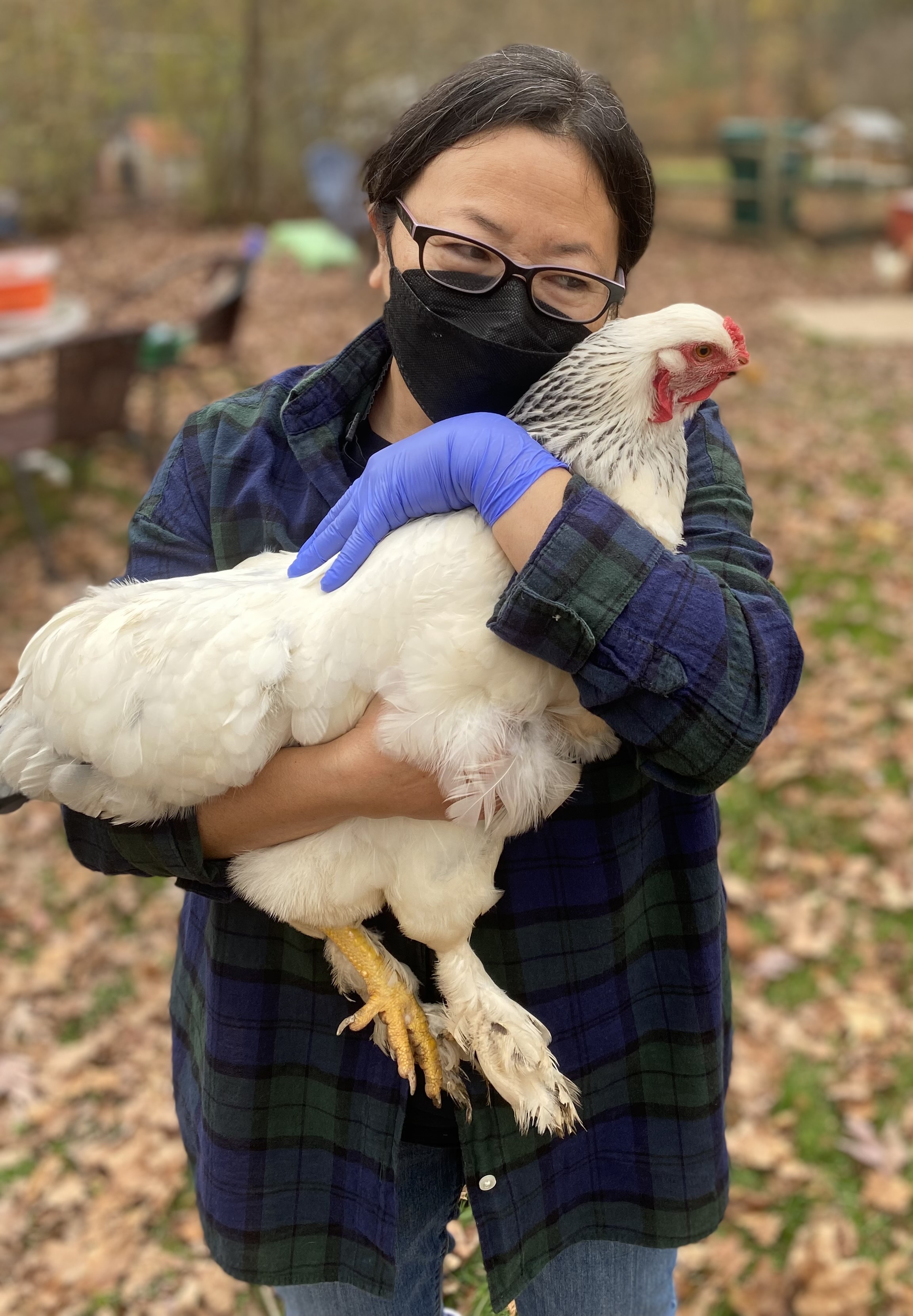

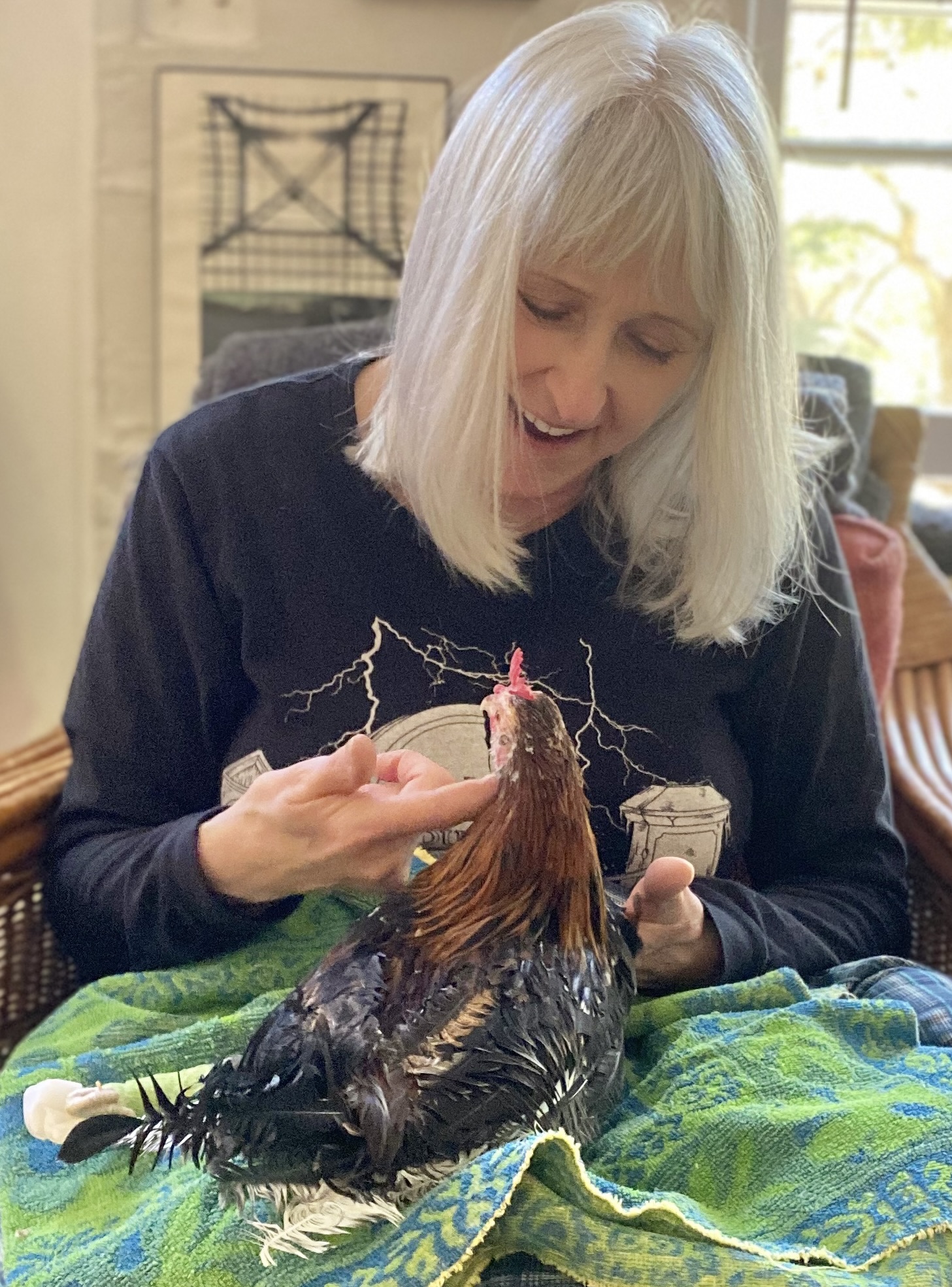
We don’t erase caregivers and caregiving work here. Caregiving is activism in a society that doesn’t want to centre care, even though it is deeply important. It boggles my mind that anyone gets chickens and buys into the industry and capitalist lies that it’s some sort of cheap easy hobby. How many people actually want to be out in snowstorms doing this? Real care (for humans and nonhumans) takes work. So many people get chickens and then don’t want to do that work. Rescues like ours have to exist because of all the billions of living sentient birds who are caught up in the gears of an industry that profits off of their suffering. Even with all we’ve done to do our very best for these feather family, and a good facility, it’s very hard work. No days off, and a lot of worry. Our coops are heated and it’s going well but the upkeep is very difficult. This is not a post for pity or anything- it’s meant to educate people, on the lies. So many birds are right now suffering beyond imagination in threadbare coops, with improper housing, no warmth, or at best a stupid, red heat lamp that does nothing. The birds will suffer, get frostbite, so many will perish – all because anyone without an ounce of study can go to a farm store, buy birds, buy the cardboard-thin plywood houses marketed as coops that are tiny as a box, and impose a state of immense suffering on them. I’m so proud of the space we’ve managed to build and the educational work we do to try to help reduce suffering but it’s such a drop in the bucket.
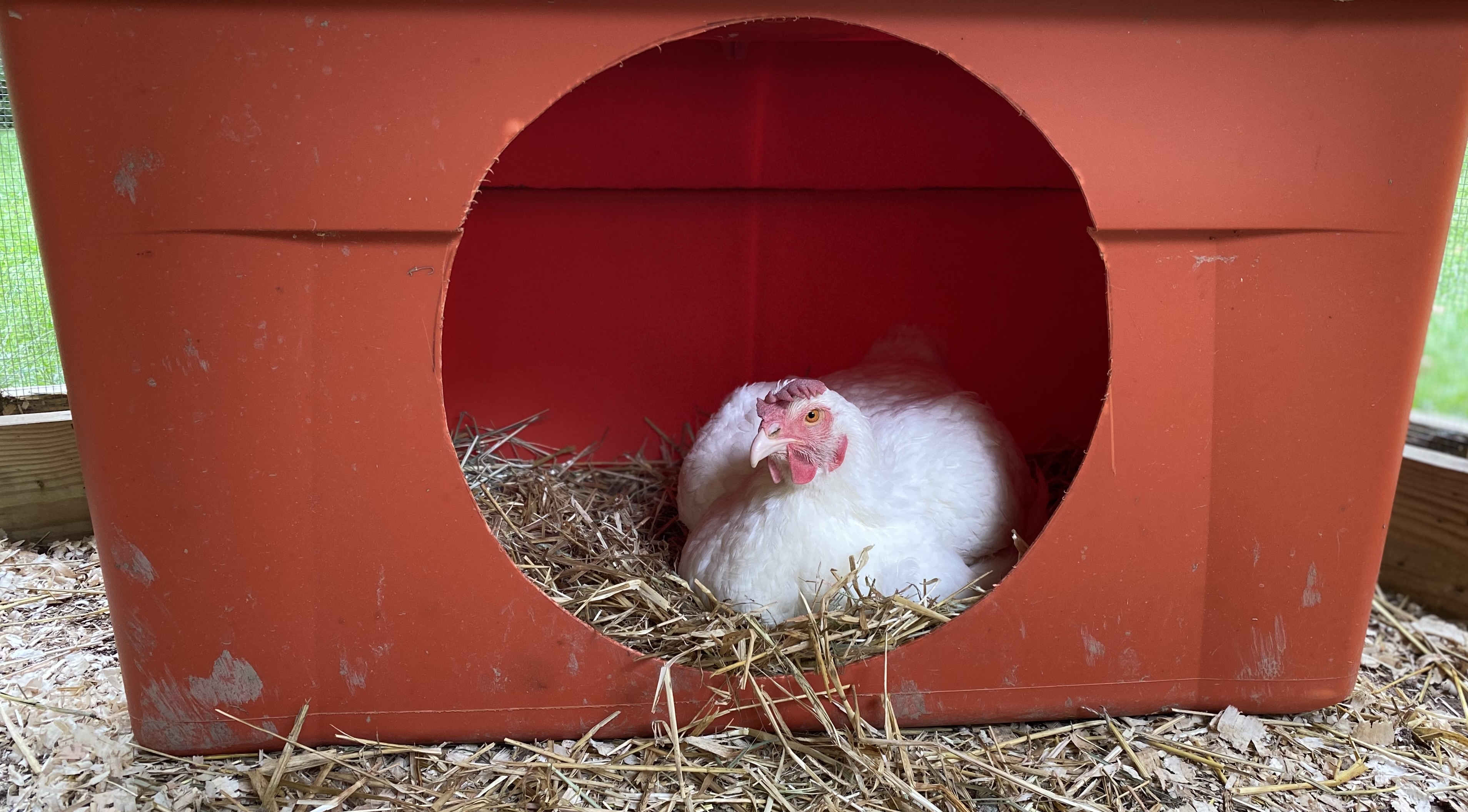
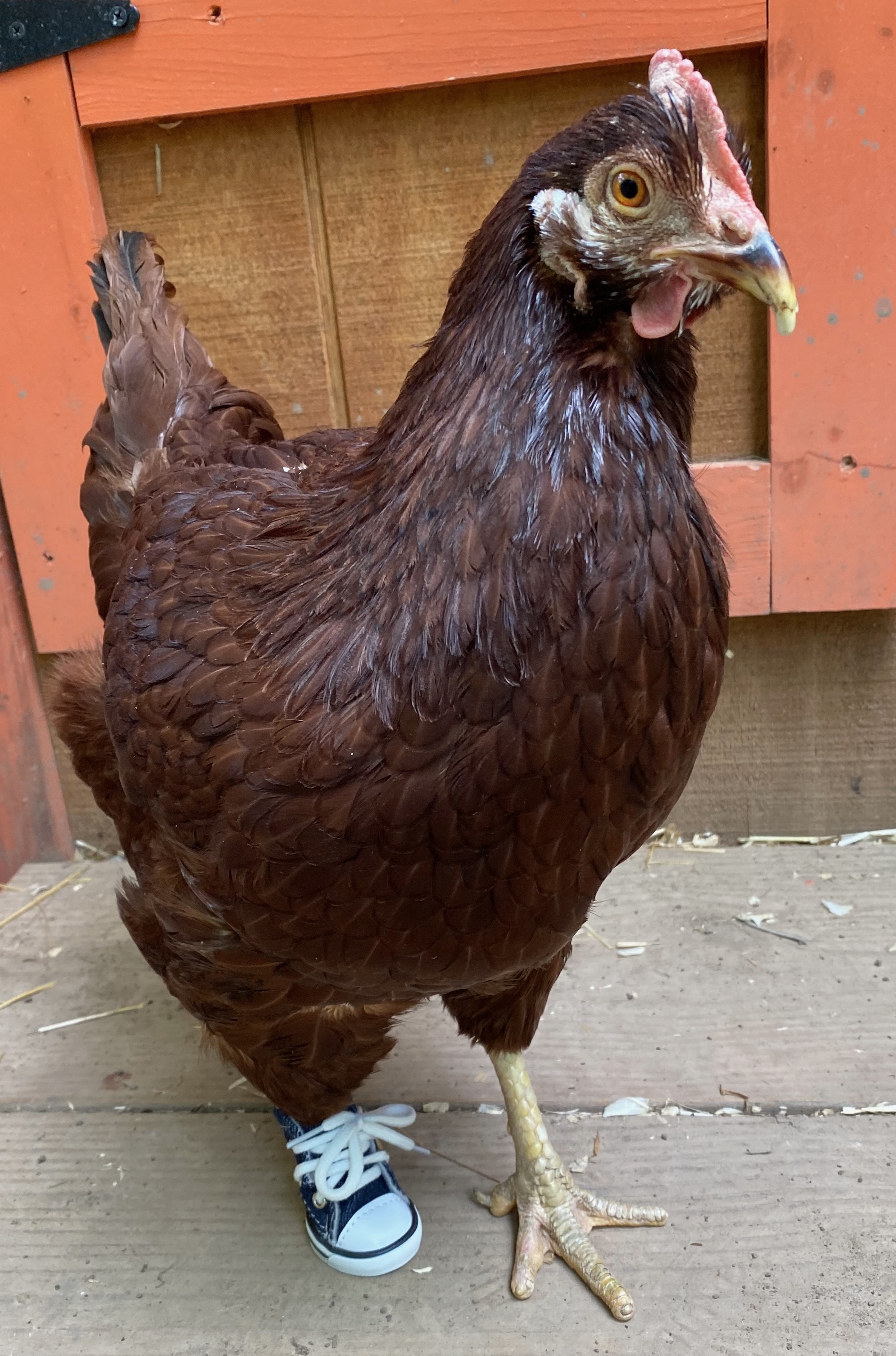
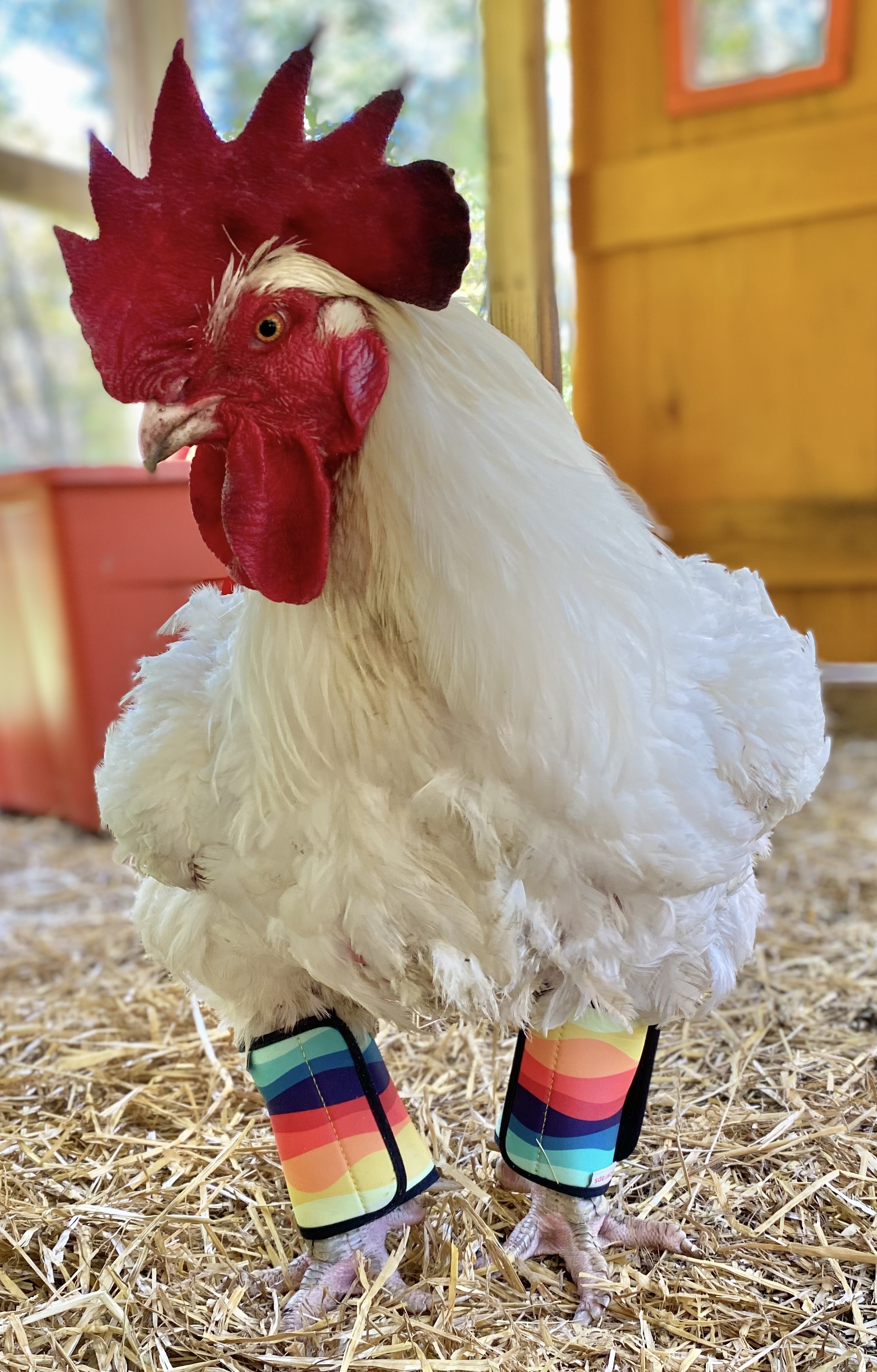
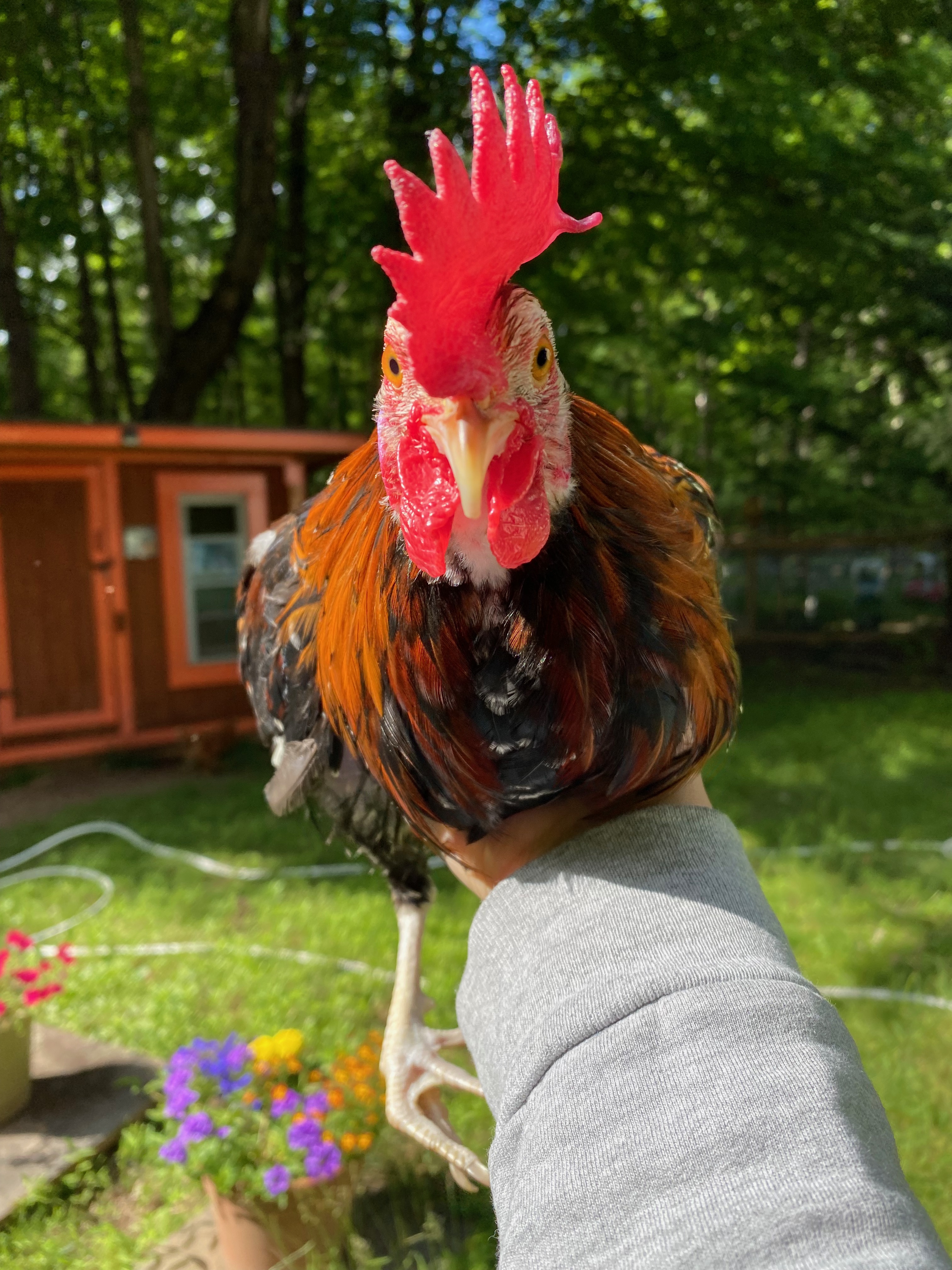
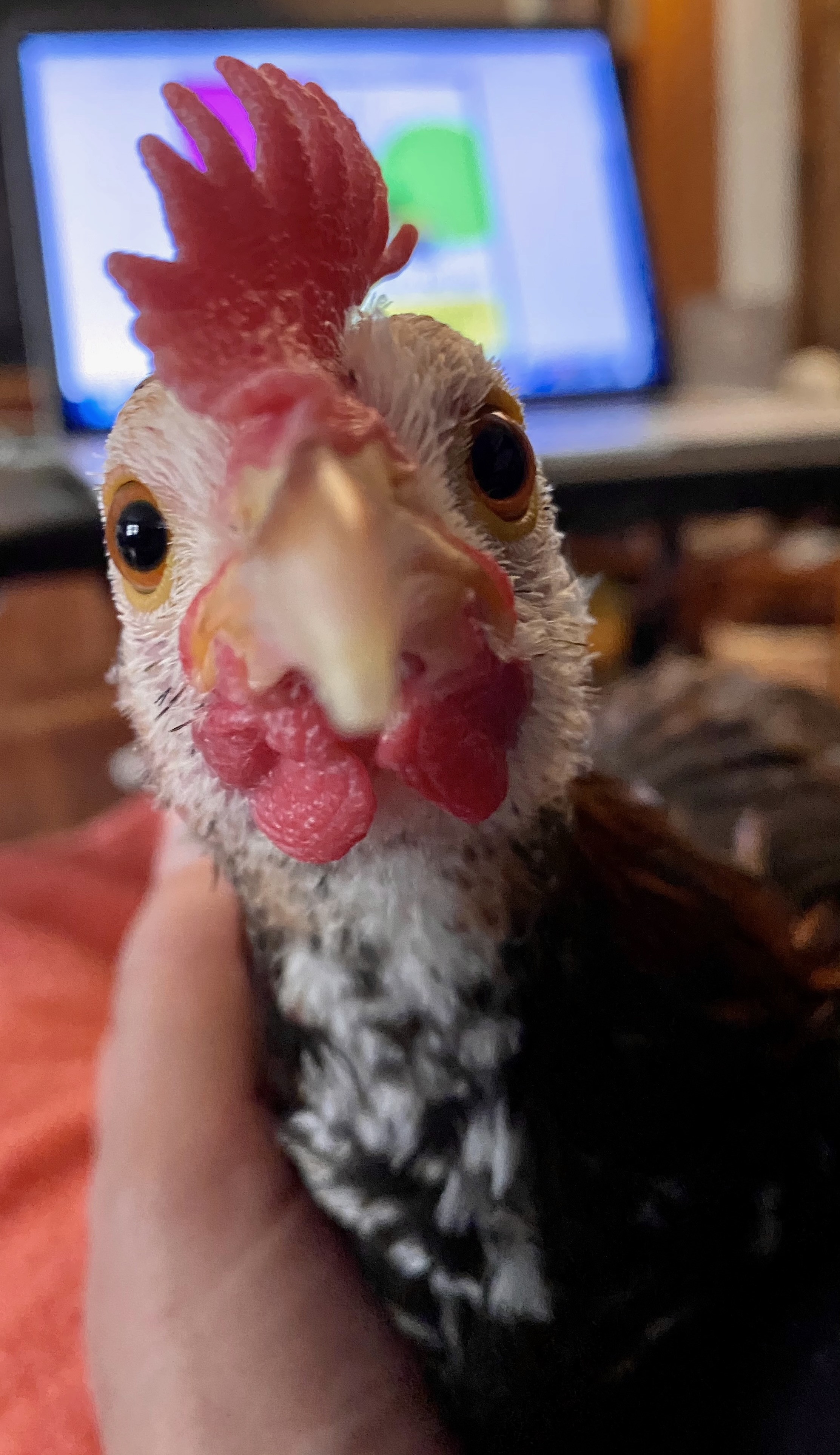
You can make a huge difference without even working on a snow day! Just stop eating eggs. Stop supporting animal agriculture. Stop eating animals. Going vegan is a boycott of conscience against the terrible endless suffering of 150 billion animals a year. PSA over and back to shovelling I go.
Thanks to guest contributor Rebecca Moore and all the folks at the Institute For Animal Happiness for sharing their story and photos, used with permission
“Saving one chicken won’t change the world — but it’ll change theirs.”


Thank you, friend! The post came out so nice – and how amazing that you were able to scoop up SO MUCH info from our social media!! That’s such a relief, and I appreciate your time getting all that together. I know Rita Bolla (chicken artist) is planning to reach out to you soon – it’s been such a hellish phase with the heat dome temperatures last week and a little this week, though it is thankfully better. I hope all is well where you are, and thank you for including our story in your efforts.
Gratefully, Rebecca
Rebecca Moore Founder + Executive Director
InstituteforAnimalHappiness.com
LikeLike
It was my pleasure. I have enough material that I will post a follow up article about the work you do caring for disabled chickens.
LikeLike