
It’s hard to keep up with all the things that might affect your flock. Keeping chickens healthy requires some on-going work. I find that my daily chores (cleaning, feeding, watering) are punctuated, on occasion, by an real emergency (e.g. prolapse, bumblefoot, an egg bound hen), or an outbreak of parasites. Even the healthiest flock is vulnerable to lice, mites and worms, which are often brought into your pen and sometimes, even your coop, by wild birds and rodents, or are present within the soil.
Sometimes we only notice our birds aren’t doing well when they are already quite sick. As prey animals they do their best to hide any signs of illness. And sometimes they appear perfectly healthy but minor things are happening that might get worse.
Sh*t happens to the best of us and this post is a perfect example of how things might go wrong if you let the ball drop in your chicken keeping duties. In this case, two issues combined to exacerbate the symptoms, which fortunately also drew my attention to the problem.
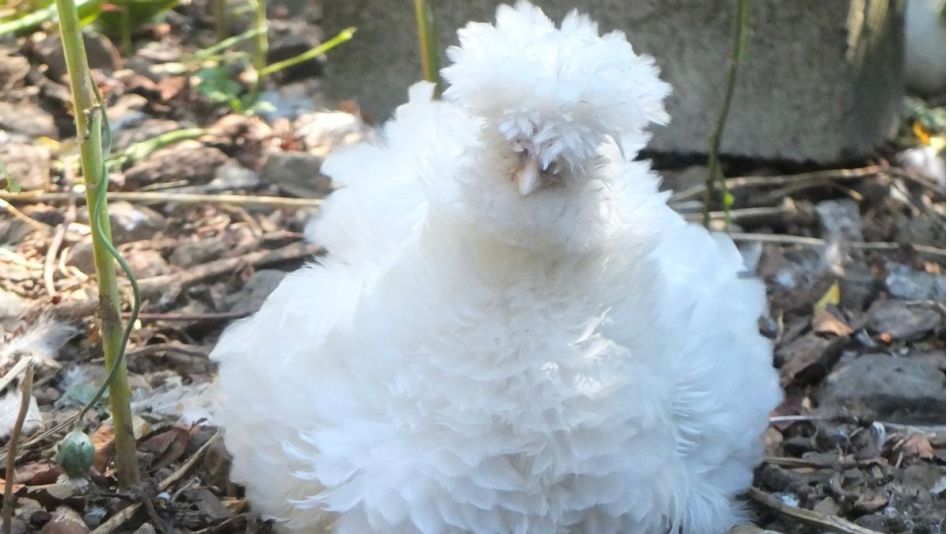
Dahlia, Barnyard Frizzle, 4 years old
Embedded Leg Band
I noticed Dahlia was holding up her right leg – the one she has a red ziptie on. I band my birds to identify what year they were born and if they lay a blue egg. When I examined her leg more closely I noticed two things: she had a nasty case of scaly leg mites and the band, which was left loose when put on, had become embedded in the flesh of her leg. Both conditions must have been painful and, of course, I felt guilty for not having seen it before.
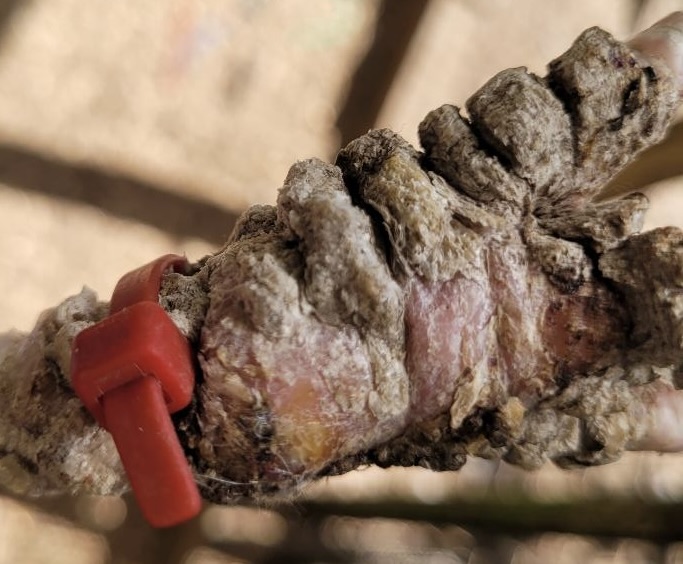
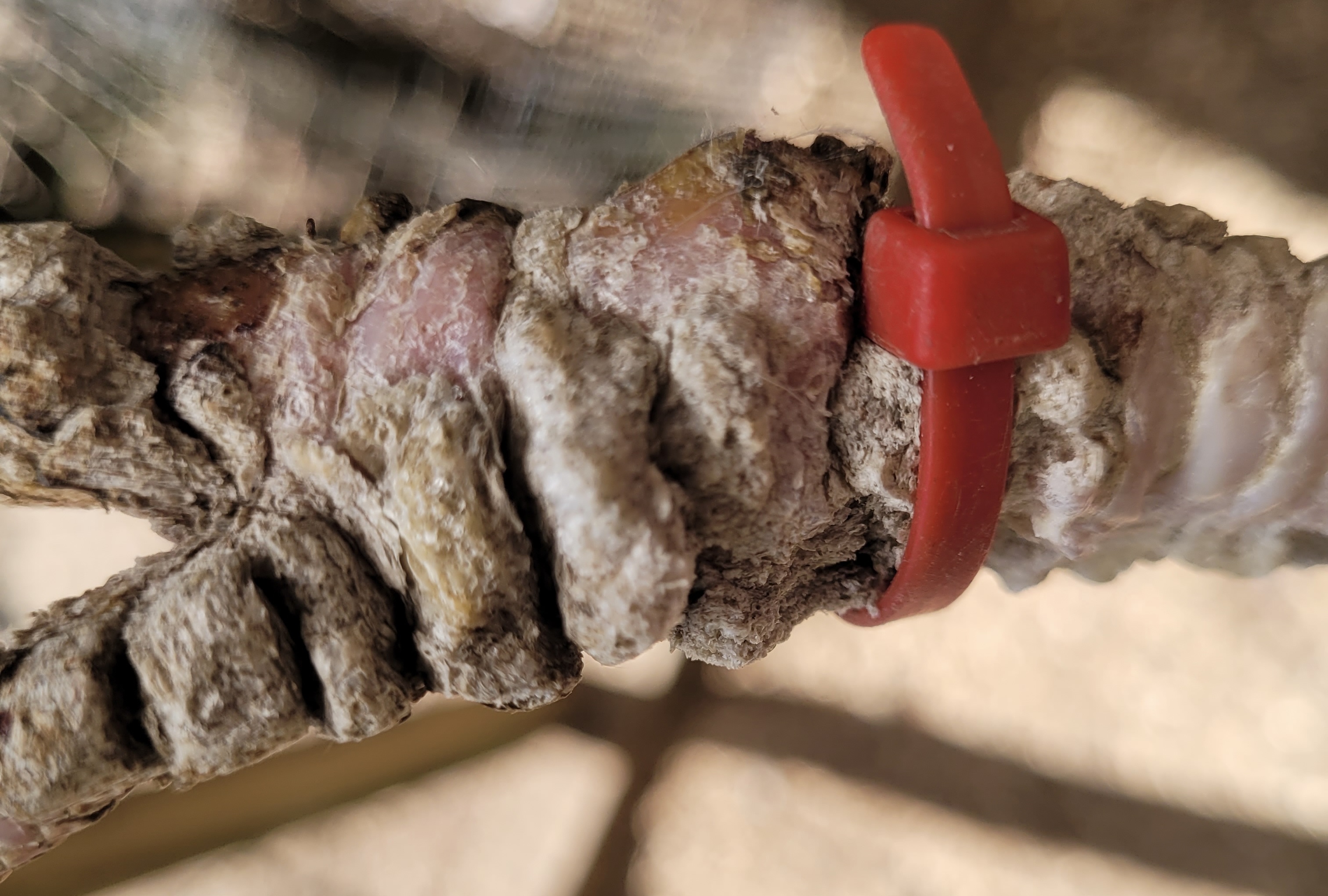
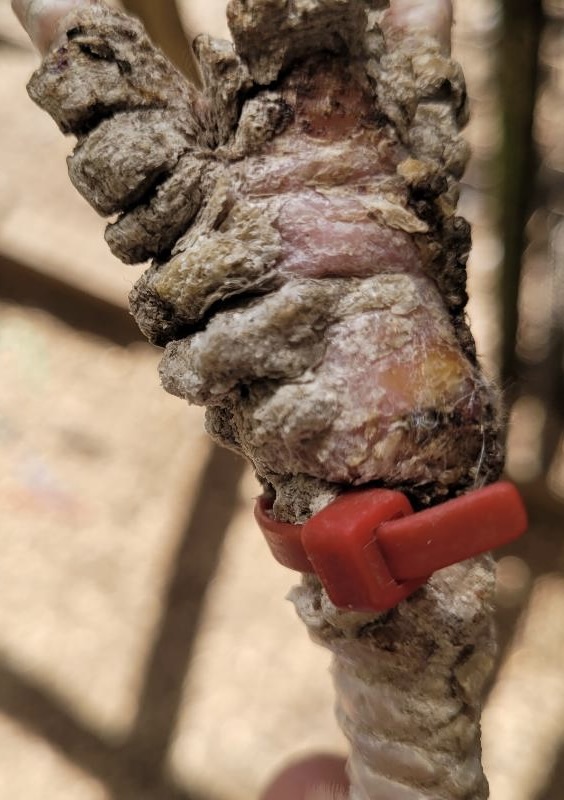
I was curious to figure out how the band had worked its way into her skin. It turns out, instead of it being able to move freely, the band was impeded by her spur. Yes, a bunch of my hens actually have small spurs. And hers kept the band trapped at the lower part of her leg, preventing it from sliding up higher. Luckily, there was just enough room under the ziptie on one side that enabled me to use small scissors to easily clip it off. When I removed the band it left a distinct impression in her leg, which was red and appeared to have become infected.
I cleaned up her leg and applied bacitracin several nights in a row (it’s always easier to do first aid after bedtime). She limped for a few days after that and then started walking normally.
Scaly Leg Mites
Healthy chickens have scales that appear smooth and lie flat against their legs. When chickens are infected with mites the appearance of their legs and feet will slowly deteriorate. Early signs include flaky, crusty, peeling, rough or uneven-looking scales, with some lifting upwards. Eventually, the heavy crusting of the scales can cause serious problems. SLM can also lead to bacterial infections and major tissue inflammation. One, or more, flock members might be infected, since the mites can move from bird to bird.
My flock consists of birds between one and eight years old – some show signs of mites, while others don’t. Maybe it’s similar to some folks that don’t seem to be bothered by mosquitoes while people around them are being bitten alive.
There are several treatment options – all of them require consistency to fully eradicate your flock and coop of the mites. If you’ve only got a few birds it’s quite easy. A larger flock might require some help. Those remedies include: immersing their legs in veggie oil, coating with vaseline (you can add sulphur or Debantic), applying Ivermectin topically and/or cooking oil spray.
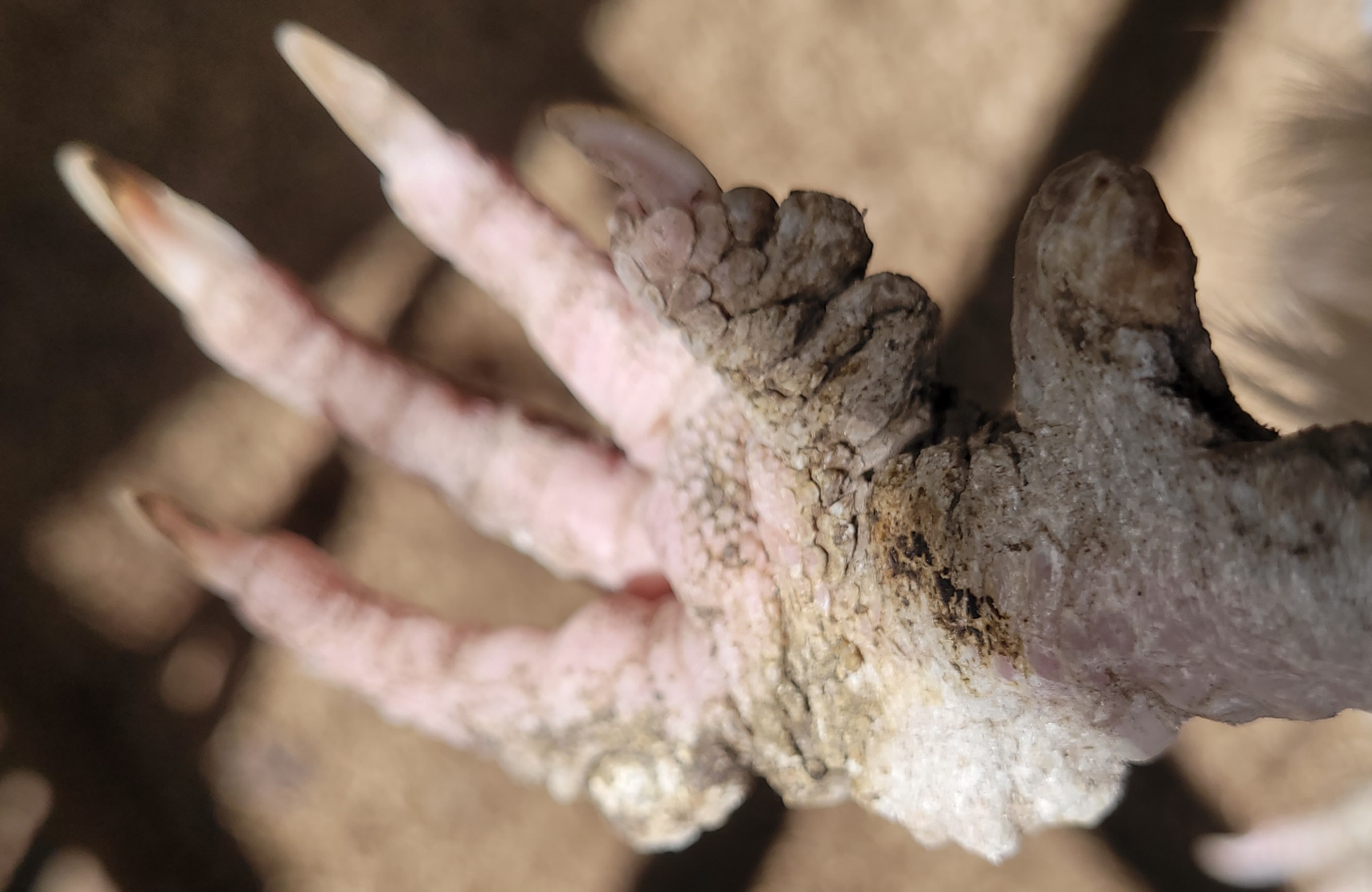
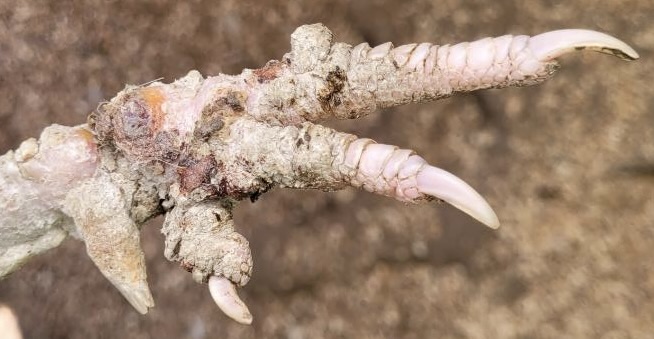
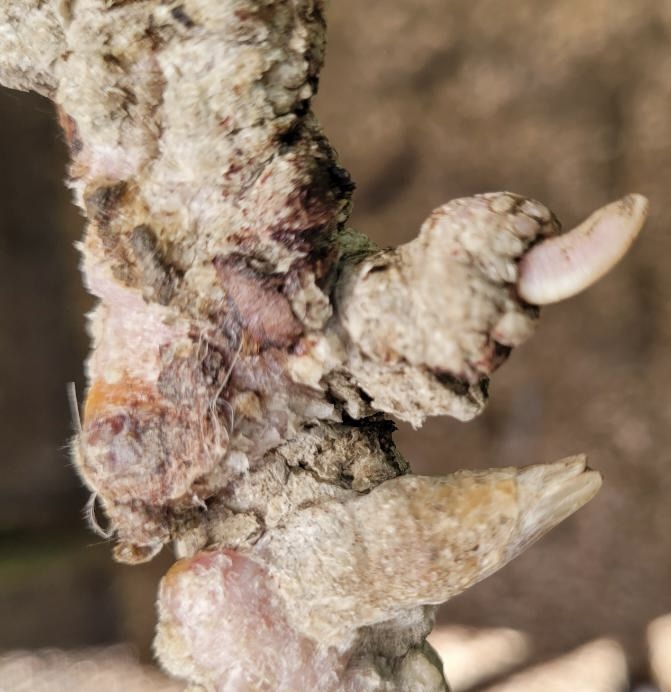
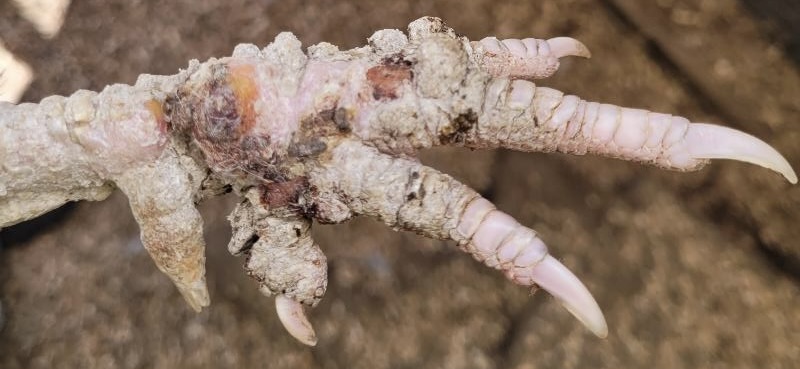
I started with Vaseline – going out after dark and coating as much of her legs as possible. The scales were raised and knobbly so it was difficult to get underneath them. After a few days, I switched to cooking spray. It may not be as effective but it’s easier, ensuring that I would actually stick to the regime of doing it five times a week (some nights I couldn’t reach her). While I was at it, I sprayed as many of my flock as I could. They soon figured out what was in store and headed for the farthest roost bars in order to avoid me. I was hoping to treat all of them at least several times.
I have to say I was pleasantly surprised by how well she responded. The divot in her leg filled it and was no longer infected. The scales, on the other hand, were the real success. The big knobs actually fell off leaving pink smooth skin underneath. In less than four weeks of consistent treatment her legs were almost back to normal. Admittedly, treatment isn’t always this easy or effective.
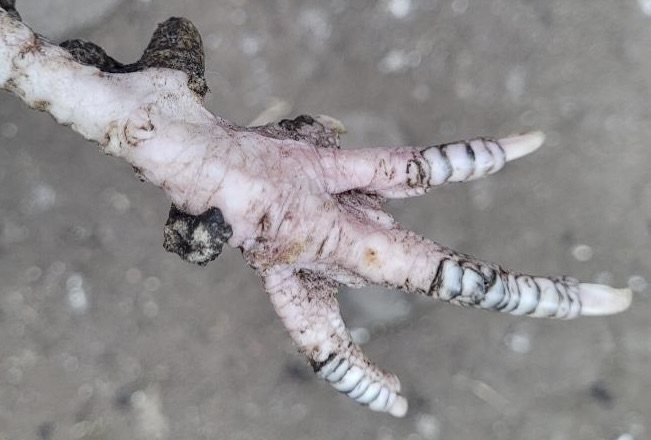
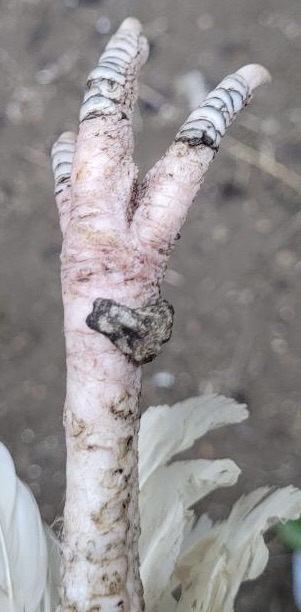
Four weeks later
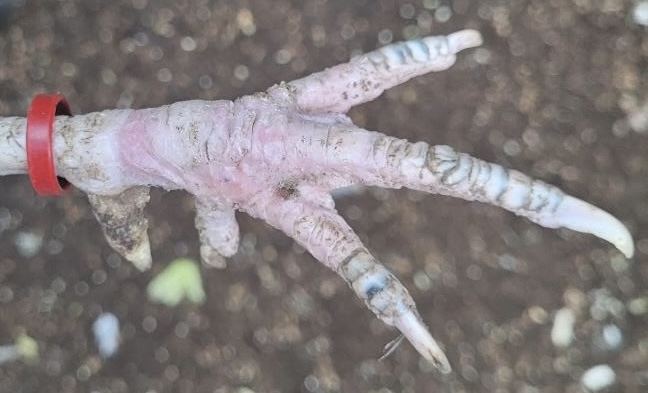
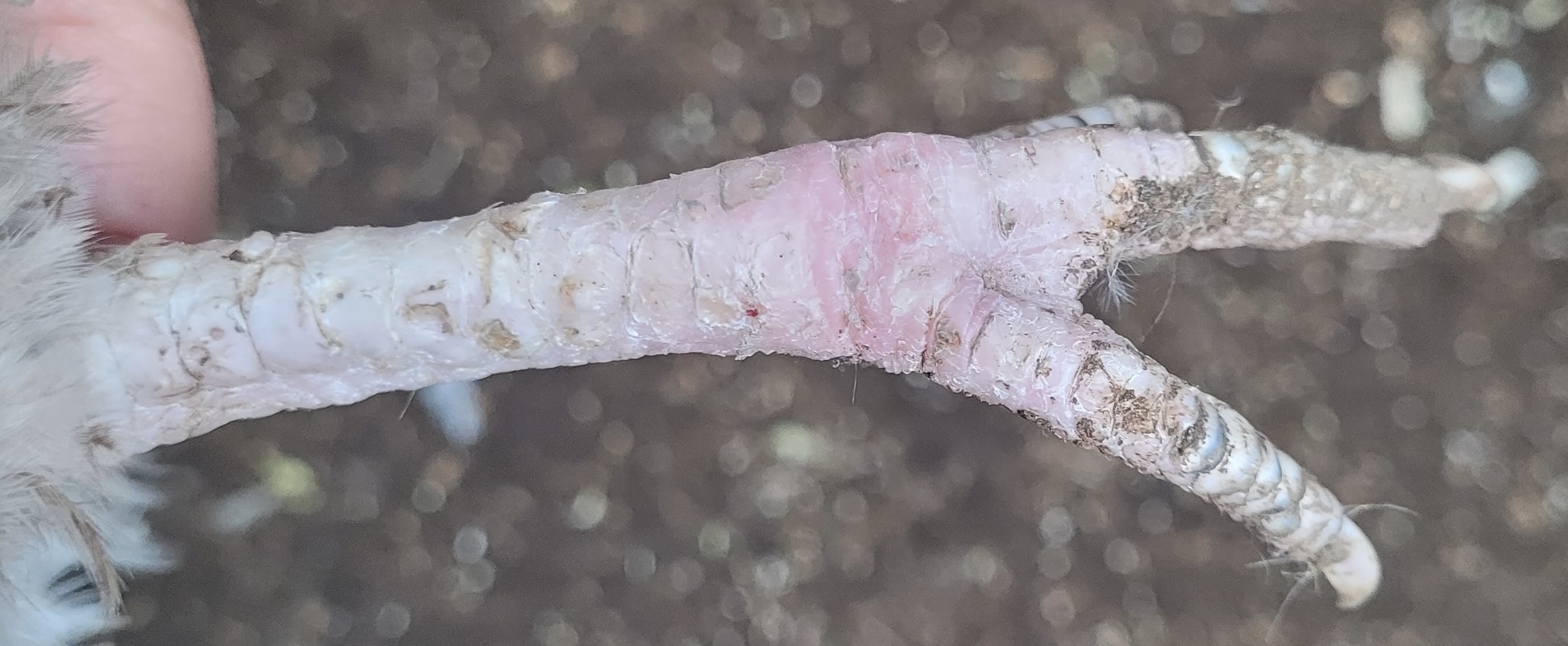
8 weeks later
I’m not going to make any excuses for having missed these issues, but sometimes life is pretty crazy. Even though I do spend time with my birds I clearly could have done better. Since starting to treat Dahlia I have gotten into the routine of spraying all my birds’ legs as often as I can. No one else had mites as bad as her and I’m hoping I caught the more minor cases before it became a more serious problem.
“Where nerds and hens flock together.”


0 comments on “Case Study: Embedded Legband & Scaly Leg Mites”