
This series is a partnership between Bitchin’ Chickens and Dr Vicki Bowes, vet/avian pathologist. We get together to chat about interesting chicken health issues and attempt to come up with a diagnosis or treatment options based on the information we have, which often isn’t much.
Recently we worked through more than 40 cases and I’ve grouped some of them according to location (i.e. head, legs and feet) and issues related to injuries. This one is all about the conditions that affect the feet and legs.
Bacterial Infection
I found my bird like this tonight – swollen in multiple places, looks to be some oozing in some places, does not look like an attack, no coughing/respiratory symptoms. – Val Pal
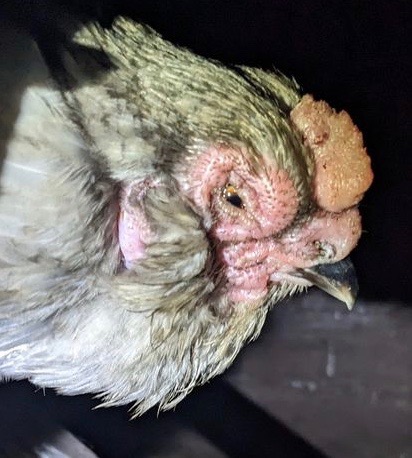
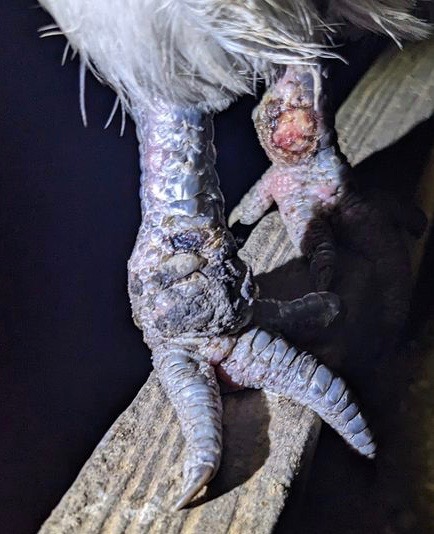
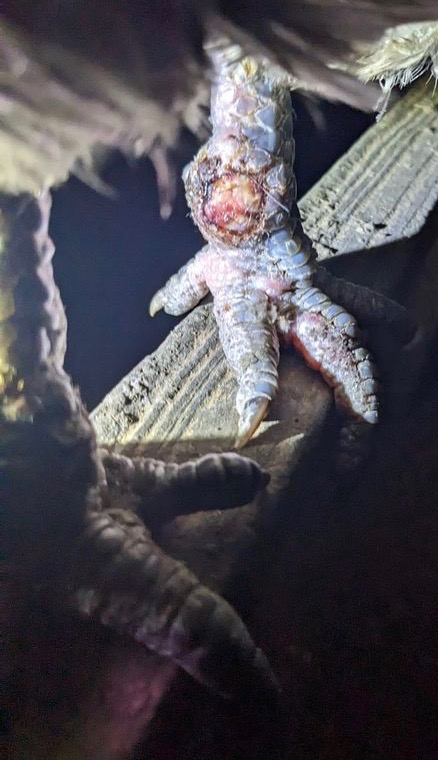

Dr Bowes: The nares appear plugged and it looks that is a bumblefoot-type infection on the leg caused by bacteria. I would have a vet debride the wounds under anesthetic and treat as a wound with antiseptic soap and injectible antibiotics.
Foot Infection
I thought this was bumblefoot and soaked her foot in a dilute Betadine and started Meloxicam (pain) and Clavamox (antibiotic) in the morning. By the evening she had passed away. It looked like melanoma, but I’m not sure without a biopsy. – Nicole Mayo
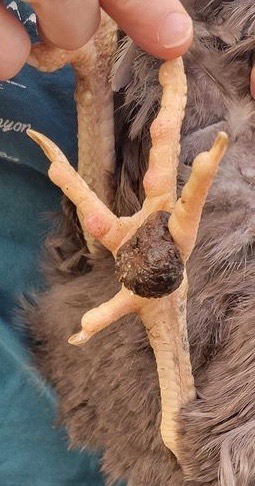

Dr Bowes: Melanoma is rare in chickens and this isn’t it. It appears to be chronic bumblefoot with loss of skin over the footpad. How long had her feet been that way? Clavamox is a heavy hitter for a skin infection; I would prefer using ampicillin or penicillin. I don’t believe her death was related to her feet, but coincidental to another, undiagnosed issue.
Osteopetrosis
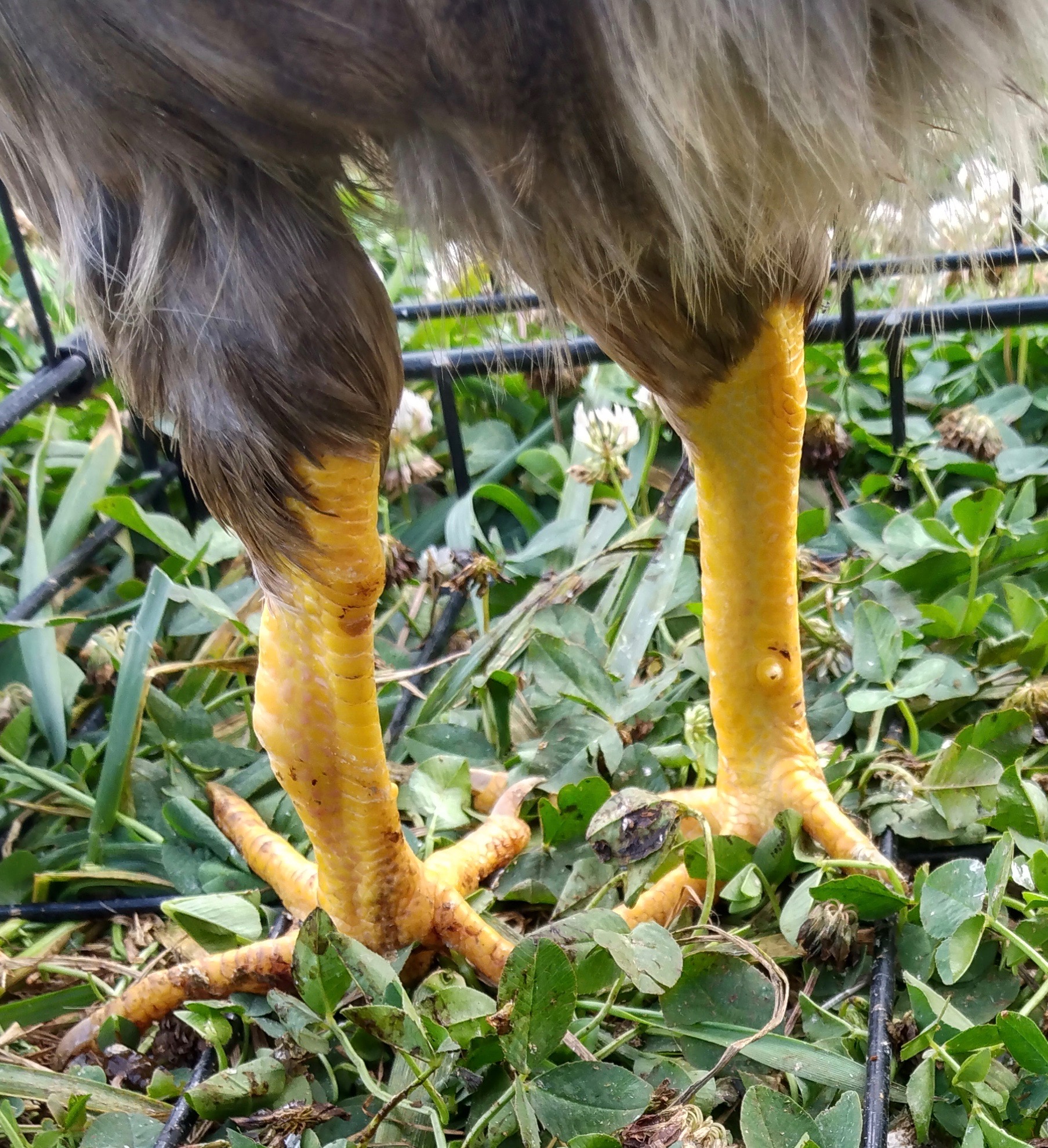
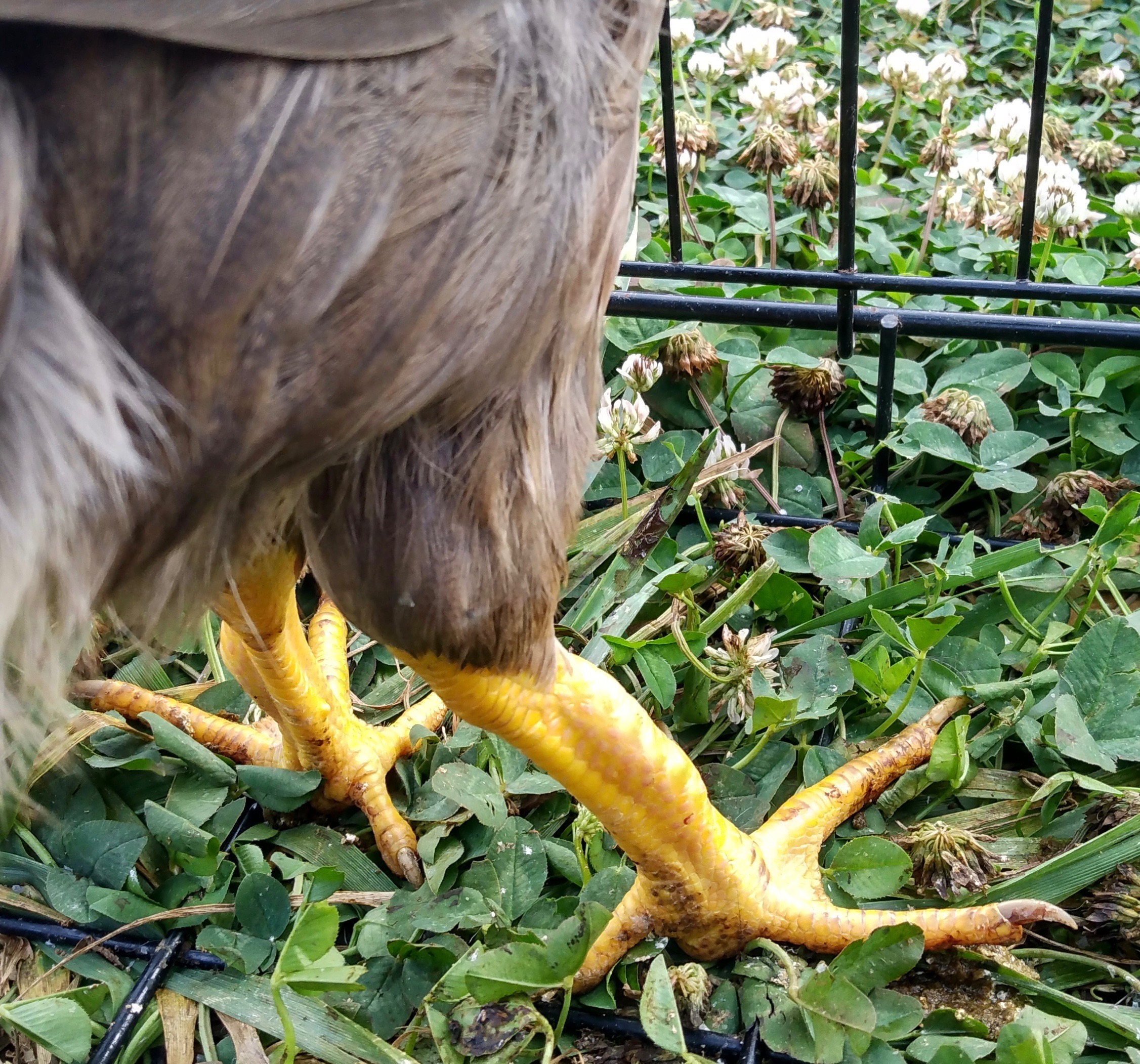
The lower legs on this three-month-old pullet are hard, not squishy like pus from an infection. The swelling, if you want to call it that, is mostly on the outer part of the hock, making the leg crooked looking. She’s limping, lethargic and lays around a lot. I got her and one other chick of the same breed from a hatchery, the rest of my flock are a backyard mix that we incubated ourselves. I’m mainly wondering if she’s untreatable, and if I need to be worried about the rest of my hens.
The inner sides of the legs are straight, but the outsides are a little knobbly, the swelling isn’t uniform. She was fine until last week when I noticed the limping. She seems to be in pain, when she does stand she holds her right foot off the ground a lot. – Kim Foster

Osteopetrosis 2
This poor guy has had something wrong with his legs for about three weeks now. His legs are swollen, warm; he has mobility issues and runny stools. What could be wrong and what remedies should we try? – Jessica Lane Harris
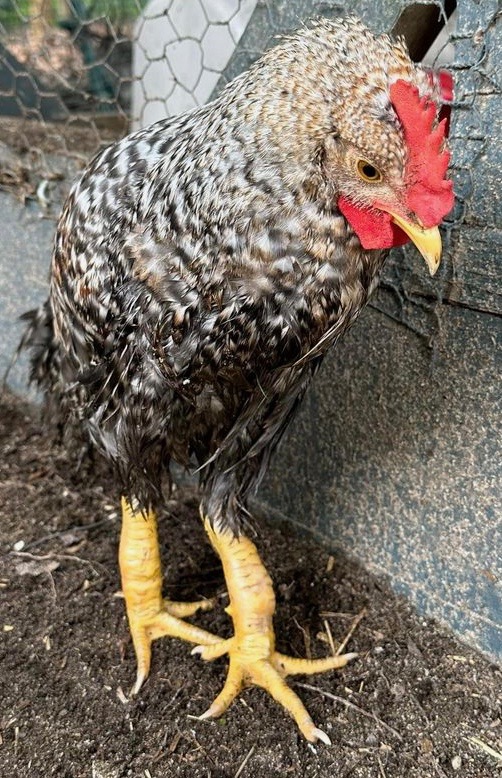
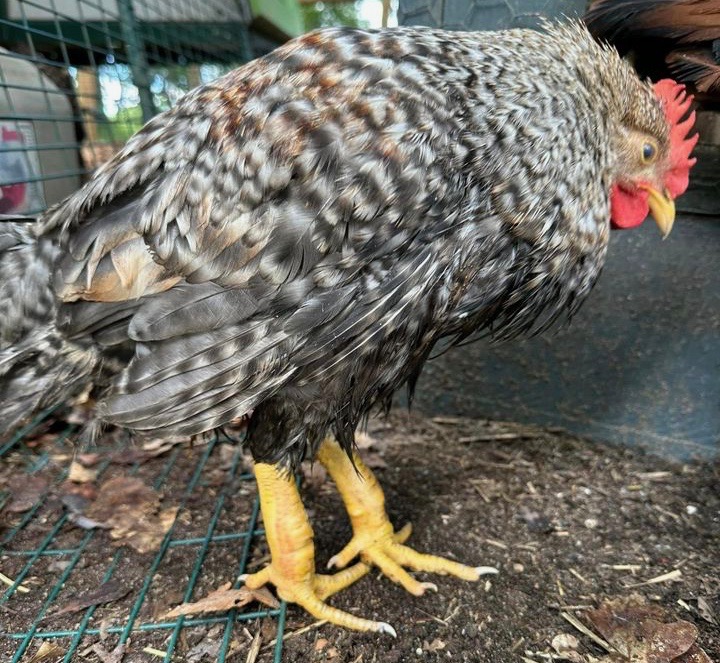
Dr Bowes: This is a case of osteopetrosis, which is often associated with the Leukosis virus. I would humanely euthanize him.
Bitchin’ Chickens: I brought my first case of osteopetrosis to Dr Bowes nine months ago. Since then we’ve looked at several others, including the two above.
Osteoporosis is the loss of structural bone whereas osteopetrosis (literally meaning ‘bone stone’) is caused by the abnormal growth in young birds. This is a proliferative bone condition that causes thickening of the long bones making them brittle and vulnerable to fractures. It is often associated with concurrent infection with Leukosis.
Xanthomatosis
This started developing last year but no one local has been able to determine what’s wrong with him. He lived inside with us for four weeks last year while I treated it as bumblefoot. The swelling/size of his legs has significantly increased recently and he now has difficulty getting around. He isn’t picked on so he is safe, but I’m concerned about pain. If anyone knows how to treat him, I’d appreciate recommendations. The vet last year recommended soaks and chlorhexidine, which did not help. – Erica Stubbs
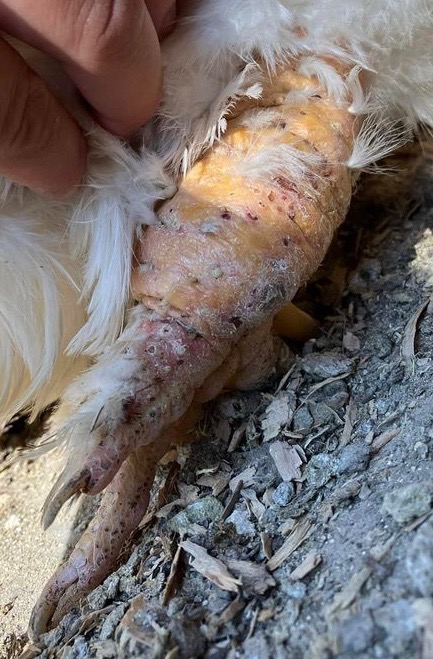


Dr Bowes: This is the result of a bacterial infection causing xanthomatosis: accumulations of fat and cholesterol creating discrete masses or diffuse, thickened areas of skin that are a yellowish-orange color with a dimpled surface. There is also erosion of his toenails. It would be a long, painful road to recovery in which case I would recommend humane euthanasia.
Slipped Tendon (photo: Melissa Rae)

Dr Bowes: This is a case of two slipped tendons, which are irreparable at this stage, as the condyle becomes smooth and can’t hold the tendons in the groove. Recommendation: humane euthanasia
Well that wraps up another edition of Show & Tell With Bitchin’ Chickens and Dr Bowes. I hope that it’s been a learning experience for you, it was for me and even Dr Bowes learned a thing or two.
If you’d like help with a case drop me a line using the ‘contact’ button on my home page. Remember to wear gloves, take good close up photos from several angles and supply us with plenty of information (e.g. timelines, symptoms, medications, general flock health, etc) so we’re able to more accurately pinpoint what’s going on.
Thanks again to Dr Vicki Bowes for her willingness to share her wealth of knowledge and experience to build capacity and skills in small flock keepers.
 Bitchin' Chickens
What causes a tendon to slip?
LikeLiked by 1 person
In chicks, slipped tendon can be caused by vitamin deficiencies, but is mostly attributed to slippery surfaces in the incubator or brooder. The tendon in the lower leg slips out of the groove on the back of their leg. If you have a chick with this condition you can use your thumb to feel the tendon rolling. In older birds, it’s the result on an injury.
LikeLike
Great pictures!
LikeLike