

When my main coop was built in 2014 I installed an automatic door, which I think is a necessity for any chicken keeper. It means you can sleep in, or come home later than planned, and not worry that your chickens are stuck inside or, worse, left outside the coop and are vulnerable to predators and cold weather or deprived of food and water. (Even with an auto door I still go out to check nightly that everyone made it in safely on time.)
My first auto opener was a simple German-made Techtronoscher motor with a pop-style metal door and frame. It wasn’t cheap at the time ($220CAD/166USD) for a model with zero bells and whistles. It was battery operated and opened using a solar sensor. There was no manual override or timer. It didn’t come with any instructions so it took me a couple of years to figure out that the sensor could be adjusted via an innocuous white screw within the box. It was a reliable workhorse and gave up the ghost after seven years.


When I was looking to replace it I wanted something that was good quality with a few more features. I contacted three major companies asking if they would send me a complementary auto door in an exchange for a review on my blog. Two didn’t bother to respond and the third, based in the U.K., felt my fan base wasn’t in the right location for their shipping routes. I guess I was seen as small potatoes in the world of big bloggers.
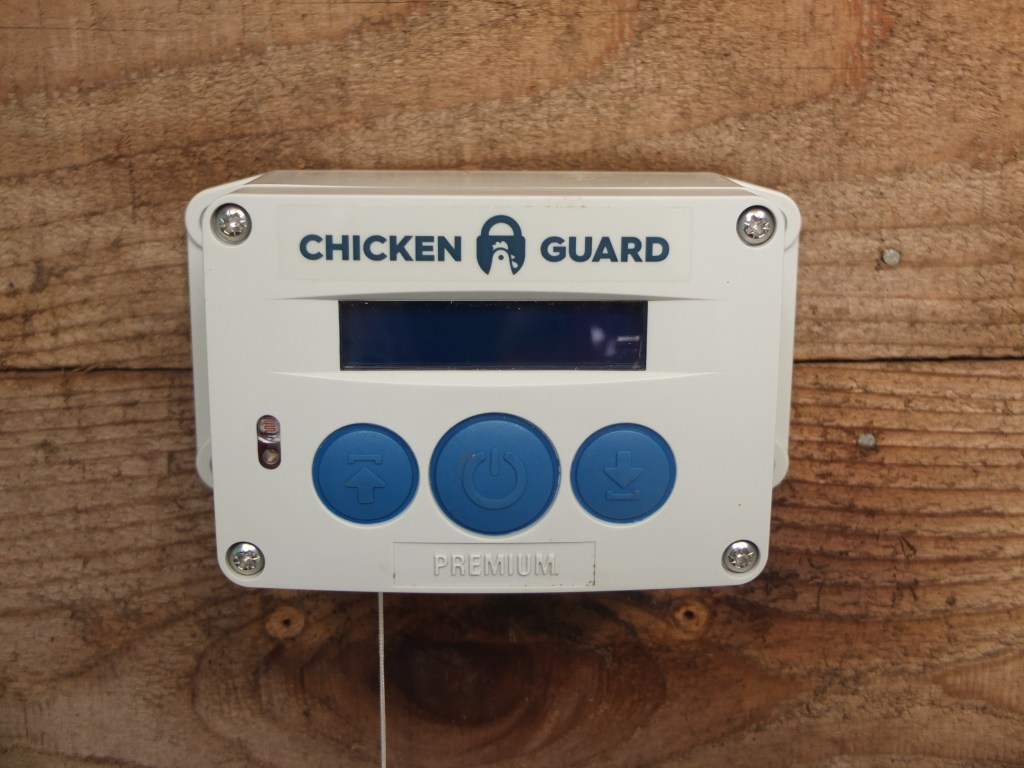
I did end up purchasing an auto door from one of those companies, Chicken Guard, and forked out more for the Premium model: a whopping $255CAD/190USD just for the door opener since I already had a door and frame (that would have been an additional $100CAD/75USD). It does have a lot of features, but in some ways that’s actually a detriment since it’s a bit confusing to figure out how to program only what you need and wade through the rest of what you don’t.
When Chickcozy contacted me last May asking if I would like to try one of their auto doors ($179CAD/135USD) in exchange for a review on my blog I was both pleasantly surprised and a tad suspicious. Sure, I said, but it would be an accurate assessment of my experience. I got to choose the colour (there are only two options: goldenrod or green) and received it in a well-packed box a few weeks later.
One of the things that annoys me about scrolling through some blogs and websites is the constant pop-ups and sponsored ads. I’ve been blogging for more than five years and managed to avoid the trap of seeking out ways to offset my costs. I promised myself that if I gave space to any products that I would be honest in my appraisal. There’s nothing worse than being beholden to a sponsor because there is money involved.
So here’s a synopsis of the product:
As far as I know it’s the only horizontal door that opens from the centre to both sides with a safety sensor so birds don’t get crushed. Another company makes a horizontal door but it’s in one piece so requires more clearance space for the door, when open. I’d only ever seen vertical pop-style doors and wondered how it might work, but then realized that the coop where it was being installed probably wasn’t a good candidate for a vertical door anyway. I was given an unused 4’x4’x8’ structure divided into two compartments in 2017 that I think was intended for a rabbit hutch so the openings for doors were larger than traditional coop doors. My friend Tracy and I replaced them with guillotine style ones, which worked but I don’t think there would have been enough clearance for a motor, which would have to be installed directly above the centre of the door. As it turned out, horizontal was the way to go.
The Chickcozy door and motor is all one piece, which makes for easy installation. It is made of plastic, so I wondered about its longevity although they say it is rated for extreme weather conditions, has a waterproof seal around the door opener and a 2-year warranty. The entire area above my coop is protected from rain or snow so I didn’t think that inclement weather would be an issue.
The instructions are simple and straightforward. There are three modes: manual, timer and light sensor, with the default set to the latter which would be my choice. By holding the power button down for three seconds you can either manually open or close the door. The LCD display indicates the life left on the batteries (which were included), current time, when the door will open/close, and when you’ve set the door to open and close. It also comes with a power adaptor, in case your batteries die and you don’t have immediate replacements.
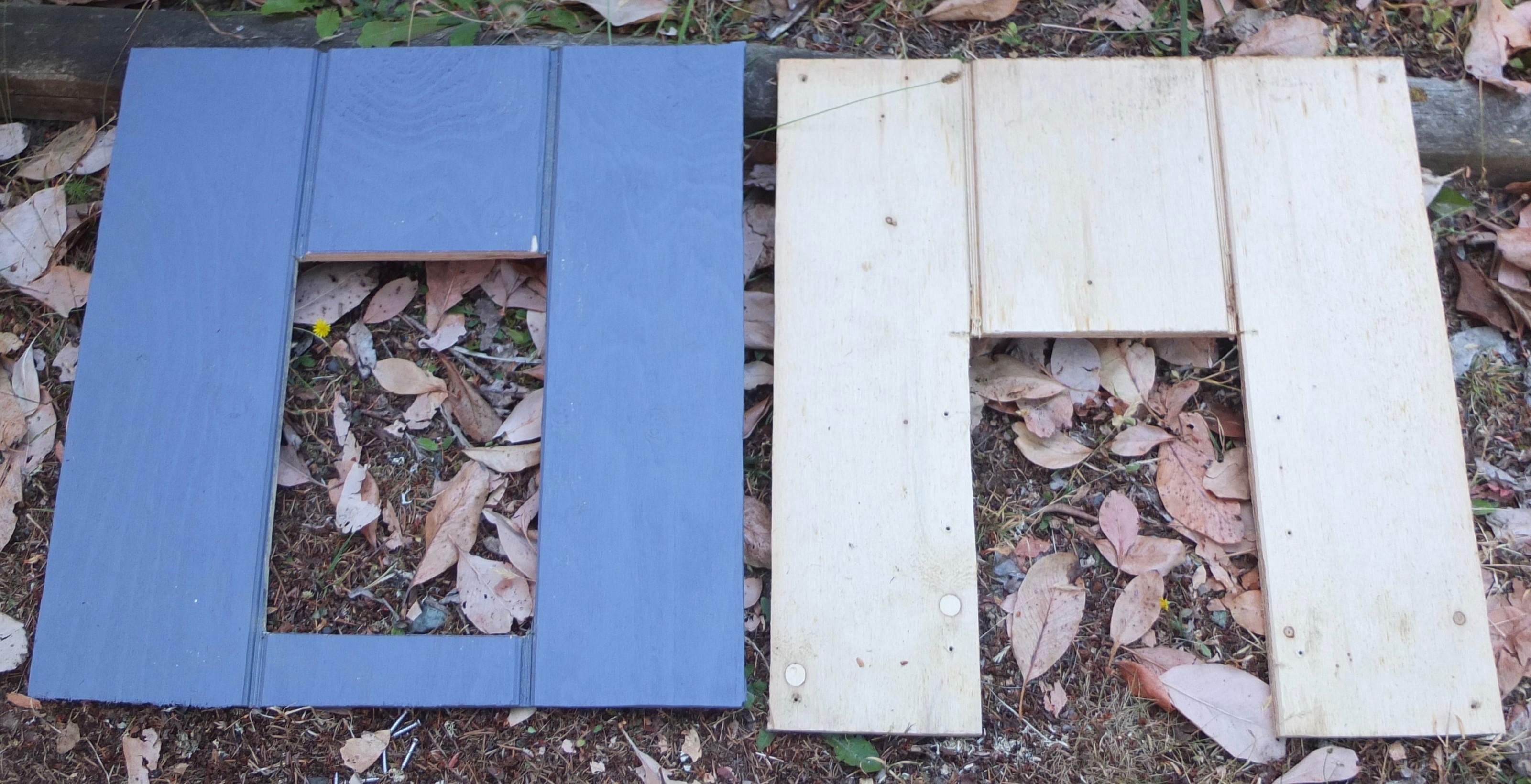
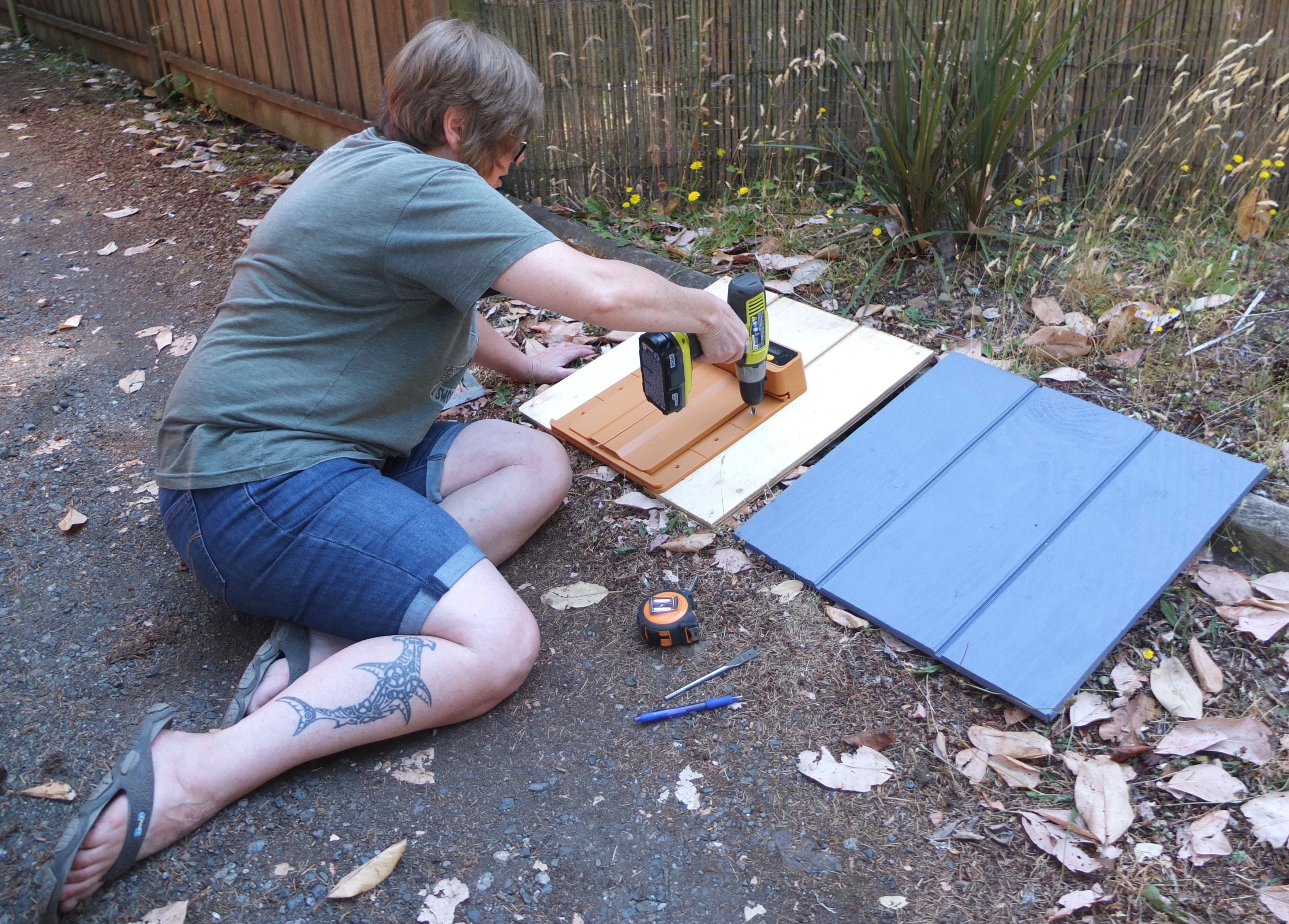
The installation was easy-peasy (just six screws), although Tracy and I had to do some retrofitting because the existing opening was larger than required. I hunted though my pile of offcuts from another project and found the perfect piece of ranchwall plywood that would cover part of the old door opening and provide a flat surface for the new one to be attached to.
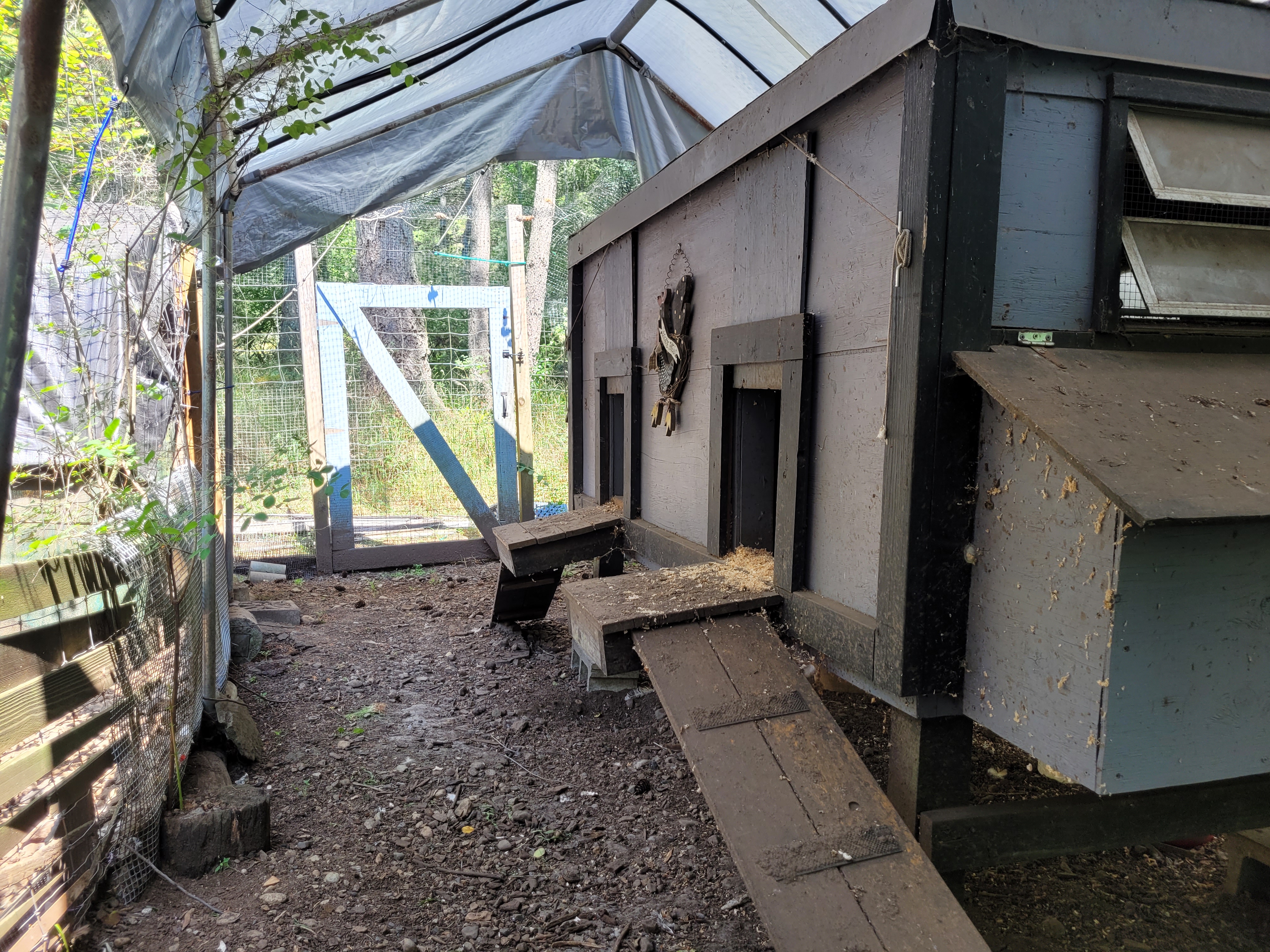


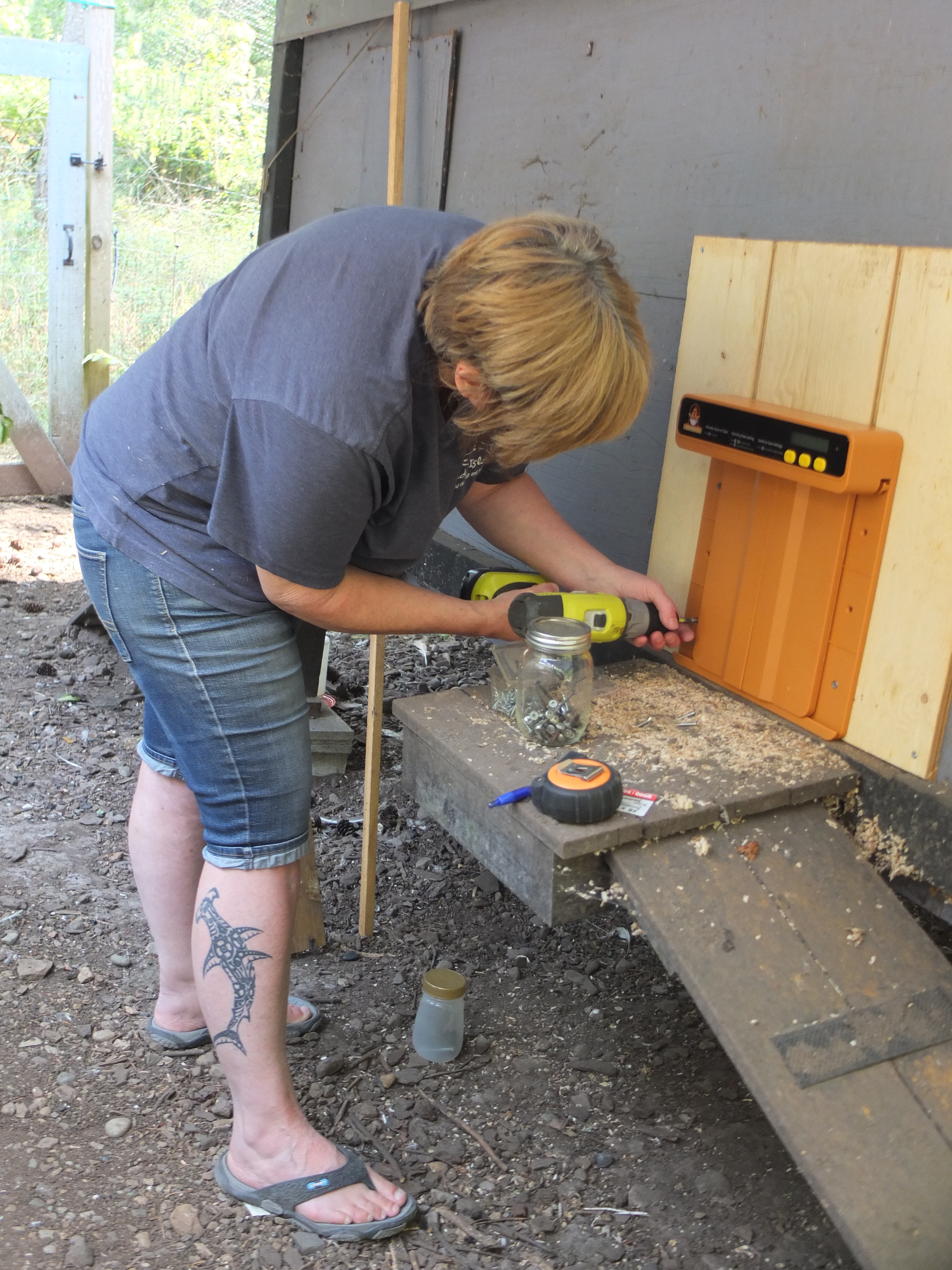
I should have read the instructions more carefully. We mounted the bottom of the unit so it sat flush with the bottom of the opening which was a mistake in two ways: my adult birds had to duck to enter (a slightly taller door would be helpful) and occasionally shavings got caught in the hollow track, meaning the door didn’t close tightly at night. No problem. I had an identical offcut. This time I painted it before installation and Tracy cut a new opening so the door was raised 2” from the landing, remedying the previous issues. (Apparently this is a design flaw, which I later read about in online reviews and in a service notice from the manufacturer).

So what was my experience?
Scrolling through online ads, many chicken auto doors are touted as ‘the best’ by their makers including both Chickcozy and Chicken Guard.
After we installed the door I wanted to give it time to see if there were any kinks that needed working out. As it turns out, I’m glad I did wait because I had to revise my draft review.
My first quibble is that it took some playing with to figure out which numbers between 0-100 I should program for opening/closing.
I then discovered that if I used the manual override for some reason (i.e. opening/closing the door before the light sensor would have done so) meant reprogramming the options again. I found this to be true with both Chickcozy and Chicken Guard. However, because there are fewer options with the former it is much simpler than the Chicken Guard.
A few weeks later, as the days got shorter, I found that the door opened both later than desired in the morning and closed earlier than I wanted in the evening. I wanted the door to open at first light and close before dusk but the door was not set up to accommodate that. This became an issue when my birds were consistently locked out and I had to corral them in, which of course, meant reprogramming the options daily. Sometimes that worked, and unfortunately, sometimes it didn’t. I contacted the company for advice – their response was quick – and as it turned out the parameters of the light sensor were not as flexible as the Chicken Guard. I couldn’t set the door to open at first light and close when it was still light out (my birds were already in bed). The opening had to be triggered by more light than at closing time.
On the advice of a Chickcozy representative I reprogrammed the settings, which worked for awhile – until they didn’t. The door, inexplicably, closed at the correct time, then opened later leaving my birds vulnerable to predators. That meant I had to go out nightly to ensure the door was closed and if not, to manually close it and yes, you guessed it, required me to reset the settings every single time.
I contacted the company who diagnosed the issue as a faulty light sensor and offered me a replacement for the clearly malfunctioning unit. In the interim, I removed the auto door and put back all the fittings for my original manual pop-style door not wanting to be bothered with the hassle of monitoring the safety of my birds. This turned out to be a smart decision when dealing with the replacement door, which I received faster than the first one. They now ship within Canada so I didn’t have to wait for a parcel from China.
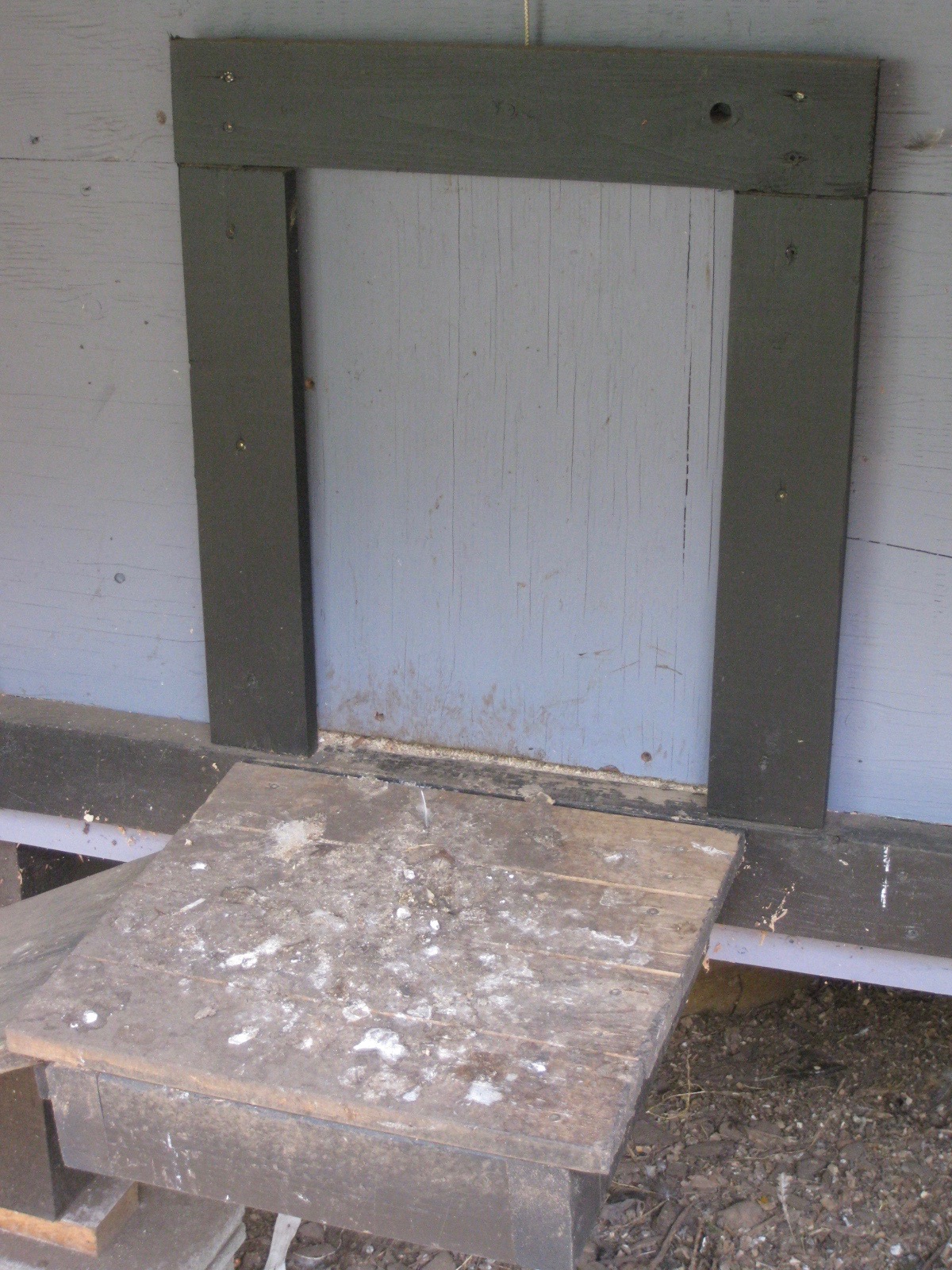


I was busy for a couple of weeks, so didn’t install it immediately. This time I decided to mount the door on the board I had removed when I had to put the pop-style door back. I installed the new batteries that came with the door and did as the instruction booklet directed: press the power button which would trigger the door to open and close three to five times and then stay open. I did so and it only opened once. I then noticed that the LCD display was impossible to read. I chalked it up to the bright lights in my house and due to my schedule put it out on my porch intending to deal with it later. Lo and behold, it was closed that evening and open the next morning at the times I’m assuming corresponded to the default settings. On the fourth evening I noticed it stopped working. Two days later there was no change.
I brought it into the house to troubleshoot the problem. The LCD display still couldn’t be read and nothing happened when I pressed the power button. I popped open the battery holder and noticed a pool of watery black fluid. I removed the batteries and tested them – three were fine, one was leaking corrosive battery acid that hurt my hands when I handled them. I cleaned up the area where the batteries were located and replaced them with new ones. No joy. I swapped out the battery holder that came with the first door and still nothing happened. My door was dead after less than a week of inconsistent performance.

I wrote to the company explaining what happened, accompanied by photos. I didn’t really expect them to send me a third door. Even if it had worked I would have been obliged to write about my experience with the two previous faulty doors. It’s now been many weeks since that email and I’ve had no response from Chickcozy. No surprise there.
Whatever features I liked – the easy installation, the compact horizontal opening door and the application for use in smaller coops – are moot as this is a product I, unfortunately, can’t recommend.
I chose not to look at any online reviews before I wrote this in case they influenced my opinion. After the latest door issue I did check out Amazon (342 reviews averaging 4.2/5) and the Chickcozy site (which featured a number of 5 star reviews). It was interesting to note that even the folks who had negative comments about the door’s design or function often inexplicably gave it high ratings.
All photos Bitchin’ Chickens. I would have taken more, but Tracy is a bit camera shy so I did my best.
 Bitchin' Chickens
I have the Chicken Guard door which I find easy to use. I never have to reprogram it if I manually open the door or close the door. If I open it early, I just walk away and it closes as programmed. If I close it early, it just opens as programmed the next morning. I can open and close it one after the other and it returns to the program. I’m not sure why your experience is that you have to reprogram the whole thing if you manually override. The few times I’ve had to change something… say, when the batteries run out (which isn’t often, (they last far longer than a year, in my experience), then I do have to run through the reprogramming schedule. If I want to tweak some setting, I can just hit okay on all the settings I want to leave intact until I get to the one I want to change, like the time, (it’s not a big deal because I do it so rarely). I appreciate that I can tell it to respond sooner to daylight, or later to daylight by controlling the number of lumens it requires to open or shut. Sorry you have not been happy with it. I love it.
It does require quite a bit of space above the door in order to mount the motor above and allow the door’s entire height to raise up and clear the pop door opening. The tracks do sometimes become jammed with sawdust, and I leave a tool out there to scrape the track clean every couple of months. I plan to build a new coop next spring and will keep all of these things in mind when I place my door so that less bedding gets into the tracks by raising it from the coop floor a bit more. I also plan to put a protective cross piece along the bottom of the door so that the door slides into a “slot” as I’ve had worries that an industrious raccoon could figure out that it could put its “fingers” underneath the metal door and just slide it up. A piece of wood there would make it impossible to put paws under the lower edge when it is in the down position.
Since I am building a new coop, I was glad to see this review because I plan on having more than one pop door, and might have considered this new model. Now I know to stick to what I know works, and to design accordingly.
I enjoy your blog very much. Keep up the excellent work.
LikeLiked by 2 people
I have the Chicken Guard Extreme. Got to agree with you that programming it can be a PITA especially when it’s in the middle of winter, the batteries died and it’s freezing out! I think they must have done some kind of upgrade since you had yours because I can manually close the door at night and it keeps the Sensor programme intact and opens the door in the morning at first light. The one thing I learned was to use Lithium batteries so they don’t die in the cold weather. I’ve got the programming memorized now so easier to do. All in all I’m very happy with the door.
LikeLiked by 1 person
Finding the right door was possibly the most important part of our whole coop build! I did research on this same door not knowing you had already posted this! Glad with the one we went with, Run-Chicken from Slovenia.
LikeLike