
If you keep chickens long enough you’ll know they are affected by an assortment of health issues: injuries and accidents, predators and parasites. Some things are unavoidable but others, like parasites, can be treated and with good management practices even prevented.
There are a number of products that target internal or external parasites, and sometimes both. This one is aimed at digestive system worms.
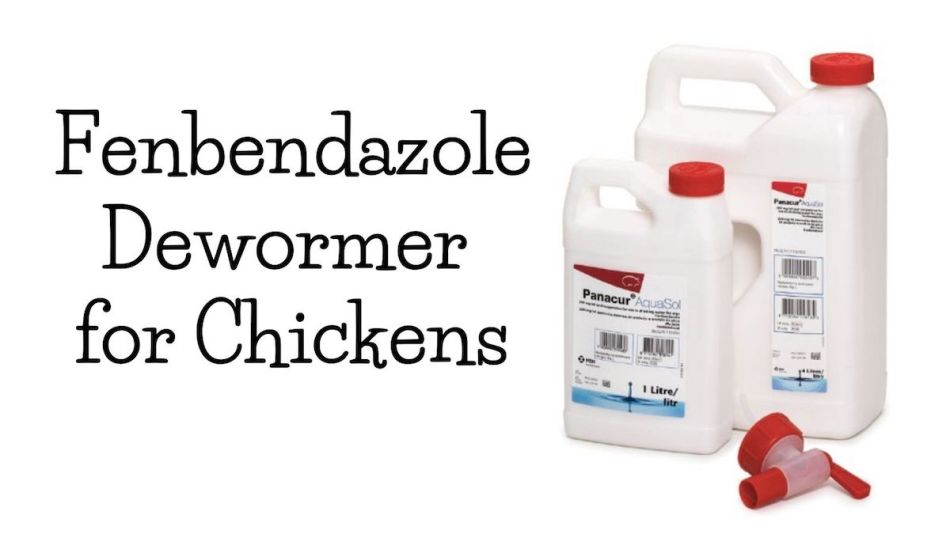
Fenbendazole (brand names Panacur® and Safe-Guard®) was first approved in 1983 for use in cattle. In 2020, Panacur Aquasol was passed for use in broiler birds and laying hens.
It’s used as a dewormer to treat a variety of intestinal parasites in chickens: roundworms (Ascaridia galli), cecal worms (Heterakis gallinarium), flukes, certain types of tapeworms, and Giardia. It may not be an effective treatment for Capillaria spp. (certain kinds of roundworms).
Dosage
- 200 mg of Fenbendazole/ml for oral administration via drinking water
- Safe-Guard AquaSol can be given orally to chickens via their drinking water at a daily dose of 1mg/kg body weight (0.454 mg/lb.) for 5 consecutive days
Although drug residue levels in the eggs is highest on the day following the last day of treatment they decline rapidly thereafter. There is no egg withdrawal period.
Cautions:
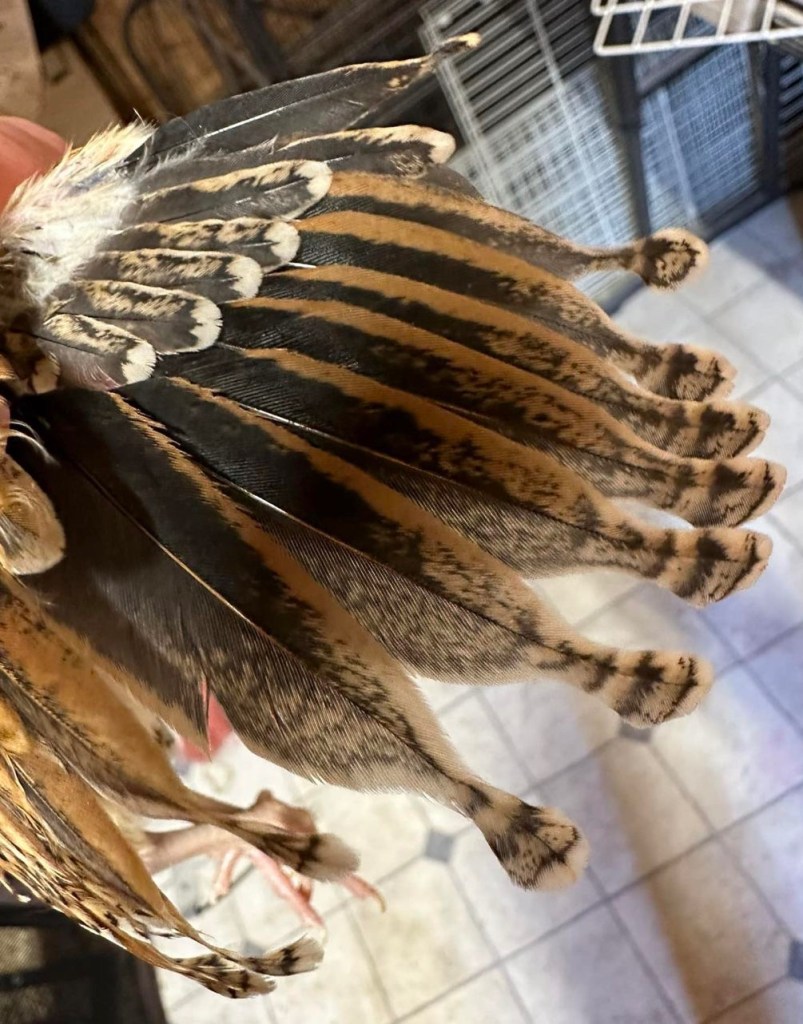
- Should not be used in molting birds or during periods of active feather growth
- Ineffective for Capillaria (type of roundworm) infestations
I don’t have firsthand experience using Fenbendzole. I starting using Ivermectin topically (off label for chickens) several years ago because it works on most internal worms and ectoparasites, like mites and lice. It’s not always easy to get an accurate dosage as most birds only require 2-3 drops, so it’s possible to overdose them. Aqua-Sol, on the other hand, can be added to their drinking water so you can treat your whole flock at once. You will need another product to treat external parasites.
I asked Dr Vicki Bowes, avian vet/pathologist what she would use for worms and she recommended Fenbendazole. For external parasites, such as mites and lice, she suggested Exzolt or diatomaceous earth (DE). I was a bit surprised about the latter as there is a lot of online controversy about how it can damage the respiratory systems of poultry. She responded that she’s done thousands of avian necropsies and birds are capable of walling off foreign substances in their lungs with no adverse effects.
I did get some advice from guest contributor Seleta Nothnagel who encountered an issue after using Fenbendazole. Full disclosure, Seleta has had a number of rare conditions affect her flock, so if any unusual side effects were going to be encountered it would be with her birds.
“I am not an idiot when it comes to medication dosages. I have a degree in veterinary technology and understand how to use a formulary and calculate dosages based on weight. I own an exotic animal formulary, which has a specific section for chickens and waterfowl. Despite all of that, I still ended up making one of my birds very ill, nearly killing her.
A couple weeks ago, I noticed my bantam Sultans had tapeworms. I weighed each of them on a scale that is capable of measuring to the gram. Tapeworms are stubborn to kill and very few dewormers are effective against them. The formulary said to use Fenbendazole. I calculated the proper dosage for their weight and gave them one dose per day for five days, as instructed. Their last dose was given and the tapeworms disappeared from their stool.
Several days later my hen laid a soft-shelled egg. Then there were no eggs and she seemed just ‘off’. The following day she was very lethargic, weak and rolled over to her side. Her lab work showed that her red and white blood cell count was very low with no signs of regeneration; liver enzymes were high, indicating organ damage. One of the side effects of Fenbendazole can be bone marrow suppression and liver damage.
The remedy is supportive care waiting for her liver to heal and bone marrow to start making blood cells again. She was also put on antibiotics to help support her immune system, and extra nutrients through a critical care food.
I don’t believe this is a common occurrence, but is definitely a known potential complication with the use of Fenbendazole. I would just make sure that anyone who was planning on using it to know the potential side effects and what signs to look for: lethargy, anorexia and being fluffed up. Knowing the potential side effects of any drug you are planning on administrating to an animal is good practice. Just as in people, different animals can experience different reactions. When in doubt consult a veterinarian.”
Credits: Dr Vicki Bowes; Parasites & Vectors; Poultry DVM; Seleta Nothnagel; USDA.
 Bitchin' Chickens
Interesting regarding Seleta’s hen having such a side effect I wasn’t aware of. I’m currently treating my flock with fenbendazole. I hate to admit, I’m dosing them by way of “pea size” paste. Then in 10 – 14 days, I plan on treating them with the AquaSol mixed in their feed for their second dosage. One ounce added to one cup water which is then mixed into 15 – 20 lbs of feed. This is fed for three consecutive days. Any thoughts on this type of treatment? Or changing up their second treatment. I’m glad to hear about no egg withdrawal period. This is the first I’d heard that.
I’m also surprised about the DE recommendation. Would there be any concerns on adding small amounts to their dust bathing areas? Or is the recommendation to apply directly to each bird, avoiding inhaling, for both yourself and the bird?
Thanks Claire. Great article.
LikeLiked by 2 people
I’m curious as to why you’re mixing AquaSol into their feed rather than just giving it to them in their water. I’d think that was a more effective way of ensuring that all your birds got treated. Dr Bowes suggested that you could add DE to their dust bath.
LikeLiked by 1 person
Is praziquantel allowed in chickens? It is a dewormer effective against tapeworms, and became available for horses a few years ago.
LikeLiked by 2 people
Most things used in poultry are off-label. Praziquantel is recommended by my avian pathologist as it’s one of the few dewormers that target tapeworms.
LikeLiked by 2 people
Speaking of parasites, I have successfully used Elector PSP externally on my hens and in their coop to treat red mites. My local veterinarian who treats chickens, recommends it .
Are you aware of this product and if so, can you do an article on it sometime? Apparently it has no deleterious effects on mammals and the environment at large…. But I have not found much science on it.
LikeLiked by 3 people
I’ve heard lots of good things about it and will look at writing a post about it.
LikeLiked by 2 people