
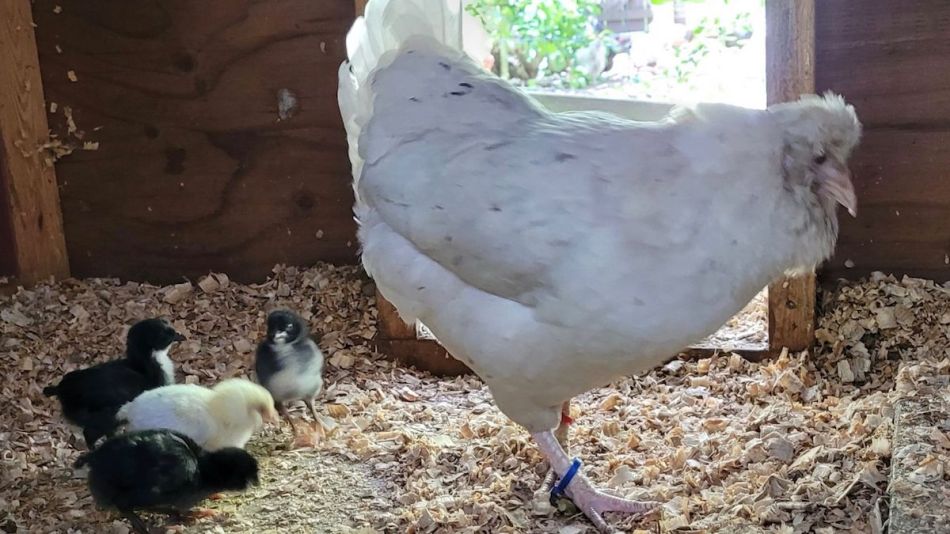
Dealing with broody hens can be a bit like a soap opera or even a Shakespearean tragicomedy, full of missteps and bad outcomes. I was hoping when I embarked on this latest foray of dealing with my flock during hatching season it would be full of happy endings and not the latter.
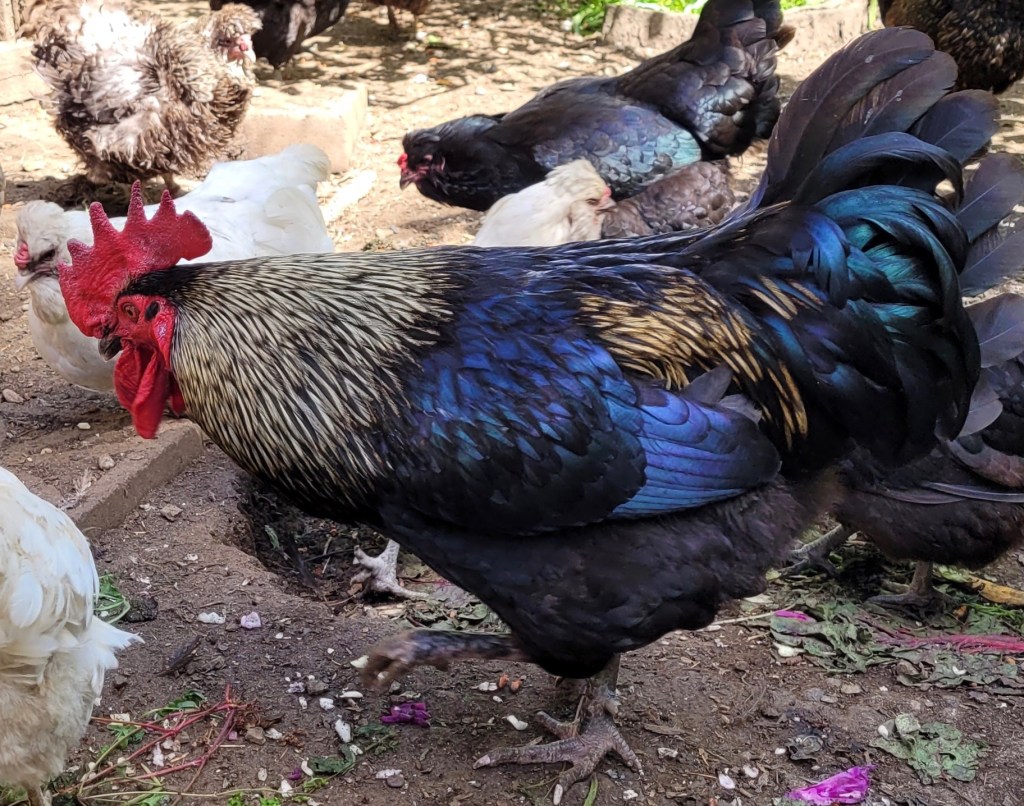
I’ll start out by saying that the tendency for hens to go broody is genetic and my flock clearly carries that maternal DNA. Some breeds like Silkies, Orpingtons and bantams are overrepresented in that department, but most of my girls are descended from Polish, Appenzeller Spitzhaubens and Ameraucanas. My rooster Hank is a first generation (F1) Olive Egger: Isbar (pronounced Ice-bar) also known as Silverudd Blå crossed with Black Copper Marans. My last rooster was a smooth feathered Silkie-Easter Egger cross whose only obvious Silkie traits are his walnut comb, five toes and his ability to throw the odd melanistic (black skinned) or blue eared offspring. Some of my hens are his daughters so perhaps he contributed some broody genes in a flock already rife with them.
2018 was a crazy year: I had 17 clutches hatched by broody hens as well as receiving 26 chicks from eggs I donated to two school hatching programs. To say it was crazy is an understatement. I vowed never to weaken and let every hen who wanted to walk the road to maternity be allowed to. I found that with a few, consistent gentle strategies I could talk them out of it fairly easily. Of course, that was until they went broody a few weeks later.
The last couple of years I have pared things down to letting two hens sit/hatch at the same time. The rationale is that if one hen gives up before all the chicks hatch I can transfer the remaining incubating viable eggs over to the second hen. I’ve also found that one hen usually finishes with her brood earlier, leaving the other to care for both sets of chicks.
This year no one seemed to want to go pair up making my task more difficult. My first hen, One Spot, went broody in April, an inconvenient time for chicks, when it was still unseasonably chilly and rainy. She persisted longer than any of my hens – four long weeks – despite all by best efforts to ‘break’ her. I finally gave in and gave her 11 eggs and crossed my fingers that she would continue to sit for three more weeks. During this time hens often eat or drink just enough to survive, resulting in significant weight loss and seven weeks is a marathon of devotion.
It’s amazing that their outputs seem to far outweigh their inputs.


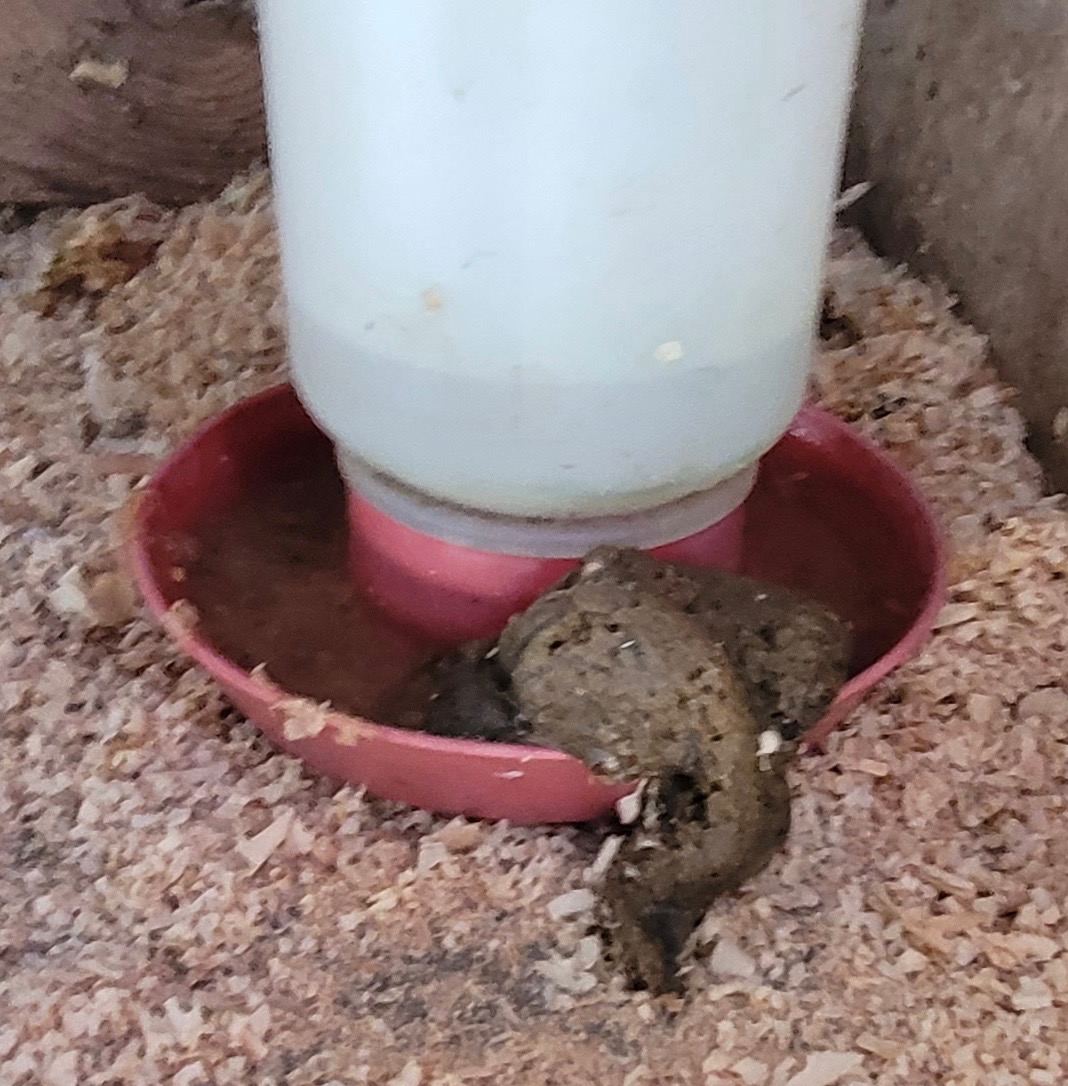
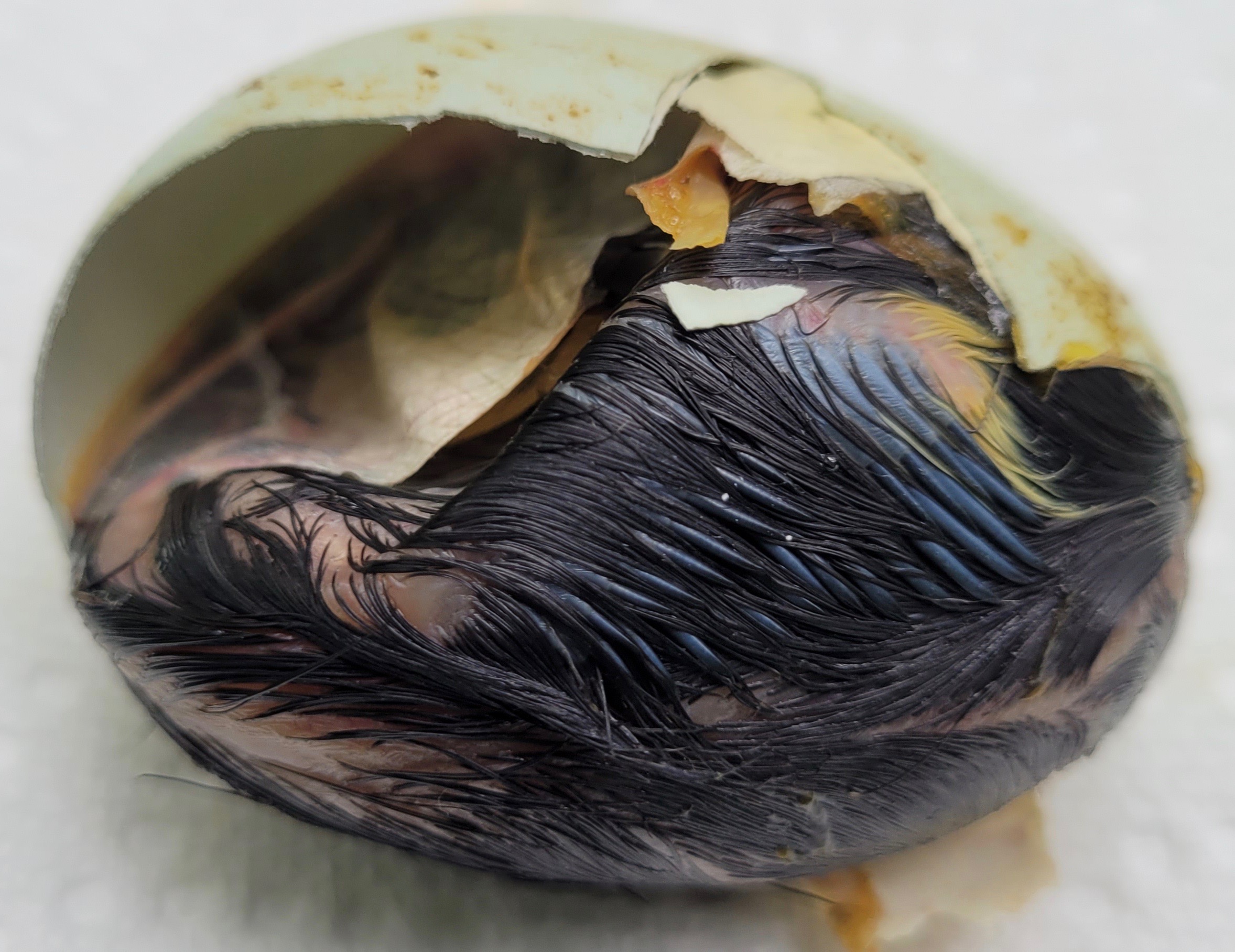
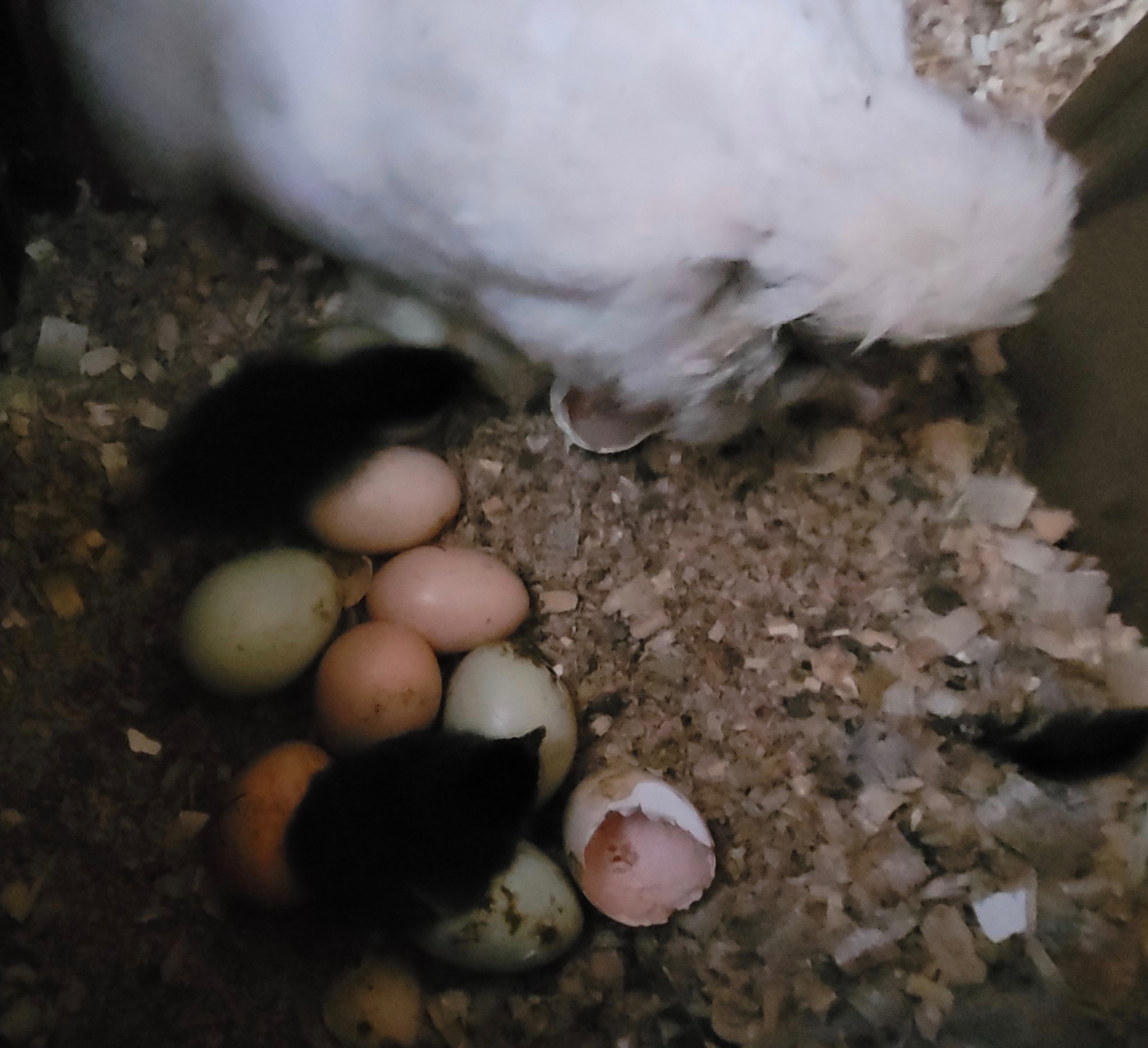
One Spot was a trooper and did not disappoint. The fertility rate, however, despite my rooster’s seemingly constant mating behaviour wasn’t stellar. Of the 11 eggs, only four hatched. I cracked open the remaining eggs: five were unfertilized, one contained a very undeveloped embryo that died early in development and finally, a chick that died right before hatch. This was a new one for me, in that, the large air cell was on the side and not at the wide end of the egg, so the chick developed around it. As you can see from the first photo the chick was indented. Third photo shows fully developed chick as well as an early ‘quitter’.


She and the chicks had the whole 15’x30′ grow out pen all to themselves. The pen shares one fence line with my main coop (see photo below with my flock in the background), which I find is a great way to both expose the chicks to the bigger birds but protect them at the same time. It wasn’t long before the more daring of the bunch found ways to sneak through the fence. My adult birds just seem to accept them and I’ve never had issues with bullying the littles.
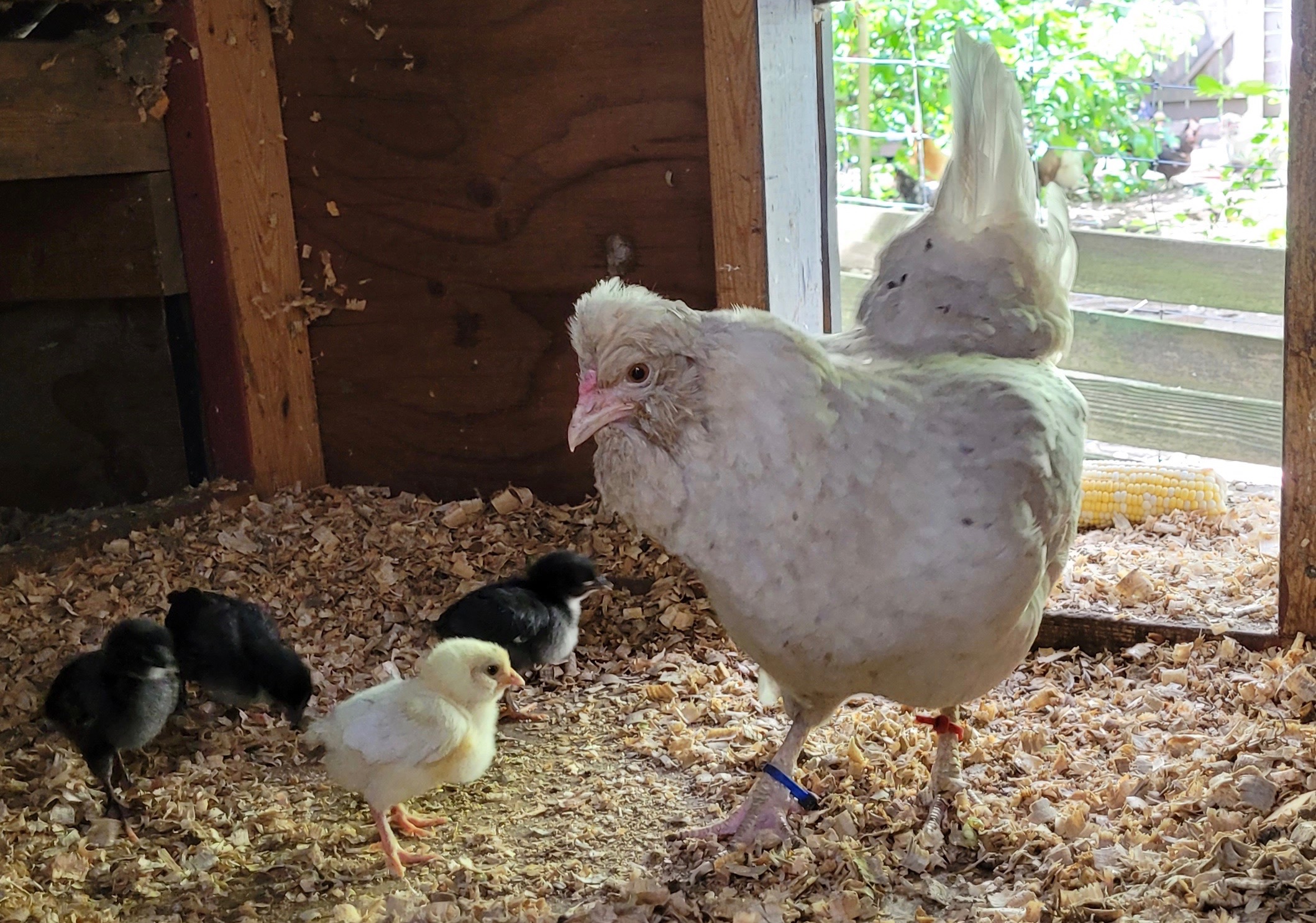

One Spot’s chicks are almost ten weeks old. Unfortunately three of the four chicks turned out to be cockerels. I say that because, like most chicken keepers, I don’t want more than one rooster. One of the them is quite precocious. He started crowing at six weeks and within a couple of weeks was attempting, quite awkwardly, to mate with the full sized hens.
I rehomed their dad two weeks ago, in part to get new genetics into my flock as well as to give my hens a break. He’s big for my girls and his mating behaviour has contributed to some substantial feather loss for my frizzles. I tried saddles to protect them and they reacted as though I was trying to kill them.
At 13 months, Hank’s spurs are just emerging and I was concerned more damage might occur. He’s living the best life with my friend Romela on seven acres. His flock consists of 35 hens, including the recently rehomed hens of Dr Emily Carrington, DVM. Her hen Lacey has made it into the Guinness Book Of Records and has been dubbed ‘the smartest chicken in the world’.
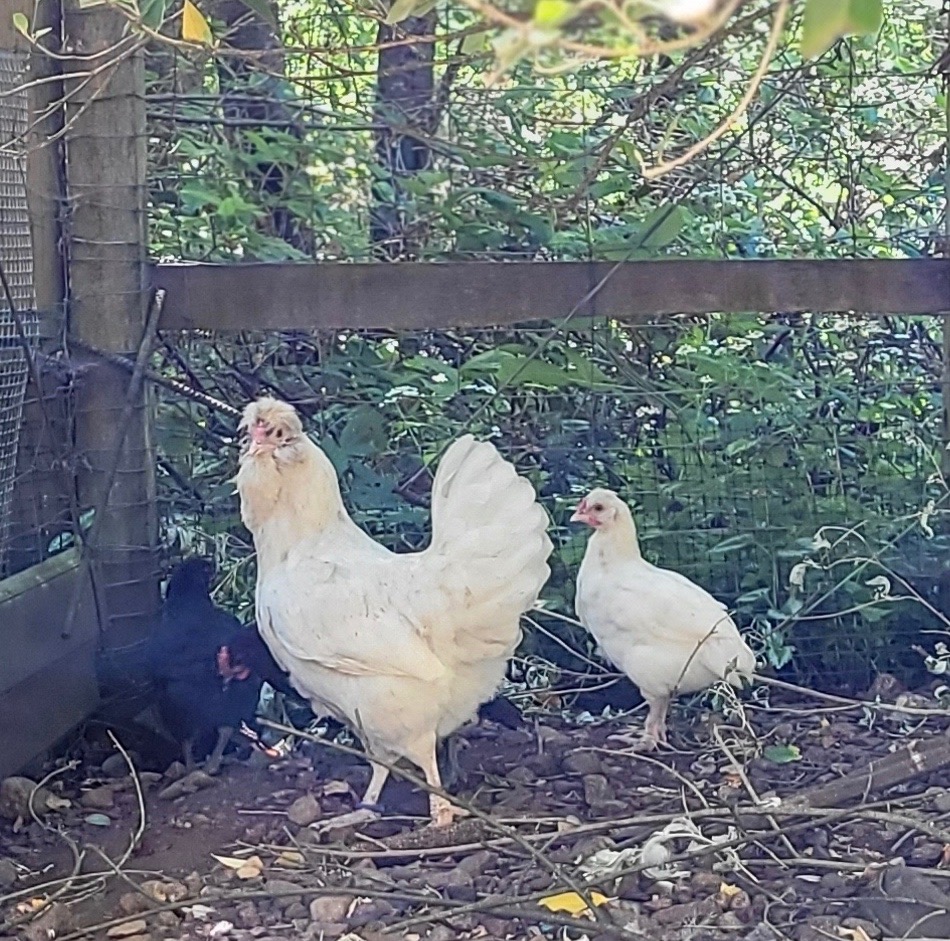
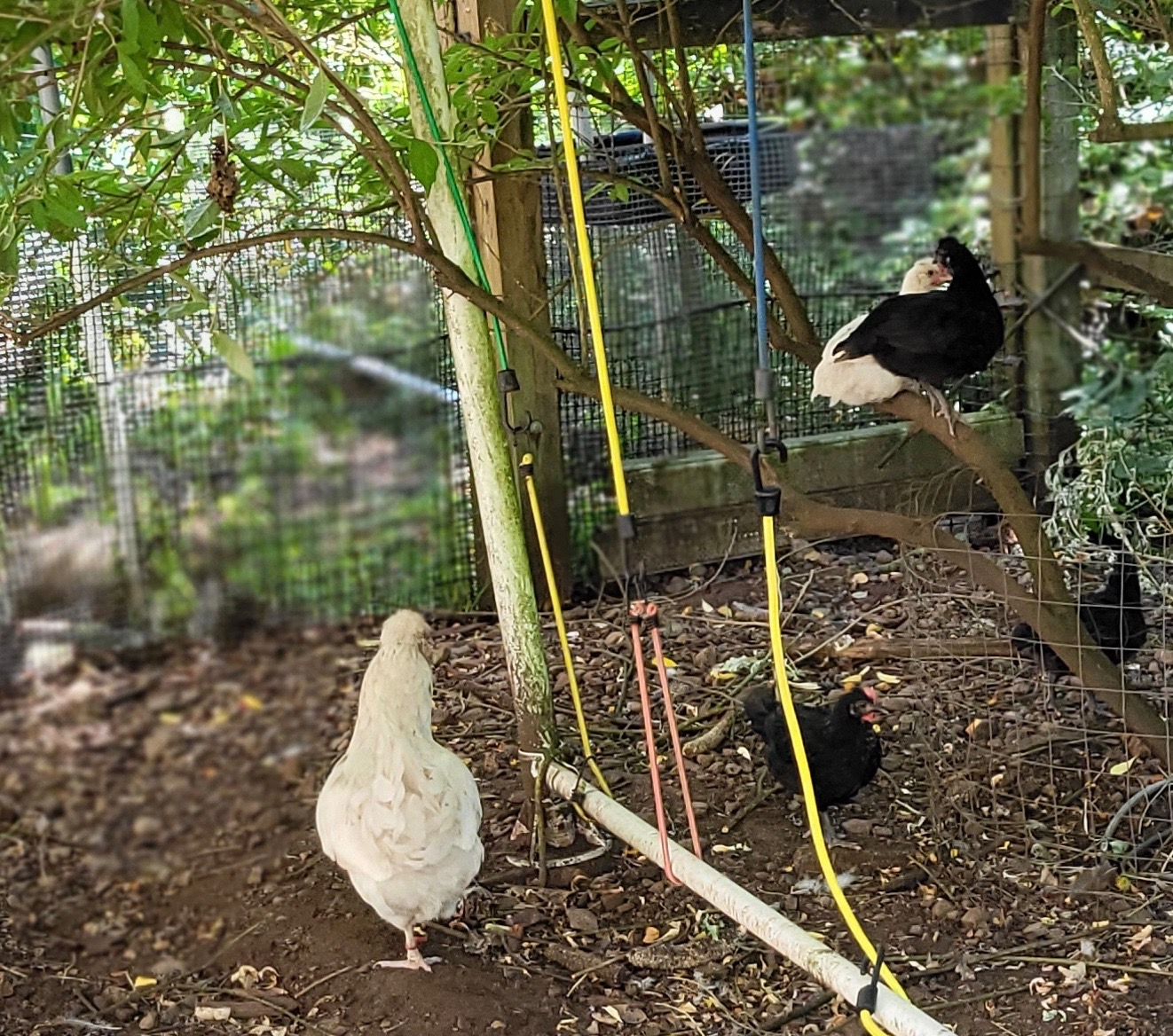
I was hoping, that in Hank’s absence, my hens would get a break and there would be no crowing for awhile. Unfortunately, the little guy is in love with his voice and crows throughout the day. I’m working at finding them homes but with the number of boys I’ve ended up with from this and subsequent hatches it’s proving to be a bit of a challenge.
If you’re wondering how One Spot got her name; I have a number of splash hens and she’s the only one with a solitary black spot.
Stayed tuned for further tales of more broody Bitchin’ Chickens which include some heartache as well as happy endings.
“From broody hens to bold opinions — cluck yeah, we’ve got it all.”


I feel your pain. 6 of 6 turned out to be roosters for me the first time I let a broody hatch eggs. This last broody hatch of 4 appears to be 2 pullets, 2 roosters.
LikeLiked by 1 person
Thanks for the eggs. I got eight chicks from 20 eggs that two hens sat on. They are doing a lovely job of coparenting and hoping they will be big enough to put in with the flock before real cold sets in. Love your chats.
LikeLiked by 1 person
Always love your emails! I look forward to reading each new one.
I would like to get your input on something. You mentioned that you had some quitters under One Spot and one that died shortly before hatching. In your photo I noticed that she was in a plastic pet carrier for setting purposes. In the past I have used various plastic and metal containers to use as places for my hens to set. My hatches would be about 60%. My roosters love my Girls so I didn’t think it was a rooster problem. I purchased some specialty eggs and my best hen hatched 7 out of 12. I wasn’t pleased. But I knew that it wasn’t some issue with my flock because these were from another flock. Accidentally I dropped one of the unhatched eggs and there was a fully developed chick that had died. I started thinking and realized that my best hatches were when my hens were setting in wooden boxes. I decided to see if it was my imagination or if there was something to it. I promptly set a hen in a wooden box and she hatched 12 out of 12. I tried another hen in a wooden box and even though temperatures were so warm that she really didn’t need to set on her eggs she hatched 7 out of 7. Not a rooster problem! And there were no struggles to get out for the chicks. In the past I had actually had some die in the egg when all they had to do was give one final push to get out. But the hen was setting in a large plastic container even though I used hay and wood shavings as nesting material. I used the same nesting materials in my wooden boxes. My roosters are the same. The only difference is the material the nesting boxes are made of. I did search the internet for something that would shed insight but found nothing. Do you have any thoughts on this? Regardless I will never again use plastic bins for my hens to set in. Your thoughts please! Sherry
Sent from my iPhone
>
LikeLiked by 1 person
When those eggs didn’t hatch did you crack them open to see if they were fertilized? Any sign of early development, then failed? I think there are a few factors that impact viability of eggs – including proper temperature and humidity. Fertility is another issue altogether. I’ve had five broody hens this season: three were in plastic dog crates with shavings; two of them were in wooden coops, also with shavings. Sometimes when they are in crates I put the bottom of a cardboard box inside to hold the eggs and shavings. I’ve had very high hatch rates with a previous rooster (80-100%) – all using crates. I know my rooster is very active with the hens but I wonder if there is a bit of incompatibility based on size difference? He’s the biggest rooster I’ve had and most of my hens, though standards, tend to be on the smaller size. Watching how chickens mate it seems like a miracle that anything hatches at all.
LikeLike
There were two that I did see. They were probably about day 18. To be honest it greatly saddens me to see such things so I didn’t check the rest. But the hatch from last year they were almost out and died before getting out. I chose to help the last one of that hatch out because of the two that died. It never made a noise and was almost lifeless. I put the lethargic chick under a different hen expecting it to be dead by the time I returned home. Not only did she survive but she was totally revived. I have thought of the humidity that may have been created in the large mineral bins used for mineral salts for cattle. The hens have been set at different times of the year so its not the temperature nor the humidity from the weather. I find that hens are very good at controlling the temperature of their eggs and any humidity that they themselves may create. It can be humid and miserably hot (feels like temps of 120) here in southwest Missouri yet this year after switching to only wooden boxes I was able to have 100% hatches. Maybe the bins off gas chemicals that are detrimental to the developing chicks. The wooden boxes are old Coke crates. There is something that is beyond what the hen can control. I am careful to use either hens that have proven themselves or breeds like Bielefelder that are super moms to hatch my eggs. My Girls keep spotless eggs. I can’t blame my hens. 🤔 Regardless the problem, I guess I found the solution that works for me. I was only wondering if someone else had noticed a similar trend. Thank you for your input! Sherry
LikeLike